REVIEW · BUCHAREST
The Jewish heritage of Bucharest – half day walking tour
Book on GetYourGuide →Operated by Razvan Trancu · Bookable on GetYourGuide
Bucharest’s Jewish past walks right up to you. I love how the tour pairs street-level walking with specific, human-scale history, and I love ending at the Romanian Holocaust Memorial with time to reflect. You’ll also admire the surviving religious architecture, especially the Coral Temple, but one possible drawback is that opening hours and holiday closures can affect which interiors you get to see.
The guide really makes the difference. Razvan Trancu is praised for turning facts into a story you can follow, even using photos on an iPad to clarify what you’re looking at. He’s also attentive to comfort in hot weather, so you’re not stuck rushing through a serious subject.
In This Review
- Key points you’ll care about
- Walking the surviving traces of the old Jewish quarter
- Starting at Starbucks and getting oriented fast
- Jewish Community Museum: history you can read with your feet
- The Great Synagogue area and the Romanian Holocaust story
- Teatrul Evreiesc de Stat: Jewish culture beyond religion
- Laude-Reut Educational Complex and Jerusalem Lion Square
- Avraham Kosher break time: snacks, fuel, and a pause
- Coral Temple: neo-Mudejar style with 150+ years behind it
- Communist-era apartment blocks and why the neighborhood looks like it does
- Closing at the Holocaust Memorial: the walk’s emotional punctuation
- Price and timing: is it worth $318 per group?
- Practical details that can make or break your day
- Who this tour fits best
- Should you book?
- FAQ
- Where do I meet for the tour?
- How long is the Jewish heritage Bucharest walking tour?
- How big is the group?
- What languages is the guide speaking?
- Do I have to pay entrance fees?
- What’s included in the price?
- Are the Great Synagogue and Coral Temple always open?
- What are the visiting hours for synagogues and temples?
Key points you’ll care about
- Small group pace helps you ask questions and actually process what you’re seeing
- Synagogue + Holocaust focus gives you the full arc, from community life to tragedy
- Communist-era context explains why the city’s Jewish quarter looks the way it does now
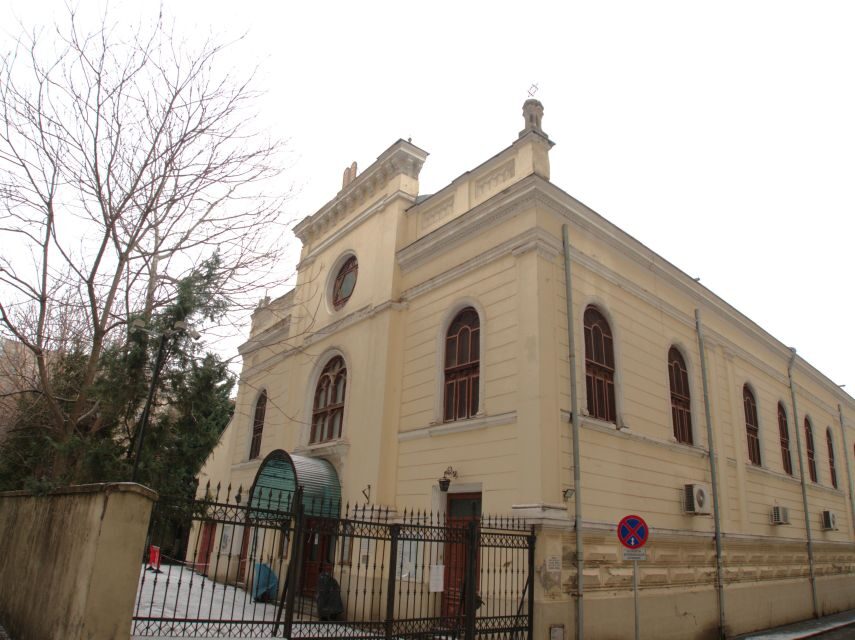
- Architecture that survived includes the newly restored Coral Temple and the Great Synagogue area
- Practical timing matters because some sites close on Fridays and during major holidays
Walking the surviving traces of the old Jewish quarter
This is the kind of tour where the streets do half the talking. You start in Bucharest’s Old Town area and move through narrow streets that used to sit at the center of Jewish life. Today, those streets still carry marks—mostly architectural fragments and a sense of place—because much of the original neighborhood changed fast, and not always for reasons you can summarize in one sentence.
What I like is that the route doesn’t treat the Jewish quarter as a museum piece stuck in time. It connects what you see on the street—then and now—with the political forces that reshaped daily life. That approach helps you understand why communist-era apartment blocks sit nearby modern landmarks, and why so much history is forced to live in smaller, surviving spaces.
You’ll also walk with a group that’s intentionally small (limited to 7 participants), so the guide can slow down when you want extra context.
You can also read our reviews of more walking tours in Bucharest


Starting at Starbucks and getting oriented fast
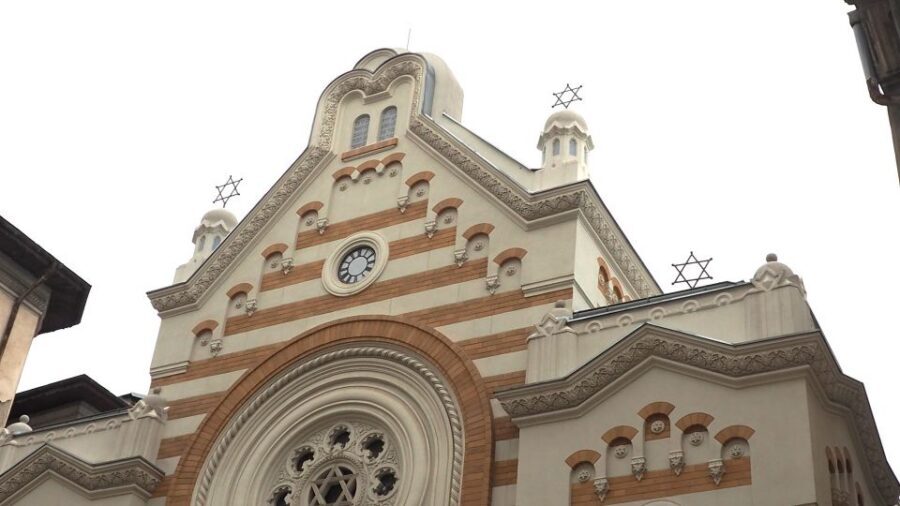
The meeting point is simple: the Starbucks entrance door. From there, you get quick orientation in the Old Town area before you head into the Jewish-focused part of the walk.
That early orientation matters more than you’d think. Bucharest can feel sprawling, and Jewish landmarks are spread across different pockets. Even with a short walking segment, you’ll want your bearings so you can read the city’s layout while you still have energy.
This isn’t a long trek, either. With about three hours total, the pace is designed to keep the story moving without turning it into a sprint.
Jewish Community Museum: history you can read with your feet
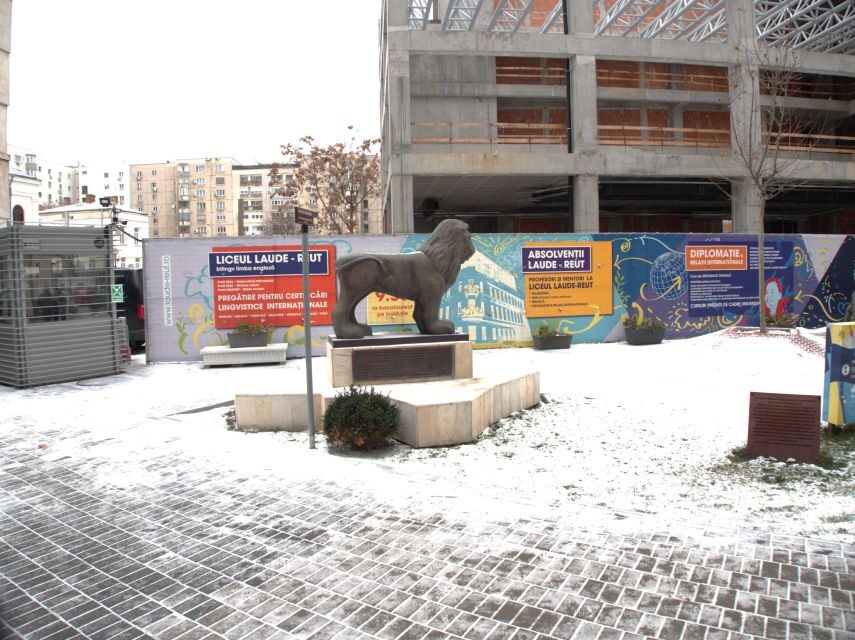
One of the first inside stops is the Jewish Community Museum of Bucharest. You’ll spend about half an hour there with a guided visit.
The key idea here: the museum is housed in an ex-temple, so the setting already tells part of the story. Even before you hit the exhibits, you’re standing inside a repurposed sacred space. That gives the history a weight beyond dates and names.
Expect the guide to connect the exhibits to what you’ve seen outside—then bring you forward into the events that broke community life. The tour specifically includes the community’s trajectory during the Communist regime, which helps explain how Jewish culture could persist while being constrained and reshaped.
Practical note: the museum is closed on Fridays, so if you’re planning a Friday visit, you may need the guide to adjust the route depending on what’s open.
The Great Synagogue area and the Romanian Holocaust story
Next up is the Great Synagogue area, where you’ll have about 30 minutes to visit. This is one of the stops where the tour becomes both architectural and emotional—because it’s not only about the building itself, but about what the synagogue represents in Romanian Jewish history and the Holocaust narrative connected to it.
What I recommend you do here is slow down as the guide explains the context. It’s easy to treat a synagogue visit as a photo stop. Instead, watch for what the guide points out about continuity and rupture: what survived, what changed, and what that means for how Bucharest remembers its past.
Time matters for access. Synagogues and temples generally have set visiting hours: Mon–Thu from 9:00 to 14:00, and Friday from 9:00 to 12:00. And during major Jewish holidays—Rosh Hashana, Pesach, Shavuot, Yom Kippur, and Sukkot—the Coral Temple and the Great Synagogue are closed.
Even aside from religious holidays, safety-related closures can happen depending on current events, so it’s smart to confirm opening status before booking.
Teatrul Evreiesc de Stat: Jewish culture beyond religion
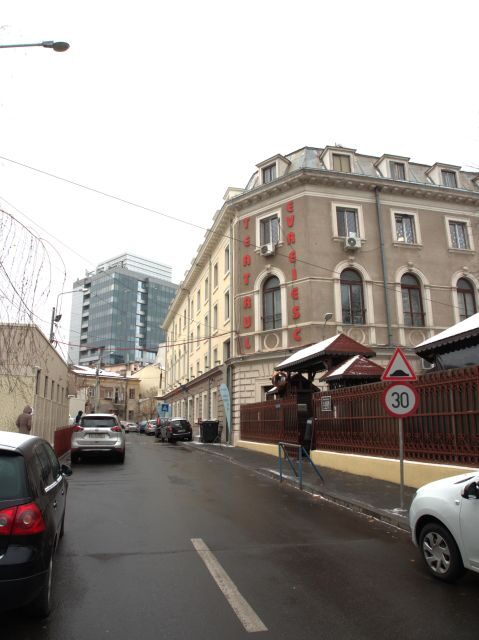
You’ll also stop at Teatrul Evreiesc de Stat, the Romanian Jewish State Theater, with about 30 minutes allocated for the visit.
This matters because it widens the lens. If your mind only links Jewish Bucharest to synagogues and memorials, this is the corrective. The theater is tied to community culture—language, performance, identity—so the story stops being only about suffering and starts including art, public life, and creativity.
Even if you don’t speak the local language, you can still appreciate how architecture and institutions represent cultural endurance. It also keeps the tour from feeling like one long uninterrupted solemn chapter.
You can also read our reviews of more historical tours in Bucharest

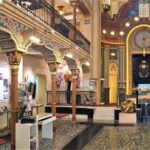


Laude-Reut Educational Complex and Jerusalem Lion Square
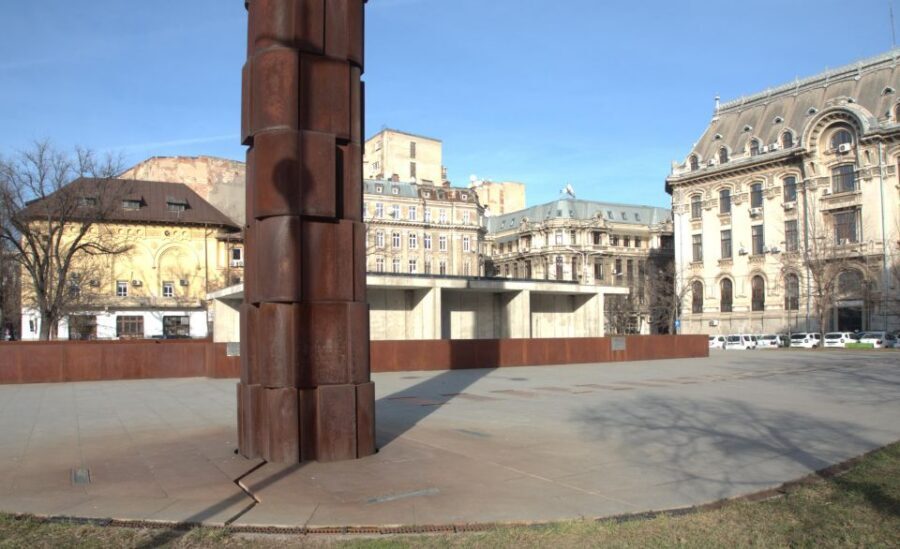
After the theater, you’ll pass by the Laude-Reut educational complex and then the Jerusalem Lion Square.
These are not the stops you linger in as long as the major sites, but they work as visual waypoints. They help you understand how Jewish education and public symbols have remained in the city’s spatial memory—even as the neighborhood’s population changed over time.
If you like tours that connect dots across a map, these pass-by segments are helpful. If you only want the longest possible time inside buildings, you might wish you had more time at the major interiors instead—but the walking route is designed to keep the pacing balanced across multiple key sites.
Avraham Kosher break time: snacks, fuel, and a pause
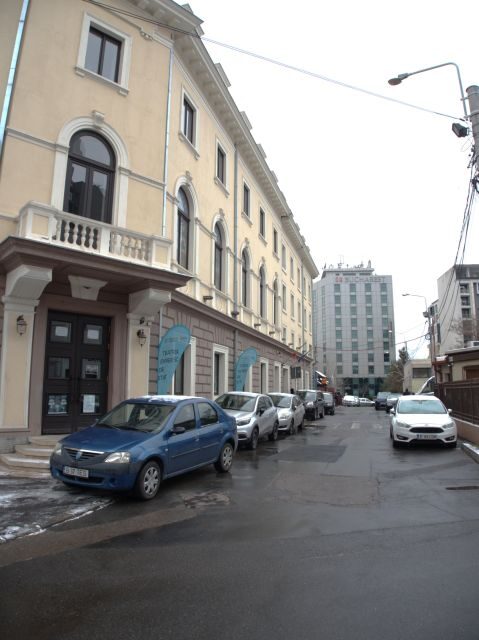
You’ll get a break at Avraham Kosher for local snacks for about 30 minutes.
Snacks aren’t included in the price, but this is exactly the kind of planned pause that makes a serious walking tour workable. If it’s hot (and Bucharest can be), you’ll be glad the schedule builds in a moment to regroup.
Bring cash, since that’s specifically called out for you. It also helps you handle entrance fees smoothly when locations are open.
Coral Temple: neo-Mudejar style with 150+ years behind it
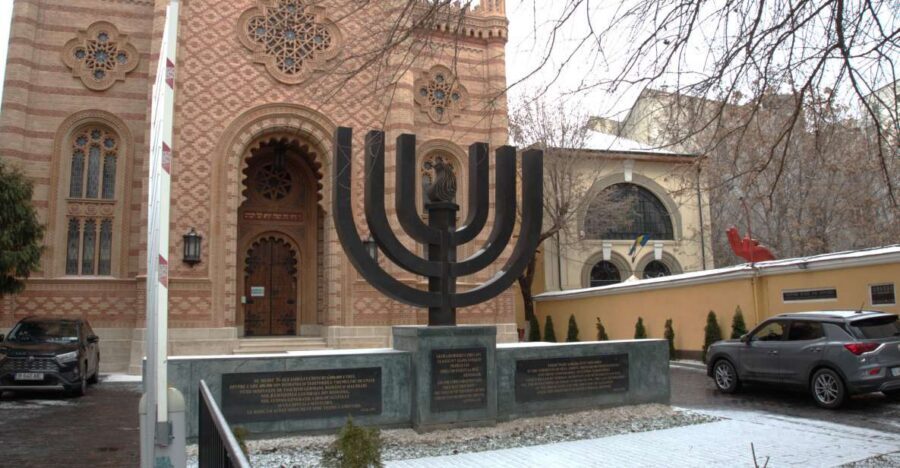
The Coral Temple is one of the architectural anchors of the whole experience. You’ll visit for about 20 minutes, and it’s described as neo-Mudejar style and recently restored, with 150+ years of history.
Here’s what to appreciate beyond the surface. When a community’s religious buildings survive, they become living references for identity. A restored temple also signals ongoing care and continuity—something you’ll feel more strongly after learning about the losses and disruptions in Romanian Jewish history.
Just like the Great Synagogue, the Coral Temple has limited opening times and holiday closures (closed during Rosh Hashana, Pesach, Shavuot, Yom Kippur, and Sukkot). Visiting hours follow the same general pattern for synagogues and temples: Mon–Thu 9:00–14:00 and Friday 9:00–12:00.
Also, heat can affect opening schedules. If you’re visiting during a hotter period, ask the operator ahead of time what’s currently expected to be open.
Communist-era apartment blocks and why the neighborhood looks like it does
One of the tour’s themes is visible in the way the streets are lined today. As you walk through areas that once made up the Jewish quarter, you’ll see communist-era apartment blocks nearby.
This is more than background scenery. The guide frames these buildings as part of the story—how political systems reshaped cities, which in turn reshaped where Jewish life could be centered, and how memory gets stored when communities are dispersed.
I like that the tour doesn’t pretend the old neighborhood is still intact. Instead, it teaches you how to read what’s left: fragments of architecture, institutions that remain, and the way modern Bucharest overlays the past.
Closing at the Holocaust Memorial: the walk’s emotional punctuation
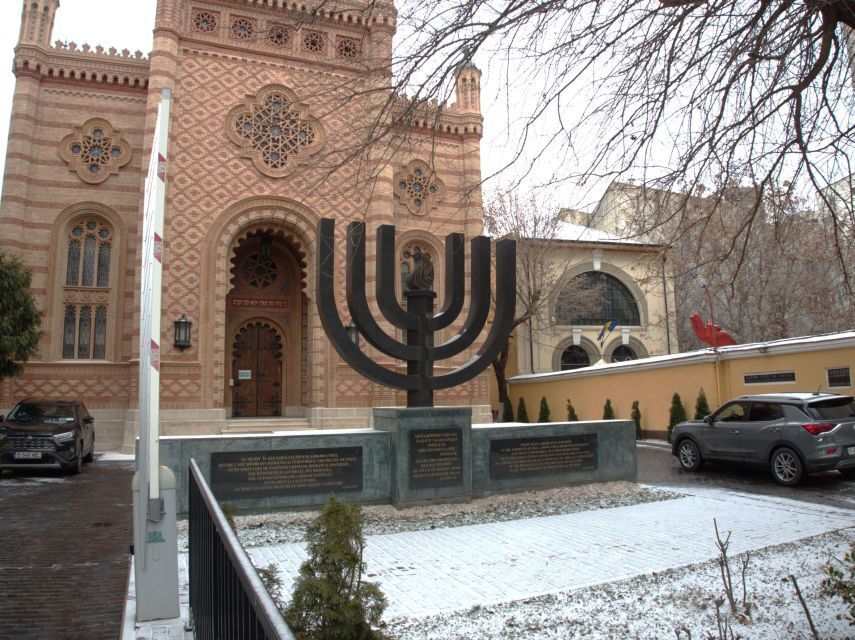
The tour ends at the Holocaust Memorial in Bucharest, with about 20 minutes for your visit.
Ending here gives the experience a clear structure. You start with community life and cultural sites, then move through the historical shocks that changed everything, and finally finish with a place designed for remembrance. It’s a deliberate flow, and it’s one reason the tour works well even for people who only have a short time in the city.
When you visit the memorial, take the time to let the guide’s context land. This isn’t the kind of stop you speed through and forget.
Price and timing: is it worth $318 per group?
The price is $318 per group (up to 12 participants) for a 3-hour, live guided walking tour. In practice, the tour is described as small group limited to 7 participants, so you should expect a more personal pace than a standard big-bus-style tour.
Here’s how I think about value:
- You’re paying for an organized route that covers multiple major Jewish landmarks in one morning/afternoon window.
- Your guide’s expertise is repeatedly highlighted, including the ability to explain historical context clearly and answer questions.
- You get a guided museum visit and multiple religious/cultural site stops, plus built-in time to pause and regroup.
Is it expensive? For a half-day walk, yes, it sits on the higher side. But if Jewish Bucharest history is central to your trip, you’ll likely feel the time-saving and the guided interpretation.
Also remember: entrances and snacks are extra, so you’ll want cash ready.
Practical details that can make or break your day
A few logistics points can save you stress:
- Bring cash for entrance fees and for snacks at Avraham Kosher.
- There’s an entrance fee of 30 lei per person (around $6 USD) in each open location.
- Synagogues and temples have set visiting hours (Mon–Thu 9:00–14:00; Fri 9:00–12:00).
- The Jewish Community Museum is closed on Fridays.
- Coral Temple and the Great Synagogue are closed during major holidays: Rosh Hashana, Pesach, Shavuot, Yom Kippur, and Sukkot.
- Programs may change due to safety concerns tied to current events in Israel.
- High temperatures might affect the opening schedule, so it’s worth checking before you go.
On the comfort side, the short duration helps. And based on guidance style noted by visitors, you can expect the tour to pay attention to keeping people steady in extreme heat.
Who this tour fits best
This works best if you want more than a quick list of sights. You’ll enjoy it if you like tours that connect buildings to events—especially the Romanian Holocaust context and the community’s experiences during the Communist era.
You might skip it if:
- You’re mainly looking for a light, casual city walk without heavy historical context.
- You’re visiting on a Friday or during a major holiday, when key interiors may be closed.
If you’re traveling with limited time but strong interest in Jewish history and Bucharest’s changing urban fabric, this is a solid way to spend a short window.
Should you book?
I’d book this if Jewish heritage in Bucharest is a priority and you’re okay with a serious, structured route. The combination of Jewish Museum visit, major synagogue and temple stops, cultural context through the theater, and a focused ending at the Holocaust Memorial makes the three hours feel purposeful rather than rushed.
Before you lock it in, check opening expectations for your specific date—especially if you’re traveling during major Jewish holidays, on Fridays, or during hot weather. If a site ends up closed, the value still comes from the guided context and the route’s ability to cover the main story beats.
FAQ
Where do I meet for the tour?
You meet at the Starbucks entrance door.
How long is the Jewish heritage Bucharest walking tour?
It lasts about 3 hours.
How big is the group?
It’s a small group limited to 7 participants.
What languages is the guide speaking?
The live guide speaks Italian and English.
Do I have to pay entrance fees?
Yes. When open, there is an entrance fee of 30 lei per person (around $6 USD) in each location.
What’s included in the price?
You get a guided walking tour through the Jewish quarter of Bucharest. Entrance fees and snacks are not included.
Are the Great Synagogue and Coral Temple always open?
No. During Rosh Hashana, Pesach, Shavot, Yom Kippur, and Sukkot, the Coral Temple and the Great Synagogue are closed.
What are the visiting hours for synagogues and temples?
They are generally Mon–Thu from 9:00 to 14:00, and Fri from 9:00 to 12:00.