REVIEW · BUCHAREST
Bucharest Highlights Walking Tour
Book on Viator →Operated by Bike the City · Bookable on Viator
Bucharest history hits fast on foot. This 2.5-hour highlights walk strings together old-town trade, Orthodox landmarks, and major government architecture, giving you a clear sense of how the city evolved. You’ll follow a planned route with a small group pace and guided context instead of wandering with guesswork.
I love two things most. First, the stops move in a logical storyline, from caravan-serais like Hanul Gabroveni to the big financial and political landmarks around BNR and Parliament. Second, the guides bring the details to life with approachable explanations and plenty of room for questions, with past guides including Dan, Ed, Alex, Andrei, and Lucia.
One possible drawback: this is a walk, and the weather can make it feel longer than the clock says. In colder months, you’ll want real layers, plus the tour may include paid-entry buildings at some stops, so plan for extra cost if you want inside access.
In This Review
- Key things to know before you walk
- Why this 2.5-hour loop works for first-time Bucharest
- Price and value: what $21.77 gets you
- Start point at Piaţa Sfântul Anton: where the walk begins
- Manuc’s Inn: the oldest buildings story in one stop
- Hanul Gabroveni: caravan-serai heritage you can still see
- BNR Palace area: the financial district around you
- Stavropoleos Monastery: Orthodox heritage in architecture form
- Palatul CEC: classic architecture with a city-shaping explanation
- Macca Villacrosse Passage: when money meets design
- Palatul Regal (Royal Palace): monarchy to communist-era footprints
- Sala Palatului: Stalin-era architecture in the middle of the story
- Cismigiu Park: the oldest park break
- Palace of Parliament: the heavy finale
- What to expect on the walk: pace, questions, and comfort
- Free vs paid stops: how to plan your budget
- When to book and what weather means for your tour
- Should you book this Bucharest highlights walking tour?
- FAQ
- How long is the Bucharest Highlights Walking Tour?
- How much does the tour cost?
- Is the tour offered in English?
- Where does the tour start and end?
- Are tickets included for all stops?
- How big is the group?
- What should I expect for weather?
- Can I cancel for a refund?
Key things to know before you walk
- A route built for orientation: old-town trade to Orthodox heritage to major state architecture.
- Short, focused stops: most sights are brief exterior-focused moments, with time to keep the pace.
- Small group size (max 25): easier questions and fewer bottlenecks.
- A mix of free and paid-entry highlights: some places are outside-view or optional tickets.
- Cold-weather practicality: guides typically account for comfort breaks when conditions are rough.
- You finish near Parliament: a strong end point for photos and city orientation.
Why this 2.5-hour loop works for first-time Bucharest
This tour is built for the moment you land in a new city and your brain feels overloaded. Bucharest can look like a mash-up of eras at street level, and that’s exactly what you’ll learn to recognize as you walk.
The timing is the big win. You get a solid overview without turning the afternoon into a slog. Each stop is short enough that you keep momentum, but long enough for the guide to explain what you’re seeing and why it matters.
You can also read our reviews of more walking tours in Bucharest


Price and value: what $21.77 gets you
At $21.77 per person for about 2 hours 30 minutes, this is priced like a practical city intro rather than a museum-heavy day. The real value is the way you learn the city’s “map in your head” during the walk—especially around the old city center and the stretch leading toward Palace of Parliament.
Also, the tour’s small-group cap (up to 25) helps. It’s easier to ask questions, and you’re less likely to feel lost in a crowd. You’re paying for interpretation: how inns, monasteries, and state buildings connect to Romanian history and Bucharest’s growth.
One note on value tradeoffs: a few of the big-ticket architectural stops don’t include admission. If you want to go inside those sites, you may pay extra on the spot.
Start point at Piaţa Sfântul Anton: where the walk begins
You’ll begin at Piaţa Sfântul Anton 64, București 030167. The start puts you close enough to public transportation that you won’t need a complex pre-plan just to get there.
From the start, the route signals what the tour is really about: Bucharest as a layered city. Instead of jumping straight to the biggest monument, you begin with older buildings and trade-related history—so later landmarks make more sense.
Manuc’s Inn: the oldest buildings story in one stop
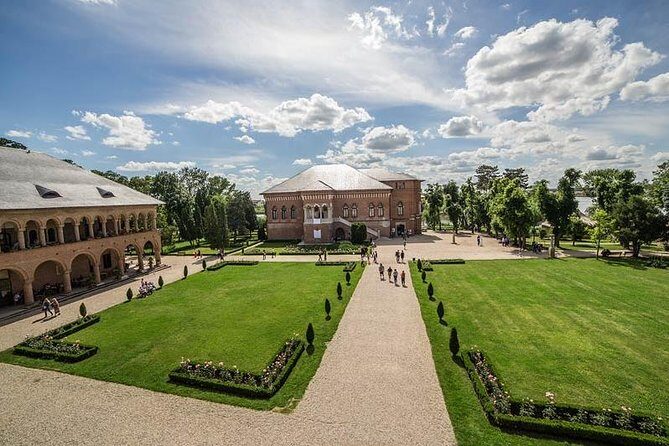
Stop 1 is Manuc’s Inn (Hanul lui Manuc), where you get an introduction to Bucharest’s early history through one of the city’s oldest surviving structures. It’s a quick but meaningful orientation moment because inns like this explain how commerce shaped daily life—before today’s boulevards and institutions existed.
You’ll spend around 20 minutes here. The admission ticket is free, so this is a no-stress start: you can focus on the stories and the architecture without thinking about extra fees right away.
Hanul Gabroveni: caravan-serai heritage you can still see
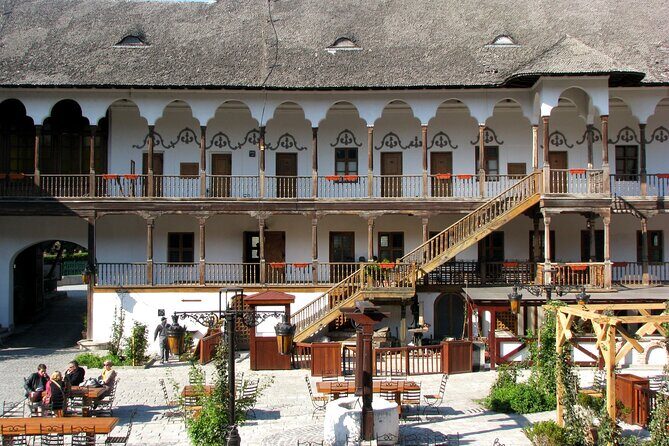
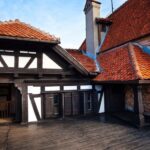
Next is Hanul Gabroveni, another caravan-serai style building tied to Bucharest’s trading roots. The concept is simple: these were lodging and market hubs for merchants moving goods and people through the region.
This stop is also about scale and loss. One in four buildings in the old city center used to be such a caravan-serai; today, only a few remain—and this is one of them. That kind of context is why this tour feels more than sightseeing. You’re learning what’s missing and what survived.
Like the first stop, admission is listed as free, with about 20 minutes at this point.
BNR Palace area: the financial district around you
At Stop 3, you move into the Bucharest financial district story at the BNR Palace. You’ll be surrounded by institutions and landmark-adjacent buildings, including the National Bank area plus the former Stock Exchange and related commercial architecture.
This is one of the more “street-level history” parts of the tour. Instead of treating the city like isolated monuments, you’re learning how finance, commerce, and state power formed a strong cluster.
Time here is short—around 10 minutes—and the stop is free from admission fees. It’s designed to give you context fast, not to make you memorize institutional names.
Stavropoleos Monastery: Orthodox heritage in architecture form
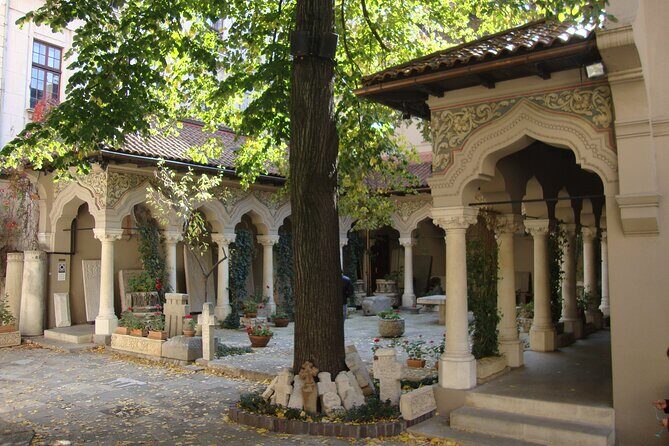
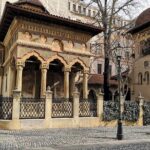
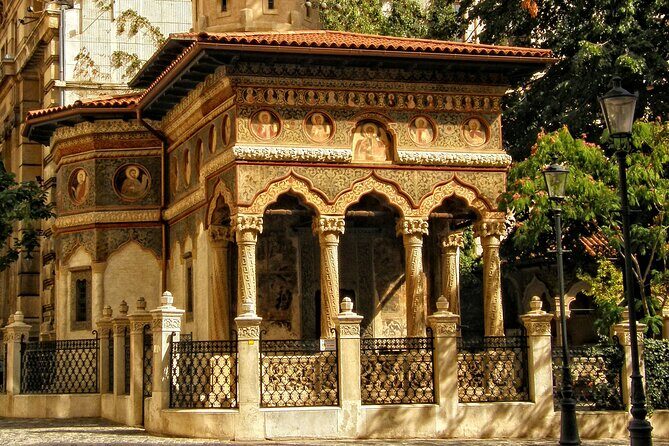
Stop 4 is Stavropoleos Monastery. Here, the tour shifts from trade and institutions into Romanian religious heritage.
Romania is overwhelmingly Christian Orthodox, and the monastery is presented as an iconic monument of Orthodox architecture and expression. Even if you’re not religious, you’ll likely appreciate how the building communicates identity through design choices.
This is another short stop (about 10 minutes) with free admission. It’s a good palate cleanser between the heavy architecture of banking and the later palace areas.
Palatul CEC: classic architecture with a city-shaping explanation
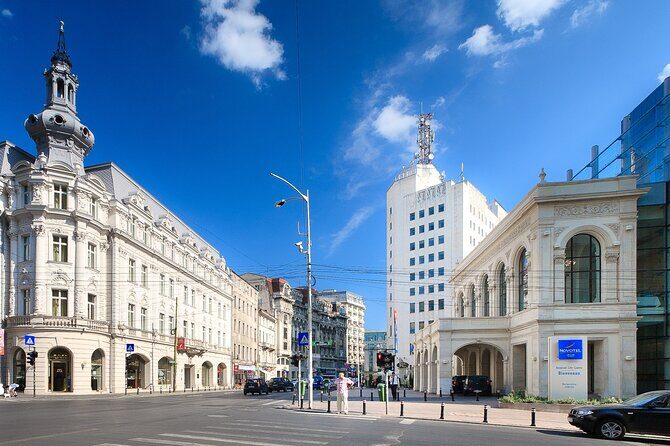
Stop 5 is Palatul CEC. This is one of those moments where the guide’s narration does a lot of work. You’ll stand in front of what’s considered top-tier old architecture in Bucharest and get the explanation behind a seemingly confusing idea: why some of the oldest-feeling buildings are actually relatively newer, and how the city was remodeled over roughly 600 years.
Admission here is listed as not included, so expect that you may look from outside or only go inside if you purchase tickets separately. That’s not a dealbreaker—architectural exteriors can still be impressive—but it’s a consideration if you’re the type who wants interior access at every stop.
Time is about 10 minutes.
Macca Villacrosse Passage: when money meets design
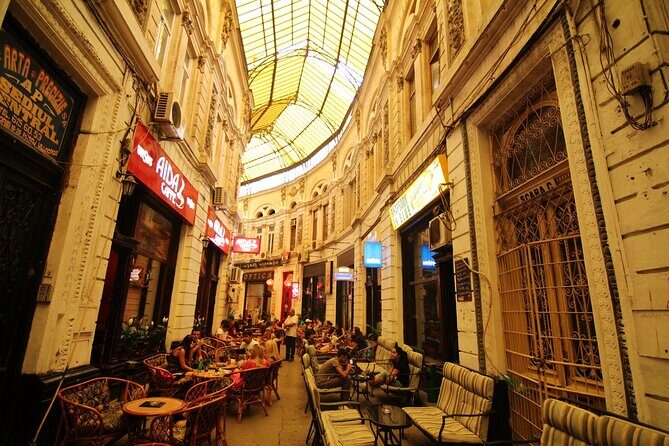
Stop 6 is the Macca Villacrosse Passage. This is a short, almost snack-sized stop (about 5 minutes), but it fits the storyline perfectly: once you reach the financial district, you start noticing how design supports spending and commerce.
The guide frames the galleries and passageways as once-standard shopping and spending experiences for the moneyed parts of the city. Even without entering every space, you’ll likely enjoy the change in atmosphere—narrower and more “passage-like” than the wide-open streets of the surrounding area.
Admission is listed as free at this stop.
Palatul Regal (Royal Palace): monarchy to communist-era footprints
Stop 7 is the Royal Palace area (Palatul Regal). This is where Bucharest’s modern history starts to feel sharper and more complicated.
The tour describes the site as connected to the shift from monarchy to communism and then to democracy. In other words, it’s not just a pretty building. It’s a marker of power changes that shaped the city’s recent direction.
Admission is listed as not included here, so again: plan for optional or separate entry if you want to go inside. Time is about 10 minutes.
Sala Palatului: Stalin-era architecture in the middle of the story
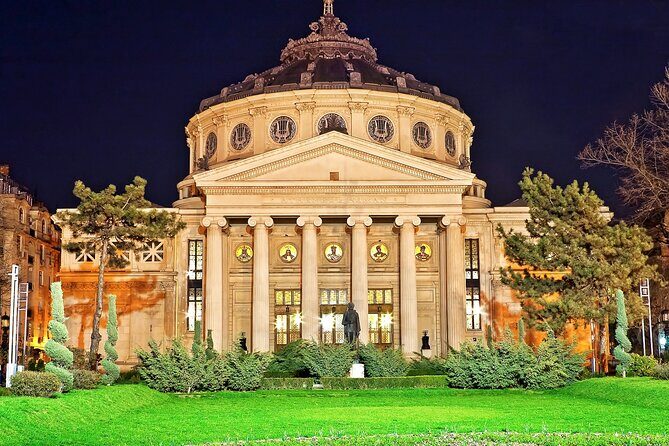
Stop 8 is Sala Palatului, described in terms of its architectural style from the Stalin era. This stop matters because it helps you read Bucharest’s skyline with better eyes.
You’ll get the sense of how architectural language was used to signal authority and ideology. Even if you can’t instantly identify every style feature, the guide’s framing makes the building’s mood easier to understand.
Admission is listed as free. Time is about 10 minutes.
Cismigiu Park: the oldest park break
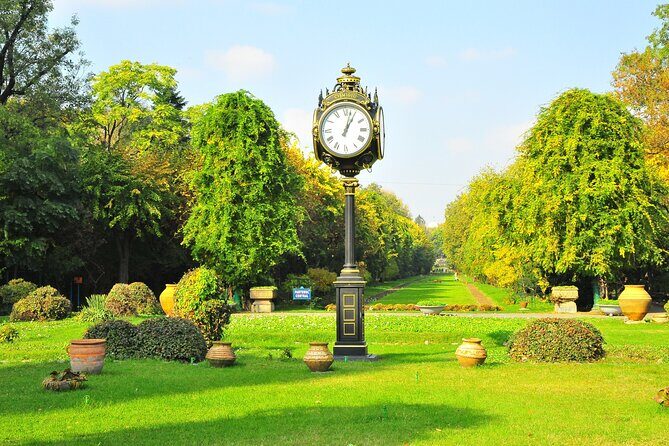
Stop 9 is Cismigiu Parc, described as the oldest park in Bucharest. After palace and state buildings, a park stop is a smart change of pace—your brain gets a breather, and your photo options broaden too.
Time is about 10 minutes, with free admission. This is the kind of stop that makes the route feel less like a checklist and more like a real walk through different city moods.
Palace of Parliament: the heavy finale
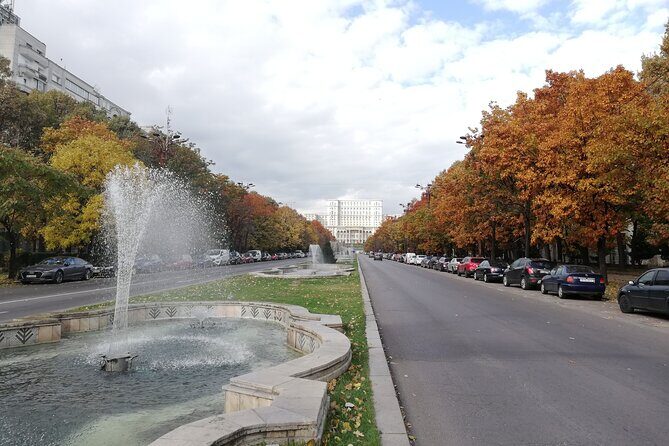
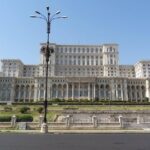
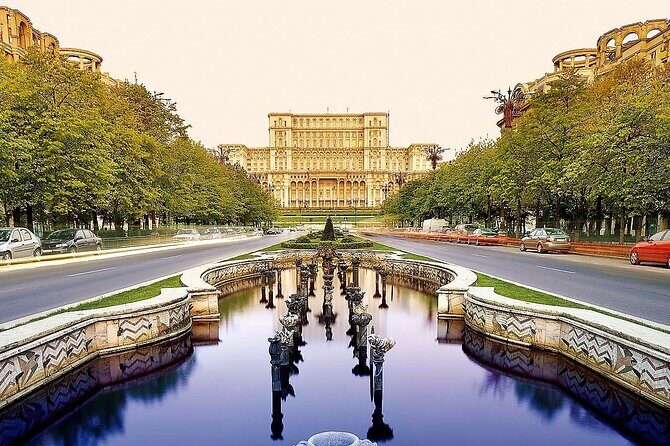
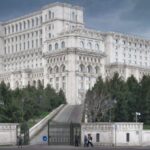
Stop 10 is Palace of Parliament, and this is where the loop pays off visually. The tour describes it as the second largest administrative building in the world after the Pentagon, and heavier than it. It’s the kind of scale you feel as much as you see.
Admission is listed as not included here, so you’ll likely focus on exterior views and the setting rather than an interior tour unless you’ve planned extra tickets separately.
Time is about 20 minutes. This longer final stop is also practical: you finish near the massive landmark, so it’s easier to continue your day in that area without hunting for transport through city-center streets.
What to expect on the walk: pace, questions, and comfort
Expect a steady city-walking pace with frequent narrative stops. The best part is that the guide doesn’t just point at buildings. They connect them—trade to faith, finance to government—so you stop thinking in isolated postcards.
Comfort matters. In winter, you’ll feel it when you’re standing around listening. Guides have been known to build in breaks for group needs such as bathroom stops and short respites from cold, including opportunities for coffee or hot drinks. That’s not just kindness; it keeps the experience enjoyable rather than frozen endurance.
Also, dress for “standing and walking.” Good shoes beat expensive shoes here. If you run cold, layer up even if the forecast looks mild.
Free vs paid stops: how to plan your budget
A handful of stops are listed with free admission tickets, including Manuc’s Inn, Hanul Gabroveni, the BNR Palace area, Stavropoleos Monastery, Macca Villacrosse Passage, Sala Palatului, and Cismigiu Park.
Paid admission is not included at Palatul CEC, the Royal Palace area (Palatul Regal), and Palace of Parliament. That doesn’t mean you’ll be locked out. It just means you may need to decide in the moment whether you want to spend more for interior access.
If you want the best value, treat this as an architecture-and-context walk first, and then choose what to pay for based on your time and interests.
When to book and what weather means for your tour
This experience requires good weather. If conditions are poor, the tour may be rescheduled or refunded. That’s a fair rule for a walking-heavy route.
I’d also book sooner than last minute if your dates are tight. On average, it’s booked about 20 days in advance, which tells you it’s a popular first stop for people landing in Bucharest.
Should you book this Bucharest highlights walking tour?
Book it if you want a fast, structured way to understand Bucharest in a short timeframe. It’s ideal for first-time visitors, people with limited time, and anyone who likes learning how a city’s architecture links to real history.
Skip or adjust expectations if you specifically want lots of interior tours. Several major sights in the route list tickets as not included, so your experience will lean more toward exteriors plus interpretation. Also, if you hate walking in cool weather, plan serious layers and build in warm breaks.
If you want a clean “where am I and why does it look like this?” starting point, this is a solid pick.
FAQ
How long is the Bucharest Highlights Walking Tour?
It runs for about 2 hours 30 minutes.
How much does the tour cost?
The price is $21.77 per person.
Is the tour offered in English?
Yes, it’s offered in English.
Where does the tour start and end?
It starts at Piaţa Sfântul Anton 64, București 030167, Romania, and ends at Piața Constituției, București, Romania, in front of the Palace of the Parliament.
Are tickets included for all stops?
Admission is free for several stops, but some major sites list admission as not included (such as Palatul CEC, Palatul Regal, and Palace of Parliament).
How big is the group?
The tour has a maximum of 25 travelers.
What should I expect for weather?
The tour requires good weather. If it’s canceled due to poor weather, you’ll be offered a different date or a full refund.
Can I cancel for a refund?
Yes. You can cancel up to 24 hours in advance for a full refund.