REVIEW · BUCHAREST
10 Days Private Tour in Romania from Bucharest
Book on Viator →Operated by Nicolas Experience Tours · Bookable on Viator
Romania hits fast, then keeps surprising you. This 10-day private tour mixes grand buildings, Dacian ruins, mountain roads, and painted monasteries, with a dedicated guide helping you connect the dots across regions. I like the way it balances heavy history with lighter, more human details like village crafts and quirky local stops.
I particularly liked two things: the private car + licensed English guide model makes the pace feel calm (not like cattle herding), and the itinerary’s spread across Transylvania and Moldavia helps you understand why Romania feels so layered. The second best part for me is the mix of famous sights with smaller, very Romanian experiences that you cannot easily DIY.
One possible drawback to consider: this is a lot of moving around in 10 days, so if you hate long days in transit, you’ll want to mentally plan for “see more, rest less” rhythm and bring good day snacks.
In This Review
- Key points before you go
- How this private Romania style tour actually feels
- Price and value: what you’re paying for
- Day 1 in Bucharest: Revolution, massive scale, and old-town texture
- Day 2: Curtea de Argeș, Vlad’s cliff fortress, and the Transfăgărășan road timing
- Day 3: Hunedoara castles and the Dacians’ strategic masterpiece
- Day 4 in Transylvania: salt air, garden time, and a wooden church showpiece
- Day 5: Maramureș fun with the Merry Cemetery, then a communist history reality check
- Day 6: Barsana and Tihuța Pass, plus painted houses in Ciocănești
- Day 7: The Bukovina painted monasteries called Voroneț blue
- Day 8: Lucia Condrea’s egg museum and the Bicaz Gorges walk
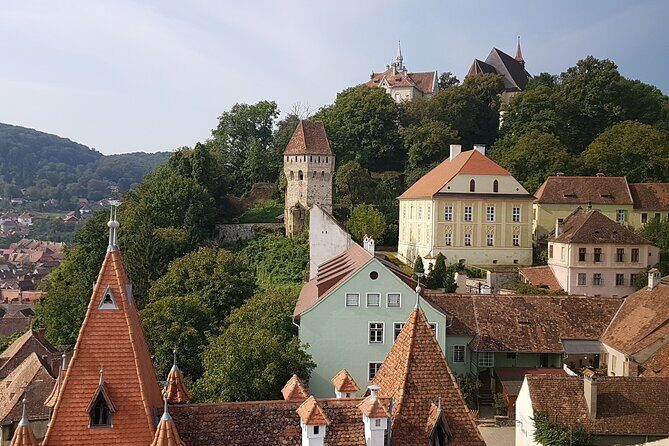
- Day 9: Sighișoara’s medieval citadel and fortified churches in Biertan
- Day 10: Brașov’s medieval center, Bran’s Dracula myth, and Pelișor’s royal grandeur
- Should you book this Romania private tour?
Key points before you go
- Private car for your group only, so you’re not waiting on other schedules
- English-speaking guide/driver throughout, which helps a lot at complex sites
- Big Romania variety in one trip, from the Palace of Parliament to Bukovina monasteries
- Romania’s nature and roads are built in, including the Transfăgărășan timing window
- Dracula-related stops are factual, not just themed, like Bran plus the Bram Stoker connection
- Most tickets are listed on the itinerary, but you’ll still want to confirm what’s covered for you
How this private Romania style tour actually feels
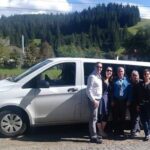
This isn’t the kind of tour where you hop out for a photo and sprint back in. You get a private vehicle for your group only, plus a licensed English guide/driver who stays with you through the route. That means you can ask questions in real time, slow down when something grabs you, and keep moving when the day gets full.
The pace is busy in a good way. You’ll cover major highlights in cities like Bucharest and Brașov, then switch gears to castles, fortresses, and religious art across Transylvania and Bukovina. The private setup helps you handle the practical stuff too, like timing and route changes.
You should still expect long sightseeing stretches. Romania’s distances between regions are real, and the itinerary is designed to pack in a lot of different “Romania moods.”
You can also read our reviews of more private tours in Bucharest
Price and value: what you’re paying for
At $3,472.81 per person for 10 days, the price is clearly not “budget backpacking.” You’re paying for: a private car, a private guide/driver, and the time savings that come from not coordinating buses, transfers, and separate tickets.
If you split the cost with friends or family, the value gets better fast, especially because it’s your group only. The tour also offers flexibility for itinerary changes even after it starts, which can matter when weather or opening hours get weird.
One more cost detail to watch: the tour description notes that entrance fees are as per the itinerary. Some stops are marked as included or free, while others list tickets as included on the day. Before you go, confirm exactly what is covered for your dates, especially for the big-ticket sites like castles and major museums.
Day 1 in Bucharest: Revolution, massive scale, and old-town texture
Your first day is a strong Bucharest introduction that mixes power, culture, and memory.
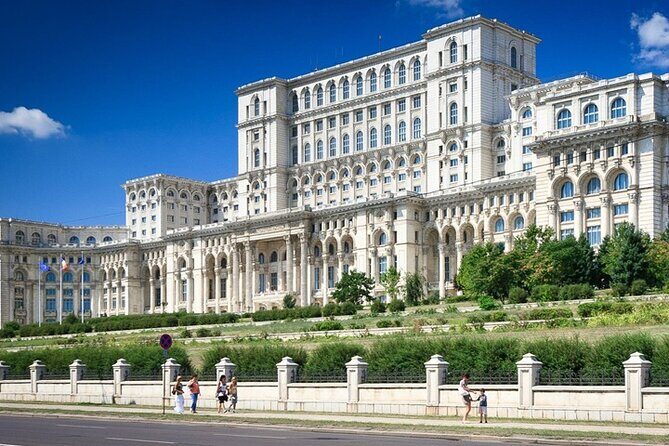
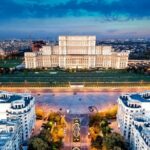
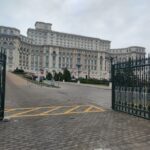
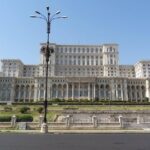
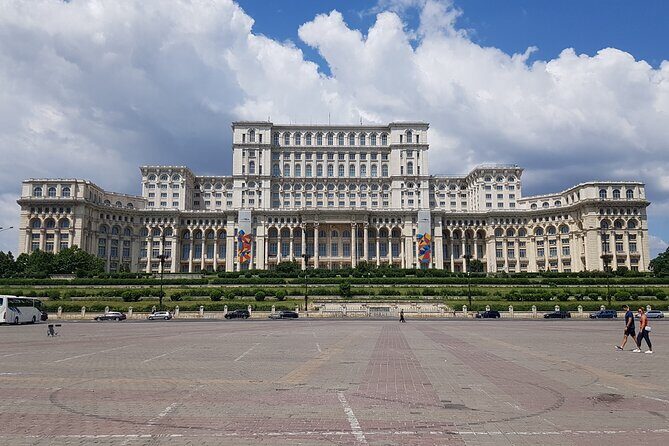
You start with the Palace of Parliament (People’s House). Even if you normally skip monuments, this one has a different impact because of its sheer scale and the story behind it. You’ll also get a lesson in why the building is so controversial—an architectural monument to totalitarian excess. The tour notes that close-up selfies can be hard, which tells you something important: plan for views, not just close photos.
Next is the National Village Museum Dimitrie Gusti, a place designed to show older Romanian life in a sustainable, community-centered way. It’s the kind of museum where you can see how daily living connected to the land, rather than just reading artifacts behind glass.
After that, you’ll stop at the Romanian Athenaeum, a major symbol of Bucharest culture and a fixture on Calea Victoriei. It’s also part of the European Heritage line-up, so it’s the sort of site that rewards even a short visit with context.
Then comes Revolution Square, tied to the 1989 upheaval and Ceausescu’s removal from power. This is where Bucharest stops feeling like a postcard capital and starts feeling like a lived-in place with consequences.
Finally, you’ll get time in Old Town, including Hanul lui Manuc, the fortified inn built around 1806 by Manuc Bei. I like this kind of ending because it gives you a human-scale Bucharest—cafés, streets, and old economic life—after the heavy political sites.
Day 2: Curtea de Argeș, Vlad’s cliff fortress, and the Transfăgărășan road timing
Day 2 shifts from Bucharest toward the Carpathians, and the theme becomes rulers, fortresses, and dramatic terrain.
At Curtea de Argeș Monastery, you’ll see royal tombs and the remnants of a princely court. The site is described as unique for its royal burials and tied to the 13th-century Royal Church, plus monastery ruins and stories that have a sad edge to them.
Then you head to Poienari Castle, high on a cliff above the Argeș River. It’s a fortress ruin with real fortress energy: origins with early Wallachian rulers, later repairs under Vlad-related leadership, and a 1462 moment involving Turks. The tour explicitly frames it as linked to Vlad escaping via a secret passage through the mountains—whether you look at it as legend or local history, the location is the point. It forces you to understand why castles were built where they could control views and routes.
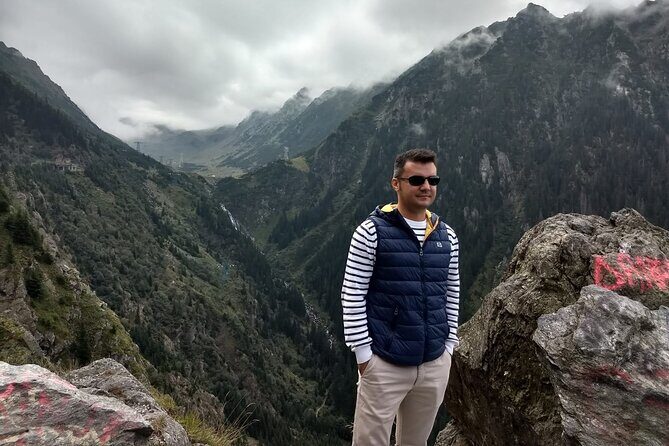
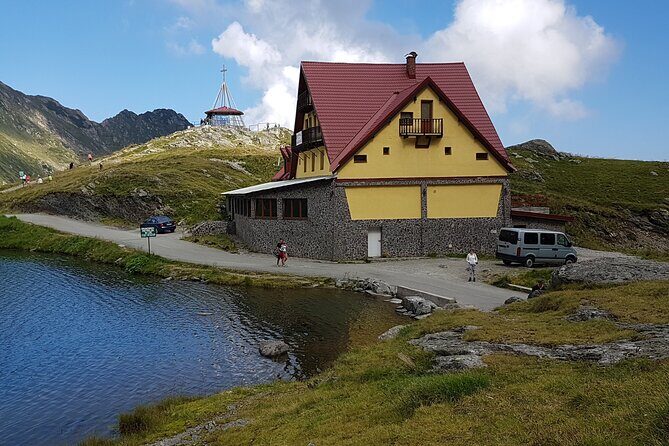
After that, the itinerary includes Transfăgărășan Highway. Here’s the practical truth: it’s fully open only from June to October. The highest point is 2042 meters, and the route includes the tunnel linking northern and southern sides at Balea Lake. If you’re traveling outside that window, you’ll likely need to expect substitutions or alternate stops, so match your travel dates to the road’s season.
The day rounds out with time in Piata Mare (Big Square) and a city-tour style overview tied to Sibiu—including the Evangelical Cathedral and the old-city center. Even if you only get a slice of Sibiu, this is a good way to understand why the city stands out culturally.
Day 3: Hunedoara castles and the Dacians’ strategic masterpiece
Day 3 is built for people who like their history with architecture and geography.
You start at Corvin Castle (Corvin/Hunyadi/Hunedoara), described as one of the largest castles in Europe and known as one of Romania’s Seven Wonders. If you love Gothic-Renaissance details, this is the day to bring your camera and your patience.
Next is Densuș Church, presented as the oldest stone church in Romania. The key story here is layered building materials and time: the present form is 13th-century, but it sits on a site that used to be a Roman temple, with even Dacian fortress materials mentioned as part of the construction. Inside, the murals showing Jesus in Romanian traditional clothing are a standout detail, with references to artists and later additions.
Then you reach Sarmizegetusa Regia, the Dacian capital and key religious and political center before the Roman wars. It’s described as being erected on top of a 1200 m mountain and tied to a defensive system across six citadels in the Orăștie Mountains. This is one of those places where the ground plan matters. The value is that you see how the Dacians used elevation, sightlines, and structured defense rather than relying only on walls.
The drawback on a day like this is energy. When you stack castle, church art, and an archaeological fortress, you need good walking shoes and a willingness to take breaks.
Day 4 in Transylvania: salt air, garden time, and a wooden church showpiece
Day 4 is a shift from stone power to something gentler.
You visit Turda Salt Mine, described as one of the most interesting places in Transylvania. The tour highlights the purifying saline air and even notes possible benefits for respiratory issues like allergies or asthma. I’d frame it practically: it’s a fun, atmospheric break from sightseeing streets, and the “lungs will be grateful” angle is part of why people remember it.
Then there’s a stop at Gradina Botanica Alexandru Borza paired with time in Cluj-Napoca old city center. The guide-style overview is about the mix of Baroque, Renaissance, and Gothic architecture, with buildings as old as the 17th century mentioned. This pairing works well because you get both nature/green space and the city’s architectural variety.
Finally, you’ll see Surdesti Wooden Church, known for craftsmanship and size. The tour calls out the wooden church towers at 54 meters, and notes it was built in 1721. Even if you don’t count yourself a “wood architecture person,” this kind of build is impressive because it’s basically engineering you can see.
Day 5: Maramureș fun with the Merry Cemetery, then a communist history reality check
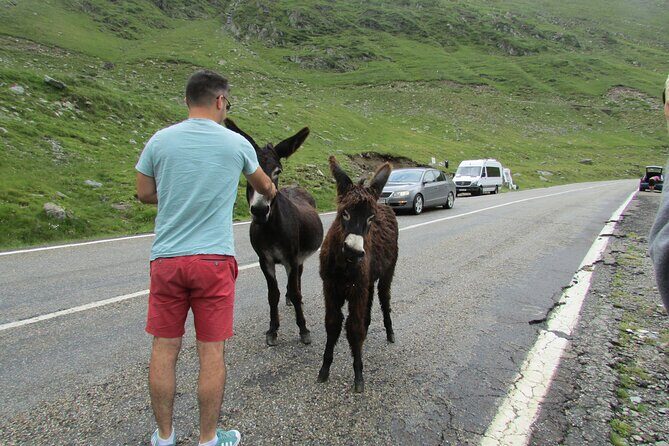
Maramureș brings the offbeat and the serious side in one day.
You stop at Sapânta’s Merry Cemetery, famous for colorful crosses and tombstones with humorous poems about the deceased. The tour frames it as a tradition where Dacians treated funerals with laughter and babies with tears in a symbolic way. Whether you take that as cultural myth or as a guiding attitude, the cemetery’s message is clear: grief doesn’t have to be only heavy.
Later you visit the Memorial of the Victims of Communism and of the Resistance. This is the day’s reality anchor. The tour notes the museum helps you understand how damaging totalitarian rule was and the pain and suffering in a short time.
I like that this day doesn’t only chase pretty landscapes. It gives you emotional variety so your Romania story feels complete rather than staged.
Day 6: Barsana and Tihuța Pass, plus painted houses in Ciocănești
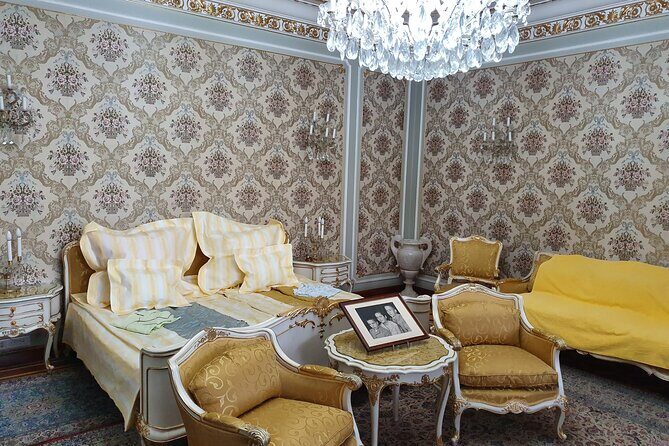
This day is all about wooden churches, mountain atmosphere, and Bukovina-style cultural details.
At Barsana Monastery, the focus is on it being among Romania’s tallest wooden churches, with a 57 m height mentioned. The site is described in almost fairy-tale terms, including a spiritual connection feeling as you walk through the courtyard and grass barefoot. Expect that the experience is as much about atmosphere as it is about architecture.
Then you head to Tihuța Pass, described as connecting Bistrița with Vatra Dornei in the Bârgău Mountains. The big hook is the Dracula tie-in: Bram Stoker’s novel mentions the Borgo Pass, and the tour explains that Stoker likely used a map name rather than visiting himself. You also pass or visit Hotel Castel Dracula, at 1,116 m, built in 1976 and renamed to match the Dracula association.
Next is Ciocănești, known for its merry painted houses decorated with traditional motifs. The tour places it along the Golden Bistrița River, surrounded by pine spruce forests and meadows, and notes it’s about 22 km from Vatra Dornei. This is the kind of stop that makes your photos look like you’re cheating—they’re just that colorful.
Day 7: The Bukovina painted monasteries called Voroneț blue
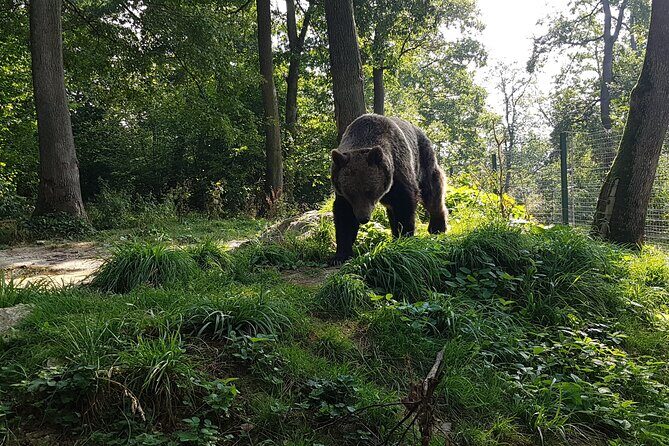
If you’re choosing one “make-the-trip-worth-it” day, this is it. Day 7 is about the famed painted monasteries of Bukovina.
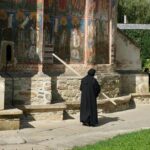
You start with Voroneț Monastery, built by Stephen the Great in 1488 over “3 months and 3 weeks,” tied to a victory at the Battle of Vaslui. The tour’s standout fact is the intense blue fresco shade called Voroneț blue, and it compares the monastery to the Sistine Chapel of the East. This is a real visual reason to book a Romania trip focused on art, not just castles.
Next is Humor Monastery, described as a fortified monastery built around 500 years ago. It also includes a backstory: an earlier church around 1400 was destroyed, and the monastery endured afterward. The point is how religion and defense were blended in response to history.
Then you’ll visit Sucevita Monastery, also described as UNESCO-listed and part of the broader painted-monastery heritage. The tour emphasizes biblical scenes and icons painted on the walls, and notes it’s like an open book once inside.
Finally, you go to Moldovița Monastery, built in 1532 and described as having murals both inside and outside the fortified church. It’s said to combine Byzantine, Gothic, and Moldavian styles. If you like when art carries meaning, not just decoration, this is your late-day payoff.
Day 8: Lucia Condrea’s egg museum and the Bicaz Gorges walk
Day 8 is wonderfully odd in the best way, then it switches to nature.
You visit the International Egg Museum Lucia Condrea. The tour says it opened in 1993, has over 5,500 exhibits, and the displays are organized in 56 display cases across two levels. If you’re the type who enjoys small, strange museums, this is a highlight that makes the whole trip feel personal and local rather than only major-ticket sightseeing.
Next is the Popa Museum (Nicolae Popa). The tour describes it as a museum founded in the 1970s by the sculptor in his own house, and it includes a dramatic backstory: he was wounded in WWII, imprisoned by communists for opposing the regime, and he returned to build an artistic legacy with hard work and commitment. This stop adds a human face to Romania’s 20th-century pressures.
Then you finish with a walk through Bicaz Gorges. The focus is on the river cutting through mountains and virgin forests. The practical note here is simple: wear shoes you can trust on uneven paths, because gorges don’t do flat.
Day 9: Sighișoara’s medieval citadel and fortified churches in Biertan
Day 9 brings you back to Transylvanian medieval town life.
In Sighișoara, you visit the Clock Tower and Arms museum. The tour frames Sighișoara as a living medieval fortress since it has stayed inhabited for over 700 years, and it mentions the citadel was built in 1280. It also ties the town to Dracula in an important correction: the tour notes this is Vlad the Impaler’s place of birth.
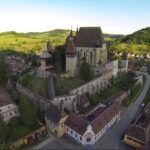
Then you visit Biertan Fortified Church, a UNESCO site linked to early Transylvanian Saxon settlement. The tour says the church stands on a hillock in the middle of town, surrounded by three defensive walls and seven bastions, and that its setting is part of what makes it special.
This is another “stone and strategy” day, but with a calmer pace than full archaeology. You get time to appreciate town layout, then key architecture.
Day 10: Brașov’s medieval center, Bran’s Dracula myth, and Pelișor’s royal grandeur
Your final day takes you to the heart of the Carpathian foothills.
You start in Brașov with a walking tour of the Old Town, including Black Church (Biserica Neagră), the Old Town square, and medieval city walls. There’s also free time in cafés, which is a smart move at the end of a full circuit. You’ll need that breathing space.
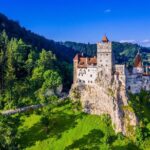
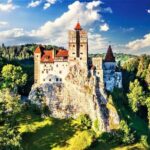
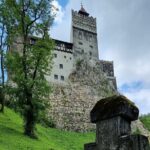
Then it’s Bran Castle, presented as always between myth and history. The tour notes why people connect it to Dracula’s fictional home: it matches closely enough that Bram Stoker’s descriptions get attributed to it. It also goes beyond pure theme and lists the kind of local foods you can try outside the castle area: handmade cheeses, pálinka (plum and pear brandy), and traditionally-produced ham and sausages. This matters because the best Dracula tourism includes local food, not just photo spots.
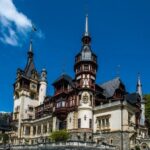
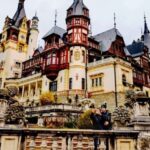
Finally you close with Pelișor / Peliș Castle—the description clearly points to Peleș Castle, the royal family’s summer residence. The tour calls it one of Romania and Europe’s important tourist attractions and suggests you’ll soon understand why people come just for this sight.
If your feet are tired by day 10, this is still worth it because it’s a “slow down and look” finale rather than another fortress scramble.
Should you book this Romania private tour?
I’d book this tour if you want a guided, private cross-country route that covers major Romanian identity themes: royal and revolutionary stories, Dacian roots, Transylvanian Saxon medieval life, and Bukovina’s painted monasteries. It’s also a good fit if you like your travel to include both famous places and oddly specific Romanian stops like the Lucia Condrea egg museum.
I would think twice if you’re traveling with very small kids or you hate long transit days. This itinerary is full, and 10 days means you’ll be moving often, even with the private car helping it feel smoother.
If you’re flexible, bring walking shoes, and confirm what entrance fees are included for your dates, this is one of those trips where you come home with a clearer picture of Romania—and not just a list of landmarks.