REVIEW · BUCHAREST
Private Bucharest: History & Food with Traditional Meal
Book on GetYourGuide →Operated by Intrepid Urban Adventures - Europe · Bookable on GetYourGuide
Bucharest explains itself through food. This private 4-hour tour links big political moments and architectural styles to what you eat today, starting at Revolution Square and ending with a full traditional meal.
I especially like how the route gives you a fast, usable city 101 while you walk. You’re not stuck reading plaques; you get stories about Ottoman, Austro-Hungarian, Russian, and Balkan flavors—and why they show up on Romanian tables.
One small thing to consider: the food focus is mostly on the set tastings and the three-course meal, so if you expect lots of extra snack stops along the way, you may find it more structured than you hoped.
In This Review
- Key Things You’ll Notice on This Bucharest Tour
- Where the Tour Starts: Carol I and the Political Heart
- Revolution Square to Victory Street: How History Shapes What You See
- Old Town Crossroads: Where Ottoman, Russian, and Austro-Hungarian Flavors Collide
- A Quick Reality Check: Looking at the People’s Palace Without the Spin
- The Traditional Meal at a Bucharest Hanu: What the End Really Feels Like
- Carbon Neutral Touring and the Human Pace
- Price and Value: Is $140 Worth It for 4 Hours?
- Who This Tour Fits Best in Your Trip
- Final Call: Should You Book This Bucharest History & Food Tour?
- FAQ
- How long is the Bucharest Private History & Food tour?
- What is the price per person?
- Is this tour private or a shared group?
- Where do we meet?
- What’s included in the meal and drinks?
- What areas and landmarks will we see?
- Is the tour carbon neutral?
- Is the tour suitable for kids?
- Is free cancellation available?
Key Things You’ll Notice on This Bucharest Tour
- Revolution Square to Old Town in one logical loop so you understand the why behind the look
- Architecture with a backstory, from interwar institutions to Ceausescu’s vision
- Food mapped to history (mici, sarmale, borscht/ciorba, schnitzel)
- A proper sit-down meal at a traditional hanu, not just bites on the go
- Guides who can slow down for kids while keeping adults engaged
Where the Tour Starts: Carol I and the Political Heart
Meet at the Equestrian Statue of Carol I in Sector 1. It’s a practical starting point, and it puts you close to the center of the action without making you fight traffic or guess where to begin.
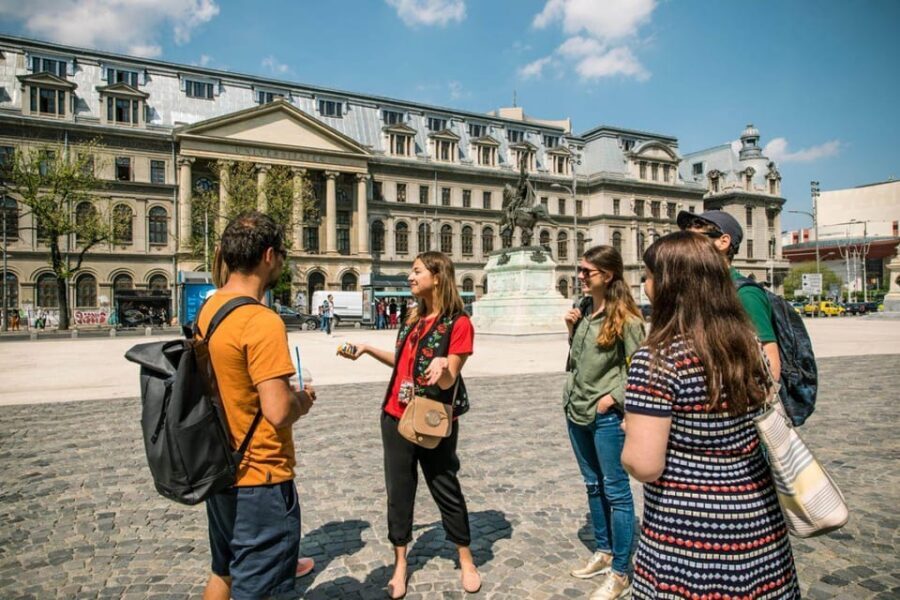
From there, you head straight to Revolution Square—formerly called Palace Square. This is the kind of place where you can feel the weight of 20th-century Romania. In 1989, it’s where Nicolae Ceausescu made a speech to a crowd that turned on him, sparking the revolution. When you know that, the surrounding buildings stop being just “pretty facades.” They become props in a real drama: royal power, political theater, and then abrupt change.
Around the square you pass major landmarks, including the former Royal Palace, the Athenaeum concert hall, and Athenee Palace. Those names matter here because Bucharest’s food culture didn’t develop in a vacuum. Big political shifts brought foreign influence, new tastes, and new dining habits—then locals adapted them into something unmistakably Romanian.
Before you even get too far, you get a first snack moment: a covrig, a salty daily treat many Romanians grab like a habit. The origin story you’ll hear places its introduction around medieval Habsburg or German merchant influence. That’s a neat reminder: even everyday street foods have long travel histories.
You can also read our reviews of more food & drink experiences in Bucharest

Revolution Square to Victory Street: How History Shapes What You See
After Revolution Square, you walk south along Victory Street. The name points to Romania’s 1871 War of Independence, a victory that helped shape national identity. But the story doesn’t end there—full unification of the three Romanian principalities came later, in 1918. That timing is a big deal for food, because the country’s regions developed their own styles and preferences.
You’ll get a quick “how to read Romania” guide through cuisine geography:
- Moldova leans sweet
- Transylvania tends earthy
- Muntenia often feels spicier
That’s not trivia. It helps you taste with context later when you’re eating dishes at the end of the tour. Instead of thinking, This is good food, you can think, This is regional memory on a plate.
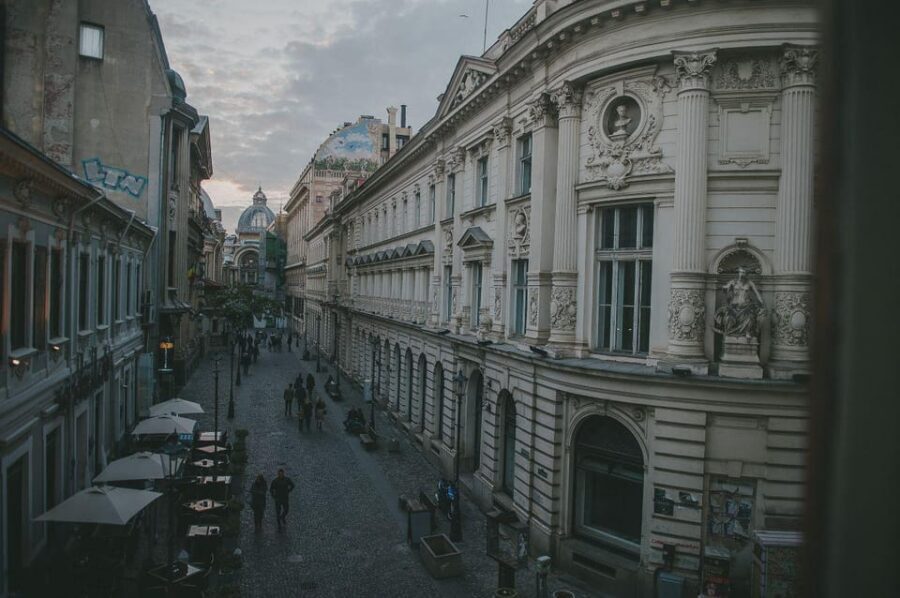
Victory Street also brings you through interwar Bucharest, when the city was actively remaking itself. You’ll see places like the Telephone Palace, the Military Circle, and the former National Theatre. Along the way, your guide ties architecture to power—who had it, who wanted it, and how buildings broadcast status.
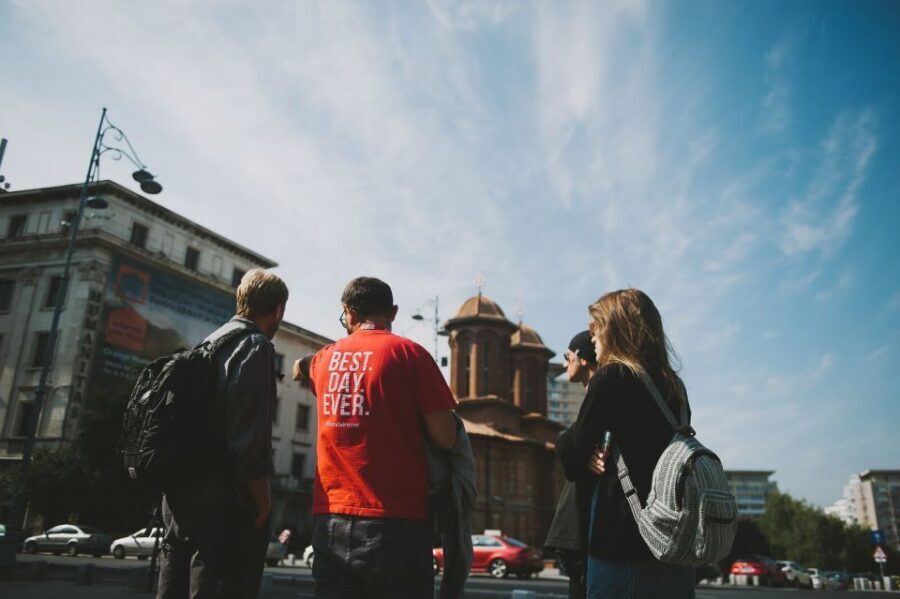
One stop you’ll appreciate is the church of Kretzulescu, one of the best-known churches in Bucharest. It’s a good “reset” moment in the tour, because after political squares and grand institutions, the church gives you a more intimate kind of history. And it’s exactly the sort of scene where locals keep their everyday rhythms, even when governments change.
Old Town Crossroads: Where Ottoman, Russian, and Austro-Hungarian Flavors Collide
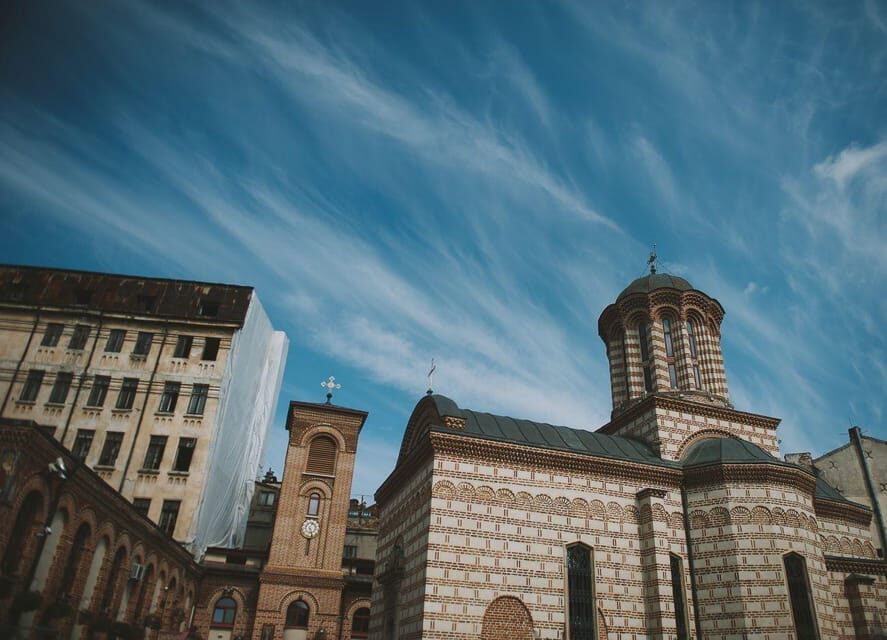
Next comes the part that makes this tour feel like more than a history lesson: the Old Town. This is medieval Bucharest in street form—the crossroads where East and West rubbed shoulders. You’ll hear about Ottoman pashas alongside Transylvanian princes, and about religious life where churches and mosques stood close enough to shape each other’s presence.
This is also where you start noticing why Romanian cuisine doesn’t sit inside one neat box. You’ll connect the dots between architecture, people, and eating habits.
Your guide will point you toward several major flavor families, including:
- mici (skinless sausages with Balkan roots)
- sarmale (Ottoman-style stuffed cabbage leaves)
- borscht and ciorba (Russian and sour-soup traditions)
- schnitzel (Austro-Hungarian influence)
The key here is how the tour teaches you to see food as a map. Different regimes and trading partners didn’t just bring new ingredients; they brought new techniques, service styles, and ideas about what counts as comfort.
As you walk, you’ll also get a sense of the Old Town’s mood, including:
- Princely courts and lavish interiors
- The calm of an Orthodox monastery
- The wooden inn Hanul Lui Manuc, an important old stop for travelers and merchants
If you like architecture details, this section rewards you. If you’re hungry for stories, it rewards you too. The blend is what makes the tour work for a first-time visitor: you leave with both a mental picture and a mental menu.
A Quick Reality Check: Looking at the People’s Palace Without the Spin
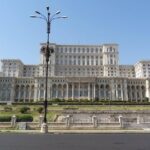
Before the meal, you get a look at the People’s Palace, tied to Ceausescu’s ambition to reshape Bucharest. Even if you don’t memorize every fact, you’ll understand what you’re looking at. It’s the kind of building that feels like a political statement made of concrete—scaled up, stubborn, and impossible to ignore.
You’ll also hear that it’s the second-largest building in the world, with only the Pentagon bigger. Even if you’ve seen photos, standing near it is different. The sheer mass changes your sense of the city around it. And for this tour, that’s the point: you see how one leader’s vision affected the skyline—and you see how Bucharest adapted after.
This stop is also a good bridge between “history you can see” and “food you can taste.” You’ve just walked through layers of influence. Now you’re about to sit down and eat the result.
The Traditional Meal at a Bucharest Hanu: What the End Really Feels Like
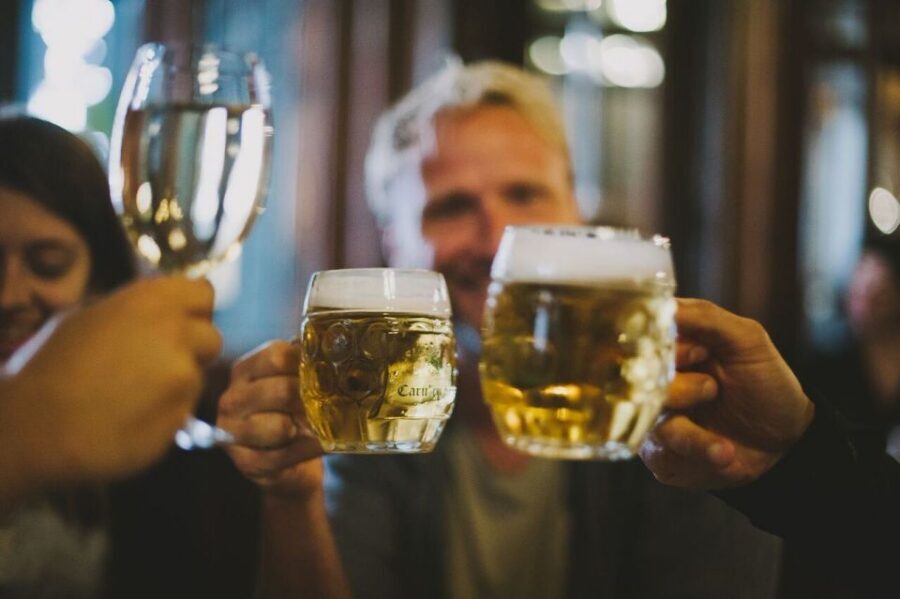
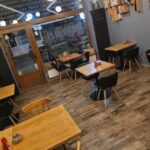
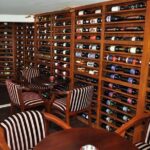
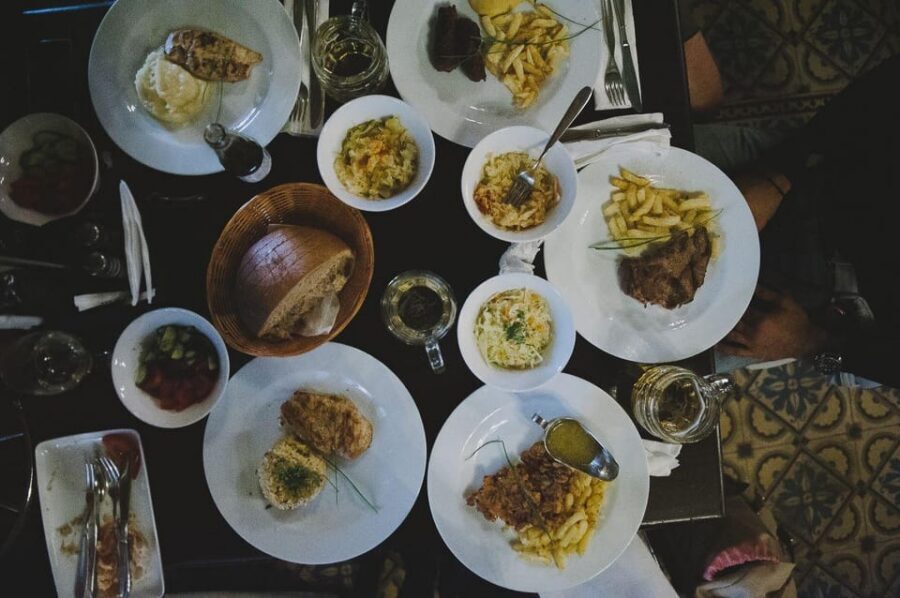
The tour finishes at a traditional hanu (an old-style inn). The meal happens in one of Bucharest’s most charming settings, the kind of restaurant atmosphere that makes you slow down without trying too hard.
You’re looking at a three-course Romanian meal. The tour describes a plate-style experience with local delicacies served across the courses, giving you that real taste tour feeling rather than one single dish that’s “the highlight.”
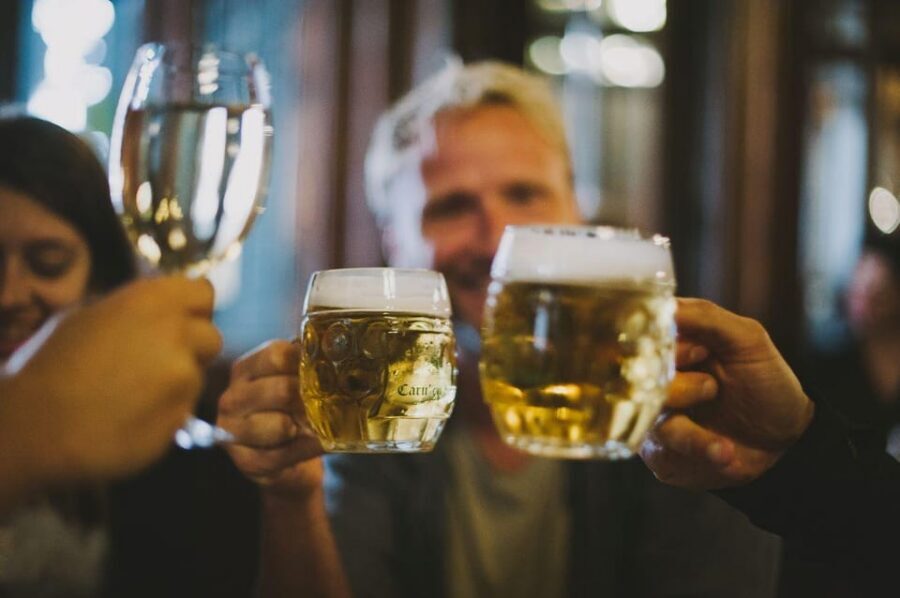
You’ll also get a drink included: house beer or wine or a soft drink. That matters because Romanian meals often work as a rhythm—food first, then a drink that keeps the conversation moving.
The origin story you’ll hear is fun and very local: during the era of the Dacians, it’s said that so much wine was drunk that their leader Burebista banned wine production. The workaround was beer—so you get a nod to both fine Romanian wines and locally brewed beer as part of the palate-setup for your meal.
What I like about ending this way is that the food doesn’t feel like an add-on. By the time you sit down, you’ve already heard about the regions and the foreign influences. So when dishes show up that connect to Ottoman, Russian, or Austro-Hungarian traditions, it lands with context.
One practical note: if you’re the type who wants constant snacking, this isn’t that tour. The structure is: brief snack moments on the walk, then a full meal that does the heavy lifting at the end.
You can also read our reviews of more tours and experiences in Bucharest

Carbon Neutral Touring and the Human Pace
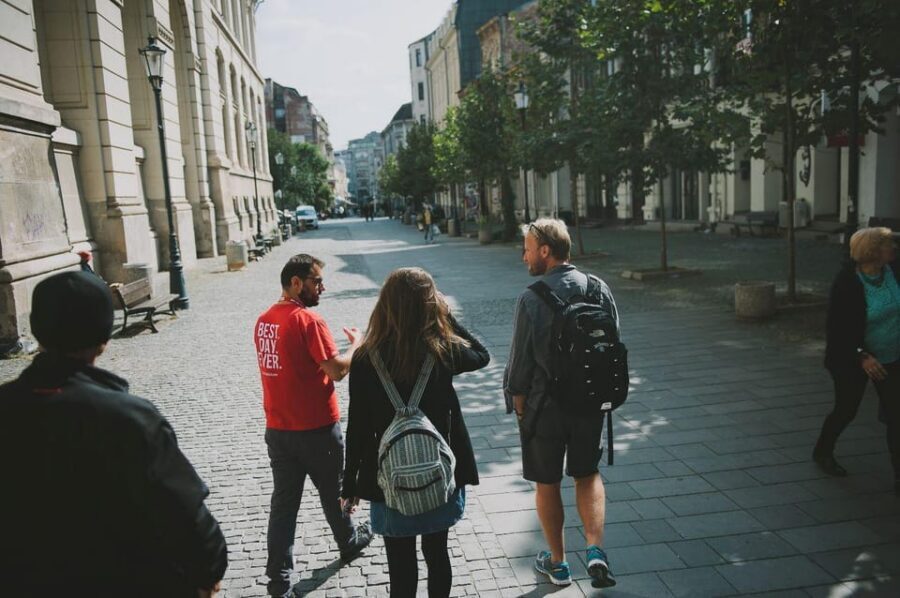
This tour is described as carbon neutral, organized and led by a B Corp certified company committed to using travel as a force for good. You don’t need to “perform eco-virtue” while you’re walking, but it’s good to know the operator is thinking about footprint, not just itineraries.
Pacing-wise, I like that it’s set up for real conversation. The tour is private, so you’re not getting pushed through like cargo. In the field, that usually translates into better questions, more targeted explanations, and more flexibility if a child needs a slower rhythm.
Guide quality is a big part of what keeps the tour from becoming a script. Across guides such as Elaina, Mara, Ioanna, Andra, Monica, Andrei, and Dana, the common thread you’ll want is clear city storytelling and patience—especially if you’re traveling with kids who need time to adjust.
Price and Value: Is $140 Worth It for 4 Hours?
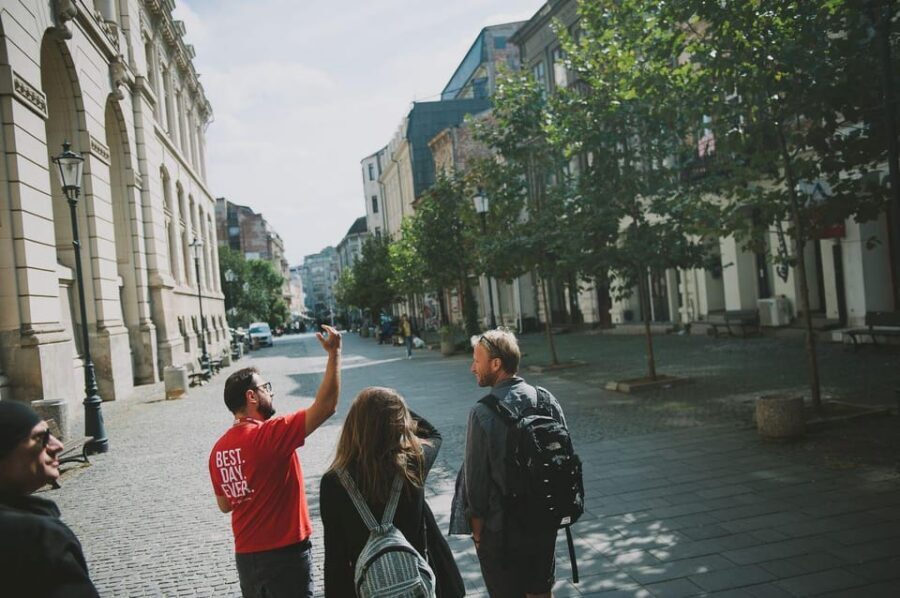
At $140 per person for a 4-hour private experience, the value comes from what’s actually included:
- a local English-speaking guide
- a three-course Romanian meal
- house beer or wine or soft drink
That’s important. Many “food tours” price themselves like a stroll plus a snack. This one prices like a guided city experience with a full restaurant payoff. If you were to pay for a guide and then book a proper meal separately, you’d usually spend at least a similar amount—then you’d lose the historical links that make the meal more meaningful.
You’ll likely feel this is best value if:
- you’re a first-timer who wants orientation fast
- you care about architecture and how politics changes cities
- you want a sit-down meal at the end, without hunting for the right place yourself
Who This Tour Fits Best in Your Trip
This is a smart pick if:
- you want a first-day Bucharest activity that gives you a framework for later exploring
- you like food with context, not just food for food’s sake
- you’re traveling with kids and want a guide who can keep the walk moving at a workable pace
Because it’s a walking tour through central landmarks and Old Town paths, wear comfortable shoes. Dress is listed as casual, which is exactly right for a city day where you’ll be on your feet.
Final Call: Should You Book This Bucharest History & Food Tour?
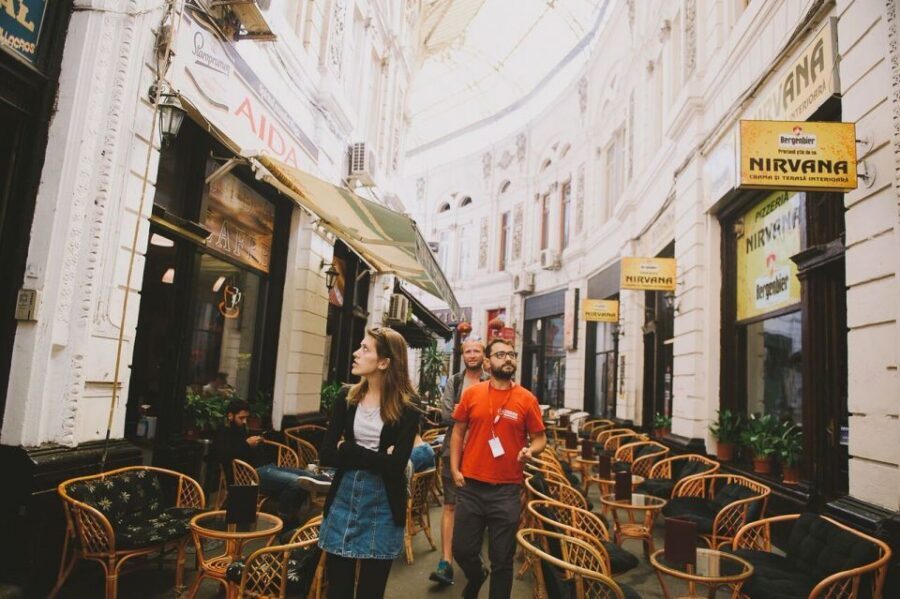
If you’re craving a tour that connects what you see to what you eat, this is one of the cleanest setups in Bucharest. You’ll get Revolution Square, Old Town’s East-West blend, an eye-opening look at the People’s Palace, and then a real three-course traditional meal in a traditional hanu.
I’d book it if you want a guide-led experience that helps you understand Bucharest fast, not just tick off sights. I’d think twice only if your main goal is lots of small, repeated food bites along the route, because the biggest eating moment happens at the end.
FAQ
How long is the Bucharest Private History & Food tour?
The tour lasts 4 hours.
What is the price per person?
The price is $140 per person.
Is this tour private or a shared group?
It’s a private group tour.
Where do we meet?
You meet at the Equestrian Statue of Carol I, Sector 1, Bucharest 030167, Romania.
What’s included in the meal and drinks?
You get a three-course traditional Romanian meal, plus house beer or wine or a soft drink.
What areas and landmarks will we see?
You’ll visit major central sites including Revolution Square, walk along Victory Street, explore Old Town, and see the People’s Palace, then finish at a traditional hanu for your meal.
Is the tour carbon neutral?
Yes. It’s described as a carbon neutral tour, operated by a B Corp certified company committed to using travel as a force for good.
Is the tour suitable for kids?
It’s listed as child-friendly, and children under 6 can join free of charge (you should inform the supplier if you’re bringing a child under 6).
Is free cancellation available?
Yes. You can cancel up to 24 hours in advance for a full refund.