Romania by road, guided by stories and craft. This private 8-day route is built around that simple idea: you cover big distances in comfort, then hop out for real-time history, from medieval tombs to mountain viewpoints, with Nicolas your English-speaking guide in the driver’s seat of the day.
I love the way the trip mixes big icons with hands-on details. Salina Turda treats you to salt-air fresh breathing plus Roman-era traces, while wooden church craftsmanship in Maramures turns architecture into something you can almost hear in the silence of the forest.
One thing to plan for: the schedule is heavy on driving, so expect long road stretches and keep an eye on budgeting for stops with entrance fees not included. If you’re sensitive to travel days, you’ll want to pack snacks and keep your energy high for the longer stretches.
Key things you’ll like on this private Romania tour
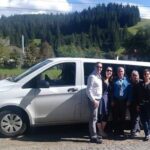
- A private car + a real guide in the van: Nicolas stays with you all day and keeps the trip moving at human speed.
- Salina Turda and its salt-air effect: a “lungs first” stop, tied to mines from Roman times and medieval machinery.
- Maramures wooden churches with serious height: Surdesti and Barsana bring towering scale and old-world build methods.
- Bucovina’s painted monasteries: Voroneț, Humor, Sucevita, and Moldovița add visual wow that’s easy to recognize in person.
- Scenic road breaks: Transfăgărășan (seasonal) plus Bicaz Gorges and Lacul Roșu break up the history days with views.
- A Romania story that includes communism: the Memorial Museum gives context before you reach the lighter legends.
In This Review
- From Bucharest pickup to Curtea de Argeș: Wallachia in one long drive day
- Salina Turda salt mines and wooden church scale in Transylvania
- Maramures: Merry cemetery humor, communism context, and sky-high wooden monasteries
- Bucovina painted monasteries: Voroneț blue and fortified church murals
- Bicaz Gorges and Lacul Roșu: when the road turns into the attraction
- Sighisoara and Brașov squares: medieval Saxon life with a modern-day pulse
- Bran and Peles finish: Dracula legend meets royal architecture in Sinaia
- Price and logistics: what the $2,825.81 private tour covers (and what it doesn’t)
- Why this tour feels better with Nicolas and a punctual private guide
- Who should book this private Romania route from Bucharest
- Should you book this 8-day private Romania tour?
- FAQ
- What’s included in the price for this private Romania tour?
- Are pickup and mobile tickets included?
- Are my meals and accommodation included?
- Do I pay entrance fees separately?
- Is this tour private or group-based?
- What if I need to cancel close to the start date?
From Bucharest pickup to Curtea de Argeș: Wallachia in one long drive day
You start with the kind of convenience that makes this tour worth it: pickup is offered, and you’re in a private car for your group the whole time. That matters in Romania, where distances add up fast and schedules can get disrupted. Here, the car is your buffer, so you spend energy sightseeing instead of negotiating.
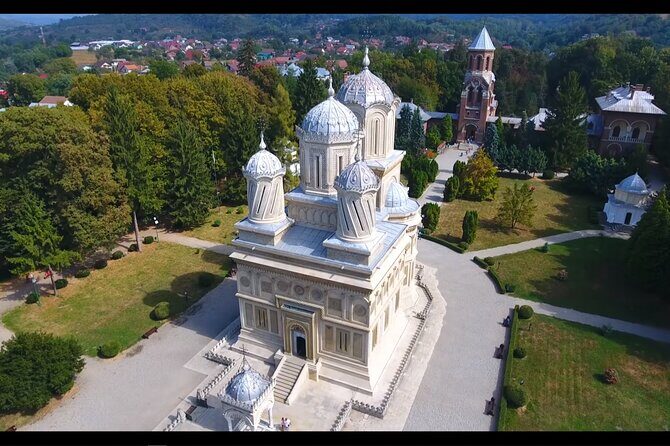
Day 1 leans into Wallachia’s royal layer. Curtea de Argeș Monastery is the first stop, with royal tombs and the 13th-century Royal Church. You’ll also see ruins tied to the Wallachian princely court. Even if you’re not a history nerd, this is the kind of place where you quickly understand why rulers wanted stone near power centers.
Then comes Poienari Castle, high above the Arges River. The big story here is the fortress on a cliff and Vlad’s connection to escape during the 1462 Turkish attack, using a secret passage through the mountains. The ruins are dramatic even from a distance, but the climb perspective is what sticks with you: this is defense as geography.
After that, the day shifts toward Transylvania’s Saxon imprint with Piata Mare (Big Square). It’s tied to Sibiu’s old city atmosphere, including stops you’ll recognize as anchors: Evangelical Cathedral and the Old City Center. It’s a good move because it changes the visual texture of the day from Wallachian stone and cliffs to a more civic medieval feel.
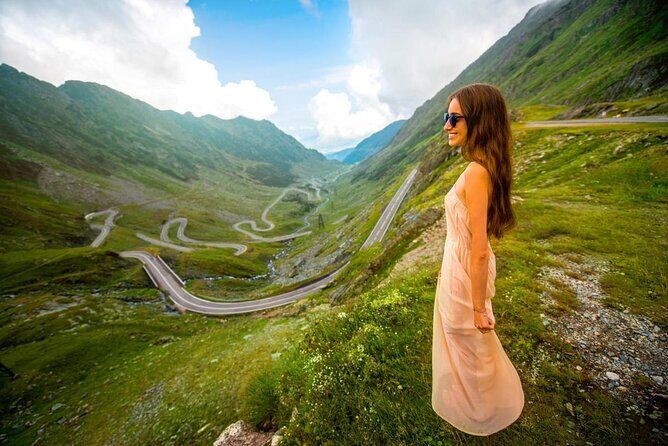
Finally, you hit the Transfăgărășan Highway. This is the “road trip postcard” moment: over 150 kilometers long, highest point at 2,042 meters, and a tunnel linking sides at Lake Balea (Balea Lac). One important practical note: the road is fully open only June to October. If your dates fall outside that window, you’ll want to confirm what the driver plans instead.
What I like most on this day is that it doesn’t treat Romania as a single theme. You get royal churches, fortress ruins, a city square, then a cinematic highway.
Possible drawback: with so many stops clustered into driving-heavy days, some visits are short (for example, 30 minutes here). If you’re the type who wants to linger inside buildings for long periods, you’ll need to balance curiosity with the pace.
Salina Turda salt mines and wooden church scale in Transylvania

Day 2 is a smart reset: it pairs a science-meets-culture stop with craft you can see at a glance.
Salina Turda is first, and it’s one of those places where the setting changes how your body feels. The saline air is described as purifying and helpful for respiratory issues such as allergies or asthma. That’s a strong reason to take this seriously, even if you’re not chasing the medical angle. You’ll also connect it to real heritage: salt mining here goes back thousands of years, with Roman traces and medieval salt exploitation machinery.
You’ll see named mines such as Iosif, Terezia, and Rudolf. You’ll also spot unique tools and features listed as distinct in Europe, including the crivac (or gepel), the salt mill, an altar carved into the salt wall, and the Stairway of the Rich with its intricate woodwork. For me, the value is that you’re not just looking at a room underground. You’re seeing how a resource shaped technology and labor.
Next is Gradina Botanica Alexandru Borza. It’s not just plants as decoration. In the broader Cluj context included here, you get a quick pass through Transylvania’s city character with old buildings and architectural styles referenced as Baroque, Renaissance, and Gothic. If you like to understand a place by its buildings, this short stop helps you get your bearings before you move deeper into rural heritage.
Then the day ends with Surdesti Wooden Church. This is where the tour earns its “Romania by road” identity. Wooden churches can look simple on a map, but scale changes everything. The Surdesti church is described as having towers measuring an impressive 54 meters, with the build dating to 1721. The idea of a 72-meter high wooden construction built centuries ago is hard to picture until you’re staring up at it.
What you’ll likely enjoy is the contrast: salt-air science aboveground comfort, then the quieter vertical focus of wood and craftsmanship.
If you’re prone to motion sickness, note that the day is still part of a long-driving itinerary. The upside is that the stops are spaced enough to make the day feel varied, not repetitive.
You can also read our reviews of more private tours in Bucharest
Maramures: Merry cemetery humor, communism context, and sky-high wooden monasteries
If Romania has a region for emotional whiplash, it’s Maramures. Day 3 and Day 4 are where that shows up, in the best way.
Day 3 starts at the Merry Cemetery in Sapanta. The concept is simple and brilliant: crosses and colorful tombstones with humorous poems about the deceased. Even the background you’re given ties it to Dacian beliefs around funerals and babies being born. This stop works because it breaks the usual “sad cemetery” script and shows how culture can handle death with humor instead of only grief.
Then you shift gears to the Memorial of the Victims of Communism and of the Resistance. This is the place to slow down. The tour framing here is about understanding how damaging totalitarian oppression was, and how much pain and suffering happened quickly. It’s heavy subject matter, but it earns its place in the route. It gives context for why so much of Eastern Europe’s modern story is shaped by what people escaped.
After that, you visit Sapanta-Peri Monastery. This one is described as a wooden church next to Sapanta Village, within a dendrology park, and built in 1391. It also includes a lineage detail: lands donated by Dragos Voda’s nephews, and for centuries it served as a headquarters of the Romanian Diocese of Maramures. If you’re someone who likes learning a place through timelines, this stop gives you more than a photo op.
Day 4 brings Barsana Monastery, noted as one of the tallest wooden churches in Romania at 57 meters. The tone here is spiritual connection as you walk into the courtyard and absorb the scale. Even if you don’t follow the religious message, the architectural effort is the point: build height, wood technique, and the feeling of a whole community committing to a structure meant to last for centuries.
Then you take Tihuța Pass (Borgo Pass). This is not just “a pass.” It’s a crossing between Moldavia and Transylvania through the Bârgău mountains. The road was built first between 1812 and 1817 at the Austro-Hungarian Council of War’s initiative, later paved in 1969 and then asphalted. That timeline matters because it explains why the route feels like a designed corridor, not random roads.
You might hit traffic on this kind of route, including the possibility of being stuck behind trucks, though villages are relatively limited so cruising can still feel acceptable. Build your expectations around that.
Finally, Ciocănești is where the tour gets playful again. It’s famous for being painted like Easter eggs, and it’s described as one of Europe’s most colorful destinations, cited via Lonely Planet. Even if the paint feels like a gimmick to some people, the real value is that it shows how a community uses color as identity and draws visitors through something immediately visible.
Bucovina painted monasteries: Voroneț blue and fortified church murals
Day 5 is a monastery day, but it’s not the repetitive kind. It’s four different visual styles and purposes stacked together, plus one oddball cultural stop that’s hard to forget.
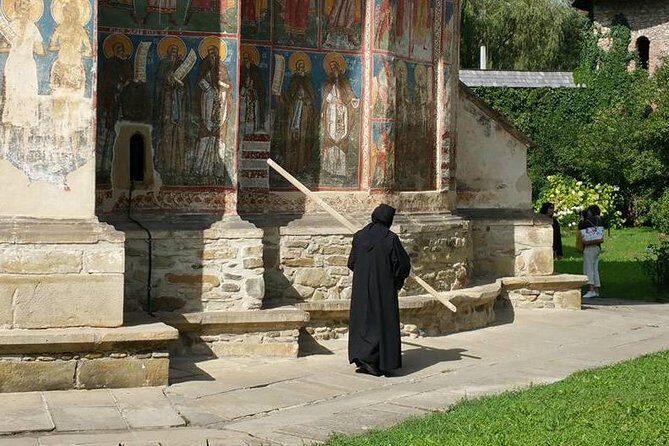
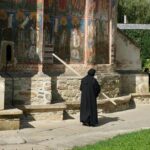
You begin with Manastirea Voroneț in Voroneț village (part of Gura Humorului). This monastery is connected to Stephen the Great and the victory at the Battle of Vaslui. The tour description highlights how quickly it was built over a period of 3 months and 3 weeks in 1488. You also get the defining feature: frescoes with an intense blue shade called Voroneț blue. The nickname you’ll hear is the Sistine Chapel of the East, and it makes sense once you stand there and look at the color on the walls.
Next is Humor Monastery, described as a fortified monastery that survived centuries. It notes that an earlier church around 1400 was destroyed, and the fortified version endured. If you’re learning why churches were built where they were, this fortified clue helps you connect faith with survival.
Then come Sucevita and Moldovița Monasteries, both described as UNESCO World Heritage listed landmarks as part of these painted monasteries in northern Moldavia. Sucevita is framed like an open book: biblical scenes and icons painted on walls give you a visual support for understanding Christianity’s story. Moldovița is older in feel, built in 1532 and noted as an older monastic settlement, with murals on both inside and outside. Styles are referenced as Byzantine, Gothic, and Moldavian.
And then you end with the Lucia Condrea International Egg Museum in Moldovița. It opened in 1993 and contains over 5,500 exhibits housed in 56 display cases across two levels. This is the stop that turns the day from spiritual visuals into handcrafted art you can study close-up. If you like museums that feel specific and a bit eccentric, you’ll probably smile here.
Potential drawback: you’ll do multiple 45-minute monastery blocks back-to-back. It’s enough time to see, understand, and take photos, but it won’t satisfy a “slow art” pace. The upside is that the color and mural themes keep each stop distinct.
Bicaz Gorges and Lacul Roșu: when the road turns into the attraction
Day 6 shifts from painted walls to natural scale. This is one of the best “reset” days in a driving tour because it lets you stand still and let your eyes relax.
Bicaz Gorges is described as a passageway between Romanian provinces of Moldova and Transylvania. The drive runs along an 8-kilometer stretch of ravines with serpentines, rock on one side, and a sheer drop on the other. You’ll also hear about cliff-dwelling birds such as the wallcreeper.
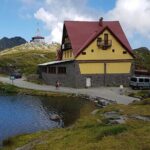
The gorge also includes Lacul Roșu (Red Lake), formed by a landslide in the 19th century and located at 980 meters altitude. You’ll see traditional cabins and hotels around the lake area. Even if you don’t go for a long walk, the road views plus the lake detail are enough to make it feel like a full break from churches and museums.
Afterward, you get another short stop at Lacu Roșu with the formation story. The tour mentions that the timing is debated and points to earthquakes in 1838 and storms or heavy rains in nearby years as possible contributors.
Then the day ends at The Popa Museum in Târpești, Neamț County. It’s described as being founded in the 1970s by sculptor Nicolae Popa, in his own house. This stop carries an emotional backbone: Popa was wounded in World War II, imprisoned by communists for fighting against the regime, and left without personal possessions besides the house. The museum becomes a statement of Romanian values and a lesson in resilience through art. If you like folk art, the naive sculptor angle makes this stop feel personal and human.
Practical tip for this kind of day: wear shoes you trust on uneven ground and keep a light jacket handy. The gorges and passes can feel cooler than the lowlands.
Sighisoara and Brașov squares: medieval Saxon life with a modern-day pulse
Day 7 is medieval city focus. You start with Sighișoara, visiting the Clock Tower and Arms Museum. The route frames Sighisoara Old Town as a living medieval fortress, with the citadel noted as built in 1280 and inhabited for over 700 years, which is rare. You’re also given Dracula’s thread through Vlad the Impaler as linked to the birthplace story.
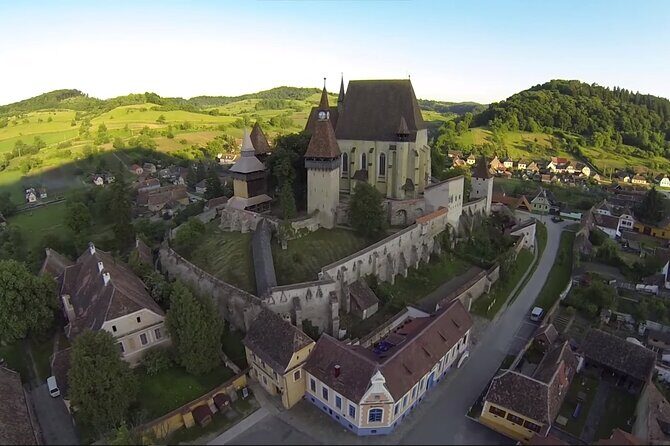
Then you head to Village de Viscri. The big landmarks here are the 12th-century history, the fortified church, and the Mihai Eminescu Trust involvement. Prince Charles’ visits are specifically mentioned as part of how the village reinvented itself, and the tour frames Viscri as one of Transylvania’s must-see attractions now.
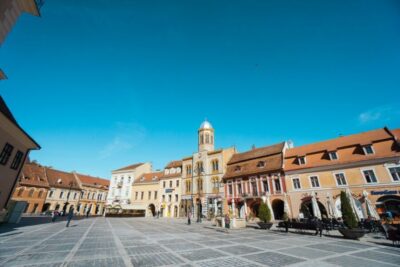
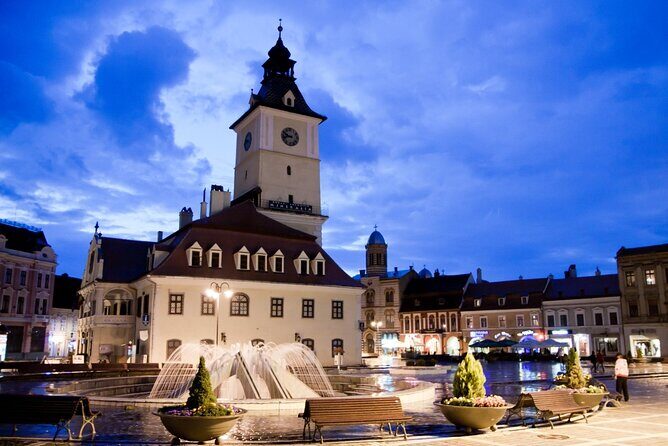
Finally you visit Piața Sfatului in Brașov, historically also called Marktplatz in German, with other names in Hungarian and Romanian listed. The key practical detail here is its market history: it received the right to hold markets in 1520 and has hosted weekly and annual markets since 1364. You can feel the layers when you look around at the surrounding 18th-19th century houses noted as historical monuments.
What you’ll like: these stops are built around squares, towers, and walls. Even with limited time per stop, you’ll leave with recognizable shapes and a cleaner mental map of where you are.
Possible drawback: city days depend on how crowded streets feel. This tour is private, which helps, but it still won’t make narrow historic centers feel like airports.

Bran and Peles finish: Dracula legend meets royal architecture in Sinaia

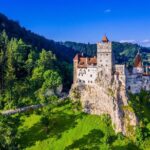
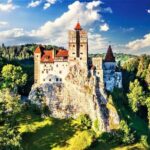
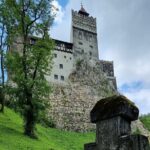
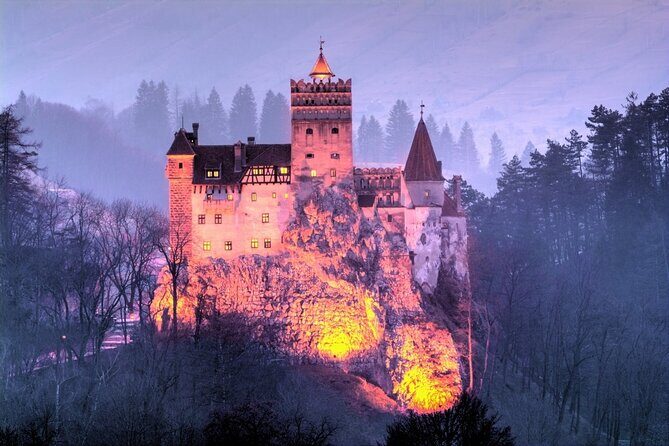
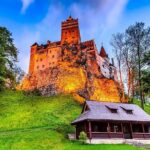
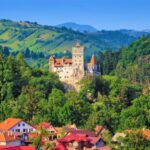
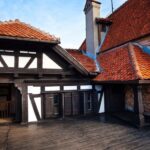
Day 8 is where myth and museum-luxury collide. You begin at Bran Castle, often linked to Dracula. The tour frames Bran as a belief point for why Bram Stoker’s fictional castle resembles it. It’s described as between myth and history, and the stop includes a tasting-like moment outside the castle: handmade cheeses, pálinka (plum and pear brandy), and traditionally produced ham and sausages.
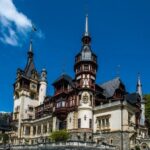
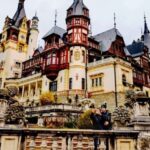
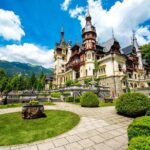
Then you go to Peles Castle. This is the royal summer residence and described as one of Romania and Europe’s key tourist attractions. Expect a lot of people, but the logic is simple: Peles is famous because it looks famous.
You end with Manastirea Sinaia, founded in 1695 by Prince Mihail Cantacuzino and named after Saint Catherine’s Monastery on Mount Sinai in Egypt. The description notes that it’s inhabited by 13 Orthodox monks led by hegumen Macarie Boguș.
What I like about the ending is the range. You start with legend and tasting, move into royal architecture, then finish with a quiet religious site before the trip ends.
Budget note: the tour says entrances are not included as per the itinerary, so castles may require tickets on the day or through your guide’s plan.
Price and logistics: what the $2,825.81 private tour covers (and what it doesn’t)
This is priced at $2,825.81 per person, and for a private, 8-day drive-based tour, the value comes from what’s baked in.
You’re paying for a private car just for your group, plus a private licensed English-speaking guide/driver available throughout. All car expenses are included too, including gasoline, parking, and road tolls. You also get complimentary wireless internet in the car and flexibility to change the daily itinerary even after it starts.
What you should not assume is included: accommodation, meals, and beverages for you are not included, and entrance fees are not included as per the itinerary. That’s a big reason to plan your overall spend beyond the headline price. Also, there are group discounts listed, so if you can travel with friends or family, your per-person cost may make more sense.
One more practical piece: the tour mentions mobile tickets and a private format, which generally helps at ticketed stops by keeping things organized for your group.
If you’re trying to decide whether the price is fair, here’s my test: if you want your own driver, English guidance throughout, and a route that ties together castles, monasteries, and scenic highways without you doing route math all day, this format can feel worth it. If you’re happy taking buses and paying for your own tickets without ongoing help, you might find cheaper options, but you’ll lose the time-saving guidance and the comfort of not constantly coordinating.
Why this tour feels better with Nicolas and a punctual private guide
The strongest praise tied to this experience is the quality of the guide. Nicolas is described as punctual, friendly, and well prepared, with information plus jokes that keep long driving from turning into just commuting. That matters more than it sounds.
On a tour with lots of stops and a lot of road time, your guide is the difference between seeing places and understanding why they matter. Nicolas is also mentioned as recommending where to go and how to experience the sites, which helps you make the most of short visit windows like 30 to 45 minutes.
For you, that likely means faster context at each stop, clearer pacing, and less time wasted asking basic questions. In other words: you spend your energy looking, not figuring out.
Who should book this private Romania route from Bucharest
This is a great fit if you want:
- A private, English-guided road trip across Wallachia, Transylvania, Maramures, and Bucovina
- A mix of medieval fortresses, wooden churches, painted monasteries, and dramatic drives
- The comfort of having a guide/driver who stays with you, plus flexibility to adjust the plan
It may be less ideal if you:
- Want lots of free time in each city or building. Some stops are short, by design.
- Don’t enjoy long driving days. The route is built around covering distance efficiently.
Should you book this 8-day private Romania tour?
If your dream Romania trip includes castles and monasteries plus at least a couple real scenic drives, this private format is a solid choice. The best reason to book is the combination of private transport, an English-speaking guide/driver throughout, and a route that covers very different parts of Romania instead of repeating one theme for eight days.
Before you say yes, do two quick checks: confirm your travel dates for the Transfăgărășan seasonal window (June to October is when it’s fully open), and set aside a realistic budget for entrance fees since they’re not included. If you handle those two points, you’ll likely come away with a Romania map in your head and a smoother travel rhythm than you’d get alone.
FAQ
What’s included in the price for this private Romania tour?
The tour includes a private car (tourism or minibus) for your group, a private licensed English-speaking guide/driver available throughout, accommodation, meals, and entrance fees for the guide, complimentary wireless internet in the car, and all car expenses like gasoline, parking, and road tolls. It also includes hotel recommendations based on your budget.
Are pickup and mobile tickets included?
Pickup is offered, and mobile tickets are included.
Are my meals and accommodation included?
No. Accommodation, meals, and beverages for you are not included.
Do I pay entrance fees separately?
Yes. Entrance fees as per the itinerary are not included.
Is this tour private or group-based?
It’s private. Only your group participates.
What if I need to cancel close to the start date?
You can cancel for free, up to 24 hours in advance for a full refund. If you cancel less than 24 hours before the start time, the amount paid is not refunded.