REVIEW · BUCHAREST
Bucharest: Guided Walking Tour with Romanian Snack
Book on GetYourGuide →Operated by MARA’S TOURS & TRAVEL · Bookable on GetYourGuide
Bucharest history shows up fast on foot. This small-group walk links major landmarks to the stories behind them, from the looming Palace of the Parliament view to the street-side details that explain how Romania changed after 1989. I especially love the guide-led pacing (with time for questions) and the payoff of seeing central neighborhoods you’d miss if you just wing it. One possible drawback: at a $45 price point for 3 hours, it’s best if you want context as you walk, not only photos.
You’ll start at One Sip cafe near Piata Unirii, get oriented with a quick stop, then move through standout churches, historic buildings, and the classic grand boulevards people associate with Bucharest’s Little Paris era. The tour is in English, capped at 10 participants, so you can actually talk with the guide instead of shouting over a crowd. If you’re not into modern history discussion, you may wish the ending focused less on communism and more on architecture.
In This Review
- Key Things That Make This Walking Tour Worth Your Time
- Starting at One Sip: Getting Oriented Before You Hit the Streets
- Piața Unirii and the Palace of the Parliament: Seeing the Scale in Real Life
- Hanu’ lui Manuc: A Historic Pause Before You Go Older
- St. Anthony’s Church and the Feeling of Age in the Old Center
- From Royal Court Ruins to the Medieval Old Town Streets
- Stavropoleos Monastery: A Short Visit With a Different Pace
- Cărturești Carusel: When a City Landmark Becomes a Break
- Calea Victoriei and the Little Paris Effect
- Revolution Square: Communism, 1989, and How Context Changes the City
- Equestrian Statue of Carol I and the Finish Near the Athenaeum
- The Romanian Snack Stop: Real Food Break, Not a Token Bite
- Guide Style and Small Group Value: Why 10 People Feels Different
- Price and Value: Is $45 Worth It?
- Who This Tour Fits Best
- Should You Book This Bucharest Walking Tour?
- FAQ
- How long is the Bucharest guided walking tour?
- How much does the tour cost?
- Where do I meet the guide?
- Is the tour in English?
- How big is the group?
- What food is included?
- Is entry to the Romanian Athenaeum included?
- Is the tour refundable if my plans change?
Key Things That Make This Walking Tour Worth Your Time
- Unirii Square + Parliament views: you get the big first impression without wandering aimlessly.
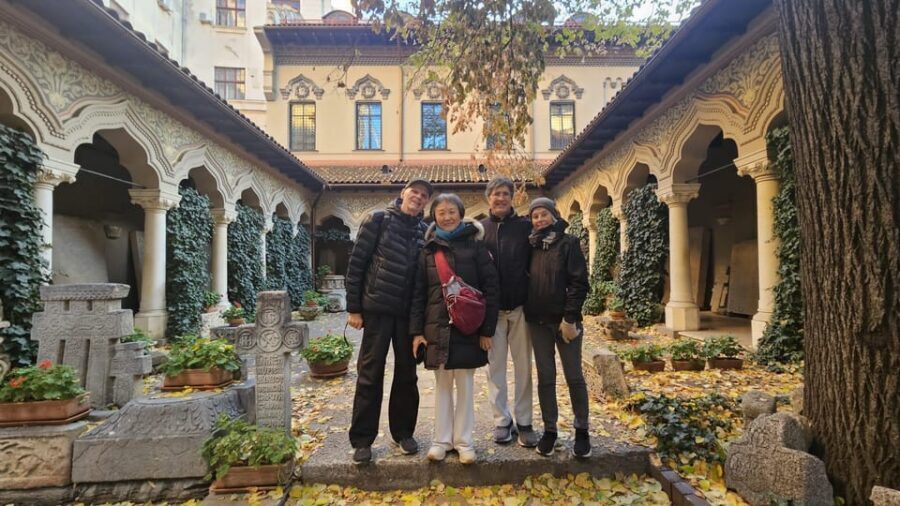
- St. Anthony’s Church and old-town atmosphere: you’ll connect centuries of Bucharest to what you see in front of you.
- Stavropoleos Monastery stop: a calm pause that breaks up the city walking pace.
- Calea Victoriei’s French-style buildings: the Little Paris explanation lands better once you’re standing on the street.
- Revolution Square discussion: you’ll talk through what the communist era meant and what changed after 1989.
- One included Romanian snack: food is part of the experience, not an afterthought.
Starting at One Sip: Getting Oriented Before You Hit the Streets
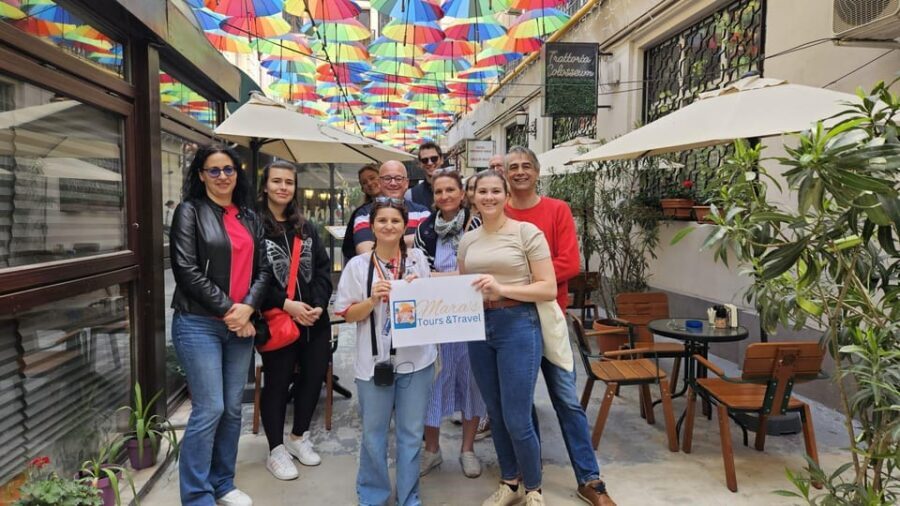
The meeting point is simple: stand in front of One Sip cafe at Unirii Boulevard, with Piata Unirii as the closest metro stop. I like this kind of start because it makes the tour feel grounded in the real city, not a far-off pickup point that forces you to scramble.
Your guide kicks things off with a short orientation stop at One Sip, then you’re walking. That quick start matters in Bucharest because central streets can feel similar at first. In just a few blocks, the guide helps you learn what to look for: building scales, street layouts, and the different historical layers packed into the center.
You can also read our reviews of more walking tours in Bucharest


Piața Unirii and the Palace of the Parliament: Seeing the Scale in Real Life
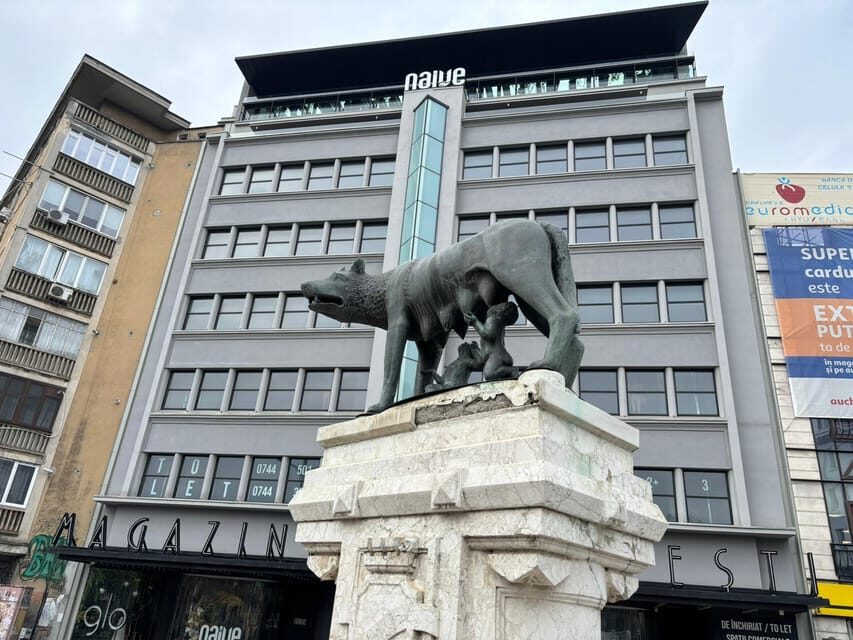
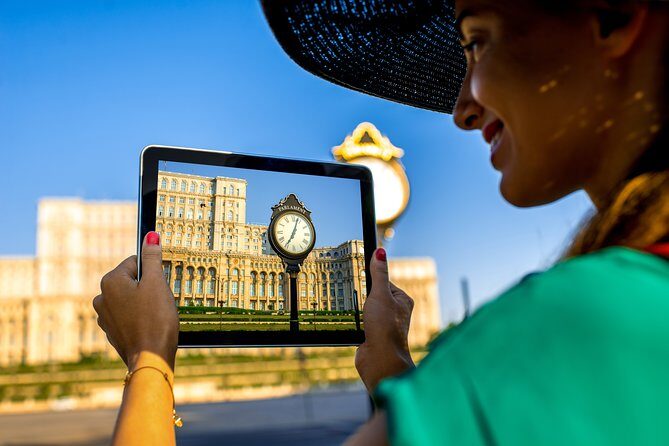
Your first major guided segment is Piața Unirii. The highlight here is the view of the Palace of the Parliament, described as the second-largest building in the world. Even if you’ve seen photos, the scale hits differently when you’re standing there. It’s not just an impressive facade; it’s a reminder of how power and architecture can dominate an entire skyline.
This is also where the tour’s tone sets in: big landmarks get explained in plain terms, then you move on before the information overload takes over. I found that approach helpful. Instead of spending all your time on one stop, you keep momentum and keep learning.
Hanu’ lui Manuc: A Historic Pause Before You Go Older
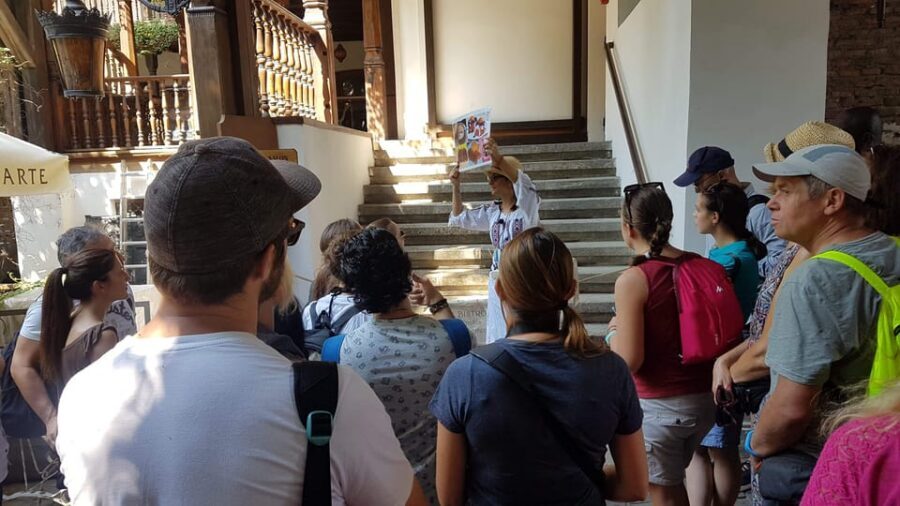
After Piața Unirii, you’ll continue to Hanu’ lui Manuc for another guided look. This stop is one of those “you can’t fully get it from a brochure” places. On a walking tour, that matters. You’re guided to notice what’s there now and how it fits into the broader story of the center.
Practically, it also works as a rhythm reset. The tour is paced in short guided chunks, and these in-between stops keep the walk from feeling like a constant march.
St. Anthony’s Church and the Feeling of Age in the Old Center

Then comes Biserica Sfantul Anton, St. Anthony’s Church, noted as the oldest church in the city. That’s the kind of detail that can turn a photo stop into a real anchor. You’re not just looking at a church; you’re standing in a spot that helps you understand how long Bucharest’s center has been evolving.
One reason I like a stop like this is that churches often act like time machines. Materials, design choices, and even how people move around the area all show you that the city didn’t develop in a straight line. It grew, adapted, and layered eras on top of each other.
From Royal Court Ruins to the Medieval Old Town Streets
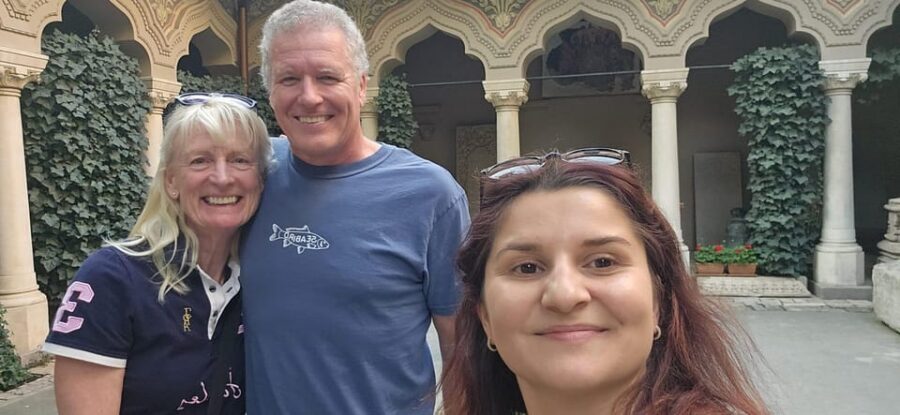
As the route progresses, you pass the ruins of the former Royal Court. This isn’t a destination you can fully appreciate if you only know what’s on a modern map. On foot, though, you can sense why the location mattered and how the surrounding center shifted over time.
The tour then moves you toward the medieval Old Town, which today is transformed into Bucharest’s active downtown streets. I like how the guide ties the “then” and “now” together. It keeps you from treating the past like a museum exhibit. Instead, the old city feels like part of your walk, part of what you’re seeing right now.
You can also read our reviews of more guided tours in Bucharest




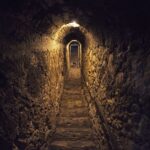
Stavropoleos Monastery: A Short Visit With a Different Pace
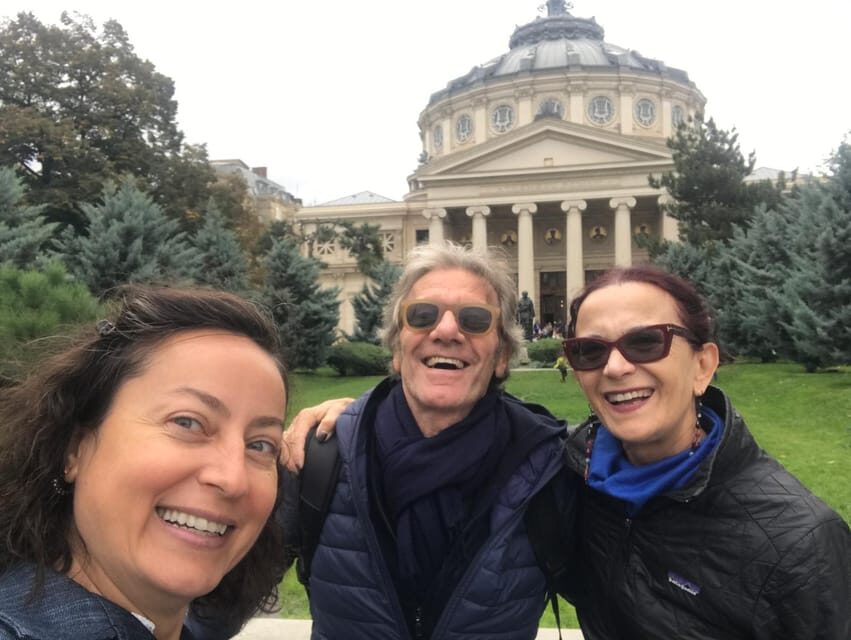
Next is Stavropoleos Monastery. This is a quick visit designed to slow you down for a moment, which is more important than it sounds on a 3-hour walking tour.
Monastery stops tend to do two things well: they give you a visual break from major streets, and they add depth beyond grand boulevards. Even if you only spend a short time here, you’ll leave feeling like you got a taste of Bucharest’s quieter, more contemplative side.
Cărturești Carusel: When a City Landmark Becomes a Break
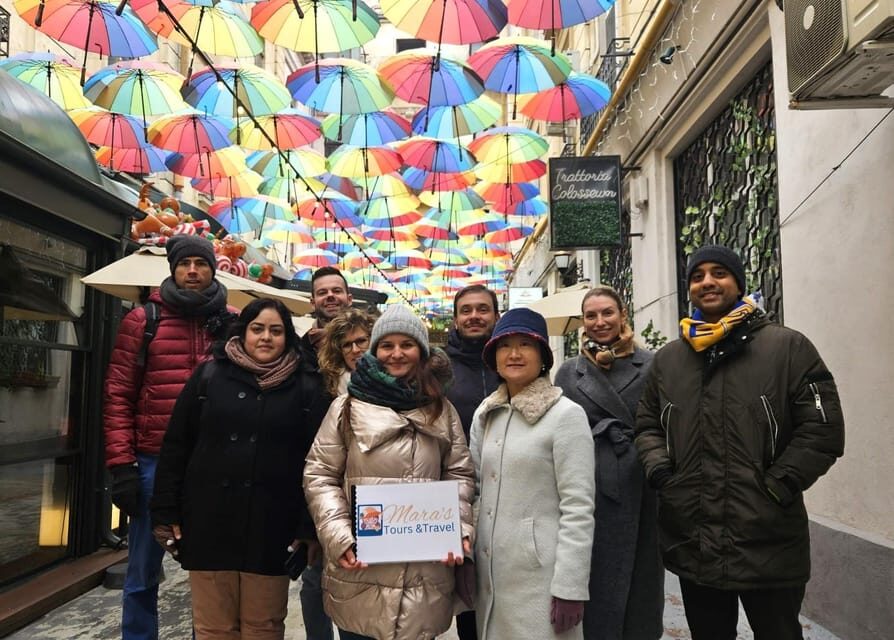
From there you head to Cărturești Carusel for a shorter guided stop. This kind of stop matters because it’s not just another street crossing. It’s a chance to regroup, look closely, and keep your attention refreshed.
If you like taking photos, this is where your camera stops feeling like a chore. Also, a quick landmark pause keeps the tour feeling like a guided experience rather than a checklist.
Calea Victoriei and the Little Paris Effect

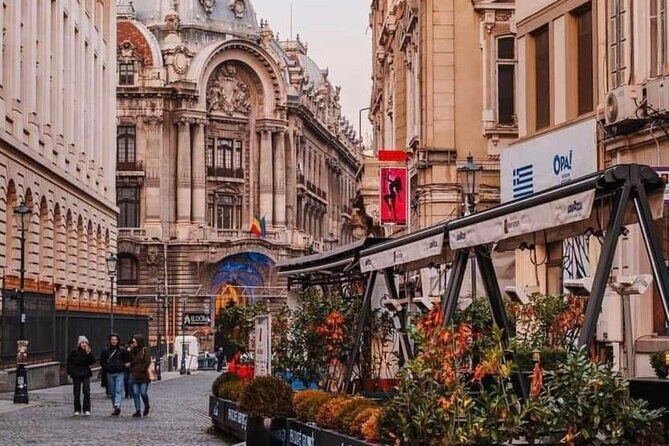
One of the biggest “wow” stretches is Calea Victoriei. The tour gives you a guided walk here that focuses on the French-style buildings and why Bucharest once earned the nickname Little Paris.
Standing on this street is key. The French-style architecture concept makes more sense when you’re actually seeing the details in place. And the tour’s framing helps you connect the architecture to the cultural identity people were trying to project at the time.
This segment also helps your brain map the city. After Calea Victoriei, you’ll better understand why Bucharest feels different block-to-block—grand facades here, older street patterns nearby, and then the political-era changes around the center.
Revolution Square: Communism, 1989, and How Context Changes the City
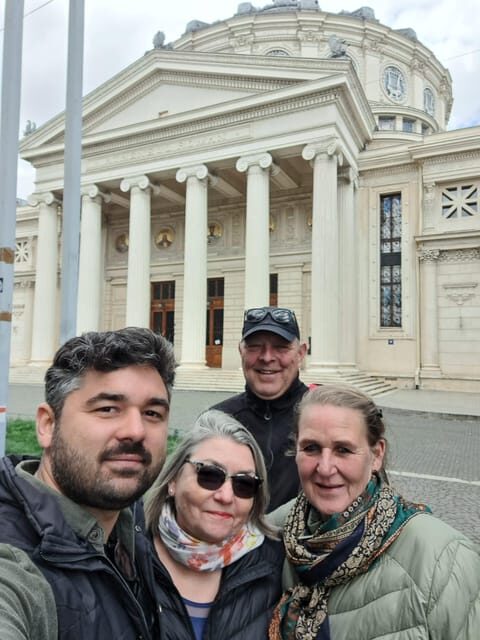
The walking tour lands at Revolution Square, with guided time that includes a discussion you won’t get from a quick photo route. You’ll have the chance to talk with your guide about what communist rule meant for Romania and how the country changed after the 1989 revolution.
This is the part of the tour that makes it more than architecture sightseeing. Political history can sound heavy on paper, but a good guide keeps it concrete—how it affects everyday life, urban decisions, and the way people remember the past.
I like that the tour builds toward this discussion late in the walk. By then, you’ve already seen enough streets and buildings to understand that history isn’t abstract. It’s written into the city.
Equestrian Statue of Carol I and the Finish Near the Athenaeum
Next up is the Equestrian Statue of Carol I, followed by the tour finish near the Romanian Athenaeum.
You end at a cultural landmark for a reason: after three hours of stories and city layers, it’s a natural moment to shift from “walking through history” to “deciding what to do next.” The Romanian Athenaeum also has an optional entrance fee—15 lei (about 3 EUR)—and it’s cash only if you want to go inside.
If you’re the type who likes to turn tours into a plan for the rest of the day, the ending is well placed. You can continue wandering nearby or set your next dinner spot with more confidence because you understand the central structure better.
The Romanian Snack Stop: Real Food Break, Not a Token Bite
This tour includes 1 famous Romanian snack. That matters because you get a planned pause instead of searching for something random while everyone else is already moving.
From the kind of snack stops people describe, you may find yourself in a classic pastry shop area where options can lean toward a sandwich-style bite or something sweet like eclairs. The point is simple: you’ll taste something locally during the tour rather than treating food as a separate mission.
Guide Style and Small Group Value: Why 10 People Feels Different
The group is limited to 10 participants, and you’ll be with an English-speaking guide. I find that cap makes a real difference in Bucharest walking tours. It’s not just comfort; it’s control of the experience. A smaller group means you can ask follow-up questions without losing your place.
The guides listed for this experience include people like Mara, Elena, Andrea, and Julian. Across guides, the common thread is approachability and storytelling—so you don’t just get facts. You get the “why” behind what you’re seeing, plus answers to the kind of side questions that turn a 3-hour walk into a memory you keep.
Price and Value: Is $45 Worth It?
At $45 per person for a 3-hour guided walk, the value comes down to what you want from Bucharest.
You’re paying for:
- a structured route through central sights
- an English-speaking local guide with time to explain connections
- one included Romanian snack
- a small group setup that keeps interaction realistic
If you’re visiting for the first time and want the city’s layers explained while you’re still close enough to act on it, this price tends to make sense. If you only want a casual stroll and you don’t care about context (or you already love Romanian history), you might question the cost. This tour sells interpretation, not just motion.
Who This Tour Fits Best
I’d point you toward this experience if:
- it’s your first time in Bucharest and you want a fast, guided orientation
- you like architecture with an explanation attached
- you want a clear discussion of the communist era and what changed after 1989
- you prefer small-group pacing and photo-friendly stops
I’d skip it if you want long, standalone museum time or you’d rather avoid modern political discussion.
Should You Book This Bucharest Walking Tour?
Yes, if you want a strong first pass through central Bucharest with real context. The route hits major anchor points (Unirii Square, Calea Victoriei, Revolution Square) while still adding quieter stops like Stavropoleos Monastery and the Old Town streets. With a small group of up to 10 and an included Romanian snack, it’s one of those “useful hours” that also feels enjoyable.
I’d book it early in your trip too. After this walk, you’ll have a much easier time deciding where to go next, what neighborhoods connect to which eras, and what stories to chase on your own.
FAQ
How long is the Bucharest guided walking tour?
The tour lasts 3 hours.
How much does the tour cost?
It costs $45 per person.
Where do I meet the guide?
Meet in front of One Sip cafe at Unirii Boulevard. The closest metro station is Piata Unirii.
Is the tour in English?
Yes. The tour runs in English.
How big is the group?
It’s a small group limited to 10 participants.
What food is included?
The tour includes 1 famous Romanian snack.
Is entry to the Romanian Athenaeum included?
Entrance to the Romanian Athenaeum is optional and costs 15 lei (about 3 EUR), cash only.
Is the tour refundable if my plans change?
Free cancellation is available up to 24 hours in advance for a full refund.