REVIEW · BUCHAREST
Half-Day Jewish Heritage Walking Tour in Bucharest
Book on Viator →Operated by Laura Genescu · Bookable on Viator
Bucharest’s Jewish history is written in stone. This half-day walk links major synagogues with the stories that shaped them, and it does it with a live guide plus historical photos shown on an iPad as you move through town. You’ll cover a lot of ground in a short time, but you won’t feel rushed, since this is built around a small private group.
I especially like the historical photos on an iPad—they turn the facades into evidence, not just sightseeing. I also like how the tour is designed for a tighter group size (up to 8), which makes it easier to ask questions and get answers that connect past and present Jewish life in Bucharest. In past groups, guides such as Laura Genescu (and also guides named Jacky and Loan) have been praised for patient, detailed explanations.
One consideration: you may still need to budget extra time and money for entry. The tour lists synagogue and museum admissions as a separate $25 per person item, even though the stop descriptions mention tickets, so it’s smart to confirm what’s covered in your booking before you arrive.
In This Review
- Key Highlights You’ll Actually Notice
- A Smart Half-Day Route With Real Context
- Great Synagogue: Rococo Style and Survival Through Restoration
- The Choral Temple: A Vienna Copy With Bucharest Meaning
- Museum of the History of the Jewish Community: The Surviving Synagogue Connection
- How the iPad Historical Photos Make the Streets Tell Stories
- What the Private, Small-Group Format Changes
- Price and Tickets: Getting the Real Value
- Pacing, Timing, and What to Do Before You Start
- Who This Tour Fits Best (and Who Might Want Something Else)
- Should You Book This Jewish Heritage Walking Tour?
- FAQ
- Where does the tour start?
- What time does the tour begin?
- How long is the tour?
- Is this a private tour?
- What language is the tour offered in?
- What are the main stops on the route?
- Are historical photos included?
- What is included in the price?
- What isn’t included?
- What if the weather is bad?
Key Highlights You’ll Actually Notice
- Tablet-based historical photos make each synagogue feel tied to real people and real events
- Great Synagogue connections from the 1800s into WWII restoration, explained step-by-step
- Choral Temple as a design echo of Vienna, with clear architectural comparisons
- Jewish Community Museum inside a surviving synagogue space, so history is literally the building
- Small-group pace (up to 8) with room for questions and small detours
- Local recommendations for what to do next in Bucharest, beyond the tour route
A Smart Half-Day Route With Real Context
This is a 3 to 4 hour Jewish heritage walking tour in Bucharest, starting at 9:30 am near Starbucks, Str. Franceză 62. It’s offered in English and is set up for a private group, so you’re not stuck filtering noise from a bigger crowd. The format also includes a mobile ticket, which is handy on a busy morning.
Walking tours can be hit-or-miss when they feel like a long parade of photos and dates. Here, the walking is mainly the delivery system for context: you move between landmarks, and your guide keeps tying them to the community’s changing reality over time. That matters because Bucharest’s Jewish history doesn’t sit neatly in one era.
I also like that the tour isn’t only about buildings. You get recommendations for your stay, and the guide’s job is to help you understand what you’re seeing now—rather than treating history like a museum label.
You can also read our reviews of more walking tours in Bucharest


Great Synagogue: Rococo Style and Survival Through Restoration
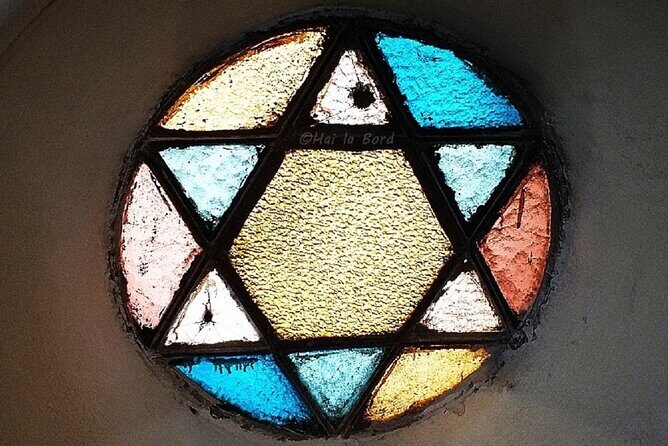
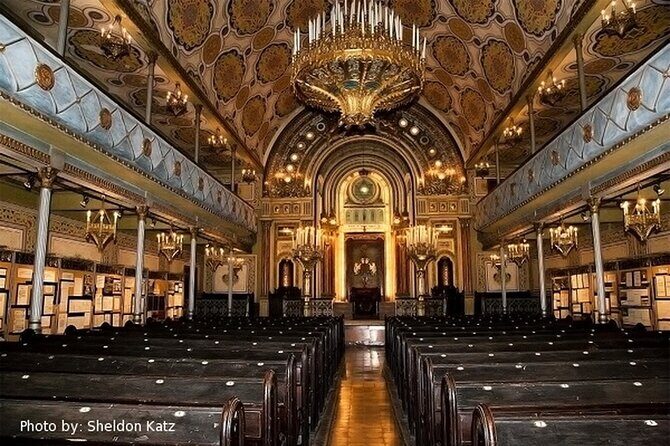
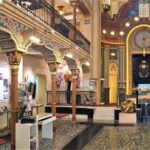
The walk begins at the Great Synagogue, a landmark with an unusually layered timeline. It was raised in 1845 by the Polish-Jewish community, then repaired in 1865, redesigned in 1903 and 1909, and repainted in Rococo style in 1936 by Ghershon Horowitz.
What makes this stop work is the way the building’s changes track the community itself. A synagogue isn’t just a religious structure; it’s also a statement about resources, identity, and who felt safe enough to invest in grand architecture. When your guide connects the design shifts to historical pressures, the building stops feeling like trivia.
Then comes the part that turns the tour emotionally serious. The synagogue was devastated by the far-right Legionnaires, also known as the Iron Guard movement, and it was restored again in 1945. If you’re sensitive to dark history, give yourself a breath here. Your guide should be able to explain what happened without rushing you past it.
Practical note: this stop is listed at about 20 minutes with an admission ticket component attached. Still, the tour pricing info also flags an additional $25 per person admission fee, so confirm your exact ticket situation when you book.
The Choral Temple: A Vienna Copy With Bucharest Meaning
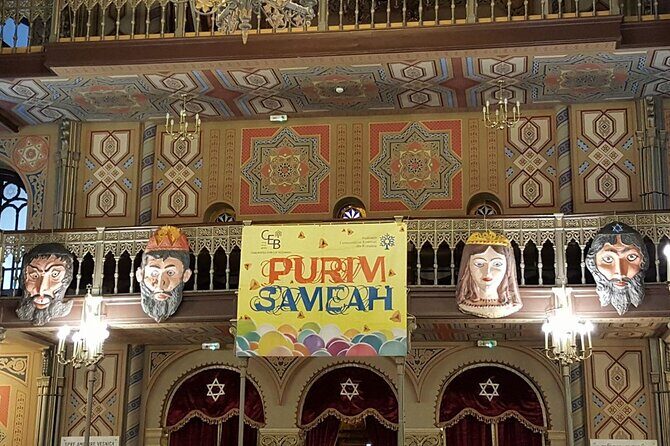
Next up is the Choral Temple, built between 1864 and 1866 and designed by Enderle and Freiwald. The key detail here is architectural: it’s described as a very close copy of Vienna’s Leopoldstadt-Tempelgasse Great Synagogue (built 1855–1858).
This is one of those stops where you can see history traveling. When the guide points out the Vienna-to-Bucharest connection, it turns a façade into a story about influence, diaspora networks, and what communities borrowed to express status and tradition. If you like architecture, this is where the tour gives you enough detail to spot why the style matters.
This stop also runs about 30 minutes, and it’s another place where questions fit naturally. I like that the guide can slow down here if your group wants to focus on design, symbols, or the way different Jewish communities adapted forms from elsewhere.
Like the first synagogue, admission is listed for this stop, but admissions may also be part of the $25 per person fee category. Either way, plan to spend a small amount of time managing tickets or check-in, so you don’t feel flustered.
Museum of the History of the Jewish Community: The Surviving Synagogue Connection

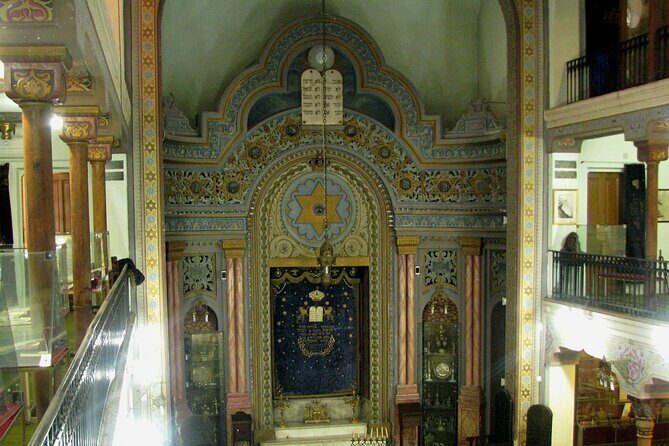
The final stop is the Museum of History of the Jewish Community in Bucharest. It’s located in the former Templul Unirea Sfântă synagogue, which survived World War II. Depending on how your guide explains it, you may also hear the museum referred to with variants of the name, including the Museum of the History of the Romanian Jewish Community.
This stop has a special kind of power because the museum is not just inside a building that remembers. It’s inside a synagogue that made it through the war, which means you’re surrounded by the same walls that once held community life. You’ll get about 20 minutes here, so it’s a quick visit, but it’s focused.
A good guide can use that short time well by choosing a few themes rather than trying to show everything. For you, the goal is understanding: how to place Bucharest’s Jewish life within Romania’s larger story, and how cultural life continued even under major pressure.
If you’re a slower museum person, this stop might feel short. Still, the advantage is that the tour keeps moving so you don’t lose the thread. The balance is good for a half-day format.
How the iPad Historical Photos Make the Streets Tell Stories
One of the best things about this tour is the way it uses historical photos shown on a tablet/iPad. You’re not just learning what a synagogue looked like once—you’re seeing that look layered onto the present street.
Photos work particularly well in Bucharest because the city’s architecture makes it easy to assume everything is older than it is. With the photos, you get a reality check. You can compare how the area looked during earlier eras, and you start noticing continuity as well as change.
This is also where guides named in past groups like Laura Genescu, Jacky, and Loan have an edge. The strongest guiding style here isn’t only reciting dates. It’s answering the follow-up question: what does this photo mean for how people lived, worshiped, or coped?
If you’re traveling with friends who usually hate walking tours, this tablet approach can be the difference. It gives your brain a visual anchor so you’re not just trudging between stops.
You can also read our reviews of more historical tours in Bucharest



What the Private, Small-Group Format Changes
This is not a big group tour. It’s a private tour/activity with only your group participating, and the listing says up to 8 people. That small size has real benefits:
- Your guide can adjust pacing if someone needs a longer look or has more questions.
- You’re less likely to miss key context while listening for your stop’s group announcement.
- The guide can steer the tour toward what your group cares about—architecture, community history, or the emotional side of WWII-era events.
Timing matters too. At 3 to 4 hours, you won’t get museum-fatigue. Instead, you get a concentrated narrative arc: major synagogue landmarks, then a museum that ties it into a broader story.
If you’ve got a busy itinerary in Bucharest, I think this format is easier to fit than a full-day program. It’s also a solid choice when you want something meaningful but not exhausting.
Price and Tickets: Getting the Real Value
The price is $318.06 per group for up to 8 people, which makes it feel expensive until you do the math. For two or three people, it can still be a stretch, since private guides cost more when the group stays small. But for a group of friends, this pricing can become very reasonable compared to per-person tours.
Then there’s the admission question. The tour includes ticket language in the stop descriptions, but the overall pricing info also says you should budget $25.00 per person for admission tickets to synagogues and museums. Since the information is inconsistent inside the details you provided, I recommend you check your booking confirmation carefully. You want clarity before you show up.
Where the value really shows up is not just in access. It’s in the guide’s explanations, the iPad photos, and the fact that the guide focuses on your group. If you’re the type who likes to ask why things happened, you’ll get more out of that than a standard audio-only walk.
Also note: private transportation or pickup from a hotel is not included, so build in a simple plan to reach the meeting point near Str. Franceză 62.
Pacing, Timing, and What to Do Before You Start
This tour starts at 9:30 am and returns to the same meeting point at the end. Because it’s mostly walking with three structured stops, you’ll want to show up with comfortable shoes and a bit of patience for city traffic and street crossings.
I like doing this early-ish in the day. It gives you a framework for what you’ll see later. Even if you don’t revisit the same buildings, the context helps you read the city differently—especially when you notice memorials, plaques, and older architectural styles.
If you’re bringing a camera, you’ll likely want it ready for quick shots outside and around the synagogues. Inside museum space and religious sites, rules can vary, so follow what the guide tells you. The tour’s best moments usually come from the guide’s explanations anyway.
Who This Tour Fits Best (and Who Might Want Something Else)
This tour fits best if you want a guided, narrative-focused walk rather than a loose sightseeing checklist. It’s especially good for people who care about how Jewish life in Bucharest changed over time and why specific restoration efforts mattered.
If you’re traveling with a small group of friends, the private format gives you the freedom to ask questions. It’s also a good match if you’re the kind of person who likes to understand what you’re looking at—architecture, community identity, and the historical pressures that shaped the built environment.
If you’re only interested in a quick photo stop and you don’t care about context, you might feel the time is better spent on self-guided wandering. This tour earns its time by explaining, not by moving fast.
Should You Book This Jewish Heritage Walking Tour?
I’d book it if you want a meaningful half-day with a guide who can connect architecture to community history. The iPad photos are a real advantage, and the small private group size helps you get answers instead of just hearing the same script.
Also, if your Bucharest plans include other cultural stops later, this tour’s built-in recommendations can help you pick what makes sense with your interests and time. It’s one of those activities that gives you a “map” for the rest of your trip.
Just do one thing before you go: confirm whether the $25 per person admission applies to your booking as written. Once that’s clear, you’re set.
FAQ
Where does the tour start?
The meeting point is at Starbucks, Str. Franceză 62, București 030106, Romania.
What time does the tour begin?
The start time is 9:30 am.
How long is the tour?
It lasts about 3 to 4 hours.
Is this a private tour?
Yes. Only your group participates, and the group size is up to 8.
What language is the tour offered in?
The tour is offered in English.
What are the main stops on the route?
The tour visits the Great Synagogue, the Choral Temple, and the Museum of History of the Jewish Community.
Are historical photos included?
Yes. Historical photos are presented on a tablet/iPad during the tour.
What is included in the price?
It includes a fully narrated walking tour, historical photo presentations on a tablet, and recommendations for your stay in Bucharest.
What isn’t included?
Private transportation and pickup are not included. Admission fees to synagogues and museums are listed as $25.00 per person.
What if the weather is bad?
The experience requires good weather. If canceled due to poor weather, you’ll be offered a different date or a full refund.