Bucharest tells stories fast on foot. This walking tour stitches together past and present landmarks in a tight loop, with a guide who helps you read the city like a timeline.
If you like landmarks that feel close enough to hear the city breathing, this works well.
I like two things a lot: first, the walk is built around major squares and institutions—University Square, Revolution Square, and the People’s House area—so you see how politics shaped the streets. Second, the tour style is hands-on and responsive; one standout guide, Marius, kept families engaged and even helped people figure out transit afterward.
One possible drawback: language match matters. The tour is offered in English, but some guides may speak other languages too; if you need strong Italian (or any specific language), make sure you’re comfortable with the language you’ll hear on the day.
In This Review
- Key highlights worth marking on your map
- A Bucharest walking loop that makes the city feel legible
- Starting at Ion Luca Caragiale National Theatre: a good place to orient
- University Square: context first, photos second
- Revolution Square (Piaka Revolukiei): where regimes show up in stone
- Quick passes that still matter: museum fronts and the Royal Palace area
- Palace of Parliament: the exterior stop that teaches scale
- Stavropoleos Monastery and Palatul CEC: older Bucharest in short hits
- Lipscani: walking into the Old Town’s merchant-life vibe
- National Museum of Romanian History and Ateneul Roman: cultural icons, limited time
- What the $54.07 price buys you (and why it can be a bargain)
- Pace, group size, and why guides like Marius make a difference
- Practical tips so your 2–3 hours feel smooth
- Should you book Bucharest Past and Present?
- FAQ
- How long is the Bucharest Past and Present walking tour?
- What’s the meeting point for the tour?
- Where does the tour end?
- What languages is the guide available in?
- Is the tour offered in English?
- Is the tour private?
- Are there admission fees at the stops?
- Are meals included?
- Is the tour suitable for most travelers?
- Does the activity depend on weather?
- Is there a refund if I cancel?
Key highlights worth marking on your map
- University Square start at the National Theatre area, where you begin with context, not just photos
- Revolution Square time long enough to notice the Royal Palace and Communist-era architecture in the same frame
- Palace of Parliament exterior focus that shows scale without requiring you to plan a full museum day
- Stavropoleos Monastery and old-city lanes for a slower, more human pace near Lipscani
- Ateneul Roman optional interior only if availability works out, otherwise you still get the famous look from outside
A Bucharest walking loop that makes the city feel legible
This tour works because it doesn’t treat Bucharest like a museum you visit once. Instead, you walk through chunks of the city that explain each other. One minute you’re in a grand civic setting; the next you’re near older religious architecture and old merchant streets. That back-and-forth is the whole point of Past and Present.
The duration—about 2 to 3 hours—is perfect for first-timers who want meaning fast. It’s long enough to cover big-name spots like the Palace of Parliament area, but not so long that you’re exhausted before you even start sightseeing for the day.
And because it’s set up as a private tour for your group, you’re not stuck with a one-size-fits-all script. If your questions drift toward people and politics one moment, architecture the next, the better the guide will adapt.
You can also read our reviews of more walking tours in Bucharest


Starting at Ion Luca Caragiale National Theatre: a good place to orient
You begin at the Ion Luca Caragiale National Theatre on Bulevardul Nicolae Bălcescu (address listed as 2). This is a smart meeting point for a walking tour because it sits right in the middle of the city’s civic core. You’ll feel like you’re stepping into the storyline immediately, not hunting for your way through side streets first.
From here, the tour gives you that crucial early advantage: orientation. As you head toward University Square and the Revolution Martyrs Memorial, you’re learning the city’s geography as you go—so later, when you’re on your own in central Bucharest, it clicks.
Practical note: even though this is a short walking tour, your footwear still matters. You’re moving between squares, and Bucharest’s streets and sidewalks can vary. Comfortable shoes make the whole experience easier to enjoy.
University Square: context first, photos second
At University Square, you’ll spend about 15 minutes around the National Theatre area and the Revolution Martyrs Memorial. The time allocation is telling. This stop isn’t about staying put for long speeches—it’s about setting the stage.
You’ll get a feel for how Bucharest frames major public spaces: monuments, institutions, and the places where history gets staged for the modern city. If you’re the kind of traveler who likes understanding why buildings and statues end up exactly where they do, this portion helps your brain lock onto the rest of the route.
If you’re more into quick photo stops, you can still do that here—but I’d suggest using the time to listen. The first stop sets up what comes next in Revolution Square, and without that setup, some of the architectural contrasts can feel random.
Revolution Square (Piaka Revolukiei): where regimes show up in stone
Revolution Square is where the tour really earns its Past and Present name. You’ll have about 30 minutes here, and the route is designed to show how different eras share the same public stage.
Expect to see the Royal Palace area, the Romanian Atheneum (you’ll get an exterior look elsewhere too), the Communist Party Headquarters, and the Rebirth Memorial. It’s a lot to pack into one square, but the guide’s job is to help you see the connections. The city’s political history isn’t hidden—it’s built into the surroundings.
What I like about this stop is that it forces you to switch your viewpoint. One angle can feel like national pride and culture; another can read as power and control from a different era. Walking a few steps here can change the mood of what you’re looking at.
A small consideration: with 30 minutes, you won’t be able to wander slowly for long. If you know you want extra time for Revolution Square, plan to come back after the tour for a second lap.
Quick passes that still matter: museum fronts and the Royal Palace area
You’ll do a short 5-minute pass around the front of Muzeul Național de Artă al României, located near the Royal Palace in Revolution Square. This isn’t a full museum visit. It’s more like a visual bookmark.
Then there’s another brief pass related to the National Museum of Romanian History on Victoriei Street, also about 5 minutes. These short moments work as signposts. You learn the major landmarks even if you’re not going inside.
If you’re the kind of traveler who likes having options, these passes are useful: you’ll know what buildings to target later if you decide you want a museum day.

Palace of Parliament: the exterior stop that teaches scale
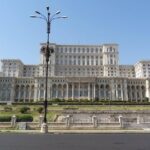
At the Palace of Parliament (often called the People’s House), you’ll have about 15 minutes. Since the tour focuses on the exterior, it’s a smart choice if your schedule is tight. You still get the impact of the building without turning the tour into a half-day admission plan.
This stop also hits a deeper value. You’re not just seeing a famous structure—you’re seeing what dictatorship-era planning looks like when it’s built into everyday view. The tour frames it as the People’s House built at the dictator’s orders, and that context helps you interpret the massiveness and intent of the space.
What to do with your time: don’t rush to one photo angle. Walk a few steps so you can understand the building’s scale from more than one perspective. Even 15 minutes can make you feel like you understood more than just the outline.
Stavropoleos Monastery and Palatul CEC: older Bucharest in short hits
After the monumental civic spaces, the tour shifts toward human scale.
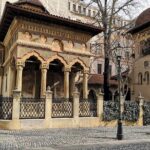
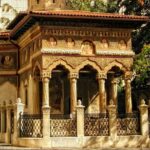
Stavropoleos Monastery is next, with about 10 minutes at the Orthodox monastery dating to 1724. This is the kind of stop that gives your legs a break and your eyes a different texture. Monasteries aren’t only religious sites; they’re also clues to how communities lived and organized earlier than the grand 19th- and 20th-century institutions.
Then you get a brief 5-minute stop at Palatul CEC, known for eclectic architecture. Even in a short window, it helps to have an architectural reason for why a building looks the way it does. This is the type of place where a good guide can point out what makes the style interesting.
If you like buildings that show layers of taste and influence, this pairing—monastery then eclectic civic architecture—does a nice job of widening your view.
Lipscani: walking into the Old Town’s merchant-life vibe
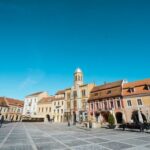
Lipscani is where the tour feels like a postcard you can actually walk through. You’ll have about 15 minutes here, and it’s described as the famous merchants street from old times.
This stop is valuable for two reasons. First, it’s a change of pace after the heavy political stops. Second, it gives you a feel for where Bucharest’s older street life centered—so when you later eat, shop, or just wander, you understand why this area feels like the heart of the old center.
If you’re traveling with teens or want something more relaxed, this is often the easiest part to enjoy. It’s not only about history; it’s about atmosphere.
National Museum of Romanian History and Ateneul Roman: cultural icons, limited time
You’ll pass by the National Museum of Romanian History again on the way toward the Parliament Palace area, but it stays brief at around 5 minutes. Think of this as a route marker: you’ll recognize it later, even if you don’t go in immediately.
Then you reach Ateneul Roman (Romanian Atheneum) for about 5 minutes exterior-only. There’s an optional inside visit of the Entrance Lobby and Concert Hall if availability allows, but that’s not included and depends on conditions.
I like including Ateneul even as an exterior stop because it’s instantly recognizable and it adds a cultural counterweight to the political architecture. If the inside access works out, it’s a bonus. If it doesn’t, you still leave understanding why it matters.
What the $54.07 price buys you (and why it can be a bargain)
At $54.07 per person for a 2 to 3 hour private walking tour, you’re paying for two things: an expert guide and time. In a city where distances can be easy but context isn’t, a guide turns random sights into a coherent story.
Here’s what’s included that supports the value:
- A private tour with an experienced guide speaking English/French/Italian
- Free admission (where listed) for the major stops along the route
- A mobile ticket
- Group discount options, if available for your booking
You’ll still need to plan for the basics: meals and drinks aren’t included, and tips aren’t included either. That’s normal, but it matters for budgeting.
Also, check expectations: this isn’t a museum tour where you’ll spend hours inside multiple institutions. It’s a landmark and context tour on foot. If you want tickets, schedules, and deep interior time, you’ll likely pair this with one or two separate paid attractions later.
Pace, group size, and why guides like Marius make a difference
The best part of this experience is how it can feel tailored even while you’re following a set route. The tour runs as a private experience for your group, and that means questions don’t get squeezed at the edges.
One guide, Marius, stood out in how he kept people engaged for several hours and adjusted pace to walking speed and interests. He also handled different learning styles—some people want architecture details; others want human stories. When a guide can do both without losing energy, the city becomes easier to remember.
You’ll also feel the practicality in how a guide can help beyond the walk. In one case, a guide supported a family in navigating the metro back to their hotel. You might not need that kind of help, but it’s a good sign: the tour doesn’t end when you finish walking.
Practical tips so your 2–3 hours feel smooth
This is a weather-dependent activity—good conditions make it work best, because you’ll be outdoors moving between stops.
Here are the practical things to keep in mind:
- Wear comfortable shoes. You’re covering several civic squares and old-town streets.
- Bring water. You won’t have time built in for long breaks.
- If you care about seeing the Ateneul interior, ask early. Inside access is optional and depends on availability.
- If you want help after the tour, ask your guide about transit or where to go next in the Old Town.
If you’re staying nearby and you’re comfortable walking, you can add extra time around the Old Town before or after. One traveler walked to and from the meeting area from their hotel and said it was manageable because Bucharest is easy to walk.
Should you book Bucharest Past and Present?
Book this tour if:
- You’re in Bucharest for a short stay and want a fast way to understand the city’s political and cultural shifts
- You enjoy walking between big landmarks and want context delivered in plain, practical terms
- You want a private guide who can adapt to your group’s interests
Skip it or pair it differently if:
- You’re looking for a heavy interior museum day with lots of paid entry time
- You strongly need a specific language level beyond what you expect on the day, especially if you plan to rely on Italian
My take: this is a smart first-booking type tour. It helps you get your bearings fast, and it gives you enough context that the next streets you explore feel meaningful instead of random.
FAQ
How long is the Bucharest Past and Present walking tour?
The tour lasts about 2 to 3 hours.
What’s the meeting point for the tour?
The start point is the Ion Luca Caragiale National Theatre at Bulevardul Nicolae Bălcescu 2, Bucharest.
Where does the tour end?
The tour ends in Bucharest’s Old Town.
What languages is the guide available in?
The guide is described as speaking English/French/Italian.
Is the tour offered in English?
Yes, it is offered in English.
Is the tour private?
Yes. It’s listed as a private tour/activity, and only your group participates.
Are there admission fees at the stops?
Admission is listed as free for most stops. Ateneul Roman has an exterior visit included, while optional inside access is not included.
Are meals included?
No. Meals or drinks are not included.
Is the tour suitable for most travelers?
It’s listed as suitable for most travelers.
Does the activity depend on weather?
Yes. It requires good weather, and if it’s canceled due to poor weather you’ll be offered a different date or a full refund.
Is there a refund if I cancel?
Cancellation is free if you cancel at least 24 hours in advance for a full refund.