REVIEW · BUCHAREST
Private Tour – Food, Culture, History & Traditions
Book on Viator →Operated by Ultra Violet Travel Services · Bookable on Viator
I love the food-and-culture pairing and the way the guide ties quick street stops to big moments, from the mici origin story to the 1989 revolution. I also like the practical setup: audio devices if your group gets larger than four, so you can actually hear the explanation while you walk. The main catch is that most sights are short outside peeks, so you’re moving steadily and you’ll want a comfortable level of stamina for a roughly 6 km route.
This is a private half-day tour in English, with an included lunch (or dinner) and all fees covered. Expect a calm, story-focused pace, with time for photos and a route that starts near Bulevardul Ion C. Brătianu and ends at University Square on Bulevardul Regina Elisabeta.
In This Review
- Key things I think you’ll care about
- Bucharest as a walking story (not a museum list)
- Stop 1: Old Town and the mici origin story you’ll remember
- Practical note
- Stop 2 and 3: Stavropoleos Monastery and the CEC Bank palace
- What to look for
- Stop 4, 5: Macca Villacrosse Passage and the BNR Palace world
- Why this is worth your time
- Stops 6 and 7: Calea Victoriei, plus Pasajul Victoriei’s darker backstage
- How to enjoy this part
- Stop 8: Piața Revoluției and Ceausescu’s last speech
- Stops 9 and 10: Ateneul Roman and the Royal Palace’s art mission
- What you can do with this stop
- Stop 11 to 13: Bulevardul Dacia, Şcoala Centrală, and the Armenian quarter
- A tip for this section
- Stop 14: Gradina Icoanei and the witch-lore details
- How to keep it grounded
- The included meal: a Romanian two-course lunch/dinner that actually matters
- What I’d do before you go
- How the walking pace and audio setup works
- Best practical move
- What’s the real value of $114.14 per person?
- Should you book this Bucharest food, culture, history tour?
- FAQ
- How long is the private Bucharest food, culture, history, and traditions tour?
- What food is included in the tour?
- Are admission tickets included for the stops?
- Is this tour private or shared?
- About how far do we walk, and do I need to be fit?
- Is the tour offered in English?
Key things I think you’ll care about
- A true mix of food, architecture, and turning points in modern Romanian history rather than just “look at the building.”
- Lunch is built in: a two-course meal plus a starter platter (cheeses/charcuterie and Romanian starters), with the main course following.
- Short, high-impact stops mean you see a lot of Bucharest in 4–5 hours without a full day commitment.
- Audio devices help when the group is bigger than four, so the guide’s voice stays clear.
- Quiet-but-smart guiding style shows up in real guide experiences (including Bianca), with pacing that adjusts to your interests.
- A private-group format: only your group participates, and you get a more personal flow on the walk.
Bucharest as a walking story (not a museum list)
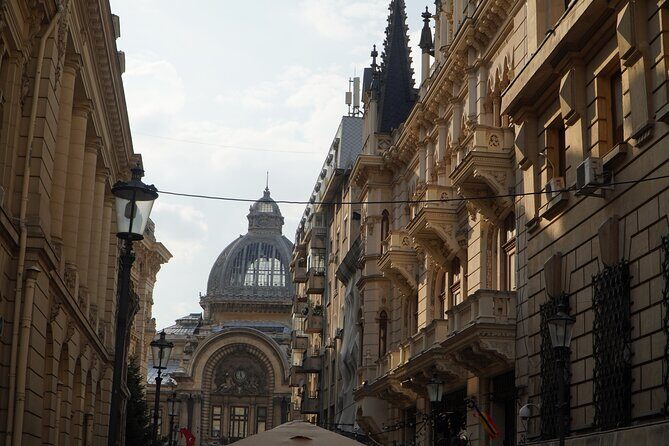
Bucharest is easy to misunderstand if you treat it like one single “old city.” In a few hours, you can see how trade, religion, money, nightlife, and politics all left physical clues. This tour is designed to connect those clues so the streets feel like a timeline instead of random sightseeing.
You’ll cover key areas on foot and hear how each one fits into everyday Romanian life—what people ate, where they gathered, what they built, and what they fought over.
You can also read our reviews of more food & drink experiences in Bucharest

Stop 1: Old Town and the mici origin story you’ll remember
Old Town is where you get the first “why it matters” moment. You’ll learn the history of the area where trading goods helped the neighborhood flourish, and you’ll hear the local claim about where mici were invented.
Even if you’ve already tried mici, hearing the story in context changes the taste. It turns it from a menu item into a piece of street culture. This first stop is brief—about 30 minutes—but it sets the tone: food and history aren’t separate tracks here.
Practical note
This is also a great moment to ask your guide to slow down if you’re into the market-and-trade side of Bucharest. The tour is built for quick pivots if something catches your eye.
Stop 2 and 3: Stavropoleos Monastery and the CEC Bank palace
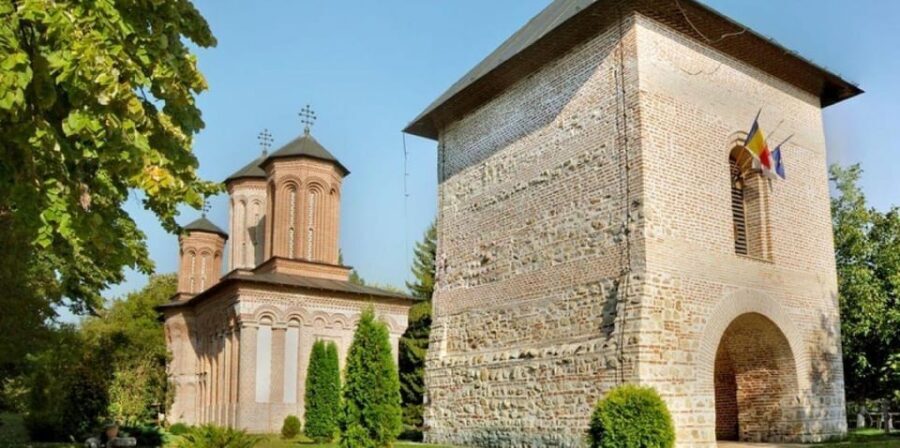
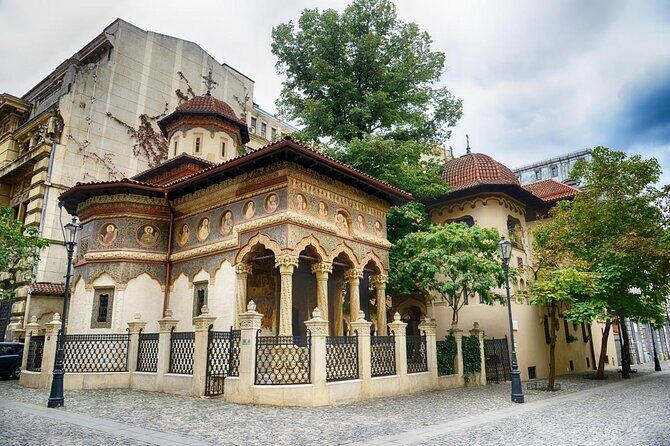
Next, you shift from commerce to faith and public life. Stavropoleos Monastery is an 18th-century Romanian Renaissance monastery, so even at a short stop you get a sense of Romania’s artistic identity. The point isn’t to “check off” a church—it’s to recognize how Bucharest collected different influences in real places people used.
Then you pop to the outside of Palatul CEC, the CEC Bank palace. It’s described as an eclectic building from the end of the 19th century. That matters because it shows how the city’s look wasn’t just uniform government grandeur; it grew with different styles and ambitions.
What to look for
On these quick stops, look at the mix of shapes and the building “mood.” The guide will connect those visual cues to why people built in that way—so you’ll understand the design, not just see it.
You can also read our reviews of more tours and experiences in Bucharest




Stop 4, 5: Macca Villacrosse Passage and the BNR Palace world
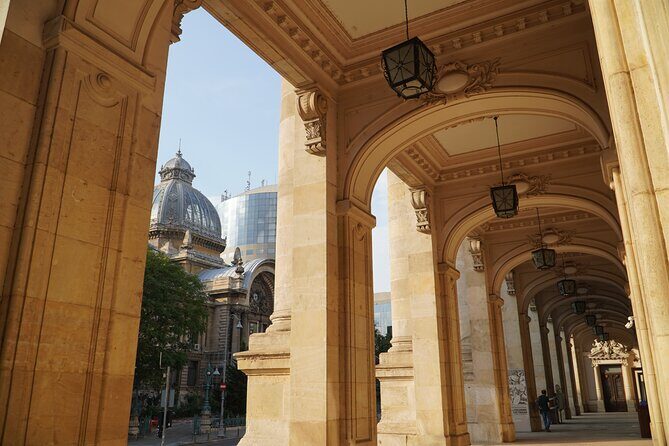
After monasteries and bank palaces, you move into Bucharest’s in-between spaces. The Macca Villacrosse Passage is known as the most beautiful passage in Bucharest, and it’s the kind of place that makes you pause without needing a long speech.
From there, you head to BNR Palace, the National Bank of Romania, plus the neighboring reference to Marmorsch Blank Bank—which is now turned into a hotel. This is one of the tour’s clever teaching moments: you see how “financial power” buildings can change role over time while keeping their presence in the city.
Why this is worth your time
Passages and bank palaces are the kind of details you can walk past on your own. Here, you get context fast—so when you return later, you’ll recognize what you’re seeing.
Stops 6 and 7: Calea Victoriei, plus Pasajul Victoriei’s darker backstage
Calea Victoriei is the heart of Bucharest since the 19th century. So this is more than a street walk—it’s the city’s long-running idea of where public life and big buildings should gather.
Then you hit Pasajul Victoriei, together with Pasjul Englez. The description is very specific: it was a former brothel on the main avenue, with a convenient back entrance. You’ll also hear that the king and high-class society used to party there. That’s not random gossip. In Bucharest, these stories explain how social life used to work, and why certain streets have the feel they have.
How to enjoy this part
If you prefer respectful, fact-focused stories (not sensationalism), this is still interesting. The goal is to understand the city’s social history and the built environment that supported it.
Stop 8: Piața Revoluției and Ceausescu’s last speech

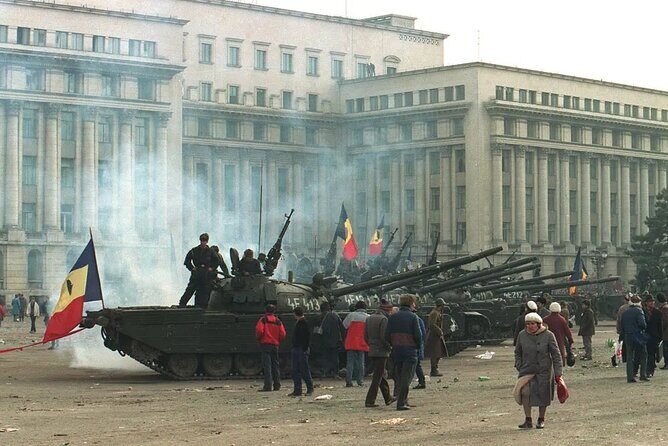
Next comes one of the emotional anchors of modern Romania. At Piața Revoluției, you’ll discover where communist leader Nicolae Ceaușescu held his last speech at the beginning of the bloody 1989 revolution.
This stop is short—about 10 minutes—but it’s powerful because it connects a major event to a real street corner you can stand on. Even if you know the general facts already, placing the moment into the city’s layout helps it stick.
Stops 9 and 10: Ateneul Roman and the Royal Palace’s art mission
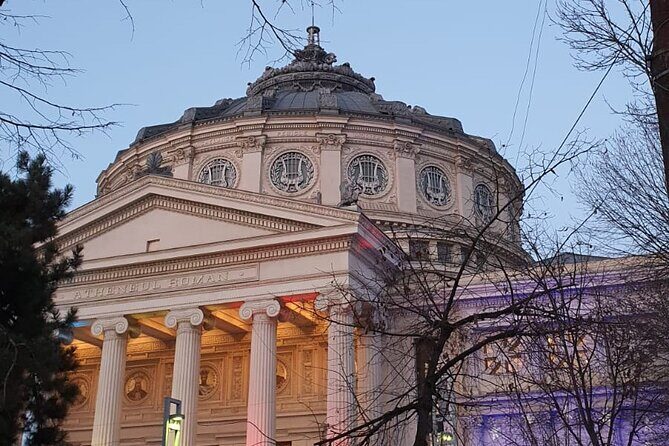
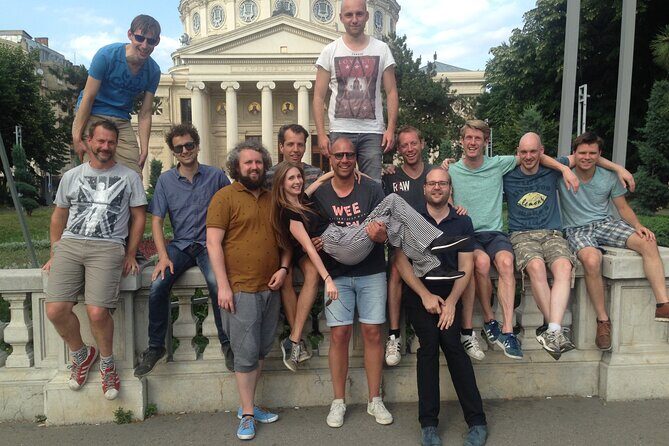
From revolution back to culture, you’ll admire Ateneul Roman, described as one of the most beautiful buildings in Bucharest. Even if you’re not a concert-goer, this kind of landmark is a signal: the city invested in arts and public identity.
Then you head to Palatul Regal (Royal Palace), which now houses the national art museum. The contrast here is worth noting: royal power in the building’s original role, and national cultural life in its current one. It’s a reminder that Bucharest’s major structures keep working, even when the story of who uses them changes.
What you can do with this stop
If you like photography, this is where you’ll want a clear angle for wide shots. The tour is designed with photo time in mind, and the guide can help with positioning.
Stop 11 to 13: Bulevardul Dacia, Şcoala Centrală, and the Armenian quarter

Now you shift into residential and community stories.
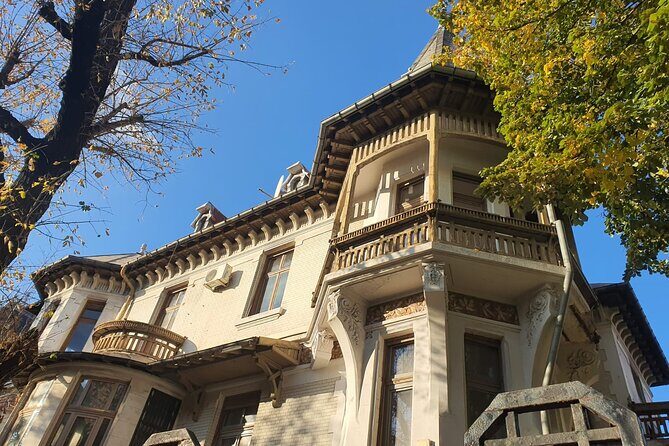
On Bulevardul Dacia, you’ll see magnificent villas and examples of the neo-Romanian architectural style. That style is a clue about how Romania wanted its own look—how it shaped identity through design rather than only through politics.
Then you visit Colegiul Național “Școala Centrală”, a 19th-century boarding school for girls surrounded by eerie stories. Even without turning it into a campfire tale, the idea of “stories attached to places” is part of Bucharest’s charm. It’s local folklore layered on real institutions.
Finally, you explore Cartierul Armenesc, the Armenian neighborhood. The emphasis here is on history, lesser-known corners, and mystery. This is the segment where the tour feels less like a famous postcard loop and more like a walking conversation about communities that shaped Bucharest.
A tip for this section
If you like neighborhoods, tell your guide. You’ll get more out of these stops if you lean into the “what makes this place itself” angle—street patterns, community clues, and small details.
Stop 14: Gradina Icoanei and the witch-lore details
To end, you go to Gradina Icoanei, where people believed witches cast spells not long ago. This is a different kind of history: folklore, fear, belief, and how rumor attaches to gardens and everyday life.
It can sound strange on paper, but it’s also a smart reminder. Cities aren’t only monuments. They’re also what people believed while they lived there.
How to keep it grounded
If your brain resists folklore, that’s fine. Use it as a lens for how locals explained uncertainty and the unknown. The guide’s job is to connect the story to the city’s atmosphere and place.
The included meal: a Romanian two-course lunch/dinner that actually matters
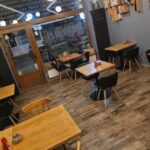
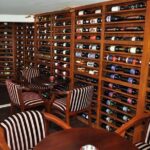
Food is the point here, and it’s structured in a useful way. You’ll get a full meal (lunch or dinner) with two courses. You start with a platter that includes cheeses, charcuterie, and/or other Romanian starters, then you move to a main course.
A key value piece: alcoholic beverages and soda/pop aren’t included. So if you’re a wine with lunch type, plan for that extra cost. (You can also avoid the sticker shock by deciding your limit before you sit down.)
Some guide experiences also mention pastries and coffee during the walk, so don’t be surprised if there’s something sweet and caffeinated along the way. Either way, the official included piece is the two-course meal.
What I’d do before you go
If you’re the kind of eater who hates waiting, show up hungry. This tour builds toward the meal, and that makes the walking feel like part of dinner, not a separate chore.
How the walking pace and audio setup works
This is a walking tour with an approximate 6 km route and a minimum physical fitness requirement. That doesn’t mean “athletic only,” but it does mean you should wear shoes you’d comfortably walk in for a couple hours.
Timing-wise, many stops are 3 to 5 minutes, which means your guide’s explanations have to be efficient. That’s why the audio devices matter when the group is larger than four; they help everyone hear clearly while keeping a comfortable distance.
Also, this is private. Only your group participates, so you’re not stuck with a loud crowd making it harder to hear or slower to move.
Best practical move
If you’re sensitive to noise or your hearing struggles outdoors, position yourself where you can face the guide. On busy streets, volume is your friend.
What’s the real value of $114.14 per person?
For $114.14, you’re buying more than “a guided walk.” You’re getting a multi-stop city experience that includes:
- a structured route across major Bucharest highlights,
- all fees and taxes covered,
- English guiding,
- and a two-course lunch (or dinner) plus a starter platter.
And because the tour focuses on lots of exterior stops where admissions are listed as free, your money isn’t going to ticket lines for every stop. You’re paying for the guide’s ability to connect the dots—food, architecture, and political events—so the places feel meaningful instead of just scenic.
One more sign of demand: this tour is often booked about 49 days in advance, so if you’re traveling in a busy season or want a specific day/time, locking it earlier usually helps.
Should you book this Bucharest food, culture, history tour?
If you want Bucharest in one half-day, with a meal that feels tied to the city (not tacked on), this is an easy yes. It’s especially good for you if you like architecture and want the stories behind it, plus you enjoy food that’s connected to local identity.
I’d skip it if your ideal tour is long time inside museums or slow, deep stays at one place. This one moves. You’ll get quick, smart stops and a satisfying meal at the end—so bring stamina and keep expectations aligned with a walking pace.
If you do book, aim to go with comfortable shoes and a little curiosity about the darker corners too. Bucharest has them, and this tour handles them with clear, place-based storytelling.
FAQ
How long is the private Bucharest food, culture, history, and traditions tour?
It runs about 4 to 5 hours.
What food is included in the tour?
You get a full meal (lunch or dinner) with 2 courses. There’s a platter with cheeses, charcuterie and/or other Romanian starters, plus a main course.
Are admission tickets included for the stops?
The stops listed show admission ticket free, and the tour includes all fees and taxes.
Is this tour private or shared?
It’s private, meaning only your group participates.
About how far do we walk, and do I need to be fit?
It’s an approximate 6 km route. A minimum physical fitness level is required.
Is the tour offered in English?
Yes, it’s offered in English.