REVIEW · BUCHAREST
Footprints of Bucharest: History, Communism & Urban Tales
Book on Viator →Operated by Crafted Tours Romania · Bookable on Viator
Night in Bucharest feels like a movie set. This small-group tour threads communism, history, and local urban tales through some of the city’s most recognizable landmarks—plus a proper look at the streets after dark.
I like how it stays practical: you get insider tips on where to eat, drink, and explore while you walk. I also love the tight group size (max 8), which means questions don’t get lost in a crowd and the pace stays human.
One thing to consider: not every stop is fully free. The tour lists some sights as free, but other entrances are not included, so budget a little for museums if you want in.
In This Review
- Key things to know before you go
- Why Bucharest at Night Works So Well
- Meeting at Strada Benjamin Franklin 2, Ending at Piața Unirii
- The Real Value: A Certified Guide Who Tells Stories
- Ateneul Roman: Bucharest’s Greek-Temple Moment
- Piaka Revolukiei: The 1989 Story at Ground Level
- The Elegant Avenue Interlude: Monuments Marching in a Line
- Biblioteca Centrala Universitara and King Carol I’s Presence
- Palatul Regal: A Winter Royal Residence on the Clock
- Old Town Walk: Cafes, 19th-Century Architecture, and Easy Wandering
- Stavropoleos Monastery: A Quiet 18th-Century Pause
- Macca Villacrosse Passage and Cărturești Carusel: Cover-Your-Weather Fun
- Lipscani: The Old Street You’ll Want to Walk Again
- Palatul CEC and the Former Royal Palace Museum Connection
- Muzeul National de Istorie a Romaniei and Biblioteca Nationala: When Entrance Fees Apply
- The Palace of the Parliament: Exterior Views and Pharaonic Scale Talk
- How to Handle the Walking Pace (Moderate Fitness)
- Choosing Your Tour Time and Getting Your Bearings
- Price and Value: $72.25 for a Guided Night Route
- Who This Tour Suits Best
- Final Advice: Should You Book Footprints of Bucharest?
- FAQ
- How long is the Footprints of Bucharest tour?
- Where does the tour start and end?
- Is the tour offered in English?
- How large is the group?
- What is included in the price?
- Are entrance fees included?
- Does the tour include night views?
- What should I do about museum entrances that are not included?
- What happens if the weather is bad?
- Is there free cancellation?
Key things to know before you go
- Night-lit Bucharest: You’ll see major sights after dark, when the city looks softer and more cinematic.
- Max 8 people: Small group size keeps it conversational and photo-friendly.
- Communism to street-level life: Revolution Square connects the 1989 story to everyday details, not just dates.
- A clear Old Town route: From monasteries to passages and bookshops, you get a focused walk through the center.
- Museums may cost extra: Some entrances are listed as not included, even though many stops are free to view.
- English guide + mobile ticket: Offered in English, with a mobile ticket for an easier start.
Why Bucharest at Night Works So Well
Bucharest is not just monuments. It’s also angles, street texture, and light bouncing off old stone. Doing this walk at night means the grand buildings hit differently—Ateneul Roman and the big-palace architecture look almost dramatic enough to deserve their own soundtrack.
The other big win is timing. A 2 to 3 hour tour is long enough to cover a meaningful slice of the center, but short enough that you’re not stuck sightseeing until your brain turns to mush. You’ll finish near Piața Unirii, which is convenient if you want to keep wandering afterward.
You can also read our reviews of more historical tours in Bucharest

Meeting at Strada Benjamin Franklin 2, Ending at Piața Unirii
This tour starts at Strada Benjamin Franklin 2 and ends at Piața Unirii, close to the Old Town area. That’s a smart setup: you begin in a way that’s easy to reach, then you finish in a big hub where you can grab a taxi, transit, or a late dinner without planning the rest of your evening from scratch.
You’ll likely get a mobile ticket, plus printed materials for the guide’s presentation. And because the group maxes at 8 travelers, the meeting point works smoothly—no herding cats, no giant line of people trying to match outfits with the city map.
The Real Value: A Certified Guide Who Tells Stories
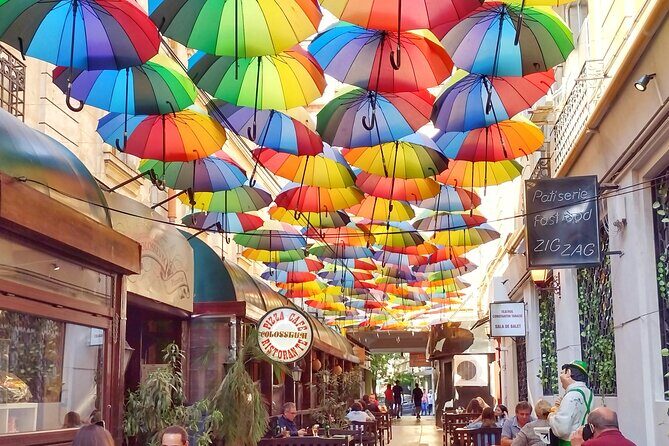
The guide is certified, and that matters. What you’re paying for here isn’t just walking from point A to B. It’s the explanations that connect buildings to political change, and political change to how people lived.
The names from the tour’s guides show the flavor you can expect. Toni leans into childhood memories from the communist era, including a Christmas detail about green bananas being a special treat. Manuela is the type to slow down when questions pop up, and she even shares a personal favorite snack. Marius’s approach comes through in how he blends history with local food moments—like adding tea, coffee, and street food during the experience. Maurice also keeps the communist-life angle front and center, with an emphasis on how Bucharest has changed.
You don’t need to be a history nerd for this to work. If you like stories that make the city feel human, this format is a good fit.
Ateneul Roman: Bucharest’s Greek-Temple Moment
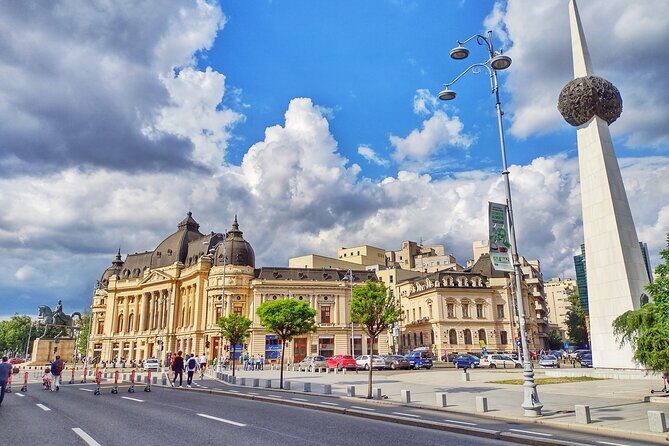
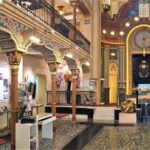
The tour kicks off at Ateneul Roman—a building that’s emblematic and easy to recognize, with a look that resembles an ancient Greek temple. The stop is short (about 15 minutes) and the admission is listed as free.
Why this stop matters: it sets the tone. Before you hit communist-era sites, you’re shown a pre-20th-century face of Bucharest—more classical, more ceremonial. Even if you only glance up at the façade, it helps you understand why Bucharest feels pulled in different directions: old-world grandeur, modern ambition, and later political heaviness.
Practical tip: have your phone ready for exterior photos here. The building is photogenic from multiple angles, and you’ll be glad you start early.
Piaka Revolukiei: The 1989 Story at Ground Level
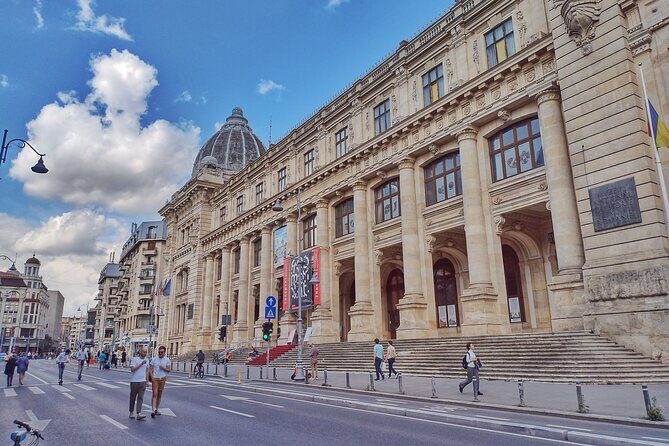
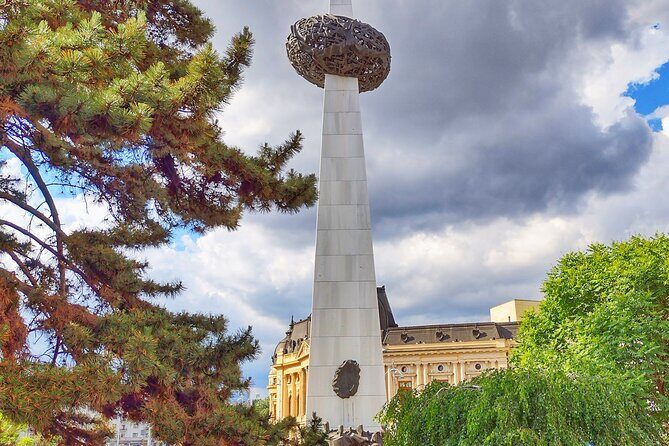
Next comes Piaka Revolukiei, where Ceausescu’s last speech took place in 1989. This is a 45-minute stop with free admission, and the presentation includes pictures and video from the Revolution days.
This is one of the tour’s strongest emotional anchors. You’re not just hearing about a regime. You’re standing at the place tied to the end of it, then seeing visuals that help the story click into place. A 45-minute window is enough time for the guide to connect the political timeline to what people experienced—and for you to ask follow-up questions without feeling rushed.
If you want a tour that mixes architecture with real-world consequences, don’t skip this stop.
The Elegant Avenue Interlude: Monuments Marching in a Line
The route then includes the city’s most elegant avenue, described as the main boulevard with major buildings and monuments along it. No single building is singled out in the details you have, but the idea is clear: you walk a stretch where Bucharest’s power and style show up in a row.
Think of this as your “orientation by monuments” moment. You’ll start to notice how the city centers around broad corridors and how political eras left their handwriting on architecture. It’s also a nice reset after Revolution Square, when your brain might be running on full charge.
Biblioteca Centrala Universitara and King Carol I’s Presence
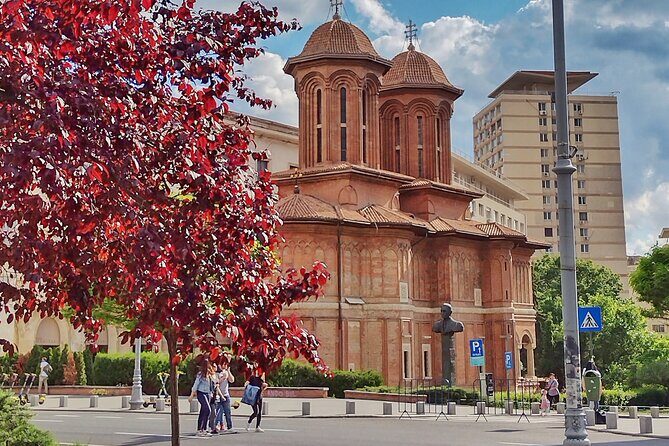
You then reach Biblioteca Centrala Universitara, built in an eclectic style by French architect Paul Gottereau, sponsored by King Carol I. There’s an equestrian statue of Carol I visible in front, and this stop is about 10 minutes, with free admission.
This is a small stop, but it’s one that pays off. It reminds you that Bucharest wasn’t only shaped by politics and upheaval—it was also shaped by international influence and royal investment. The French connection gives you a hint of why Bucharest’s style sometimes feels European in texture, not just regional.
Palatul Regal: A Winter Royal Residence on the Clock
The tour moves to Palatul Regal / Royal Palace, described as the winter royal residence of Romanian kings, dated 1937. It was built under supervision of Queen Maria and her son King Carol II. This stop is about 10 minutes, with free admission.
You’re mostly here for context and exterior viewing. Even so, it’s valuable because it bridges the “royal” Bucharest you just learned about with the later transformation of political power. It’s an architectural chapter heading you can feel in the route.
Old Town Walk: Cafes, 19th-Century Architecture, and Easy Wandering
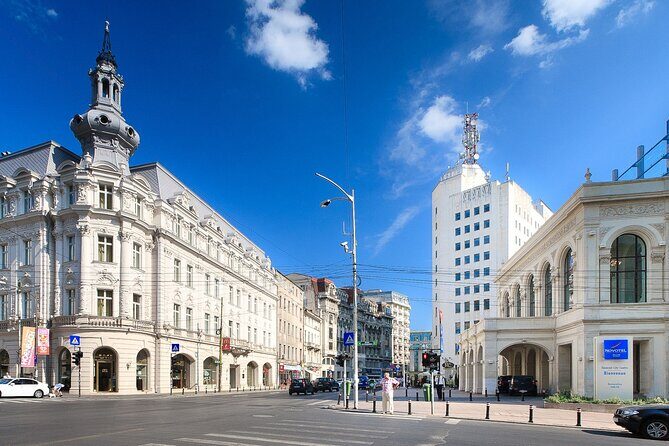
Old Town is next for about 15 minutes, with free admission. The description points out a center packed with cafes, pubs, and restaurants, plus lots of 19th-century architecture.
This is where the tour becomes more than a lecture. You get a sense of how the historical layers coexist with today’s social life. And if you came hungry, this is your cue to remember the guide’s food tips—because the tour is doing double duty: telling stories and pointing you toward where to actually spend your time after.
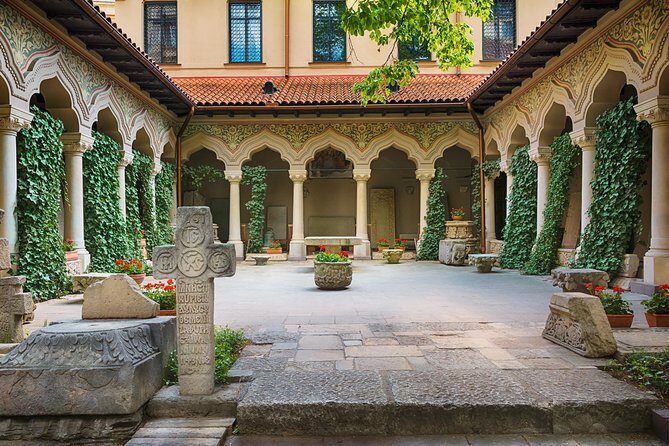
Stavropoleos Monastery: A Quiet 18th-Century Pause
Then you reach Stavropoleos Monastery, an Old Town church dating to 1724. The stop is about 10 minutes and free.
This one is short, but it’s a contrast piece. After boulevards and palace talk, you get a more intimate religious setting. It also gives you a break from the broader streets, which helps if you’re doing this in colder months or after a long day of walking elsewhere.
Macca Villacrosse Passage and Cărturești Carusel: Cover-Your-Weather Fun
Next is Macca Villacrosse Passage, described as a charming passage with a glass roof and hooka cafes. The stop is about 5 minutes, with free admission.
Then you get to Cărturești Carusel, a renovated bookstore filled with Romanian souvenirs and gifts (about 10 minutes, free).
These stops are clever because they’re useful. Passageways like this give you shelter if the weather turns. And Cărturești Carusel is practical if you want small, meaningful gifts without wandering for hours.
If you’re photo-minded: this is where you’ll likely take quick snaps. Glass roofs and interior displays behave well in low light.
Lipscani: The Old Street You’ll Want to Walk Again
Lipscani is next for about 10 minutes, with free admission. The tour frames it as a nice stroll along an old street.
Lipscani is one of those areas where your feet keep going even after the tour ends. If you like streets with history but also modern energy, this stop helps you choose where to extend your evening—dinner, a drink, or just more wandering.
Palatul CEC and the Former Royal Palace Museum Connection
You’ll also pass Palatul CEC, a 19th-century building noted for its architecture and magnificent statues (about 5 minutes, free).
Then there’s Muzeul Național de Arta al României, described as the former Royal Palace (about 5 minutes, free). This gives you another royal-threaded connection: you’re not only hearing about power. You’re seeing how royal spaces turned into cultural institutions.
Muzeul National de Istorie a Romaniei and Biblioteca Nationala: When Entrance Fees Apply
Two museum stops are listed as not included for admission:
- Muzeul National de Istorie a Romaniei, described as the former Post Office Palace (about 5 minutes)
- Biblioteca Nationala a Romaniei, an iconic palace in the Old Town area (about 5 minutes)
This is where you need to plan. The tour time at each is short, and the admission isn’t covered. If you’re curious enough to go inside, you’ll want to treat these as optional upgrades you can decide on during your evening.
The Palace of the Parliament: Exterior Views and Pharaonic Scale Talk
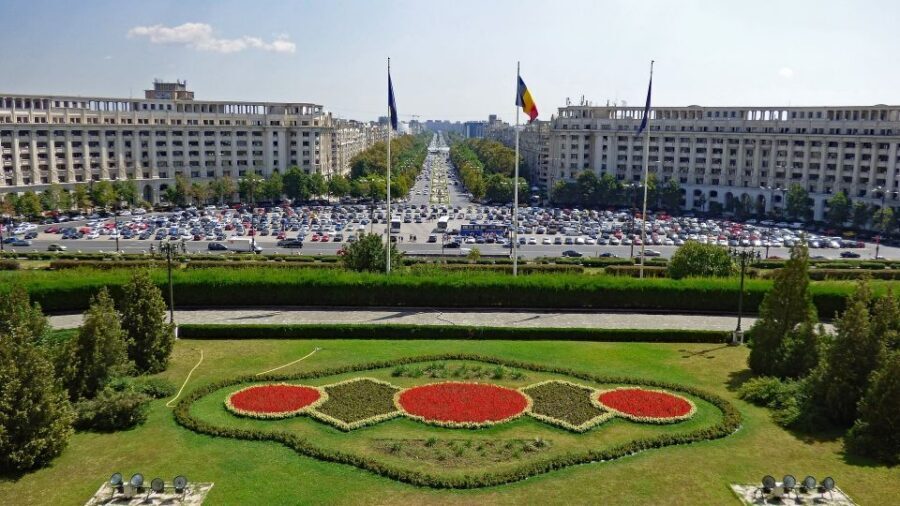
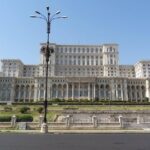
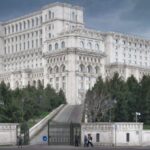
One of the most talked-about segments is the stop for Romania’s most famous building: the Palace of the Parliament. Construction began in 1984. It’s described as the heaviest building in the world and the world’s third-largest administrative building. There’s also a comparison that it exceeds the volume of the Great Pyramid of Giza by 2%, which is why it’s called pharaonic in scale terms. You’ll admire the exterior and hear the story.
Even if you never step inside (entrance fees aren’t mentioned for this specific sight in the data), the exterior can still land hard. This is the kind of architecture that makes you look up without thinking. It’s also one of the best “bookend” sights for a communism-focused walk: you can connect ambition, control, and politics to the physical footprint it left behind.
How to Handle the Walking Pace (Moderate Fitness)
The tour is described as requiring moderate physical fitness. That fits the overall style: you’ll be moving between multiple points across central Bucharest, mostly at street level, with short stops where you can rest your feet for a moment.
Also, it’s an evening tour, which usually means cooler air but also uneven lighting. Wear shoes you trust. And if it’s raining, you’ll be glad the route includes covered stops like the glass-roof passage.
Choosing Your Tour Time and Getting Your Bearings
The tour offers several times to fit your schedule. That’s useful because Bucharest evenings can fill up fast—especially if you also want dinner plans.
Average booking timing is 31 days in advance, which suggests this tour is popular and not something you should gamble on at the last minute. If you know you’re traveling in high season or during popular weekends, lock it in early.
Price and Value: $72.25 for a Guided Night Route
At $72.25 per person, this isn’t the cheapest walk in town—but it also doesn’t try to be a cheap walk. You’re paying for a certified guide, a small group (max 8), a night route, and a guided sequence that includes places where the story is more than signage.
Many stops are listed as free (so you can see plenty without spending extra). Still, entrance fees and food/drinks aren’t included, and the history-museum and national-library admissions are explicitly not included. So the best value happens when you treat those as optional choices rather than assuming everything inside is covered.
If you want a simple evening plan with built-in context and local food guidance, the price starts to make sense fast.
Who This Tour Suits Best
This works especially well if you:
- want a night tour to see Bucharest illuminated
- like history that connects to daily life, not just dates
- enjoy walking with a guide who answers questions and makes room for photos
- prefer a small group over a mass-market bus vibe
It’s less ideal if you:
- hate museums and don’t want to consider extra entrance costs
- want a purely inside-the-building tour (many stops are focused on viewing and short presentations)
Final Advice: Should You Book Footprints of Bucharest?
Yes—if you want a guided evening that mixes grand architecture, Revolution Square’s 1989 story, and Old Town street flavor in a single smooth plan. The small group size, certified guide, and focus on communist-era urban tales make it feel more personal than a standard sightseeing walk.
If you’re on the fence, I’d decide like this: book it if you want context and direction for the rest of your night. Skip it only if your main goal is museum interiors, because some admissions aren’t included and the stops are mostly brief.
FAQ
How long is the Footprints of Bucharest tour?
It runs about 2 to 3 hours.
Where does the tour start and end?
It starts at Strada Benjamin Franklin 2, București 030167, Romania, and ends at Piața Unirii in central Bucharest, near the Old Town area.
Is the tour offered in English?
Yes, it’s offered in English.
How large is the group?
The tour has a maximum of 8 travelers.
What is included in the price?
A certified guide and printed materials for the tour presentation are included.
Are entrance fees included?
Entrance fees are not included overall. Some stops are marked as admission free, while others are marked as admission not included.
Does the tour include night views?
Yes. It’s designed as a night tour so you can see the city all lit up.
What should I do about museum entrances that are not included?
You can decide on the spot whether you want to pay for entrances at the stops marked as not included.
What happens if the weather is bad?
The tour requires good weather. If it’s canceled due to poor weather, you’ll be offered a different date or a full refund.
Is there free cancellation?
Yes. Free cancellation is available up to 24 hours in advance for a full refund. If you cancel less than 24 hours before the start time, the amount paid is not refunded.