REVIEW · BUCHAREST
3 Days Private Tour in Romania with Transfagarasan Road
Book on Viator →Operated by Nicolas Experience Tours · Bookable on Viator
A road with drama starts this trip fast. In three days, you’ll stitch together Romania’s best mountain roads and powerhouse stops, from Transfagarasan views to cave walls and fortress stars. It’s private, so you’re not stuck with a slow-moving bus rhythm.
What I love most is the mix: big scenery days plus culture stops that actually mean something. I also like how the guide work feels personal—Nicolas comes across as calm, well-prepared, and tuned to your pace. One thing to think about: this route includes serious walking, and one highlight is a long stair climb.
Key take: if you like road trips and don’t mind getting out of the car often, you’ll have a blast.
In This Review
- The best parts to pay attention to
- Why this Romania road route works in just 3 days
- Day 1: Curtea de Argeș, Poienari stairs, Vidraru Dam, then Transfăgărășan
- Curtea de Argeș Monastery: royal tombs and a tragic building legend
- Poienari Fortress: the long stair climb and the Vlad connection
- Vidraru Dam: quick, scenic, and very different from the ruins
- Transfăgărășan Highway: the mountain road portion of the trip
- Day 2: Sibiu’s main square, Corvin Castle, and the monastery-and-church backbone
- Piata Mare (Big Square): start in the heart of Sibiu
- Castelul Corvinilor: gothic drama in a massive fortress
- Prislop Monastery: pilgrimage energy and Father Arsenie Boca
- Densus Church: one of Romania’s oldest Orthodox churches
- Day 3: Alba Iulia star fortress, Transalpina heights, Polovragi Cave, and UNESCO-era Horezu
- Alba Iulia: Vauban-style fortress and the seven-corner star
- Transalpina: the highest road moment at 2145 meters
- Polovragi Cave: 10 km of galleries, 800 m open, famous formations
- Horezu Monastery (Hurezi): UNESCO-era Romanian architecture and ceramics
- Price and logistics: what you’re really paying for
- Comfort and smart prep: how to make these 3 days feel easy
- Should you book this private Transfăgărășan/Transalpina tour?
- FAQ
- How long is the private tour?
- Is pickup included?
- Is this tour private?
- Are entrance fees included?
- Are meals and accommodation included for me?
- Do I need to pay for driving costs like tolls and parking?
- Is Wi-Fi available during the drive?
- Is the tour suitable for most travelers?
The best parts to pay attention to
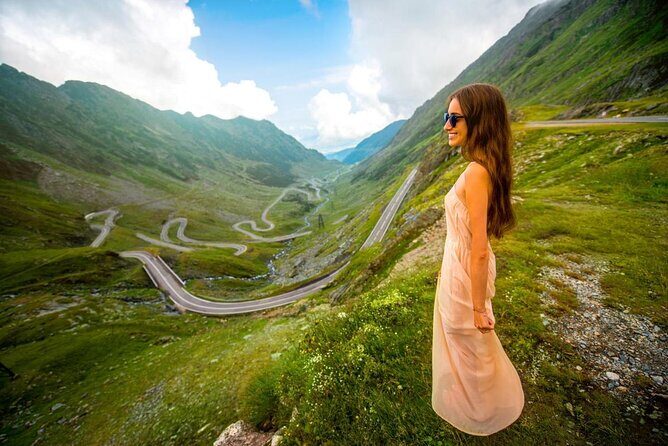
- Two mountain roads, not just one: Transfagarasan plus Transalpina in the same 3-day push
- Dracula-adjacent scenery: Poienari Fortress and the Vlad the Impaler story beat
- “Engineering view” stop: Vidraru Dam gives you a nature-meets-machines moment
- Medieval and spiritual variety: gothic Corvin Castle, Orthodox monasteries, and an ancient church
- A real cave outing: Polovragi Cave visits selected galleries with famous named formations
- A highly praised guide/driver: Nicolas is repeatedly singled out for information and a personal feel
Why this Romania road route works in just 3 days
Romania is big, and most first trips waste time. This one doesn’t. You get a strong spine of road, then you plug in major sights that feel different from each other: royal tombs and legends, fortress walls, castle architecture, Orthodox pilgrimage sites, and underground formations.
The private-car setup matters more than people expect. On mountain roads like Transfagarasan and Transalpina, timing can be everything for views and crowd levels. With a dedicated driver/guide, you spend your energy on the sights—not on logistics.
And the guide is a major reason this works. In the feedback I saw, Nicolas is repeatedly praised for giving useful facts (cities, churches, and regional details), plus for keeping the day flexible so you can linger where you care most. That’s exactly what makes a private tour feel worth the price.
You can also read our reviews of more private tours in Bucharest
Day 1: Curtea de Argeș, Poienari stairs, Vidraru Dam, then Transfăgărășan
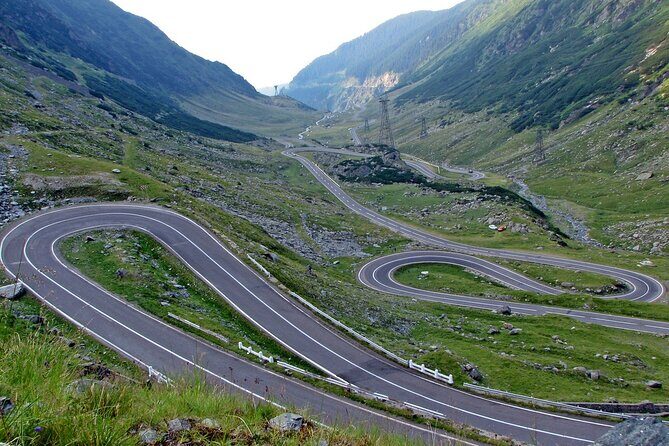
Day 1 is where the trip turns into a proper Romania story: legends, heights, and then a legendary highway.
Curtea de Argeș Monastery: royal tombs and a tragic building legend
You start at Curtea de Argeș, known for the Royal Church and royal tombs. The standout here is that you don’t just see stone—you hear a legend tied to the cathedral’s construction. The story goes that master Manole and nine stonemasons were tasked with building a great cathedral around 1512, and each day what they built would collapse by morning. It’s sad, it’s dramatic, and it helps you understand why the place feels heavy even in bright weather.
Plan for about 45 minutes here. The admission is listed as not included, so you’ll want to budget for it.
Practical note: this is a church/monastery stop, so dress respectfully. It’s the kind of place where you’ll feel better taking your time and looking at details instead of rushing.
Poienari Fortress: the long stair climb and the Vlad connection
Next is Poienari Castle, a ruined fortress above the Argeș Valley. It sits around 860 meters up, and it’s famous because it’s linked in Romanian tradition to Vlad the Impaler.
The most physical moment of the day is the climb: you’ll face 1480 stairs up to the fortress viewpoint area. If your feet are already tired from travel days, this is the part where you should slow down and take small breaks. It’s a commitment, but the reward is huge—fortress walls and a view that feels like you’re peeking into the past.
Time here is about 2 hours. Admission is not included.
Vidraru Dam: quick, scenic, and very different from the ruins
After stairs and legends, Vidraru Dam is a welcome reset. The visit is short—about 15 minutes—but it’s one of those places where you get a clean sightline and a “humans built this in the mountains” moment. You’ll look at the reservoir lake on the Argeș River, and it’s also listed as free for admission.
Don’t treat it like a drive-by. Even if you’re tired, stand where the view opens and take a minute. This is the kind of stop that breaks up the emotional intensity of the earlier story beat.
You can also read our reviews of more tours and experiences in Bucharest
Transfăgărășan Highway: the mountain road portion of the trip
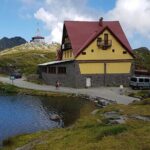
Then comes Transfăgărășan Highway—the big payoff. Expect a long stretch of driving with the kind of scenery that makes you want to keep your eyes up instead of checking your phone. This road is so famous that even mainstream TV road-show coverage called it one of the most beautiful roads in the world.
Your time here is listed around 3 hours, and admission is free. That’s important because it means you get the experience without extra ticket budgeting.
If you get motion-sick, pack what helps you. Mountain roads can be curvy. Also, bring a light layer: temperatures shift fast in the highlands.
Day 2: Sibiu’s main square, Corvin Castle, and the monastery-and-church backbone
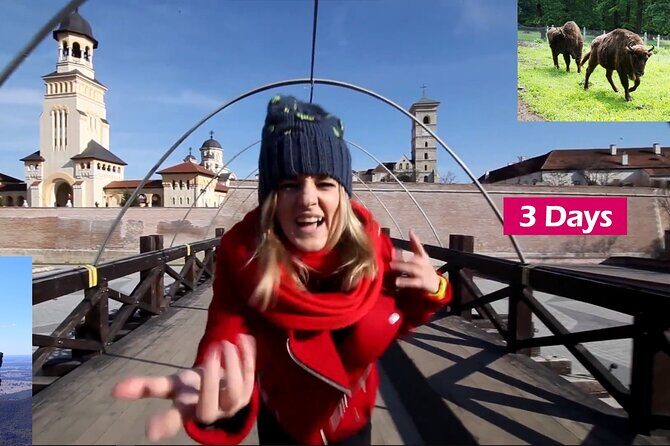
Day 2 slows the pace just enough to give you culture depth—Sibiu-style town energy, gothic castle drama, then Orthodox religious sites with age and atmosphere.
Piata Mare (Big Square): start in the heart of Sibiu
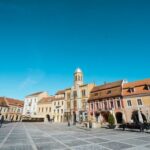
You begin at Piata Mare, the Big Square. This is where you get oriented fast and understand why Sibiu is considered a cultural hub, including its recognition as European Capital of Culture.
The stop is around 1 hour and is free. You’ll see the Evangelical Cathedral area and the old city center vibe (stone streets, historic façades, and the sense that the town has layers).
If you like people-watching and strolling, this is a good moment to slow down and let the guide’s city context land.
Castelul Corvinilor: gothic drama in a massive fortress
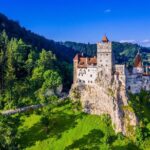
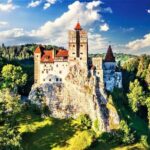
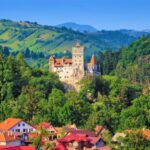
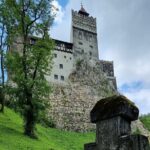
Then it’s off to Castelul Corvinilor (Corvin/Hunyadi Castle). This is a top “wow” stop of the route. It’s described as one of the top gothic castles in the world, plus it’s among the largest in Europe.
What makes this visit more than a pretty backdrop: it has a restoration story. After a devastating fire, the castle underwent extensive restoration and reopened as a museum. That means you’re not only looking at medieval style—you’re seeing a site that lived through damage and then got brought back.
Time is about 1 hour 30 minutes, and admission is not included.
Quick practical tip: the defense towers are a great spot for selfies. Even if you don’t do selfies, it’s still a good viewing location for perspective.
Prislop Monastery: pilgrimage energy and Father Arsenie Boca
Next comes Prislop Monastery. This place is linked to pilgrimages and the idea of spiritual healing. It’s described as a 400-year-old Orthodox settlement, and the atmosphere is connected to the church’s location and the devoutness of nuns who spend time praying.
A big detail here is the modern spiritual figure connected to the site: Father Arsenie Boca, described as a saint even during his life and now pending canonization. If you come from a background where religion and tradition shape travel, this stop can feel deeply meaningful.
Time is about 45 minutes, and admission is free.
Densus Church: one of Romania’s oldest Orthodox churches
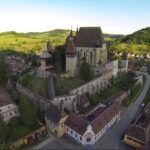
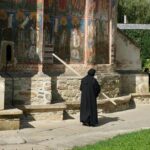
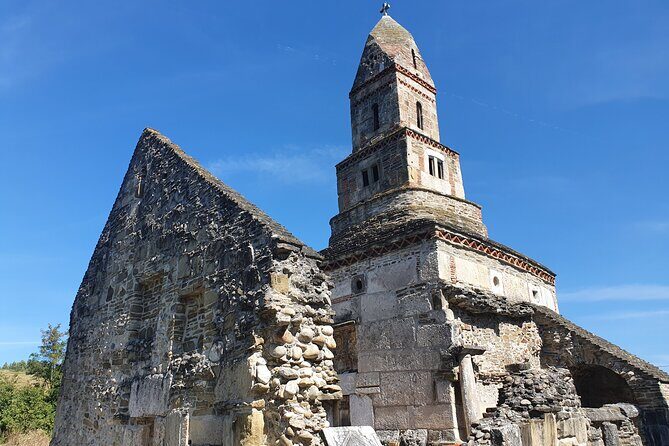
To close Day 2, you visit Densus Church, described as one of Romania’s oldest Orthodox churches. The key story is the layering: it was built on top of ruins dating back to the 4th century, with changes made in later stages, including the 13th century.
The architectural mix is part of the appeal, and the murals are another. The church includes mural paintings dating to 1443. Admission is listed as not included, and time is around 45 minutes.
A small warning: churches can be dim. If you want photos, consider bringing a phone setting that helps with low light.
Day 3: Alba Iulia star fortress, Transalpina heights, Polovragi Cave, and UNESCO-era Horezu

Day 3 gives you a final sweep of “Romania scale.” Fortifications above ground, one of the highest roads, a cave under ground, and a UNESCO monastery finish.
Alba Iulia: Vauban-style fortress and the seven-corner star
You start in Alba Iulia, one of Romania’s important centers. The fortress here is Vauban-style, credited to Sébastien Le Prestre de Vauban, using a seven-corner star model described as impossible to conquer.
You also get the Alba Carolina citadel, surrounded by three lines of fortification. The architecture is a major focus, and this place is described as one of the largest fortresses of its kind in Eastern Europe.
Time is around 2 hours, and admission is free.
If you like military architecture or just want a different kind of “big sight,” this stop is excellent because it’s not focused on legends—it’s focused on design.
Transalpina: the highest road moment at 2145 meters
Then you hit Transalpina, described as one of the most spectacular roads in the Carpathian Mountains and considered the highest road in Romania, reaching 2145 m.
You’ll get a broad mountain panorama and that “breathe easier” feeling that comes from being above the tree line. The stop is listed as very short—about 2 minutes—but it’s exactly the kind of quick break where the payoff comes from standing still and looking.
Transalpina is also listed as free for admission.
Name trivia matters here: the road is known as The Devil’s Path, possibly linked to shepherds crossing with their sheep during transhumance. Even if you don’t care about names, it adds texture to the viewpoint.
Polovragi Cave: 10 km of galleries, 800 m open, famous formations
Next is the cave: Polovragi Cave. This is described as eerie and spiritual, with a warm and humid feel. You’ll understand quickly why caves have a different rhythm than monuments above ground.
The cave has galleries extending for over 10 km, but only 800 m are open for visits. You’ll see named formations such as the Spring of Hope, the Bloody Vault, the White Room, the Divine Chamber, and others like the Grim Reaper and the Dacian Oven.
Time is around 1 hour 30 minutes, and admission is not included.
If you have sensitivities to humidity, bring something that helps you stay comfortable. Also, wear shoes that handle uneven cave ground.
Horezu Monastery (Hurezi): UNESCO-era Romanian architecture and ceramics
Your final stop is Horezu Monastery, described as one of the most beautiful and refined Orthodox monasteries, with 100% authentic Romanian architecture. It’s also listed as UNESCO World Heritage from the very beginning.
The focus isn’t just the church. You’ll connect the architecture to craft and landscape: Horezu ceramics, plus gorges carved in the mountain walls and stone caves nearby (as part of the general area’s appeal).
Time here is about 45 minutes, and admission is not included.
This is a strong ending because you finish with a “place with character,” not just a viewpoint. By now you’ll be tired, but Horezu gives you a meaningful visual goodbye.
Price and logistics: what you’re really paying for
At $1,156.44 per person for a private 3-day tour, this isn’t a budget add-on. So I measure value by what you get that you can’t easily replicate yourself.
Here’s the core value: you’re paying for a private vehicle for your party only, plus a private licensed English-speaking guide/driver who stays with you throughout the trip. The tour also includes all car expenses like gasoline, parking, and road tolls, plus complimentary wireless internet in the car.
You also get flexibility. The setup explicitly says your itinerary can change even after the start of the tour, which matters a lot on road trips. If you’re running ahead, you can use that time. If you’re feeling tired, you can adjust. Nicolas is praised for being easy to work with and for tailoring the experience to the pace you want.
What you should budget separately: entrance fees and your own accommodation/meals. The tour includes accommodation and meals for the guide, but not for you. In other words, you’re buying transport + interpretation + planning time, and you handle your personal expenses.
If you’re traveling as a couple or a small group, private tours can start to feel like the sensible choice. If you’re solo, you’ll feel the cost more—still, if you want a high-impact route with minimal hassle, it can be worth it.
Comfort and smart prep: how to make these 3 days feel easy
This route moves. It’s packed with sights, and you’ll be in and out of the car often.
A few practical tips based on how the stops are set up:
- Plan for uneven terrain and stairs, especially Poienari’s long climb.
- Expect some stops to be short but intense (like Transalpina’s brief viewpoint moment). If you want photos, be ready fast.
- Caves run warm and humid, so light layers help.
- Many visits list admission as not included, so keep a running budget for tickets.
On the comfort side, you have the advantage of being in a comfortable car with Wi‑Fi. That may not sound glamorous, but it helps on long drives—maps, messages, and charging time add up.
Finally, I’d take seriously the fact that the guide/driver gets repeatedly praised for being well informed and personal. That means you’ll get better from the trip if you ask questions. When Nicolas explains what you’re seeing, the whole day clicks.
Should you book this private Transfăgărășan/Transalpina tour?

Yes, if you want a high-impact Romania sampler in only three days and you care about mountain-road scenery more than checking boxes. This works especially well if you like a mix of fortresses, churches, castles, and caves, and you want that mix guided by a driver who can connect the dots.
Consider booking with extra care if you have mobility limits, because Poienari’s stair climb is a big physical element, and you’ll still do plenty of walking at churches and indoor stops.
My simple decision rule:
- Book it if you want scenery plus history with minimal stress.
- Skip it (or ask about pacing) if stairs and tight schedules will wear you down.
If you’re the type who likes to ask, listen, and adjust on the fly, this is the kind of private tour that makes those three days feel like a real memory, not just a route on a map.
FAQ
How long is the private tour?
It runs for about 3 days.
Is pickup included?
Pickup is offered.
Is this tour private?
Yes. It’s described as private, with only your group participating.
Are entrance fees included?
Entrance fees are not included, as listed for the stops.
Are meals and accommodation included for me?
Accommodation and meals for you are not included. The guide’s accommodation and meals are included.
Do I need to pay for driving costs like tolls and parking?
No. Car expenses such as gasoline, parking, and road tolls are included.
Is Wi-Fi available during the drive?
Yes. Complimentary wireless internet is included in the comfortable car.
Is the tour suitable for most travelers?
Most travelers can participate, and service animals are allowed.