REVIEW · BUCHAREST
Bucharest Communist Bike Tour
Book on Viator →Operated by Bike the City · Bookable on Viator
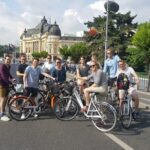
Communist Bucharest moves faster on two wheels. This 4-hour tour links major landmarks tied to Romania’s communist story, with free entry at each stop and bike-friendly transfers that keep you from wasting time between neighborhoods. Two things I really like: the way the route turns big, intimidating sites into clear walking-and-riding stops, and how the guide’s explanations make the ideology feel grounded.
One possible drawback: it’s not a food-and-drinks outing, so you’ll want to plan around that if you’re the kind of person who gets hungry mid-museum. Also, since the sights are spread over several locations, comfortable cycling matters more than you might expect.
In This Review
- Key things to know before you go
- Hopping on a bike for Bucharest’s communist story
- Palatul CEC: where power and society got shaped
- Catedrala Patriarhala: Romania’s early parliamentary moment
- Palace of Parliament: the last megalomaniac project
- Palatul Bragadiru: the old-versus-new contrast
- National College of Defence: history that plays with reality
- Casa Radio: the unfinished museum behind the story
- Piaka Revolukiei: the fall of Ceausescu’s regime
- The 4-hour pacing, plus shade breaks that actually help
- Price and value: is $54.13 worth it?
- Who should book this bike tour (and who might prefer something else)
- Should you book the Bucharest Communist Bike Tour?
- FAQ
- How long is the Bucharest Communist Bike Tour?
- How much does the tour cost?
- What languages is the tour offered in?
- What’s included, and is food provided?
- Are admission tickets required for the stops?
- Can I get a full refund if I cancel?
Key things to know before you go
- Bike transfers between landmarks make the route feel efficient and easy to follow
- All listed stops have free admissions, so you can focus on the story instead of tickets
- A tight 4-hour format works well for both morning and afternoon schedules
- A guide-led history thread helps you connect what you see to what came before and after
- Built-in breaks for shade can make a warm day much more pleasant
- Private group format means only your group participates
Hopping on a bike for Bucharest’s communist story
This tour is basically a guided route through the “how it happened” side of communist rule in Bucharest. You’re not just staring at monuments. You’re riding between places that each explain a different step in the story—from early political pressure to the final collapse.
For me, the smart part is the pacing. With a mix of smaller sites and major heavy-hitters like the Palace of Parliament, you get variety without turning the day into a long slog. You’ll also get a local guide (and a group discount option), plus a mobile ticket to keep things straightforward.
It starts at Strada Operetei 12, București 030167, and the tour ends back at the meeting point. The morning departure is listed at 9:30 am, and there’s also an afternoon option so you can match it to your other plans.
You can also read our reviews of more cycling tours in Bucharest

Palatul CEC: where power and society got shaped
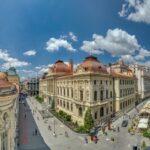
Your tour kicks off at Palatul CEC, in the Old City Center. This stop is about the world before communists truly took power—how society was shaped and where tensions were already brewing.
It’s a longer segment on purpose: 40 minutes lets the guide set the scene before you hit the big, unmistakable communist-era structures. I like that approach. If you start at the “final form” of the regime, the story can feel like a jumble of symbols. Starting here makes later stops click.
A practical bonus: admission is listed as free, so you’re not paying to learn the context you need. One thing to consider is that this is a conceptual start. If you prefer action right away, you may want to mentally gear up for the background first.
Catedrala Patriarhala: Romania’s early parliamentary moment
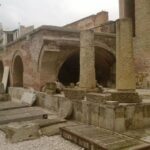
Next you head to Catedrala Patriarhala, described as the first Romanian Parliament and tied to the first communist attempt to take power. The stop is short—15 minutes—but it carries a lot of weight.
This is where the tour’s framing really helps. Instead of treating communism as a single sudden arrival, you see it as a force competing for control, even during early efforts at governance. That kind of context is useful once you start spotting how propaganda and power play show up in architecture and institutions.
Again, admissions are listed as free, so the value here is all in the explanation. It’s also a good stretch point—short enough that you don’t feel trapped inside the idea.
Palace of Parliament: the last megalomaniac project
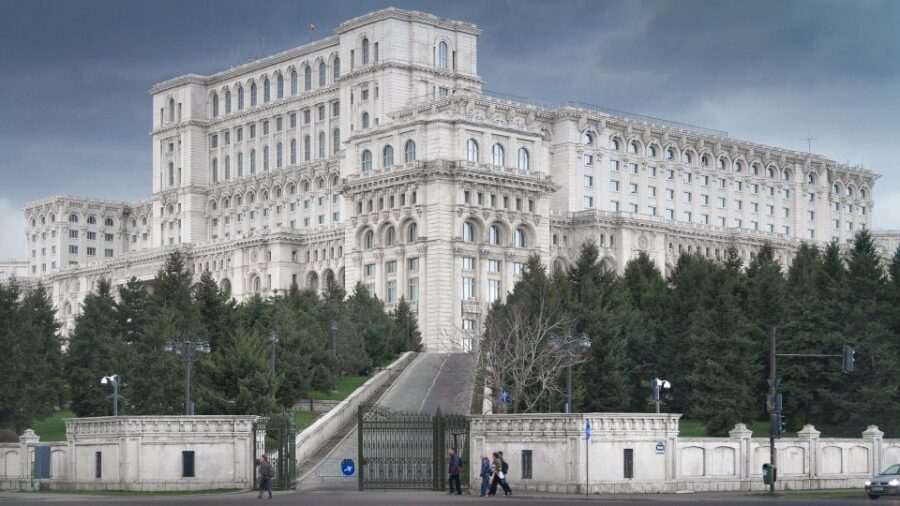
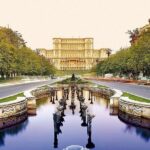
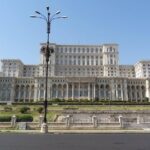
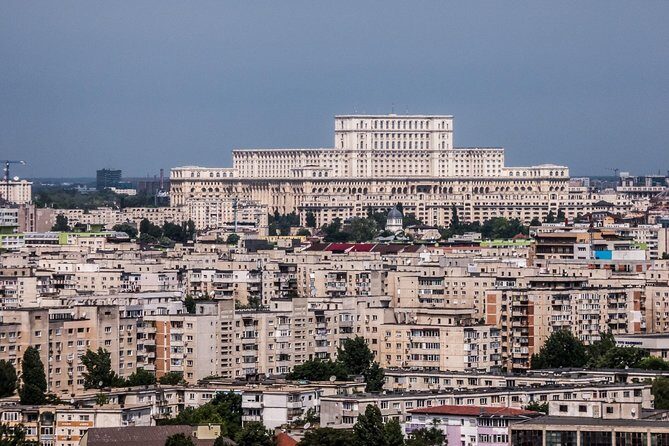
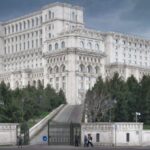
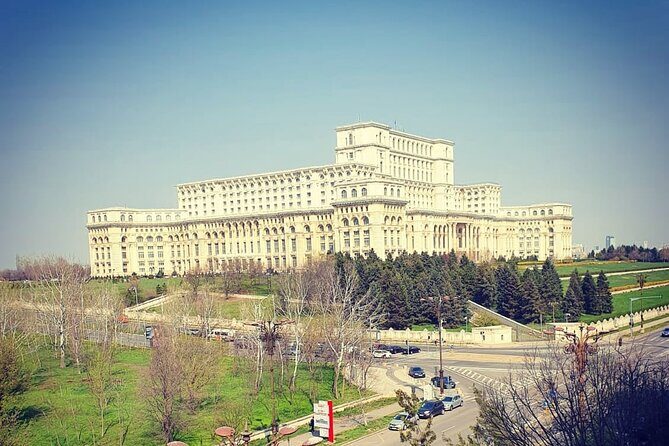
Then comes the big one: the Palace of Parliament—called the last megalomaniac communist project. The stop is 15 minutes, which surprises some people. Big sites can tempt you to spend hours just wandering.
But in this format, the goal is not a full visit. It’s a focused, guided stop tied directly to the message the regime wanted to project: scale, control, permanence. A short segment works because your bike ride and other stops give you momentum, and you’ll likely get the clearest takeaway from the guide’s interpretation rather than from passive looking.
Admission is listed as free for this stop in the itinerary. If you want a deeper look inside rooms or galleries, you’d likely need a separate plan. For this tour, you’re here to understand what the building represents in the political story.
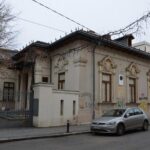
Palatul Bragadiru: the old-versus-new contrast
At Palatul Bragadiru, you get a quick snapshot—5 minutes—but it’s described as the best contrast between the old and the new communist social order.
That tiny time slot is intentional. Contrast like this works best when it’s framed and then moved on quickly. You’ll get the “before and after” idea without it turning into a long discussion that loses the visual impact.
Admission is listed as free, so you’re not managing extra costs for a very short stop. If you’re sensitive to rushed pacing, this might feel quick—but it’s balanced by the longer segments elsewhere.
National College of Defence: history that plays with reality
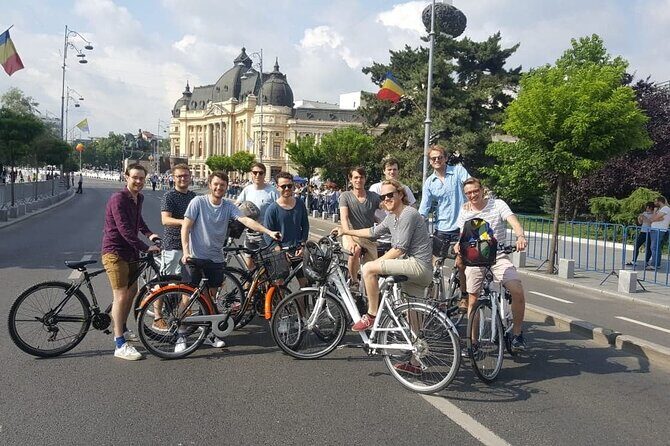
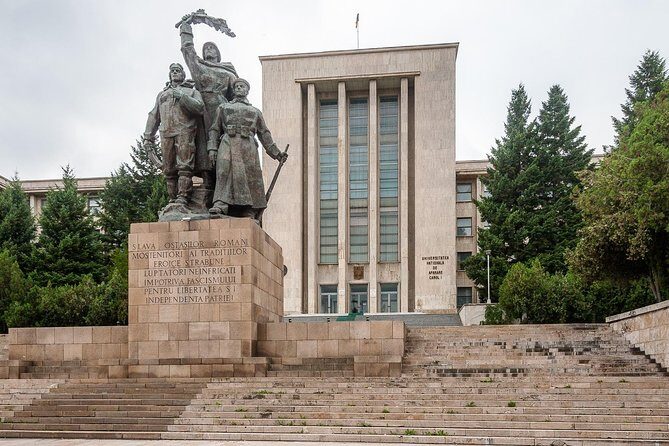
Next is National College of Defence, where the story is presented as a kind of counterfactual history: the Russian army and the communist movement shown as liberators from a fascist government.
The stop is 20 minutes. That’s enough time to understand how narratives can be engineered—especially in a regime that needed public support and ideological legitimacy. I like this stop because it gives you the tools to read propaganda as propaganda, not just as “what happened.”
Admission is listed as free in the itinerary. The main caution is mental: be ready for a political framing that’s meant to persuade. If you’re the type who prefers strict neutrality all the time, keep your critical eye on.
Casa Radio: the unfinished museum behind the story
You then reach Casa Radio, a stop tied to the idea that the communist regime needed historical background. The itinerary describes it as the site connected to the biggest communist history museum in the world—one that unfortunately or fortunately remained unfinished.
This stop is 10 minutes, which sounds brief, but it helps the tour keep its rhythm. The point isn’t to inspect every detail. It’s to connect the dots between ideology, institution-building, and the urge to control the historical narrative.
Admission is listed as free. The best use of the short time is to listen closely to how the guide explains why unfinished projects still matter. In a story like this, incompletion can be evidence of changing priorities, political pressure, or funding problems—depending on how your guide frames it.
Piaka Revolukiei: the fall of Ceausescu’s regime
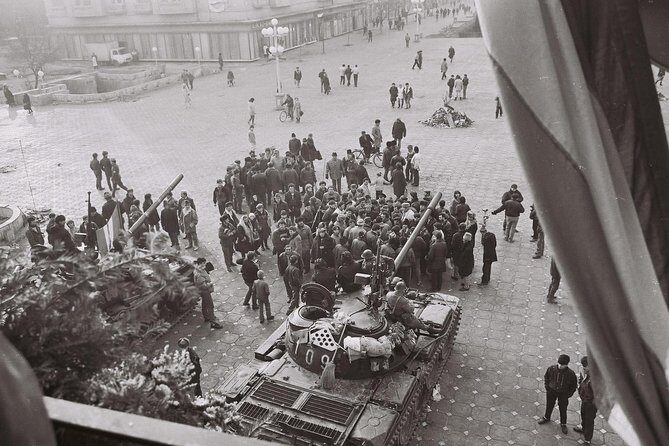
The final major stop is Piaka Revolukiei, tied to the fall of the communist system and the end of Ceausescu’s regime. This is the most time at once besides the first stop: 30 minutes.
This is your wrap-up segment, and it matters because it turns the earlier pieces into one timeline. After you’ve seen the “how power was built” stops, you need “how it ended” to complete the story arc. A half hour also gives the guide room to answer the kind of questions people naturally have at the end—especially around what replaced what.
Admission is listed as free. The key here is to treat this as a concluding lesson, not just another photo stop. If you’re thinking about Romania beyond the communist period, this ending often helps you understand why later political and cultural shifts looked the way they did.
The 4-hour pacing, plus shade breaks that actually help
The tour runs about 4 hours. That length is a sweet spot for a city-history experience because it’s long enough to connect ideas across multiple stops, but short enough that you’re not stuck in “museum fatigue.”
One review highlight points to a nice break in the shade, and I’m glad that’s part of the experience conceptually. Bucharest can be warm, and a planned pause keeps the energy up so you can stay focused on what the guide is saying.
You also get a choice of morning or afternoon timing, which is practical. Morning is often best for cooler temperatures and clear light for photos. Afternoon can work well if you want to start later and fit it around other activities.
Price and value: is $54.13 worth it?
At $54.13 per person for roughly 4 hours, this tour isn’t trying to be cheap. It’s priced like an organized, guide-led experience with a bike route, in English, with the key sights tied into one coherent storyline.
Here’s where the value math gets better:
- Local guide included
- Free admission listed for every stop on the route
- Mobile ticket for easy entry and smoother coordination
- Private group format (only your group participates), which can feel more personal and less distracting
Food and drinks are not included, so you’ll want to plan for water and a snack if you need it. That’s the trade-off: you pay for the guided history and transportation between sights, not for meals.
The tour is also described as booked about 18 days in advance on average, which suggests it’s not just a niche idea. If you’re traveling in busy periods, it’s wise to lock it in.
Who should book this bike tour (and who might prefer something else)
This fits best if you want a guided, city-connected history walk-through without the stress of jumping between sites on your own. The bike format helps you cover multiple landmarks while staying in a manageable time window.
It’s also a good choice if you want to skip the “guidebook shuffle.” The tour is built around the guide providing context so you’re not piecing together meaning from signs and articles yourself.
A couple groups to think about:
- If you’re traveling with kids, children must be accompanied by an adult.
- If you don’t feel comfortable cycling for several stops in a row, you might find a walking-focused history tour easier.
- The itinerary notes that most travelers can participate, and it’s near public transportation, which helps if you’re using transit to arrive.
Should you book the Bucharest Communist Bike Tour?
I’d book this if you like history that explains cause-and-effect, and if you want your city sightseeing to feel efficient. The combination of bike transfers, free admissions at every stop, and a guide-led storyline makes it easy to understand what you’re seeing without getting lost in the details.
Skip it only if you want a deep, inside-the-building museum crawl with food included. This tour is built for interpretation and orientation, not for lingering all day.
If you’re in Bucharest for a short visit and want one smart history outing you can feel good about, this is a strong pick—especially when you can choose the timing that fits your day.
FAQ
How long is the Bucharest Communist Bike Tour?
The tour lasts about 4 hours.
How much does the tour cost?
The price is $54.13 per person.
What languages is the tour offered in?
It’s offered in English.
What’s included, and is food provided?
A local guide is included. Food and drinks are not included.
Are admission tickets required for the stops?
The itinerary lists admission tickets as free for each scheduled stop.
Can I get a full refund if I cancel?
Yes. Free cancellation is available, and you can cancel up to 24 hours in advance for a full refund.