REVIEW · BUCHAREST
Bucovina Painted Monasteries & Transylvania Tour: 4-Day Private
Book on Viator →Operated by Crafted Tours Romania · Bookable on Viator
If blue frescoes could talk, this route would listen. This Bucovina Painted Monasteries & Transylvania private tour strings together some of Romania’s most famous Orthodox mural churches, plus Transylvanian Saxon history in places like Sighișoara and Brașov. It also includes real travel comfort: private transport, Bucharest pickup, and three nights in a 3-star hotel with breakfast.
I especially like the one-on-one feel. Your private guide can slow down when a fresco needs explaining, and speed up when you just want to get to the next viewpoint. I also like that several entrance tickets are handled for you, so the day runs without constant ticket detours.
One thing to plan for: not every stop has an entrance fee included. You should budget for additional onsite tickets, and some places also have photo and dress rules.
In This Review
- Quick Hit Checklist Before You Go
- Why Bucovina’s Painted Monasteries Hit Hard
- Private Transport and Hotel Nights: The Real Value
- Day 1: Agapia and Văratec Nunnery Monasteries
- Agapia Monastery: Church History Painted Over Time
- Văratec Monastery: Scale and Stillness
- Day 2: Sucevita, Moldovița, and Voroneț’s Famous Blue
- Sucevita Monastery: Byzantine and Gothic in One Frame
- Moldovița Monastery: Built as a Protective Barrier
- Voroneț Monastery: The Sistine Chapel of the East
- Day 3: Sighișoara, Viscri Fortified Church, and Brașov’s Old Center
- Sighișoara Historic Center: UNESCO Walled Citadel Vibes
- Viscri Fortified Church: Saxon Architecture in a Living Village
- Brașov Historical Center: Trade Routes and Saxon Power
- Day 4: Black Church and Pelișor’s Big Brother—Peleș Castle
- Black Church: Gothic and Lutheran Centerpiece
- Peleș Castle: Neo-Renaissance Royal Summer Residence
- Price and What You’re Getting for Your Money
- Photo Rules, Dress Notes, and the Small Stuff That Matters
- Who This Private Tour Suits Best
- Should You Book This Bucovina and Transylvania Private Tour?
- FAQ
- What’s included on this tour?
- Are monastery entrance fees included?
- How much should I budget for entrance fees?
- Where does the tour start and how does pickup work?
- How long is the tour?
- Is this a private group or shared tour?
- What’s the cancellation policy and what if weather is bad?
Quick Hit Checklist Before You Go
- Private guide, not a cattle-car day: you’ll get more back-and-forth than on standard group tours.
- Bucovina mural churches as the main event: Agapia, Văratec, Sucevita, Moldovița, and Voroneț each bring a different style and story.
- Saxon medieval stops on Day 3 and Gothic Lutheran landmarks on Day 4: a neat mix, not just monasteries.
- Comfort matters on a packed route: private, comfortable transport plus included hotel nights keeps you sane.
- Expect extra onsite tickets at some sights: Viscri and the Black Church are listed as not included, and others may have rules on photos.
Why Bucovina’s Painted Monasteries Hit Hard
Bucovina’s painted monasteries aren’t just pretty. They’re a visual theology lesson, built to teach through color and story. The murals you’ll see were created over centuries by different artists and workshops, and the tour is set up so you can notice those differences instead of treating every church as the same postcard.
Two of the most satisfying parts of the route are the way the churches are compared back-to-back and the way the guide connects the art to the region’s history. In one hour, a place like Agapia can feel like calm, devout order. Then the next monastery flips the mood with bolder composition and a different painting approach. It’s art you can read like a timeline.
There’s also an emotional quiet to these sites. Even on busy travel days, you often get a slower pace once you step inside and the frescoes take over your attention.
You can also read our reviews of more private tours in Bucharest
Private Transport and Hotel Nights: The Real Value
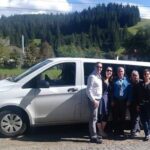
This is a private tour, and that isn’t just a label. Private transport helps because your route is long and your stops are spread across different towns and valleys. You want enough comfort to arrive focused, not worn out.
You also get three nights in 3-star hotels plus breakfast (3 mornings). That matters more than it sounds. On a multi-stop tour like this, you don’t want to spend your evenings negotiating meals and logistics after a day of driving. Breakfast included gives you a clean, predictable start, and it helps you spend your time on sightseeing instead of planning.
You’ll have hotel pickup and drop-off in Bucharest, and pickup can be arranged anywhere in the city. Start time is 9:00 am, so plan for an early-ish morning routine—especially if you’re joining from a hotel outside the center.
Day 1: Agapia and Văratec Nunnery Monasteries
Day 1 is a gentle opener, in the best sense: it eases you into Bukovina’s Orthodox world with two major nunneries.
Agapia Monastery: Church History Painted Over Time
Agapia Monastery sits about 9 km west of Târgu Neamț in the commune of Agapia (Neamț County). The core story here is time layered onto time. The monastery was built in the early 1640s by Romanian hetman Gavriil Coci, and the church was restored and modified in later centuries. Then, in the late 1850s, it was painted by Nicolae Grigorescu between 1858 and 1861.
That long arc is a big reason this stop works so well at the start. You see how a place evolves: architecture, restoration, and then the mural program. It helps you understand why different churches look different even when they share the same spiritual purpose.
Practical note: this is listed as about a one-hour visit with the entrance ticket included, so it’s paced well for energy on Day 1.
Văratec Monastery: Scale and Stillness
Then you head to Văratec Monastery, located in Văratec village in the same Agapia commune area. Văratec is the largest nunnery monastery in Romania, with more than 400 nuns living there.
The highlight for me is the scale. With that many nuns, the monastery isn’t a museum set up for visitors—it’s a living religious community. You’ll likely feel the difference instantly: slower movements, quieter attention, and an atmosphere that doesn’t feel staged.
This stop is also listed as about one hour, with admission included.
Consideration for Day 1: if you’re sensitive to longer driving days, keep your expectations realistic. This is still a full tour day. The advantage is that the first day’s stops are well matched and not exhausting in themselves.
You can also read our reviews of more tours and experiences in Bucharest
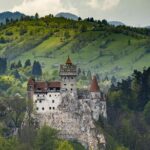
Day 2: Sucevita, Moldovița, and Voroneț’s Famous Blue
Day 2 is where the tour really earns its reputation. It’s three painted churches in the heart of northern Moldavia’s monastery tradition, and they’re different enough that you can tell the regional painting language from stop to stop.
Sucevita Monastery: Byzantine and Gothic in One Frame
Sucevita Monastery is known for a church architecture mix, with Byzantine and Gothic elements, plus features typical to painted churches of northern Moldavia. What you’ll notice right away is the density of mural painting. Both interior and exterior walls are covered with murals of high artistic value, depicting biblical episodes from both the Old and New Testament.
The big value of Sucevita is the way it gives you both structure and narrative. It’s not just a wall of images; it reads like a plan for how faith is taught through art.
This stop is listed for about two hours with admission included, so you get time to actually look.
Moldovița Monastery: Built as a Protective Barrier
Next is Moldovița Monastery, built in 1532 by Petru Rareș, who was Stephen III of Moldavia’s illegitimate son. The tour context for this place is protective in tone: it was founded as a barrier against Ottoman threats from the east.
That historical purpose adds weight when you look at the monastery’s murals and stonework. You’re not just seeing beauty; you’re seeing a statement of endurance.
Again, this is listed for about two hours with admission included.
Voroneț Monastery: The Sistine Chapel of the East
Then comes Voroneț Monastery, one of the star names of Bucovina’s painted churches. It was constructed by Stephen the Great in 1488 over a very compressed schedule of 3 months and 3 weeks, commemorating the victory at the Battle of Vaslui.
You’ll hear Voroneț described as the Sistine Chapel of the East, and the reason is clear once you see the fresco program. The famous element is the intense shade of blue known in Romania as Voroneț blue. That blue isn’t a vague color; it’s a signature look that makes the church instantly recognizable even when you’re comparing photos.
This stop is also around two hours with admission included.
One practical reminder: fresco-heavy sites often have rules about photography and access. If you’re the type who likes exterior shots, bring spare time and check what is allowed on the day you visit.
Day 3: Sighișoara, Viscri Fortified Church, and Brașov’s Old Center
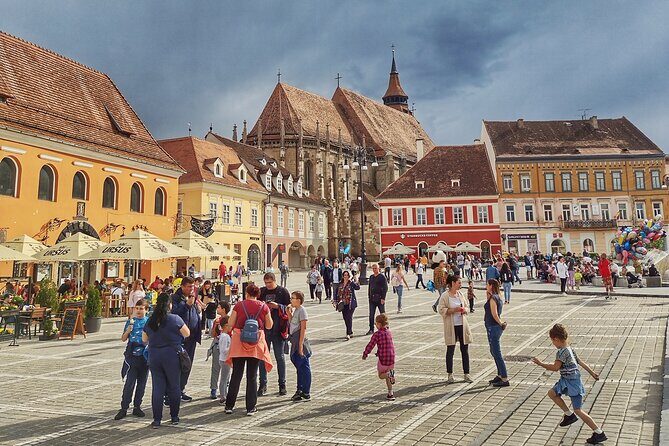
Day 3 shifts gears. You leave the monastery core and move into Transylvania’s medieval and Saxon heritage. It’s a smart change because it prevents “church fatigue.”
Sighișoara Historic Center: UNESCO Walled Citadel Vibes
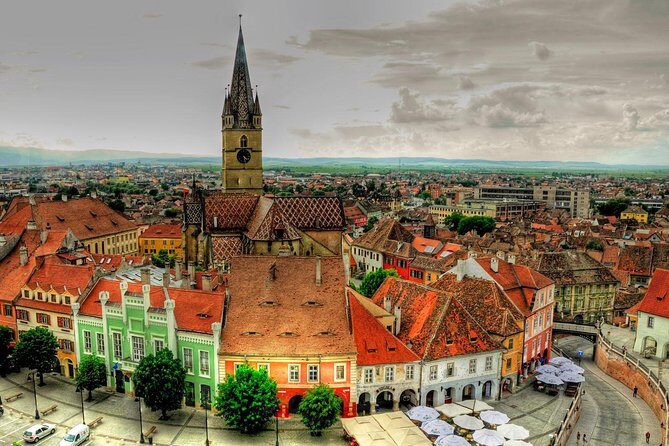
Your first stop is the Centrul Istoric Sighisoara. This medieval citadel is famous for its well-preserved walled old town and is listed by UNESCO as a World Heritage Site.
Even without adding extra activities, the setting does most of the work. Narrow lanes, defensive walls, and the sense of a compact medieval world make you slow down naturally. It’s also a helpful contrast after the open monastery grounds and fresco walls of Day 2.
This is listed for about two hours with admission included.
Viscri Fortified Church: Saxon Architecture in a Living Village
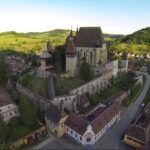
Next is Viscri Fortified Church, another UNESCO World Heritage Site. This is a well-preserved Saxon fortified church that shows you medieval architecture in a way that feels connected to village life, not detached from it.
This stop is listed for about one hour, but admission is not included. So plan to pay onsite.
Brașov Historical Center: Trade Routes and Saxon Power
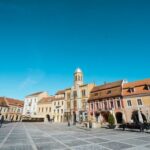
Then you arrive in Brașov for the historical center visit, about two hours with admission included. Brașov was the regional capital of the Transylvanian Saxons of the Burzenland administrative area in the past, and it also became a major commercial hub on trade routes between East and West.
One fun detail that makes this city feel real: Brașov is said to be the birthplace of the Romanian national anthem. It’s the kind of fact a good guide can weave into the streets so it doesn’t feel like random trivia.
Consideration for Day 3: this day is less about ticketed monuments and more about walking time and street ambiance. Wear shoes that handle uneven stone.
Day 4: Black Church and Pelișor’s Big Brother—Peleș Castle
Day 4 is a final mix of Gothic Lutheran heritage and royal-scale architecture.
Black Church: Gothic and Lutheran Centerpiece
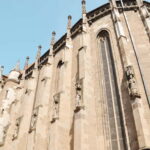
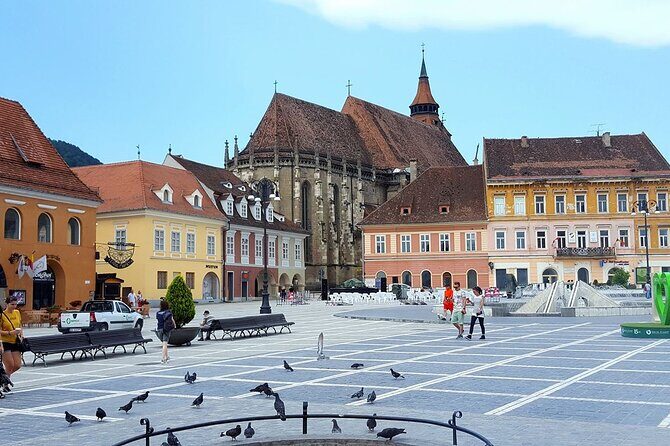
The Black Church in Brașov is described as the main Gothic-style monument in Romania and the largest and one of the most important Lutheran (Evangelical Church of Augustan Confession in Romania) places of worship in the region.
Admission is not included here. It’s also a good stop if you want to see how different faith traditions show up in the same Transylvania setting that produced so many Orthodox monasteries.
This is listed for about one hour.
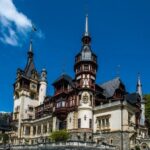
Peleș Castle: Neo-Renaissance Royal Summer Residence
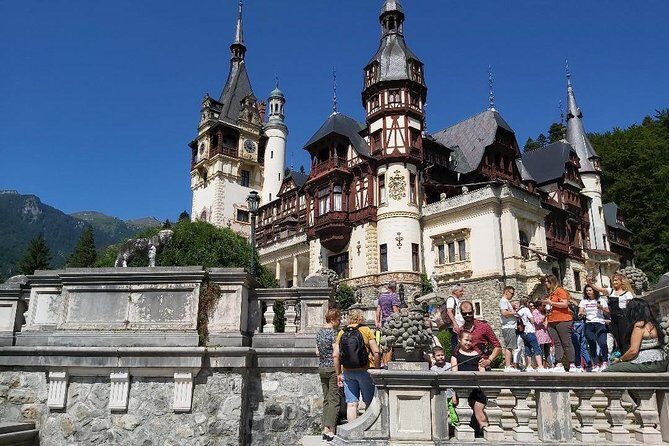
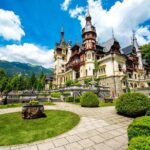
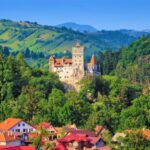
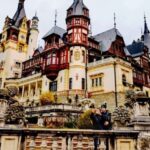
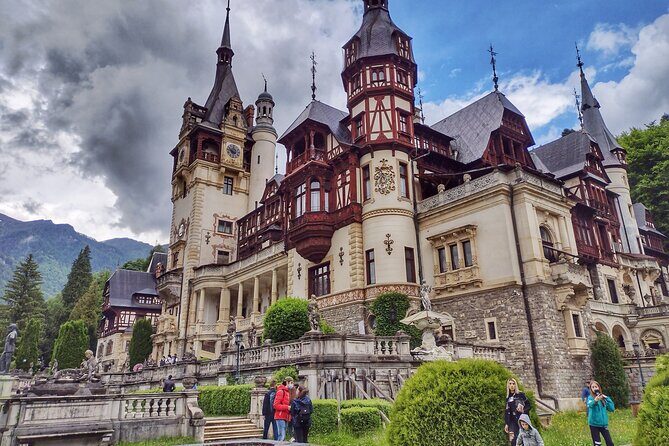
Finally you head to Peleș Castle, near Sinaia in Prahova County, Romania. It’s the summer royal residence, built between 1873 and 1914 for King Carol I. The castle is Neo-Renaissance, placed in the Carpathian Mountains, on an existing medieval route linking Transylvania and Wallachia.
Admission is not included, and the listed time is about one hour.
What makes Peleș Castle worth the final-day slot is scale and mood. After days of fresco and fortified stones, you get a different kind of craftsmanship—ornate interiors and the sense of a palace meant for presence.
Price and What You’re Getting for Your Money
At about $1,356.43 per person for roughly four days, the cost isn’t cheap on paper. But it lines up with what you’re paying for: private transport, a dedicated guide, three nights in 3-star hotels, and included breakfast.
The best way to judge value here is to look at time and friction. Without this structure, you’d still spend money on hotels, you’d still need a driver, and you’d still have to coordinate entrance tickets across multiple regions. Even with some onsite fees remaining, the tour reduces decision fatigue.
Where the cost gets more understandable is that many entrance tickets are included. Still, not all stops are covered. Plan for additional onsite entrance fees—given as about €25–€30 per person—and treat that as part of the real trip budget.
Also note: meals and drinks aren’t included beyond breakfast. If you’re trying to control spending, choose simple lunch plans and save your best splurges for dinner.
Photo Rules, Dress Notes, and the Small Stuff That Matters
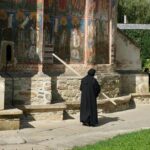
This route is heavy on churches, so rules can matter. In one case, photos outside required an extra payment (10 Lei was mentioned). Inside, photography wasn’t allowed.
For dress, you may be asked to cover your head and wear appropriate clothing; one review specifically said that head covering wasn’t required but trousers or a long skirt were needed to access the grounds. Since rules can vary by site and day, I recommend you pack a light layer and plan for conservative attire in the church areas.
If you’re a serious photo person, keep these in mind:
- You may get limited shooting time at certain angles.
- Exterior photo rules might cost extra in some places.
- Inside rules can be strict, so you’ll want to enjoy the art with your eyes first.
Who This Private Tour Suits Best
This tour fits you best if you want:
- a private guide who can explain the meaning behind the frescoes, not just point them out
- a focus on painted monasteries without turning the whole trip into one repetitive site
- a Transylvania mix that includes both medieval walled towns and major landmarks like the Black Church and Peleș Castle
- comfort on a multi-day route (private transport plus hotel nights)
It’s also a good match if you like structured days. Visits are timed, and you’re not left hunting for how to connect one place to the next.
It may feel like a lot if you dislike driving days or you want a slow travel pace with long free afternoons. This itinerary is built for seeing more in fewer days.
Should You Book This Bucovina and Transylvania Private Tour?
If your top priority is Bucovina’s painted churches, this is an efficient way to see several of the region’s most important examples in a single trip. The private format matters because the art is the whole point, and art needs explanation—especially when you’re looking for differences in style, era, and themes.
I’d book it if you’re okay planning around a few extra onsite fees and you’re ready for rules around photos and dress at religious sites. And I’d feel good about booking if you want a guide who can bring the region to life—names like Toni Tatar and Marius show up in real feedback as people who work hard to make the days meaningful and smooth.
Don’t book it if you want total flexibility, lots of free time, or a trip that only scratches the surface. This one is for travelers who want a focused route and prefer someone else to handle the driving and sequencing.
FAQ
What’s included on this tour?
You get 3 nights in 3-star hotels, breakfast for 3 mornings, hotel pickup and drop-off in Bucharest, a private tour, and entrance tickets are included for several listed stops.
Are monastery entrance fees included?
Some entrances are included for the listed visits, but not all stops have included admission. Entrance for places like Viscri Fortified Church, the Black Church, and Peleș Castle is listed as not included.
How much should I budget for entrance fees?
Entrance fees not included are given as about €25–€30 per person. Tickets can be purchased on the spot.
Where does the tour start and how does pickup work?
The tour starts in Bucharest, Romania, with a 9:00 am start time. Pickup can be arranged anywhere in Bucharest.
How long is the tour?
It’s a 4-day private experience, approximately.
Is this a private group or shared tour?
This is a private tour/activity. Only your group participates.
What’s the cancellation policy and what if weather is bad?
You can cancel up to 6 days in advance for a full refund. If the experience is canceled due to poor weather, you’ll be offered a different date or a full refund. The tour requires good weather.