REVIEW · BUCHAREST
Walking Tour- Delightful Bucharest (Highlights, Stories, Sights)
Book on Viator →Bookable on Viator
A short walk, big Bucharest context. This 2-hour route is a fast way to learn how the city ticks, with a local guide named Adrián guiding you between standout landmarks and stories. You’ll love the easy orientation you get early in a trip, plus the mix of architectural eras packed into a few blocks.
What I like most is how the tour gives you both the eye-candy and the meaning. You’ll get quick context on the Orthodox heart of the city at Stavropoleos, then shift gears to Belle Époque-style Bucharest with the Palatul CEC area. The other win is pace: it’s long enough to feel like a real introduction, but short enough that you’re not stuck all afternoon.
One thing to know up front: several stops are outside views only, so you won’t be going inside every building even if you have an admission ticket for a couple of them.
In This Review
- Key takeaways before you go
- Why this 2-hour Bucharest highlights walk is a smart first step
- Start at Marmorosch Bucharest, then glide toward Old Town
- Stavropoleos Monastery: the Orthodox jewel you’ll actually remember
- Palatul CEC: belle Époque style, with a real limitation
- Macca Villacrosse Passage: the covered arcade stop that feels like a reward
- National Military Club: power on display, with questions to answer
- Palace of Telephones: a lucky place with a twisted story
- Revolution Square: where regimes turn over
- Ateneul Roman: the finish at the Romanian Athenaeum
- How Adrián’s style shapes the value of the tour
- Pace, cobblestones, and what to wear for comfort
- Price and value: what $22.99 gets you in practice
- Who should book this, and who might want a different style
- Book it or skip it? My practical take
- FAQ
- How long is the walking tour?
- How much does it cost?
- What language is the tour offered in?
- Do I need a printed ticket?
- Where does the tour start and end?
- How many people are in the group?
- Which stops include admission tickets?
- Are the sites visited inside during the tour?
- Is the tour easy to reach using public transportation?
- Is cancellation free if plans change?
Key takeaways before you go
- A tight 2-hour highlights route that helps you navigate central Bucharest fast
- Adrián’s storytelling style, with local color and memorable personal anecdotes
- Real variety of Bucharest from Orthodox lanes to Belle Époque details to Revolution Square
- A couple of paid sights included, including Stavropoleos Monastery and Macca Villacrosse Passage
- Exterior-only stops at some landmarks, so plan separate time if you want interiors
Why this 2-hour Bucharest highlights walk is a smart first step
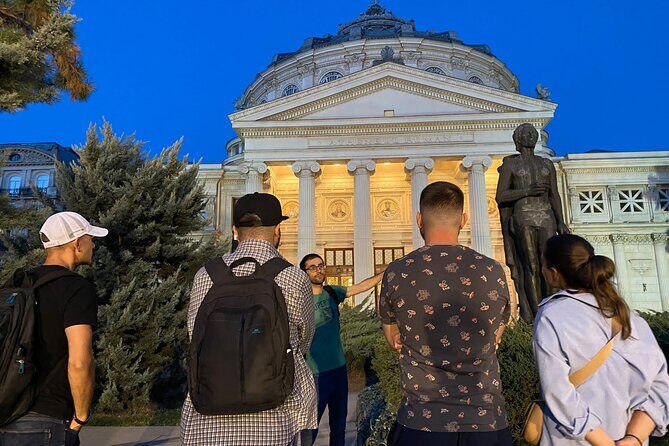
If you’re new to Bucharest, your biggest challenge is figuring out what goes where. This tour helps you solve that quickly. In about 2 hours, you cover major central landmarks on foot and get a narrative thread that ties them together, from church-era Bucharest to later political shifts.
The value here is not just ticking off famous spots. It’s learning what each place represents, in plain language, while you’re standing right in front of it. That matters because Bucharest can feel like it has layers stacked on layers, and a guided walk helps your brain place those layers in order.
Also, the group size stays reasonable. It runs with up to 25 people, so you’re not disappearing into a crowd.
You can also read our reviews of more walking tours in Bucharest


Start at Marmorosch Bucharest, then glide toward Old Town
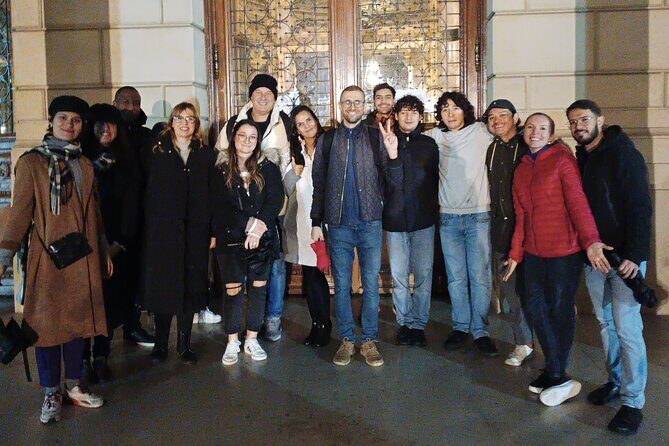
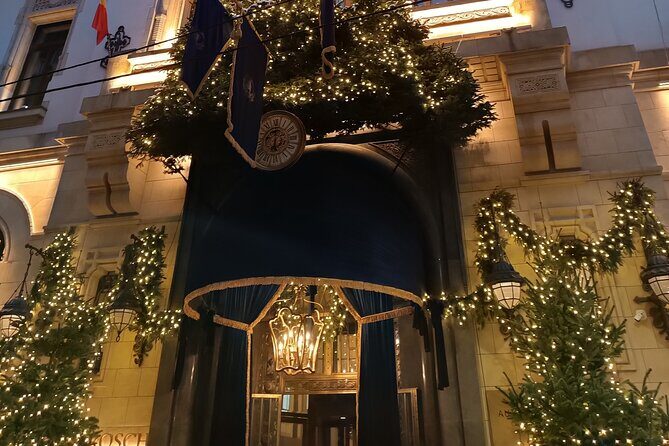
The meeting point is the Marmorosch Bucharest, Autograph Collection, on Strada Doamnei 2. From there, your walk flows into the older core and then onward toward the Romanian Athenaeum.
This start matters because Strada Doamnei puts you close to the heart of the action. You’re already in a good position for grabbing coffee or continuing your day afterward. And with public transportation nearby, it’s easy to fit this into a busy schedule.
Expect a straightforward walking structure: short stops, quick explanations, and then you move on. The tour is designed for orientation. If you’re the type who likes to understand a city’s “why” instead of just “what,” this style usually works well.
Stavropoleos Monastery: the Orthodox jewel you’ll actually remember
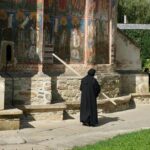
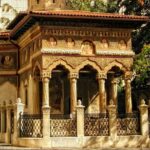
Stop one is Stavropoleos Monastery, a standout Orthodox site right in the city center. You get about 15 minutes here, and an admission ticket is included.
The best part is how the guide frames it. You don’t just see an old church and move along. You hear what makes the monastery special in the late Romanian Renaissance look, and you understand why this sort of sacred pocket feels so different from the surrounding streets.
Practical tip: if you’re visiting in colder months or during rain, churches can be a welcome pause. You’ll likely find it easier to slow down and absorb details in this kind of stop than during outdoor monuments later on.
Palatul CEC: belle Époque style, with a real limitation
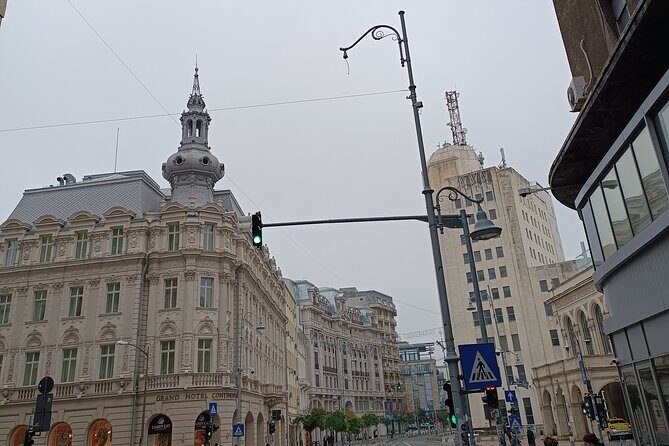
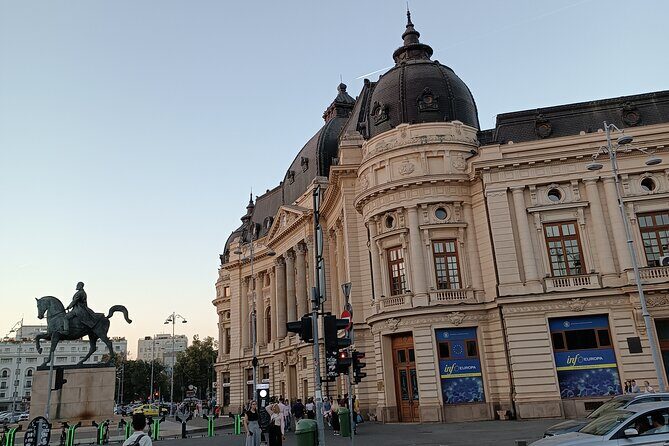
Next up is Palatul CEC, a major landmark associated with the Belle Époque vibe in Bucharest, often described as the Little Paris feeling. You’ll spend around 15 minutes here, but the important note is that you cannot visit inside the building, and admission isn’t included.
That exterior-only detail is worth planning for. This stop is about architectural spotting and symbolism, not interior access. You’ll want to bring your eyes: notice facades, alignments, and the “grand” language buildings use to tell you what kind of power or confidence they were built to project.
If you love photos, this is a good place to slow down for a few pictures. But don’t expect a museum-style visit. Treat it like a look-and-learn moment.
Macca Villacrosse Passage: the covered arcade stop that feels like a reward
Then comes Macca Villacrosse Passage, about 10 minutes on the route, with admission included. This is the kind of stop that makes the whole tour feel charming. You walk into a covered arcaded street that’s small, cute, and historically interesting, and it’s the sort of place many people end up wanting to return to later.
Because it’s a passage with a roof, it’s also practical. On rainy days, covered sections can turn an uncomfortable walk into a manageable one. (Even if it’s only ten minutes, that shelter can feel like a mini win.)
This is one of the stops that fits the tour’s overall promise: it’s not just “big monuments.” It’s the little built passages and urban details that make Bucharest feel like a real city you could wander for hours.



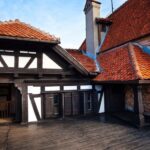

National Military Club: power on display, with questions to answer
Stop four is the National Military Club, roughly 10 minutes. Again, the building can’t be visited inside, and admission isn’t included.
The guide’s job here is to help you read what the building is saying. The description you’ll hear focuses on the Romanian Army symbolism and ambitions. Standing outside, you’ll get the sense that architecture isn’t neutral. It’s messaging.
This stop is brief, so you’ll get the headline version. If you’re the type who loves military history and political symbolism, you’ll probably want to spend extra independent time in the area afterward. If not, treat it as a quick context stop that connects to what comes later at Revolution Square.
Palace of Telephones: a lucky place with a twisted story
Next is the Palace of Telephones. You’ll have about 15 minutes, no interior access, and admission isn’t included.
This is one of those stops built for curiosity. The theme is a lucky place with a twisted history. You don’t just get a fact dump. You get a story with enough odd angles to make you pay attention, because you’ll be looking at the building while the guide explains why it’s surrounded by that kind of reputation.
If you like tours where the guide gives you an explanation for odd quirks in a city, this stop usually lands well. You’ll walk away feeling like you know what to ask your next Bucharest bar conversation friend.
Revolution Square: where regimes turn over
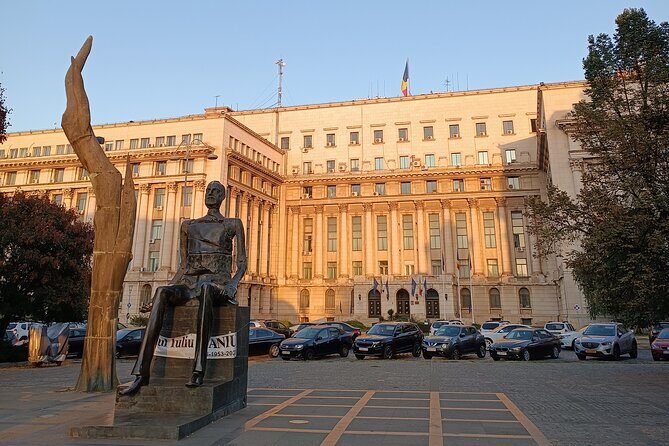
At around 20 minutes, Revolution Square is one of the longest stops on the walk, and it’s a free stop. The theme here is Bucharest’s recent decades and how major events shaped the society. The guide frames it as a place where different political regimes started and ended.
This is the emotional spine of the tour for a lot of people, because it’s where the city’s past becomes direct and personal. Even if you don’t memorize every detail, you’ll feel the shift between architecture meant for grandeur and architecture tied to political upheaval.
Practical note: it’s an outdoor space, so if you’re sensitive to cold or rain, dress for it. The good news is that the tour’s timing and pacing are built for quick movements between covered and open areas.
Also, keep your expectations realistic: this is not a full history lecture. You’ll get the big picture and the symbolism, which is perfect for first-time visitors trying to place later history.
Ateneul Roman: the finish at the Romanian Athenaeum
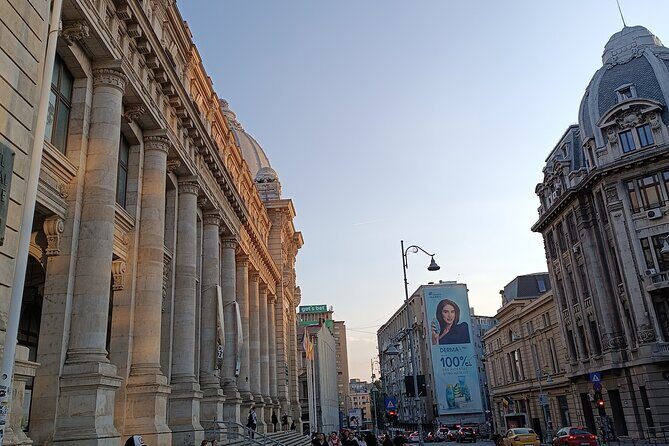
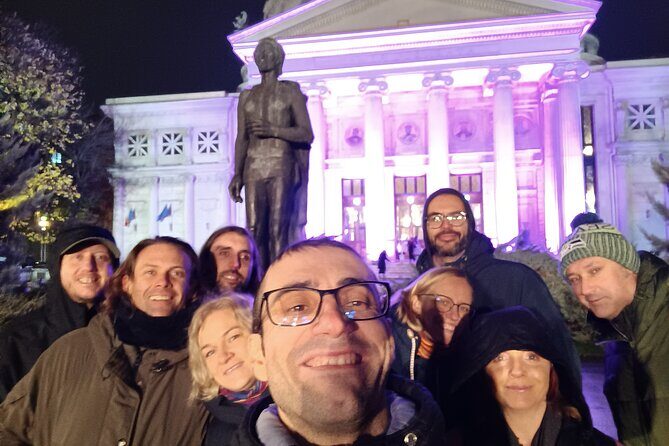
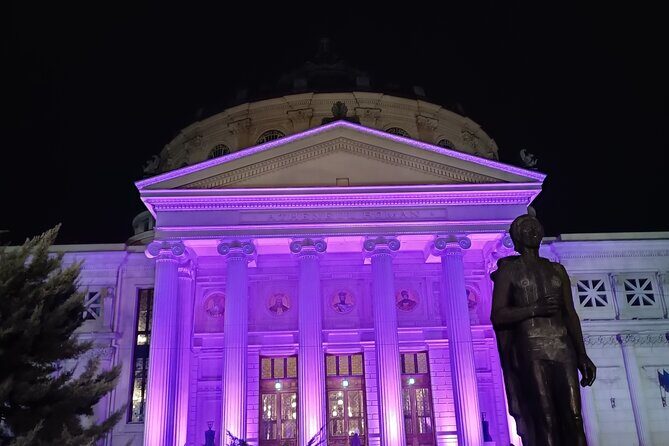
The final stop is the Romanian Athenaeum, known as Ateneul Roman. The walking tour ends here after the guide’s story at about 15 minutes. Interior visits are not included as part of this walking format.
This is a strong ending. You’re finishing at a landmark that feels like a cultural statement: the temple of the Romanian nation, framed as a 19th-century masterpiece and a feast for the eyes. Even from outside, it’s the kind of building that makes you slow down.
If you’re planning the rest of your day, this finish is convenient. You’re dropped in a central spot, and you can keep exploring from there without having to retrace your steps.
One more real-world detail: the tour doesn’t end where it starts. That’s normal for city-walk formats, but it can trip you up if you’re expecting a round trip. Since the ending is very central, it usually turns into an advantage.
How Adrián’s style shapes the value of the tour
A tour like this lives or dies by the guide. In this case, the name you’ll hear attached to the experience is Adrián. People consistently describe him as funny, energetic, and good at weaving local context into what you see.
What stands out is the balance between architecture talk and human stories. You might hear personal memories related to growing up in Romania, plus details that bring the communist era into focus in a way that’s less textbook and more lived-in. There’s also mention of him sharing a family story about an exorcism attended with his grandmother at a Bucharest church that still performs them. Even if that’s not your usual historical focus, that kind of anecdote is exactly what turns a walking tour into something you remember.
There are also times he answers questions as you go, rather than waiting until the end. If you’re the kind of person who likes to clarify details on the spot, that’s a real plus.
Pace, cobblestones, and what to wear for comfort
This is a walking highlights tour, so your comfort depends on your shoes. Old Bucharest streets can mean uneven cobblestones, and that matters for anyone pushing a stroller, using mobility aids, or just trying to stay steady in the dark or rain.
Expect a brisk but manageable pace between stops. If the weather is bad, you might still spend time on the move. When it rains, you’ll want footwear with grip and layers that keep you warm without overheating.
If you’re very sensitive to slipping or you’re recovering from an injury, plan to take extra care. For most people it’s fine, but Bucharest cobbles don’t care about your schedule.
Price and value: what $22.99 gets you in practice
At $22.99 per person for about 2 hours, the price is in the “easy decision” category if you like guided orientation. Here’s why that matters: you’re not only paying for walking and explanations. You also get admission value baked into the route.
An admission ticket is included for Stavropoleos Monastery. Admission is also included for Macca Villacrosse Passage. Revolution Square is free. Several other major landmarks are exterior-only (like Palatul CEC, National Military Club, Palace of Telephones, and the Romanian Athenaeum), and you shouldn’t expect paid entry for those.
So you’re paying for access to the guided story plus a couple of paid stops where entry is actually part of the tour. For a first-time itinerary, that’s good value because you learn what to prioritize later for independent visits.
Also, the mobile ticket format makes this smoother. You don’t want to lose time at check-in while your day melts away to waiting in a line.
Who should book this, and who might want a different style
This tour is a strong fit for:
- First-time visitors who want orientation fast
- People who like architecture plus context, not just photos
- Anyone with limited time who still wants a guided narrative thread
- Travelers who enjoy a guide with personality and local perspective (Adrián’s style is a big part of the appeal)
You might consider a different option if:
- You’re mainly interested in interiors and full museum-like access (several stops are view-only)
- You prefer a slower pace and lots of time standing still in every spot
- You’re uncomfortable with tours that include pointed takes on politics and national events. One critical experience reported commentary that felt too nationalistic for their taste, and a second concern was a guide’s pacing and conduct during rain. That doesn’t sound like the typical pattern based on the overall ratings, but it’s still worth keeping in mind if you’re sensitive to tone.
Book it or skip it? My practical take
I’d book this if you want a clean, efficient start to Bucharest. It hits major landmarks, explains what they represent, and ends at a top destination in the city. You’ll leave with a better mental map, plus enough stories to make your next hours feel less random.
Skip it if you already know Bucharest well and you’re hunting for deep museum time. This is an overview walk. It’s best as your first or second day, when you need grounding.
If you go, bring good shoes and a mindset of: you’re here to learn the city’s logic quickly, then wander on your own with smarter choices.
FAQ
How long is the walking tour?
The tour runs for about 2 hours.
How much does it cost?
It costs $22.99 per person.
What language is the tour offered in?
The tour is offered in English.
Do I need a printed ticket?
No. You get a mobile ticket.
Where does the tour start and end?
It starts at Marmorosch Bucharest, Autograph Collection (Strada Doamnei 2) and ends at the Romanian Athenaeum (Strada Benjamin Franklin 1-3).
How many people are in the group?
The tour has a maximum of 25 travelers.
Which stops include admission tickets?
Admission tickets are included for Stavropoleos Monastery and Macca Villacrosse Passage. Revolution Square is free. Other major stops mentioned can’t be visited inside, and admission is not included for those.
Are the sites visited inside during the tour?
Some stops are outside views only (the tour notes you cannot visit inside at multiple locations).
Is the tour easy to reach using public transportation?
Yes, it is near public transportation.
Is cancellation free if plans change?
Yes. You can cancel up to 24 hours in advance for a full refund. If you cancel less than 24 hours before the start time, it won’t be refunded.