REVIEW · BUCHAREST
Discover Bucharest: Private Highlights and Traditional Food Tour
Book on Viator →Operated by Intrepid Urban Adventures - Romania · Bookable on Viator
Bucharest hits you with stories fast. This private, half-day walk mixes street-level eating with big historical turning points, from Revolution Square to Lipscani.
I loved the 3-course traditional Romanian meal at the end, especially because it comes with a drink and a real local-restaurant feel. I also like how you get a local guide who gives personalized tips for where to eat and drink after the tour.
One possible drawback: expect lots of walking on uneven old streets and across major squares, so wear comfortable shoes and don’t plan this as a slow stroll day.
In This Review
- Key things to know before you go
- Starting at Carol I: Revolution Square and your fast intro to Bucharest
- Calea Victoriei and an 18th-century Eastern Orthodox church stop
- Lipscani back streets: Ottoman to French, with real street texture
- Palace of the Parliament: communist scale and what got erased
- The 3-course Romanian meal: what you actually taste on this day
- Private-guide style: how your pace and interests stay in control
- Price and value: what $143.61 really covers
- Who should book this Bucharest tour (and who should skip it)
- Should you book Discover Bucharest: Private Highlights and Traditional Food Tour?
- FAQ
- What’s the duration of the private Bucharest food and history tour?
- How much does the experience cost per person?
- Where is the meeting point, and where does the tour end?
- What language is the tour offered in?
- Is the tour private?
- What’s included in the traditional meal?
- Do you get any extra food or drinks beyond the included meal?
- Is this tour good for families or children?
- Can I cancel for a full refund?
- What ticket do I need for the tour?
Key things to know before you go

- Private tour, just your group, with an English-speaking local guide
- Old Town storytelling that connects Ottoman influence, French architecture, and daily life
- Calea Victoriei stop at an 18th-century Eastern Orthodox church
- Revolution Square and Lipscani highlights handled with context, not just photo stops
- Palace of the Parliament perspective on the controversy and the cost to historic neighborhoods
- Romanian flavors that commonly include classics like mici, sarmale, and the dessert papanas
Starting at Carol I: Revolution Square and your fast intro to Bucharest
Your tour starts at the Equestrian Statue of Carol I near Revolution Square, and that’s a smart way to begin. This area sets the tone: Bucharest’s layers of power, protest, and reinvention are all within a short walk.
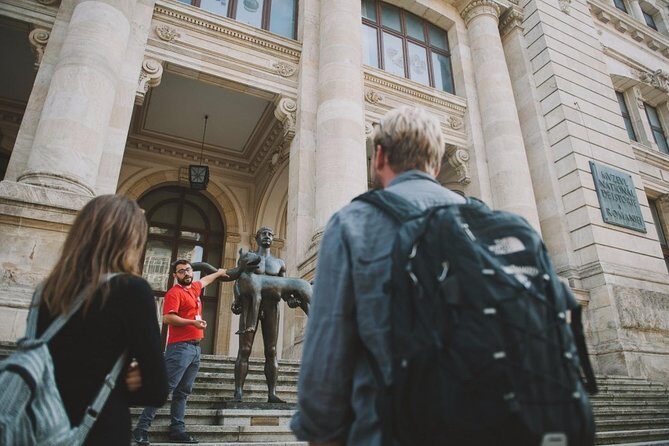
A good guide will point out how the city signals meaning through monuments. You’ll hear details tied to the equestrian statue, including a note about the horse’s tail position. And around Revolution Square, guides often help you decode the local references people call out by nickname, like the so-called potato monument and a sculptural homage connected to the tortured man theme.
What I like about this opening is that you’re not just waiting for the “main sites.” You’re learning how to read the city. You start with symbols, then move into streets where those symbols make sense.
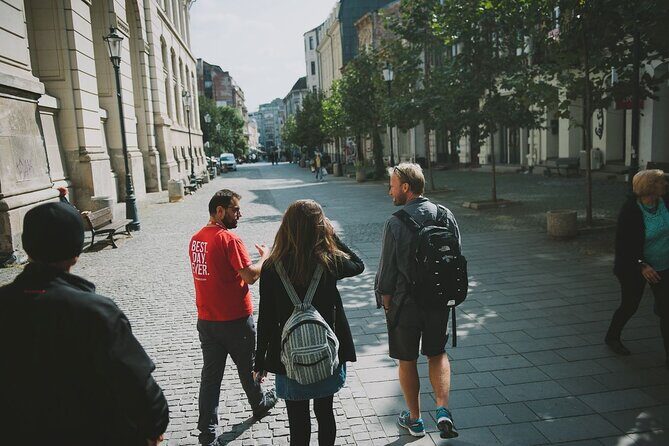
From here, the walk naturally angles toward Old Town areas like Lipscani, where the vibe shifts from monumental to lived-in. You’ll spend time on winding back streets and older lanes, with your guide connecting what you see—buildings, street shapes, and small details—to the eras that shaped Bucharest.
You can also read our reviews of more food & drink experiences in Bucharest

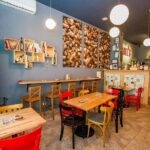
Calea Victoriei and an 18th-century Eastern Orthodox church stop
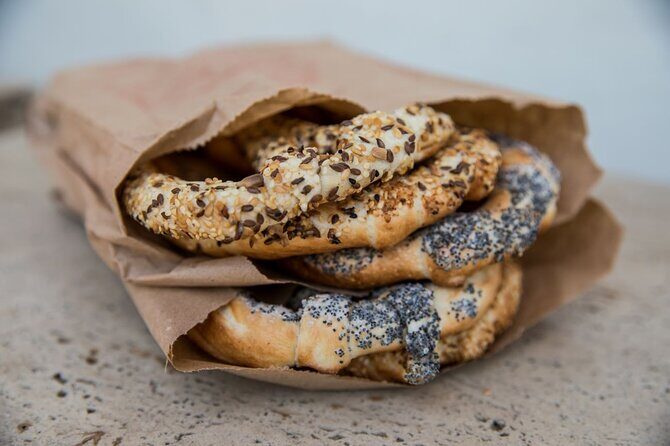
Next comes Calea Victoriei, Bucharest’s famed long avenue lined with landmarks and grand facades. Even if you’ve never been, you’ll quickly understand why it’s such a key corridor: it feels like the city showing off its “big-city” ambitions.
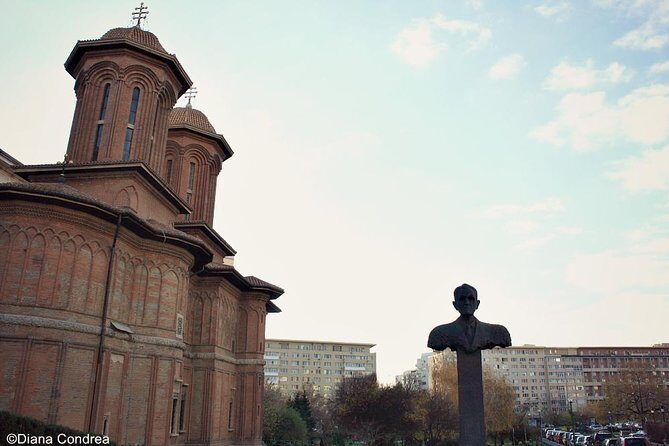
The tour includes a stop at an 18th-century Eastern Orthodox church on Calea Victoriei. This isn’t only about architecture. Your guide’s job is to explain how religion, empire, and local life kept pulling Bucharest in different directions over time. It’s also a good pause point if you want something calmer than street corners and moving crowds.
A nice bonus of this section is the way it threads the story of foreign influence into everyday scenes. The tour is designed to move from ideas like Ottoman-era pressure to later French-era taste, so you can see how Bucharest absorbed outside forces while still staying unmistakably itself.
If you enjoy walking with a purpose, this stop gives you that. You’re not just “seeing a church.” You’re learning why it matters in the city’s timeline.
Lipscani back streets: Ottoman to French, with real street texture
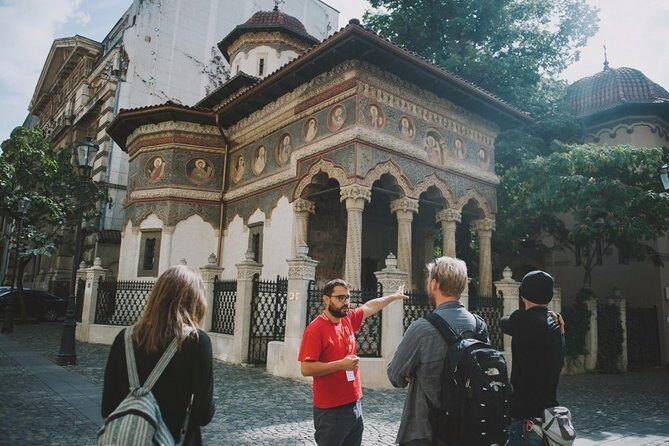
After Calea Victoriei, you’ll get into Bucharest’s heart: meandering streets, older urban rhythms, and areas where the city feels slightly compressed, like you’re stepping into another pace. This is the part that tends to make first-time visitors feel oriented fast.
Lipscani is where history becomes more tactile. The streets here let your guide explain how Bucharest evolved—from Ottoman pressures to later European tastes—without turning the day into a lecture hall. You’ll hear the story through the layout itself: where people would have moved, where commerce clustered, and why the city’s character feels so layered.
One of the most appreciated aspects of this tour is how much room there is for questions. In the reviews, guides are praised for answering everything and tailoring the walk. That matters here, because Bucharest is one of those cities where one detail leads to another: a style of doorway, a hidden passage, a name on a storefront.
Some guides also add small local detours when time allows. For example, Dana Toma has been mentioned for taking time for a tiny hat shop and for pointing out handmade items connected to Roma crafts. Even if those stops don’t happen on your exact day, the approach is the same: the guide tries to show you Bucharest beyond the postcard list.
Practical note: this section rewards curiosity, but it’s still walking. Keep water handy and expect your shoes to get a workout on older surfaces.
Palace of the Parliament: communist scale and what got erased
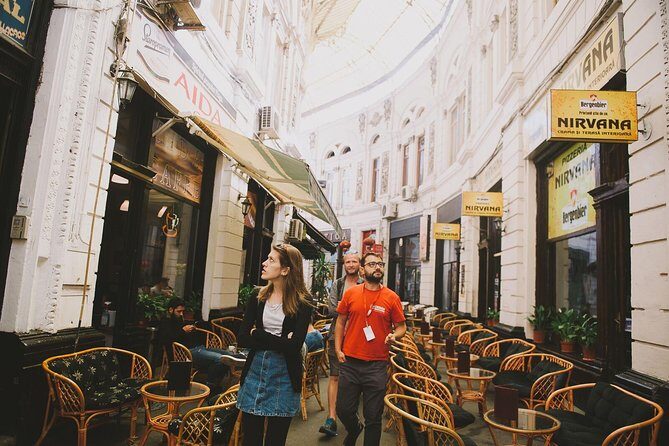
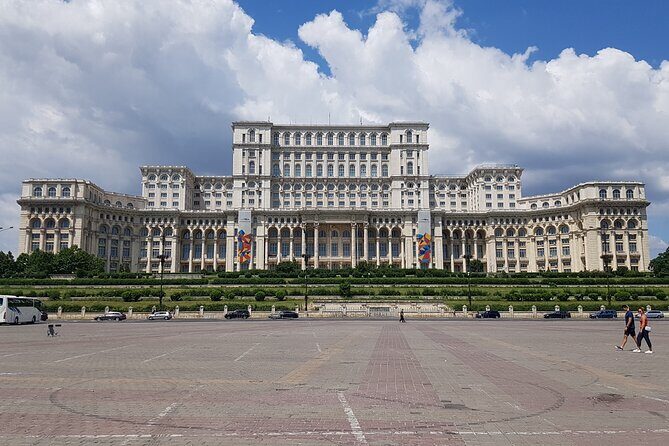
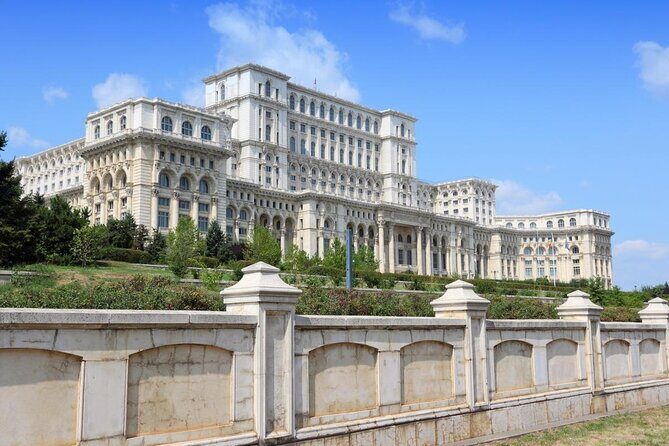
The tour saves its biggest visual moment for later: the Palace of the Parliament. This isn’t a “quick photo and move on” stop. You’ll learn about the scale and the politics behind it, including the fact that it’s the world’s second largest administrative building after the Pentagon.
Most people know the exterior from pictures. The tour’s value is what happens behind and around that colossus: your guide explains the controversy and the human cost. You’ll hear about the destruction of historic neighborhoods to make way for the mega-complex, so you understand the building as more than stone and symmetry.
This part of Bucharest can feel like standing next to a timeline made of concrete. It’s imposing, and it’s also controversial—so it’s helpful to have context from someone local. Your guide ties the architecture back to the broader story of Bucharest’s shifting regimes, and you’ll come away with a sharper sense of how power leaves physical scars.
Even if you’re not a “communist architecture” person, this is still one of the best places to see how Bucharest thinks about dominance, visibility, and control. And if you’re a history buff, you’ll appreciate how your guide connects what you see to what was lost.
After this, you walk toward the ending area at Piața Unirii, which is a good release valve. The day’s big emotional note ends with you moving back into regular city energy.
The 3-course Romanian meal: what you actually taste on this day
The food is a major reason this tour works. You get a three-course traditional Romanian meal in a charming restaurant, and you’re not stuck with the same tired cafeteria-style ordering system. Reviews highlight that people get good variety and that the food is plentiful.
You also get a drink: a choice of a fine Romanian wine or a locally brewed beer (or a soft drink). That’s a thoughtful inclusion, because you’re not paying extra just to make the meal feel complete.
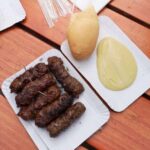
What might be on your plate depends on the day and the restaurant, but Romanian classics are a big focus. The dessert papanas comes up again and again as a standout. And other commonly mentioned plates include mici (mixed sausage meat) and sarmale (meat stuffed cabbage rolls). If you like comfort food with a regional personality, you’re in the right place.
One practical thing: this is not a tiny sample menu. Multiple reviews mention the meal being very substantial. So if you’re the type who likes to snack all day, shift your strategy. Save room for the three courses and you’ll enjoy the flavors more.
Also, the meal isn’t just about eating. Your guide explains dishes and what to expect, so even if you’re trying Romanian food for the first time, you’re not guessing in the dark.
You can also read our reviews of more tours and experiences in Bucharest




Private-guide style: how your pace and interests stay in control
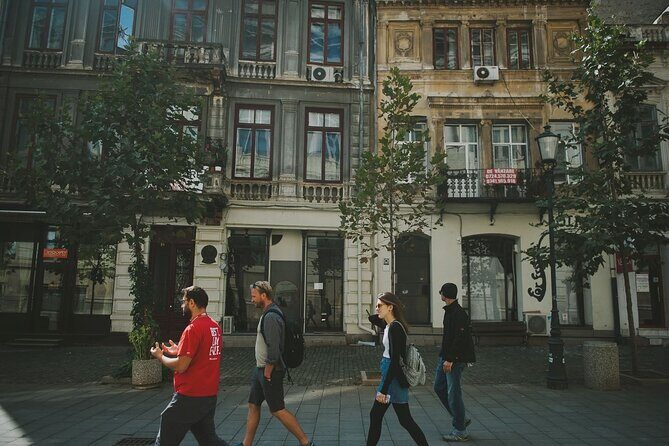
This is a private tour, meaning only your group participates. That changes the whole feel of a city walk. You don’t have to keep up with a large cluster, and you don’t have to hold your questions until a guide is done with everyone else.
In the reviews, people repeatedly praise guides like Andrea, Elena, Dana Toma, Cristina, Andra, Emma, Mircea, Constantin, and Andrei for two things: answering questions clearly and adjusting the experience to the group. That flexibility matters most on a city with fast-changing eras like Bucharest.
You’ll also get personalized follow-ups—tips for the best bars and eateries in the area. I like tours that do that, because it turns your guide from a one-time narrator into a practical tool for the rest of your trip.
The pace is another part you should notice. Reviews describe the pace as right on target, with plenty of time to look around without feeling rushed. You’ll still walk, but it won’t feel like a forced march.
Price and value: what $143.61 really covers
At about $143.61 per person for roughly 4 hours, this isn’t a cheap impulse buy. But it’s also not just a guided walk.
You’re paying for a local guide for a private half day, plus a three-course meal and a drink. When you compare that to paying for a guide plus dining separately, the math starts to make sense—especially if you’ll be eating that night anyway.
Two other value signals matter here:
- The operator describes itself as carbon neutral and run by a B Corp certified company using travel as a force for good. Even if you don’t chase sustainability labels, it’s a useful indicator that the company is paying attention to its footprint.
- You get localized recommendations after the tour, which can save you time and help you avoid generic tourist choices.
Also, the tour is offered in English, and there’s a mobile ticket. That’s small, but it reduces hassle and keeps the day smoother.
Who should book this Bucharest tour (and who should skip it)
Book this if you want a first, strong connection to Bucharest—food plus history, without the day feeling like a museum circuit. It’s especially good for:
- Food lovers who want Romanian classics explained while you eat
- History buffs who like architecture with context
- First-time Bucharest visitors who need orientation fast
- Families, since it’s described as child-friendly and children under 6 join free
Consider another option if you hate walking or want a purely “sit-down” day. This tour includes multiple stops across major areas, including big squares and a major landmark complex.
That said, even on chilly days and winter weather, the tour has a track record of staying upbeat. Just plan for the reality of being outside for hours.
Should you book Discover Bucharest: Private Highlights and Traditional Food Tour?
If you’re craving an efficient, meaningful Bucharest intro, I’d book it. You get the big sights—Revolution Square, Lipscani, and the Palace of the Parliament—but you also get the practical payoff: a proper Romanian meal and drink, plus guidance on where to go next.
It’s not only “history facts.” It’s history as something you can taste and see.
One final tip: go hungry. Then bring questions. This is the kind of tour where the best moments often happen when you ask why the city looks the way it does.
FAQ
What’s the duration of the private Bucharest food and history tour?
The tour runs for about 4 hours.
How much does the experience cost per person?
The price is listed as $143.61 per person.
Where is the meeting point, and where does the tour end?
You start at the Equestrian Statue of Carol I, Sector 1, Bucharest, and the tour ends at Piața Unirii, București.
What language is the tour offered in?
The tour is offered in English.
Is the tour private?
Yes. It’s a private tour/activity, and only your group will participate.
What’s included in the traditional meal?
You’ll enjoy a three-course traditional Romanian meal in a charming restaurant, plus a drink (Romanian wine or locally brewed beer, or soft drink).
Do you get any extra food or drinks beyond the included meal?
Additional food and drink are not included beyond what’s listed in the meal portion.
Is this tour good for families or children?
It’s described as child-friendly, and children under 6 can join free of charge.
Can I cancel for a full refund?
Yes. Free cancellation is available if you cancel up to 24 hours in advance of the experience’s start time.
What ticket do I need for the tour?
You’ll receive a mobile ticket.
If you tell me your travel dates and whether you prefer more food time or more photo time, I can help you decide if this 4-hour format fits your Bucharest plan.