REVIEW · BUCHAREST
Bucharest 3-hours Walking Tour (Small Groups)
Book on Viator →Operated by Mara's Tours&Travel · Bookable on Viator
Bucharest packs a lot into three hours. This small-group walk connects French influence on architecture and language with the big political break that ended communist rule in Romania. You also get an easy, street-level way to understand why Bucharest feels like multiple cities stacked on top of each other.
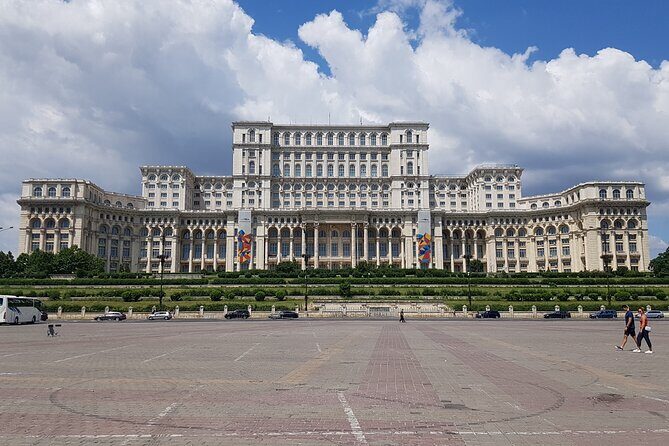
I especially liked the Palace of Parliament panorama from Unirii Square—big, strange, and impossible to ignore. And I like that the tour uses major stops plus quieter, older places, so you get both the postcard and the backstory without rushing.
One drawback to plan for: a couple highlights are ticketed separately. The Romanian Athenaeum stop, in particular, requires cash (15 lei) if you want to enter.
In This Review
- Key things I found most useful
- Why this Bucharest walking tour is such a smart use of 3 hours
- Starting at Unirii Square and the Palace of Parliament view
- Manuc’s Inn: stepping into the medieval Old Town (Hanul lui Manuc)
- St. Anthony’s Church and Curtea Veche ruins: Dracula links explained
- Stavropoleos Monastery and Orthodox art you can actually see
- Lipscani and Calea Victoriei: finding the Little Paris clues
- Revolution Square: the fall of Ceaușescu and what 1989 changed
- Ending at the Romanian Athenaeum (and planning for the 15 lei cash ticket)
- What’s included, what isn’t, and how to get the best value for $54.31
- How the walking pace feels (and who it suits best)
- Should you book this Bucharest 3-hour walking tour?
- FAQ
- How long is the Bucharest 3-hours Walking Tour?
- How much does the tour cost?
- Is this a small group tour?
- Is the tour offered in English?
- What is included in the price?
- Are entrance tickets included for the main sights?
- How much is the Romanian Athenaeum ticket and how do I pay?
- Where does the tour start and end?
- What if the weather is bad or the minimum group size isn’t met?
Key things I found most useful
- Palace of Parliament panorama from Unirii Square, with scale explained
- Manuc’s Inn (Hanul lui Manuc), Bucharest’s largest inn and a working window into medieval trade
- St. Anthony’s Church and Curtea Veche ruins, including the Dracula-era connection you’ll hear about
- Stavropoleos Monastery for a focused look at Orthodox art in the old town
- Lipscani and Calea Victoriei streets tied to the Little Paris story and hidden passageways
- Romanian Athenaeum ending with an optional entry fee you should have cash for
Why this Bucharest walking tour is such a smart use of 3 hours
If you’re short on time in Bucharest, you need two things: orientation and context. This tour gives you both. The route is paced in a way that lets you see the city’s strongest anchors—then explains what changed and why, from French-era influence through communism and out the other side.
The small group size (max 10) matters more than you might think. Smaller groups mean your guide can steer the pace to your questions, and you spend less time waiting at corners. Also, you’ll often feel like you’re getting a curated walk through districts you might otherwise not connect into one story.
You can also read our reviews of more walking tours in Bucharest


Starting at Unirii Square and the Palace of Parliament view
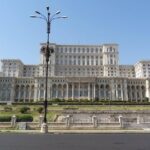
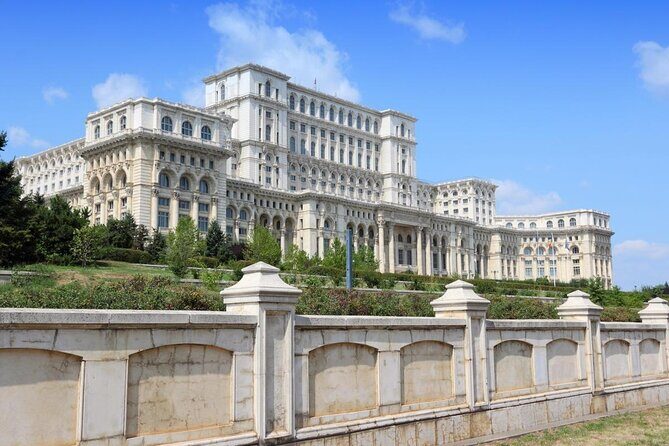
You begin at Unirii Square with a panoramic look toward Unirii Boulevard, often described as Romania’s Champs-Élysées. Then the tour turns your attention to the Palace of Parliament, the second-largest administrative building in the world.
Here’s what makes this stop valuable: you don’t just see a huge structure. You learn how Bucharest’s power and planning decisions shaped what you’re looking at. Even if you’re not into architecture, this kind of scale hits fast. It’s one of those “how is this real?” moments that gives your photos a point of reference.
Practical tip: this is a good time to check your footing and water before the walk gets denser in the old town. The opening view is worth lingering for a moment, and then you’ll move on quickly enough to keep energy up.
Manuc’s Inn: stepping into the medieval Old Town (Hanul lui Manuc)
From the modern grandeur, the route shifts past the medieval Old Town, now turned into Bucharest’s lively downtown core. Your next key stop is Manuc’s Inn, also called Hanul lui Manuc—a caravanserai and the city’s largest inn.
This is a fun stop because an inn doesn’t sound like a “must-see landmark” until you understand what an inn meant here. It was a place that helped travelers and goods move through the city. It’s history you can picture: stages, arrivals, merchants, and people passing through long before today’s streets were laid out the way they are.
The tour also helps you “read” the street itself. When you walk past older city fabric and then cross into spots that feel more modern, you start noticing how Bucharest grew.
Small note: since this is an outdoor walk with quick interior time (about 15 minutes listed), don’t expect a slow, museum-style visit. Instead, you’re getting a strong introduction so you know what to look for later.
St. Anthony’s Church and Curtea Veche ruins: Dracula links explained
Next up is Biserica Sfantul Anton (St. Anthony’s Church) in the Curtea Veche area. The church is described as the oldest in the city, and it’s a real contrast to the bigger, newer-looking parts of Bucharest.
The tour then moves to the ruins of the former Royal Court. This is where you’ll hear the surprising connection between Bucharest and Vlad the Impaler, the Dracula figure that keeps popping up in Romanian cultural stories.
What I like about this stop is the balance. You don’t just get a spooky legend and move on. You get a sense of how stories attach to places over time—how power, religion, and myth all end up living in the same streets.
Practical tip: this area can be very photogenic, but it can also be busy depending on the day. If you want the quiet photo, hang back for a moment while your guide finishes the story and then step forward.
Stavropoleos Monastery and Orthodox art you can actually see
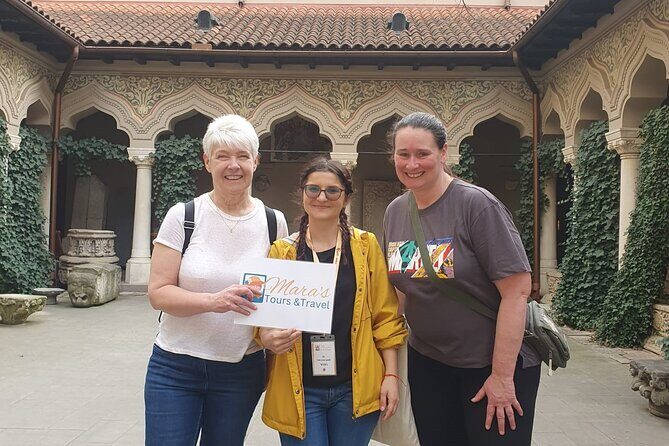
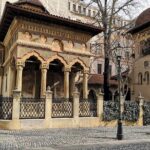
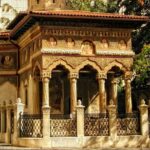
Stavropoleos Monastery is one of the most visually rewarding stops on the route. It’s presented as the most beautiful monument of Christian Orthodox art in the old town, and that description makes sense once you’re there.
Here, the value is focus. Instead of dumping random facts, your guide points you toward what makes it distinct. You start noticing details that are easy to miss if you’re walking without a plan: the feel of the space, the way Orthodox art communicates through structure and ornament, and why monasteries like this mattered in the daily life of the city.
Even with only about a 15-minute stop, you come away with enough to recognize it again later if you loop back through the old town.
Watch your pace: monastery stops often involve short walking segments and small paths. Good shoes help, especially if the weather turns.

Lipscani and Calea Victoriei: finding the Little Paris clues
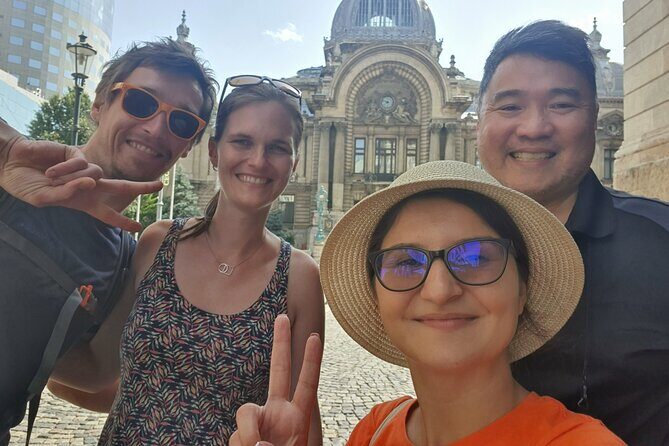
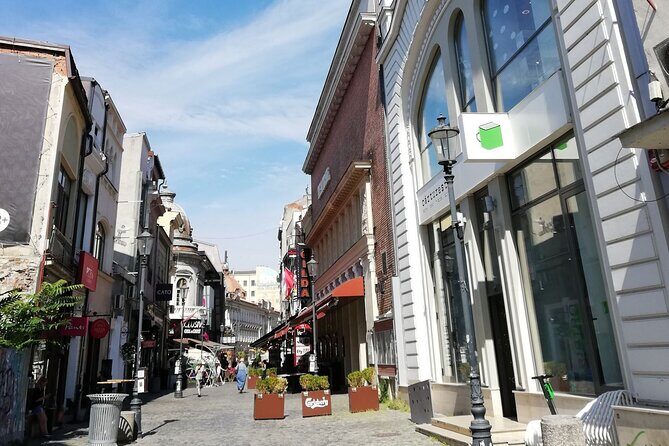
After the older religious anchors, the tour jumps forward into the 18th and 19th centuries around Lipscani and Calea Victoriei. This is where Bucharest earns the nickname Little Paris, tied to French-style buildings and the city’s adoption of French cultural influence—architecture, food, and even language.
This part of the walk is fun because it’s not just big landmarks. You’ll notice the pattern of streets, the hidden passageways, and how the city “tightens” into old-town lanes. These are the streets where Bucharest’s European styling shows up in details: facades, street rhythm, and the sense of a city that wanted to present itself as modern.
Also, Lipscani is a practical win. After this stop, you’ll know where to wander on your own without getting lost in the wrong direction. It’s the kind of orientation that pays off later when you’re looking for dinner or a café and don’t want to guess.
Photo tip: the best shots are often a little off-center—watch how your guide positions you to look down side streets and into passageways.
Revolution Square: the fall of Ceaușescu and what 1989 changed
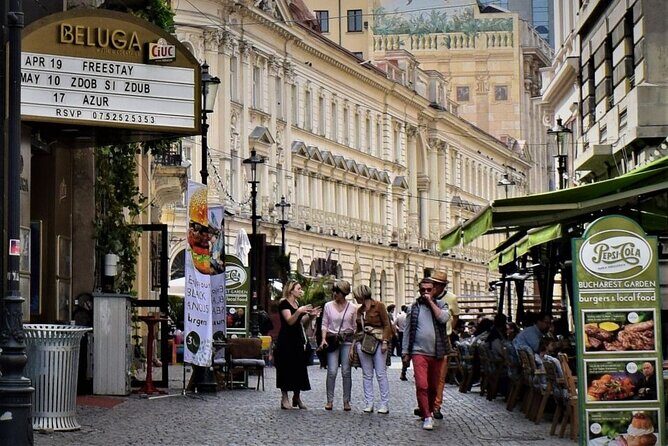
Then you shift from 18th–19th century flavor to the 20th-century turning point. At Revolution Square, your guide talks about what communist rule meant for Romania and how the Nicolae Ceaușescu regime collapsed in the aftermath of the 1989 revolution.
This stop is about understanding cause and effect. When you learn history in a place like this, it doesn’t feel like a textbook list. It feels like a sequence: decisions made, systems enforced, and then a sudden break when people pushed the country toward a new direction.
What I appreciate is that the tour doesn’t treat politics like abstract background noise. It connects the regime to visible city life and to the sense of transition you still feel in Bucharest’s layout.
Practical consideration: this is another part where you might want your full attention. If you’re the type who likes to skim explanations, you may miss why this segment matters.
Ending at the Romanian Athenaeum (and planning for the 15 lei cash ticket)
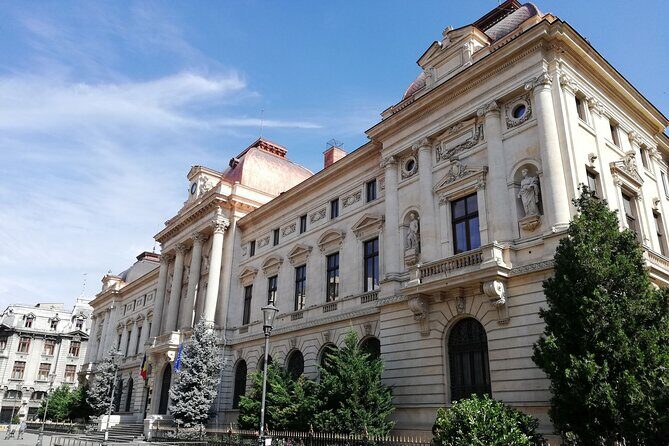
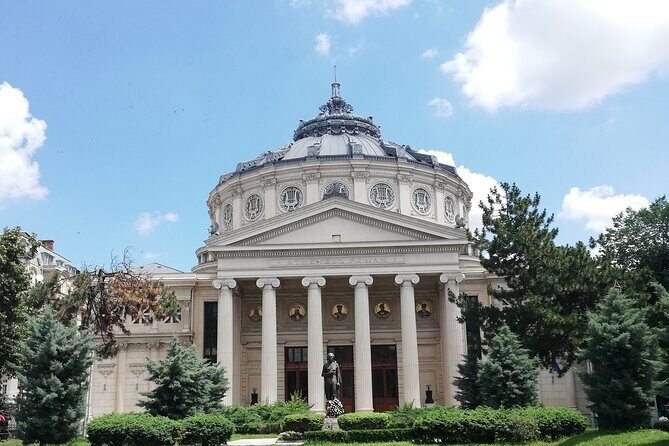
You finish in front of the Romanian Athenaeum, one of Bucharest’s most iconic concert halls. It’s described as a testament to the development of Romania during the monarchy era. The timing works well: you get the political story first, then end with a cultural symbol.
Entrance to the Athenaeum isn’t included, and the tour lists a ticket price of 15 lei (about 3 EUR), cash only. So if you want to go in, bring a little local currency. There’s no benefit in showing up without the cash if your plan includes that last interior moment.
Why the ending works: the Athenaeum is the kind of site that changes your understanding of the city in minutes. After the walk through older churches, inns, and political spaces, you’re now ending in a place tied to music, public culture, and national pride.
Time reality check: your stop here is listed as about 15 minutes, so treat it like a “final payoff” window. If you plan to enter, make sure you’re ready for that extra time.
What’s included, what isn’t, and how to get the best value for $54.31
At $54.31 per person for about 3 hours, this is priced like a serious city-lesson tour, not a casual stroll. The value comes from two things: the tight route and the way the guide ties architecture and street scenes to historical shifts.
You get:
- 1 traditional Romanian snack
- a guided walk in English
- a small group experience (max 10)
You do not get:
- the ticket cost for the Palace of Parliament (admission not included at that stop)
- the ticket cost for the Romanian Athenaeum (listed as 15 lei, cash only)
So you’re paying mostly for expert storytelling and route design, not for a long list of paid admissions. That’s not a bad thing. It keeps the tour flexible and lets you choose which ticketed interiors you want to prioritize.
My recommendation for value-minded planning: decide in advance if you want to pay for the Athenaeum entry. Since it’s cash-only and not included, it’s the easiest to plan incorrectly. If you show up with the right small amount of lei, your ending feels complete.
How the walking pace feels (and who it suits best)
This tour is designed for most people to participate, with a comfortable walking pace. In practice, the guide keeps things moving but doesn’t rush you through each stop, and there’s room for practical needs like a restroom break.
Who it’s best for:
- First-time visitors who want a strong overview of Bucharest’s center
- People who like history that connects buildings to events
- Anyone with a short stay who doesn’t want to build a route from scratch
- Visitors who enjoy walking and can handle a steady 3-hour format
Who might not love it:
- If you hate walking tours or need lots of long indoor time
- If you want a purely museum-style itinerary with full ticket inclusions
- If you won’t carry cash and you’re set on entering the Athenaeum
Should you book this Bucharest 3-hour walking tour?
I’d book it if you want to understand Bucharest fast, in a way that helps you explore the rest of your days with confidence. The route hits major anchors—Palace of Parliament, Manuc’s Inn, St. Anthony’s Church, Stavropoleos Monastery, Lipscani/Calea Victoriei, Revolution Square, and the Romanian Athenaeum—while also explaining the themes that connect them: French cultural influence and the political rupture of Ceaușescu’s collapse.
If you do book, do two things that make a real difference:
- Bring a small amount of lei cash for the Romanian Athenaeum entry if you want to go inside.
- Wear shoes you can trust. This is a walking tour, and the streets add up.
If you’re excited by a guided storyline that moves across centuries without getting heavy, this is a strong match.
FAQ
How long is the Bucharest 3-hours Walking Tour?
The tour lasts about 3 hours.
How much does the tour cost?
It costs $54.31 per person.
Is this a small group tour?
Yes. The maximum group size is 10 travelers.
Is the tour offered in English?
Yes, it’s offered in English.
What is included in the price?
The tour includes snacks (1 traditional Romanian snack).
Are entrance tickets included for the main sights?
No. The Palace of Parliament stop lists admission as not included, and the Romanian Athenaeum also requires a separate ticket.
How much is the Romanian Athenaeum ticket and how do I pay?
The Romanian Athenaeum entrance is 15 lei (about 3 EUR) and it’s cash only.
Where does the tour start and end?
It starts at One sipC4G3+HQ, Bucharest, Romania, and ends in front of the Romanian Athenaeum at Strada Benjamin Franklin 1-3, București 010287.
What if the weather is bad or the minimum group size isn’t met?
The tour requires good weather. If it’s canceled due to poor weather, you’ll be offered a different date or a full refund. If the minimum number of travelers isn’t met, you’ll also be offered a different date/experience or a full refund.