REVIEW · BUCHAREST
Relics of Communism: 3-Hours Walking Tour (Small groups)
Book on Viator →Operated by Mara's Tours&Travel · Bookable on Viator
One square can change how you see a whole city. This 3-hour Bucharest walking tour connects the big communist-era landmarks to real stories, so the statues and buildings stop looking random. I like the small-group size (max 10) and the way the guide stories make the 1989 events feel human, not just dates.
Two more things I really appreciate: you get snacks to keep your energy up during the walk, and most stops have no entry fee, so you’re not constantly hunting for tickets. The main drawback to plan for is that this is a walking tour with a moderate fitness level requirement, and it depends on decent weather.
In This Review
- Key things to know before you go
- Why Bucharest Communism Landmarks Work So Well on Foot
- Small-group pace and the guide effect (Mara’s Tours&Travel)
- Stop 1: Revolution Square and the balcony moment of 1989
- Stop 2: Piața 21 Decembrie 1989 and the revolution’s pressure points
- Stop 3: Unirii Square and Boulevard—power built into the city
- Stop 4: Mihai Voda Monastery—religion under communist pressure
- Stop 5: Palace of Parliament—why it’s the center of the story
- Price and value: what $48.06 buys you (and what it doesn’t)
- The walking reality: timing, weather, and how to prepare
- Who should book this tour—and who might not love it
- Should you book Relics of Communism in Bucharest?
- FAQ
- How long is the Relics of Communism walking tour?
- How much does the tour cost?
- How large are the groups?
- What language is the tour offered in?
- Are there admission fees for the stops?
- What’s included during the tour?
- Is a museum visit included?
- Where does the tour start and end?
- What time does the tour begin?
- What if the weather is bad or I need to cancel?
Key things to know before you go
- Small-group format (up to 10) means more time for questions and a slower, easier pace than big bus tours
- Five focused stops each timed around 20 minutes keeps you moving without rushing
- Most admission is free for the first four stops, with only the Palace of Parliament admission not included
- Communism explained on location ties buildings and squares to what happened there
- Snack included helps if you’re walking straight through midday
- English-language guide makes the political context easier to follow and remember
Why Bucharest Communism Landmarks Work So Well on Foot
Bucharest’s communist-era imprint is written in squares, boulevards, and big power symbols you can’t really ignore once you know what to look for. On foot, you’re able to read the space around each site—where crowds gathered, where speeches happened, and how the city was reshaped to project authority.
I like that this tour doesn’t try to turn everything into a lecture in one place. Instead, you move from Revolution Square to major landmarks, and the story changes with the streets. That’s the difference between seeing buildings and understanding them.
You can also read our reviews of more walking tours in Bucharest

Small-group pace and the guide effect (Mara’s Tours&Travel)
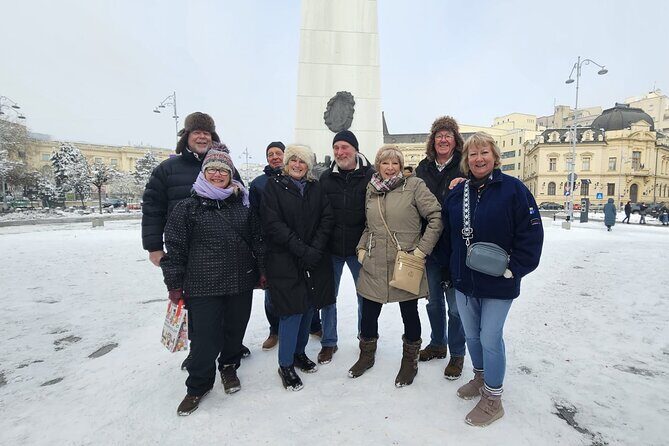
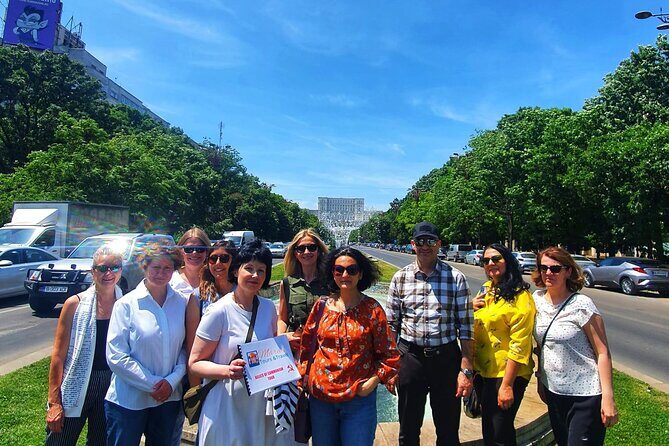
This experience runs with a maximum of 10 travelers, which keeps it personal. You’re not stuck listening to one-way audio while people drift off. And because the format is designed for walking between short stops, you get a steady rhythm: listen, look, ask, move on.
The tour is provided by Mara’s Tours&Travel, and guide names that come up again and again are Mara and Elena. What both have in common in the feedback is how directly they answer questions about life under communism—not just what the leaders did, but how the system affected everyday people. If you like your history explained in plain language, this is a good sign.
Stop 1: Revolution Square and the balcony moment of 1989
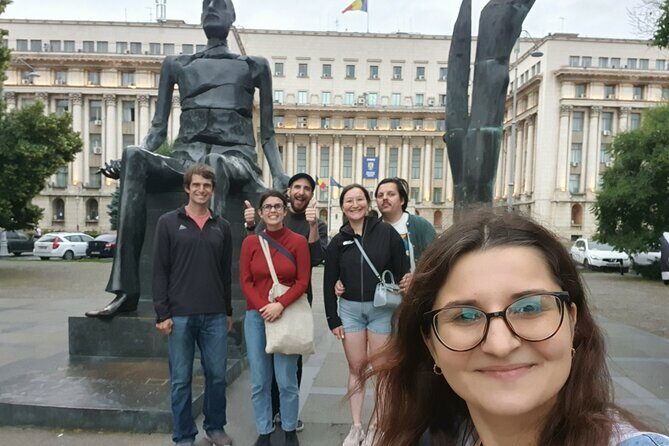
You start at Revolution Square (Piața Revoluției). The tour begins in front of the balcony where Ceaușescu held what’s described as his last speech, so your first visuals connect straight to the turning point of 1989. Even if you’ve read about the revolution before, standing there helps you understand why that moment mattered so much.
Expect the guide to walk you through what happened in December 1989 and how the city became the stage for a regime collapsing. This stop runs about 20 minutes, and admission here is free, so it’s easy to absorb the context without extra ticket steps.
Possible consideration: this is a serious topic right from the start. If you’re hoping for a lighter, casual photo-walk, you may want to mentally switch gears before you meet up.
Stop 2: Piața 21 Decembrie 1989 and the revolution’s pressure points
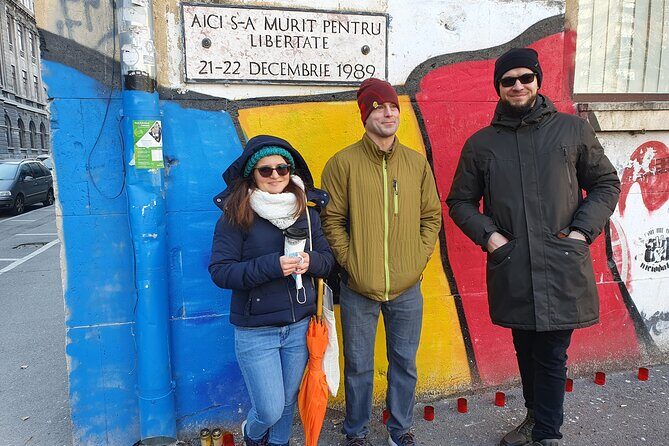
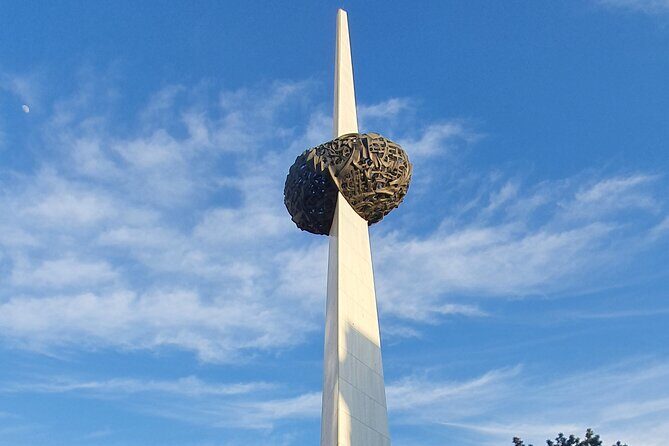
Next you head to Piața 21 Decembrie 1989 (20 minutes). This stop focuses on the incidents tied to the 21st of December—plus the idea of heroes in the revolution and what follows in the neo-communist era.
This is the kind of stop that helps you see why dates matter. The guide’s job here is to connect what you’re looking at now with why people risked everything then. It also gives you a lens for understanding the transition years, when the country didn’t simply snap back to normal.
Admission at this stop is also free, which keeps the pace simple. If you like timeline clarity, this is one of the most useful stops on the walk.
Stop 3: Unirii Square and Boulevard—power built into the city
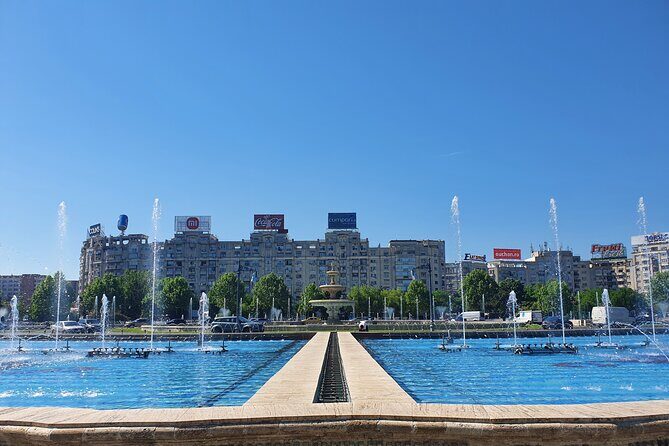
Then it’s off to Unirii Square (Piața Unirii), near Unirii Boulevard, often described as the new city center built during the Communist era. The guide explains how the boulevard bisects the square and what that says about planning for control, movement, and symbolism.
You’ll also learn about the rise to power of the communist party in Romania and Nicolae Ceaușescu’s cult of personality—how leaders turned public space into stagecraft. Standing in and around a square that was designed as a showpiece helps you understand the message behind the architecture. It’s not just brick and concrete; it’s politics written large.
This stop is timed at about 20 minutes and admission is free. The main “drawback” here is that it’s easy to miss the layout details if you’re only taking photos. Give yourself a moment to look at how the space channels pedestrians along the boulevard.
Stop 4: Mihai Voda Monastery—religion under communist pressure
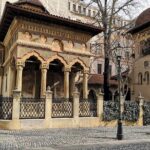
After the big-city planning stops, you get a change of pace at Mihai Voda Monastery. This is one of the more interesting contrast points on the tour: instead of focusing on power symbols, the story turns toward religion and how communists viewed it.
Bucharest has churches and hidden religious spaces that don’t scream for attention the way some communist monuments do. That’s why I like this stop. It adds texture to the big-picture narrative: the system wasn’t only about who held authority—it also shaped what communities could openly believe and practice.
This stop runs about 20 minutes and is marked as free admission. If you’re the type who likes to balance “politics” with daily life, this is where the tour feels more human.
Stop 5: Palace of Parliament—why it’s the center of the story
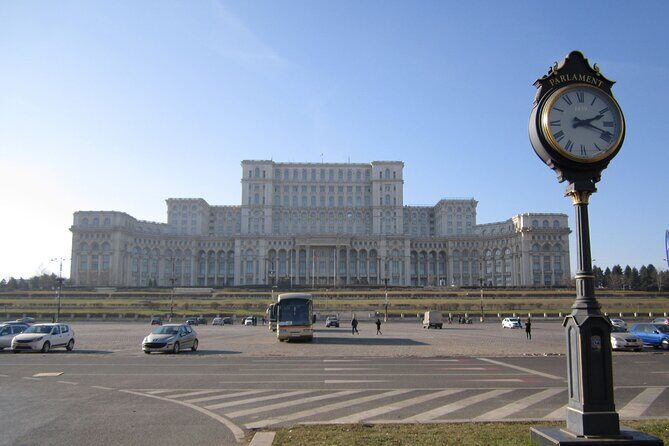
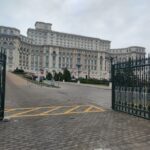
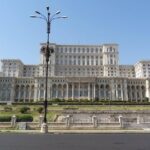
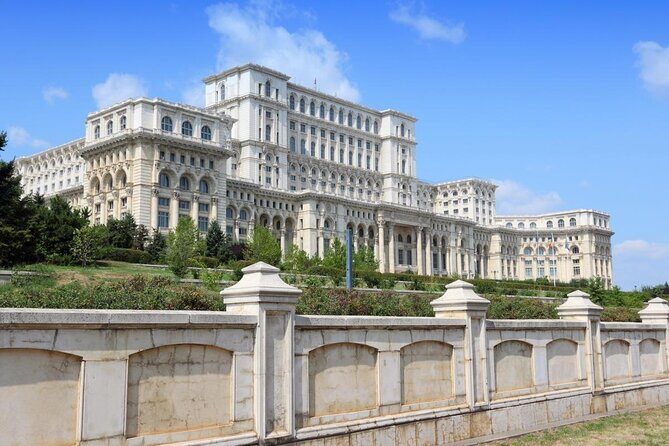
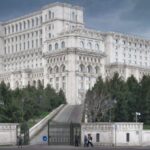
The final stop is the Palace of Parliament area, ending at Constitution Square, with the tour finishing in front of the palace. This is where communist power architecture reaches full scale: the guide discusses the Socialist realism style and how the building was designed as an absolute center of power.
The tour also points out it’s one of the world’s biggest administrative buildings (as described in the tour details). Even if you don’t go inside, it’s hard not to feel the statement the building makes. It’s a useful ending because you’ve already picked up the context: now you can read the building as an instrument of control.
Important practical note: admission to the Palace of Parliament is not included. So if you want interior views, you’ll need to plan that separately. The tour ends outside, so your time here is about interpretation, not museum coverage.
Price and value: what $48.06 buys you (and what it doesn’t)
At $48.06 per person for about 3 hours, this tour sits in the “good value if you like guided meaning” category. You’re paying for more than walking. You’re paying for a guide who connects each square and building to what happened there, and that’s where the value really shows.
You also get:
- A small-group format (max 10)
- English interpretation
- A mobile ticket
- A snack: one famous Romanian snack from communist times
- Mostly free admission stops along the way
What you should not expect: museum time and included Palace of Parliament entry. That’s totally normal for a walking tour, but it matters. If your goal is to see inside the biggest sites, you’ll need to add separate museum or building tickets.
One more value signal: the tour is typically booked about 43 days in advance on average. That doesn’t guarantee sold-out dates, but it does suggest it’s popular enough that you should book early rather than hope.
The walking reality: timing, weather, and how to prepare
This is a 3-hour walking tour with a “moderate physical fitness level” requirement. Each stop is around 20 minutes, and you’ll spend the rest of the time moving between sites. In Bucharest, that usually means you’ll want comfortable shoes and the kind of patience you only get from good street-level walking.
Also plan for weather. This experience requires good weather, and if it’s canceled due to poor conditions, you’ll be offered another date or a full refund. That’s the right kind of policy for an outdoor format. Still, it’s smart to bring a light layer and be ready to adjust.
If you’re sensitive to political content, one gentle heads-up: the theme is communist history and revolution-era events. It’s presented with context and story, but it’s not a comedy tour.
Who should book this tour—and who might not love it
This tour fits best if you want to understand Bucharest beyond postcard landmarks. If you’re the kind of traveler who reads plaques, notices statues, and wonders why a building looks the way it does, you’ll likely have a great time. The short stop structure also works well if you like your tours organized and not too long in one place.
You might reconsider if:
- You want a mostly light, casual city stroll
- You specifically want museum interiors included
- You prefer very long time at one attraction instead of five short, story-driven stops
If you’re visiting Bucharest for a first time and you only have a limited window, this is also a strong “orientation” choice. It gives you a framework you can use later when you explore on your own.
Should you book Relics of Communism in Bucharest?
Yes, I’d book it if you want communist history explained where it actually happened. The biggest reasons: the small-group size, the way the guide connects each location to the story, and the practical value of mostly free admission stops plus a snack to keep you going.
If you’re on the fence, here’s the simple decision rule: book it when you want meaning and context more than you want museum time. And if you care about going inside the Palace of Parliament, plan an extra stop after this tour so you don’t feel like something important was left out.
FAQ
How long is the Relics of Communism walking tour?
It’s approximately 3 hours.
How much does the tour cost?
The price is listed as $48.06 per person.
How large are the groups?
The tour has a maximum of 10 travelers.
What language is the tour offered in?
It’s offered in English.
Are there admission fees for the stops?
Admission is free for Revolution Square, Piața 21 Decembrie 1989, and Unirii Square, and it’s marked as free for Mihai Voda Monastery too. Admission to the Palace of Parliament is not included.
What’s included during the tour?
You get snacks, specifically one famous Romanian snack from communist times.
Is a museum visit included?
No. Admission to any museums is not included.
Where does the tour start and end?
It starts at Revolution Square (Piața Revoluției, București) and ends at Constitution Square (in front of the Palace of the Parliament).
What time does the tour begin?
The start time is 11:00 am.
What if the weather is bad or I need to cancel?
The experience requires good weather. If it’s canceled due to poor weather, you’ll be offered another date or a full refund. You can cancel for a full refund up to 24 hours in advance.