REVIEW · BUCHAREST
Bucharest: Street Food Tour with a Local Guide
Book on GetYourGuide →Operated by TravelMaker · Bookable on GetYourGuide
Street food tours can be hit or miss, but this one is often a win. I like the Obor Market focus and the chance to try classic Romanian comfort foods in real places, not snack carts. I also like that you get transit and city context, with short rides that help you understand how Bucharest neighborhoods connect. One possible drawback: the route can feel spread out, and if your group ends up doing longer waits at food stops, the food-history balance may feel off.
You start at the Lupa Capitolina Monument and work your way into market life fast, beginning with a fun, very local throwback: the Romanian pretzel and yogurt sometimes called the snack of communism. The best tours here are guided by people who bring energy and patience, like Riga and Laura, who both stood out for making the walk easy and the stories clear.
In This Review
- Key highlights you’ll notice right away
- Snack of communism, tram ride to Obor, then real food at market scale
- Obor Market: why this stop is the whole point
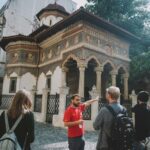
- Jewish and Armenian quarters by transit: small views, big context
- University Square and the walk toward Cismigiu Park: landmarks you can match to the map
- The final meal: Papanasi, jam, and cream at a proper restaurant
- Price and value: what you’re paying for in a 4-hour format
- Guides set the tone: patience, energy, and how the stories land
- Who should book this food tour, and who should skip it
- Should you book? My straight recommendation
- FAQ
- Where does the tour meet?
- How long is the street food tour in Bucharest?
- What’s included in the price?
- Are there any restrictions on who can join?
- What should I bring?
- What’s the minimum group size to run the tour?
- Can I cancel and get a refund?
Key highlights you’ll notice right away
- The snack of communism: Romanian pretzel plus yogurt to start your morning like a local worker
- Obor Market: one of Romania’s biggest and oldest markets, packed with food stalls and everyday culture
- Neighborhood contrast by transit: tram and trolleybus rides through areas tied to the city’s Jewish and Armenian quarters
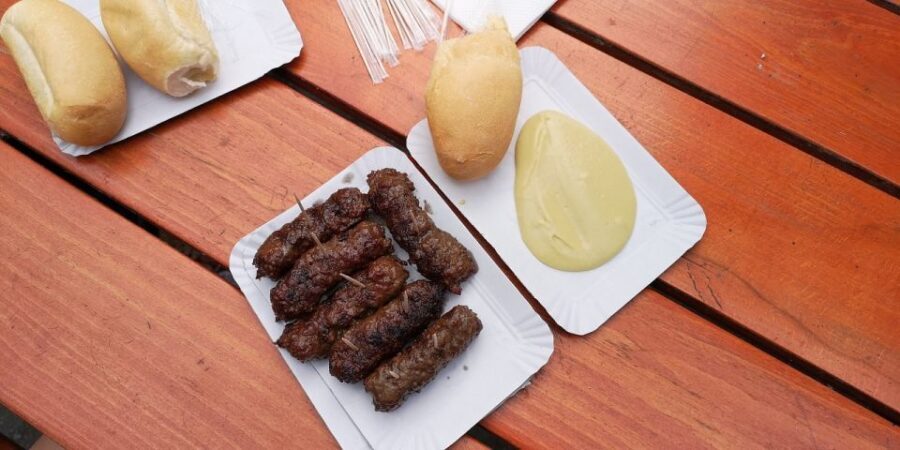
- Hands-on tastings: honey, cheese, fresh produce, and traditional ground meat rolls with a cool beer
- Sweet finish at a proper restaurant: hot papanasi doughnuts with jam and cream
Snack of communism, tram ride to Obor, then real food at market scale
If you’re the type who wants more than a list of dishes, this tour works because it ties food to place. You’ll begin at the Lupa Capitolina Monument (36 I.C. Bratianu Blvd.), where the meeting point is easy to find and close enough to the action that you don’t waste the first hour trying to orient yourself.
The tour kicks off with a Romanian pretzel and yogurt. It’s called the snack of communism, and the point isn’t just the name. It’s a quick lesson in what everyday breakfasts looked like for workers in the past, and why certain flavors stuck around. The pretzel is salty and filling, while the yogurt adds tang and balance. For me, that combo sets the tone: this isn’t about “tourist food.” It’s about how people actually ate when speed mattered and ingredients had to be practical.
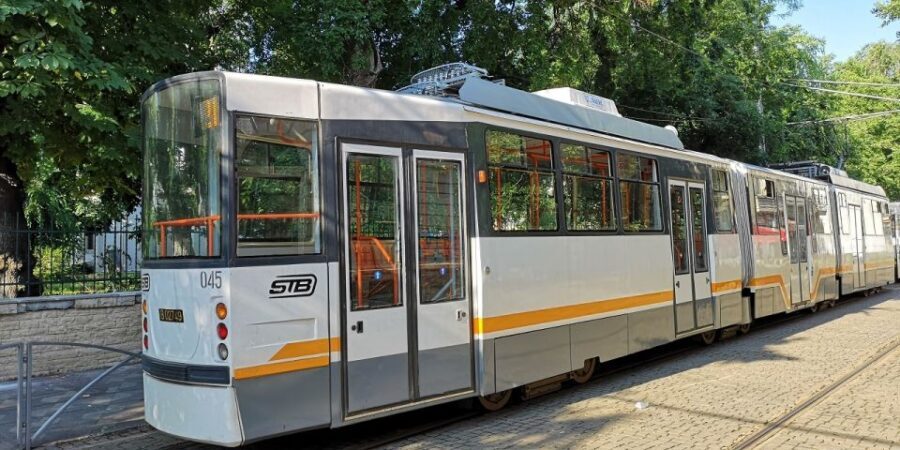
Next comes the short tram ride to Obor Market. This matters more than you might think. The guide uses the ride to keep you moving, and you get a slow look at buildings tied to the Jewish and Armenian quarters. Even if you’re not the type who reads every plaque, you’ll start noticing how streets, facades, and street life change block by block.
You can also read our reviews of more food & drink experiences in Bucharest

Obor Market: why this stop is the whole point
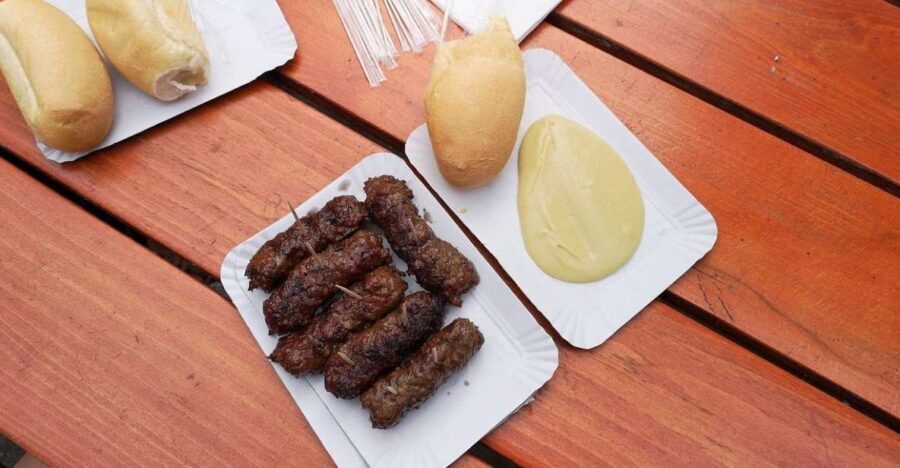
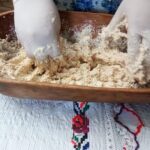
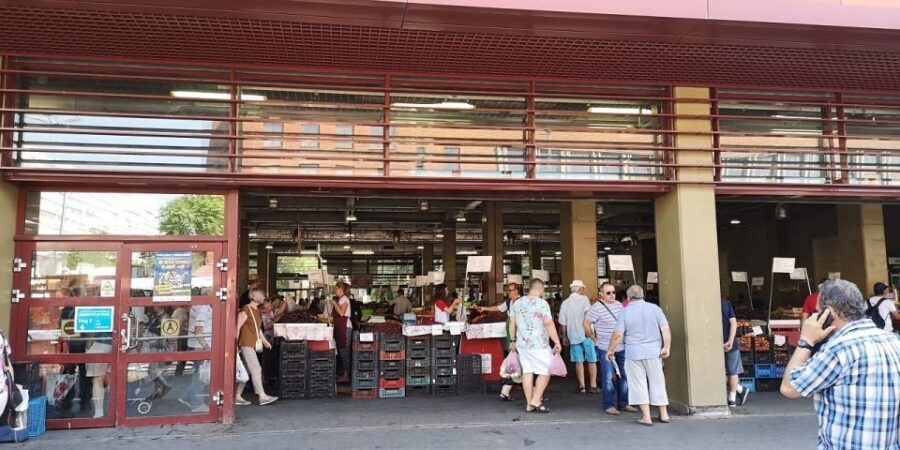
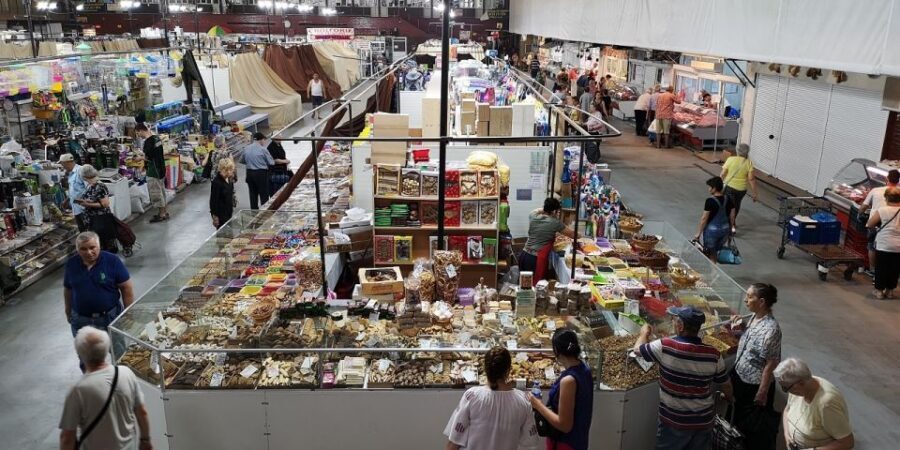
Obor Market is where the tour earns its name as a street food experience. It’s huge, and it has that old-school market feel where you can smell cheese, honey, and grilled items all at once. You’ll stroll through stalls with everything from fresh produce to honey and cheese. You might also spot handcrafted wooden bowls, which are the kind of souvenirs that actually make sense because they link to real household use.
What I love about Obor in a guided setting is how the guide steers your attention. A market like this can overwhelm you if you’re there solo. With a group, you’re less likely to just wander randomly or miss the stalls that are best for tasting. You also get help managing the rhythm: look around, listen to the story, taste something, and move on.
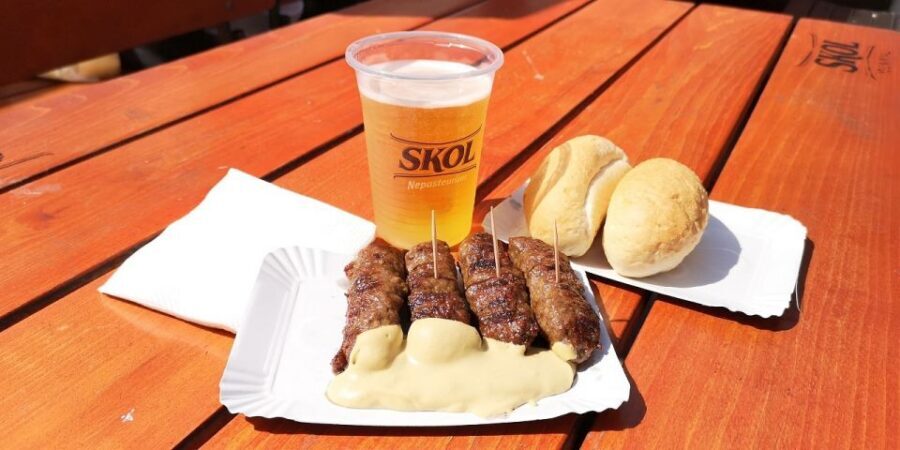
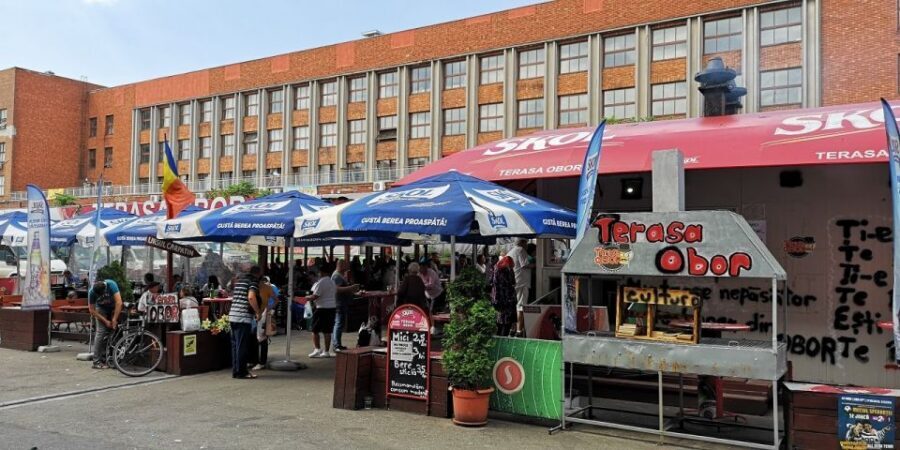
The tour includes a sample of traditional Romanian ground meat rolls. You’ll likely get them hot and freshly served at a known stall. The pairing is a cool beer, which fits the market setting perfectly. It’s the kind of meal that feels simple but satisfying, and it’s a good “anchor dish” if you’re trying to remember what Romanian market food tastes like.
One practical note: markets often mean lines. Some guides handle this smoothly, using waiting time to explain food culture and local habits. But if your stop involves a longer queue and the guide waits quietly, you’ll feel like time drags. This was exactly the kind of complaint that popped up in a few accounts: food was tasty, but the pacing didn’t always feel optimized.
Jewish and Armenian quarters by transit: small views, big context

The tour doesn’t ask you to do a deep walking tour of one neighborhood. Instead, it uses transit stops as mini checkpoints. During the tram ride, you’ll admire architecture and buildings connected to the Jewish and Armenian quarters.
Even without museum-level stops, this is a useful approach. Bucharest’s story isn’t only in big landmarks. It’s also in the layers—communities that shaped streets and storefronts and how the city grew over time. The guide helps connect those layers to what you’re seeing outside the window, so the ride doesn’t feel like dead time.
A good guide will also connect history to food indirectly. Markets don’t exist in a vacuum. When you see how different communities lived and traded, you start to understand why Romanian food culture can feel both distinct and influenced by neighbors and old trade routes. If your guide is more focused on just moving the group along, you might not get as much of that context.
University Square and the walk toward Cismigiu Park: landmarks you can match to the map
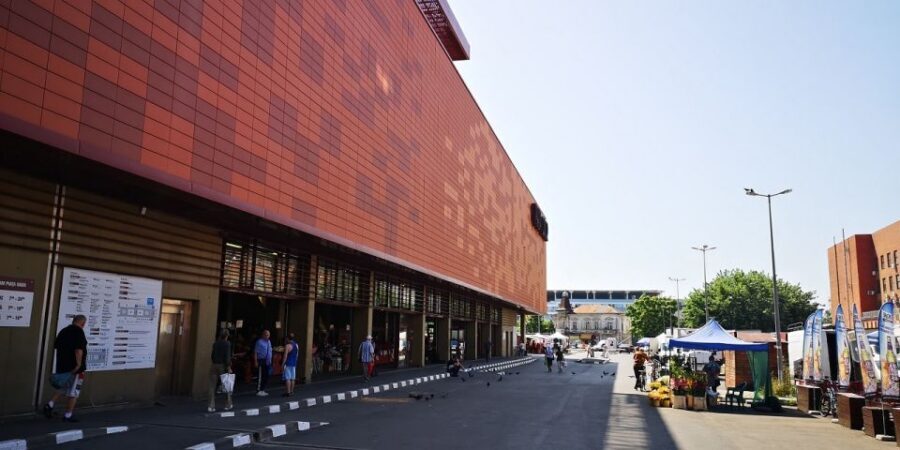
After the market, you’ll take a trolleybus to University Square. This shift from market noise to central Bucharest street life is a nice reset. It also helps the tour feel like it covers more than one bubble of the city.
From University Square, you’ll walk toward Cismigiu Park and learn about important historical landmarks along the route. The point here isn’t to memorize dates. It’s to get enough context that the streets stop being a blur. You’ll leave with a mental map of where the major sites sit relative to each other, which pays off later when you’re planning your own days.
This part of the tour is also where pacing matters most. Some people prefer a guide who talks through every block. Others like time to browse and take photos while the group keeps moving. The best version of this tour strikes a balance: explanations that land, plus enough space for you to look around without feeling rushed.
The final meal: Papanasi, jam, and cream at a proper restaurant
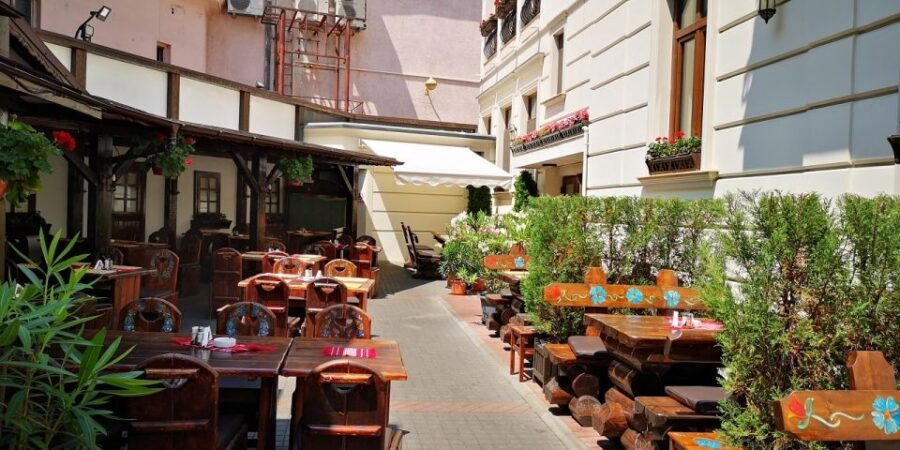
Every food tour needs a strong finish, and this one does it with sweet papanasi doughnuts. You’ll end at a fine dining restaurant, where you can taste hot doughnuts filled with jam and served with cream.
Papanasi are the kind of dessert that makes you stop and actually enjoy the last course instead of just checking off one more dish. The warm doughnut texture pairs well with fruit jam, and the cream adds richness that rounds out the earlier savory tastings. It’s also a nice cultural marker: Wallachian comfort food that feels like a real meal, not a token dessert.
I also like that this final stop is in a restaurant setting. After a market day, you get a calmer environment where the guide can answer questions. If you’re traveling with limited time in Bucharest, this is a smart moment to ask for specific food and sight recommendations. The tour aims to give you ideas you can use immediately, not just stories to remember.
You can also read our reviews of more tours and experiences in Bucharest



Price and value: what you’re paying for in a 4-hour format
At $74 per person for about four hours, you’re paying for three things: guided market access, multiple tastings and drinks, and public transit tickets (tram and trolleybus), plus bottled water.
On value, the included parts generally line up well with the price. You get the early pretzel-and-yogurt start, market samples that cover both ingredients and a hot dish (meat rolls with beer), and the dessert finale with papanasi. You also get transit support so you’re not figuring out which line goes where while hungry.
That said, there are two value concerns worth knowing:
First, variety. A few accounts felt the food list didn’t stretch as far as they expected for the price, and that the tour leaned toward heavier portions late in the itinerary instead of spreading smaller tastings more evenly across the market stalls. If you love sampling lots of small bites, you may want to ask your guide how the tastings are structured.
Second, consistency of drinks. One account reported that the beer expectation in the written description wasn’t matched during their tour. That’s not something you should assume will happen, but it’s smart to check early. If beer is part of what’s promised for your group, confirm it right at the first tasting point so there’s no disappointment at the end.
Guides set the tone: patience, energy, and how the stories land
The quality of this tour is closely tied to the guide. In the best cases, you’ll get someone with strong storytelling and real patience. Riga, for example, was praised for energy, lots of knowledge, and a kind, calm approach that worked well for first-timers. Laura also stood out for mixing Bucharest history and food culture, with an upbeat presence that made the pace feel relaxed.
When the guide is engaged, you’ll feel it in small ways: the group moves smoothly, explanations connect to what you’re tasting, and you don’t end up waiting in line with nothing to do. On tours where explanations feel light or time spent waiting grows, the overall experience can feel less satisfying even if the food itself is good.
If you’re picky about value, you’ll do best by picking a time that fits your energy level. This tour is active and walking-based, and you’ll want comfortable shoes from the start.
Who should book this food tour, and who should skip it
This is a great match if you want a guided introduction to Bucharest through food, and you like the idea of starting with a local breakfast-style snack, then hitting one of the biggest markets in Romania, and ending with a classic dessert.
It’s also a solid pick for first-time visitors who want transit help and a simple city orientation. The route from market to central landmarks helps you understand how Bucharest is laid out, so your later self-guided plans feel easier.
Skip it if you have mobility limits. The tour is not recommended for people with limited mobility, and it requires walking through market areas. Also skip if you’re traveling with a pet, since pets aren’t allowed.
One more timing note: the tour requires a minimum number of participants to run. Depending on the season, it may need at least 4 people (certain months) or at least 2 people (other months). If your dates are flexible, you’ll have more options if the tour doesn’t run exactly as you planned.
Should you book? My straight recommendation
I’d book this tour if you’re excited by market food and you want a guided route that connects bites to neighborhoods. The Obor Market focus plus the hot ground meat rolls and beer, followed by papanasi, gives you a satisfying arc that actually feels like a meal plan.
I’d think twice if your top priority is maximum variety of tastings. Some versions of this tour can feel more about a few key dishes than a wide spread of samples, and a couple of accounts raised concerns about drink consistency and pacing during food ordering.
If you go in with the right expectations—market scale, guided tastings, and city context—you’re likely to leave with a stronger feel for Bucharest than you’d get from a quick list of restaurants.
FAQ
Where does the tour meet?
You meet at the Lupa Capitolina Monument, 36 I.C. Bratianu Blvd., Bucharest, Romania.
How long is the street food tour in Bucharest?
The tour lasts 4 hours.
What’s included in the price?
It includes an English-speaking guide, all food and drink mentioned in the itinerary, bottled water, and tram and trolleybus tickets.
Are there any restrictions on who can join?
Pets are not allowed. The tour is not recommended for people with limited mobility.
What should I bring?
Bring comfortable shoes.
What’s the minimum group size to run the tour?
From March to October and from December 16 to January 6, it requires at least 4 people. From January 7 to February 29 and from November 1 to December 15, it requires at least 2 people.
Can I cancel and get a refund?
Yes. You can cancel up to 24 hours in advance for a full refund.