REVIEW · BUCHAREST
Private Guided Panoramic Tour in Bucharest by Car
Book on Viator →Operated by Tours 4 Joy · Bookable on Viator
Bucharest in one drive needs no map. This private panoramic car tour strings together the city’s biggest political monuments and prettiest boulevards, with an English-speaking guide who explains what you’re actually looking at.
I especially like the private, car-based format—you can see a lot without bouncing between stops on your own—and the guide energy, which shows up in the smart stories and practical suggestions (from quick photo positioning to restaurant ideas). You’ll also get plenty of “first-time in Bucharest” orientation along Calea Victoriei and the Revolution-era sights.
One thing to consider: much of the itinerary is outside viewing with short stops, so if you’re hoping for lots of walking or deep time inside multiple buildings, this may feel a bit fast. Also, the Palace of the Parliament visit requires planning with ID and advance reservation, so you’ll want to line that up early.
In This Review
- Key Highlights to Know Before You Go
- Panoramic Bucharest by Car: The Real Point of This Tour
- Price and Timing: What $89.87 Buys You
- Stop 1: Palace of the Parliament and the ID Rule That Matters
- Stops 2–4: Outside Views With Strong Stories (Neamului, Unirii, Victoria Palace)
- Stop 5: Triumph Arch (Arcul de Triumf) and the First World War Link
- Stop 6: House of the Free Press and Why This “Garden City” Feeling Matters
- Stop 7: Calea Victoriei—Your Best Chance to Spot the “Little Paris” Buildings
- Stop 8: Piaka Revolukiei (Revolution Square) and the 1989 Storyline
- Stop 9: University Square—From Student Barricades to Nightlife Energy
- Guides You Might Encounter: Victor, Daniel, and Razvan in the Feedback
- What You’ll Do in the Car (And How to Get Better Photos)
- Is This Tour for You?
- Should You Book This Bucharest Panoramic Car Tour?
- FAQ
- How long is the Bucharest panoramic car tour?
- Is this a private tour?
- Do they offer pickup?
- What language is the tour in?
- Do I get to go inside the Palace of the Parliament?
- What ID do I need for the Palace of the Parliament?
- Are admission tickets included for the stops?
- Can I cancel for a full refund?
Key Highlights to Know Before You Go
- Car-to-monuments convenience: built for maximizing sights in limited time, with pickup offered.
- Palace of Parliament is the anchor: a reserved interior visit is the main “wow” moment.
- Outside-view storytelling at nearly every stop: you’ll get context without a long line schedule.
- Calea Victoriei’s architectural roll call: guide-led pointers help you spot what matters.
- Revolution Square + University Square contrasts: heavy 1989 history side-by-side with student-life energy.
- Experienced guides in English: names like Victor, Daniel, and Razvan show up often in feedback.
Panoramic Bucharest by Car: The Real Point of This Tour
This is a tour for the day you land in Bucharest and want the city to make sense fast. The route is designed like a practical overview: you hit the major landmarks first, then you get the “why” behind them from your guide.
Because it’s private, you’re not stuck in a slow moving group shuffle. You’re in a car, with short photo stops, and you can ask questions that come up naturally as you go—especially when the guide connects architecture to Romania’s political shifts.
You can also read our reviews of more guided tours in Bucharest

Price and Timing: What $89.87 Buys You
At about $89.87 per person for 2 to 3 hours, you’re paying for two things: access to a dedicated guide and a car-based route that saves time. If you were to DIY this, you’d likely lose time figuring out parking, locations, and what each building represents.
The pacing is tight by design. Most stops are about 15 minutes, which means you’ll see the sights and get the story, but you won’t hang around long enough to turn it into a marathon of museums. If you like a “great overview plus flexibility” style, this tour fits that mindset well.
Stop 1: Palace of the Parliament and the ID Rule That Matters
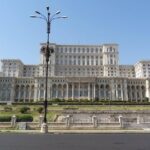
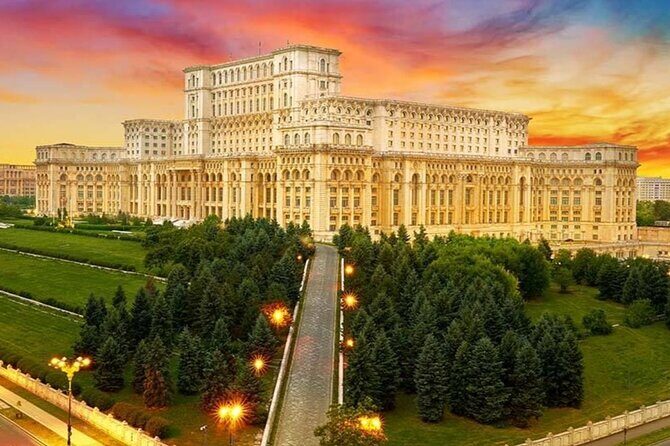
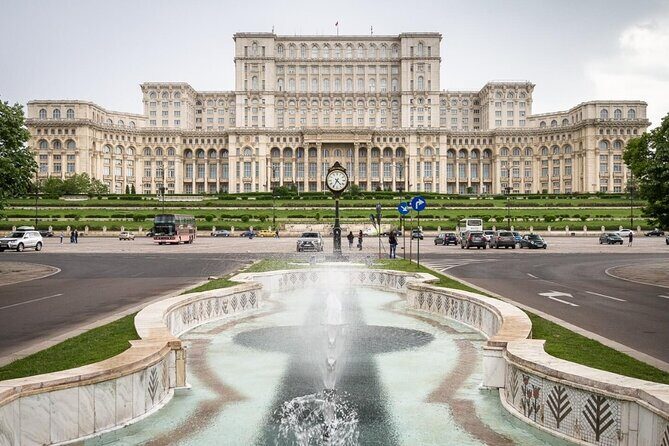
Your big first stop is the Palace of the Parliament—also known as the People’s Palace. This building is less like a normal monument and more like a statement in concrete and scale. Your guide will frame it with the famous numbers people always repeat: it’s enormous in length and depth, and it carries a huge amount of history in its construction and symbolism.
Here’s the practical part you can’t skip: visiting inside requires a reservation made 24–48 hours in advance, and you must bring an identity card or passport. A driver’s license isn’t enough, and the standard interior tour is about 1 hour.
So if you’re booking late, plan around that reservation window. If you’re on a tight schedule, this is the stop where you’ll feel the planning most strongly—because everything else can usually flex, but this one has rules.
Stops 2–4: Outside Views With Strong Stories (Neamului, Unirii, Victoria Palace)
After Parliament, you get a sequence of sights that you’ll mainly view from the outside. The key value here is interpretation: your guide points out what’s significant, then ties it back to Romania’s modern identity.
- Catedrala Mântuirii Neamului: you’ll see it from the outside, and your guide will share the background that makes it more than just another big church. Expect short, clear context rather than a long devotional visit.
- Piaka Unirii (University Square area context begins to form): at Unirii you’ll also get water music referenced in the experience, which helps turn a photo stop into something more atmospheric.
- The Victoria Palace: the guide will explain why this government seat is placed where it is, and how the surrounding institutions (including museums nearby) fit into Bucharest’s political geography.
Because these are outside stops, the payoff is speed and clarity. You’ll be moving, learning, and taking photos without spending your whole time waiting at entrances.
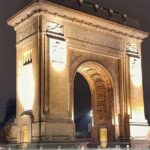
Stop 5: Triumph Arch (Arcul de Triumf) and the First World War Link

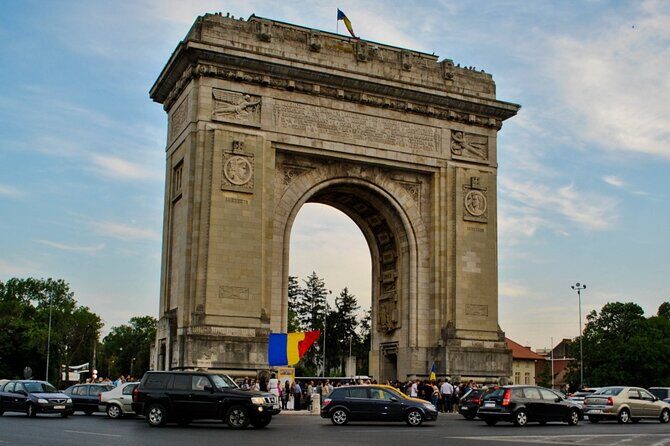
Next up is the Triumph Arch, the one that often makes people say Bucharest feels like “Little Paris.” The comparison isn’t just about looks—it’s about how Bucharest stages its public memory through grand monuments and wide avenues.
Your guide frames the arch as more than decoration. Construction and reconstruction took place over different periods, and the current form is linked to the early 20th century. The story ties it directly to Romanian participation and sacrifice in the First World War.
Even though you won’t be going inside, this stop works well because the arch is easiest to understand when you know what it’s commemorating. Your guide’s narration turns a quick roadside photo into a better-informed moment.
You can also read our reviews of more private tours in Bucharest


Stop 6: House of the Free Press and Why This “Garden City” Feeling Matters
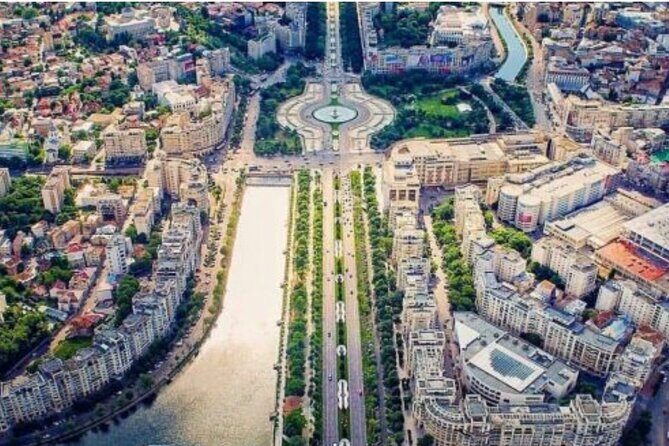
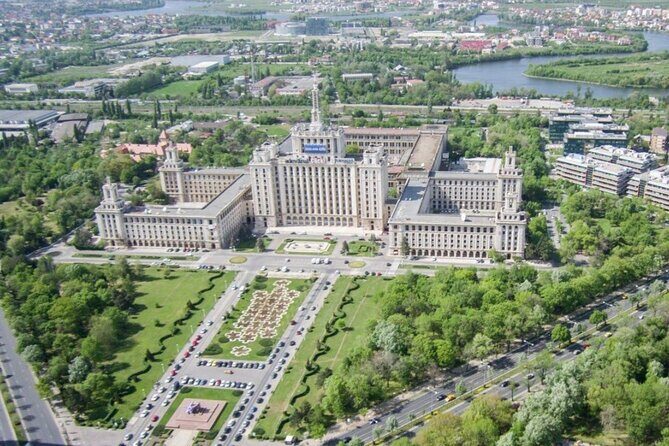
The House of the Free Press stop is a nice change of pace. It’s described as part of a city area with rich gardens and older stories, and that’s exactly what makes it worth a stop: Bucharest isn’t only about big buildings and street monuments.
In this segment, you’re mostly collecting atmosphere. Your guide gives you the background that explains why the area feels the way it does and what it represents. This is also the kind of stop where you appreciate a guide who can connect politics, design, and daily life without making it sound like a lecture.
Stop 7: Calea Victoriei—Your Best Chance to Spot the “Little Paris” Buildings
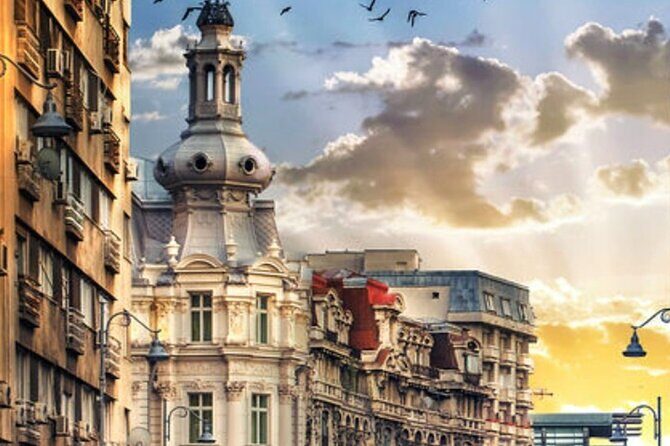
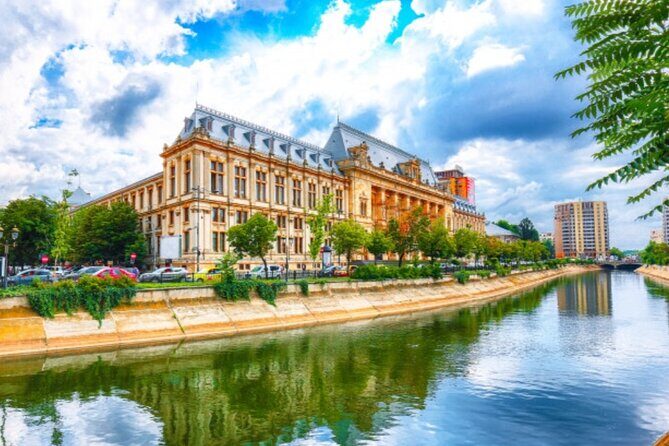
If one part of the tour feels like it was built for picture lovers, it’s Calea Victoriei. This street is famous because it’s packed with landmarks that look different from each other—but all contribute to the same grand city idea.
Your guide points out architectural highlights that include:
- Cantacuzino Palace (today tied to the George Enescu Museum)
- Cretulescu Church
- Revolution Square
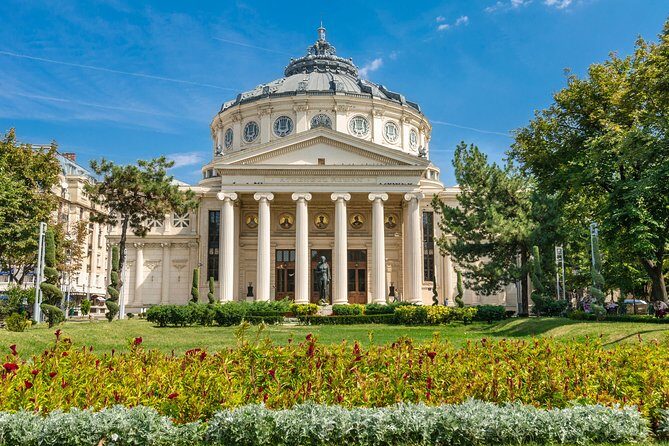
- The Romanian Athenaeum
- Palace of Economy (CEC Building)
- Royal Palace
- Central University Library Carol I
- Palace of Telephones
- Palace of Posts (noted as the National History Museum now)
What makes this stop valuable isn’t that you’ll see every building up close. It’s that you’ll know what you’re looking at—rococo details, institutional meanings, and how these grand structures line up along one historic corridor.
Also, Calea Victoriei is one of those places where your guide can help you avoid the common mistake: photographing the street but missing the “read” of the architecture. A good guide turns it into a walking-understanding lesson, even if you’re doing it from the car with brief stops.
Stop 8: Piaka Revolukiei (Revolution Square) and the 1989 Storyline
Then you shift to the emotional center of modern Romanian history: Revolution Square. Here, the emphasis is on the 1989 revolution, including the role played by Nicolae Ceaușescu.
This part of Bucharest hits differently after you’ve just seen grand monuments and official architecture. The guide connects the dots so you understand why the square matters—why people gathered, why the story changed, and why the city still carries that memory.
You’ll likely take fewer photos here, and that’s not a problem. The value is in the narrative clarity, not just the postcard angle.
Stop 9: University Square—From Student Barricades to Nightlife Energy
The final stop is University Square, and it’s the one that gives you contrast. Your guide frames it as a place tied to student resistance against dictatorship, and also as the area with nightlife today.
This is where you get a “then and now” feeling that helps Bucharest stop being just a history quiz. It becomes a living city: heavy past, then movement in the streets, then people enjoying the evening.
The itinerary notes this stop as about 1 hour, which is longer than the others. That extra time matters because it lets you slow down a little near the end, breathe, and make sure you’re not leaving with just a blur of monuments.
Guides You Might Encounter: Victor, Daniel, and Razvan in the Feedback
A big reason this tour scores high is the human factor—your guide’s voice, flexibility, and how comfortably they answer questions.
From the feedback, names come up again and again:
- Victor (including Victor Cobzaru): described as exceptionally knowledgeable, friendly, and proud of Bucharest, with a storytelling style that mixes history and personal perspective.
- Daniel: praised for English skills, knowledge, and practical surprises, including suggestions that lead to a traditional Romanian café snack.
- Razvan: noted for being flexible, keeping things fun, and having small amenities like water and drinks ready.
If you have a guide preference, it’s fair to ask. In fact, one piece of advice from feedback is simple: ask for Victor Cobzaru if he’s available. You’ll still want to confirm schedule details, but requesting the guide you’ve heard about is a smart move.
One more thing: several reviews mention the guide adapting to traffic and time. That’s not a guaranteed promise on every day, but it’s a sign that this tour isn’t run like a rigid factory line.
What You’ll Do in the Car (And How to Get Better Photos)
You’re in the vehicle a lot, which sounds boring until you realize how the stops are structured. You’ll get short windows to step out, take photos, and learn quickly—then back on the road.
A real-world tip: if parking is tight or streets are constrained, your guide may do quick photo stops rather than long viewing. That happened in feedback, and it’s exactly what you should expect in a city where traffic and access can be tricky.
To get the best results, tell your guide what you care about:
- Want the Parliament interior experience to feel unhurried? Ask.
- Want fewer photos and more explanations? Ask.
- Need an extra minute for a skyline shot? Ask.
Because it’s private, you can steer the pacing more than you can on group tours.
Is This Tour for You?
This works best if you want:
- a first-day orientation to Bucharest,
- a history-and-architecture guided overview without planning a route yourself,
- and a comfortable car ride that hits the main points in a few hours.
It might not be ideal if you want:
- deep museum time in multiple indoor sites,
- long guided walks,
- or a highly flexible itinerary without any structured stops.
Also, if you’re sensitive to tight schedules, remember the Parliament reservation and ID requirements. That’s the one part that needs early attention.
Should You Book This Bucharest Panoramic Car Tour?
Yes—if you want a smart, efficient introduction to Bucharest. For the price, you’re buying guide expertise plus a car route that strings together the city’s political landmarks and its most recognizable streets, especially the Calea Victoriei architecture corridor.
Book it if your goal is to get your bearings, understand the 1989 Revolution context, and leave with photos that match the stories. If you’re the type who hates time pressure, plan for the fact that many stops are outside and short—and give the Parliament interior stop the time and documents it requires.
FAQ
How long is the Bucharest panoramic car tour?
The experience runs about 2 to 3 hours.
Is this a private tour?
Yes. It’s listed as private, meaning only your group participates.
Do they offer pickup?
Yes. Pickup is offered.
What language is the tour in?
The tour is offered in English.
Do I get to go inside the Palace of the Parliament?
Visiting the Palace of the Parliament requires a reservation 24–48 hours in advance, and the standard interior tour lasts about 1 hour.
What ID do I need for the Palace of the Parliament?
You’ll need an identity card or passport. A driver’s license or an insurance card is not mentioned as sufficient.
Are admission tickets included for the stops?
The itinerary indicates Admission Ticket Free for the listed stops, including the Palace of the Parliament and the outside-view locations.
Can I cancel for a full refund?
Yes. Free cancellation is available if you cancel up to 24 hours in advance of the experience start time for a full refund.