REVIEW · BUCHAREST
Bucharest: private and exclusive Italian walking tour
Book on GetYourGuide →Operated by S.C. VIAGGIARE BUCAREST S.R.L. · Bookable on GetYourGuide
Bucharest rewards slow walking. This private Italian tour is designed to help you read the city like a storybook, with an experienced guide setting the pace and pointing out the details most people walk past. You’ll move through classic sights and lesser-seen corners, from Lipscani’s character-filled atmosphere to the formal beauty of Calea Victoriei.
What I like most is the Italian-only, certified guiding. And I also love the private format, because you can slow down for photos, ask questions, or linger when something grabs your attention. Based on strong feedback for guides like Filippo DiCataldo and Giuseppe (Beppe), the narration isn’t just facts—it includes thoughtful cultural context.
One consideration: this walk involves sightseeing on foot, and the info provided says it’s not suitable for hearing-impaired people (even though wheelchair access is also mentioned). If mobility or audio clarity is a concern for you, I’d double-check with the operator before booking.
In This Review
- Key things you’ll notice on this tour
- A private Italian walk that makes Bucharest feel readable
- Starting at Caru cu bere: the easiest meetup and a strong first taste
- Old Town’s Lipscani energy: monasteries, inns, banks, and passages
- Stravopoleos Monastery: quiet detail in a noisy zone
- Manuc’s Inn: a piece of Bucharest’s meeting-place past
- National Bank of Romania: grandeur with purpose
- Pasajul Villacrosse: the city’s indoor shortcuts and character
- New Saint George Church and Carutiresti Carusel: Bucharest’s two moods
- The New Saint George Church: symbolism you can read
- Cărturești Carusel: a photo stop that’s actually about culture
- Calea Victoriei: the elegant boulevard walk that connects eras
- Umbrellas Street and Revolution Square: from artful details to 1989
- The Romanian Athenaeum: beauty with a public legacy
- Timing, walking pace, and what to wear
- Price and value: is $53 a good deal for 2.5 hours?
- Who should book, and who might want a different type of tour
- Should you book this Bucharest Italian walking tour?
- FAQ
- How long is the Bucharest private Italian walking tour?
- What does it cost?
- Where does the tour meet?
- What language is the tour in?
- Is it private?
- What should I bring?
- Are there restrictions on what’s allowed?
Key things you’ll notice on this tour
- Private and exclusive in Italian with an experienced, certified guide
- Flexible pacing so the route adapts to your interests and energy
- Focus on important sights and less-obvious places around the center
- A route that links Old Town nightlife history with 1989 turning-point landmarks
- Photo moments like Umbrellas Street and time around iconic architecture
- Comfortable walking time built into short, manageable segments
A private Italian walk that makes Bucharest feel readable
Bucharest can look like it’s wearing two outfits at once: older streets and grand facades on one side, newer life and modern details on the other. A private walking tour is a smart way to deal with that. Instead of rushing from one “must-see” to the next, you get someone who can translate what you’re seeing into human stories—why a building exists, what it replaced, and what people used it for.
The language matters, too. This is Italian-guided, and that’s a real quality-of-experience upgrade. When you understand the guide’s rhythm and nuance, you catch details faster—and you’re more likely to ask follow-up questions without feeling lost.
Also, this tour isn’t built around a single straight line where everyone must follow the same speed. It’s described as adaptable to your needs. That matters because Bucharest rewards curiosity. You’ll likely find yourself pausing in doorways, looking up at facades, or slowing down when the guide points out symbolism on a church or a public building.
You can also read our reviews of more walking tours in Bucharest



Starting at Caru cu bere: the easiest meetup and a strong first taste
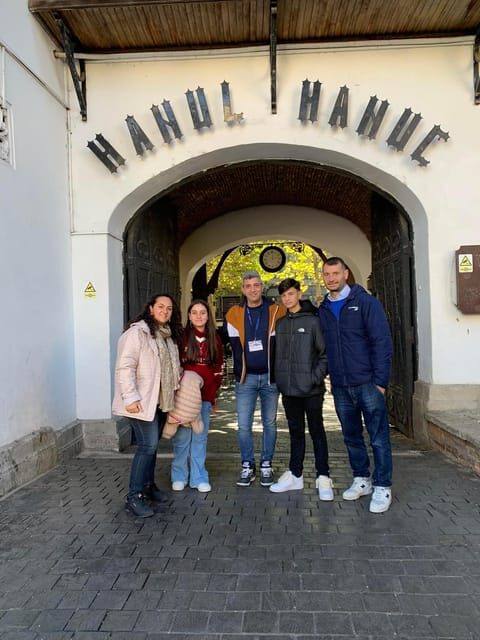
The walk begins at Strada Stavropoleos 5, right in front of Caru cu bere. Your guide waits there with a professional identification card, and you’ll be able to spot them easily.
Even if you don’t plan to eat, Caru cu bere is a meaningful first stop. It’s the kind of place that helps set the tone for Bucharest’s Old Town. You get an early sense of the city’s blend of social life, tradition, and architecture. After that, the tour pivots quickly into quieter, more historical stops—so you don’t just get nightlife vibes, you get context behind them.
One practical note: your guide will spend only a short amount of time at some points. That’s good for people who want movement without getting exhausted. But it also means you’ll benefit from bringing comfortable shoes and being ready to walk at a steady pace.
Old Town’s Lipscani energy: monasteries, inns, banks, and passages

Old Town is where Bucharest shows its personality most clearly. You’ll move through the area associated with Lipscani Street, known for nightlife, but the tour steers you beyond the obvious crowds. This is where the guide’s storytelling becomes the main attraction.
Stravopoleos Monastery: quiet detail in a noisy zone
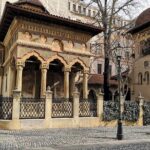
One of the first true “pause and look” stops is Stavropoleos Monastery. Monasteries tend to feel powerful because they don’t rush. The guide’s job here is to help you notice what your eyes might miss: the monastery as a piece of the city’s spiritual history, and the way religious architecture sits inside modern street life.
Why this stop is valuable: it gives you contrast. Lipscani is social and lively; Stravopoleos is reflective. That contrast helps you understand Bucharest as a city built layer by layer rather than in one single era.
Manuc’s Inn: a piece of Bucharest’s meeting-place past
Next comes Manuc’s Inn. Inns matter historically because they were built for movement—people trading, traveling, negotiating, and meeting. Even if you only see part of the space, the guide can frame why places like this shaped everyday life in older Bucharest.
Practical takeaway: if you like architecture, you’ll appreciate how inns and passage-like spaces connect neighborhoods. You’ll start to see the city as a network, not isolated landmarks.
You can also read our reviews of more private tours in Bucharest




National Bank of Romania: grandeur with purpose
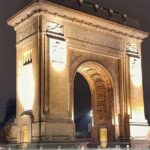
The tour also includes a stop at the National Bank of Romania. Banks are often overlooked on walking routes because they look like “just another building.” On this tour, you get guided context to explain what that grandeur communicates—power, stability, and the city’s modern ambitions.
This is one of those spots where your enjoyment depends on your willingness to look closely. If you enjoy civic architecture and symbolic design, you’ll likely get a lot out of this stop.
Pasajul Villacrosse: the city’s indoor shortcuts and character
You’ll also visit Pasajul Villacrosse. Passageways are fascinating in Bucharest because they often act like time capsules: indoor routes with distinct design, built to serve a different pattern of movement than today.
If you’re the type who likes hidden-in-plain-sight corners, this stop is a winner. It’s short, but it’s the kind of place you remember because it changes how you picture the city.
New Saint George Church and Carutiresti Carusel: Bucharest’s two moods
After the Old Town focus, you’ll shift into a mix of religion, design, and street-level charm.
The New Saint George Church: symbolism you can read
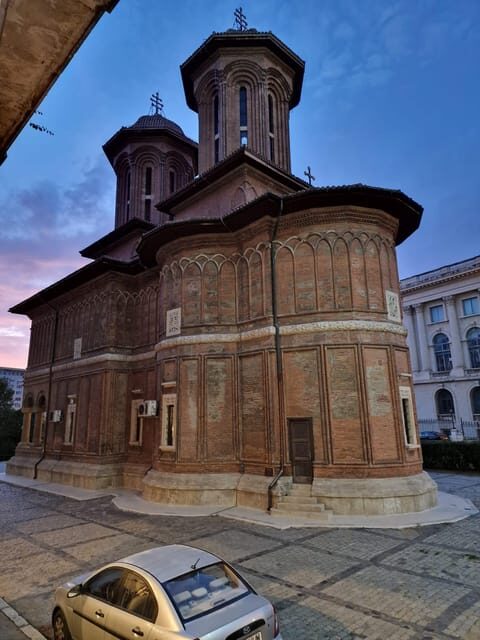
The tour includes The New Saint George Church for a guided visit. Churches can be tricky on tours because you might only see the exterior and rush the rest. Here, you get a set visit time, which gives you enough breathing room to look properly.
What to watch for: don’t just scan for decoration. Let the guide point out the elements that communicate identity—how style choices reflect the beliefs and the era behind the building.
Cărturești Carusel: a photo stop that’s actually about culture
Next is Cărturești Carusel with a photo stop. This is the more playful, modern-cultural side of Bucharest: a place tied to books and design energy rather than only to old monuments.
Even though it’s shorter, it’s a helpful contrast in the route. You’ll likely feel the tour’s balance between serious history and everyday culture.
Calea Victoriei: the elegant boulevard walk that connects eras
One of the most striking sections is Calea Victoriei, described as Bucharest’s most beautiful and elegant boulevard. This is where the city’s grand architecture and formal atmosphere really come into focus.
You’ll get a guided explanation plus walking time. That’s a smart combination. Standing still can help for looking up at facades, but walking helps you understand proportions—how buildings relate to the street and how people once moved through this area.
If you like city structure, this part helps you mentally map Bucharest. You start to see how the capital’s power and prestige worked spatially.
Umbrellas Street and Revolution Square: from artful details to 1989
The tour includes a photo stop at Umbrellas Street. Even if you’re not the biggest fan of staged photo spots, it’s still a good moment to reset your eyes. You’ll get a bright, human-sized visual break between heavier historical storytelling.
Then you move to Revolution Square, which is one of Bucharest’s defining landmarks for modern history. This stop is about the end of Ceausescu’s dictatorial regime in December 1989. The surrounding buildings help you place the revolution in space, not just in dates.
What makes Revolution Square work on foot: it’s not just one monument. You’re seeing a public stage—architecture that tells you how power presented itself, and how that story changed.
The Romanian Athenaeum: beauty with a public legacy
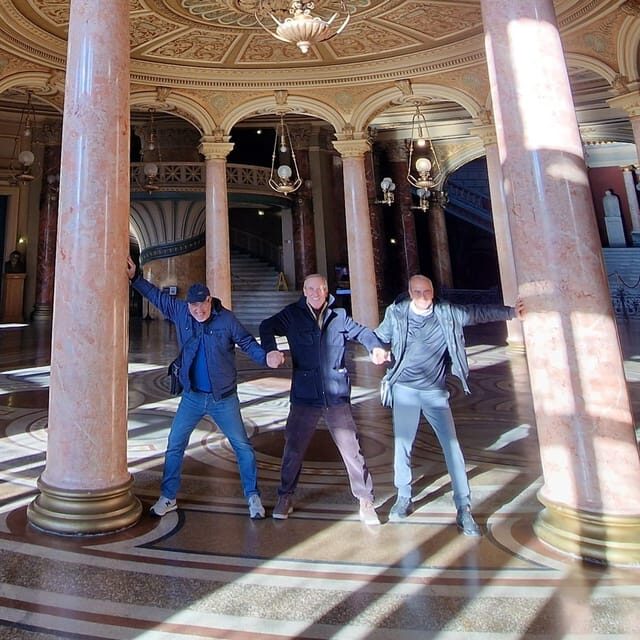
Your route finishes with the Romanian Athenaeum, including a guided visit. The Athenaeum is one of those places where the city’s identity becomes emotional. Even if you’re not a classical-music devotee, the point here is the cultural weight tied to the building.
This stop gives the tour an ending that feels earned: after Old Town texture, boulevard elegance, and revolutionary meaning, the Athenaeum brings it into something memorable and dignified.
Timing, walking pace, and what to wear
The tour runs about 2.5 hours, and the stops are broken into short segments—some with visits, some with guided looks, and a few as photo pauses. That structure keeps the experience from dragging.
Because it’s a walking experience, comfortable shoes matter. You’ll be on streets and sidewalks in central areas, and short walking bursts add up. If you’re carrying a camera bag or shopping bag, consider keeping it light. This is the kind of route where you want to move freely and be able to step aside when the guide points something out.
Weather can also matter. In feedback, guides like Giuseppe (Beppe) have been praised for keeping the tour engaging even during intense rain. That suggests the guide’s flexibility is real, not just a marketing phrase. Still, bring layers and plan for the possibility of wet pavement.
Price and value: is $53 a good deal for 2.5 hours?
At $53 per person, this is positioned as a premium walking tour because it’s private and guided in Italian by a certified professional. For many travelers, the “value” comes from the private factor. You’re not paying mainly for distance covered—you’re paying for time with a guide who can tailor the pacing and explanation.
Compared with generic group tours, the cost can feel easier to justify when you want more than bullet-point history. If Italian is your comfort language, you’ll likely get better comprehension and more natural conversation. And because the route includes both major landmarks and less obvious stops (like a passageway and a monastery), you should feel like the time is spent on meaningful places, not just clocking famous names.
If you’re traveling with a friend or small group, private pricing often becomes even more reasonable per person. If you’re a solo traveler who wants to avoid the pressure of joining a crowd, this format can also be worth it.
Who should book, and who might want a different type of tour
This tour is a great fit if:
- you want a private format rather than a set-group pace
- you prefer to understand the city in Italian
- you enjoy architecture, street-level details, and guided stories behind landmarks
- you like photo stops but also want substance between them
It may be less ideal if:
- you have mobility limitations, since it’s labeled as not suitable for people with mobility impairments, even though wheelchair access is mentioned
- you are hearing-impaired, since the provided info says it’s not suitable for that
- you want long, sit-down museum-style breaks (this is a walking-and-looking route, not a long indoor marathon)
Should you book this Bucharest Italian walking tour?
I think it’s an easy yes if you want a city-center overview with depth and you can do the walking. The private format plus Italian guidance is the core reason to choose it. You’ll get the “where” and the “why,” with stops that connect Old Town character to formal boulevards and the landmarks tied to 1989.
I’d say hold off or ask extra questions first if mobility or hearing needs are part of your planning. And if you dislike walking tours in general, you might find the structure too movement-heavy.
FAQ
How long is the Bucharest private Italian walking tour?
The tour lasts 2.5 hours.
What does it cost?
The price is $53 per person.
Where does the tour meet?
Meet your guide in front of Caru cu bere (Stavropoleos Street 5, 030081, Bucharest). The guide will be recognizable by a professional identification card.
What language is the tour in?
The live tour guide provides the experience in Italian.
Is it private?
Yes, it’s a private group and described as private and exclusive.
What should I bring?
Wear comfortable shoes.
Are there restrictions on what’s allowed?
The tour information states that alcohol and drugs and explosive substances are not allowed.