REVIEW · BUCHAREST
Bucharest in a nutshell – half day private walking tour
Book on GetYourGuide →Operated by Razvan Trancu · Bookable on GetYourGuide
Bucharest history hits fast on foot. This half-day private walking tour gives you a clear chronological route through the old historic center, moving from early foundations to Ottoman influence, the late 1800s glory era, and the hard stop of Communism and Revolution Square. I love that the story is guided by an authorized local who keeps things fun, flexible, and interactive, not a lecture. I also like the mix of major sights and quick-but-meaningful stops, so you get a sense for how Bucharest worked socially and economically over time. One consideration: with a 4-hour window and several pass-by moments, you will cover a lot, so wear comfy shoes and be ready to stay focused.
If you care about getting your bearings fast, this tour is built for that. The route is designed to start you from the city’s early beginnings and then build context street by street, ending at the Romanian Athenaeum so the modern city feels less random. You’ll have a private group experience, and the guide can adjust in real time if you want more time on a building, a photo angle, or a specific era.
Razvan Trancu is the kind of guide you’ll be grateful for on a short trip. In reviews, he’s described as an encyclopedia with great timing, humor, and flexibility, and that matters here because the tour has to balance many periods without losing the thread.
In This Review
- Key things that make this tour worth your time
- Where the tour starts: Starbucks at Hanul lui Manuc
- Biserica Sfantul Anton: a guided look at an early Bucharest anchor
- Cărturești Carusel: bookstore culture in a fast 10-minute moment
- National Bank of Romania: pass by, but read the city’s priorities
- Stavropoleos Monastery: where the atmosphere tightens
- Caru’ cu bere: icon stop that doubles as a meal idea
- CEC Palace: another pass-by that makes the timeline click
- Calea Victoriei (Victory Boulevard): monarchy-era streets for big-picture thinking
- University Square: guided perspective in the middle of the city’s story
- National Military Circle: pass by with context
- Revolution Square: the Communism and Revolution chapter
- Finish at the Romanian Athenaeum: ending with a lasting symbol
- The guide makes the tour: Razvan Trancu’s style
- Price and value: what $188 per group gets you
- What to expect from the pacing (and how to get the most)
- Who this tour suits best
- Should you book it? My take
- FAQ
- FAQ
- How long is the Bucharest in a nutshell tour?
- Is this tour private?
- What languages does the live guide speak?
- Where does the tour meet?
- Where does the tour end?
- What’s included in the price?
- Is it wheelchair accessible?
- What’s not included?
Key things that make this tour worth your time
- Chronological route that connects medieval beginnings to Ottoman influence, then to the 1800s and Communism
- Authorized local guide who can customize what you focus on during the walk
- A tight 4-hour format that still reaches the Revolution Square area and finishes at the Athenaeum
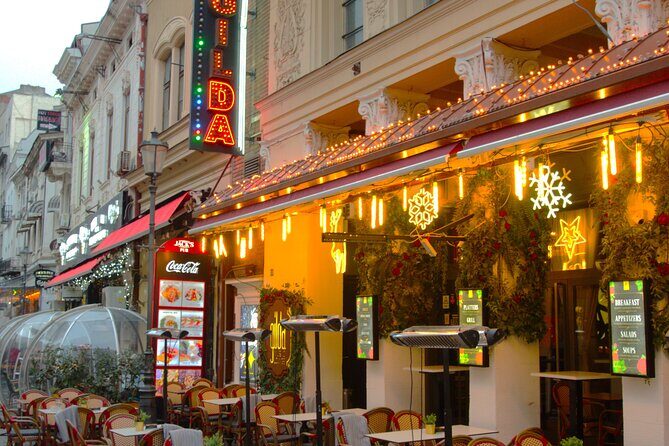
- Iconic Bucharest “layers”: churches, monasteries, major boulevards, and landmark squares
- Private group up to 12 so you can ask questions without feeling lost in the crowd
- Multi-language support (English, Italian, Spanish) with an active, two-way style
Where the tour starts: Starbucks at Hanul lui Manuc
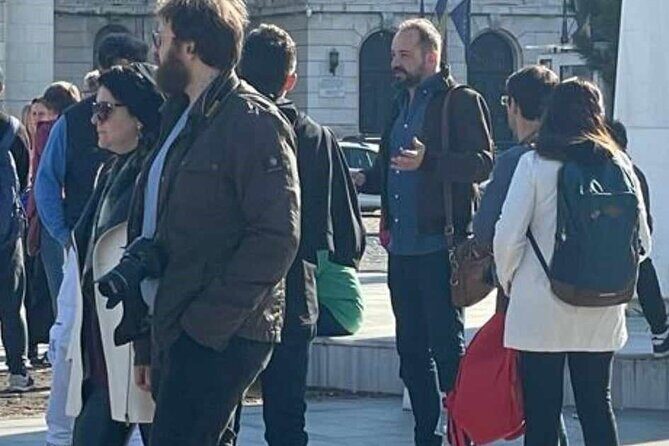
The tour begins at a Starbucks coffee shop at Hanul lui Manuc, using the main door as the meeting point. It’s a practical choice: you can show up, regroup easily, and start moving right away instead of spending time searching for a landmark that’s hard to find on foot.
What I like about starting here is the immediate sense of place. You’re anchored in the old center, and from that first step you’re not just collecting buildings—you’re building a timeline in your head. The guide can also set the tone quickly, asking what you’re most curious about so the walk matches your interests.
This is also where you’ll get your first real advantage: a private guide can fine-tune the pacing for you. If you want more explanation on a particular era, you can request it early instead of waiting until later.
You can also read our reviews of more walking tours in Bucharest


Biserica Sfantul Anton: a guided look at an early Bucharest anchor
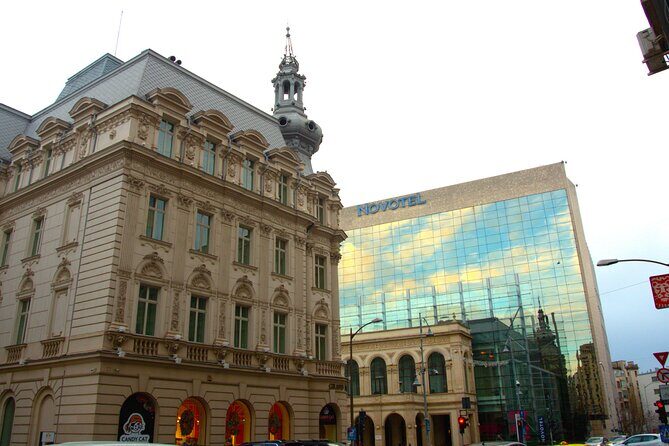
First up is Biserica Sfantul Anton, with a guided visit that lasts about 20 minutes. Even if churches aren’t your usual priority, this stop works because it gives you a human-scale landmark early in the route. You learn how Bucharest’s social life formed around major institutions, not just royal or political decisions.
A guided church stop is especially useful on a tour like this, because it helps you understand why later periods (Ottoman influence, the monarchy era, and beyond) show up the way they do. You’re getting early context before the route shifts into boulevards, squares, and state power.
Possible drawback: if you’re hoping for long interior time at every stop, remember this is a half-day plan. The goal is flow and coverage, so the church visit is meaningful but not endless.
Cărturești Carusel: bookstore culture in a fast 10-minute moment
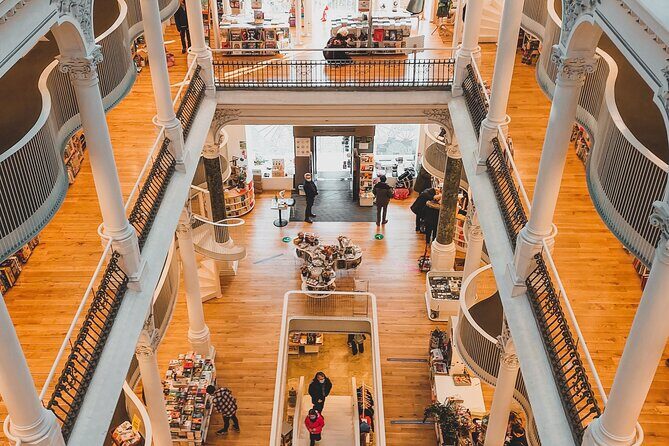
Next is Cărturești Carusel, visited for about 10 minutes. This is the kind of stop that keeps the tour from becoming all monuments and official buildings. Book and cultural spaces tell you something about daily life and modern taste, even when the tour is mainly structured around earlier centuries.
Think of this as a palate cleanser between heavier sites. You’ll also be able to move through quickly, which is important when you only have four hours total. If you like photography, a short stop like this often gives you enough time for a couple good shots without derailing the itinerary.
National Bank of Romania: pass by, but read the city’s priorities
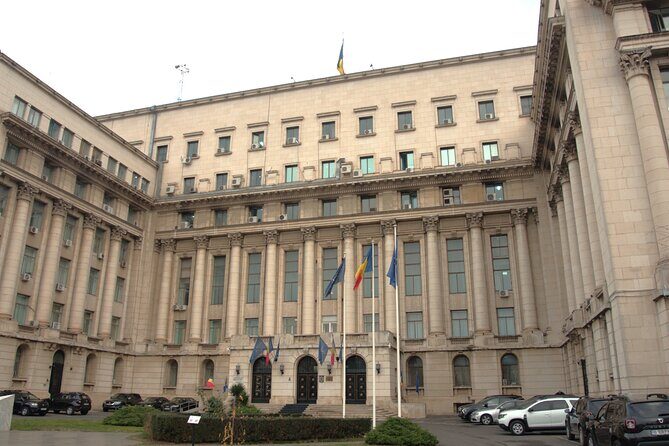
There’s a pass-by stop at the National Bank of Romania (around 10 minutes). You won’t get a deep guided interior moment here, but that’s not a weakness—it’s how the tour creates a city-wide perspective.
A bank is a great marker of how Bucharest developed in more recent times. When the guide points out what you’re seeing from the street, you start connecting politics, wealth, and public institutions. It’s a quick reality check: history isn’t only old streets and monuments. It’s also the systems that shaped jobs, money, and everyday stability.
Stavropoleos Monastery: where the atmosphere tightens
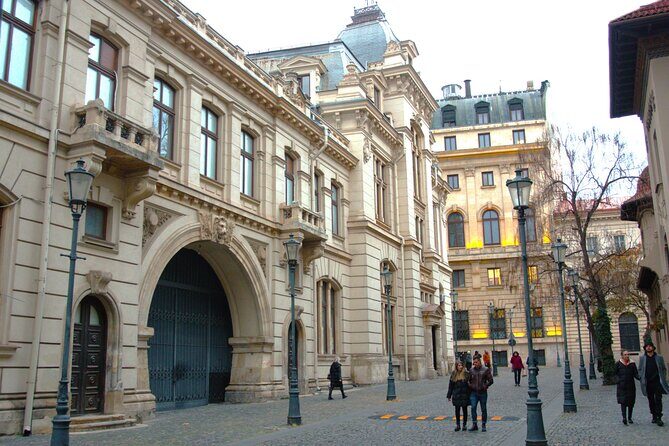
Then you reach Stavropoleos Monastery, with a guided visit of about 20 minutes. A monastery stop changes the mood in a way that photographs don’t always capture. You get a slower-feeling moment that helps you process what came before.
This stop also fits the tour’s larger theme: Bucharest didn’t grow in a straight line. Religious and cultural anchors show you the continuity of local life across changing empires and political systems. Even without spending all afternoon here, a guided visit gives you something to look for instead of walking past and forgetting.
You can also read our reviews of more private tours in Bucharest




Caru’ cu bere: icon stop that doubles as a meal idea
After the monastery, the tour includes a quick 10-minute visit at Caru’ cu bere. This is one of those places where the name alone carries weight, and it’s also the kind of landmark a guide can turn into a practical recommendation.
What I like is the value beyond the stop itself. You’re still within the historic center, and a guide can suggest how/when to fit a meal here or nearby based on what you’ve already seen. So even if you’re not eating during the tour, you leave with clearer options instead of guessing.
CEC Palace: another pass-by that makes the timeline click
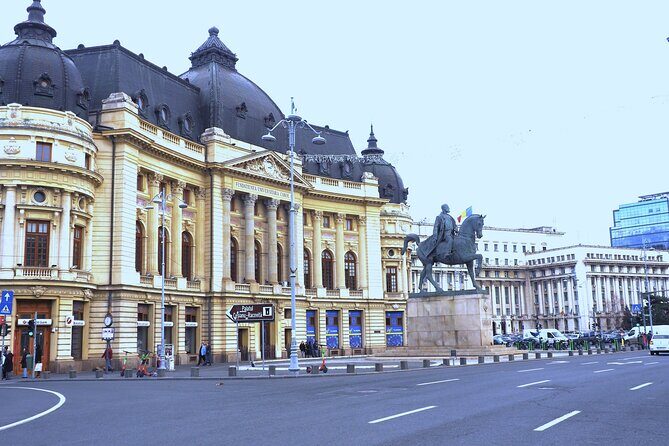
There’s a pass-by at CEC Palace (about 10 minutes). Again, you won’t spend a long time inside—this stop works as a visual punctuation mark.
The tour’s strength is that it doesn’t treat buildings as isolated objects. It links them to the era you’re walking through. When you see a prominent institutional facade on your route, the guide can help you connect architecture to the economic or political phase that produced it.
Calea Victoriei (Victory Boulevard): monarchy-era streets for big-picture thinking
Now you hit Calea Victoriei, visited for around 20 minutes. This is your “glory days” stretch—Bucharest at its most ambitious—matching the tour’s focus on the end-of-century architecture and the monarchy period.
This section is where you’ll feel the city’s scale. Even a shorter timed walk here helps you understand why Bucharest looks the way it does in postcards and in real life: the streets were made to impress. You also start to see how public space can project power, wealth, and national identity.
If you’re the type who likes to connect what you see to how people lived, this is one of the best parts of the tour. You can stand back a moment, look down the avenue, and let the guide’s context turn it into something you can understand, not just admire.
University Square: guided perspective in the middle of the city’s story
University Square is a guided stop for about 30 minutes. This longer time slot matters because it lets the guide slow down and explain how different eras share the same urban canvas.
This is a good moment to ask questions. A private group tour means you’re not stuck waiting your turn. If you’re wondering how Romania’s cultural and political story connects, this is the kind of place where the guide can tie those threads together in plain language.
I like that the tour keeps moving, but doesn’t rush this part. It’s the difference between collecting stops and building a working model of the city.
National Military Circle: pass by with context
There’s a pass-by at National Military Circle for about 10 minutes. Military and civic institutions can feel abstract when you’re reading about them far from the street. Here, they become part of the visual timeline, which is exactly what a chronological walk should do.
Even in a short pass-by moment, you get to see how state power historically occupied prominent spaces. The guide’s explanations are what turn it from a quick glance into a meaningful detail.
Revolution Square: the Communism and Revolution chapter
Then comes Revolution Square, visited with a guided portion of about 30 minutes. This is the stop where the tour’s tone becomes heavier, because this area ties directly to the Communism story and the revolution that followed.
The value here is not just what happened, but how the guide helps you make sense of what you’re seeing in the present. Public squares are where societies negotiate memory—what gets honored, what gets questioned, and what gets re-framed over time. In a short walking tour, you want at least one anchored moment like this, and Revolution Square is the anchor.
One practical tip: this area can be visually dense. If you want to understand it, don’t rush your photos. Give the guide a minute to finish the explanation, then look again with new context.
Finish at the Romanian Athenaeum: ending with a lasting symbol
The tour ends at the Romanian Athenaeum. Finishing here gives your walk a satisfying shape: you move from tense historical chapters to a landmark that feels like Bucharest’s cultural statement.
This ending also helps with your next steps. When you leave a tour at a place people remember, you can more easily plan your evening—whether that means grabbing a nearby drink, walking around more, or just using the Athenaeum area as a reference point for your remaining time in town.
It’s also an efficient finale for a half-day format. You’re not scattered across the city at the end; you’re concentrated around a recognizable cultural core.
The guide makes the tour: Razvan Trancu’s style
The biggest repeat note across reviews is that Razvan Trancu brings serious knowledge without turning the day stiff. People specifically highlight how he tells stories in a fun and exciting way, with strong communication, punctuality, humor, and the flexibility to adapt when interest shifts.
That matters in a tour like this because it spans many time periods. If a guide sticks to a script, it can feel like walking through a checklist. A guide who’s comfortable adjusting keeps your energy up and helps you remember what connects each era.
It also helps that this tour is intentionally interactive and customizable. If you’re more curious about architecture, you can steer toward more street-level explanation. If you care about social changes, you can ask follow-ups about daily life and institutions.
Price and value: what $188 per group gets you
At $188 per group (up to 12 people) for a 4-hour private walking tour, the value depends on how you’ll split the cost. For a small group, it can be a smart way to buy time and clarity—especially when you want context for both older layers and 20th-century turning points without spending days on planning.
Here’s the practical way to think about it:
- You’re paying for a private, licensed local guide, not just a self-guided route.
- You get a guided chronology that compresses a lot of learning into one walk.
- You can ask for extra advice on activities, dining, and even 1–2 day trips outside Bucharest.
If you’re solo, it may feel like a higher spend for four hours. But if you’re on a tight schedule and you care about understanding the city instead of just seeing it, a guided timeline can still be worth it—because it reduces confusion fast.
What to expect from the pacing (and how to get the most)
This tour runs about 4 hours and mixes guided visits with pass-by sections. That structure is useful: you get deeper time where it counts (church, monastery, university square, Revolution Square, and the finale) and lighter time where the goal is visual context (bank, palaces, military-related facade, and major boulevard framing).
To get the best experience, come with one or two priorities:
- Are you mainly after the 1800s architecture and monarchy-era feel?
- Or is Communism and Revolution Square your key interest?
- Or do you want a balanced overview with practical context about today?
Because the tour is flexible, you can guide the emphasis. And because it’s private, you don’t have to worry about awkwardly asking questions in a crowd.
Who this tour suits best
This is a great fit if you:
- want a walkable, story-driven way to understand Bucharest fast
- prefer a private guide over group buses or large tours
- like history told with real examples and social context, not just dates
- want practical recommendations for dining and what to do next
It’s also useful for first-timers, because the tour ends in a central cultural landmark area and gives you a clearer mental map of where to go after.
Should you book it? My take
Book it if you want a guided timeline that takes you from Bucharest’s early foundations through Ottoman-era influence, into end-of-century architectural confidence, and then to the hard realities of Communism and Revolution Square. This is the kind of tour that helps you understand what you’re looking at right now, not just what once happened.
Skip it only if you hate walking or you want long, slow museum-style visits with lots of independent wandering. This is about momentum and context, not lingering all day.
FAQ
FAQ
How long is the Bucharest in a nutshell tour?
It lasts about 4 hours.
Is this tour private?
Yes. It’s a private group experience.
What languages does the live guide speak?
The guide offers live commentary in English, Italian, and Spanish.
Where does the tour meet?
Meet at the Starbucks coffee shop at Hanul lui Manuc, main door.
Where does the tour end?
It finishes at the Romanian Athenaeum.
What’s included in the price?
You get a private tour with a local licensed tour guide and suggestions for other local activities (including dining and 1–2 day tours outside Bucharest).
Is it wheelchair accessible?
Yes, the tour is listed as wheelchair accessible.
What’s not included?
Snacks, souvenirs, and personal expenses are not included.