REVIEW · BUCHAREST
Bucharest by bike
Book on Viator →Operated by CarpatBike SRL · Bookable on Viator
Bucharest feels like two cities at once, and bikes make that obvious. You glide along bike-friendly pathways and tree-lined avenues, with a local guide who ties what you see today to the forces that shaped Romania’s recent past. I like that the pace stays easy and relaxed, so the trip works as a quick on-ramp to the city instead of a stressful checklist run.
What I really enjoy is the mix of big-ticket architecture (hello, the Parliament Palace) and quieter stops that explain everyday life, including the National Museum of the Romanian Peasant. One thing to consider: this is outdoors and timed, so if you’re not comfortable riding a city bike for a couple of hours, you may feel a bit rushed during transitions.
In This Review
- Key takeaways before you pedal off
- Starting at Hard Rock Cafe and rolling out at 10:30
- Why a guided bike tour is one of the best ways to get your bearings
- Value at around $87.40: what you’re actually paying for
- Ceaușescu’s megaproject: the Parliament Palace from the saddle
- Museum time that explains everyday Romania: the National Museum of the Romanian Peasant
- Piata Revolukiei (Revolution Square): a turning point you can feel
- Herăstrău Park (King Michael I Park): where the ride cools down
- Old Town on wheels: Curtea Veche ruins and Romanian royal artifacts
- Royal symbols and major architecture stops you’ll remember
- Vlad Țepeș ruins and Mogosoaia Palace: medieval power and royal retreat
- The café stop: use it well, not just as a break
- How guides shape the experience: Mugurel and Oana’s approach
- Who this tour suits best (and who might want something else)
- Should you book Bucharest by bike?
- FAQ
- Where does the bike tour start and end?
- What time does the tour start?
- How long is the tour?
- How much does the tour cost?
- What’s included in the price?
- Is food included?
- Do I need to buy tickets for the stops?
- How many people are in the group?
- Can children participate?
- Can I cancel for free?
Key takeaways before you pedal off
- Bike lanes and traffic-smart routing keep the ride calmer than it looks on a map
- Ceaușescu-era landmarks give you the scale of modern Bucharest’s most controversial story
- Museum and park stops break up the ride with real context, not just photo ops
- Small group size (max 10) helps you get questions answered and make quick adjustments
- Guides like Mugurel and Oana bring history with personality, plus safety-focused guidance
Starting at Hard Rock Cafe and rolling out at 10:30
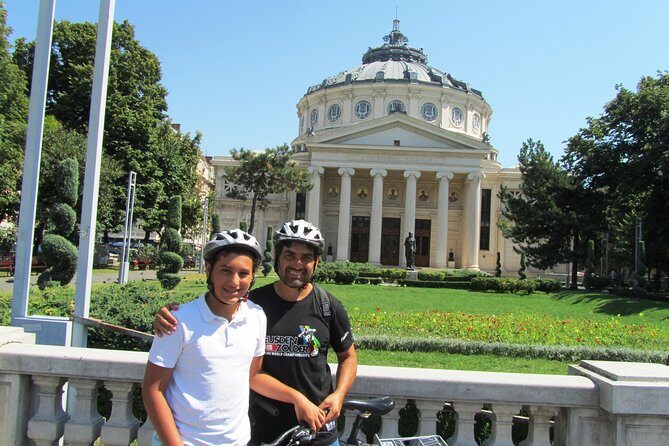
Your tour begins at the Hard Rock Cafe București on Șoseaua Pavel D. Kiseleff 32, and it finishes back at the same meeting point. The start time is 10:30 am, which is a smart move in Bucharest: you get solid daylight for architecture and parks, without burning the whole morning in heat. The tour runs about 2 to 3 hours, depending on how long you pause at each stop and how the group flows.
This location is also convenient. It’s near public transportation, which helps if you’re building the day around other plans. And since the ending point is the start point, you don’t have to worry about figuring out a return route after you’re already tired from biking.
You can also read our reviews of more cycling tours in Bucharest

Why a guided bike tour is one of the best ways to get your bearings
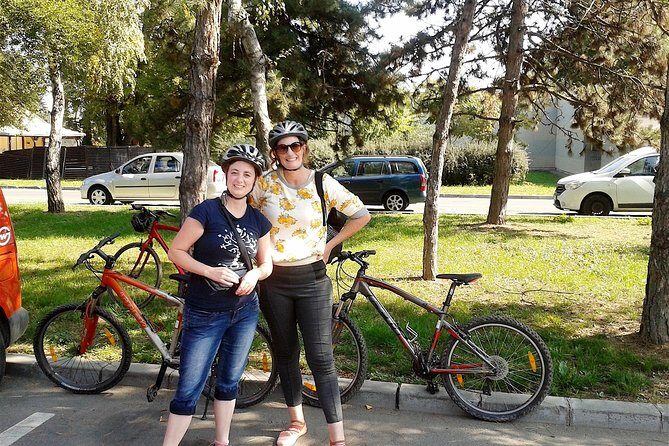
Bucharest can feel confusing on foot at first. Streets are wide, landmarks are spread out, and some areas make you work hard just to cross from one scene to the next. A bike tour solves that by giving you motion with structure. You get a route that uses bike-friendly pathways and keeps you moving between major zones.
The big practical win is freedom. When something catches your eye—an angle on a building, a view between trees, a scrap of history—you can stop. When you want a break, you get one. The guided aspect matters too: you’re not just traveling from point A to point B, you’re getting the what-and-why so the city starts to make sense.
And yes, the ride stays relaxed. The tour is designed for most people who can handle a city bike. You still want to be comfortable in basic traffic situations, but the goal is a smooth, low-stress day where the bike simply helps you see more in less time.
Value at around $87.40: what you’re actually paying for
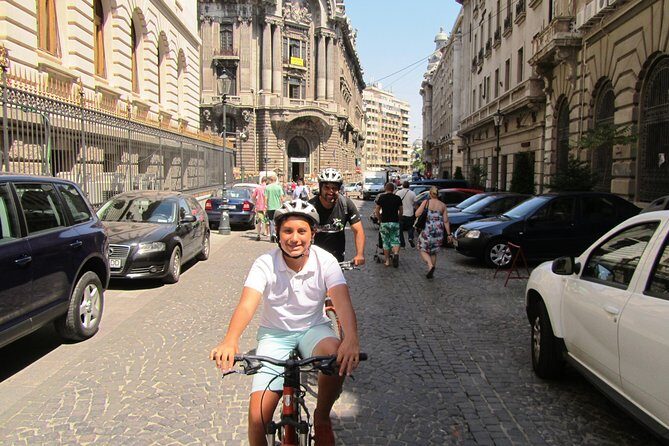
The price is $87.40 per person for a 2–3 hour guided experience. On paper, that can sound like a lot compared to free walking. The value comes from three things you don’t get with self-guided roaming:
First, you’re paying for a professional guide who connects the dots between architecture and Romania’s shifting political story. That’s the kind of context that turns a building into a place with meaning.
Second, you get the bike and helmet included, plus bottled water. That’s not flashy, but it removes friction. You don’t need to hunt for rentals, figure out helmet rules, or manage hydration on your own during a city circuit.
Third, the tour is capped at a maximum of 10 travelers, which usually means fewer delays and more chance for questions. You also get flexibility from the group format—stop more often if needed, speed up slightly if the group is comfortable.
If you’re on your first day in Bucharest, this kind of structured orientation can be a smart spend. It often saves you time later because you’ll understand where you want to return on foot.
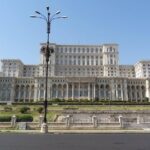
Ceaușescu’s megaproject: the Parliament Palace from the saddle
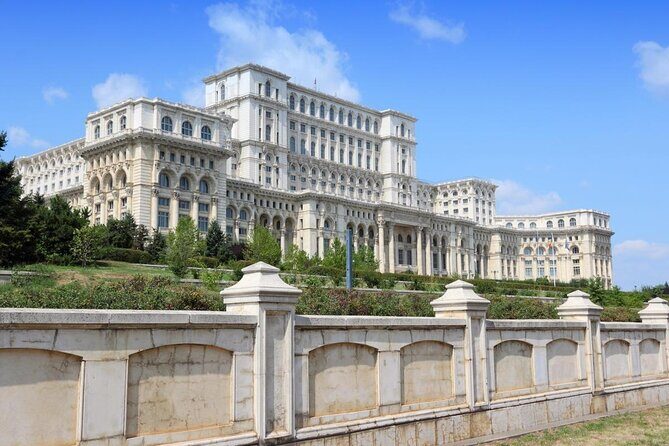
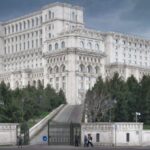
One of your early wow moments is the massive communist-era project tied to Nicolae Ceaușescu. Even if you’ve seen photos, nothing quite prepares you for how large the complex feels in person. From the bike, you get angles and scale that are hard to recreate from a street corner.
This stop is also a history lesson in plain terms. You’re not just looking at a building—you’re seeing what megalomania looks like when it becomes stone, bureaucracy, and urban planning. The guide’s role here is crucial: they help you read what you’re seeing without drowning you in details.
A small note to keep in mind: big monumental sites often come with crowds and strong visual focus. A bike tour helps because your route is built around viewing, not parking and wandering. Still, expect this to be one of the stops where you may pause longer for photos and explanations.
Museum time that explains everyday Romania: the National Museum of the Romanian Peasant
Next you’ll visit the National Museum of the Romanian Peasant, with a focus on artifacts tied to Romanian peasant life—textiles, icons, ceramics, and other objects that show how people lived and believed. This kind of stop changes the emotional tone of the day. After the scale of state power, you see ordinary lives expressed through craft.
This is also a useful stop for first-time visitors because it gives you context you can carry into the rest of your trip. Even if you don’t memorize every object, you’ll start recognizing cultural threads behind what you later see in churches, markets, and traditional shops.
The downside? Museums take a moment to switch gears. If you prefer nonstop outdoor sightseeing, treat this as a short, meaningful reset rather than a long sit-down.
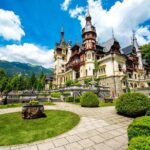
Piata Revolukiei (Revolution Square): a turning point you can feel
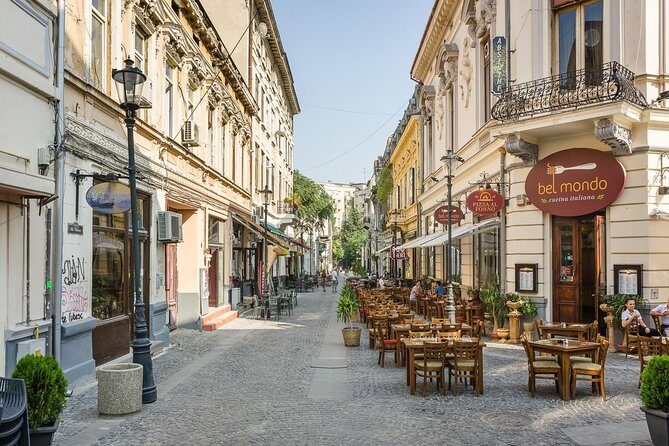
One of the most important stops is Piaka Revolukiei—Piata Revoluției—marked as the end of the communist regime in December 1989. It’s the kind of place where history stops being abstract. You’re standing at a geographic reference point for political change, not just a name in a timeline.
Admission here is ticket-free, which makes it easier to keep the day moving. And because the tour is designed to stop often, you don’t feel like you have to rush your own look. The guide’s timing also helps: you’re not hearing the story too early or too late; it lands when you’re physically there.
Herăstrău Park (King Michael I Park): where the ride cools down
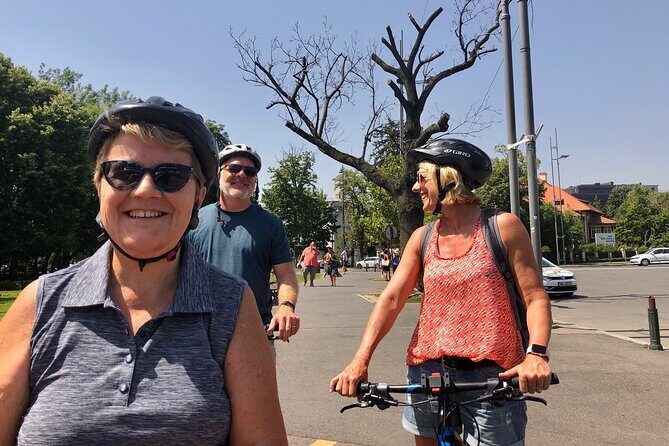
Then you head to Herăstrău Park, which is now called King Michael I Park and is the largest park in Bucharest. This stop is more than a scenic break. It gives you a mental reset from heavy architecture and politics.
In a bike tour, parks do practical work. They reduce stress and let your body recover. You get air, shade when available, and space to slow your pace without feeling like you’re losing the itinerary.
Admission is free, and the planned time is around 20 minutes. That’s enough to breathe and take a few photos, but it’s short enough that you’re not trapped in the park when you’d rather keep exploring.
Old Town on wheels: Curtea Veche ruins and Romanian royal artifacts
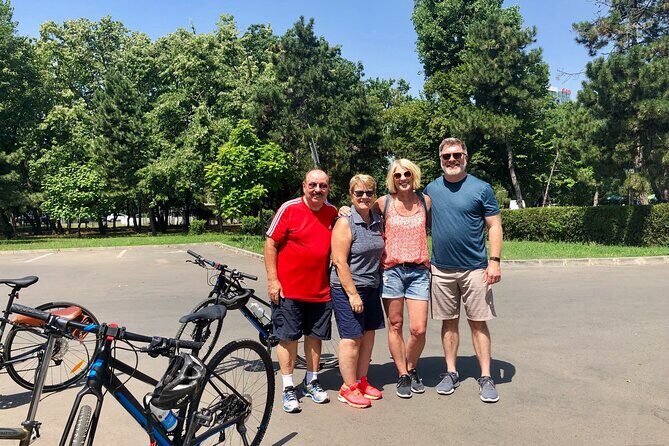
Old Town is where the tour shifts from modern and communist-era landmarks toward medieval Bucharest. You’ll get close to the former court of Vlad the Impaler at Curtea Veche, now preserved as an open-air museum of excavated medieval ruins. From a bike, the ruins feel more immediate than a distant panorama—like you’re moving through the actual layers of the city.
You’ll also encounter the National Museum of Romanian History, located in a former palace and featuring religious icons and royal treasures. This pairing is smart: one stop gives you physical remnants, and the other gives you objects that survived through collecting and preservation.
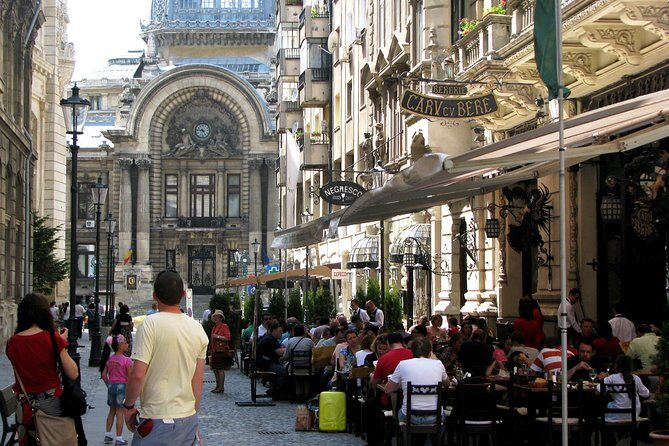
There’s also a practical side to Old Town. You pass shops selling local wines and beaded jewelry, and you’ll find traditional restaurants in 19th-century buildings. Even if you don’t stop to eat, the tour helps you spot the kinds of places you might want later.
Two cautions for Old Town:
- Cobblestones and uneven surfaces can be tougher in certain areas. You’ll still be on the bike, but you may have short moments of dismounting.
- This is one of the areas where your guide’s pace matters most. If you like deeper looking, ask for a couple extra minutes at the ruins or museum entry viewpoints.
Royal symbols and major architecture stops you’ll remember
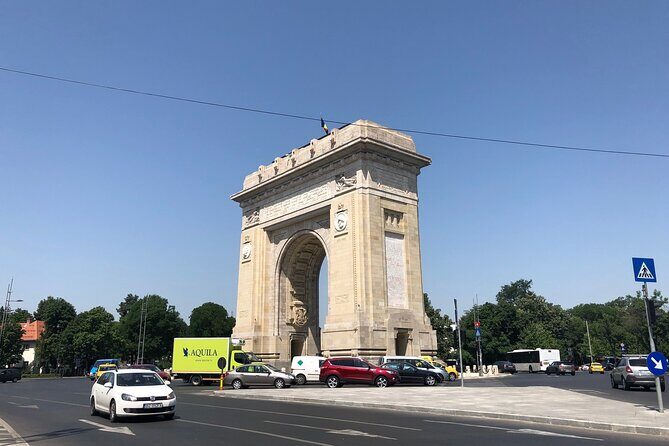
Between the more clearly named sites, the tour also includes stops tied to major cultural and national architecture. You’ll see a royal dynasty symbol that now serves as an art gallery, and you’ll also pause at one of the most beautiful buildings in the city—described as a symbol of the country.
On bike, these can work like visual anchors. You’re not just getting a list; you’re seeing patterns. Royal power, religious meaning, and state identity all appear in different forms, sometimes side by side. The guide helps you interpret those shifts so you don’t leave with a set of photos that don’t connect.
You’ll also notice communist “modern” architecture along the route. The benefit is that you see it in relation to older parts of the city. That contrast is often what makes Bucharest feel so unusual and worth revisiting.
Vlad Țepeș ruins and Mogosoaia Palace: medieval power and royal retreat
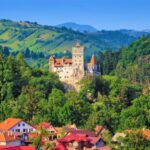
From the overview, you’ll also get to experience the ruins of Vlad Țepeș’s royal castle, and you’ll stop at Mogosoaia Palace. Even when these stops aren’t the biggest in size, they’re big in mood.
Vlad Țepeș is the kind of figure who turns a city into a story. The ruins connect Bucharest to medieval intrigue and power struggles, while the rest of the tour reminds you how modern Bucharest kept reinventing itself through politics and architecture.
Mogosoaia Palace adds another layer: royal life beyond Bucharest’s dense core. You get a change in scenery that makes the day feel like a real outing, not just a city loop. If you like history, you’ll appreciate how the tour moves between medieval identity and later political eras.
The café stop: use it well, not just as a break
The itinerary includes a stop at a local café for a refreshing drink. This matters more than you might think. After biking and standing around historic landmarks, you want a quick reset where you’re not waiting in line for food somewhere else.
It’s also a chance to slow down and watch the local rhythm of the area. You’ll get a taste of daily life between major sites, and that’s often what makes a tour feel real.
Just plan around the fact that food and drinks aren’t broadly included beyond what’s specified for the stop. If you want a proper meal, you’ll likely handle that on your own after the tour.
How guides shape the experience: Mugurel and Oana’s approach
One reason this tour earns such strong marks is the guides. The names that stand out are Mugurel and Oana, both described as friendly, funny, and tuned to what the group wants to know.
Mugurel is noted for knowing the city and sharing both history and recent political events, with info adjusted for the group’s interests. That tailoring is huge. If you prefer architecture, you get architecture. If you want politics explained in human terms, the guide can steer you there.
Oana is described as passionate about biking and deeply connected to Romania, with a focus on staying safe. A key practical theme is that she keeps the group on bike lanes protected from traffic. That makes the whole ride feel calmer, especially if you’re not an aggressive cyclist.
If you have the choice, you’ll do well to pick a tour time where you can ask questions freely. Good guides don’t just point. They explain.
Who this tour suits best (and who might want something else)
This is a great fit if:
- you want an introduction to Bucharest that doesn’t require planning every stop yourself
- you like bikes and want less walking between far-apart landmarks
- you want a guided explanation of both communist history and medieval remnants
- you’re planning to revisit areas later and want a mental map first
It might be less ideal if:
- you don’t feel comfortable riding a bike for a couple hours outdoors
- you prefer long museum time over short, timed stops
- you want purely scenic sightseeing with no political-historical context
The sweet spot is moderate curiosity plus basic comfort riding. The tour is designed to feel like a smooth city adventure with context, not a demanding workout.
Should you book Bucharest by bike?
I’d book this if it’s your first time in Bucharest and you want to understand the city fast—how it evolved from medieval roots to communist-era power displays and modern-day life. The combination of bike-friendly routing, a small group, and guides like Mugurel or Oana makes it feel practical, safe, and genuinely informative without turning into a lecture.
Skip it only if you’re likely to struggle with cycling comfort or you dislike structured routes. Otherwise, this is one of the cleanest ways to get oriented, see major landmarks, and finish with enough energy to keep exploring on your own.
FAQ
Where does the bike tour start and end?
The tour starts at Hard Rock Cafe București on Șoseaua Pavel D. Kiseleff 32 and ends back at the same meeting point.
What time does the tour start?
The start time is 10:30 am.
How long is the tour?
The experience runs about 2 to 3 hours.
How much does the tour cost?
The price is listed at $87.40 per person.
What’s included in the price?
The tour includes a professional guide, use of a bicycle, use of a helmet, and bottled water.
Is food included?
Food isn’t included unless specified. The tour does include a stop at a local café for a refreshing drink.
Do I need to buy tickets for the stops?
Admission details vary by stop. Some stops are ticket-free, and others may involve admission tickets depending on what you’re viewing.
How many people are in the group?
The tour has a maximum of 10 travelers.
Can children participate?
A child rate applies only when sharing with 2 paying adults, and children must be accompanied by an adult.
Can I cancel for free?
Yes. You can cancel up to 24 hours in advance for a full refund.