REVIEW · BUCHAREST
Bucharest Half a Day Bike Tour
Book on Viator →Operated by Bike the City · Bookable on Viator
A bike tour is the easiest way to get bearings fast in Bucharest. This half-day ride mixes big landmarks with calmer, lesser-known corners, and you cover real ground in open air without spending your whole day walking. I especially like the included bike and helmet and the way the guide turns history into an easy, story-driven walk-and-ride rhythm, like Lucia and Dan have done for different groups.
The one thing to plan for: Bucharest streets can mean pedestrians, crossings, and occasional construction, so the ride isn’t a traffic-free cycling fantasy. It’s still described as gentle overall, but if you’re sensitive to busy intersections or you need frequent stops, you’ll want to go in with that in mind.
In This Review
- Key highlights to look forward to
- Why this Bucharest bike tour works for a first visit
- Price and value: what $45.97 buys you
- Where you start at 10:00 and how the ride feels
- Stop-by-stop: from the National Bank to old monasteries and Hanul streets
- 1) The National Bank area: architecture that anchors the tour
- 2) An old Bucharest monastery: religion as an everyday thread
- 3) Hanul Gabroveni: Ottoman-leaning streets and a photo-friendly pause
- Manuc’s Inn and the civic shift: food influences, community, and the odd romance stop
- 4) Manuc’s Inn (Hanul lui Manuc): the city through food influences
- 5) The “new civic center”: the replacement plan for the old core
- 6) A playful local stop about finding love
- 7) The Romanian Jewish community: community history in the urban map
- Palatul Patriarhiei and Antim Monastery: religion and political symbolism
- 8) Palatul Patriarhiei: the first Romanian Parliament
- 9) Manastirea Antim: religion in Romania, more than one-stop religious sightseeing
- Palace of Parliament and the communist chapter on wheels
- 10) Palace of Parliament: the last megalomaniac communist project
- 11) The first park in Bucharest and communist futuristic architecture
- 12) The main old boulevard and best old architecture: older Bucharest still matters
- 13) The royal dynasty: monarchy as another city layer
- 14) Piaka Revolukiei: the end of the communist regime
- Photo breaks, small comforts, and how to get more from the ride
- Who should book this Bucharest half-day bike tour
- Should you book this tour?
- FAQ
- How long is the Bucharest Half a Day Bike Tour?
- How much does the tour cost?
- Where does the tour start and end?
- What time does the tour start?
- Is food included?
- What’s included in the price?
- What language is the tour offered in?
- How many people are in the group?
- Do I need to buy admission tickets for the stops?
- Is free cancellation available?
Key highlights to look forward to
- Open-air city coverage in about 4 hours with a relaxed pace and plenty of photo breaks
- Included bike and helmet for a low-effort start (you just show up)
- A small-group feel, with guides like Lucia, Dan, Ed/Eduard, and Alex cited for clear English and great storytelling
- A stop list that ranges from church and monarchy to Ceaușescu-era power and symbolism
- Lots of free admission stops along the route so you’re not juggling ticket lines
Why this Bucharest bike tour works for a first visit
Bucharest can be oddly hard to “map” on your own, even if you’ve read a guidebook. The city has layers: grand state buildings next to older courtyards, Ottoman-influenced architecture mixed with communist-era planning, and local stories woven into street corners. A bike tour helps because you’re not choosing between “the highlights” and “the details.” You get both in one morning.
You also save time. In about four hours, you can see a spread of neighborhoods and monuments that would take most of a full day on foot. And because the pace is easy—people describe it as not too strenuous—you get time to look, stop, and actually understand what you’re seeing instead of rushing through photos.
The best part is the guide style. Names like Lucia and Alex come up repeatedly for explaining politics, culture, and everyday life in plain language. Dan and Ed/Eduard also get praise for being fun, personable, and very good at turning the city into a story you can remember (not a list you forget).
You can also read our reviews of more cycling tours in Bucharest
Price and value: what $45.97 buys you
At $45.97 per person for roughly 4 hours, the value comes from what’s bundled. You’re paying for a guided route plus the practical stuff: a local/professional guide, a bicycle, and a helmet. That’s a big deal in a city where sorting out bike rental, safety basics, and route planning can eat hours.
You also get a private tour format (meaning you’re not stuck in a giant bus-style group). Even though the cap is listed at up to 30 travelers, the experience is described as small-group friendly, with a comfortable pace and time for questions.
Then there’s the stop structure. Many of the stops on the route note free admission tickets, so you’re not constantly paying at each point. The tour is built around what you can see from the streets and at key landmarks, with the guide doing the interpretation.
Food and drinks aren’t included, but that’s common for bike tours. The money you spend is aimed at getting you moving and informed, not feeding you.
Where you start at 10:00 and how the ride feels
You meet at Strada Operetei 12, București 030167. The start time is 10:00 am, and the tour ends back at the same meeting point.
Two practical points matter for how the morning goes:
- You’re near public transportation, so it’s easier to arrive without a long detour from your hotel.
- Expect a mostly easy ride with a short hill mentioned by riders. One hill is not the end of the world—especially if you show up with decent energy—but it’s good to know you’re not on a perfect flat track.
Also, plan for the reality of riding in a real city. Reviews flag construction and pedestrian traffic in places, which can make some stretches feel busier than a dedicated bike path. A good guide helps by timing the route and keeping the group together.
If you’re biking in hot weather, this is where pacing helps. One rider mentions the ride in about 35 degrees with comfortable timing and shade stops. Bring your own basics (water, sunscreen), but know the tour is designed around breaks and comfort.
Stop-by-stop: from the National Bank to old monasteries and Hanul streets
This tour is structured like a guided walk through Bucharest’s chapters, but you’re doing it on a bike. You roll out, stop often enough to regroup and take photos, and each location adds a piece to the bigger puzzle.
1) The National Bank area: architecture that anchors the tour
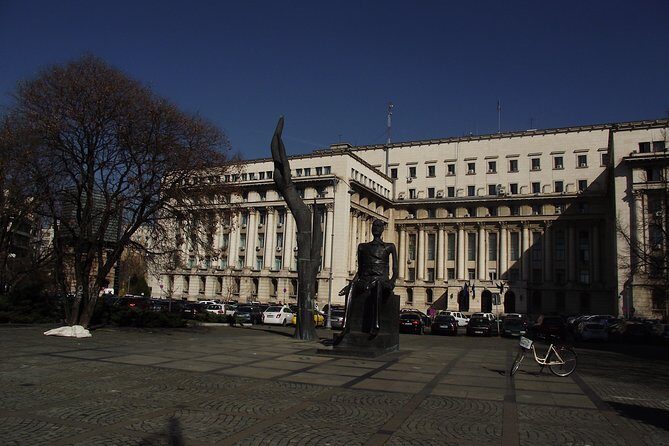
The ride begins with a first stop at The National Bank. Even if you don’t know Romanian finance history, this kind of landmark matters because it sets the tone: Bucharest mixes official grandeur with street-level life. It’s a good early anchor before you move into older, more story-driven spots.
2) An old Bucharest monastery: religion as an everyday thread
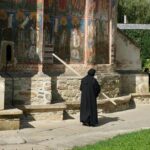
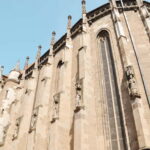
Right after, you’ll see one of the oldest monasteries in Bucharest. The point here isn’t just the building itself—it’s the way religion threads through the city’s identity. Monasteries in Bucharest aren’t only religious sites; they’re also historical markers, often tied to older generations and survival through change.
One later stop on the route is Manastirea Antim, specifically highlighted as the religion in Romania. That makes the early monastery visit feel like the first chapter, with the tour coming back to faith themes later for stronger context.
3) Hanul Gabroveni: Ottoman-leaning streets and a photo-friendly pause
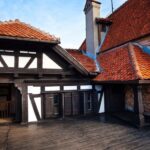
Next comes Hanul Gabroveni. You’ll get a look at oriental architecture and a small photo gallery that captures old Bucharest. This stop is a great example of why biking works: you can hop into a courtyard-type feeling and then move on before you get worn out by long walking detours.
This is also the kind of location where your guide’s storytelling matters. Architecture means more when someone explains what to notice—shapes, influences, and how these spaces fit into city life.
Manuc’s Inn and the civic shift: food influences, community, and the odd romance stop
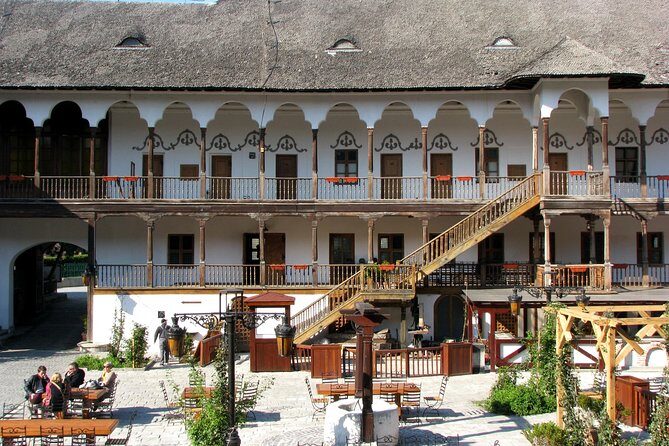
4) Manuc’s Inn (Hanul lui Manuc): the city through food influences
At Manuc’s Inn, the tour points you toward influences in Romanian traditional food. In other words, this isn’t a stop built purely for architecture lovers. It’s a cultural stop: the story of Bucharest as a meeting point of peoples and tastes.
In a city where different periods left physical fingerprints, a food angle gives you a human way to understand what changed—and what persisted.
5) The “new civic center”: the replacement plan for the old core
Then you’ll pass by the new civic center, described as an alternative to the old city center. This is where Bucharest’s modern story starts to show. You’ll feel the shift from older, organic patterns to a more planned, monumental approach.
It helps to think of this as a physical argument in stone: one era trying to rewrite what the center should mean.
6) A playful local stop about finding love
There’s also a stop described in a fun, slightly cheeky way: the place where you get yourself a smart wife or husband. Don’t expect a serious lecture here—it’s a reminder that Bucharest has a sense of humor, and local landmarks often carry folklore or playful meaning alongside the big political shifts.
7) The Romanian Jewish community: community history in the urban map
The route also includes the Romanian Jewish community. This matters because the tour isn’t only about power buildings or churches. It’s also about people and communities that shaped the city’s life across time.
The practical value for you: your guide gives you context so you’re not just looking at plaques and hoping they make sense.
Palatul Patriarhiei and Antim Monastery: religion and political symbolism
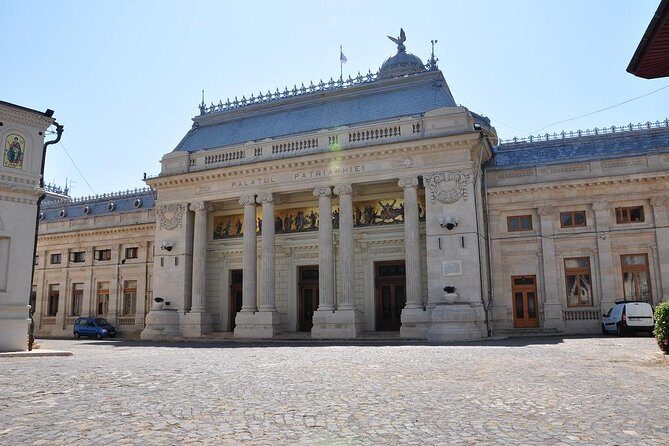
8) Palatul Patriarhiei: the first Romanian Parliament
At Palatul Patriarhiei, the highlight is the first Romanian Parliament. This stop is a key “bridge” moment. You’re moving from religious identity and community stories into governance and national change.
Even if you’re not a politics nerd, this kind of building helps you understand why Bucharest’s later communist-era monuments feel so dramatic. It’s one reason the tour stays on theme: different regimes leave different kinds of symbols.
9) Manastirea Antim: religion in Romania, more than one-stop religious sightseeing
Then you’ll reach Manastirea Antim, highlighted as the religion in Romania. This is where the tour’s interpretation matters most. Monasteries can feel similar at a distance, so a good guide helps you notice what’s distinct and how faith shaped everyday life and identity.
Palace of Parliament and the communist chapter on wheels
This is where Bucharest stops being subtle.
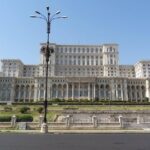
10) Palace of Parliament: the last megalomaniac communist project
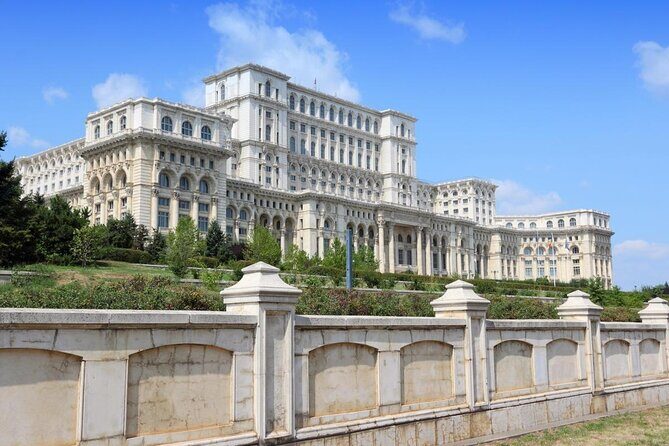
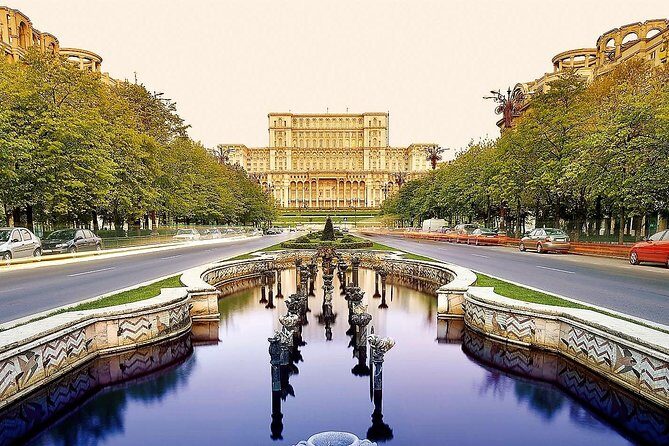
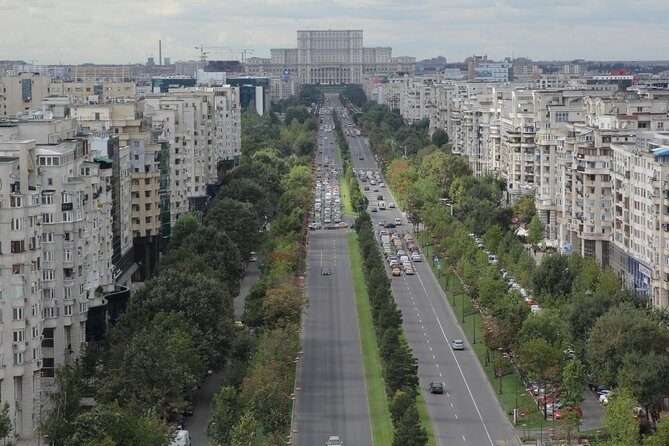
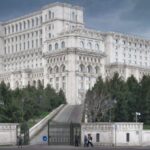
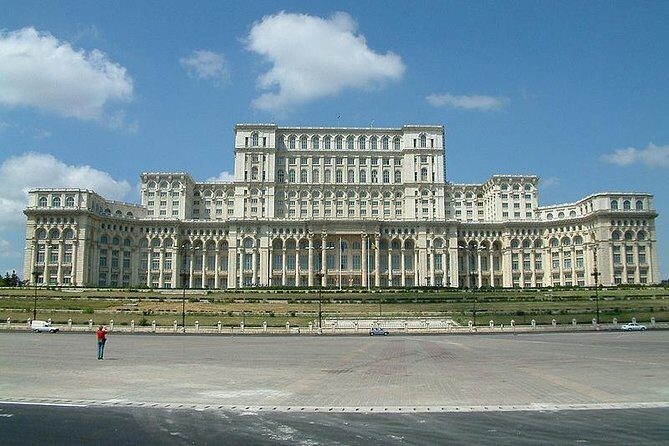
The Palace of Parliament is presented as the last megalomaniac communist project. That wording is a hint at what you’ll learn: how ambition turned into construction, how politics shaped scale, and how the city has to live with those choices.
This isn’t a stop for people who want quiet, minimalist sightseeing. It’s for people who want to understand what a regime tried to communicate through architecture.
11) The first park in Bucharest and communist futuristic architecture
After the Palace, the tour takes you through more planned elements: the first park in Bucharest and communist futuristic architecture. The park adds a softer layer. It shows how communist planning also tried to control leisure and public space, not only power and offices.
12) The main old boulevard and best old architecture: older Bucharest still matters
You’ll also cover the main old boulevard of Bucharest and one of the best old architecture scenes. This is important because it prevents the tour from turning into a one-theme lecture. You see that communist-era planning happened in a city with deep older roots, and the older look still pulls its weight.
13) The royal dynasty: monarchy as another city layer
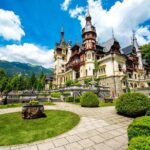
Next is a stop about the royal dynasty. It’s another reminder that Bucharest has shifted systems, and the built environment reflects those shifts. You’ll get a sense of how the city reframed authority again and again—first monarchy, then different national chapters, then communist rule, and afterward.
14) Piaka Revolukiei: the end of the communist regime
Finally, you reach Piaka Revolukiei, framed as the end of the communist regime. Ending with a place tied to that turning point gives the whole tour a finish line. You’re not just collecting monuments; you’re following a timeline through space.
Photo breaks, small comforts, and how to get more from the ride
A bike tour succeeds or fails based on how you use the stops. This one is built around pauses that work: short enough to keep momentum, long enough for photos and questions.
From what’s been shared by riders, guides often keep things friendly and encouraging—Lucia, Dan, Ed/Eduard, and Alex are all praised for humor and storytelling. Some groups also mention small touches like water and even chocolates, which sounds minor until you’re riding in summer heat.
A few practical tips for you:
- Bring sunglasses and sunscreen. Even on an easy ride, you’ll be out in the open.
- If you have dietary limits, plan your own snacks. Food isn’t included, and the tour isn’t trying to be a walking restaurant crawl.
- Ask your guide for a next-day plan. Several riders mention guides gave ideas for where else to go after the tour. That’s a smart use of your time.
Also, if you’re traveling with family or mixed ages, this tour has a track record of working well. The route is often described as manageable, with a pace that keeps everyone together.
Who should book this Bucharest half-day bike tour
I think this tour is a strong fit if you want:
- A first- or second-day introduction to Bucharest
- A way to see major landmarks without spending the entire day on foot
- A guide who explains the why behind the buildings and street layouts
- An active morning that still feels relaxed
It’s also a good choice if you like history that connects to real life—religion, community, monarchy, and political power—because the stops are designed to cover those angles in one flow.
Consider skipping it (or at least plan extra caution) if:
- You dislike riding in busy street environments with pedestrians and occasional construction.
- You need lots of bathroom stops or you’re likely to get frustrated by group logistics. One lower-score comment mentioned awkwardness around break decisions.
Should you book this tour?
Yes, if you want a high-value Bucharest bike tour that gives you a clear overview of the city’s big chapters in a small-group setting. The included bike and helmet, the easy-going pace, and the fact that guides like Lucia, Dan, Ed/Eduard, and Alex are repeatedly praised for clear English and story-driven explanations make it a practical choice.
Book it especially if Bucharest is new to you. This is the kind of tour that helps you know where to roam next—because you’ll leave understanding what you’re looking at.
FAQ
How long is the Bucharest Half a Day Bike Tour?
It runs for about 4 hours.
How much does the tour cost?
The price is $45.97 per person.
Where does the tour start and end?
It starts at Strada Operetei 12, București 030167, Romania and ends back at the same meeting point.
What time does the tour start?
The start time is 10:00 am.
Is food included?
No. Food and drinks are not included.
What’s included in the price?
The tour includes a local guide and professional guide, use of a bicycle, use of a helmet, and it’s listed as a private tour.
What language is the tour offered in?
It’s offered in English.
How many people are in the group?
The tour has a maximum of 30 travelers.
Do I need to buy admission tickets for the stops?
The stops listed on the route show admission tickets as free.
Is free cancellation available?
Yes, cancellation is free up to 24 hours in advance for a full refund.