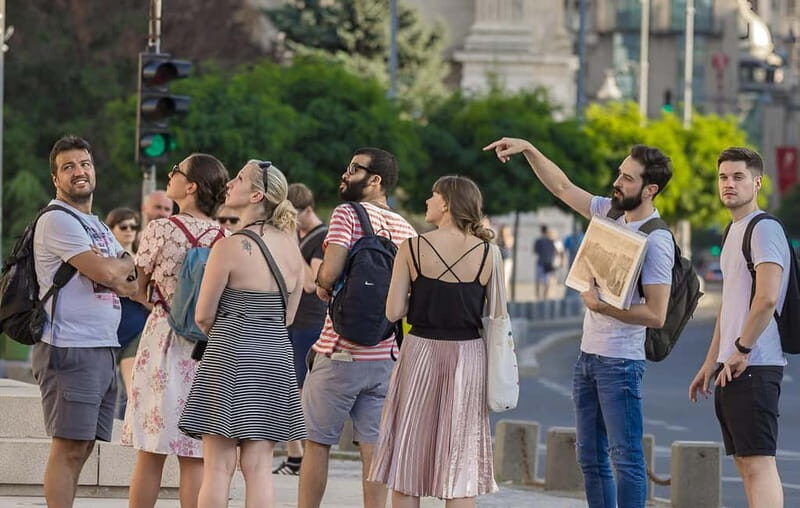
Bucharest has layers, and this walk reads them. This 2.5-hour experience takes you through quieter corners of the city where the architecture shifts under your feet. I especially like the focus on how history shaped neighborhoods and the way guides use real streets to explain the Ottoman-era influence and later demolitions. The main thing to plan for: it’s a walking tour, so you’ll want moderate fitness and good shoes.
What you’re really buying here is context, not just photos. You’ll start with one of the city’s landmark cultural buildings, then move into street-level stories tied to community quarters called mahallas. A possible drawback is that the exact pace and photo stops can vary a bit depending on the guide and the day, so build in a little flexibility rather than treating it like a strict checklist.
Key tour highlights at a glance
- Mahallas and neighborhood change: how communities formed around religious life, then fused into wider districts
- Architecture mix on the same streets: Ottoman influence, Armenian/Jewish/French presence, and later communist damage
- Three main stops, easy flow: National Theatre area → Strada Batiștei → Parcul Ion Voicu
- Snacks included: plus time to pause for coffee/tea along the way (alcohol is extra)
- Small group size: up to 12 travelers, so you’re not just one face in a crowd
In This Review
- Starting at Ion Luca Caragiale National Theatre: the story begins in plain sight
- Stop 1: National Theatre Ion Luca Caragiale and the Ottoman influence you don’t expect
- Stop 2: Strada Batiștei and the mahallas that became today’s neighborhoods
- Stop 3: Parcul Ion Voicu and Belle Époque mansions from the late 1800s
- Refreshment breaks: snacks now, drinks later
- How the guide experience really works (and why small groups matter)
- Price and value: why $46.86 can make sense in Bucharest
- What you’ll walk through: architecture, community mixing, and the communist years
- Who this tour fits best—and who might prefer a different style
- Should you book this Hidden Bucharest-style walking tour?
- FAQ
- What is the duration of the tour?
- What time does it start, and where do I meet the guide?
- Where does the tour end?
- Is the tour in English?
- How many people are in a group?
- What’s included in the price?
- Are drinks included?
- Do I need to worry about walking a lot?
- How do tickets work?
- Should I book in advance?
- What is the cancellation window?
Starting at Ion Luca Caragiale National Theatre: the story begins in plain sight
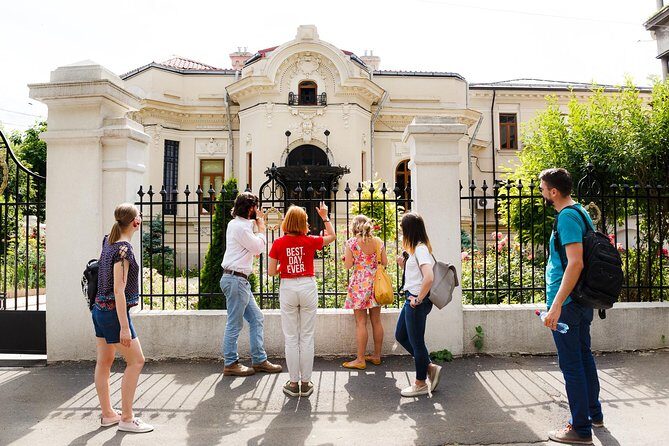
Your day kicks off at the Ion Luca Caragiale National Theatre, on Bulevardul Nicolae Bălcescu (address: Bulevardul Nicolae Bălcescu 2, Bucharest 010051). Meeting there matters because it’s a good “anchor” in a city that can feel chaotic on first arrival. Even if your first instinct is to head straight for the big avenues, this tour nudges you to start sideways—on smaller streets where the city feels more human.
From the start, the tour framing is clear: this isn’t about collecting monuments. It’s about understanding why Bucharest looks the way it does. You’ll also get snacks included, which helps when you’re walking and listening for hours.
The tour runs about 2 hours 30 minutes, starting at 10:00 am. It’s offered in English, and it’s limited to a maximum of 12 travelers, which usually makes questions easier and the pace less rushed.
Stop 1: National Theatre Ion Luca Caragiale and the Ottoman influence you don’t expect
The first stop is the National Theatre Ion Luca Caragiale (Teatrul Național Ion Luca Caragiale). Admission here is listed as free, and that’s a big plus for value: you’re spending your money on the walking and the storytelling, not entry fees.
What makes this start interesting is the way it sets up a theme that could easily be missed in Bucharest. The tour connects the Romanian capital to the Ottoman world of influence—not because Bucharest was an Ottoman city, but because the cultural and urban patterns overlapped. That matters for your walk ahead, because the next neighborhood story is all about how towns organized themselves socially and geographically.
You’ll also get an architectural read on the theatre’s charm—how it fits the city visually and historically. This first stop works like a warm-up: you’re not just learning facts, you’re getting a lens for what to notice later when the streets change character.
Practical tip: bring a small note-taking habit. As you move from theatre façades to side-street details, it’s easy to forget which “clue” a guide pointed out 20 minutes earlier. A few quick words in your phone can save you later.
You can also read our reviews of more tours and experiences in Bucharest.

Stop 2: Strada Batiștei and the mahallas that became today’s neighborhoods
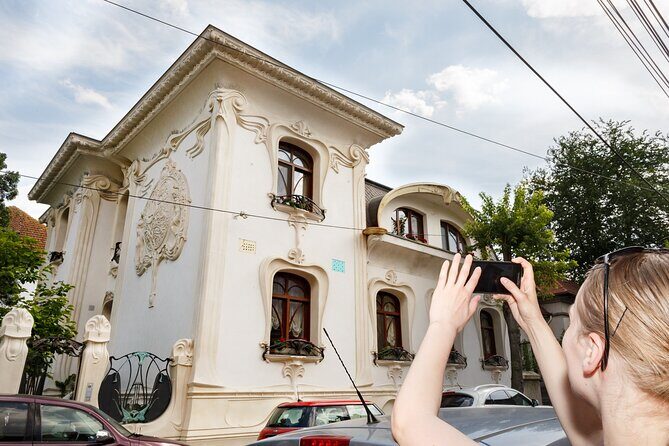
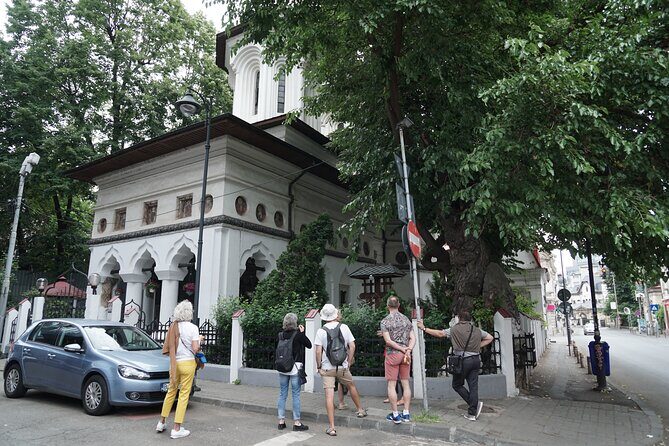
Next comes Strada Batiștei, and this is where the tour shifts from landmark architecture to neighborhood structure. The big idea is mahallas—small quarters that often formed around religious buildings and tended to be populated by people from similar ethnic, social, or religious communities.
This is the kind of concept that sounds academic until you see how it explains what you’re actually walking through. The tour ties mahallas to later growth: as Bucharest expanded, these quarters fused into broader neighborhoods. Then came disruption—modernization waves, earthquakes and wars, and later Ceaușescu-era demolition projects.
Strada Batiștei is linked to neighborhoods such as the Armenian Quarter, Mantuleasa, the Old Jewish Quarter, and Batiștei itself. What I like about this part is the focus on how those communities left mixed traces in the built environment—architecture, street rhythm, and even food culture. It’s the difference between “pretty buildings” and “why these buildings exist here.”
Admission is also listed as free at this stop, so you’re not paying for access to understand the story. You’re paying for a guide to point out what would otherwise be invisible: how layers pile up rather than disappear.
Heads-up for your expectations: Bucharest can look worn in places, and some properties are abandoned or in uneven repair. That’s part of the narrative here, but it can also be visually harder on a hot day or in rainy weather. If you’re visiting mid-summer, wear breathable layers and plan to pause when your guide suggests it.
Stop 3: Parcul Ion Voicu and Belle Époque mansions from the late 1800s
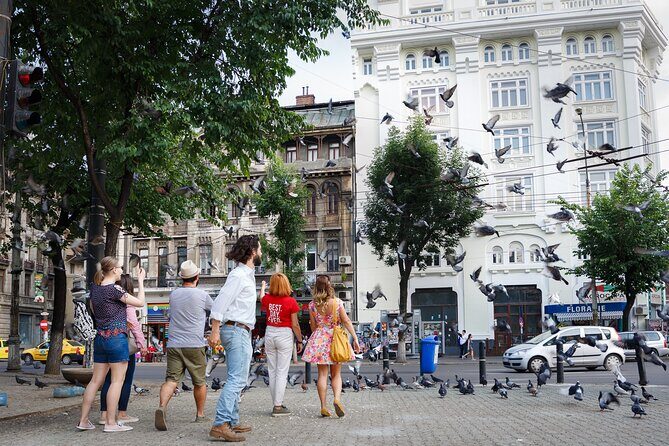
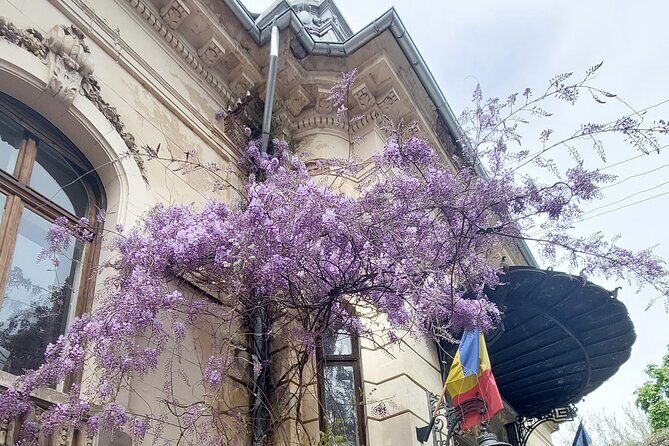
The final planned stop is Parcul Ion Voicu, which the tour frames as a Belle Époque area with mansions dating to the end of the 19th century. This is a different mood from the street-level mahalla story. In the park-adjacent space, you get a clearer sense of Bucharest’s earlier prosperity and the kind of residential scale the city once had.
What you’ll look for here is contrast. You’ve just learned about disruption and loss; now you’re seeing the physical evidence of what came before—grander homes, more formal urban planning, and a quieter “pause” inside the city.
Admission is listed as free, and the time spent here is long enough to actually notice details. That matters because the guide’s job isn’t just to name styles—it’s to help you connect style to era, and era to people.
Practical tip: if you care about photos, this is the stop where you’ll want your best shoes and your patience. Park edges and villa fronts can create awkward angles, so move slowly and wait for a clean line of sight.
Refreshment breaks: snacks now, drinks later
The tour includes snacks, which is a smart inclusion for a 2.5-hour walk. Summer in Bucharest can be hot, and a snack break keeps the energy steady while you’re listening.
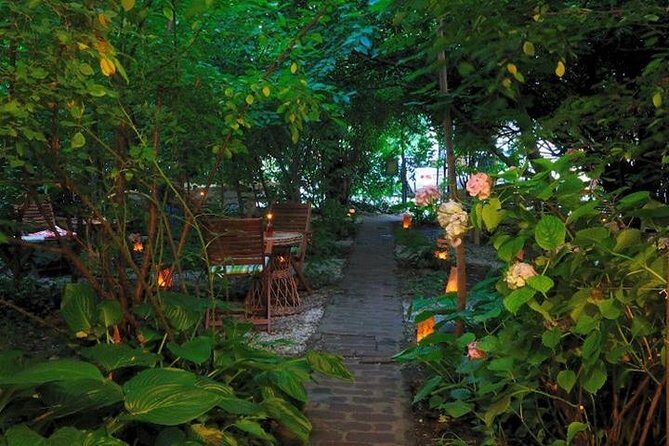
The highlights also mention refreshments in summer gardens and historic tea houses. In other words, you’re not only walking and staring—you’re meant to pause in calmer settings that fit the city’s older character. Alcoholic drinks are not included, but they are available for purchase if you want them.
A few guides referenced in past feedback also built in cafe stops (for example, places like Simbio, Share Cafe, and lunch at Hanu Manuc show up in stories). Those aren’t guaranteed for every day, but they give you a sense of the vibe: older interiors, courtyard breaks, and food that doesn’t feel like cafeteria tourism.
My advice: if you have dietary needs, it’s worth asking before the tour about lunch options, since “snacks included” doesn’t automatically mean a full meal is provided.
How the guide experience really works (and why small groups matter)
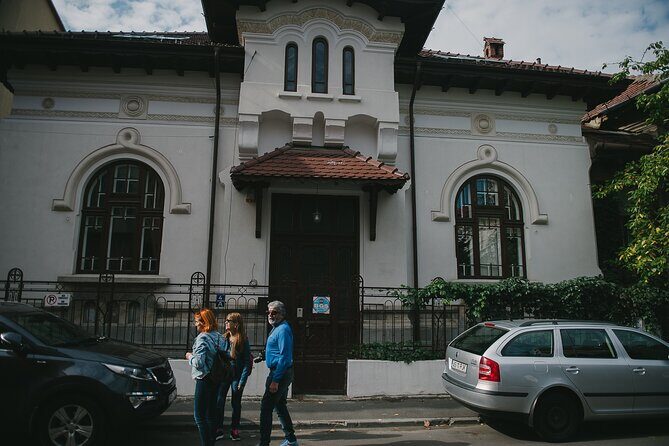
This is one of those tours where the guide’s style can make or break the day—and the feedback you’ve got here is strong on that front. Names that appear in guide feedback include Andrea/Andreea, Ioana, Elena, Mircea (Mircea Constantin), Irina (with Alex), Tudor, Lala, Anita, and Roxana. Across those guides, the common thread is architecture explained like a story, not a textbook.
You’ll get stop-by-stop framing: what the building was used for, what influence shaped the design, and what changes happened after major historical turns. One of the most practical ways guides help is by pointing out the architecture details you’d miss if you just walked past: the small decorative cues, the mixing of styles over time, and the visible scars of communist-era redevelopment and later neglect.
Small group size (maximum 12) helps with two things:
- It’s easier to ask questions mid-walk.
- It’s less likely you’ll be forced along like you’re on a conveyor belt.
Some feedback also mentions flexibility for specific needs, including adjusting when someone couldn’t walk the last stretch. So if you’re traveling with limited stamina, it’s still better to communicate your situation early.


Price and value: why $46.86 can make sense in Bucharest
At $46.86 per person, the price sits in the “reasonable” zone for a city-walk tour—especially one that avoids multiple paid admissions. Most of your learning time is on the street, and admission at major stops is listed as free.
Here’s what you’re actually paying for:
- A local guide who translates urban details into history you can see
- Snacks included, which reduces your need to stop and hunt for food
- A targeted route through neighborhood structure and architectural influence, not only big highlights
Hotel pickup and drop-off aren’t included, so you’ll want to arrive at the meeting point yourself (the start is near public transportation). The end point is at KFC on Bulevardul General Gheorghe Magheru 28-30. That’s not glamorous, but it’s practical: it gives you a clear finish near a major area where you can easily continue your day.
If you’re visiting Bucharest for the first time, I think the cost is justified because it helps you read the city. If you’ve already spent hours studying maps and guidebooks, it can still be worth it because it gives you human context and street-level orientation.
What you’ll walk through: architecture, community mixing, and the communist years
Even with only three named stops, the tour’s theme is broader. You’re moving through neighborhoods that show how Bucharest changed without ever fully resetting itself. The story connects:
- Ottoman-era influence patterns (even without being Ottoman-controlled)
- Mahallas and community organization around religious life
- Later modernization, earthquakes and wars
- Ceaușescu-era demolition and the uneven rebuilding afterward
- A mix of cultural imprints, including Armenian, Jewish, and French links
That last point matters because it helps you see why the city feels eclectic. You’ll see styles from different influences side by side, and you’ll also see repairs and renovations next to deterioration. That isn’t random—it’s part of how Bucharest’s residents and power shifts changed what got maintained.
In your photo-taking, try to capture “layers.” One photo can show a façade; another can show the street scale; a third can show an odd architectural mix on the corner. It’s the kind of visual set that makes the stories stick long after your trip.
Who this tour fits best—and who might prefer a different style
This tour suits you if you want:
- A walking introduction that goes beyond the central postcard streets
- A focus on architecture and neighborhood history you can observe
- A smaller group setting with time for questions
- An experience in English with a local guide who explains what you’re looking at
You might want a different tour if:
- You’re looking for only major monuments and big-ticket sights
- You prefer a strict, timed checklist with no flexibility at all
- You struggle with moderate walking distances, since the tour is designed for travelers with moderate physical fitness and you’ll spend most of the time on your feet
Also, for the best odds of entry to certain sites (like churches), consider timing around public holidays. One Easter Sunday experience in feedback included being able to enter a beautiful church, which is exactly the kind of “extra” that can make a walking tour feel special.
Should you book this Hidden Bucharest-style walking tour?
If you want Bucharest to make sense fast, I’d book it. The route is built for orientation: it gives you historical context you can see in the streets, and the small group size helps you get answers, not just pass through stops.
Choose it if you value neighborhood-level storytelling, especially the mahallas idea and the way Ottoman influence and later political change shaped the city’s look. Pick it confidently if you’re comfortable walking for about 2.5 hours, and if you’re the type of traveler who likes details—doors, façades, and street structure.
Skip it only if you want fewer “reading the city” moments and more classic attractions with clear, famous must-see status.
FAQ
What is the duration of the tour?
The tour lasts about 2 hours 30 minutes.
What time does it start, and where do I meet the guide?
It starts at 10:00 am. The meeting point is Ion Luca Caragiale National Theatre, Bulevardul Nicolae Bălcescu 2, Bucharest 010051.
Where does the tour end?
The tour ends at KFC, Bulevardul General Gheorghe Magheru 28-30, Bucharest 010336.
Is the tour in English?
Yes, it’s offered in English.
How many people are in a group?
The group size is capped at a maximum of 12 travelers.
What’s included in the price?
Snacks and a local guide are included.
Are drinks included?
Alcoholic drinks are not included. Drinks are available to purchase, and food/drinks are not included unless specified.
Do I need to worry about walking a lot?
This tour calls for moderate physical fitness since it’s a walking experience with multiple stops.
How do tickets work?
You’ll receive a mobile ticket.
Should I book in advance?
On average, this tour is booked about 37 days in advance, so booking ahead is a good idea.
What is the cancellation window?
Free cancellation is available up to 24 hours in advance for a full refund.