REVIEW · BUCHAREST
Private Walking Tour of Communist Bucharest
Book on Viator →Operated by Uncover Romania Tours · Bookable on Viator
One set of streets in Bucharest can feel like a time machine. This private communist history walk blends 1989 revolution landmarks with the big, heavy architecture of the dictatorship, guided by someone who can explain what you’re seeing without turning it into a lecture. I especially loved how the day stays easy to follow with a flexible plan, and how the guide names the political events behind each site; the main drawback is that not every major interior has fees included, so a couple of stops may cost extra.
You get about 7 hours from an 8:30 am start, with hotel pickup offered for smaller groups and a private vehicle for some segments when walking gets too much. For moderate physical fitness, it’s a workable day, and the payoff is clarity: why royal Bucharest and communist Bucharest clash in the same squares, and how that shape still shows up in churches and government buildings.
In This Review
- Key things I’d circle before you go
- Why this communist Bucharest route hits harder than a normal city tour
- Revolution Square landmarks: the December 1989 story in three connected stops
- University’s Square next to Revolution Square
- Piața Revoluției (Revolution Square) as a clash of eras
- Ateneul Român: switching gears to 19th-century culture at the right moment
- Ceausescu’s Mansion: meeting the person behind the system
- The Palace of Parliament (House of the People): what “monumental” really means
- Piața Constituției and the preserved churches: how communism shaped public space and faith
- Piața Constituției as the civic heart
- Manastirea Antim and Mihai Voda Monastery: churches saved by moving them
- Lunch and the 7-hour pacing: keeping the day enjoyable, not exhausting
- Price and value: is $92.19 worth a private full-day?
- Guides matter: how Laura and Diana set the tone on this kind of tour
- Should you book this Communist Bucharest private walking tour?
- FAQ
- How long is the Private Walking Tour of Communist Bucharest?
- What’s included in the tour price?
- Is this tour private or shared with other groups?
- Which stops have admission fees?
- Do I need a passport for this tour?
- What time does the tour start, and is there hotel pickup?
Key things I’d circle before you go
- A truly private guide: your group only, with the ability to adjust the route to your interests
- Revolution Square area focus: you’ll cover both the main square and the nearby memorial spaces tied to December 1989
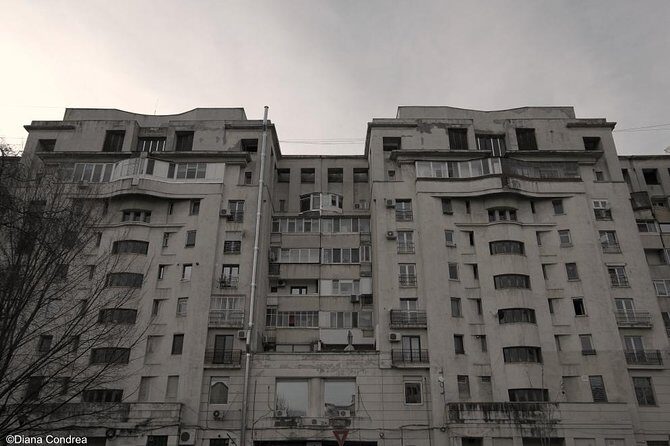
- Big-ticket communist architecture: the House of the People and the civic center sites that define the era
- Churches saved from demolition: two monastery visits show how Bucharest tried to preserve faith under pressure
- Mix of paid and free sights: some entrances are free, but at least the Atheneum and Palace may require extra funds
- Midday lunch break built in: you get a stop for food at a city-center restaurant, even though meals aren’t included
Why this communist Bucharest route hits harder than a normal city tour
If your idea of Bucharest is just grand boulevards and big façades, this day adds the missing layer: politics made visible in stone. You’ll walk and look at places tied to the rise and fall of the Romanian Communist Party, and you’ll see how power was staged in public space.
I like that you’re not stuck with one strict script. The tour is designed for a full-day flow, but it also allows changes to fit your preferences, which matters when you’re standing in front of places like Revolution Square and realizing the details are what make it click. One practical consideration: because it’s a private day, you’ll want to wear comfortable shoes and keep your energy steady for a solid stretch of sightseeing.
You can also read our reviews of more walking tours in Bucharest

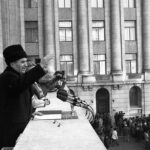
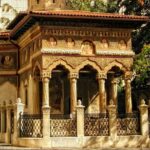
Revolution Square landmarks: the December 1989 story in three connected stops
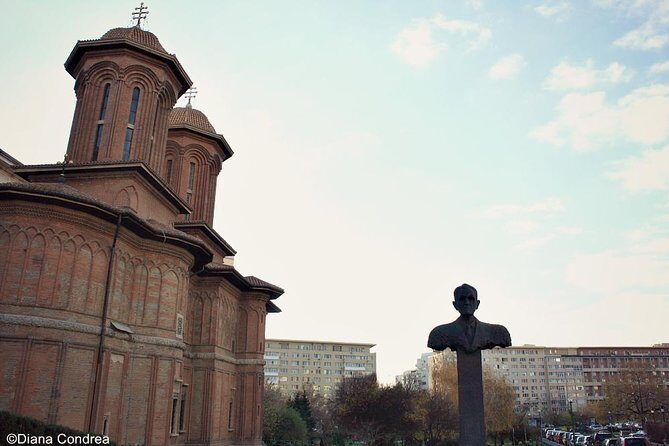
Your morning sets the tone around the Revolution Square complex. Two of the early stops sit near each other, but they don’t feel repetitive. They’re different pieces of the same human story: crowds, violence, and the moment the old political system fractured.
University’s Square next to Revolution Square
This is treated as another memorial space tied to the violent events that led to communism’s fall in Romania in December 1989. The timing is short here (about 30 minutes), but the point is to give context right away. You’ll be looking at a place that helps you understand that Revolution Square wasn’t just one dramatic moment; it was part of a wider breaking point.
Good to know: admission is free for this stop, so you can spend your time reading the surroundings rather than worrying about tickets.
Piața Revoluției (Revolution Square) as a clash of eras
This is the big public stage. Revolution Square is described as both the site of the Romanian Revolution in December 1989 and the place where two parts of history meet: the royal past and the communist dictatorship.
This is where your guide’s role really matters. Architecture and monuments can look like symbols on their own, but an explanation turns them into readable history. The stop is also about 30 minutes, so it’s paced to keep moving while you still absorb the main ideas. Admission is free here too.
Ateneul Român: switching gears to 19th-century culture at the right moment
After the revolutionary morning, you shift into a different emotional register with Ateneul Român, a 19th-century landmark that connects Bucharest to classical music and a love of the arts. You’ll spend around 30 minutes here.
The standout feature is the impressive 75-meter fresco in the concert hall. Even if you’re not a concert person, it’s the kind of detail that makes you stop and look up, because it’s visually loud in a good way. It’s also a reminder that Romania’s story didn’t start in 1947 and won’t end in 1989.
What to plan for: admission is not included for this stop. So you may need to budget a bit extra depending on whether the areas you want to see require a ticket.
You can also read our reviews of more private tours in Bucharest

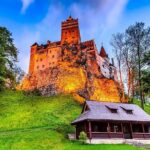


Ceausescu’s Mansion: meeting the person behind the system
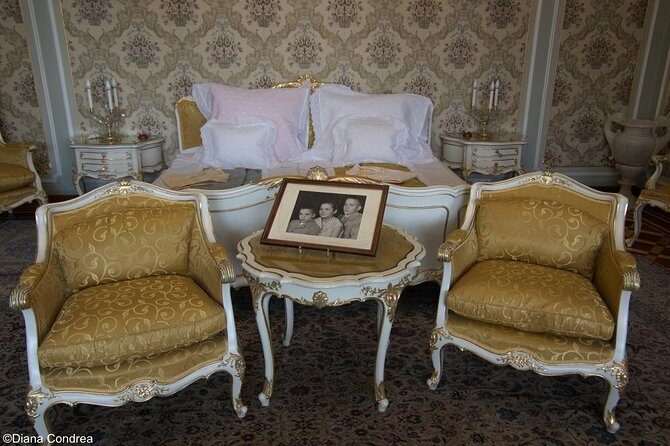
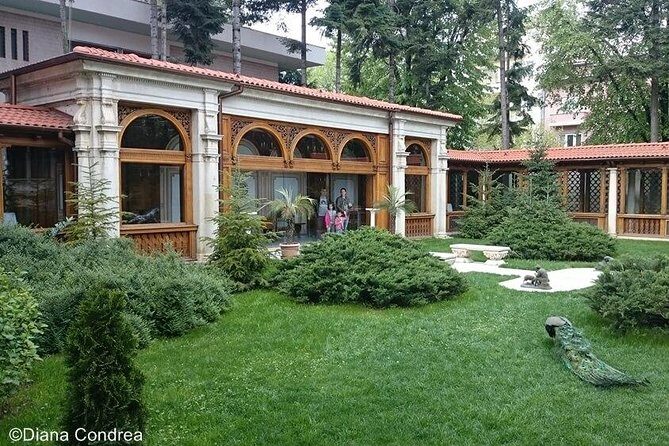
Ceausescu’s former residence is a full hour on your schedule. That longer time matters because you’re not just looking at a building; you’re learning how the dictatorship shaped daily life and public power.
This stop is straightforward: you’ll visit the former residence of Nicolae Ceaușescu, the communist dictator whose name is tied to both repression and the final collapse of the regime. Admission is listed as free, so your time stays focused on the story rather than costs.
I like that the day doesn’t rush you here. An hour is enough to understand why personal rule and public ideology were linked, without feeling like you’re rushing through a museum checklist.
The Palace of Parliament (House of the People): what “monumental” really means
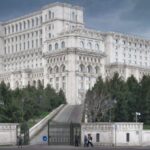
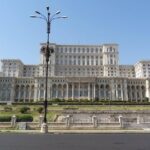
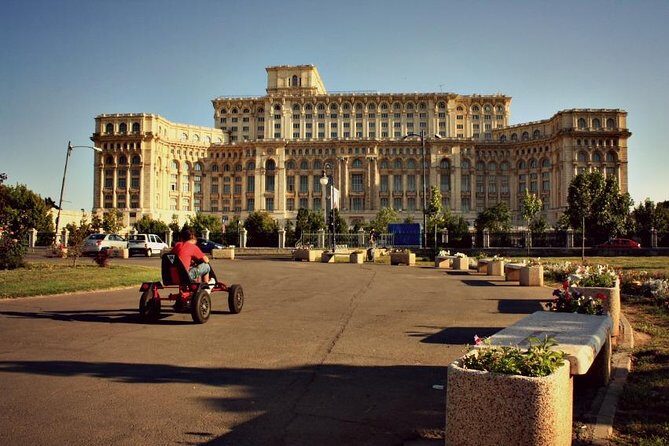
If you take one decision-based tip from this review, make it this: go into the Palace of Parliament expecting scale that’s hard to process at street level. This is Bucharest’s most famous communist landmark and locally known as the House of the People. It’s also described as the second largest administrative building in the world.
You’ll spend about 1 hour 30 minutes here, which is important because the building is not just big. It’s packed with claimed materials and crafted interiors. You’re told it has more than 1,000 rooms, plus hand-made decorations using the finest and most expensive materials. The numbers shared for the building’s construction include around 1 million cubic meters of marble and about 3.5 tonnes of crystal. Those specifics help you grasp the intent: show power by spending without apology.
Practical planning: admission is not included for this stop. Also, because you’re in a huge building, it’s smart to bring patience with you. You might feel a bit “architecture overload” if you go too fast through each room, so keep a slow pace and focus on what your guide highlights.
Piața Constituției and the preserved churches: how communism shaped public space and faith
After the Palace, the tour shifts toward the communist civic center and the places where Bucharest tried to keep older identity alive.
Piața Constituției as the civic heart
This is described as the heart of the communist civic center. You’ll have about 20 minutes. The value here is in tying the huge government building back to the surrounding urban plan. It’s easier to understand the idea of control when you can see how the city frames the state.
Admission is free, so it’s a low-friction stop where you can focus on atmosphere and layout.
Manastirea Antim and Mihai Voda Monastery: churches saved by moving them
Two short church visits follow, each about 20 minutes, and both have a crucial theme: they were saved from communist demolitions by being moved from their original locations.
- Manastirea Antim: you’ll see how a church preserved under pressure still carries meaning in a new place.
- Mihai Voda Monastery: a parallel story of relocation used to protect religious sites.
These stops are free. The emotional payoff is bigger than you might expect for a quick 20-minute visit. When a regime tries to redraw a city, the question becomes what survives, and how survival changes the way you experience a place.
I like having these two church stops after heavy political architecture. It keeps the day balanced and grounded. You end up thinking about resilience, not just grand displays.
Lunch and the 7-hour pacing: keeping the day enjoyable, not exhausting
The schedule is built around a midday lunch break at a city-center restaurant. Meals and drinks aren’t included, but the important part is that you’re not left to guess where to eat between major sites. Having that break helps your brain reset, especially after Revolution Square and the Palace of Parliament.
The tour runs for about 7 hours and includes both walking and some transport by private vehicle on parts of the route. That mix is practical. Bucharest can be very walkable, but doing a full day of politics-heavy stops without any vehicle support can get tiring fast, especially if you’re also trying to keep track of details.
One more small tip: the tour uses a mobile ticket, so bring your phone fully charged. It saves time and keeps you from hunting for paper.
Price and value: is $92.19 worth a private full-day?
At $92.19 per person, this tour sits in a mid-range price bracket for a private, full-day experience. What makes it feel reasonable is how the inclusions line up with what you’d normally pay for separately in a city like Bucharest.
Here’s what you’re getting that supports the value:
- A professional guide
- Private vehicle support on parts of the route
- Hotel pickup for groups of maximum 3 people
- A structured day covering the main communist-era landmarks plus revolution memorial spaces
- A flexible itinerary so you’re not stuck seeing only what fits someone else’s checklist
What could make it feel less straightforward:
- Admission isn’t included for some major sights like Ateneul Român and the Palace of Parliament
- Food and drinks aren’t included
- The listing notes that fees and taxes aren’t included (so your final total may be slightly higher once entrance costs are added)
My practical take: if you care about understanding the connections between Revolution Square, the dictatorship’s physical footprint, and the surviving churches, a guided private day is a strong deal. If you mainly want photos and you don’t care about context, a cheaper self-guided option might suit you better.
Guides matter: how Laura and Diana set the tone on this kind of tour
The strongest part of this experience is the human one: guides who can connect the dots. In the feedback tied to this tour, guides like Laura and Diana come up for being informative, friendly, and professionally handled. There’s also a clear pattern of helpful city sense, like knowing the layout so you don’t waste time wandering or missing key sightlines.
One fun detail from the feedback: at least one guide refused to take a tip, which tells me they treat the day like real work, not a perfunctory walk. That attitude usually shows up as extra care with explanations and pacing.
If you book, your best move is to ask questions early. When you ask at the first major stop—Revolution Square—the rest of the day tends to click faster.
Should you book this Communist Bucharest private walking tour?
Book this tour if you want a guided day that makes communist Bucharest make sense. It’s best for people who like politics explained through real places, and who appreciate a plan that can flex. The mix of revolution memorials, the massive House of the People, and the relocated monasteries is a smart way to see both power and survival.
Skip it or consider a lighter option if you’re only looking for a few exterior photos, or if you hate the idea of paying extra for specific interiors. Also, because the day runs close to 7 hours, plan for comfort: shoes, water, and a calm pace help.
If you want the highest chance of a great day, choose it for your first full morning in Bucharest, starting at 8:30 am, so you can build your understanding early and see the rest of the city with better eyes later.
FAQ
How long is the Private Walking Tour of Communist Bucharest?
The tour runs for about 7 hours.
What’s included in the tour price?
The tour includes a professional guide, transport by private vehicle on some parts of the itinerary, and hotel pickup for groups of maximum 3 people. Mobile tickets are used as well.
Is this tour private or shared with other groups?
It’s a private tour/activity, so only your group participates.
Which stops have admission fees?
Admission is not included for Ateneul Român and the Palace of Parliament. Other listed stops in the route have free admission.
Do I need a passport for this tour?
Yes, a current valid passport is required on the day of travel.
What time does the tour start, and is there hotel pickup?
The start time is 8:30 am, and hotel pickup is offered for groups of up to 3 people. The tour starts and ends back at the meeting point in Bucharest.