REVIEW · BUCHAREST
7 days Private Romania Grand Tour from Bucharest
Book on Viator →Operated by Trip2Ro · Bookable on Viator
Castles, monasteries, and legends—one smooth route. This private Romania grand tour is built for comfort and clarity: you move in an air-conditioned minivan with round-trip transport from Bucharest, and you get a local guide who ties each stop to the people and history around it. I also like the flexibility of a private format, meaning the day doesn’t feel like a cattle schedule.
My favorite part is the mix of big-name landmarks and less-famous regional detail, from Cozia Monastery in the Olt Valley to the UNESCO-listed Churches of Moldavia. One thing to plan for: entrance fees and tickets aren’t uniformly included, so a few stops may require additional cash/card on-site. If you’re picky about totals, I’d budget for a handful of paid admissions during the week.
Good guiding matters on a route this packed. In feedback for this tour, two names come up often: George, praised for helping with trip planning and on-the-ground guidance, and Liviu, cited for steering the route through mountains, valleys, painted monasteries, and Dracula-linked stops with a calm, friendly feel.
In This Review
- Key things that make this tour work
- How a private pickup from Bucharest changes your whole week
- Day 1: Cozia Monastery’s Armenian façade + Sibiu’s medieval squares
- Day 2: Alba Iulia’s Great Union moment, Turda’s underground playground
- Day 3: UNESCO wooden churches in Maramures (Şurdeşti and Barsana)
- Day 4: Merry Cemetery’s limericks, then Moldovița and Sucevița’s painted frescoes
- Day 5: Bicaz Gorges and Red Lake—legends with real scenery
- Day 6: UNESCO Sighişoara streets to Bran Castle’s border fortress
- Brasov and Peles Castle: German gables, school history, and royal interiors
- Day 7: Bucharest panoramic orientation with Triumph Arch and Parliament Palace
- Price and value: what you get for about $1,719 per person
- Should you book this private Romania grand tour from Bucharest?
- FAQ
- What time does the tour start?
- Is this a private tour?
- Does the price include pickup and drop-off in Bucharest?
- How many nights of accommodation and breakfasts are included?
- Are entrance fees included?
- Is there a supplement for a single room?
- Are tips included for the guide/driver?
- Is the tour refundable if plans change?
Key things that make this tour work
- Private pacing, not group chaos: it’s only your group, with pickup/drop-off and private vehicle use.
- UNESCO churches of Moldavia, plus major wooden-church sites: you see multiple World Heritage areas, not just one.
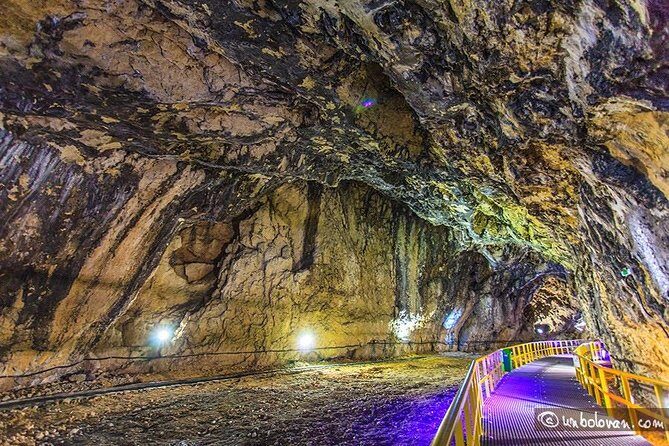
- Turda Salt Mine is not your typical underground visit: amphitheater, bowling, an underground lake with boats, and even a Ferris wheel.
- Maramures wooden architecture has nerdy details worth knowing: double-eaved roof features and a very tall wooden church story.
- Sighisoara and Bran are paired in a smart order: fortified UNESCO streets first, then the Dracula-border fortress.
- Bucovina art + crafts get real time: painted monasteries and Marginea black ceramics are woven into the driving days.
How a private pickup from Bucharest changes your whole week
The tour starts at 9:00 am and uses hotel pickup and drop-off in Bucharest, which is a big deal in Romania. You’re not trying to coordinate trains, buses, and last-mile taxis across cities; the day’s plan is handled, and you can focus on sights.
Because it’s private, your group size stays tight. That typically means fewer awkward waits, more straightforward timing between stops, and less time lost translating logistics with multiple bus transfers. You’ll also have a driver/guide pairing and travel by a private vehicle, so you’re not doing long sight gaps with strangers debating where to stop next.
If you like a guide who actually connects dots (rather than just pointing at a building), this is the format to choose. The itinerary is built around turning historical labels—Wallachia, Transylvania, Maramures, Bucovina—into real places you can walk through.
You can also read our reviews of more private tours in Bucharest
Day 1: Cozia Monastery’s Armenian façade + Sibiu’s medieval squares
Your first day begins in the Olt Valley with Cozia Monastery, a 14th-century Wallachian monument linked to Mircea Il the Old and later restoration under the Cantacuzino family. What makes this stop memorable is the façade’s Armenian decorations and the richly frescoed interiors—so it’s not just stone outside; it’s visual storytelling inside too.
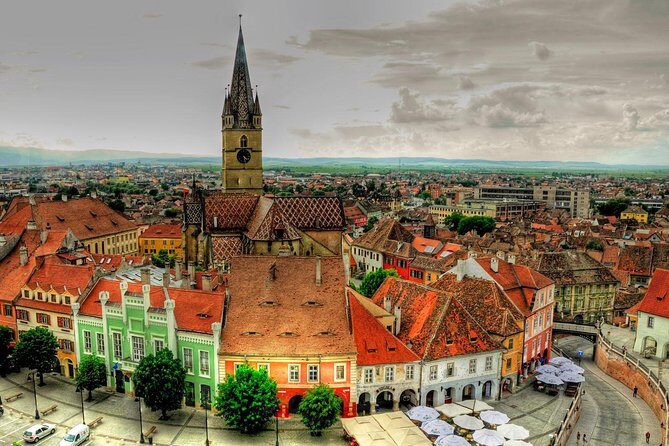
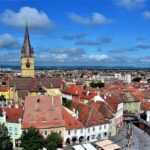
Then you head to Sibiu, a medieval city shaped by long coexistence between Romanians and Saxons. Sibiu’s three squares—Big Square, Small Square, and Huet Square—help you get your bearings fast, because they’re designed for strolling and watching daily life unfold. You’ll also hear about Sibiu’s European Capital of Culture status in 2007 and its annual theater festival, plus you’ll see classic Transylvanian touches like the famous houses with the eyes.
Sibiu also gives you variety in a small area: there’s a major gothic evangelical church, and the city’s religious monuments across Catholics, Orthodox, and Protestants are right in the sightseeing zone. One caution: day-one stops are packed into a shorter window, so wear shoes you’ll be comfortable in for walking on uneven old-stone streets.
Day 2: Alba Iulia’s Great Union moment, Turda’s underground playground
Alba Iulia anchors the week in a key national story: the Great Union of Romania happened here on December 1st, 1918. It’s a surprisingly moving way to start understanding how modern Romania formed, before you jump into the regional architecture of Transylvania and beyond.
Next comes one of the most surprising stops on the whole route: the Turda salt mine at Salina Turda. You descend about 400 feet and the experience inside isn’t limited to walking corridors—there’s an amphitheater, a bowling alley, an underground lake where you can paddle or row, and even a Ferris wheel. This is also the sort of stop that breaks up long driving days, because it feels like a full activity rather than a quick photo stop.
One practical note: the salt mine entry is listed as not included, so keep that in mind when you’re planning your daily budget. After that, you move to Cluj-Napoca, known for St. Michael’s Church and the statuary complex representing King Mattia Corvino and his soldiers.
Cluj also has a university energy—lectures in multiple languages and a strong Hungarian influence. Even if you only have a short stop here, the mix of religion, education, and city life gives you a sense of how modern Transylvania actually works.
Day 3: UNESCO wooden churches in Maramures (Şurdeşti and Barsana)
Day 3 is where the tour shifts gears into Maramures, and it does it with UNESCO sites that reward you for slowing down. The first stop is the Şurdeşti Wooden Church, known for its towering presence. The description here is specific: it was once the tallest wooden church in Europe with a 54 m tower and total height of 72 m (until a newer church reached 78 m). You also get unique architectural details like the church’s double-eaved roof and distinctive arches above the porch.
This church is also tied to the Greek Catholic tradition: it’s the Holy Archangels church, built in 1721 from oak logs by a carpenter named Toma Macarie. That kind of detail changes the visit from pretty to meaningful, because you’re looking at engineering choices made for wood and craftsmanship—not just “old buildings.”
Then you’ll see Barsana Monastery, part of the UNESCO-protected Maramures wooden architecture zone. The focus here is the dramatic vernacular design and the tall spires you’ll see across the region. The tour’s description also notes this is a recently constructed monastery complex functioning as a convent with sixteen nuns—so your visit may feel more lived-in than you’d expect from a “museum-style” religious site.
After that, you’ll stop at Vadu Izei for the Romanian valtoare (whirlpool/vortex) washing mechanism. The tour notes it uses the natural speed of a mountain stream to wash laundry and even inches, with an origin in medieval times. It’s also referenced as the world’s first natural washing machine by the Academy of World Records—an unusual fact that makes a simple mechanism feel like a cultural clue.
Day 4: Merry Cemetery’s limericks, then Moldovița and Sucevița’s painted frescoes
Day 4 starts with Cimitirul Vesel (Merry Cemetery) in Săpânţa. This isn’t the typical cemetery experience. Over 800 wooden crosses mark life stories with bright, cheerful picture scenes and annotated notes in the form of limericks. The effect is both artistic and haunting because the stories include the messy, human details—yet they’re presented with folk-color humor.
If you’re sensitive to how information can hit hard, go in with that in mind. It’s a meaningful stop, and it can slow your whole day down more than expected—because you’ll want to read, not just glance.
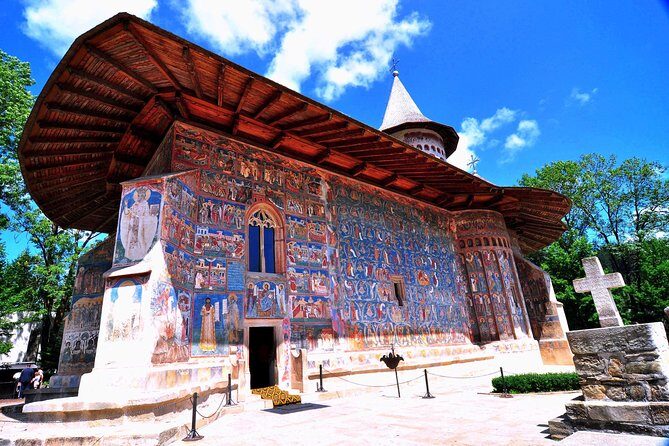
From there, the route pivots into the Churches of Moldavia style you came for: the painted monasteries. You’ll visit Moldovița Monastery, founded in the 16th century (the tour notes Pietro Rares) and recognized for frescoes that enchant you inside and outside. You then continue to Suceviţa Monastery, founded by the Movila brothers, which blends Gothic and Byzantine elements into the Moldovan architectural style. The tour description also highlights why the frescoes still show clearly on the northern façade: protective walls were never demolished.
Between monasteries, you get a practical cultural break at Ceramica neagra in Marginea. Here you can enter a workshop to watch the working phases of black ceramic, and you can buy ceramics and typical items like painted eggs using traditional Romanian technique. The stop is shorter, but it’s worth it because it connects art to the hands that make it.
Your day ends with a visit to Manastirea Voronet. The tour description lists it as a dedicated stop, so treat it as your “painted monastery finale” on the Bucovina side of the journey.
You can also read our reviews of more tours and experiences in Bucharest

Day 5: Bicaz Gorges and Red Lake—legends with real scenery
By Day 5 you shift from painted church towns to a more dramatic natural setting. You’ll head toward Bicaz Gorges, where the road runs along a stream and the cliffs create a strong sense of scale. There’s also a market along the route with typical handicrafts and souvenirs, which makes it easier to pause without feeling like you’re always rushing.
After that, the tour takes you to Red Lake, formed after a landslide. A detail that helps you picture it: the description notes trunks of trees remain in the lake, creating an evocative atmosphere. Then the visit includes the legends tied to the lake’s name, so you’re not just looking—you’re being shown how stories traveled and stuck in local memory.
The long drive energy drops into a more human pace when you arrive in Sighişoara late evening. The tour frames Sighişoara as the birth place of Vlad Dracula, and that sets the emotional mood for the fortified-town visit the next day.
Day 6: UNESCO Sighişoara streets to Bran Castle’s border fortress
Day 6 begins with the Centrul Istoric Sighişoara, a UNESCO heritage historic center built around a fortified-town layout. You’ll see the Clock Tower, plus the colorful houses that give the town its romantic feel. The tour emphasizes Sighişoara as multicultural and multi-confessional—reflected in streets and churches of different cultures.
This is also where Dracula lore becomes physical. The description ties Vlad Dracula’s birth in 1431 to Sighişoara, so the legends aren’t floating in a movie script; they’re anchored to the town’s streets.
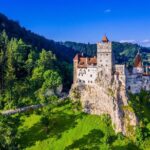
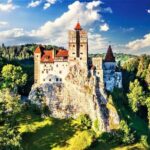
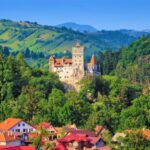
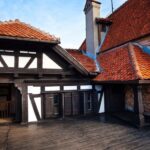
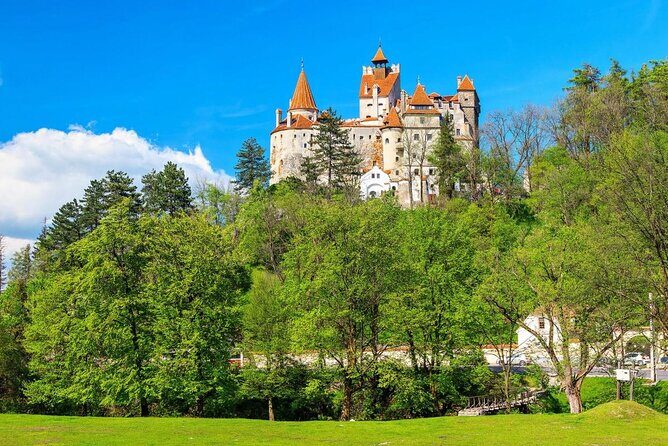
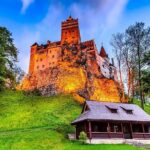
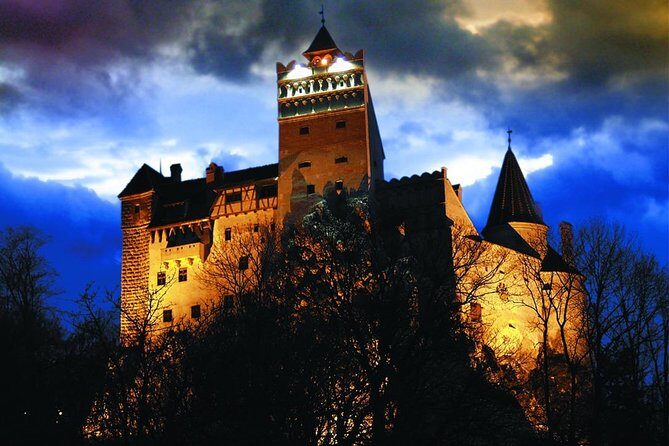
Then you continue to Bran Castle, often called Dracula’s Castle. The tour notes an important medieval logic: Bran sat on the border between Wallachia and Transylvania, so Brasov-area inhabitants built and preserved a defensive stronghold. That makes the castle feel less like a costume set and more like frontier architecture meant to survive.
Even if you’re not obsessed with Dracula, Bran works because it’s a real defensive site with a clear geographic explanation. One drawback to plan for: these castle-type visits can be crowded during peak hours, so if your priority is photos, plan to take them early in your time window.
Brasov and Peles Castle: German gables, school history, and royal interiors
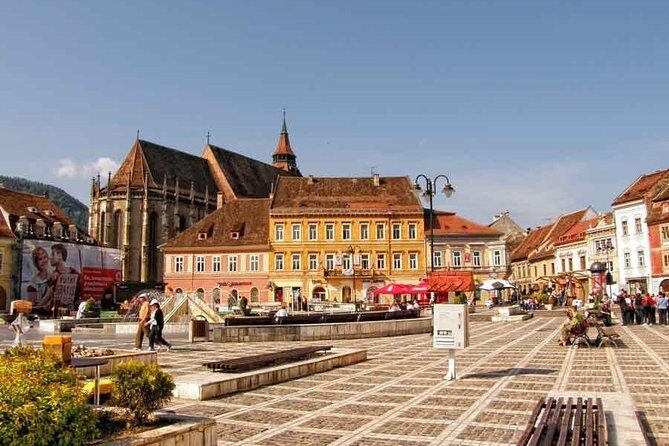
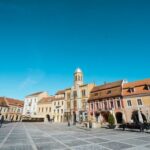
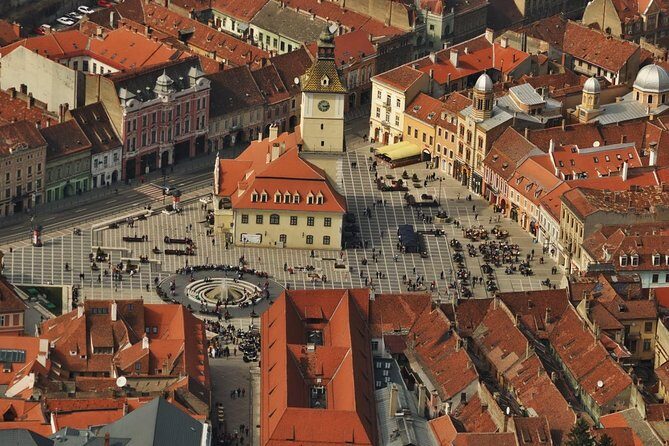
After Bran, you visit Brasov’s historical center, described as a Transylvanian town once entirely fortified. The tour focuses on the area’s German architecture and the mix of Gothic, Baroque, and Renaissance influences, which is exactly what makes Brasov feel like it has layers rather than one single style.
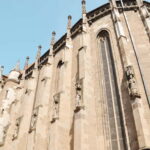
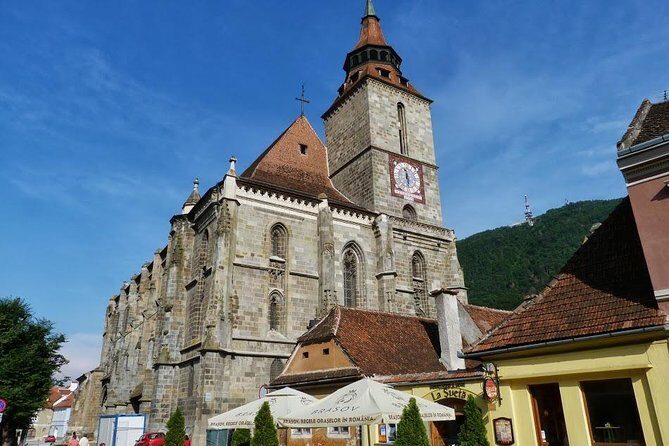
You’ll also visit the First Romanian School in the Schei district, which the description notes was inhabited exclusively by Romanians. And you’ll see medieval entry points like Catherine’s Gate and the Schei Gate. The tour also includes the Black Church, which is a major landmark for many visitors.
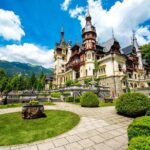
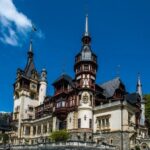
Then comes Peles Castle, one of Romania’s most impressive royal residences. The tour describes it as the summer home of the first king of Romania, King Charles I of Hohenzollern, and notes the castle’s design by a Czech architect. It also highlights a historical design point: Peles is said to have been among the most modern castles in Europe at the time of its 19th–20th century construction. Inside, each room has a different style, and the tour points out the Florentine room specifically for its Italian Renaissance vibe.
Even if you’re castle-worn by then, Peles often lands because it’s not just exterior drama. It’s interior variety and design attention, with a real “royal craft” feel.
Day 7: Bucharest panoramic orientation with Triumph Arch and Parliament Palace
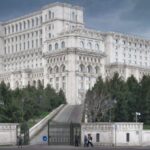
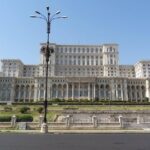
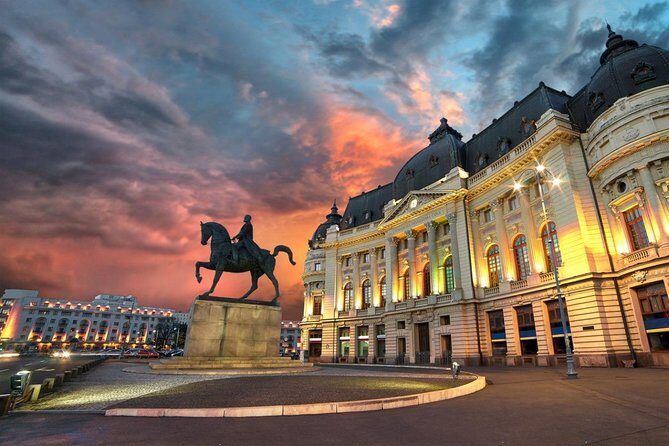
The tour ends by returning to Bucharest and offering a short panoramic tour. You’ll pass or see major landmarks such as the Triumph Arch, the Atheneum, Revolution Square, and Parliament Palace.
This kind of wrap-up works well if you want to keep traveling after the tour. It gives you enough orientation to explore more freely later, without needing another full day just to understand where the city’s landmarks sit relative to each other.
Price and value: what you get for about $1,719 per person
At $1,719.59 per person, you’re paying for a tight route across Transylvania, Maramures, and Bucovina—plus private guidance and transport. Here’s what’s clearly included: 6 nights of accommodation, a driver/guide, hotel pickup and drop-off, and private transport by vehicle. Breakfast is included for 6 days.
This is also where the “value” question needs a reality check. The tour information you have says entrance fees aren’t included in general, and multiple stops list tickets as not included (for example, the salt mine and several monasteries/castles). Other sites list admission as free, so your total out-of-pocket should be manageable—but it won’t be zero.
There’s also a single room supplement of 150 euro, payable locally in cash or by credit card. And tips for your guide/driver are not included.
In plain terms: this price is usually fair when you want everything handled—routing, pickup, timing, and a guide to make sense of a fast-moving itinerary. If you’re trying to travel on a shoestring and don’t need guided context, you could DIY many of these places. But if you want the week to flow with minimal logistics stress, private transport and guiding are where the money goes.
Should you book this private Romania grand tour from Bucharest?
You should book it if:
- You want a private, guided route that hits UNESCO sites, painted monasteries, and major castle stops without you juggling connections.
- You enjoy history that’s tied to place names you can actually stand in.
- You’d rather pay for comfort (air-conditioned minivan, pickup/drop-off) than spend your week figuring out transit.
You might skip it if:
- You dislike tours where some admissions are extra and you prefer a fully paid, ticket-inclusive total from day one.
- You prefer very slow travel and long rests between places. This trip is structured around moving often, with short to medium time windows per stop.
If you can handle a packed, well-guided week and you’re excited by both the famous Dracula stops and the quieter regional details—wooden churches, painted fresco monasteries, and craft workshops—this tour is a strong choice.
FAQ
What time does the tour start?
The start time is 9:00 am.
Is this a private tour?
Yes. It’s a private tour/activity, and only your group participates.
Does the price include pickup and drop-off in Bucharest?
Yes. Hotel pickup and drop-off are included.
How many nights of accommodation and breakfasts are included?
The tour includes 6 nights of accommodation and breakfast for 6 days.
Are entrance fees included?
Entrance fees are not included in general. Some stops list admission as free, while other stops list admission as not included.
Is there a supplement for a single room?
Yes. A single room supplement of 150 euro is payable locally (cash or credit card).
Are tips included for the guide/driver?
No. Tips for the tour guide/driver are not included.
Is the tour refundable if plans change?
The experience is non-refundable and cannot be changed for any reason. If it’s canceled due to poor weather, you’ll be offered a different date or a full refund. If the minimum number of travelers isn’t met, you’ll be offered a different date/experience or a full refund.