REVIEW · BUCHAREST
Bucharest: Walking tour with Italian speaking guide for small groups
Book on GetYourGuide →Operated by S.C. VIAGGIARE BUCAREST S.R.L. · Bookable on GetYourGuide
Bucharest rewards slow walking. This small-group tour strings together Old Town charm, grand boulevards, and a very human history story, all with an Italian-speaking guide and plenty of time to look up. I like the Italian live guidance that turns street scenes into clear context, and you’ll get stories you can’t easily piece together on your own.
I love how the route hits both the postcard and the lived-in parts of Bucharest: Stavropoleos Monastery and Manuc’s Inn in the Old Town, plus the big-hitters around Revolution Square and the Romanian Athenaeum. The pace is also smart for a 3-hour walk, with short guided windows and a couple of photo stops that keep things from feeling like a march.
One thing to consider: it’s still a walking tour, so you’ll want comfortable shoes, and it’s not a good fit for hearing-impaired people. Also, audio recording is not allowed, so plan on taking notes and photos instead of recording the commentary.
In This Review
- Key highlights
- Where the tour begins: Caru’ cu Bere and getting your bearings
- Lipscani Street and the Old Town core: monasteries, inns, and a nightlife vibe
- Calea Victoriei’s elegant boulevard: history on a grand scale
- Pasajul Villacrosse and Umbrellas Street: the “wait, stop here” moments
- Revolution Square in 1989 context: Romania’s political turning point
- The Romanian Athenaeum: finishing with a landmark that demands attention
- Small-group Italian guiding: what you gain from a guide named Filippo (and Giuseppe)
- Pace and comfort: how to make the 3 hours work for you
- Price and value: what $35 buys you in real terms
- Who should book this Bucharest walk—and who might skip
- Should you book this Bucharest Walking Tour with Italian Speaking Guide?
- FAQ
- How long is the Bucharest walking tour, and what does it cost?
- Where do we meet for the tour?
- What language is the guide speaking?
- What areas and landmarks will the tour cover?
- What is included in the tour price?
- Do I need to budget for food or drinks?
- Is the tour wheelchair accessible?
- Is it suitable for children or babies?
- Can I cancel and get a full refund?
- Are there any rules about audio recording or alcohol?
Key highlights
- Caru’ cu Bere start point that sets the tone fast, right in the heart of Bucharest’s center
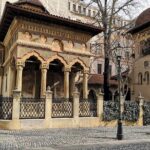
- Stavropoleos Monastery stop for an authentic Old Town moment
- Manuc’s Inn as a quick look at a building that carries big city history
- Revolution Square with context around the end of Ceaușescu’s dictatorship in December 1989
- Photo-friendly corners like Umbrellas Street and Cărturești Carusel
- Calea Victoriei’s elegant boulevard energy, with historic buildings and refined stops along the way
Where the tour begins: Caru’ cu Bere and getting your bearings
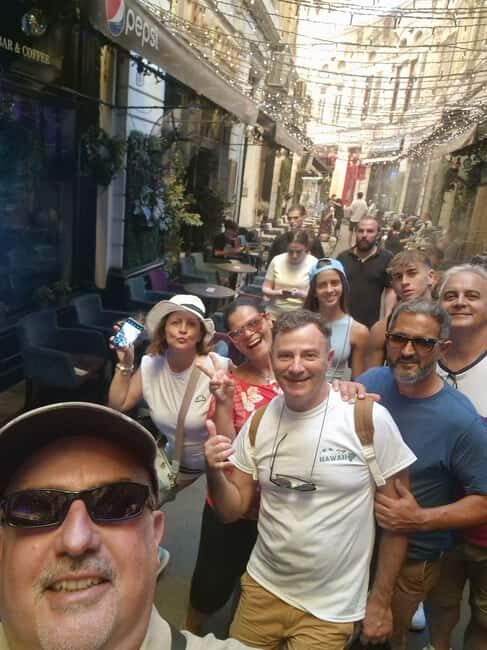
You’ll meet at Caru’ cu bere (Stavropoleos Street 5). It’s a classic Bucharest landmark and a smart meeting point because it’s easy to recognize and hard to confuse with anything else. The guide will be waiting in front of the restaurant and will show up with a professional identification card.
Starting here matters more than it sounds. Bucharest can feel a bit like different eras are layered on top of each other, and this start helps you orient quickly. In the first stretch of the walk, you’re already in the atmosphere people come for: lively streets, historic facades, and little side streets that don’t look important until the guide points out what’s there.
You can also read our reviews of more walking tours in Bucharest


Lipscani Street and the Old Town core: monasteries, inns, and a nightlife vibe
Most walking tours say Old Town. This one actually guides you through the parts that make Bucharest feel specific.
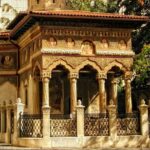
One key stop is Stavropoleos Monastery, where you’ll spend about 10 minutes. It’s the kind of place where the buildings themselves do the talking, and the guide’s job is to connect the architecture to the wider story of the city. If you usually speed through churches, this is the fix. You get a short, focused look so you can notice details instead of just snapping a photo and moving on.
Next you’ll see Manuc’s Inn for another quick stop. Even in a short visit, it’s worth it because an inn sounds ordinary until you realize how travel and commerce shaped cities. In Bucharest, these older “hub” buildings help explain why the streets feel the way they do today—busy, layered, and full of traces from different periods.
Then you’ll move through the Old Town area itself with guided time (around 15 minutes). This is where the tour becomes more than a list of sights. You’re not just passing monuments; you’re learning how the neighborhood works—especially the contrast between atmosphere and history. Lipscani is famous for nightlife, but it’s also where the city’s stories feel closest to the ground.
Calea Victoriei’s elegant boulevard: history on a grand scale
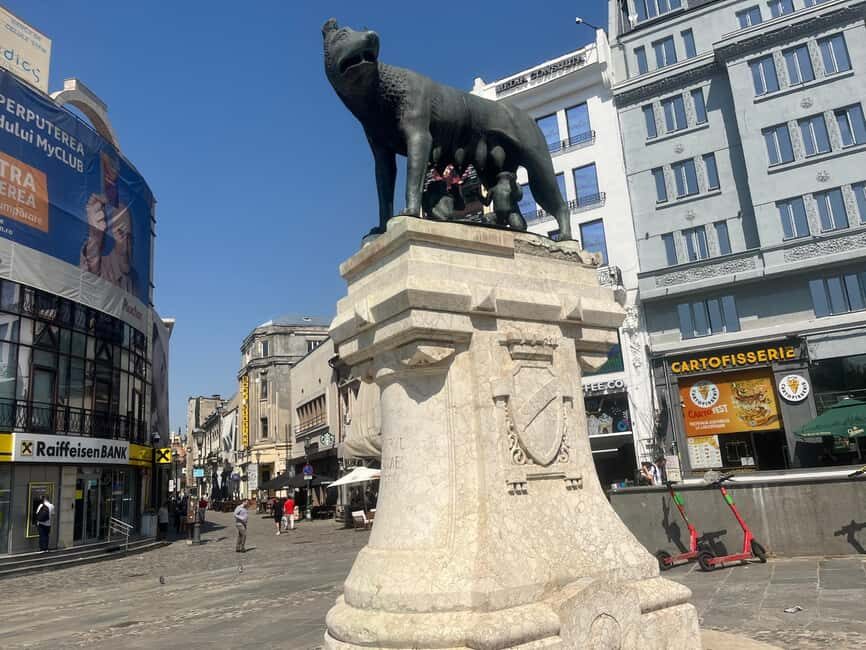
After the Old Town, the mood shifts. Calea Victoriei is widely considered one of Bucharest’s most beautiful and elegant boulevards, and the tour uses that change in scenery to help you understand the city’s layers.
You get guided time for the boulevard area as part of the overall flow, and the guide helps you read what you’re seeing. Historic buildings line the street, but the vibe is also clearly modern—high-fashion storefronts and fine bistros show up right alongside older architecture. That mix is the point. Bucharest didn’t stop changing at any one moment, and the boulevard is where you feel that continuity.
If you like walking routes where the street itself is the attraction, this portion delivers. It’s a break from the tighter Old Town lanes, but it still keeps you actively looking.
Pasajul Villacrosse and Umbrellas Street: the “wait, stop here” moments
A big reason I’d recommend this tour is that it doesn’t treat side streets as filler. It adds small, memorable stops that make the city feel navigable and real.
You’ll spend guided time at Pasajul Villacrosse, around 10 minutes. Pasajul stops are worth seeking out because they’re the kind of passageways you’d miss if you didn’t have local context. The guide helps you spot why these indoor-outdoor corridors mattered—and why they still do.
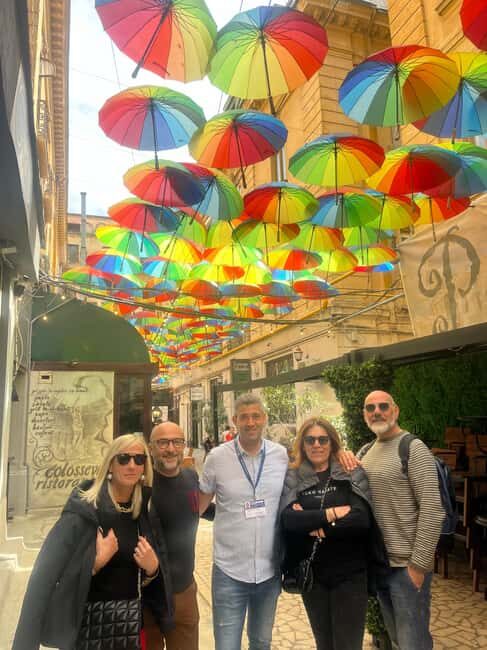
Then there’s Umbrellas Street, where you’ll get a short photo stop. It’s quick, but it’s also a good palate cleanser after more explanatory stops. Think of it as a moment to slow down, frame the scene, and let the tour’s history-heavy pace breathe.
Revolution Square in 1989 context: Romania’s political turning point
This is the emotional center of the route. Revolution Square is where the tour spends about 25 minutes, and the focus is the end of Nicolae Ceaușescu’s dictatorial regime in December 1989.
What makes this stop hit isn’t only the event—it’s the surrounding architecture. You’ll be looking at major buildings that reflect different historical periods, and the guide connects them to how Romania’s story changed over time. Nearby you’ll hear about landmarks such as the Romanian Athenaeum, the Royal Palace, and the National Library.
When you look at these places after hearing the political context, they stop feeling like “pretty buildings.” They become anchors—evidence of different eras trying to shape public life. Even if history isn’t your main hobby, this is one of those stops that makes the city’s layout and mood make sense.
You can also read our reviews of more guided tours in Bucharest




The Romanian Athenaeum: finishing with a landmark that demands attention
After the square, the tour continues to the Romanian Athenaeum, with guided time of about 15 minutes. This is a classic Bucharest “eyes up” moment. You can’t really treat it like background because it’s built to be seen—by passersby and by the city itself.
This stop works well as a closing highlight because it ties the walk together: Old Town spirituality and everyday history, grand boulevards and public life, and then a landmark that feels like Bucharest’s cultural confidence. If you want a souvenir memory that isn’t just a photo, this is one of the better places to spend your attention.
Small-group Italian guiding: what you gain from a guide named Filippo (and Giuseppe)
The tour promises a small group and an Italian-speaking guide, and those two things matter in practice.
First, small groups keep the pace human. You don’t feel like you’re being dragged to a schedule, and you can usually keep up without constantly checking where everyone is. Second, an Italian live guide helps you slow down and ask follow-up questions if something clicks. You’re not just reading plaques; you’re getting explanations as you walk.
The guide names matter here. In the earlier experiences with this operator, Filippo Di Cataldo is described as an excellent guide who shows the city in a different light, with fun anecdotes and historical explanations across neighborhoods. Giuseppe is also noted for being prepared and easygoing, with history and culture handled competently in a way that makes a sunny 3 hours feel light.
You don’t need to be a Romania scholar to benefit. What you get is a guided sense of cause and effect: why certain buildings are where they are, why neighborhoods developed how they did, and how Romania’s modern story sits beside older layers.
Pace and comfort: how to make the 3 hours work for you
This is a 3-hour walking tour with multiple short visits. That structure is actually useful: it’s not one long lecture stop after another. You’ll get several guided chunks (like around 10 to 25 minutes) plus quick photo pauses and short site visits.
Still, it’s walking, so bring the right footwear. Comfortable shoes are strongly recommended, and that’s the simplest upgrade you can make to enjoy the whole route. If you’re the type who gets sore after lots of curb-to-curb walking, you might want to build in some recovery time later in the day.
Also, the tour has clear boundaries: alcohol and drugs are not allowed, and audio recording is not allowed. If you’re planning to capture every word, you’ll need to rely on memory, photos, and notes instead.
Price and value: what $35 buys you in real terms
At $35 per person for about 3 hours, you’re paying for something specific: an organized route, a live Italian guide, and the benefit of walking with context through the center. You’re not paying for museum tickets or meals, so it’s not the kind of tour where the price feels inflated by extras.
The included items are straightforward: a walking tour for small groups and a guide who speaks Italian. Not included: personal expenses and food and beverages. So you should treat it like a cultural orientation walk. If you want a full day, plan lunch or a drink afterward on your own time—Caru’ cu bere is a natural place to circle back to if you’re in the mood.
In value terms, I’d call this a good deal if you enjoy architecture, want context for what you’re seeing, and like getting your bearings quickly without renting a car or figuring out your own routing.
Who should book this Bucharest walk—and who might skip
This tour fits you best if:
- You want a guided way to connect Old Town Bucharest with major public landmarks
- You prefer a lively walking route with short stops rather than long museum marathons
- You’re comfortable walking in the center and you want Italian-language narration
It may not fit as well if:
- You need audio recording of the commentary
- You rely on hearing support for guided tours, since it’s not suitable for hearing-impaired people
- You’re traveling with very small children; it’s not suitable for children under 2 years, under 3 years, or babies under 1 year
For everyone else, the mix of monastery, historic inns, boulevard architecture, and a Revolution Square context is a smart way to get a “full city” sense in a single afternoon.
Should you book this Bucharest Walking Tour with Italian Speaking Guide?
If you want an easy entry into Bucharest that’s more than just sightseeing, I’d book it. The route is built around meaningful places—Stavropoleos Monastery, Manuc’s Inn, Revolution Square, and the Romanian Athenaeum—while also throwing in photo-friendly stops like Umbrellas Street so the experience doesn’t feel like homework.
Choose it especially if you like the idea of learning stories while you walk, and if an Italian-speaking guide works for you. Just go in with realistic expectations about walking time, skip the audio-recording plans, and wear shoes that can handle 3 hours of city center pavement.
FAQ
How long is the Bucharest walking tour, and what does it cost?
The tour lasts 3 hours and costs $35 per person.
Where do we meet for the tour?
You meet in front of Caru’ cu bere at Stavropoleos Street 5, Bucharest (guide will be recognizable with an identification card).
What language is the guide speaking?
The guide speaks Italian.
What areas and landmarks will the tour cover?
You’ll visit Bucharest’s Old Town area (including Lipscani), see highlights such as Stavropoleos Monastery, Manuc’s Inn, Pasajul Villacrosse, Umbrellas Street, and Revolution Square, and also include Calea victoriei and the Romanian Athenaeum.
What is included in the tour price?
The price includes a walking tour for small groups and a tour guide in Italian.
Do I need to budget for food or drinks?
Food and beverages are not included, so you’ll need to plan for personal expenses on your own.
Is the tour wheelchair accessible?
Yes, the activity is listed as wheelchair accessible.
Is it suitable for children or babies?
It is not suitable for babies under 1 year, children under 2 years, or children under 3 years.
Can I cancel and get a full refund?
You can cancel up to 24 hours in advance for a full refund.
Are there any rules about audio recording or alcohol?
Audio recording is not allowed, and alcohol and drugs are not allowed during the tour.