REVIEW · BUCHAREST
Bucharest: Communism, Revolution & City Highlights Tour
Book on Viator →Operated by Unveil Romania · Bookable on Viator
Communism still shapes Bucharest’s streets. This 4-hour, private walking tour turns major landmarks into a clear story of power, fear, and change, with a licensed English-speaking guide walking you step-by-step through the city. I really like the easy hotel pickup (no hunting for a meeting point), and I also love the way guides connect buildings to real human impacts, sometimes even sharing family memories, not just dates. One practical consideration: refreshments aren’t included, so you’ll want to plan your own water or a coffee break.
If you want Bucharest beyond the usual photos, this is a strong way to do it. You’ll see the Romanian Athenaeum, Revolution Square, University Square, the restored Old Town, and the exterior of the Palace of Parliament area, with plenty of time for photos and pauses. The subject matter is heavy, but the pace is relaxed and the walk stays manageable.
In This Review
- Key points worth knowing before you go
- Communism in Bucharest: why this tour makes sense on foot
- Price and Logistics: what you’re really paying for
- Meeting point to final steps: the 4-hour rhythm
- Stop 1: Romanian Athenaeum and the contrast with pre-communist Bucharest
- Revolution Square: Ceaușescu’s last speech and the mechanics of propaganda
- University Square in 1989: where protests turned deadly
- Old Town: repaired buildings and the scars you can still spot
- Constitution Square and the Palace of Parliament exterior: scale that feels unreal
- What makes the guide matter (and why names like Andra and Michael come up)
- How much walking is it, really?
- Is it worth it for your first days in Bucharest?
- Who this tour is for
- Should you book this Bucharest Communism, Revolution & City Highlights Tour?
- FAQ
- How long is the Bucharest Communism, Revolution & City Highlights Tour?
- Is the tour private?
- Do you include hotel pickup?
- How much walking is involved?
- What stops are included?
- Is admission included for the sights?
- Are refreshments included?
- Can I cancel for a full refund?
Key points worth knowing before you go
- Hotel pickup is included, so you start in the comfort of your own neighborhood
- A licensed English guide keeps the story clear, not lecture-style
- You walk about 3 km total at a slow pace with photo and rest stops
- Revolution Square and University Square help you understand why 1989 mattered so much
- Constitution Square’s scale gives you a real feel for how communist-era power tried to look permanent
Communism in Bucharest: why this tour makes sense on foot
Bucharest is one of those cities where the past isn’t behind glass. It’s on corners, in façades, and in the sheer shape of public buildings. That’s why a walking tour works so well here: you can compare eras side by side without moving from one bus window to the next.
This tour is built around a simple idea: the city didn’t just have communism, it was rearranged by it. You’ll hear how control came through politics and fear, but also through culture, property, and what people could say or publish. And because the stops are close enough for an unhurried pace, you’re not stuck sprinting to “the next thing.”
You can also read our reviews of more city tours in Bucharest


Price and Logistics: what you’re really paying for
At $93.46 per person for about 4 hours, the value comes from a few concrete things. First, it’s private—meaning only your group—so you’re not competing with strangers for time or questions. Second, you get free hotel pickup and drop-off, which is the kind of detail that saves energy when you’re arriving jet-lagged or just don’t want to figure out transit.
The itinerary also notes admission tickets free for the listed stops, which matters. Even if you don’t care about tickets, it reduces friction: you’re less likely to lose time arguing about where you need to go for entry. The main thing that isn’t included is also clear: refreshments. So bring a little cash or plan to buy water or a snack along the way.
Meeting point to final steps: the 4-hour rhythm
Your tour starts at Strada Benjamin Franklin 1 in Bucharest and ends near the Palace of the Deposits and Consignments (Palatul CEC), Calea Victoriei 13, right by the Old Town area. If you use hotel pickup, your guide meets you in the lobby next to the reception desk, so you don’t have to chase a street corner.
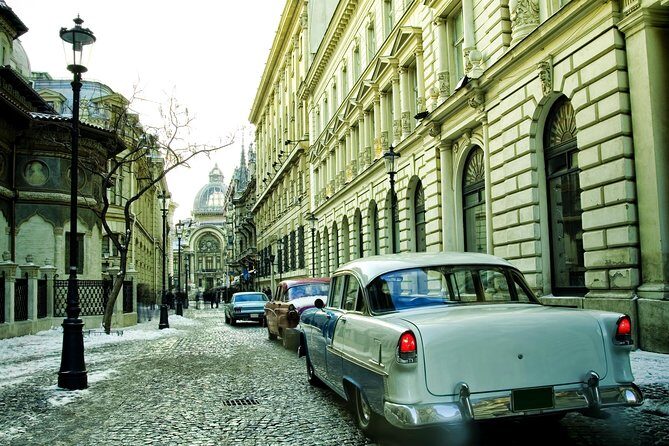
The pacing is slow and photo-friendly, with several pauses for pictures and breaks. Expect around 3 km total of walking, which is not a lot for most people, but it is steady enough that comfortable shoes matter. If the weather is rough (snow and ice can happen), this kind of slow, guided route can be easier than trying to wander on your own without a plan.
Stop 1: Romanian Athenaeum and the contrast with pre-communist Bucharest
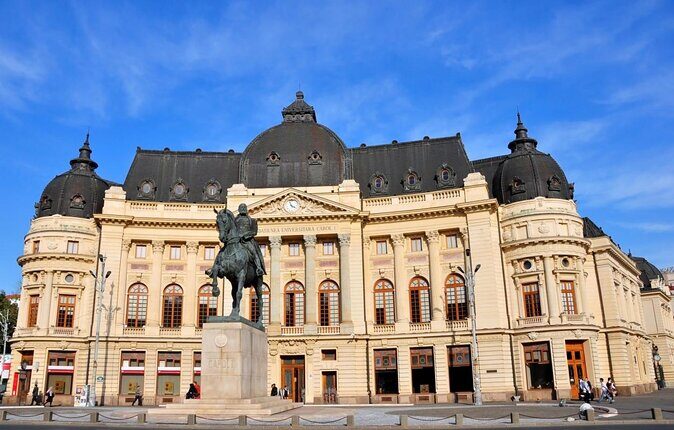
You’ll begin in front of the Romanian Athenaeum, a symbol of Bucharest’s older elegance. The point of the start is smart: it sets up the contrast before the heavier story begins. Before communism reshaped the city, Bucharest was known for its grandeur and style—then the regime’s takeover interrupted that trajectory hard.
Your guide connects the post–World War II shift to the broader Soviet grip on Eastern Europe. The story covers how communist power arrived through intimidation and state control, including the role of secret police methods, censorship, and forced changes that hit everyday life. You’ll also hear about policies that targeted free press, private property, and cultural life.
What I like here is how this stop frames everything else. If you start with the pre-communist symbol, then later scales and blocks of architecture hit differently. This is also listed as a stop with admission ticket free, so you’re not stuck waiting on entry rules.
Revolution Square: Ceaușescu’s last speech and the mechanics of propaganda
Next is Revolution Square, tied to the final days of Nicolae Ceaușescu, described as Europe’s last dictator. The square matters because it’s not just a “where something happened” spot. It shows how public space was used for messaging—how a leader’s words could be staged as truth, then crumble as events turned.
Here, your guide explains how Soviet occupation and early communist leadership shaped Romania’s path. Then the story tightens around Ceaușescu’s rise: what began as hope became a tightening grip, with increasing control and shrinking room for independent life. Even without you memorizing political timelines, you’ll see the pattern—power stops listening, then it starts punishing.
The 30-minute stop length is perfect for this topic. It gives you enough time to absorb the drama without dragging you into a long lecture while your legs cool down. This stop is also admission ticket free, so it stays focused on the street-level feel of the place.
University Square in 1989: where protests turned deadly
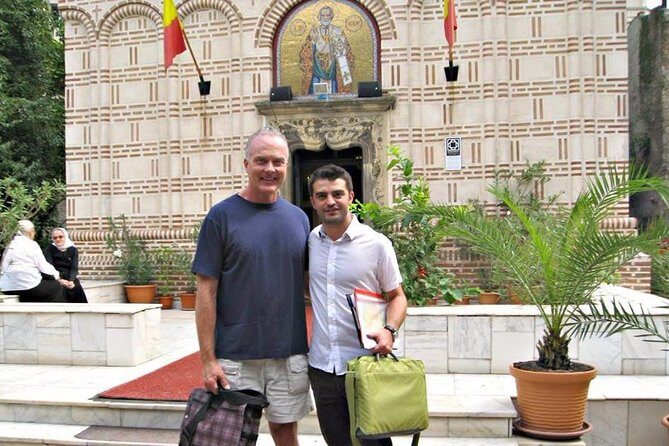
At University Square, you’re in the heart of the 1989 revolution’s turning point. This is where the story becomes vivid and urgent: protesters risked everything, and violence erupted. Your guide connects that day’s intensity to the final collapse of Ceaușescu’s rule.
What makes this stop compelling is the balance. You’ll hear about paranoia and risky decisions that left people worse off, and you’ll also get a discussion of how revolutions don’t always move in a straight line. The tour raises questions about what was happening in the shadows while crowds pushed for freedom—without turning it into conspiracy trivia.
Because the stop is 30 minutes, you can take it in while keeping your energy. If you’re the type who likes to ask questions, this is a great moment. Guides often have examples that help explain how ordinary people interpreted the signals they were seeing at the time.
Old Town: repaired buildings and the scars you can still spot

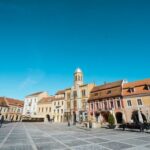
Then you shift into the restored Old Town, the part of Bucharest that feels like it wants to be playful again. It’s also where history shows up in practical ways. The tour highlights how only part of the old size remains, and how some places were rebuilt or restored after damage.
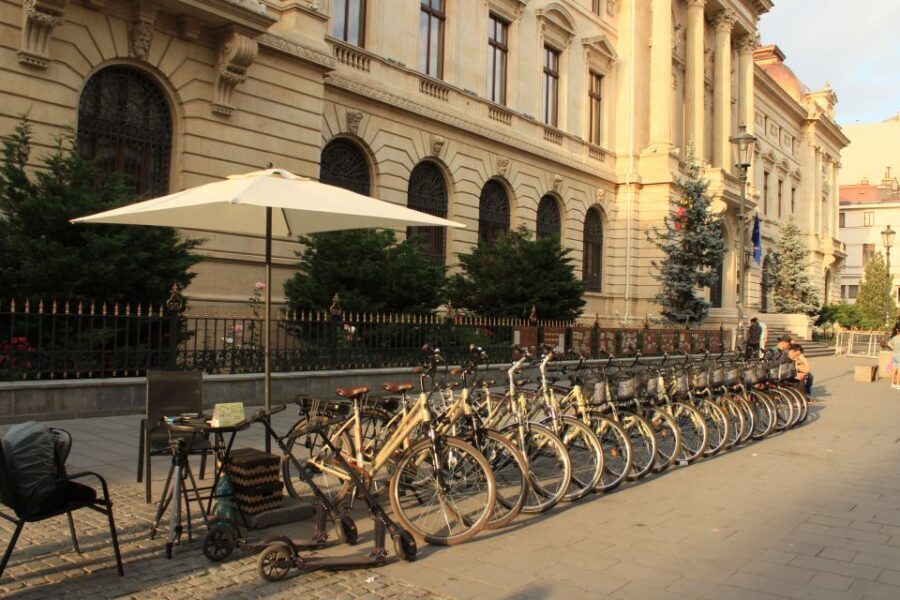
This stop matters because it reminds you that “after” is not the same as “gone.” Even when the buildings look beautiful again, people carry memory forward. In the Old Town area, you’ll see a blend of older architecture—19th-century palaces, Byzantine churches, and lively streets that now host cafés and casual hanging out.
Expect about 1 hour here, which is the right amount of time. It gives you room to wander slowly, take photos, and grab a coffee nearby if you want. Also, it’s admission ticket free, so you don’t have to manage ticket lines while you’re trying to enjoy the atmosphere.
Constitution Square and the Palace of Parliament exterior: scale that feels unreal
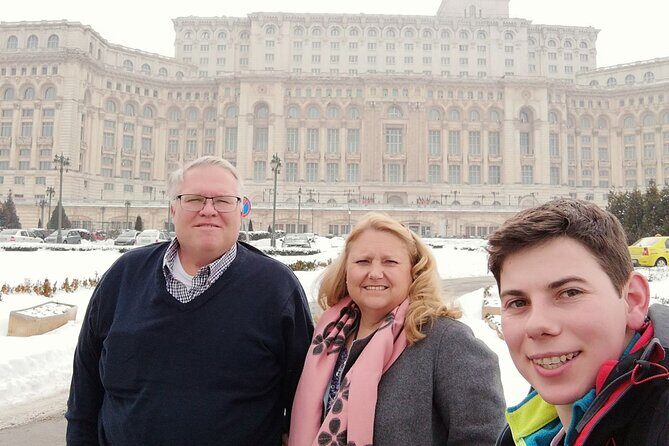
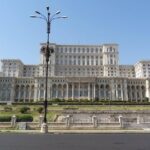
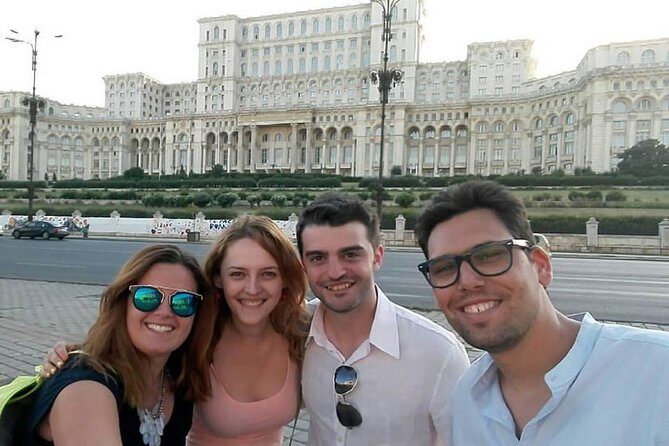
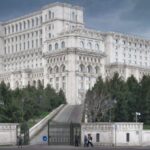
Your final stop is Constitution Square, tied to the former Communist Civic Center and dominated by the Palace of Parliament. If you want one takeaway from this tour, it’s this: the communists didn’t only control people. They also tried to control how power looked.
The Palace of Parliament is described as the world’s second-largest building after the Pentagon, and that alone tells you why it leaves an impression. Your guide also shares the darker side of the design: it reportedly has seven underground floors, atomic bunkers, and a secret tunnel network. Even if you’re only seeing the exterior, that kind of information changes the way you interpret the building’s mass.
You’ll spend about 30 minutes here. The tour notes that the emphasis is on the outside, and then the guide leads you back toward the Old Town to finish. If you’re hoping for interior access, you should know this tour is framed around what you can see on foot. Still, guides can adjust if access gets limited—one guide even handled an unexpected closure around February by improvising other elements to keep the tour moving.
What makes the guide matter (and why names like Andra and Michael come up)
This tour’s best feature is not a building—it’s how the story is told. The strongest guides keep the timeline understandable, then connect each era to what people experienced day to day. Some guides share personal family memories, which turns communist history from distant school content into something more human.
In particular, guides such as Andra, Bogdan, Michael, Mircea, Mihai, Tudor, and Emma are described as clear and engaging, with a narrative that moves step-by-step. That matters because communism has a lot of moving parts: Soviet influence, secret police methods, censorship, public fear, and the way leaders used propaganda. When the guide lays it out like a story, it becomes easier to remember and easier to connect to what you’re seeing in front of you.
One detail I appreciate from this kind of tour style: the guide often brings supporting material. Some guides are known to use old photos and magazines to help you visualize how Bucharest looked before demolitions and heavy rebuilding. That turns the tour into more than just looking at monuments.
How much walking is it, really?
The tour involves moderate walking, up to about 3 km total (under 2 miles). It’s described as slow paced, with photo opportunities and rest moments. That makes it realistic for many visitors, as long as you can handle an hour or so of steady strolling.
If you’re planning shoes, go practical. This is the kind of walking tour where comfort beats fashion. And if the weather is icy, you’ll feel happier with a guide who knows the route and the pace rather than trying to power through on your own.
Is it worth it for your first days in Bucharest?
Yes, especially if you want context fast. When you start with the Romanian Athenaeum and then work through Revolution Square and University Square, you get a framework for the city’s modern look. Then Old Town gives you the lighter side, so the emotional tone doesn’t stay grim the whole time.
If you’re only in Bucharest for a short stop, this kind of tour can help you understand why certain places feel dramatic or oversized. It also helps you read the city with less guessing, which makes your later independent sightseeing more satisfying.
Who this tour is for
This is a great fit if you:
- want a private walking tour instead of a crowded bus experience
- care about how politics changed real daily life and public space
- like asking questions and getting a guided storyline from a licensed English speaker
- prefer manageable walking over long museum days
It may not be the best fit if you strongly dislike heavy themes. Communism and the revolution are serious topics, and the tour doesn’t pretend they were pleasant chapters.
Should you book this Bucharest Communism, Revolution & City Highlights Tour?
If you like your Bucharest with context, this is an easy yes. The combination of private pace, free hotel pickup, English guidance, and a route that ties landmarks to the meaning behind them is hard to beat for the price. You’re not just checking boxes; you’re learning how the city got shaped—and then you get to enjoy the repaired streets of the Old Town after the heavy story.
Book it if you want a clear, story-driven way to understand 20th-century Romania while also seeing the city center in a practical, walking-friendly route. Skip it only if you know you want light sightseeing with minimal emotion.
FAQ
How long is the Bucharest Communism, Revolution & City Highlights Tour?
The tour lasts about 4 hours (approx.).
Is the tour private?
Yes. It’s a private walking tour, and only your group participates.
Do you include hotel pickup?
Yes. Free hotel pickup is included. Your guide meets you in your hotel lobby next to the reception desk.
How much walking is involved?
You’ll walk about up to 3 km total (less than 2 miles) at a slow pace with breaks.
What stops are included?
You visit the Romanian Athenaeum, Revolution Square, University Square, Old Town, and Constitution Square near the Palace of Parliament area.
Is admission included for the sights?
The itinerary notes admission ticket free for the stops listed.
Are refreshments included?
No. Refreshments are not included, so plan to buy water or a snack during a break if you need it.
Can I cancel for a full refund?
Yes. You can cancel for free up to 24 hours in advance for a full refund.