REVIEW · BUCHAREST
Best Walking Tour of Bucharest’s City Center – 2.5 hours
Book on Viator →Operated by Soca Tour · Bookable on Viator
Bucharest clicks into place on foot. This 2–3 hour city-center walk gives you a more in-depth view than a bus loop, with included church/monastery entries so you spend less time buying tickets and more time looking closely. One thing to consider: a small number of past bookings reported a no-show or last-minute cancellation, so it’s smart to confirm close to departure.
I like the way the route strings together big themes without feeling like a textbook. You get monarchy landmarks, the 1989 Revolution area, and then the Old Town’s byzantine-style churches, all in a compact walk that makes Bucharest easier to understand and easier to revisit later.
Because it’s described as a private, small-group experience (up to 14 people), you can usually ask questions and set a comfortable pace. You’ll likely finish near the Romanian Athenaeum, which is a handy end point for wandering on your own afterward.
In This Review
- Key things to know before you go
- Why this Bucharest walk works better than a bus loop
- Meeting at Manuc’s Inn, then heading toward the Romanian Athenaeum
- The monarchy thread: Ateneul, Carol I, and the story behind the statues
- Revolution Square: Memorialul Renașterii and the 1989 story where it happened
- University Square, kilometer 0 of democracy, and the walk into the Old Town
- Byzantine churches you can actually enter: Stavropoleos, St. Dumitru Posta, St. Anthony
- Stavropoleos Monastery
- St. Dumitru Posta (called the White Princess of the Old Town)
- Muzeul Curtea Veche and St. Anthony (Curtea Veche area)
- Manuc’s Inn: history, a lunch plan, and why it’s a smart pause
- Optional extras: Unirii Square views and the Patriarchal Cathedral
- Price, group size, and the real no-show risk you should take seriously
- Should you book this Bucharest city-center walking tour?
- FAQ
- What’s the duration of the Best Walking Tour of Bucharest City Center?
- Where does the tour start and end?
- Is the tour offered in English?
- What’s included in the price?
- Are there any major sights with entrance fees not included?
- What’s the maximum group size?
Key things to know before you go
- Small group feel (up to 14): better questions, less rushing, and more time at each stop.
- Church and monastery entrances included: you can go inside places tied to the city’s spiritual roots.
- Revolution Square focus: you’ll spend meaningful time on the December 1989 events right in the setting.
- A real mix of styles: French-influenced architecture, grand civic squares, and byzantine church interiors.
- A guided storyline: monarchy to communism to the present, tied to what you’re looking at.
Why this Bucharest walk works better than a bus loop
I’m a fan of walking tours that do more than point and say “there it is.” This one is built around a clear story: Romania’s modern identity shaped by kings, then stress-tested by communism, and finally rewritten during the revolution. The payoff is that you don’t just see landmarks. You understand why they matter.
The value is also practical. The tour includes entrance fees for several key religious sites, which matters in a city where ticketing and opening times can be uneven. Instead of spending half your time figuring out what’s open, you’re moving from stop to stop with a guide who ties each location to people and events.
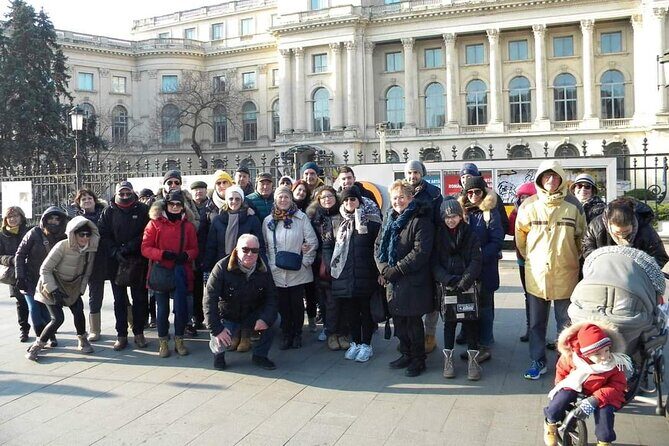
And the format helps. A group of up to 14 people makes it easier to keep attention on details: stonework, statues, icon-like paintings, the way squares are laid out, and why certain streets feel like the center of power. Even if you only come for a first-day introduction, the route gives you a strong mental map.
You can also read our reviews of more walking tours in Bucharest


Meeting at Manuc’s Inn, then heading toward the Romanian Athenaeum
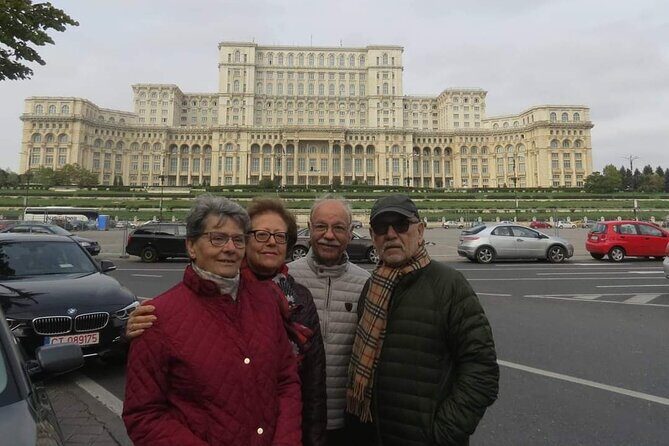
You start at Hanul lui Manuc (Manuc’s Inn) on Str. Franceză in central Bucharest. It’s a strong opening point because it’s not a random stop—Manuc’s Inn is tied to the city’s old trading and lodging world. It’s also a good “anchor” landmark. When your feet get tired later, you’ll know exactly where you started.
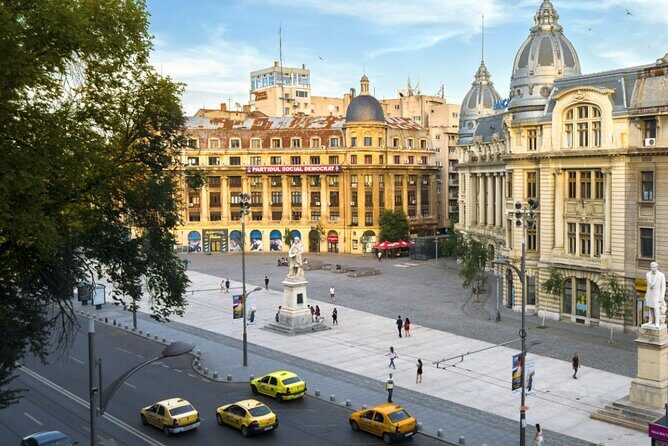
From there, your walk is aimed at the modern-symbol zone, with the Romanian Ateneum as the end-point. The Ateneum is described as the symbol of modern Romania and is known for architecture that remembers a French style. If you’re the type who likes buildings with opinions—this is one of them. Plan for the guide to connect it to the monarchy and the different eras of Romania’s kings.
One practical note: the tour is listed as including a visit to the Ateneum if it’s open, but the Ateneum admission is also shown as not included. That means you should treat the interior visit as a bonus when available, not something you can count on. If you’re hoping for a full inside experience, it’s worth budgeting a little extra time and money just in case.
The monarchy thread: Ateneul, Carol I, and the story behind the statues
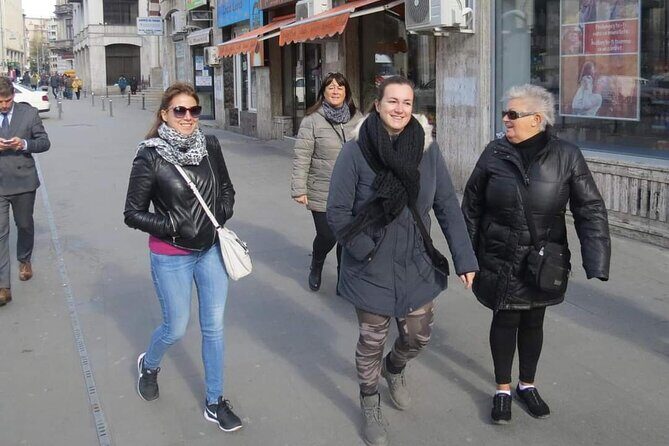
A lot of Bucharest landmarks are more meaningful than they look from street level, and this tour leans into that. Near the Ateneum, the guide focuses on the palace and connects what you’re seeing to the kings of Romania: Carol I, Ferdinand I, Carol II, and Michael I. It’s history you can point to—each name links back to a place, a building, or a visual symbol.
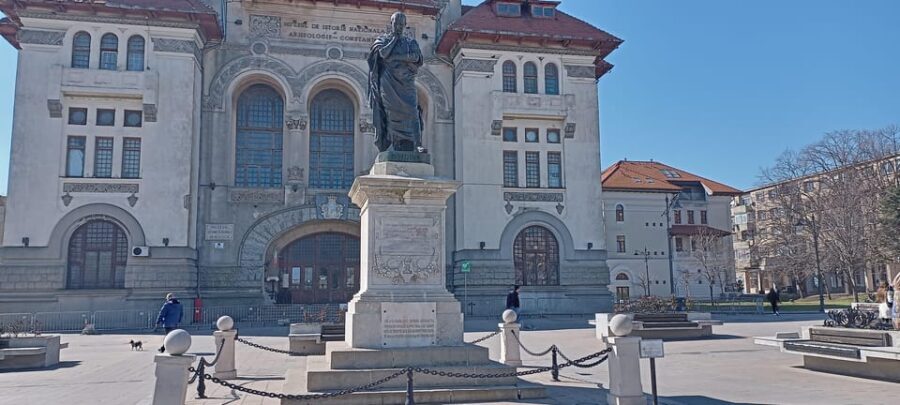
Then you move toward Biblioteca Centrală Universitară, where the guide explains the building erected by Carol I, and you’ll see an equestrian statue in front of it. Even if you’re not a “statue person,” equestrian monuments are loud for a reason. They’re meant to project power, and the guide helps you read what that power was trying to communicate.
What I like here is the pacing. You don’t sit in one place for ages, but you also don’t get the tourist-sprint treatment. These short stops give you enough context to notice things on your own later—like architectural clues and the way public art is used to shape civic identity.
Revolution Square: Memorialul Renașterii and the 1989 story where it happened
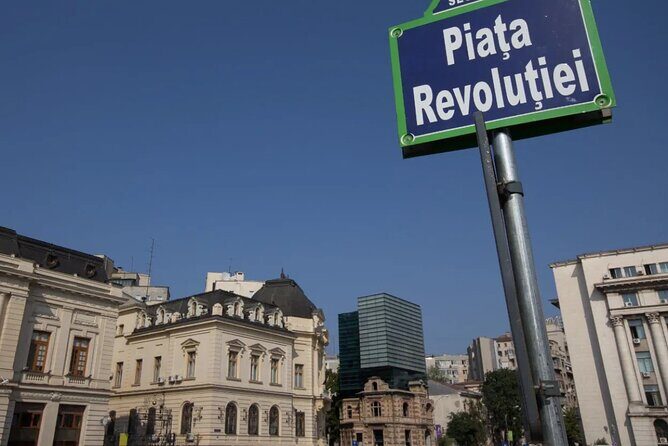
The emotional center of this walk is Memorialul Renașterii, described as the obelisk also nicknamed the potato. It’s set in Revolution Square, and you’ll spend about 20 minutes here, with the guide sharing what happened in the last days of communism.
This isn’t just a “look, that’s the monument” stop. The value is that you’re standing in the square where young people fought against the regime, and you get the background that explains why the square looks and feels the way it does. The tour also points out that two major personalities captured and tortured by communists are remembered through statues in the square.
If you prefer your history grounded in real space, this is one of the best parts of the itinerary. It’s also the part where your mood may shift from sightseeing mode to thinking mode. That’s not bad. It’s the point of coming to a place like Bucharest, rather than just collecting photos.
University Square, kilometer 0 of democracy, and the walk into the Old Town
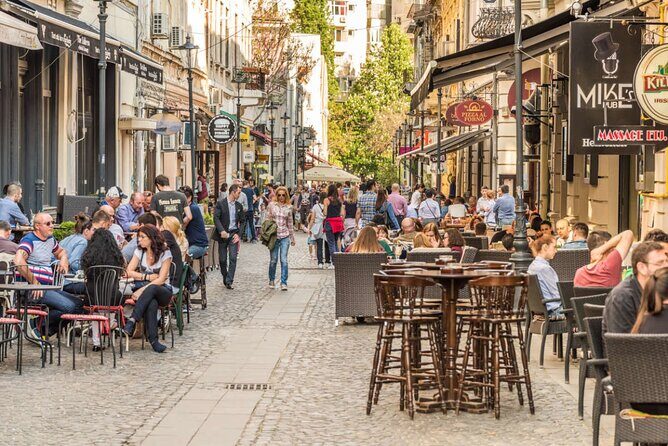
Next comes University Square, where the focus turns toward the idea of change. The tour highlights headquarters of famous Romanian universities and then points out Kilometer 0 of democracy, framed as a symbol of the revolution from 89.
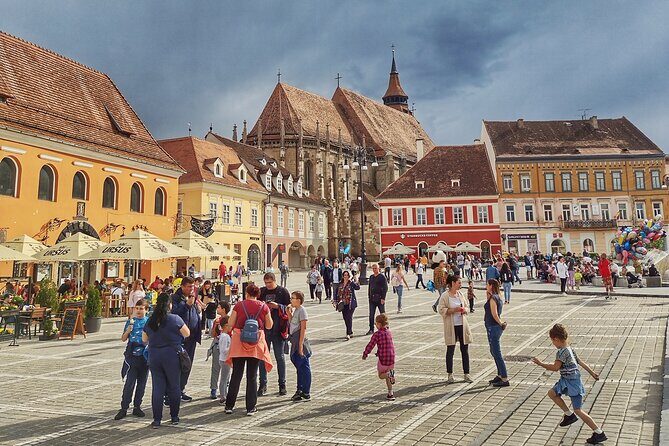
This is a clever transition stop. You’re moving from monarchy and political struggle into the area where everyday Bucharest life—and the older city fabric—shows up. The tour then begins a stroll in the Old Town, which is where you get more of the “wow” factor from architecture and interiors.
As you move, your guide also points out what’s described as a monument erected by the Russian community in the early 1900s. The details may depend on what’s in view on your particular day, but the guide’s job is to connect these objects to the layers of influence Romania experienced in the 20th century.
For you, the benefit is practical: by the time you reach the monasteries and churches, you’ll already understand the key timeline the tour is using.
You can also read our reviews of more city tours in Bucharest


Byzantine churches you can actually enter: Stavropoleos, St. Dumitru Posta, St. Anthony
Now for the side of Bucharest that feels intimate even when you’re in a busy city. This part of the walk focuses on byzantine architecture and Orthodox spirituality. You’ll stop at several religious sites, and the entrances for these are listed as included.
Stavropoleos Monastery
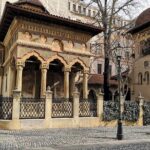
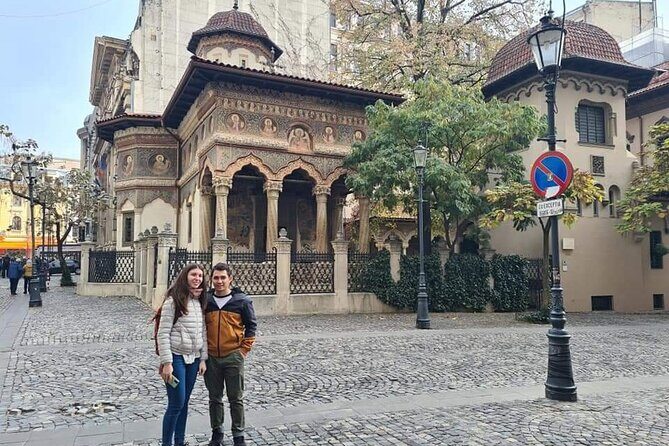
You’ll visit Stavropoleos Monastery, a small “coquet” place described as a symbol of byzantine architecture and spirituality. The guide connects it to how painted monasteries in Bucovina look, which is a nice way to link regions without dragging you across the country.
Even if you only have 5 minutes here, the interior is the kind of stop where time is measured differently. You’ll likely spend that time looking up at details, not just reading plaques.
St. Dumitru Posta (called the White Princess of the Old Town)
Next is Biserica Sf. Dumitru Posta, nicknamed the White Princess of the Old Town. This church comes with a “very interesting history” and a short guided look inside. It’s another quick stop, but it’s designed to give you a feel for atmosphere—how different these spaces are from the monumental squares you’ve been seeing.
Muzeul Curtea Veche and St. Anthony (Curtea Veche area)
Then you move through the Old Princely Court Museum (Curtea Veche), where the tour notes the oldest historical testimonies of Bucharest dating from the 13th century. The guide also ties this place to the Wallachian rulers who lived here starting in the 14th century, including Vlad the Impaler.
Immediately after, you’ll visit Biserica Sfantul Anton – Curtea Veche. This church is presented as important in Romania’s history and a place where you’ll see beauty and atmosphere inside. This stop is also one of the included church entrances, so it’s worth treating it as a highlight, not a checkmark.
If you like architecture, iconography, and religious art, this trio of stops is where the tour earns its money.
Manuc’s Inn: history, a lunch plan, and why it’s a smart pause
You’ll return to Manuc’s Inn (Hanul lui Manuc) for about 10 minutes and the tour frames it as the oldest inn and restaurant in town. The story focuses on the rich and cunning boyar behind it, described as shocking the Russian and Ottoman empires.
Even if you don’t go deep into the legend, this is an effective location for planning. The tour explicitly recommends booking lunch here. If you want a smooth day, this is a strong place to eat because it’s central, it’s historically themed, and it keeps you from cutting your walk short just to find food.
If you do plan lunch, I’d treat it as part of the schedule rather than an afterthought. A walking tour hits a lot of stops quickly, and food decisions are easier when you already know what’s nearby.
Optional extras: Unirii Square views and the Patriarchal Cathedral

Toward the end, the tour offers optional choices depending on time and how you’re feeling.
One is a view from distance from Unirii Square. You don’t have to do it, but if you want an extra perspective for photos and orientation, it’s a low-effort add-on.
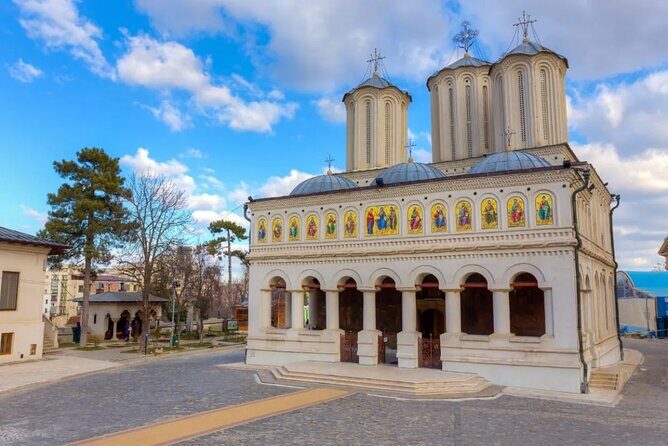
The other optional stop is the Patriarchal Cathedral, located on the hill next to Unirii Square. The tour notes you can enter a sacred place full of paintings and decorations. It’s also listed as free to enter in the itinerary notes, so if you want more interior time, this is the easiest way to extend the experience without changing plans.
Price, group size, and the real no-show risk you should take seriously
At $54.77 per person for a 2–3 hour walk, this tour sits in the mid-range. The best reason to book is not the price tag itself—it’s the mix of value inputs: a guided storyline, a small group size (up to 14), multiple included church/monastery entrances, and the practical time saved by having your route planned.
The potential downside isn’t about the content. It’s about reliability. Some past bookings describe a guide no-show, difficulty reaching the operator, and last-minute cancellations with little notice. I can’t control whether that happens again, but I can suggest a smart way to protect your day:
- Check for updates the morning of the tour.
- Keep the contact details in your phone.
- If you’re on a tight schedule, plan a backup activity near the start point.
That’s not paranoia. It’s vacation common sense, especially for tours that start early and run for a fixed window.
Should you book this Bucharest city-center walking tour?
I think you should book if you want Bucharest in layers: monarchy symbols, Revolution Square context, and then the Old Town’s church interiors you can actually enter. It’s a great first-day option because it gives you a map and a narrative so the city makes sense when you go back out on your own.
Skip it or book with extra caution if your schedule is extremely tight and a no-show would wreck your day. The content sounds worth it. You just want to protect yourself against the small chance things go wrong.
If you do book, bring comfortable shoes and be ready to stand and look around a lot. This is the kind of tour where your best photos come after you pause, listen, and notice what’s carved, painted, and positioned in the street.
FAQ
What’s the duration of the Best Walking Tour of Bucharest City Center?
The tour runs about 2 to 3 hours.
Where does the tour start and end?
It starts at Hanul lui Manuc on Str. Franceză 62, Bucharest and ends at the Romanian Athenaeum on Strada Benjamin Franklin 1-3, Bucharest.
Is the tour offered in English?
Yes, the tour is offered in English.
What’s included in the price?
Included items are a souvenir, a visit to the Romanian Atheneum if open, and entrance tickets for the churches/monasteries listed (St. Anthony, Stravropoleos Monastery, and St. Demeter Church).
Are there any major sights with entrance fees not included?
The Romanian Ateneum stop notes that an admission ticket is not included.
What’s the maximum group size?
The maximum is 14 travelers.