Bucovina painted churches hit like a movie scene. This 7-day route is built for big variety without the hassle: Bucharest on day one, royal castles in Sinaia and Bran, then Transylvania’s medieval towns and the UNESCO-listed Biertan Fortified Church. I especially like how the itinerary pairs legend with real places, from Vlad Tepes’ birthplace in Sighisoara to Romanian Orthodox monastery traditions along the way.
I also like the travel style: a driver/guide handles the long car days, and you sleep in 6 nights on a B&B-style basis rather than one generic hotel stop. One consideration: you’ll spend plenty of hours in the van, so plan your energy (and snacks) like you mean it.
In This Review
- Key highlights that matter before you book
- Romania in a week: what this tour is really like
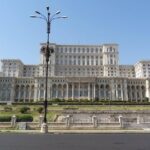
- Day 1 in Bucharest: Palace of Parliament as your opening act
- Sinaia and Bran: Peles Castle plus Dracula’s hilltop myth
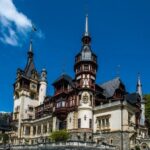
- Peles Castle in Sinaia
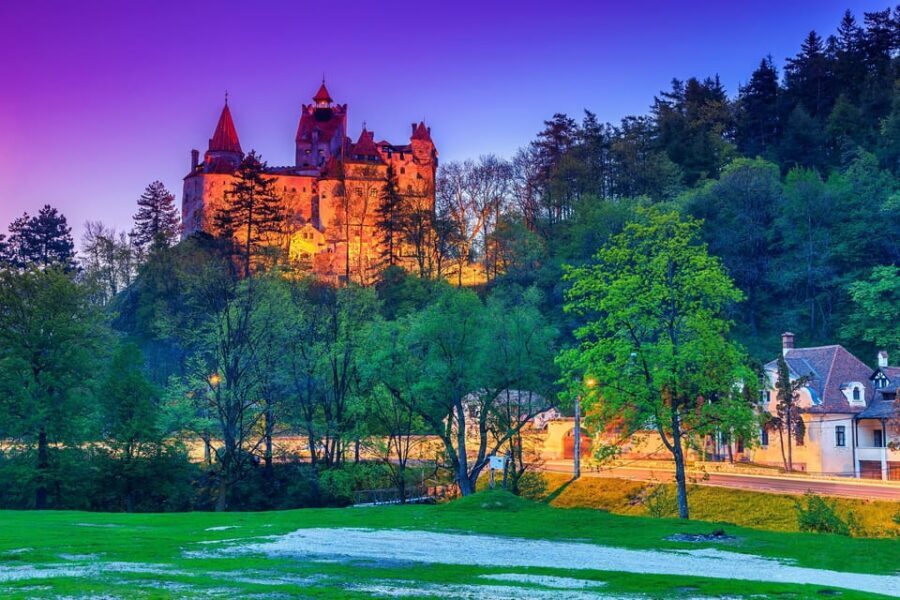
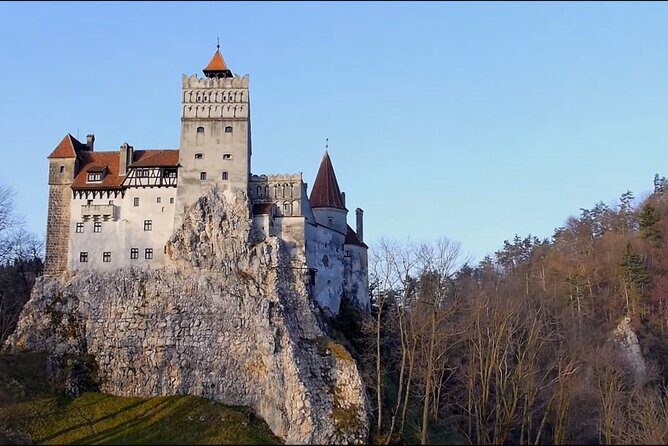
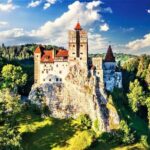
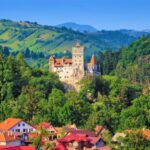
- Bran Castle (Dracula’s Castle)
- Day 3 in Brasov: cable-car views and the mountains framing the old city
- Agapia Monastery: the nuns’ workshops are the real draw
- Painted monasteries of Bucovina: Voronet, Moldovita, Sucevita
- Voronet Monastery: the Last Judgment wall
- Moldovita Monastery: fortress layout and unusual enemy details
- Sucevita Monastery: the Virtue Staircase
- Day 5: Red Lake and Sighisoara at night
- Red Lake: Dracula-area vibes and a Hungarian Szekler setting
- Arrive Sighisoara Medieval Town (UNESCO)
- Day 6: Vlad Tepes’ birthplace and Biertan’s fortified church
- Sighisoara Old Town essentials
- Biertan Fortified Church (UNESCO): three layers of protection
- Sibiu introduction: a walking tour framed by Saxon guild walls
- Day 7 Sibiu highlights plus Curtea de Arges, then back to Bucharest
- Sibiu’s museum and two cathedrals’ stories
- Curtea de Arges and the road home
- Price and value: what you’re paying for (and what you’re not)
- The travel style: long-distance days, small-town rhythm
- Who this tour fits best
- Should you book this Romania tour?
- FAQ
- What time does the tour start?
- Where does the tour begin?
- How long is the tour?
- What’s included in the price?
- Are meals included?
- Are attraction tickets included?
- Which UNESCO sites are visited?
- What is the cancellation window for a full refund?
Key highlights that matter before you book
- Sighisoara Citadel (UNESCO): the only still-inhabited medieval fortress in Europe, explored on foot at a slow, satisfying pace
- Biertan Fortified Church (UNESCO): a German Saxon stronghold church with layers of fortifications and a distinctive town story
- Painted monasteries of Bucovina: Voronet, Moldovita, and Sucevita offer exterior murals and fresco scenes you can’t fake with photos
- Royal stop: Peles Castle: a well-preserved 19th-century palace with elaborate woodwork and Wagner-themed details
- Orthodox nuns’ workshops at Agapia: see what daily craft work looks like in a working nunnery setting
- Old-world Transylvania walking in Sibiu: stairs, bridge, cathedral interior fresco details, plus Saxon city walls and towers
Romania in a week: what this tour is really like
This is a classic “Transylvania plus Bucovina” itinerary, built for people who want the wow-factor without map stress. You’re moving between regions—Wallachia/royal Romania near Bucharest, then the Transylvania spine, then the painted-church country of Bucovina—and the travel is handled by an air-conditioned vehicle with a driver/guide.
The pace feels like: mornings geared toward one signature sight, afternoons for another major stop, and evenings in smaller B&B-style accommodations. That matters because the places you visit are visual, not just informational. You’ll want to return to your room with your brain not fried from logistics.
The other big theme is “stories grounded in buildings.” Dracula myths show up in Bran and Vlad Tepes in Sighisoara, but you’ll also spend time at monasteries and UNESCO sites where history is carved into stone and routine.
You can also read our reviews of more tours and experiences in Bucharest
Day 1 in Bucharest: Palace of Parliament as your opening act
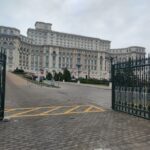
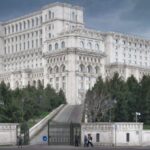
Day one starts in Bucharest, with arrival at Bucharest-Henri Coanda Airport and a meet-and-greet by the guide-driver. Depending on when you land, you may also get a quick orientation tour of key Bucharest sights, then a stop at the Palace of Parliament.
This is a strong way to begin because Bucharest sets the “Romania today” contrast. The Palace of Parliament is huge, modern, and political in tone—very different from the monasteries and medieval forts you’ll chase later. Even if your itinerary day is short, it helps you get bearings fast, which makes the rest of the week feel easier.
Tickets here are listed as not included, so you should be ready to pay your own entry costs for major sights unless noted otherwise.
Sinaia and Bran: Peles Castle plus Dracula’s hilltop myth
Peles Castle in Sinaia
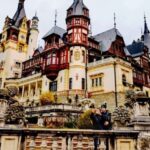
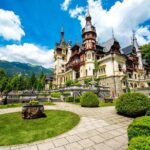
Crossing away from Bucharest toward the Southern Carpathians, you’ll hit Sinaia and the royal era hub around the Sinaia Monastery (1695 is mentioned as part of how the town grew). Then it’s time for Peles Palace, described as one of the best-preserved royal palaces in Eastern Europe.
What I like about Peles is the hands-on, craft-forward feel. You’re not just looking at big walls; you’re seeing ornament and detail both outside and in. The tour notes elaborate wood sculptures and paintings tied to German composer Richard Wagner. If you like places where art direction and architecture argue with each other in a good way, this fits.
Plan for about 2 hours. Again, admission isn’t included, so budget for the ticket.
Bran Castle (Dracula’s Castle)
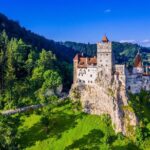
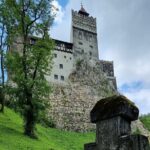
After that, you head to Bran Village for Bran Castle, the hilltop fortress often connected to Dracula myths. Even if you ignore the folklore, the positioning is the point: the castle is visually dramatic because it’s built to look like a storybook villain from the road.
You’ll typically get around 2 hours here. The ticket is also listed as not included, so check your plan for entry costs in advance.
Tip: Bran is one of those places where photos are easy to take but hard to make feel real. Move at a steady pace, get a few wide views first, then slow down for the corners and courtyards.
Day 3 in Brasov: cable-car views and the mountains framing the old city
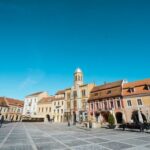
You start in Brasov, surrounded by the Southern Carpathians and positioned as a launchpad for more Romania trips. The old city is described as very well preserved, and you’ll get a chance to see it by taking the cable car to Tâmpa Mountain (995 m) for a viewpoint.
This stop is a quality reset after castle intensity. In a week packed with stone forts and fresco walls, being up above the city does two things: it gives you scale and it helps you understand how the mountains shape Transylvania.
This activity lists admission as free in the provided details, but the bigger lesson is that you’re getting a classic “look down at the map” moment without paying extra for a special guide-only experience.
Agapia Monastery: the nuns’ workshops are the real draw
Before reaching Gura-Humorului, there’s time for Agapia Monastery, noted as one of Romania’s largest nunneries with more than 300 nuns and ongoing workshop work.
This isn’t just a photo stop. You can visit workshops where nuns make painted icons and handmade carpets. That detail matters because it turns the site from a static monument into a living system of crafts and daily practice.
Admission is listed as free here. Still, go respectfully: monasteries often have rhythms, and you’ll enjoy it more if you keep the tone quiet.
Painted monasteries of Bucovina: Voronet, Moldovita, Sucevita
Day 4 is the big painted-church day, and it’s where the tour earns its reputation.
Voronet Monastery: the Last Judgment wall
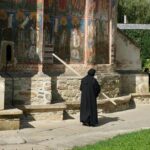
At Voronet Monastery (built 1488), you get a blend of Byzantine, Gothic, and local elements. The main wow-factor is on the exterior murals, including the famous Last Judgment scene, described as unique in the whole world in the itinerary notes.
This is one of those “you have to see it” places because mural scenes are designed to be read from a distance. If you just zoom in on tiny parts, you miss how it was meant to land visually.
You’ll have about 2 hours.
Moldovita Monastery: fortress layout and unusual enemy details
Next is Moldovita Monastery. You’ll drive via scenic road sections through the Bucovina Mountains, including mention of the Ciumarna Pass for panoramas.
Moldovita is built in 1532 with a fortified quadrangular enclosure—tower, gates, and lawned grounds. The central church has frescoes dating from 1537 (partly restored). One of the most specific mural notes: the southern exterior wall includes the Siege of Constantinople (AD 626) and depicts besiegers in Turkish dress. The itinerary even points out that the scene keeps parishioners focused on the current enemy at the time.
You’ll spend about 1 hour, and that length works because fresco overload is real. Give yourself time to step back from the walls rather than only photographing up close.
Sucevita Monastery: the Virtue Staircase
Finally, Sucevita Monastery is framed around the “Virtue Staircase,” described as impressive for its dimension and contrast between angel order and devil chaos.
This is the best kind of closing for a day like this: different monasteries, different fresco programs, and a consistent style that ties them together. You’ll likely get around 1 hour.
Day 5: Red Lake and Sighisoara at night
Red Lake: Dracula-area vibes and a Hungarian Szekler setting
You’ll cross the Eastern Carpathians through Bicaz Gorge. Red Lake is where you step into an area strongly associated with Dracula atmosphere in pop culture, and the notes mention a community of Hungarian Szekler residents.
This stop is listed as about 1 hour and admission free. I’d use the hour in two ways: take one full-view photo for context, then look for the details that match the “legend” feeling without turning it into a theme park.
Arrive Sighisoara Medieval Town (UNESCO)
Then you shift to evening in Sighisoara, the only still-inhabited medieval fortress in Europe and a UNESCO World Heritage Site.
This is a place where nighttime can actually help. When you’re walking cobblestones and burgher houses after daylight touring, you’ll feel the “settled” nature of the place. It’s not just ruins; it’s a living old town.
Admission is listed as free for the introductory day entry into the historic center area.
Day 6: Vlad Tepes’ birthplace and Biertan’s fortified church
Sighisoara Old Town essentials
In the morning, you explore the Old Town of Sighisoara: cobbled streets, burgher houses, and ornate churches. You’ll visit the Clock Tower, the Church on the Hill, and Dracula’s house, noted as Vlad Tepes’ birthplace in 1431.
This is one of the best ways to handle Dracula stuff: instead of treating it as a cartoon character, you connect the myth to a specific place and date. Even if you’re not a Vlad fan, the town architecture carries the week’s main theme—survival through defense, faith, and civic organization.
About 2 hours here.
Biertan Fortified Church (UNESCO): three layers of protection
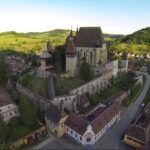
Next is Biertan Fortified Church, another UNESCO highlight and one of the early German settlements in Transylvania (Transylvanian Saxons). The fortified church is surrounded by three rows of fortifications, built by German peasants in Transylvania, and it served for nearly 300 years as the residence of the Transylvanian Archbishop.
One really specific detail in the notes: one room was used as a reconciliation place for couples about to divorce. That’s the kind of social-history moment that turns “stone church” into “human place.”
You’ll have about 1 hour. Admission is listed as not included, so plan on ticket costs.
Sibiu introduction: a walking tour framed by Saxon guild walls
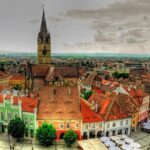
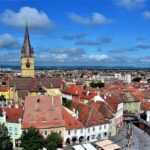
Then you move to Sibiu, taking a walking tour of the old city and its defense walls and towers connected to guilds. Sibiu is described as the chief city of the Transylvanian Saxons, so this stop feels like a cultural cousin to Biertan.
You’ll get a full day framing here, and you’ll see the town’s structure rather than only its single best viewpoint.
Day 7 Sibiu highlights plus Curtea de Arges, then back to Bucharest
Sibiu’s museum and two cathedrals’ stories
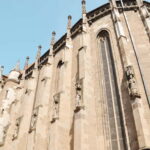
In Sibiu, you’ll visit the Brukenthal Museum—assembled by baron Brukenthal, governor of Transylvania at the end of the 18th century. You’ll also stop at the Evangelical Cathedral, completed in its actual shape in 1520, which has an exquisite fresco of the Crucifixion on the north wall of the choir dating from 1445.
The route also includes the Passage of Stairs linking Upper town to Lower town, the Liar’s Bridge (1859), and an Orthodox cathedral described as Byzantine style and a replica of St. Sophia in Constantinople.
This is a lot of stops in one day, but it works if you keep your pace calm. When you’re packing different religious traditions into a single old city, it’s better to stop, look, and read the room rather than race.
Curtea de Arges and the road home
Finally, there’s Curtea de Arges Monastery, tied to the first capital of Wallachia and the old Princely Court. The itinerary notes that three of the four Romanian kings of the Hohenzollern dynasty are buried here.
After that, it’s drive back to Bucharest, wrapping your week.
Tickets are listed as not included for many of these sights, so check ahead and carry payment options.
Price and value: what you’re paying for (and what you’re not)
At $1,708.12 per person for a 7-day experience (about 6 nights), the value mostly comes from three things:
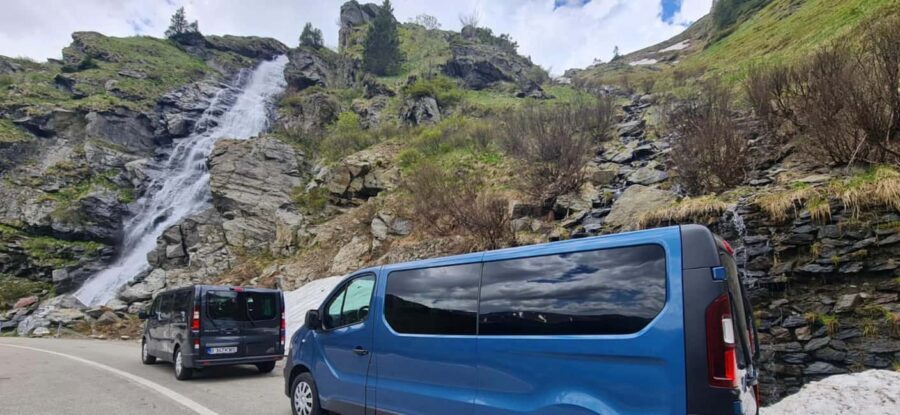
- Transport and time: an air-conditioned car/minivan/minibus with fuel and parking handled. In this itinerary, that’s not a small convenience—it’s the difference between a relaxed vacation and a job.
- Driver/guide service: you’re paying for a person who knows how to order stops and move you through day-to-day logistics.
- Lodging style: 6 nights on a B&B basis. That’s helpful because your “home base” is smaller and more local-feeling than a large chain hotel.
What’s not included is important: food and drinks unless specified, and many major sites list admission as not included. So your real total cost depends on how much you spend on entry fees and how you handle meals each day.
If you want to control the budget, plan to eat at affordable places near the route and keep a daily snack plan for long van hours. That one habit makes the trip feel smoother.
The travel style: long-distance days, small-town rhythm
The single biggest practical tradeoff is time in the car. This is not a slow tram-around-the-old-town kind of tour. You’ll be crossing regions and mountain road sections, which is exactly why the itinerary can include so many signature sights in one week.
Here’s how to make it work:
- Pack water and snacks for the drive days (your stops are spaced out).
- Bring something for motion comfort if you’re sensitive on curving roads.
- Do fewer side plans on “transfer days.” Let the tour be the plan.
The upside is that the driver/guide handles route logic. You’re not wrestling directions, and you’re not losing prime daylight to getting from one place to the next.
Who this tour fits best
This is a strong match if you:
- want the “Transylvania + painted churches” package rather than picking just one theme
- like history that shows up in places where people still live and work
- enjoy walking towns (Sighisoara, Sibiu) as much as visiting monuments (Peles, Bran, fortified churches)
- prefer guided comfort over self-driving stress
You might want to look elsewhere if you:
- hate long van days and want shorter hops
- expect most tickets to be included (many stops list admissions as not included)
- want a food-forward tour (meals aren’t included by default)
Should you book this Romania tour?
I’d book it if your priority is variety with structure: castles, UNESCO fortified churches, medieval town walking, and Bucovina painted monastery art in a single week. The mix feels intentional—legends get their own stops, but the monasteries and UNESCO sites do the heavy lifting.
I’d hesitate only if you’re travel-fatigued by car time or you’re trying to keep strict control over total spending, because admissions and meals will add up on top of the base price.
If you’re okay with a week that moves, you’ll come away with a Romania that feels real: not just Dracula imagery, but fortified communities, Orthodox tradition, and church art painted for viewers who stood right where you’re standing.
FAQ
What time does the tour start?
Start time is listed as 8:00 am.
Where does the tour begin?
It begins in Bucharest. The details mention arrival at Bucharest-Henri Coanda Airport with a meet-and-greet by the guide-driver.
How long is the tour?
It’s listed as 7 days approximately, with 6 nights of accommodation.
What’s included in the price?
Included are 6 nights accommodation on a B&B basis, a driver/guide, transport by air-conditioned car/minivan/minibus, and fuel and parking fees.
Are meals included?
Food and drinks are not included unless specified.
Are attraction tickets included?
Most stops list Admission Ticket Not Included, so you should expect to pay for tickets yourself except where the details explicitly say Admission Ticket Free.
Which UNESCO sites are visited?
The tour includes two UNESCO World Heritage Sites: Sighisoara Medieval Town and Biertan Fortified Church.
What is the cancellation window for a full refund?
You can cancel up to 6 days in advance for a full refund.