REVIEW · BUCHAREST
Bucharest City Tour 2 hours – by Car with a Private Guide
Book on Viator →Operated by Nicolas Experience Tours · Bookable on Viator
Bucharest’s past rides shotgun with you. This private 2-hour driving tour is built for first-timers and busy schedules, with major Communist-era landmarks in one easy route. I especially like the English-speaking licensed guide/driver and the no-surprises car pricing, since taxes, tolls, parking, and gas are covered. The one drawback to plan for: in just two hours, it’s ideal for seeing and understanding, not for lingering deep inside every site.
What makes it work well is the pacing. You get the flexibility to adjust the route even after you start, which matters in a city where traffic and timing can change fast. And because it’s private, you don’t lose time waiting on anyone else.
One detail that stood out from a recent review: the guide Nicolas brought the stories with humor, and his family-life angles made the heavy history easier to follow. He also mentioned a favorite spot for a quick sweet stop, which is the kind of local touch that turns a drive into a real day out.
In This Review
- Key things I’d watch for on this Bucharest private driving tour
- Price and logistics: what $123.91 gets you in 2 hours
- Palace of Parliament and People’s House: seeing power made of stone
- National Village Museum: Romanian life beyond the headlines
- Senate Palace and the Revolution of December 1989: where the timeline turns
- Ceaușescu Mansion: a private world inside public power
- Arc of Triumph and the story of unification
- Romanian Athenaeum: a cultural symbol you’ll recognize fast
- The Central Bucharest route: mixing palaces, museums, and institutions
- Who this tour suits best (and who might want something else)
- Guide quality: Nicolas’s humor makes heavy history easier
- Quick practical tips before you go
- Should you book this Bucharest City Tour?
- FAQ
- How long is the Bucharest City Tour?
- Is this a private tour or shared group?
- What language is the guide?
- What’s included in the price?
- Is food included?
- How does pickup work?
Key things I’d watch for on this Bucharest private driving tour
- Private car, just your group: you avoid the stop-and-start feeling of shared tours.
- All car costs included: taxes, tolls, parking, and gas are part of the price.
- Two big themes in one ride: the machinery of communism and the texture of Romanian village tradition.
- Historic landmarks with clear context: you’ll connect what you see at the Palace of Parliament to what happened later in the Revolution.
- Arc of Triumph has exhibit time with luck: if the exhibits are available, you can see items tied to Romania’s unification story.
- Flexible route changes: you can shift the plan even after the tour begins, as long as you’re still working within the 2-hour window.
Price and logistics: what $123.91 gets you in 2 hours
At $123.91 per person for about 2 hours, the value depends on who you’re traveling with. If you’re a couple or a small family, a private car plus a licensed English-speaking guide/driver can actually be cheaper than piecing together multiple taxis or paying for separate guided visits.
This tour also reduces mental load. You’re not tracking extra fees for parking, tolls, or gas, and taxes are included too. That matters because Bucharest’s central areas can be a pain to navigate, and parking can add up quickly if you’re arranging everything yourself.
There’s also a practical bonus: different tour times are offered so you can fit it around your hotel check-in, meals, or other plans. And if your day shifts, you can request changes to the daily itinerary even after the start of the tour. In a city with busy roads, that flexibility is real money-saver energy.
You can also read our reviews of more guided tours in Bucharest


Palace of Parliament and People’s House: seeing power made of stone
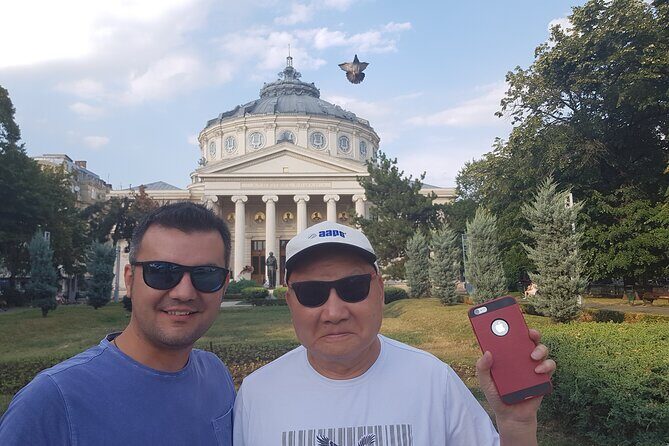
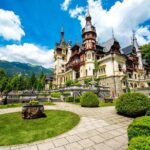
The tour’s first major “wow” is the Palace of Parliament, often connected to what people call the People’s House under the old regime. Even if you know the broad story already, seeing it framed through the lens of totalitarian control hits differently.
The key lesson here is size and intent. You’ll learn how a totalitarian system can damage a nation, and how pointless opulence and megalomania can become the visible centerpiece of an era. The scale is part of the message, too: it’s described as the second-largest administrative building on the planet, after the Pentagon.
What I like about this stop as a first-timer is that it gives you a foundation for the rest of the itinerary. Later, when you stand near the Revolution-related sites, the story isn’t random. It’s the cause-and-effect chain you can actually visualize.
National Village Museum: Romanian life beyond the headlines
Next comes a very different kind of Bucharest experience: Romanian village culture, gathered into one place at the National Village Museum. This is a smart contrast to the heavy politics of the Palace of Parliament, because it reminds you that Romanian identity isn’t only built from major buildings and major events.
In this stop, you’ll learn how traditional Romanian villagers created an ecological and sustainable environment around their homes—essentially, their everyday life was shaped by harmony with the surroundings. You also get a look at a modest lifestyle, presented as simple and grounded rather than romanticized.
The museum route focuses on traditional houses made from materials you associate with the country’s regions—wood and adobe, plus stone and others. You’ll also see national symbols such as the mill and a wooden church. For people who like understanding culture through objects and architecture, this is one of the most satisfying stops on the schedule.
One practical note: this is a “one place, many places” kind of visit. If you love history but you don’t want to chase dozens of locations, this museum is a shortcut that still feels meaningful.
Senate Palace and the Revolution of December 1989: where the timeline turns
After the museum side of things, the tour moves back into political history with a focus on the Revolution of December 1989.
When you reach the Senate Palace, you’ll see the building that used to house the Central Committee of the Romanian Communist Party. This is also described as the place where the Revolution started—where the dictator Nicolae Ceaușescu was ousted. The tour’s value here is the way it connects the events to the physical locations, so you can see why certain buildings became symbols.
If you’re the type who likes dates and cause-and-effect, you’ll probably appreciate the direction this tour takes: you don’t just hear about communism abstractly. You connect it to specific decision-makers, specific power centers, and then the moment when everything shifted.
Ceaușescu Mansion: a private world inside public power
Not far from the Revolution storyline, you’ll also encounter the Ceaușescu Mansion, the private residence of Nicolae and Elena Ceaușescu and their children—Nicu, Zoia, and Valentin—over a quarter of a century, from 1965 to 1989.
This stop is where the story gets personal. The contrast between a regime that controlled public life and the comfort reserved for a ruling family can be unsettling in a way that statistics don’t capture. It’s also a reminder that history often has two layers: what gets announced and what gets lived.
Even if you’ve heard pieces of this story before, the tour frames the mansion as part of a larger narrative about privilege, secrecy, and the fallout after 1989, including controversies around state security services and offshore accounts.
You can also read our reviews of more city tours in Bucharest



Arc of Triumph and the story of unification
Then you get a different kind of history display: Romania’s place in European-wide power and identity, shown through the Arc of Triumph.
This monument is described as measuring 27 m in height—about 16 times a person’s average height. It’s compared to arches of triumph around the world, with a specific comparison to the Arc de Triomphe in Paris, which helps you understand the visual language.
What makes this stop practical for visitors is that it’s not only about the outside. With luck, you can also admire four exhibits:
- The Great War for the Unification of Romania
- The Heraldry of the Great Boyar Families
- The Arch of Triumph in Pictures
- The Great Union of 1918
Because the tour notes that exhibits depend on availability, I treat this as a bonus. But even without the exhibits, the monument itself is a strong marker in the city, and it helps you round out the politics-and-identity theme that runs through the whole day.
Romanian Athenaeum: a cultural symbol you’ll recognize fast
The Romanian Athenaeum is often treated as a symbol of Romanian culture—and it’s also noted as a symbol of Bucharest. It’s one of those places where you can look at the building and instantly feel that it belongs on a postcard and in a story.
This stop is also connected to heritage in a formal way. It’s listed on the European Heritage list (le Patrimoine Européen), which helps explain why it’s one of Bucharest’s most visited attractions.
If you’re wondering what to do with a short stay, this is a good anchor. When your itinerary includes both the architecture of the old regime and a major cultural landmark, your Bucharest picture becomes more complete. You’re not only seeing power. You’re also seeing art, identity, and national pride.
The Central Bucharest route: mixing palaces, museums, and institutions
One of the tour’s strengths is that it doesn’t limit you to a single narrow theme. The route points you toward a mix of historic and modern-looking sections of central Bucharest.
You’ll be guided past or toward highlights such as:
- Royal Palace
- Senate Palace / Central Committee of the Romanian Communist Party
- National History Museum (formerly the Post Palace)
- Lady’s Church
- CEC Palace (CEC headquarters)
- Palace of the National Military Circle
- Cantacuzino Palace
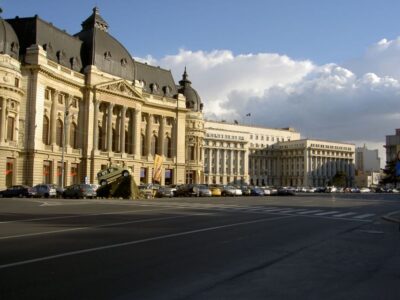
- Central University Library
- Plus churches, restaurants, cafes, inns, museums, casinos, state institutions, and statues
This matters for value. If you try to self-plan in a day, you often miss the connections between buildings and you end up seeing only what’s convenient on foot. With a guided route, the central area becomes a map you can understand, not just a string of stops.
Who this tour suits best (and who might want something else)
This is a strong choice if:
- You’re in Bucharest for the first time and want a fast introduction.
- You have limited time and still want to understand the country’s big historical shift.
- You prefer a guide who explains what you’re seeing, not just where to take photos.
- You’re traveling with family and want one plan that stays flexible.
It may be less ideal if:
- You want to spend long hours inside museums every stop.
- You’re looking for a slow, deep walking tour with lots of breaks and stops on your own pace.
- You’re specifically focused on one single topic, like purely communist history or purely architecture, rather than a mixed route.
The sweet spot is balance: you’ll get big-name sights plus a couple of very different lenses—Communist power and Romanian everyday tradition.
Guide quality: Nicolas’s humor makes heavy history easier
A major theme from one recent family tour was how guide Nicolas used humor without turning the subject silly. The comments highlighted that his stories and family-life context kept the group engaged while explaining the historic sites.
That’s worth taking seriously. Bucharest history can feel heavy fast—especially when you’re standing near symbols of repression and the aftermath. A guide who can keep the tone human makes a short 2-hour plan feel more manageable.
In that same review, Nicolas also suggested a tasty eclair shop as a snack stop he likes. That kind of local recommendation isn’t guaranteed on every tour, but it’s a good sign of how he thinks: making the history day also feel like a real outing. If you’re booking, it’s reasonable to ask whether there’s a quick snack option that fits your schedule.
Quick practical tips before you go
- Wear comfortable shoes and plan for city driving time between stops.
- Bring a camera, but also bring curiosity. The most memorable parts here are the explanations behind the buildings.
- If you have specific interests (Revolution details, village architecture, or Romanian unification themes), tell your guide early. The itinerary can be adjusted, and that helps the tour feel personal.
- If you’re traveling with kids, this tour can work well because it gives you clear structure: one huge regime symbol, then a contrast with daily-life culture, then the Revolution timeline.
Should you book this Bucharest City Tour?
Book it if you want the smart version of Bucharest in two hours: major landmarks, clear historical framing, and a private car that saves you from logistics stress. The included costs (taxes, tolls, parking, gas) make it feel more honest than tours that nickel-and-dime later.
I’d skip it only if you’re the kind of traveler who needs long, slow time in a single museum or you already have a detailed plan and want to DIY every stop. Otherwise, this is a practical first step that helps you understand what you’re seeing before you go deeper on your own.
FAQ
How long is the Bucharest City Tour?
It’s listed as approximately 2 hours.
Is this a private tour or shared group?
This is a private tour/activity, and only your group will participate.
What language is the guide?
The tour includes a private, licensed English-speaking guide/driver available throughout the tour.
What’s included in the price?
A private car for your group, the guide/driver, all car expenses (gasoline, parking, and road tolls), and all taxes.
Is food included?
No. Food and drinks are not included.
How does pickup work?
Pickup is offered. You need to share your pickup time and address.