REVIEW · BUCHAREST
3-Hour Guided Tour of Communist Bucharest
Book on GetYourGuide →Operated by Guided Stories · Bookable on GetYourGuide
Communist Bucharest changes how you see buildings. In just 3 hours, you get the story behind the concrete, the propaganda scale, and the people living through it. I especially like the way the tour frames Bucharest as a clash of two eras: the inter-war city that felt relatively calm, versus the communist makeover that came with pressure, erasure, and fear.
Two things I like most: you’ll learn the rise and fall of Ceaușescu through places you can actually stand in, and you’ll hear everyday-life details (not just dates) that make the whole period feel human. One thing to consider: it’s a walking tour with plenty of explanations on your feet, so bring comfortable shoes and plan for hot weather.
You start near a landmark that anchors the city center, then move through districts and monuments that show how different regimes left different “styles” on Bucharest’s streets. Guides like Cristina (mentioned repeatedly) use photos and personal family stories to help the timeline land, and you get at least one break for coffee—though drinks are on you.
In This Review
- Key takeaways before you go
- Two Bucharests in three hours: what this tour really helps you see
- Meeting near the Patriarchy bell tower: start where the city begins feeling central
- Ceaușescu’s Romania through architecture you can point at
- Nationalization and forced demolition: the hard part, told with context
- Palace of Parliament from outside: why it still lands without an interior visit
- Inter-war neighborhoods and Uranus remains: the city’s memory in fragments
- 1989 revolution sites: how the Iron Curtain falls in real geography
- Café break and small snacks: a quick reset for the mind
- Price and value: $29 for a 3-hour story you can walk through
- Who should book this tour (and who might want something else)
- Tips to get more from it: shoes, shade, and smart questions
- Should you book the Communist Bucharest 3-hour guided tour?
- FAQ
- How long is the Communist Bucharest guided tour?
- Where do I meet the guide?
- Is the tour in English?
- Does the tour include entry into the Palace of Parliament?
- Are drinks included during the café break?
- What should I bring?
- Is free cancellation available?
Key takeaways before you go
- Two Bucharests in one walk: inter-war urban fabric versus communist re-planning
- Ceaușescu and 1989 explained on the ground: the places make the story stick
- Architecture as evidence: how buildings signal power and control
- Real daily-life stories: not just leaders, but how people lived
- No Palace interior tour: you’ll see the impact, not the inside
- Short café break: included time to reset, with snacks provided
Two Bucharests in three hours: what this tour really helps you see
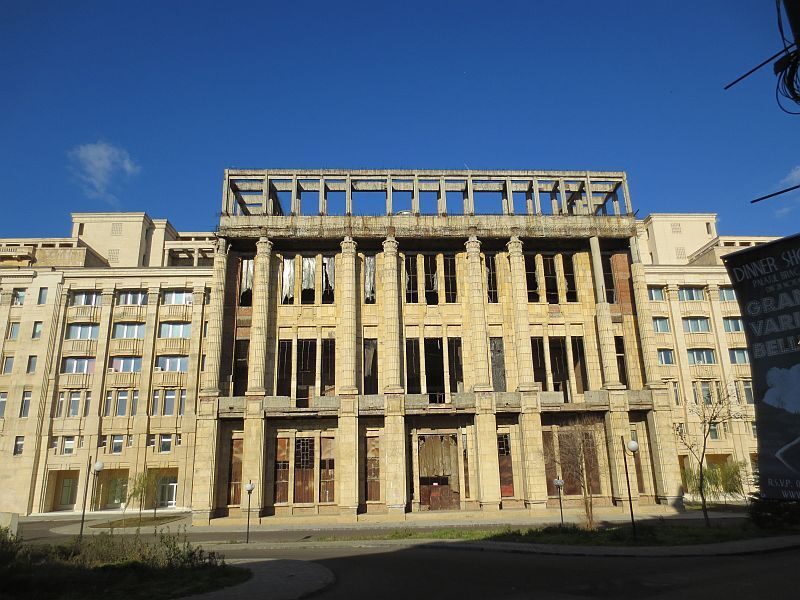
This isn’t a lecture and it isn’t a photo-op loop. The point is to help you read the city like a timeline.
You’ll start with the idea that Bucharest didn’t become communist by accident. The regime brought a new worldview—and it stamped that worldview onto space: what got built, what got demolished, and what got displayed. Then the tour tracks the collapse of that system, including the anti-communist revolution of 1989, using key political memorials and sites tied to the uprising.
What makes it work is the contrast. The tour repeatedly returns to how the city looked and felt before the communist shift—especially through inter-war neighborhoods that still show charming, more human-scale streets. Once you’ve seen those pockets, the communist-era landmarks don’t feel random. They feel intentional: big statements of authority, designed to be seen and to control.
You can also read our reviews of more guided tours in Bucharest

Meeting near the Patriarchy bell tower: start where the city begins feeling central
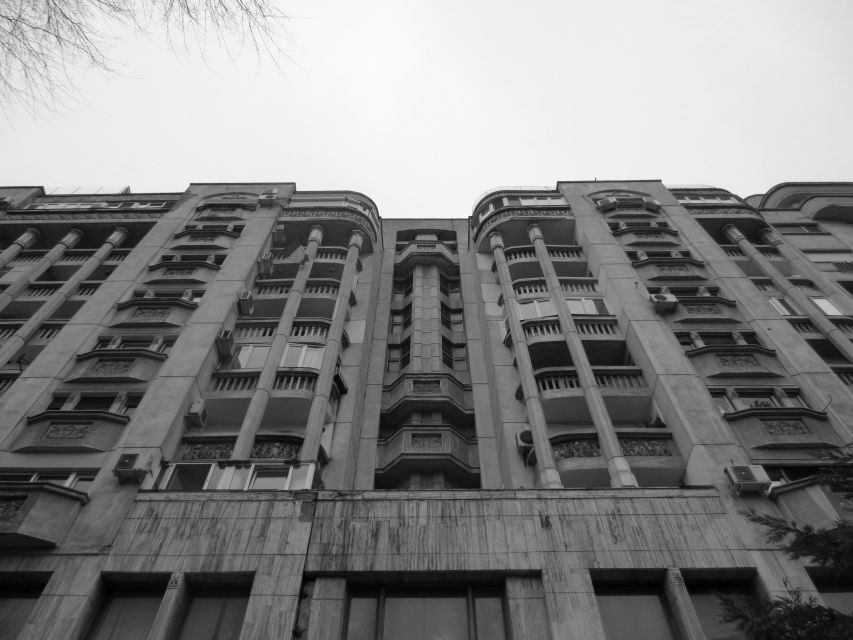
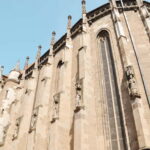
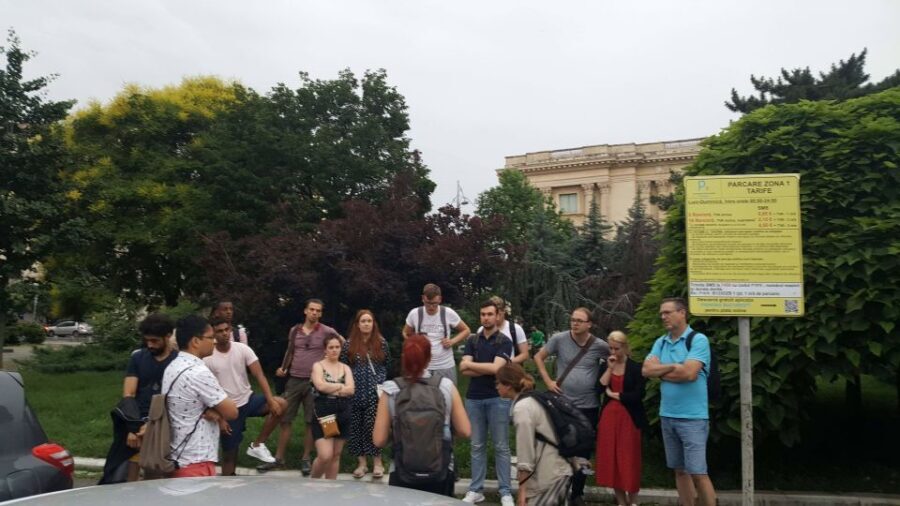
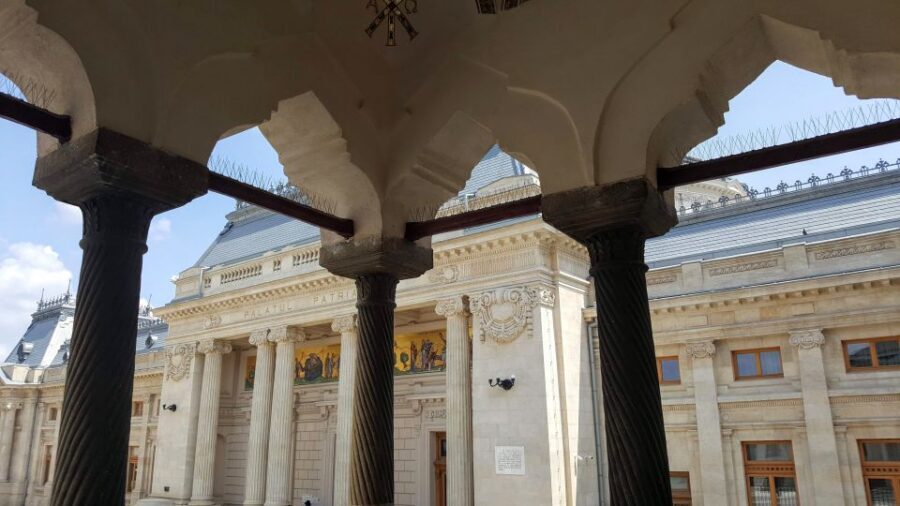
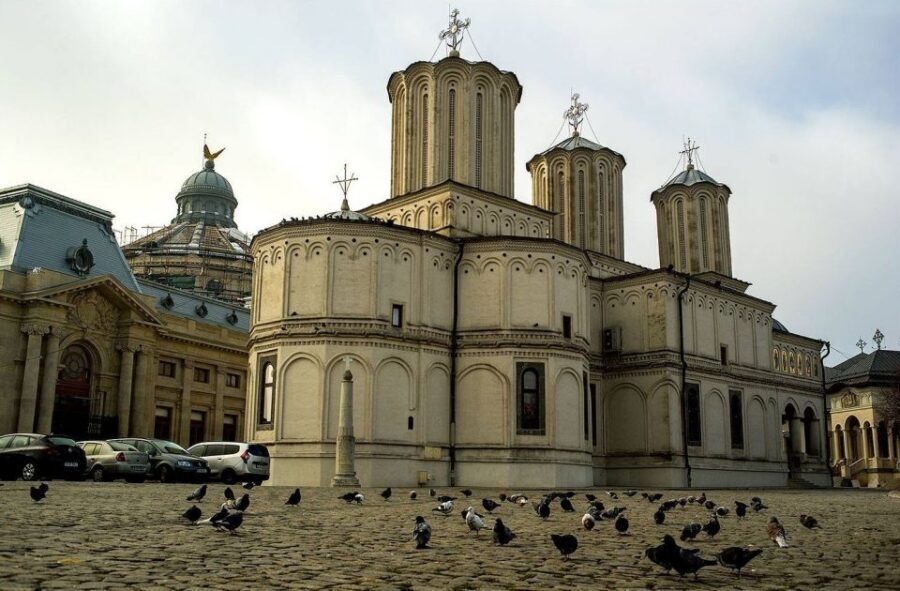
Your meeting point is near the red-brick bell tower of the Patriarchy, within walking distance from Piata Unirii (Aleea Dealul Mitropoliei 19). That location matters because it places you in the middle of Bucharest’s pedestrian reality. You’re not commuting across town to hit isolated sights. You’re walking in a way that lets the city’s layers talk to each other.
The tour is in English, and it runs about 3 hours. That timeframe is long enough to make sense of cause and effect, but short enough to keep you from burning the day on history-only mode.
Ceaușescu’s Romania through architecture you can point at
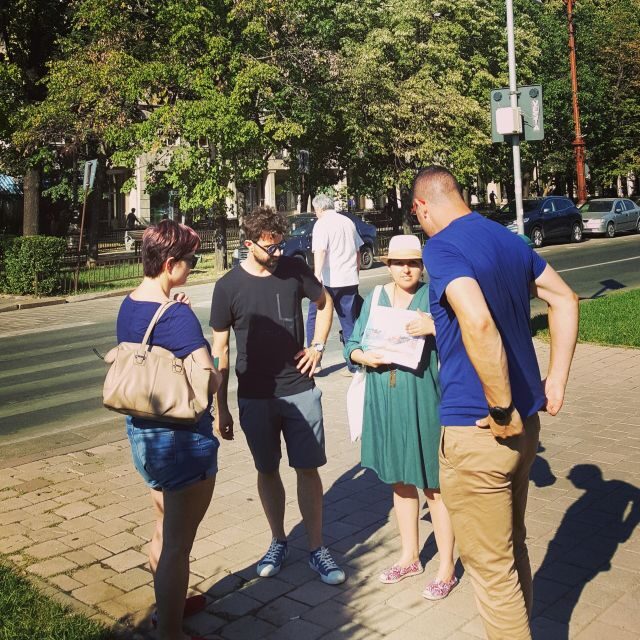
The communist period in Bucharest isn’t just a story of leaders. It’s a story of construction, scale, and control.
During the tour, you’ll see communist-era landmarks that reflect the regime’s distinctive architectural style. The guide helps you connect those buildings to what the system was trying to do: create an image of strength and permanence, while reshaping daily life around that message.
If you’re the type who normally skips architecture explanations, this is where it clicks. Instead of treating buildings as art objects, you learn what they were meant to communicate. Once you understand that, you’ll notice details on your own—how certain spaces feel designed for spectacle, how others look like they were built to organize people into the regime’s version of order.
Nationalization and forced demolition: the hard part, told with context
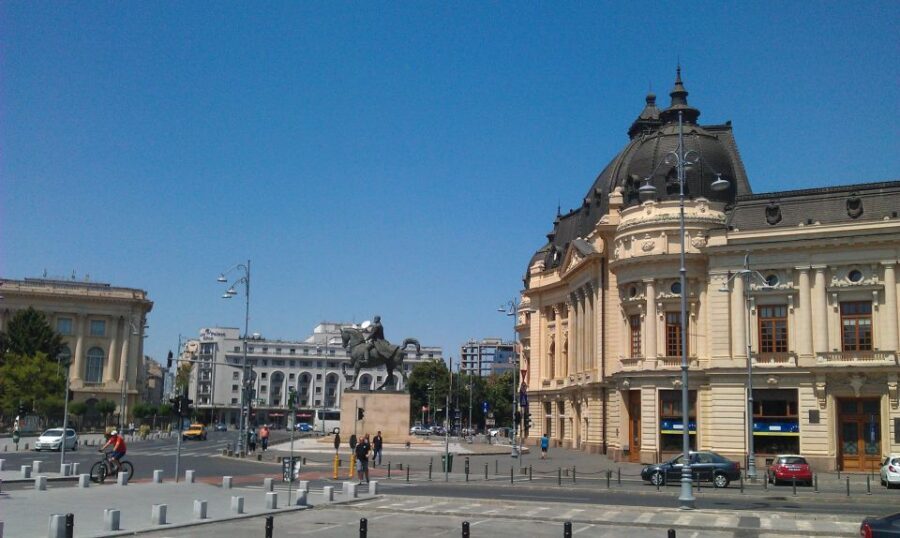
Communist power in Romania didn’t just happen in offices. It showed up at home—literally.
The tour covers the violent beginnings of the communist regime and the nationalization and forced demolition of homes. This is not the kind of history you process with just dates. It’s the kind that changes how you picture the city, because you start thinking about who lost where, and why entire neighborhoods could vanish under one political decision.
A big value here is tone. The tour’s framing keeps both extremes in view: the brutality of what the regime did, and the later pushback that culminated in 1989. You don’t end with one-note anger or one-note nostalgia. You end with a clearer picture of how political systems reach into ordinary life.
One practical note: since this section can be emotionally heavy, it helps to ask questions if something feels unclear. The guides running this tour are known for answering questions and pacing around the group’s needs.
Palace of Parliament from outside: why it still lands without an interior visit
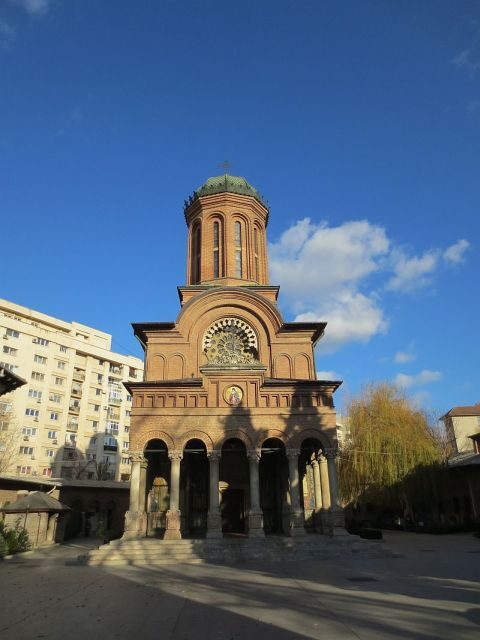
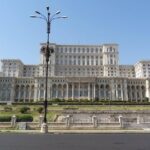
You’ll visit the Palace of Parliament, and you should treat it as more than a famous building. Think of it as a political object.
Even though entry inside the Palace isn’t included, seeing it on the outside is still powerful. It’s one of those structures that communicates the communist state’s ambition in a way words alone can’t. When your guide connects it to Ceaușescu’s family and the era’s political machinery, the scale stops being just “impressive.” It becomes legible as messaging—built to dominate the skyline and signal power.
If you were hoping for a full inside-the-Palace museum-style visit, plan extra time and separate tickets on your own. But for a 3-hour overview, not going inside keeps the tour moving and focused on the city story the walk is designed to tell.
You can also read our reviews of more tours and experiences in Bucharest



Inter-war neighborhoods and Uranus remains: the city’s memory in fragments
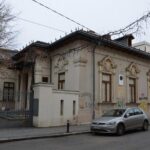
One of the most interesting parts of this tour is that it doesn’t only show the communist footprint. It also points out the lesser-known, charming inter-war neighborhoods that escaped communist urban re-modelling.
That matters because it prevents a common travel mistake: assuming a city only has one identity. Bucharest is layered. When you see surviving older areas, you’re better equipped to understand what changed—and what was intentionally overwritten.
You’ll also see the remains of the Uranus neighborhood. The value of this stop isn’t just the location. It’s what it represents: the physical evidence of decisions made by the state, and the way those decisions can survive long after the original people are gone.
This part tends to stick with you because it feels less like a monument and more like evidence—scraps of a place that once had a life, now lingering as proof.
1989 revolution sites: how the Iron Curtain falls in real geography
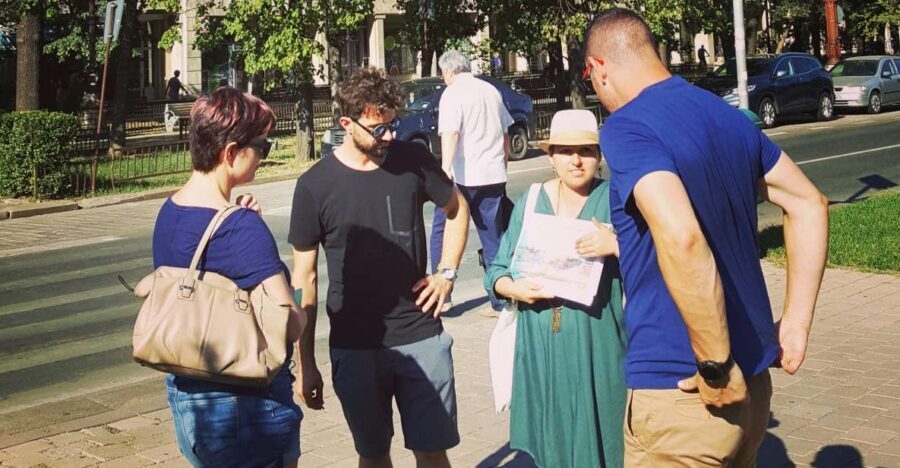
The tour includes political memorials and sites that played a key role in the 1989 revolution. This is where the story moves from “how the system worked” to “how it broke.”
Hearing about the fall of the Iron Curtain while standing in the places connected to the revolution is one of those experiences where history shifts from abstract to immediate. You begin to understand why these sites matter: not because they’re staged, but because they’re part of what people saw, feared, and fought over.
The guides often connect this to the Ceausescu family and the anti-communist revolution’s violent turning points. The overall effect is sobering, but not confusing. The timeline is built to help you follow how pressure grew, how violence erupted, and how the political world flipped fast.
Café break and small snacks: a quick reset for the mind
The tour includes a short break at a café. Small snacks are included, but drinks and additional snacks at the café are at your own expense.
This break is practical. Even in a “history walk,” you’re absorbing intense material. A few minutes sitting—especially if you’ve been standing while the guide talks—makes the difference between remembering details and just feeling wiped out.
One tip from past visitors: on sunny or hot days, bring water with you. There’s a café stop, but having some from the start helps you stay comfortable and focused.
Price and value: $29 for a 3-hour story you can walk through
At $29 per person for 3 hours, the tour is priced for a serious overview without turning into a long, expensive day. The value comes from two things.
First, you get a guide for the full walk. For this topic—where context changes everything—having a live explanation is the difference between seeing buildings and understanding them.
Second, the tour bundles key themes: Ceaușescu’s rise, communist architectural impact, daily-life stories, the 1989 revolution, and the inter-war remnants that survived. That’s a lot to compress into one outing, and it’s exactly why a guided format makes financial sense here.
If you only have a limited amount of time in Bucharest, this tour is a strong way to get your bearings fast—then you can choose what to follow up on later.
Who should book this tour (and who might want something else)
I think this fits best if you:
- want a structured introduction to communist Bucharest that doesn’t feel like a textbook
- care about how politics shows up in architecture and neighborhoods
- like questions and discussion, not just silent listening
- want the 1989 revolution story anchored in real sites, not just in a museum label
It may not be perfect if you:
- hate walking or prefer very short stops
- want a heavy museum interior day (since the Palace interior isn’t part of this tour)
Tips to get more from it: shoes, shade, and smart questions
Here’s how to make the most of your 3 hours:
- Wear comfortable shoes. This is a walk through multiple areas, and you’ll want your feet to agree with you.
- Bring water on warm days. Some explanations include standing time, and comfort affects attention.
- Ask for clarification when dates or names start to blend. Good guides will sort it out in plain language.
- If you’re curious about daily life, steer questions that way. The tour is built to include stories about how people lived under communism, and that personal detail is often what makes the history feel real.
From what I’ve gathered, guides on this tour frequently use photos and personal family anecdotes to connect big events to lived experience. So if your brain loves cause-and-effect, you’re in the right place.
Should you book the Communist Bucharest 3-hour guided tour?
Book it if you want the clearest possible overview of communist Bucharest in a short time—and you’d rather understand the city by walking than by reading.
Skip it (or consider pairing it with other options) if you’re looking for only one focus, like a full interior museum day or a very light, non-political stroll. This tour leans into real history, including violence and forced demolition. It’s not a fluffy sightseeing route.
My bottom line: for $29 and 3 hours, this is a high-value way to learn how Bucharest was shaped by communist power—and how that story ends with 1989 in the streets.
FAQ
How long is the Communist Bucharest guided tour?
It lasts 3 hours.
Where do I meet the guide?
Meet near the red-brick bell tower of the Patriarchy, Aleea Dealul Mitropoliei 19, București 030167, Romania (within walking distance from Piata Unirii).
Is the tour in English?
Yes, the tour is in English.
Does the tour include entry into the Palace of Parliament?
No. You’ll see the Palace, but visit inside the Palace of the Parliament is not included.
Are drinks included during the café break?
Drinks and any extra snacks at the café are not included. Small snacks are included with the tour.
What should I bring?
Bring comfortable shoes. On warm days, it’s smart to bring water as well.
Is free cancellation available?
Yes. You can cancel up to 24 hours in advance for a full refund.