Bucharest gets weird—in a good way—here. This small-group route links big, dramatic landmarks with everyday neighborhood details, from Bellu Cemetery to a hidden passage into an old mahalla. I like that it keeps moving (no long museum standstills), but still gives context for what you’re looking at. The main catch: you’ll do real walking with a moderate fitness level, plus stairs and hills.
What makes the day work is the host style. On tours like this, guides such as Mircea (often mentioned for humor and city passion) explain the contradictions of Bucharest without turning it into a lecture. You’ll also get built-in food breaks—think a street snack, coffee or tea, bottled water, and even a beer—so you’re not hunting for refreshments while the group is moving. My one drawback to note: if you only want classic postcard sights, this route spends more time with side streets, older layers of the city, and places that feel better when you’re curious.
In This Review
- Key things I’d highlight before you go
- A 4-hour Mahallopolis route built for curiosity, not crowds
- Meeting at Piața Sfântul Anton, then using the subway like locals
- Bellu Cemetery: Bucharest’s open-air stories and the best views in town
- The park stop: a local pause before the next time-travel moment
- The oldest train station: a milestone you can feel in your feet
- Near the former KGB headquarters: seeing the hard edges of Bucharest
- The old factory turned cultural hub: included snacks, beer, and quirky finds
- Mahallopolis and the hidden mahalla passage: neighborhood history you can walk
- Price and value: is $137.57 worth a 4-hour small-group day?
- Who this tour fits best (and who should think twice)
- Before you go: small planning notes that make the day easier
- Should you book Mahallopolis?
- FAQ
- How long is the Mahallopolis tour?
- Where does the tour start and end?
- What’s included in the price?
- Is this a small group tour?
- Is there a lot of walking?
- What weather conditions does the tour require?
Key things I’d highlight before you go
- Bellu Cemetery as an open-air museum with panoramic views and a spooky-calm atmosphere
- Secret stairs and rolling hills for high points in town and good photo angles
- A local-food stop with included snacks and beer, not an afterthought
- Old rail history and nearby KGB context that makes Bucharest’s 20th-century story easier to read
- A mahalla-area passage that turns the idea of neighborhood history into something you can actually walk through
A 4-hour Mahallopolis route built for curiosity, not crowds
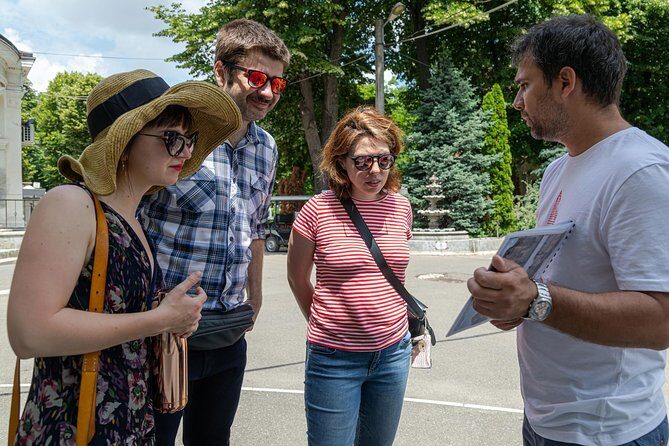
This is a half-day tour designed for people who like their sightseeing with texture. Bucharest can look formal and grand from afar, then suddenly slip into back-alley life when you turn a corner. That’s the whole idea here: you’re not just collecting monuments. You’re learning how the city’s layers fit together—cemetery to station, park to cultural hub, surveillance-era walls to neighborhood passages.
The group size matters. With a maximum of 10 travelers, you can hear the guide, ask questions, and move at a pace that doesn’t feel like a race. It also means the stops stay human-scale. You’ll spend time where locals actually hang around, rather than only where tour buses unload.
Timing also shapes the day. Starting around 11:00am, you get decent daytime light for photos and views, and you’re finished before dinner turns into a full marathon. And because the day includes a subway ride and then walking, you’re covering more ground than a pure walking tour—without the stress of figuring it all out solo.
You can also read our reviews of more tours and experiences in Bucharest.


Meeting at Piața Sfântul Anton, then using the subway like locals
You meet at piața Sfântul Anton (Google Maps friendly), and you start the route by heading out via public transit. That one choice makes a difference in real life. You avoid the worst of slow city traffic, and you also get oriented early—so Bucharest stops feeling like a mystery map.
The tour includes a one-way subway fare, and the route ends near Piața Unirii. Practically, this means you’re not stuck far away at the end with no easy plan. You’ll likely need to use your own feet and/or connect onward, but the big transfer piece is handled for you.
One more small point that affects your comfort: the tour is listed for moderate physical fitness. Translation: plan for stairs, hills, and uneven walking surfaces. If you’re the kind of traveler who sweats through your sneakers, bring shoes you trust. If you’re okay taking breaks and walking at a steady pace, you’ll be fine.
Bellu Cemetery: Bucharest’s open-air stories and the best views in town
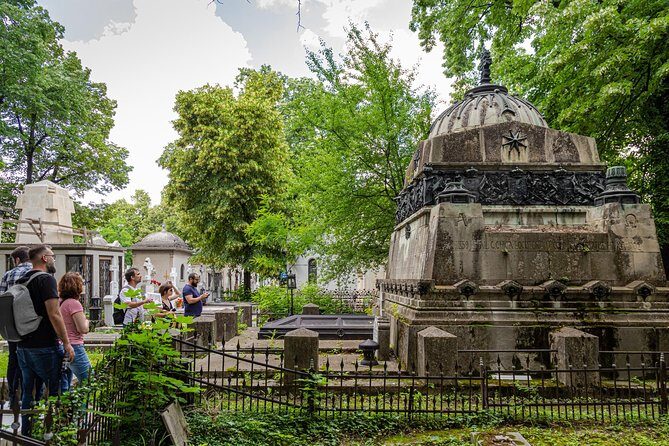
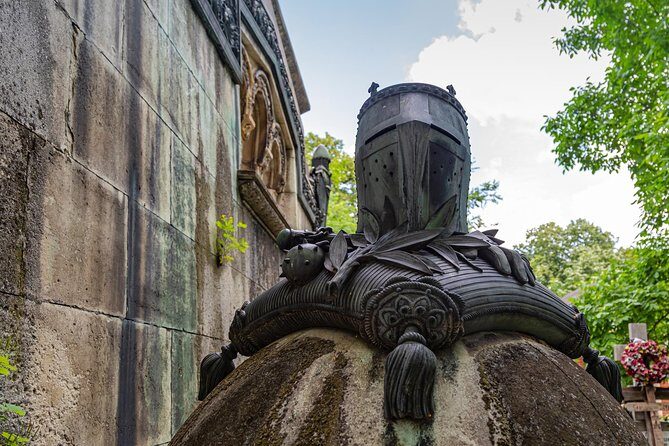
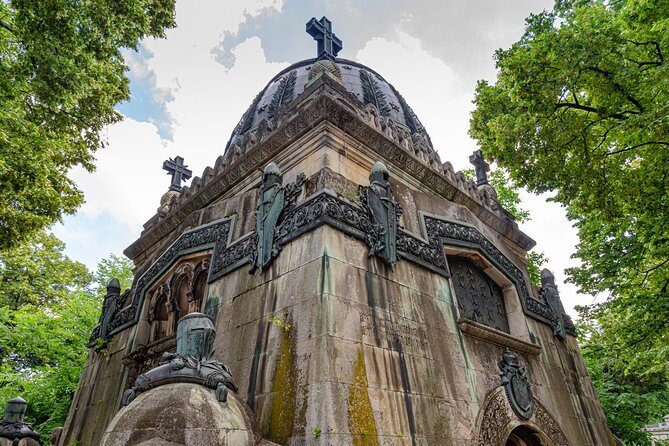
This is the anchor of the whole experience. Bellu Cemetery is described as the oldest, biggest, and most beautiful cemetery in Eastern Europe, and you can feel that scale when you’re there. It works like an open-air museum, with tombs, monuments, and the kind of atmosphere that makes you look up instead of down.
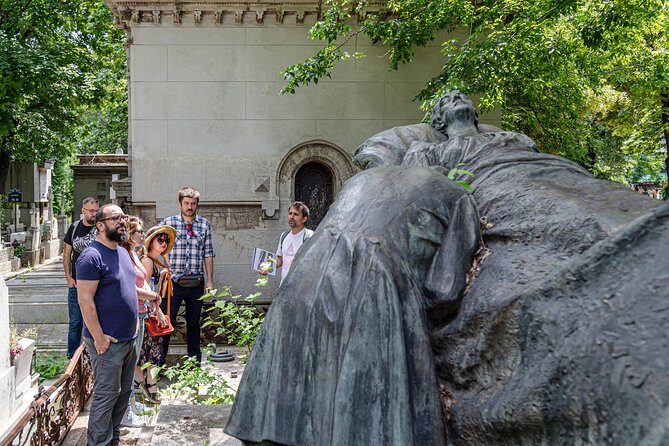
But it’s not only about the architecture. The cemetery is also where you learn how Bucharest thinks about memory—through symbolism, status, mourning, and art. A good guide makes the difference here, because cemeteries can feel like just stone from the outside. On this route, the stories help you see why certain monuments matter and how the cemetery became part of the city’s identity.
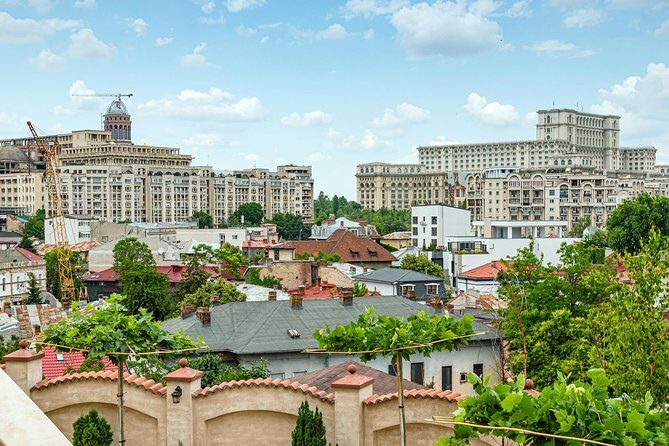
Then comes the view factor. You’ll be walking through areas that are said to sit at the highest altitude in town, with rolling hills and what the tour describes as secret stairs. In plain terms: you get viewpoints that aren’t just “from the street.” It’s the kind of shot where the city feels layered, not flat.
Potential drawback? The cemetery setting can be emotionally heavy for some people. If you’re sensitive about death-related spaces, go in with the right mindset. On the flip side, if you like history with atmosphere, Bellu is exactly the kind of place that stays with you.
The park stop: a local pause before the next time-travel moment
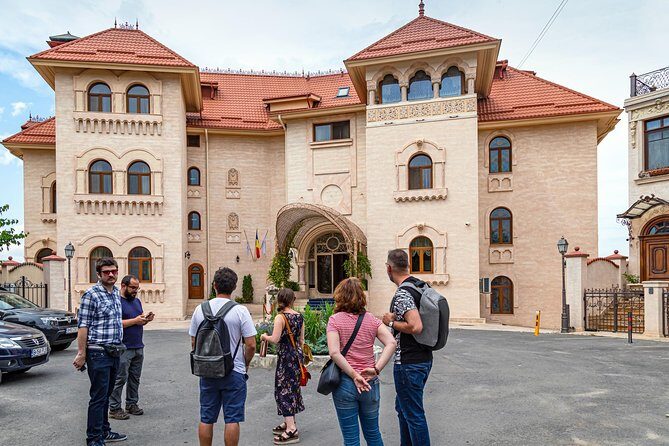
Between the heavier stops, you’ll get a lively park that’s little-known to tourists but cherished by locals. This is more than a reset. It gives you a break from big-ticket sights while still keeping you in the city’s living rhythm.
Think of it as your reset button: shade if the weather is kind, a place to stretch your legs, and a moment to watch everyday Bucharest instead of only the “heritage” version. It also matters for pacing. Half-day tours often burn people out. This one tries to keep the emotional temperature balanced.
You’ll also get to refuel here as part of the included food-and-drink setup. That means you’re not stuck searching for a cafe while the group is moving to the next spot.
The oldest train station: a milestone you can feel in your feet
Next you head into Romania’s rail legacy at the oldest train station in Romania. Stations are perfect for understanding a city because they sit at the intersection of movement and identity. They’re practical, but also symbolic: where people arrive, where people leave, and what the city decides is worth building with care.
Even if you’re not a train fanatic, you’ll probably notice the vibe. The surrounding streets, the scale, and the architecture all do work in telling the story of a modernizing country. And because you’re still on foot through the city, you’re connecting it to what you saw earlier—cemetery views, park life, then station history—like chapters in one book.
For photos, keep your expectations flexible. You might not always get a clean postcard angle, depending on street activity and sightlines. Still, this is one of those stops where slow walking helps. Look back at the station from the edges, not only straight on.





Near the former KGB headquarters: seeing the hard edges of Bucharest
The tour also checks out the former KGB headquarters nearby, which puts 20th-century power and surveillance right into your walking route. This is where Bucharest’s “beautiful contradictions” really show up: pretty facades with complicated pasts right behind them.
A strong guide helps you place what you’re seeing into context—how Cold War structures shaped daily life and public spaces. You don’t need a full political lecture to get the point. You just need the human map: where power was located, what it meant, and how it lingers in the city’s layout.
If you prefer history that’s grounded in geography rather than dates, this stop is for you. It also pairs well with the earlier cemetery storytelling. Both are about people’s lives under bigger systems—one through memory, one through control.
The old factory turned cultural hub: included snacks, beer, and quirky finds
You’ll take a break at an old factory turned into a cultural hub, a smart move in the middle of a walking route. Factories tend to be industrial by design, but once they’re reused, you get a space that’s equal parts practical and creative.
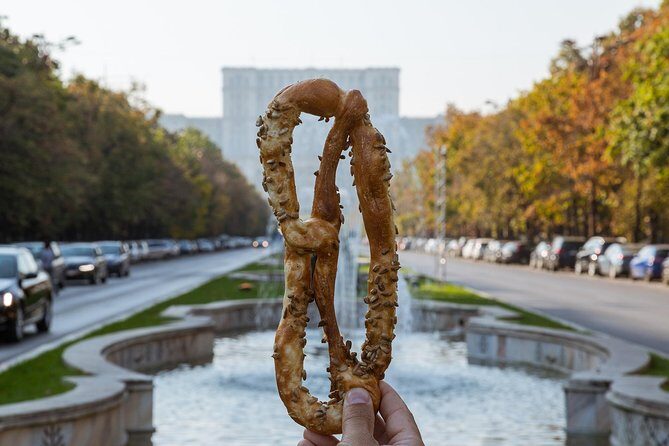
This stop is where the included food actually earns its keep. You’ll get a street snack—either covrig or cheese pie—plus coffee and/or tea, bottled water, and one 400ml beer. That lineup hits the essentials: something salty, something warm or caffeinated, hydration, and a chilled breather.
Why I like this for your trip: it prevents the most common half-day-tour problem—people go hungry or spend extra time buying snacks near transit points. Here, you’re built-in. You can actually enjoy the place you’re standing in.
Also, this cultural hub is described as a spot for quirky souvenirs and refreshment-style shopping. Just remember that souvenirs aren’t included, so keep a little cash or card space in your budget if you like to bring home small artifacts.
Mahallopolis and the hidden mahalla passage: neighborhood history you can walk
The final beat is the most “make it real” part of the tour: a secret passage to an old mahalla. A mahalla is an old-style neighborhood term associated with community life, local identity, and the way people lived close together.
This is the kind of stop that turns abstract ideas into movement. Instead of hearing about neighborhoods in theory, you’re literally going through a passage that signals how layered the city is. It’s also a reminder that Bucharest wasn’t only shaped by grand institutions. Daily life—shops, courtyards, community routes—also mattered.
If you like photo opportunities, this part usually delivers because passages and old neighborhood layouts create natural “frames” for pictures. But the real value is understanding the city as a set of living rooms and routes, not just a checklist of famous buildings.
One practical tip: bring your attention for the details. If a guide is pointing out how the passage connects to the street pattern, that’s where you’ll get the most out of the story.
Price and value: is $137.57 worth a 4-hour small-group day?
At $137.57 per person, this isn’t a bargain-basement walking tour. But it also isn’t overpriced for what you get on a practical level.
Here’s the value math that matters:
- Small group (up to 10): you’re paying partly for a guide-focused experience, not a headcount exercise.
- Food and drink included: covrig or cheese pie, coffee/tea, bottled water, and a 400ml beer. That’s real money saved, especially in a city where snacks add up quickly.
- Public transit included: you get a one-way subway fare, helping you cover distance without turning the day into logistics.
- Route variety: cemetery + park + station + KGB-area context + cultural hub + mahalla passage. You’re not paying for one attraction. You’re paying for a connected story with multiple “modes” of Bucharest.
The main reason this price can feel fair is that the tour is set up to reduce your decision fatigue. You don’t have to plan refreshment stops, interpret unfamiliar places, or figure out transit during your best sightseeing hours.
If your budget is tight, the price might sting. In that case, compare it to what you’d spend on a guide plus paid admissions plus food plus transit. If you’d rather spend that money on a slower, independent day, you can. But if you want a guided off-the-beaten-path route that actually feeds you, this one has a clear edge.
Who this tour fits best (and who should think twice)
This works best for:
- You if you like off-the-beaten-path Bucharest—places locals value and routes that don’t feel like a copy-paste checklist.
- You if you enjoy history when it’s tied to locations you can walk through, not only read about.
- You if you want a small group with a guide who brings humor and real city passion (people like Mircea often lead these kinds of experiences).
It might be less ideal if:
- You hate stairs or rougher walking surfaces. The tour is labeled for moderate physical fitness, and the cemetery route includes hills and stairs.
- You want only major, high-recognition landmarks. This day mixes famous anchors with less-touristy spaces, and the meaning is in the contrast.
One more practical note: the tour uses a mobile ticket, and it’s near public transportation. That’s helpful if you’re bouncing between neighborhoods during your stay.
Before you go: small planning notes that make the day easier
This experience is said to require good weather. If conditions are poor, it may be rescheduled or refunded and offered again on another date, so keep an eye on forecasts if you’re booking close to your trip window.
Also, since you’ll be walking and possibly climbing stairs, wear comfortable shoes you can handle for a few hours. Bring a light layer too—weather at 11:00am can change as the day warms up.
Finally, since snacks and drinks are included, you can travel lighter with fewer purchases. That said, if you like souvenirs, bring a bit of extra budget for the cultural hub stop.
Should you book Mahallopolis?
I’d book it if you want Bucharest to feel personal and slightly mysterious. The combination of Bellu Cemetery, local park time, rail-era architecture, KGB-area context, an old factory cultural break, and a mahalla passage gives you a whole city picture in one half day.
Skip it if you’re traveling with very limited mobility needs or you only want the most famous monuments. Also skip if you’re not into atmosphere-heavy places like cemeteries. This tour doesn’t treat death-related sites like a quick photo stop. It treats them like a story.
If you do book, go in curious. Bring comfy shoes. And don’t rush the viewpoints—the highest-altitude views and secret stair angles are often the moments that turn the day into something you remember.
FAQ
How long is the Mahallopolis tour?
The tour lasts about 4 hours.
Where does the tour start and end?
It starts at piața Sfântul Anton, București and ends at Piața Unirii, București.
What’s included in the price?
The tour includes one street snack (covrig or cheese pie), one 400ml beer, coffee and/or tea, bottled water, and a one-way subway fare.
Is this a small group tour?
Yes. It runs with a maximum of 10 travelers.
Is there a lot of walking?
Yes. It’s recommended for people with moderate physical fitness, since the route includes walking and stairs.
What weather conditions does the tour require?
The experience requires good weather. If it’s canceled due to poor weather, you’ll be offered a different date or a full refund.