REVIEW · BUCHAREST
Communist Era Bucharest Tour
Book on Viator →Operated by Claires Bucharest Guided Tours · Bookable on Viator
Bucharest tells its communist story on foot. This private Communist-era Bucharest tour turns big landmarks into small, understandable moments, with a guide explaining what it felt like to live in the Eastern Bloc and how the city changed after 1989. You’ll hit Revolution Square, see key buildings tied to Nicolae Ceaușescu’s era, and get plenty of time to ask questions.
I really like the setup: it’s private for your group, so the pace feels human and you can steer toward what you care about. I also like that the route mixes symbolism (monuments, party sites, memorials) with day-to-day signals like banks, government-facing streets, and university life around the University Square area.
One thing to consider: if you want a strictly one-sided, always-dark-only presentation, this tour may feel more nuanced than you expect. One review specifically questioned the historical framing, and another noted the overall impression was less negative than what they’d heard on other tours—so choose this with an open mind.
In This Review
- Key things that make this tour worth your time
- Price and logistics that actually matter
- Starting at Manuc’s Inn: a good base for a city-walk
- Piata Unirii: where city planning becomes a visible stage
- Bulevardul Unirii: the Socialist Victory-to-Seasons transformation
- Casa Poporului (Parliament Palace) area: the weight of power
- Victoria Avenue, CEC Bank, and the meaning of official buildings
- University Square and the InterContinental Hotel’s 1971 story
- The National Theatre area: cultural life under changing regimes
- Revolution Square: where 1989 turns into specific places
- Iuliu Maniu statue and the Memorial of Rebirth: the aftermath made visible
- What I’d take away from the best-guided versions of this tour
- Who this tour fits best (and who might skip it)
- Should you book this Communist-era Bucharest tour?
- FAQ
- How long is the Communist Era Bucharest Tour?
- How much does the tour cost?
- Is this a private tour?
- Where do we meet and where does the tour end?
- What language is the tour offered in?
- Are there admission tickets included?
- What should I wear or prepare for?
- Is free cancellation available?
Key things that make this tour worth your time
- Private group pacing with time to talk, not just move
- Revolution Square photo stops, including Ceaușescu’s final-speech balcony area
- Casa Poporului (Parliament Palace) scale, explained in plain terms
- Everyday architecture stops, including banks and the university district
- Morning or afternoon options, so you can fit it into your Bucharest rhythm
- Many stops are free to view, including Piata Unirii and Revolution Square
Price and logistics that actually matter
At $30.72 per person for about 3 hours, this lands in the sweet spot where you’re paying for guide time, not museum tickets and long transfers. The tour is offered in English, includes a mobile ticket, and you can typically choose a morning or afternoon slot.
The logistics are built around easy access. You can meet at the central Manuc’s Inn (Hanul lui Manuc), Str. Franceză 62, near the Old Centre, and you may also get pickup at your centrally located hotel. It ends back at the meeting point, which keeps the walk practical if you’re juggling a tight itinerary.
One small planning tip from the pattern of bookings: the tour is often reserved around a month in advance, so I’d avoid waiting until the last minute—especially if you want a specific morning or afternoon.
You can also read our reviews of more tours and experiences in Bucharest.
Starting at Manuc’s Inn: a good base for a city-walk
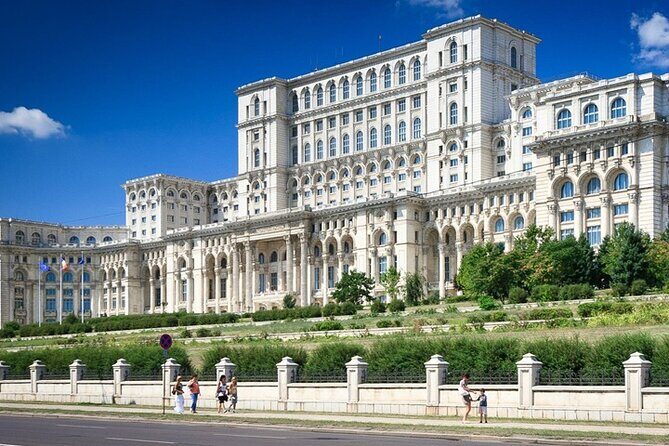
You begin outside the main entrance of Manuc’s Inn in the Old Centre. That matters because this part of Bucharest is walkable, and it puts you close to the streets and squares that the story connects to. When a tour starts in a fixed, central spot, you spend less time figuring out logistics and more time noticing details.
This is a private tour, so it’s only your group, not a mixed crowd. That tends to make Q&A easier, and it also helps if you have specific interests—like government buildings, everyday life signals, or the 1989 uprising sites.
The route includes several walking segments, so comfortable shoes are a real must. The tour also flags moderate physical fitness as the target, which is fair for a 3-hour city walk that moves between squares and avenues. If you use public transit, you’re also in a decent spot, since the tour notes it’s near public transportation. Service animals are allowed too.
Piata Unirii: where city planning becomes a visible stage
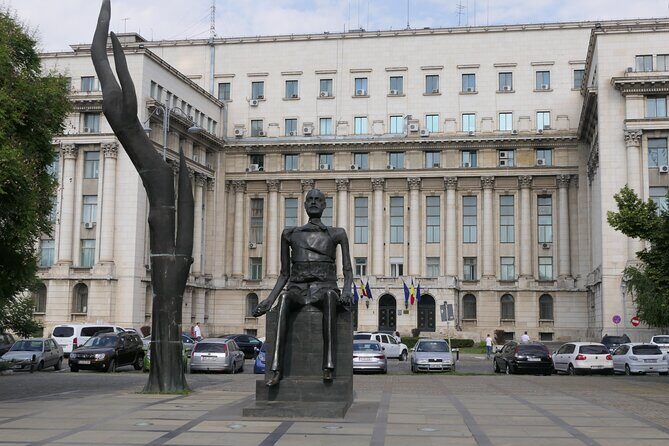
Your first big stop is Piata Unirii, described as the heart of Bucharest and tied to Communist-era modernization. What’s interesting here is that the square isn’t just a monument or a dead symbol. It’s been regenerated into a modern, active city centre—and you get the chance to see Unirii fountains in the mix.
Even if you’re not a fountain person, this works as a “set the frame” moment. Communist planning in many Eastern Bloc cities used grand public spaces to project control and progress. Here, you can compare the original intent (visible in the square’s character and layout) with the current reality—more people, more daily life, and a show element that feels designed for today.
The practical bonus: this stop is marked as free admission, so you’re not waiting on ticket lines. You’re there to look, listen, and connect the story to the surroundings.
Bulevardul Unirii: the Socialist Victory-to-Seasons transformation
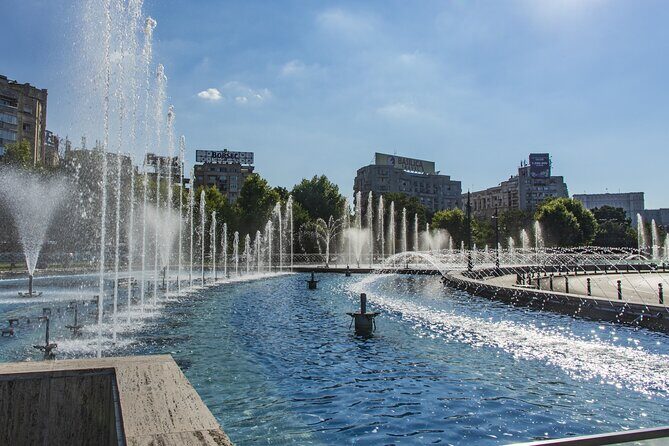
A short walk brings you to Bulevardul Unirii, the former Boulevard of Socialist Victory—often called the Champs-Élysées of Bucharest in spirit and scale. But the “you have to see it to get it” detail is the 17 artesian fountains, decorated to represent the four seasons.
That’s a clever kind of propaganda to understand: even when the political message changes, the built environment can carry layers of symbolism for decades. A street like this can look simply scenic if you don’t have context. With the guide’s explanation, you start seeing it as a message system—beauty used to make an ideology feel normal.
The good part for your schedule: this is a shorter stop (about 5 minutes), and it’s free to experience. So you can quickly absorb a lot without losing momentum.
Casa Poporului (Parliament Palace) area: the weight of power
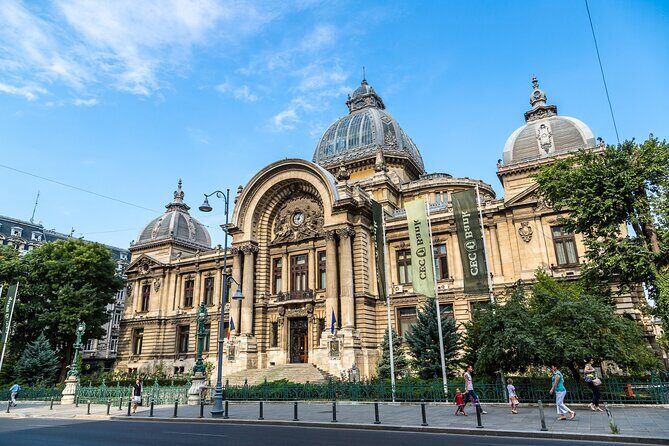
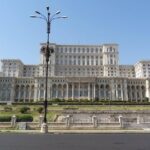
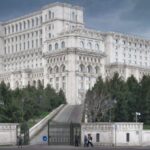
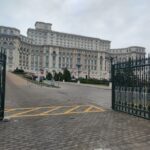
Then you move into one of Bucharest’s most dramatic visuals: Nicolae Ceaușescu’s massive Parliament Palace, also called Casa Poporului. Even people who think they’ve seen it in photos often don’t grasp scale until they’re standing near it.
The value of this stop is not just architecture. It’s what the palace represented in the Communist period: the idea of a ruling power built on monumental scale, using stone and space to say who mattered. The tour frames it with the story of why the building is infamous and how it sits in the centre of Bucharest like a permanent imprint.
There’s also a “walk-and-think” advantage here. You’re in the outdoor space around it, not stuck in a rigid museum sequence. That makes it easier to connect what you see with the political context the guide gives.
If you’re the kind of traveler who likes big European capitals but wants a sharper angle than postcard sightseeing, this is the moment where the tour’s theme becomes real.
Victoria Avenue, CEC Bank, and the meaning of official buildings
After the palace area, the tour shifts toward what many people miss: government-adjacent everyday spaces. You’ll take a walk along part of Victoria Avenue, with shops lining the street, and you’ll learn what this area would have meant during the Communist era.
This matters because Communist systems weren’t only about parades and speeches. They were also about where people went to handle money, education, and daily services. Streets like Victoria Avenue act like a bridge between politics and routines.
Then you’ll look at the CEC Bank, described as the bank of the people during the Communist years. Even if you don’t go inside, the stop is about symbolism and function—how institutions were framed as serving ordinary citizens while the broader political system controlled life.
You’ll also see the grandeur of Romania’s National Bank area and hear about its history. That gives you a fuller picture: a country can modernize and change regimes, but it still carries the architectural and institutional fingerprints of earlier decades.
This part of the tour is a good match if you like history that isn’t only about rulers. It’s history as infrastructure.
University Square and the InterContinental Hotel’s 1971 story
One of the most practical stops comes next: University Square. Here you’ll see the oldest and largest university in Bucharest and get context about the education landscape.
The tour also connects the area to the InterContinental Hotel Bucharest, noting it was completed and opened in 1971. That year detail is useful because it anchors the era in a specific timeline—so you can place the building boom and the state’s modernity message into a real historical moment.
If you’ve ever wondered why cities feel different depending on which decades shaped them, this stop gives you a clue. Large public institutions and major hotels often reflect what a government wants the outside world (and its own citizens) to believe.
This is one reason I like this tour’s pacing: it doesn’t stay trapped in “sad past only.” It shows how the Communist state tried to project normal life, progress, and international-style grandeur in visible ways.
The National Theatre area: cultural life under changing regimes
As you pass the National Theatre of Bucharest, you’ll hear how it became an iconic building and how its design changed over time.
A theatre isn’t just a pretty facade. In Communist systems, culture could be heavily guided—yet it could also be a place where people felt community and identity. Even without going inside, learning how the theatre changed gives you a sense of how regimes shaped public culture.
I like that this stop is light on ticket logistics and heavy on context. It’s also a nice reset between the heavier Revolution Square sites and the memorials later on.
Revolution Square: where 1989 turns into specific places
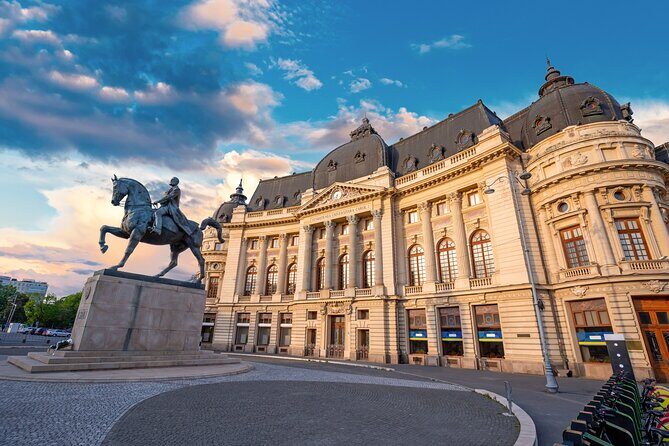
Now we get to the spine of the tour: Piata Revolukiei (Revolution Square). This area is tied to the famous Revolution of 1989, and you’ll see memorials built to commemorate what happened.
What makes this stop especially strong is the level of specificity you’re given outdoors. The tour includes:
- Ceaușescu’s balcony area from the final speech moment
- the former headquarters of the Communist party
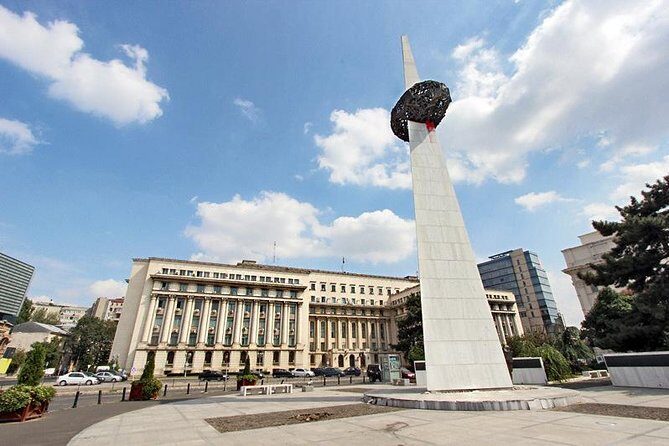
- the Monument of National Rebirth
- King Carol I’s equestrian statue
- the University library area, plus more
You also get excellent photo opportunities, and that’s not just a bonus. When you can point to the exact space where major decisions played out, the story sticks much better than if it stays abstract.
This is the stop where the guide’s delivery really matters. Reviews consistently praise guides for explaining the context clearly and encouraging questions. Even if you only take in part of the political story, Revolution Square makes it feel real.
The other practical win: this stop is marked as free admission, so you can spend your time looking instead of organizing entry.
Iuliu Maniu statue and the Memorial of Rebirth: the aftermath made visible
After Revolution Square, the tour continues with two memorial-focused viewpoints that help you understand what followed in 1989.
First is the Iuliu Maniu Statue, tied to the story of a three-time prime minister and his struggles in the early years of Communism. This shift is helpful because it broadens your view beyond one dramatic week in 1989. It reminds you that the Communist period didn’t begin or end on a single date—it was a longer set of power battles.
Next comes the Memorial of Rebirth, a 25-meter high memorial that commemorates struggles and victims of the Romanian Revolution during Christmas 1989. It’s described with free admission and a short stop time, which makes it easy to include without dragging your day.
And then you’ll also visit a historic garden-and-building stop described as built for the people by the people over 100 years ago. That kind of detail matters because Romania’s story here isn’t only Communist-era. It’s also what came before, and what survived.
If your brain likes patterns, these last stops are where you can connect the before/after: power built to control, power challenged, and then power memorialized.
What I’d take away from the best-guided versions of this tour
From the strongest parts of the experience described, the tour’s biggest asset is the guide’s style: animated, context-heavy, and willing to explain how life felt, not just what happened.
You’ll also benefit if you’re curious enough to ask follow-up questions. Multiple guides in the program are described as taking personal stories into account—some even sharing how they experienced Communist-era life growing up. That can make the history feel less like a lecture and more like a conversation on the street.
At the same time, one critical note in the feedback is that the presentation may feel less negative than other tours—or that a viewer disagreed with parts of the historical framing. I’d treat this as a reminder: history in politics is rarely clean. If you want a single emotional tone, you might prefer a tour that leans harder in one direction.
Who this tour fits best (and who might skip it)
This Communist-era Bucharest tour is a great fit if you:
- want a walking introduction to major Communist-era landmarks without long indoor time
- care about the 1989 Revolution context and want it connected to specific street locations
- like city history that connects architecture, institutions, and everyday life
You might skip it if:
- you’re looking for only museum-grade artifacts and deep interior access (this is mostly outdoors and pass-by/external viewing)
- you want a single guaranteed emotional interpretation of Communist rule and no room for nuance
Should you book this Communist-era Bucharest tour?
Yes, if you want the fastest route to understanding why Bucharest looks the way it does—especially around Revolution Square and Casa Poporului—and you like learning with a guide who encourages questions. The price is reasonable for a private, English 3-hour walk that hits multiple “must-know” zones and includes free viewing at key points.
Book it with your expectations set: you’re getting an interpretive guided walk focused on context, not a strict script with one mood. If that works for you, this tour is an efficient and memorable way to see Bucharest beyond the postcard version.
FAQ
How long is the Communist Era Bucharest Tour?
It runs for approximately 3 hours.
How much does the tour cost?
The price is $30.72 per person.
Is this a private tour?
Yes. It’s a private tour/activity, and only your group participates.
Where do we meet and where does the tour end?
You meet at Manuc’s Inn (Hanul lui Manuc), Str. Franceză 62, București, and the tour ends back at the meeting point. Pickup can also be arranged to meet your centrally located hotel, or you can meet outside the main entrance of Manuc’s Inn.
What language is the tour offered in?
The tour is offered in English.
Are there admission tickets included?
Some stops are listed as free admission, including Piata Unirii and Piata Revolukiei. Other stops are described as viewing and walking/pass-by.
What should I wear or prepare for?
You’ll be walking, so comfortable walking shoes are recommended. The tour notes moderate physical fitness and that it’s near public transportation.
Is free cancellation available?
Yes. You can cancel for a full refund up to 24 hours in advance of the experience start time.
If you want, tell me your travel dates and whether you prefer a morning or afternoon slot, and I’ll help you plan where this tour fits with the rest of a Bucharest day.