REVIEW · BUCHAREST
Bucharest: Tour of Old Town, Calea Victoriei & Communism
Book on GetYourGuide →Operated by Btrip Bucharest Tours · Bookable on GetYourGuide
History hits in Bucharest when you walk it. This tour strings together major architecture and hard political chapters in just 2.5 hours, starting at the Romanian Athenaeum and moving through Revolution Square, Calea Victoriei, and the cobblestones of the Old Town. You get the feel of how regimes shaped everyday life, not just how buildings look.
I especially love the contrast: royal-era glamour and Communist-era power sit within a short walking route. I also like that you’ll end the day with a calmer beat at Stavropoleos Church, before finishing near the fountains in Unirii Square. One possible drawback: it’s rain or shine, so you’ll want proper footwear and a bit of weather flexibility.
In This Review
- Key highlights you should not miss
- Where the tour starts: Romanian Athenaeum and the “French style” mood
- The shift from kings and world wars to Revolution Square
- Communism in Romania: the story is heavy, and the details help
- Calea Victoriei: where interwar Bucharest showed off
- The Old Town on cobblestones: medieval inns to merchant houses
- Old Town stops that give you a real map of the area
- Stavropoleos Church: an active monastery pause in the middle of the city
- Manuc’s Inn and the finish near Unirii Square fountains
- Price and what you actually get for $21
- Best fit: who should book this tour
- A few practical tips so the day feels easy
- Should you book this Bucharest Old Town, Calea Victoriei & Communism tour?
- FAQ
- Where does the tour start?
- How long is the tour?
- How much does the tour cost?
- What stops are included along the way?
- What language options are available?
- Is the tour wheelchair accessible?
- Is hotel pickup included?
- Is food or drinks included?
- What should I bring?
- When is the tour canceled if the weather is bad?
- Experience provider
Key highlights you should not miss
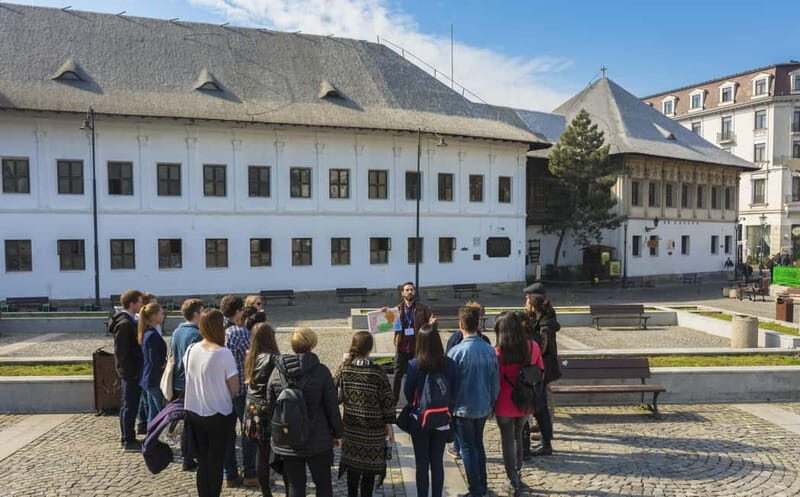
- Romanian Athenaeum as the kickoff point: Start where Bucharest’s grand “Paris of the East” ambitions show up in stone.
- Revolution Square and Ceaușescu’s story: You’ll learn how the Communist Party headquarters shaped decisions from 1950 to 1989.
- Calea Victoriei’s interwar grandeur: Belle Époque hotels and Art Deco landmarks line the famous boulevard.
- Cobblestones of the Old Town: Medieval-style inns, 19th-century merchant houses, and palaces make the neighborhood feel lived-in.
- Stavropoleos Church in the city center: You’ll step into quiet at an active monastery.
- Fountains in Unirii Square: It’s a strong finish point for photos and perspective.
Where the tour starts: Romanian Athenaeum and the “French style” mood
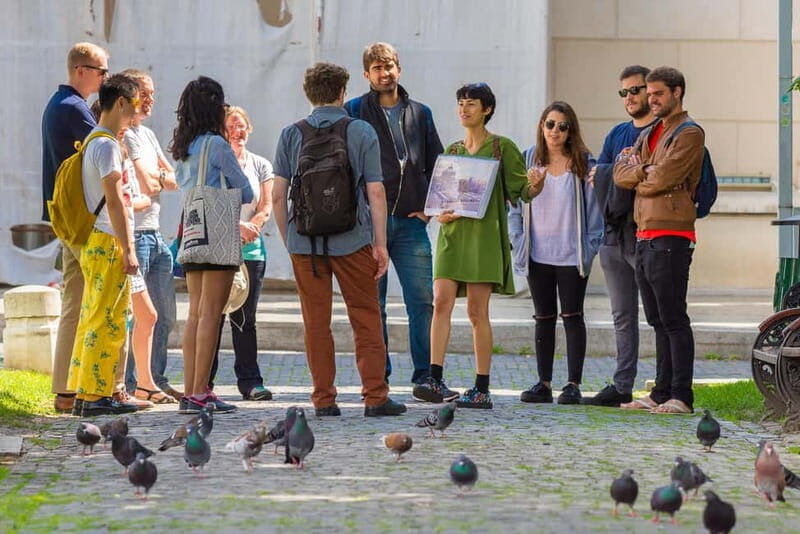
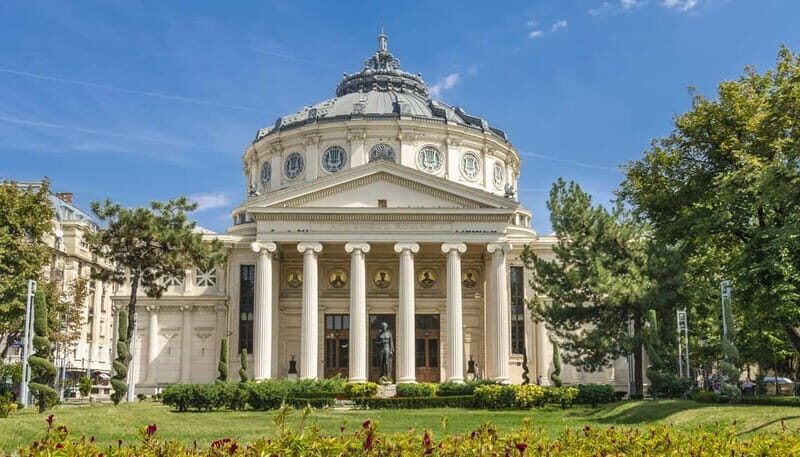
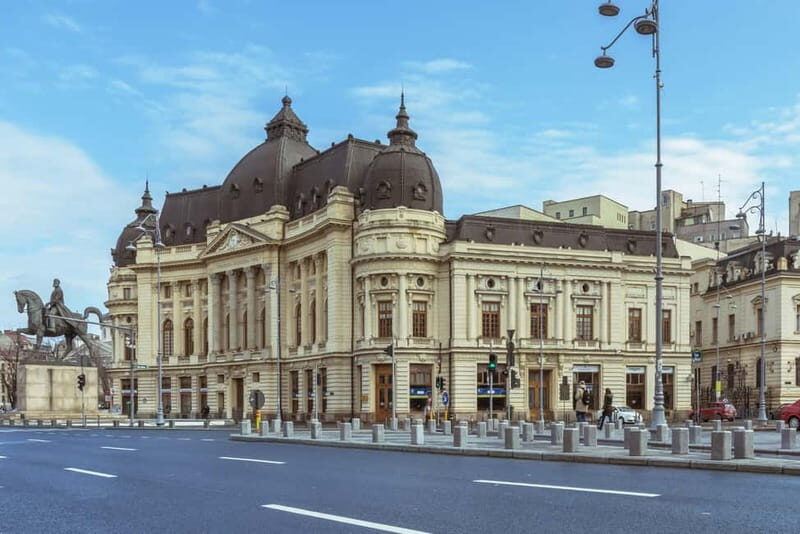
The tour begins right in front of the Romanian Athenaeum, on the steps and columns. It’s a neoclassical concert hall, and it immediately sets the tone for Bucharest’s old pretensions and big ambitions. Even before you hear a single story, you’re surrounded by buildings that were inspired by French influence—exactly the kind of “we belong among Europe’s capitals” energy that shaped the city’s center.
Around you, you can spot how the city’s royal period wanted to look serious and cultured: the Royal Palace, the University Library, and the Athenee Palace Hotel are part of the same visual conversation. That matters, because the tour doesn’t treat Bucharest as one uniform place. It treats it as a series of eras that all left their fingerprints.
If you’re the type who likes getting your bearings fast, this start helps. You’re not wandering with no plan. You start with a clear landmark and then you walk into the next chapter.
You can also read our reviews of more tours and experiences in Bucharest.
The shift from kings and world wars to Revolution Square
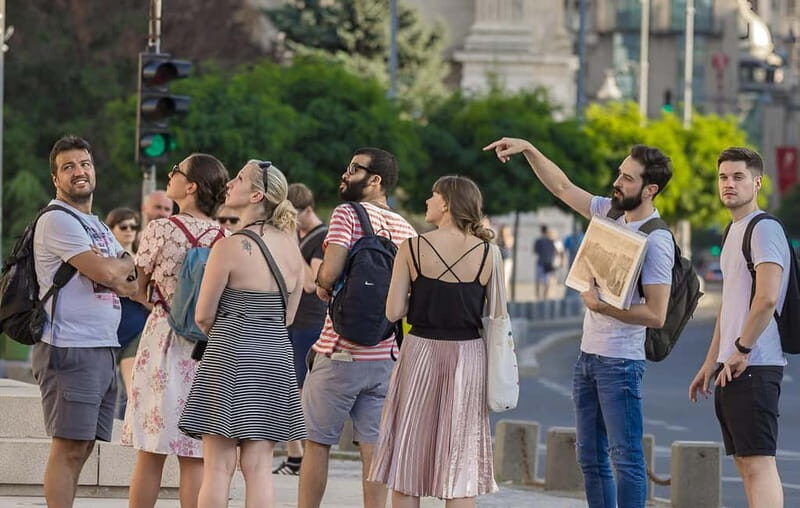
From the Athenaeum area, the route takes you past the grand symbols of monarchy. You’ll hear stories tied to kings and the world wars, told against the backdrop of King Carol’s statue. That statue isn’t just decorative. It’s part of how rulers wanted to be remembered, and the guide uses those visual anchors to explain the mindset behind the era.
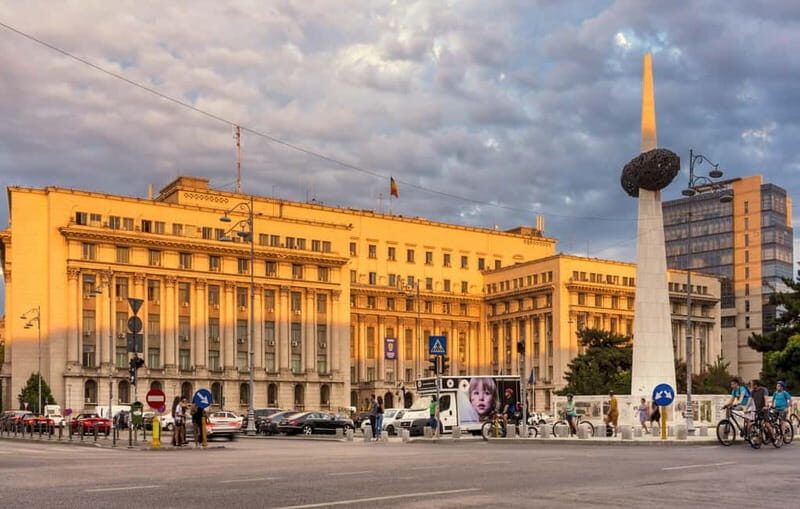
Then the walk pivots toward Revolution Square, and the change feels immediate. Instead of royal polish, you’re faced with the political center of gravity from 1950 to 1989. The square is where decisions for Romania’s Communist period were made, and it includes the former headquarters of the Communist Party.
This is the moment where the tour becomes more than sightseeing. You’re not just looking at architecture. You’re learning how power works on a city scale—what gets built, what gets controlled, and what people are forced to endure.
Communism in Romania: the story is heavy, and the details help
Revolution Square is where the guide brings you to the heart of the Communist era, including the life story of Nicolae Ceaușescu. This tour frames the period with context: what oppression looked like in everyday life, and how the regime ended in bloodshed.
One detail I found especially useful for understanding the era is the mention that Romania’s first revolution was the first one in the world to be broadcast live on TV. That’s the kind of fact that helps you connect local events to global history. It also explains why this period still resonates today: it wasn’t hidden in the background. It was visible.
A practical note: this section is guided and walk-and-talk style, so it can feel intense. If you’re visiting on a day when you want mostly light entertainment, you might need a mental gear shift. But if you want Bucharest’s real story, this is the payoff.
Calea Victoriei: where interwar Bucharest showed off
Next up is Calea Victoriei, Bucharest’s most famous and extravagant street. If Revolution Square is about political authority, Calea Victoriei is about social and economic display. The tour gives you the feel of interwar Bucharest, when bourgeois life and big-city status flourished along the boulevard.
The architecture here reflects that ambition. You’ll see Belle Époque hotels and Art Deco wonders, including landmarks like the Grand Hotel Continental, the Telephone Palace, and the Military Club. Even if you’re not an architecture buff, these names help. They put a “who and what” behind the buildings, instead of leaving them as random facades.
Expect an hour that feels like a walking magazine spread—only more grounded, because the guide connects the look of the city to the people and the time period. It’s also a good stretch for photos, as long as you’re okay with moving continuously along a well-known corridor.
The Old Town on cobblestones: medieval inns to merchant houses
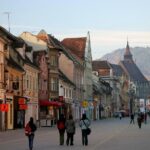
After Calea Victoriei, the tour slows into Bucharest’s older feel with the cobblestone streets of the Old Town. This is where the city texture changes under your shoes. Cobblestones make you walk differently, and that physical shift helps you notice the atmosphere.
Here, you’ll hear about medieval Oriental inns, small 19th-century merchant houses, and imposing palaces. The point isn’t to memorize dates. The point is to understand that the Old Town isn’t one style. It’s a layered neighborhood where different cultures and economic waves left buildings behind.

Old Town stops that give you a real map of the area
During the Old Town walk, you’ll cover several essential sights. This part works because you’re moving through the quarter with names and stories attached, not just standing in one place.
You’ll pass or stop for sights such as:
- The History Museum
- The CEC Palace
- Manuc’s Inn
- The Villacrosse Passage (also spelled Macca–Vilacrosse Passage on some guides’ notes)
Two of these are especially good at giving you a feel for how Bucharest functioned as a city of trade and community. CEC Palace points you toward the role of banking and institutions in the city’s growth. Meanwhile, Manuc’s Inn helps you picture older hospitality and how visitors and locals moved around.
The Villacrosse Passage is also a memorable contrast: a small, intimate passage that reminds you Bucharest has tucked-away corners even in a central district. When you’re walking on big streets all day, these little connector spaces can be a relief. They’re also the kind of detail you might miss if you were wandering without a plan.
Stavropoleos Church: an active monastery pause in the middle of the city
Right after the Old Town walk, you’ll visit Stavropoleos Church, described as the only active monastery in the center of Bucharest. This stop is about more than decoration. It’s a break in pace and tone—like stepping out of noise into a smaller world.
The church is colorful and serves as a quiet counterpoint to the louder political and architectural stops earlier. It’s a good reminder that cities don’t only run on politics and economics. They also hold spiritual life, and that’s part of why Bucharest feels lived-in rather than staged.
If you like pauses on tours, this one matters. A lot of history-focused walks can start to feel like a sprint. Stavropoleos gives you a breather while still staying relevant to the city’s identity.
Manuc’s Inn and the finish near Unirii Square fountains
As you head toward the end, the tour includes Manuc’s Inn with a photo stop plus a short guided look. Even if you mainly use this as a photo moment, it helps tie the Old Town theme together, since Manuc’s Inn fits naturally with the medieval-merchant story you heard earlier.
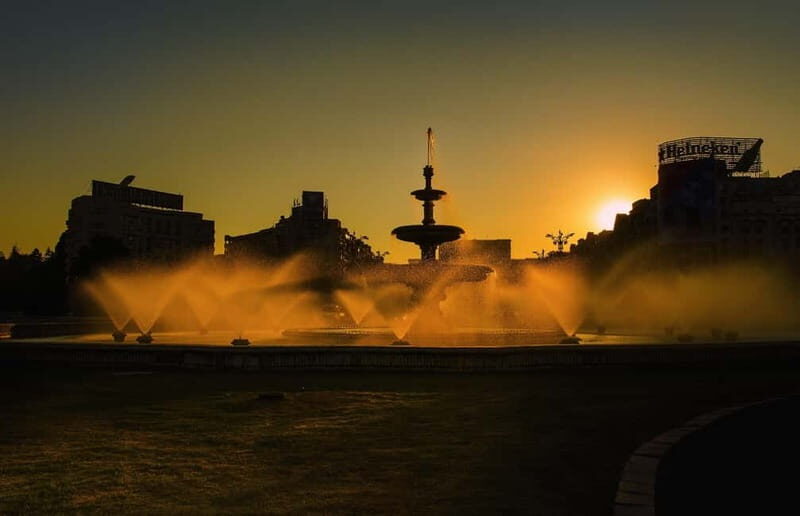
The final mood shift is toward Unirii Square, where you’ll see imposing fountains as the tour wraps up. Finishing near a large public square is a smart move: it gives you a sense of scale and helps you orient yourself for whatever comes next—dinner, a museum, or a self-guided stroll.
Also, because the tour ends back at the meeting point (and the itinerary mentions Manuc’s Inn as the finish), it’s best to plan your day with a bit of flexibility. You’ll likely end near the same central area you started in, which is convenient.
Price and what you actually get for $21
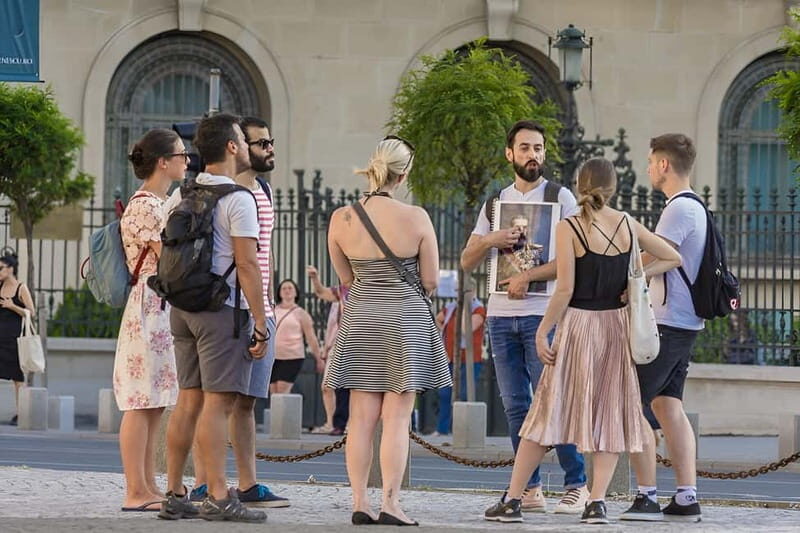
At about $21 per person for a 2.5-hour guided walk, this is priced in the “value” zone for Bucharest. You’re not paying for transportation you don’t get. The tour is built around walking key areas with a professional local guide and a map.
What makes it good value is the concentration of themes:
- major downtown architecture (Athenaeum area)
- political power and historical consequences (Revolution Square)
- a signature boulevard with named landmarks (Calea Victoriei)
- Old Town texture plus specific points (History Museum, CEC Palace, Manuc’s Inn, Villacrosse Passage)
- a calm final stop with an active monastery (Stavropoleos)
- a city-square ending with fountains (Unirii Square)
So you’re paying for interpretation and routing, not just “seeing stuff.”
What’s not included is food and drinks, and there’s no hotel pickup/drop-off. That’s normal for walking tours in city centers, but it does mean you’ll want to plan a snack stop either before or after, based on your pace.
Best fit: who should book this tour
This tour is a strong match if you:
- want a structured way to see downtown Bucharest without spending hours mapping routes
- like history that connects buildings to real human events
- enjoy walking cobblestones and switching between neighborhood vibes
- want English or Spanish narration with a guide who can explain transitions between eras
It’s also a solid choice for first-timers who want the “high points plus context” combo. If you already know Bucharest well and want deep museum time, you might find the pace more “walking overview” than “slow study.”
A few practical tips so the day feels easy
- Wear comfortable shoes. The cobblestones can be slow on the ankles if you’re in the wrong footwear.
- Expect rain or shine. Bring a light rain layer or an umbrella you trust.
- Plan to take photos at named stops like Manuc’s Inn and along Calea Victoriei, but keep one hand free for easy pacing.
- If you get tired during intense historical stories, use Stavropoleos as your mental reset. It’s deliberately placed for a reason.
Should you book this Bucharest Old Town, Calea Victoriei & Communism tour?
I think you should book it if your goal is to understand Bucharest as a city of contrasts—royal elegance, Communist control, and neighborhood life—all in one coherent route. Starting at the Romanian Athenaeum is a smart way to anchor the day, and ending near fountains gives you a clean finish point.
The main reason to hesitate is the topic. Communism in Romania, the Ceaușescu story, and the violent ending are heavy themes. If you want only light sightseeing, you may prefer a different tour. If you’re okay with emotionally serious history mixed with great architecture walks, this is a very efficient way to get it done.
FAQ
Where does the tour start?
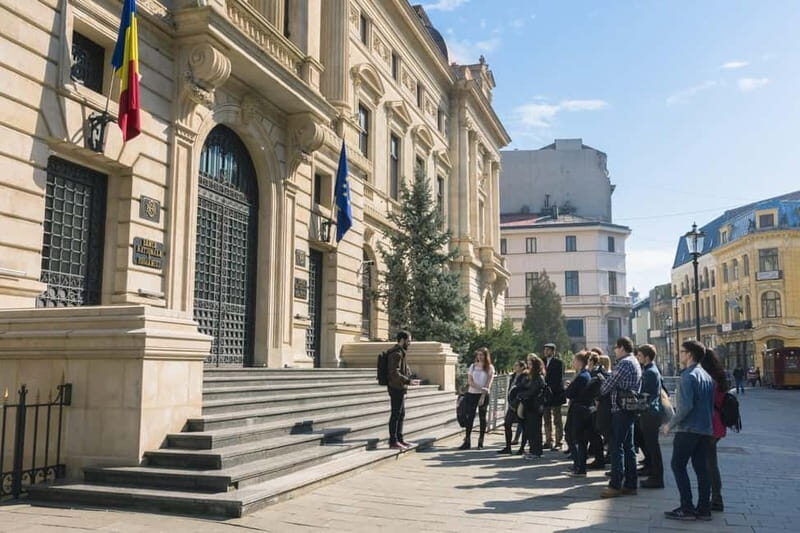
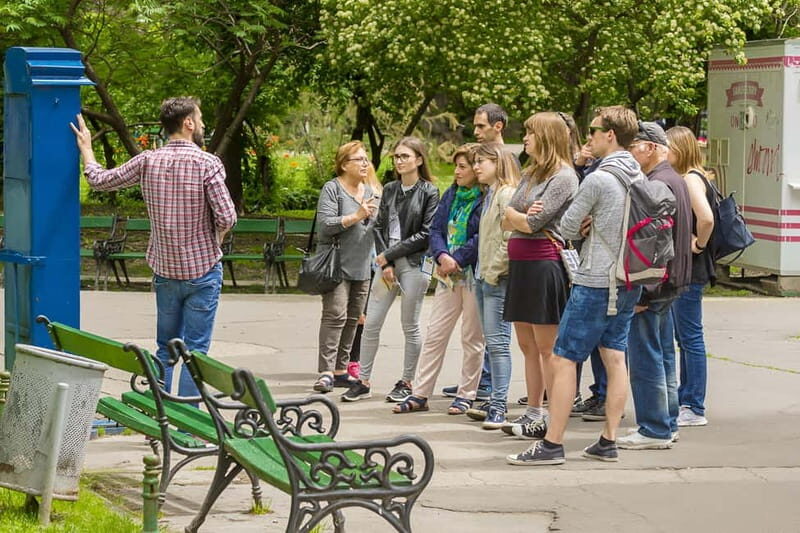
The tour starts in front of the Romanian Athenaeum, with the guide waiting right on the steps and columns. The guide wears a name tag.
How long is the tour?
It runs for about 2.5 hours.
How much does the tour cost?
The price is listed as $21 per person.
What stops are included along the way?
You’ll cover Revolution Square, Calea Victoriei, Macca–Vilacrosse Passage, Stavropoleos Church, and end near Manuc’s Inn (with the tour activity ending back at the meeting point area).
What language options are available?
The tour is available in English and Spanish.
Is the tour wheelchair accessible?
Yes, it is described as wheelchair accessible.
Is hotel pickup included?
No, there is no hotel pickup or drop-off.
Is food or drinks included?
No. Food and drinks aren’t included.
What should I bring?
Comfortable shoes are recommended. The tour runs rain or shine, so it helps to be ready for weather.
When is the tour canceled if the weather is bad?
The tour is scheduled rain or shine, so you should dress for the conditions rather than counting on a cancellation due to weather.
Experience provider
Btrip Bucharest Tours