REVIEW · BUCHAREST
Bucharest Old Centre Tour
Book on Viator →Operated by Claires Bucharest Guided Tours · Bookable on Viator
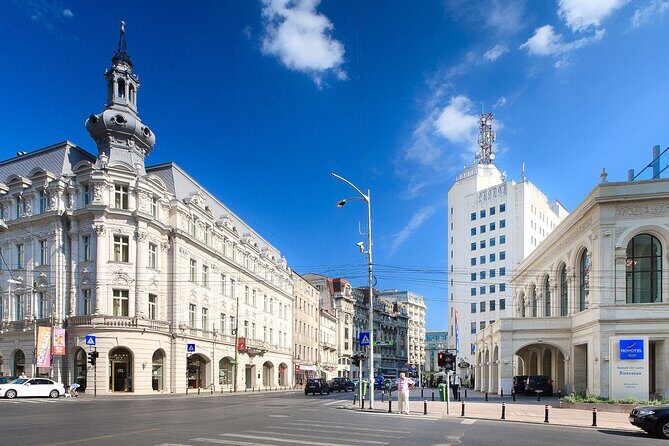
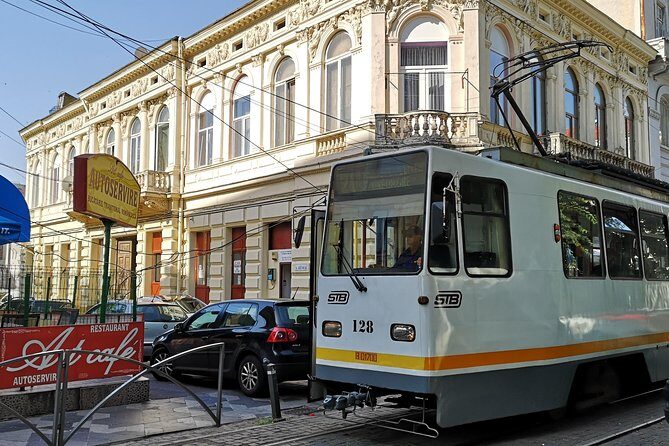
Bucharest makes sense fast on foot. This Old Centre Tour is a tight, local-led walk that helps you connect the dots between landmark after landmark, from the Princely Old Court area to St Anton Church and Stavropoleos Monastery. I love how the guide turns street corners into stories you can picture, instead of making you memorize facts.
I also like the comfort factor: hotel pickup and drop-off from selected central hotels means you spend your time walking, not hunting for the meeting point. With only about an hour, it’s a smart way to get oriented if Bucharest is new to you.
One thing to plan for is the footing. You’ll be on flagstones, so sturdy shoes matter, and the tour runs only in good weather (it may be rescheduled if conditions are poor).
In This Review
- Key things worth knowing before you go
- Bucharest Old Centre in One Hour: what this walk really does
- Meeting point and pickup: less friction, more walking
- Entering the Old Centre: Princely Old Court and the 500-year setting
- Old Coffee House and the inns: seeing merchant Bucharest
- National History Museum area: the former Post Office building as a clue
- Old Princely Palace ruins and Vlad the Impaler’s connection
- St Anton Orthodox Church: Wallachian rulers in the heart of town
- Strada Lipscani: the Old Centre’s main street feel
- The oldest and most famous inn: why these stops feel more real
- Romania’s National Bank and the vanished Șerban Voda presence
- Stavropoleos Monastery (built 1724): a fitting final chapter
- Price and value: is $16.77 a good deal for this 1-hour tour?
- Who this tour suits (and who might want a different plan)
- Should you book this Bucharest Old Centre Tour?
- FAQ
- How long is the Bucharest Old Centre Tour?
- Where does the tour start and end?
- Is hotel pickup included?
- Is this a private tour?
- What departures are available?
- What happens if weather is bad?
Key things worth knowing before you go
- A compact 1-hour route that still hits major landmarks in the Old Centre
- Hotel pickup and drop-off from selected central hotels keeps the morning or afternoon simple
- Local context at every stop, including Princely-era sites and church history
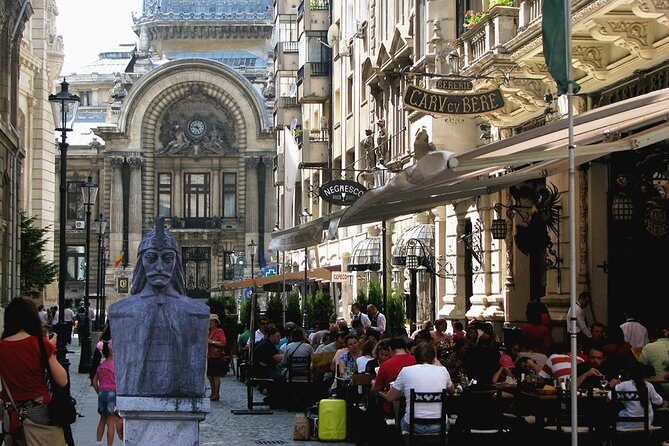
- Strada Lipscani as a focal point, the Old Centre’s main street feel
- Stavropoleos Monastery (built in 1724) for a strong finish on culture and craftsmanship
- Sturdy-shoe advice for the flagstone walking
Bucharest Old Centre in One Hour: what this walk really does
This tour works because it’s built around a simple goal: get your bearings quickly and give you a framework for what you’re seeing. Bucharest’s Old Centre can feel like a scatter of impressive buildings and plaques until someone explains how the pieces connect. Here, the guide keeps the pacing to about 1 hour, which is just enough time to feel like you learned something without burning half a day.
The route is also structured around layers of the city. You start in the area known for older cultural life and political presence, then move toward major institutions and church sites, and end with a monastery built in 1724. That order matters. You’ll notice how Bucharest’s past shows up in ruins, in restored facades, and even in street patterns.
If you like walking tours that are more “story order” than “stop-and-pose,” this format fits well. It’s easy to follow, and you leave with a mental map you can use when you explore later on your own.
You can also read our reviews of more tours and experiences in Bucharest.


Meeting point and pickup: less friction, more walking
The tour starts at the National Museum of Romanian History, Calea Victoriei 12, București 030026, and it ends back at the same meeting point. If you’re staying near the center, the big convenience is that the experience offers hotel pickup and drop-off from selected hotels.
That sounds like a small detail, but it changes your experience. When you don’t need to figure out transit, timing, and where to meet, you arrive calmer and ready to walk. It’s also helpful if you’re traveling with a friend group where everyone’s shoes and schedules don’t always line up perfectly.
You can choose either a morning or afternoon departure, so you’re more likely to match your energy level and weather. I like that flexibility because it lets you plan around the rest of your day—museum time, a meal break, or just wandering.
Entering the Old Centre: Princely Old Court and the 500-year setting
You begin by stepping into the Old Centre, an area with cultural roots stretching back over 500 years. The first stops help you understand why this area mattered. The Princely world wasn’t just castles and crowns—it was also the everyday political power that shaped the city.
At the Princely Old Court stop, you get a sense of what it meant for rulership to live right at the center. This is the kind of context that makes later sights click. When you can connect a church or a former palace site to how Wallachia governed its people, the city stops feeling like “pretty buildings” and starts feeling like a place with systems and consequences.
From the outset, the guide also names and references the small markers of urban life that made the Old Centre more than a ceremonial stage. Inns, old gathering places, and even ruins get woven into the story early, so the walk feels like one connected narrative rather than disconnected highlights.
Old Coffee House and the inns: seeing merchant Bucharest
The tour doesn’t only focus on official power. It also points you toward the “in-between” spaces where people traded news, did business, and passed time. That’s why stops like the Old Coffee House, plus places such as Gabroveni Inn and the Linden Tree Inn, matter.
Even if you don’t go inside every building, hearing what these spaces were used for gives you a different lens when you look at facades. You’ll start noticing what kind of street energy a place would have had—who gathered there, what kind of conversations might have happened, and why certain areas became magnets.
You also pass or reference ruins, including the ruins of Șerban Voda Inn early on. Ruins can feel like sad backdrops if nobody explains why they’re still there. In this tour, the guide treats them as evidence of what the city used to be, and why what survived (or didn’t) shaped what you see today.
National History Museum area: the former Post Office building as a clue
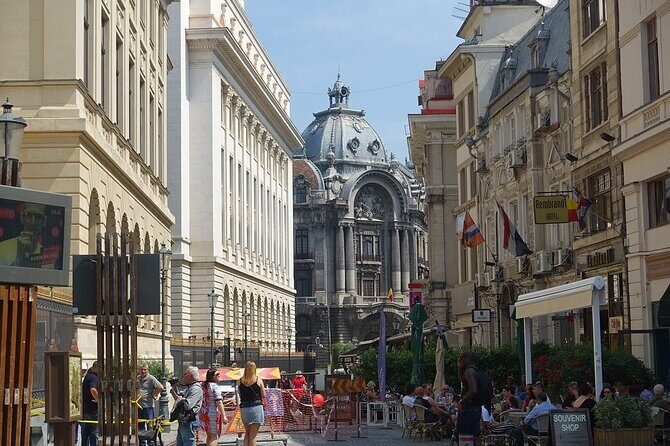
Next, the tour shifts you toward a major institutional zone by discussing the National History Museum of Bucharest and the former Post Office building. This is where the tour becomes especially useful if you like understanding how cities tell stories about themselves.
History museums can feel like one-way learning if you arrive cold. Here, you get a setup: the area around the museum and the former post office connects to how Bucharest communicated, documented, and organized public life. It’s a practical bridge between “old-world Old Centre” and the way the city developed modern infrastructure.
This segment is also a good time to slow down mentally. You’ll likely notice how the architecture changes as you move through the centre. When you know why a building type exists, it becomes easier to recognize and appreciate what it’s doing in the urban fabric.





Old Princely Palace ruins and Vlad the Impaler’s connection
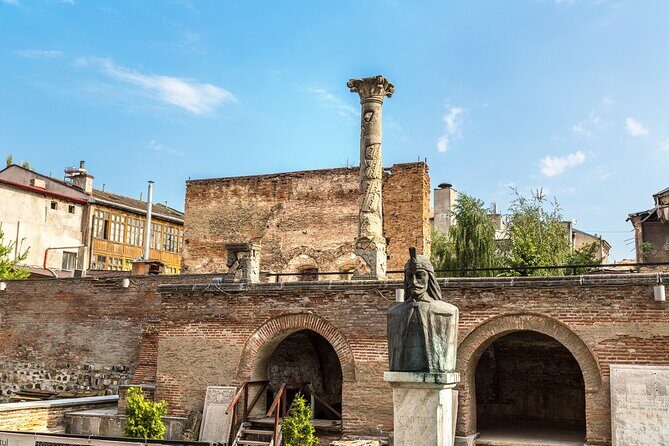
One of the most striking stops is at the ruins of the Old Princely Palace, described as one of the oldest buildings in Bucharest and tied to Vlad the Impaler. Even from outside, ruins have a way of pulling you into the timeline fast.
This stop is valuable because it gives you a specific anchor. Instead of hearing vague “medieval times,” you get a direct name connection and a sense of political presence. Whether you already know the legend or you’re learning from scratch, it helps you visualize how close the seat of power was to the everyday Old Centre streets.
Ruins also tend to raise questions like: what happened here, and what does the city do with traces like this? The guide helps you frame those questions so you’re not just looking at broken masonry—you’re seeing the result of change across centuries.
St Anton Orthodox Church: Wallachian rulers in the heart of town
Then you reach St Anton Orthodox Church, described as the church of Wallachian rulers located in the heart of Bucharest. This isn’t just a religious stop; it’s about political identity as expressed through faith and architecture.
When a guide explains the relationship between rulers and the places they supported or built, the church stops being only a beautiful interior or exterior. You start reading it as a statement about authority and legitimacy. That’s why I like this stop on the itinerary: it adds meaning to what could otherwise be just another church facade.
If you’re the type who enjoys small details, this is a great moment to look longer than you normally would. Spend a little extra time absorbing what the building communicates, now that you understand the context behind it.
Strada Lipscani: the Old Centre’s main street feel
The tour’s stop on Strada Lipscani is a key turning point. The route literally lands you in the heart of the Old Centre, and that matters because it changes the atmosphere.
Strada Lipscani is the kind of street where you can feel the old city’s identity forming around commerce, gatherings, and movement. When the guide points out why this corridor became central, your eyes adjust. You’ll likely recognize other nearby buildings and understand their “role” in the whole picture.
This is also a good moment for you to reset and orient. If you plan to explore later on your own, Lipscani is one of the easiest streets to use as a reference point.
The oldest and most famous inn: why these stops feel more real
The itinerary includes time learning about Bucharest’s oldest and most famous inn, plus a second mention of the history of this ancient inn in the oldest part of Bucharest. Even without needing to track every name perfectly, the bigger idea is that inns were central to urban life.
Inns were where news moved. They were where travelers and locals crossed paths. They were also where business relationships were formed and maintained. When you understand that role, you stop treating these buildings as just old structures and start seeing them as city engines.
This part of the tour is also good for anyone who likes travel history but doesn’t want only kings and churches. You get the rhythm of how a city actually worked—where people waited, met, negotiated, and talked.
Romania’s National Bank and the vanished Șerban Voda presence
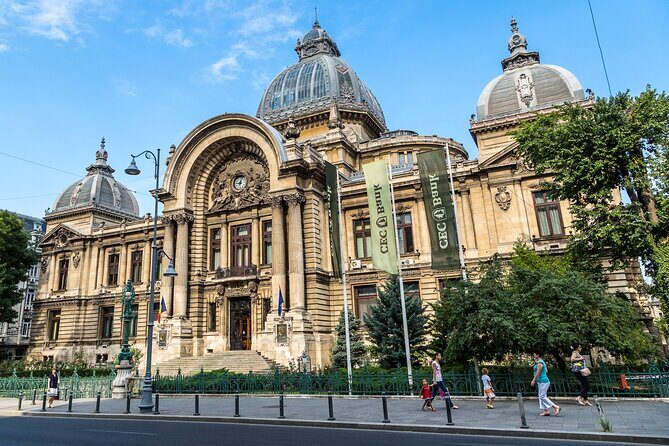
The tour then takes you to the National Bank building and uses it as a way to talk about interesting history tied to the ruins of the Former Șerban Voda Inn. This pairing is clever because it contrasts power and finance with the idea of what’s missing.
Big institutional buildings can feel like they belong to another era unless someone links them to earlier layers of the same area. Here, the guide helps you connect the present-day grandeur to the past activity that once happened nearby.
If you enjoy photography, this segment can be a strong one because the contrast—grand building versus nearby traces of older sites—makes for compelling visuals. Even if you don’t take photos, standing there with the context in your head changes what you notice.
Stavropoleos Monastery (built 1724): a fitting final chapter
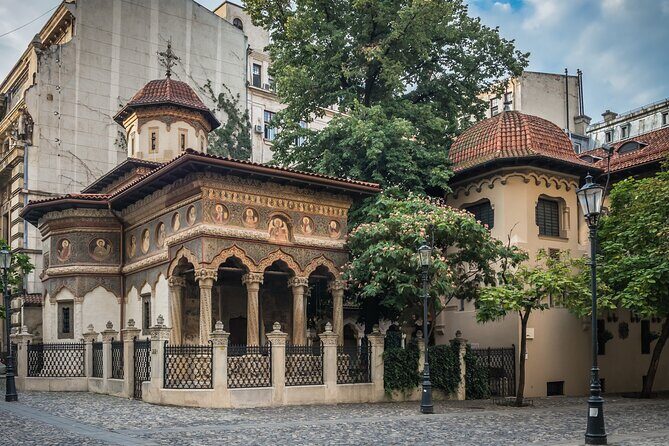
The tour ends with Stavropoleos Monastery, noted as built in 1724. This final stop is a good way to close the loop between political-era Bucharest and the city’s spiritual and cultural expression.
Monasteries tend to reward attention. Even if you don’t go deep into architectural study, you can appreciate why a site like this would stand as a lasting landmark in a city that’s constantly changing. Built in the early 18th century, it also gives you a clear time marker to hold onto as you continue exploring later.
This is the stop where you’re most likely to feel you’ve stepped out of “city history as facts” and into “city history as lived place.”
Price and value: is $16.77 a good deal for this 1-hour tour?
At $16.77 per person for an approximately 1-hour guided walk, the value comes from two things: structure and support.
First, you’re paying for a local guide’s ability to connect sites into a story you can remember. Walking without context is fine for photos, but context is what turns Bucharest into a place that makes sense.
Second, the price includes hotel pickup and drop-off from selected hotels, plus a local guide and professional guide. That combination reduces travel friction and time waste. You also get a mobile ticket, which makes last-minute logistics easier.
You might also consider timing. The tour is often booked about 30 days in advance, so if you’re traveling during a peak period or you have tight plans, booking earlier is usually the safer move.
Who this tour suits (and who might want a different plan)
This is ideal if you want:
- A quick way to understand the Old Centre before you strike out on your own
- A guided route that hits major sites without turning into a long day
- A private setup where only your group participates
- A choice of morning or afternoon departures
It also fits couples and small groups who want a leader to keep everyone on track. If you’re traveling with kids, the tour data says children must be accompanied by an adult, and most travelers can participate, so it can work for families as long as the walking pace suits.
If you hate walking on old stone surfaces, or you don’t like weather-dependent plans, you might prefer a shorter indoor-heavy day instead. Sturdy shoes solve a lot, but weather still matters.
Should you book this Bucharest Old Centre Tour?
If you want Bucharest to feel understandable fast, I think this is a solid booking. The route is short, the guide support seems to be the main strength, and the stops are chosen to give you both official sites and everyday urban life cues. Add hotel pickup from selected hotels and a clear start point, and the tour becomes easy to fit into real schedules.
I’d book it if you’re visiting for the first time, plan to explore more after, and like walking with a story in hand. Skip it only if you know you won’t enjoy flagstone walking or you’re looking for a longer, more detailed tour format.
FAQ
How long is the Bucharest Old Centre Tour?
It lasts about 1 hour.
Where does the tour start and end?
The tour starts at the National Museum of Romanian History at Calea Victoriei 12, București 030026, and it ends back at the same meeting point.
Is hotel pickup included?
Yes, hotel pickup and drop-off are included for selected central hotels.
Is this a private tour?
Yes. It is a private tour/activity, and only your group will participate.
What departures are available?
You can choose between a morning or afternoon departure.
What happens if weather is bad?
The experience requires good weather. If it’s canceled due to poor weather, you’ll be offered a different date or a full refund.