Bucharest reads best on wheels. This Bucharest à vélo ride turns a half-day into a walking-free timeline, linking monarchy, World War I, communism, and Romania’s shift to democracy—using quick stops you can actually absorb on a bike.
I really like two things: the brand-new, light bikes (comfortable for long enough rides) and the way your guide keeps the route practical, with history tied to what you see right now. Even on a hot day, the pace stays human.
One thing to consider: most stops are brief (think 5–20 minutes), so if you want hours inside every building, you’ll need a longer, museum-heavy plan too.
In This Review
- Key highlights I’d put first
- Why Bucharest Works So Well on Two Wheels
- Starting at Piaţa Presei Libere: Bikes, Meeting Point, and Timing
- Triumph Arch and Herăstrău Park: Monarchy, WWI, and a Real Breather
- Communism on the Map: House of the Free Press and Piaţa Revoluţiei
- Ateneul Român: Why This Icon Still Matters
- Palace of Parliament: The Biggest Stop, the Biggest Questions
- What You Get for $35.50: Value That’s Not Just Marketing
- Who This Bike Tour Suits Best (and Who Should Think Twice)
- Should You Book Bucarest à vélo?
- FAQ
- How long is Bucarest à vélo?
- How much does it cost?
- Where do we meet, and where does the tour end?
- Is the tour in English?
- Are the bikes included?
- What’s included besides the bike?
- Are there any entrance fees during the tour?
- Is this a group tour or private?
- What weather does the tour need?
- What if I need to cancel?
Key highlights I’d put first
- A route that acts like a fast city timeline (monarchy → WWI → communism → after-1989 landmarks)
- Comfortable, mechanically sound bikes that make short-city distances feel easy
- Coffee and/or tea included, plus photos along the route to help you remember it later
- Plenty of “see it from the bike” moments, with quick stops at major sights
- A guide with 10+ years’ experience, including Ionut, who’s been noted for being flexible and informative
- Mostly free stops, with only one optional paid site (Ateneul Român)
Why Bucharest Works So Well on Two Wheels
Bucharest can be a lot if you do it the usual way: start, stop, traffic, parking, and lines. On a bike tour like this, you trade stress for momentum. You cover real ground without feeling like you’re racing. And because the route is planned around big “story” sites, every block has a reason.
The format is also built for clarity. Instead of overwhelming you with ten museum tickets and a pile of homework, you get a guided ride with short stops: look, listen, and move on. That’s ideal if you’re visiting for the first time and you want to get your bearings fast, without spending your whole day stuck on entry queues.
Most of the stops are listed as free admission, which helps keep the budget steady. You’ll still hit key architecture and political history points, but the costs don’t spiral.
The one practical trade-off is time. The tour runs about 3 to 4 hours, and the stops are short. So you’ll learn a lot, but you won’t have long to roam inside buildings unless you choose the optional visit at the Ateneul Român.
You can also read our reviews of more tours and experiences in Bucharest.
Starting at Piaţa Presei Libere: Bikes, Meeting Point, and Timing
You meet back at Piaţa Presei Libere, Sector 1, and the activity ends there again. That matters more than it sounds. If you’ve ever finished a tour somewhere inconvenient, you know how quickly the day gets messy. Here, it’s a loop that brings you back to the same starting point.
The meeting point is also listed as near public transportation, which is helpful if you’re combining this with other plans. You can take the bike tour, then keep living your day without needing a complicated return plan.
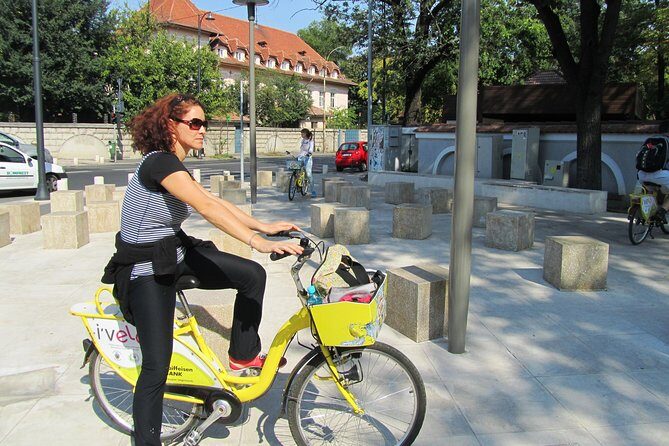
What’s included makes the logistics simpler: you get the bicycle, a drink (coffee and/or tea) along the route, and photos taken during the ride. Those small add-ons make the tour feel like it’s looking after your day, not just depositing you at monuments.
The tour is offered in English, and it’s a private tour/activity, meaning only your group rides. That’s a big quality-of-life thing for pacing and questions. In one group, the guide Ionut was able to handle French too, which suggests the guiding style can flex depending on the group’s needs.
Typical ride-and-stop timing keeps the day from dragging: quick photo moments at the big symbols, and slightly longer time where the city opens up into space.
Triumph Arch and Herăstrău Park: Monarchy, WWI, and a Real Breather
The tour opens at Arcul de Triumf (Triumph Arch). Even though the stop is about 5 minutes, the guide frames what you’re looking at: the arch is tied to Romania’s monarchy and World War I memory. This is a good way to start because it gives context before you start layering other eras on top of it.
From a cycling perspective, the early stop also helps you settle in. Your body hasn’t overworked yet, and you can start with an orientation moment rather than a rushed climb or a complicated crossing.
Next is Herăstrău Park, listed as about 20 minutes. This is the largest park in Bucharest, and that’s exactly why it belongs mid-tour. You need green time, not just monuments. On a bike route, a park stop works like a reset button: you breathe differently, you can stretch a bit, and the city feels less like a history lecture and more like a place people actually live.
There’s also a practical side: parks tend to be easier to cycle through than the tightest lanes near major downtown points. Even if you’re not an experienced cyclist, a park segment helps you get comfortable with the bike route before you move into denser symbolic stops.
You’ll leave this portion with two things in your head at once: the monarchy/war framing from the arch, and the sense of scale that Bucharest’s public spaces provide.
Communism on the Map: House of the Free Press and Piaţa Revoluţiei
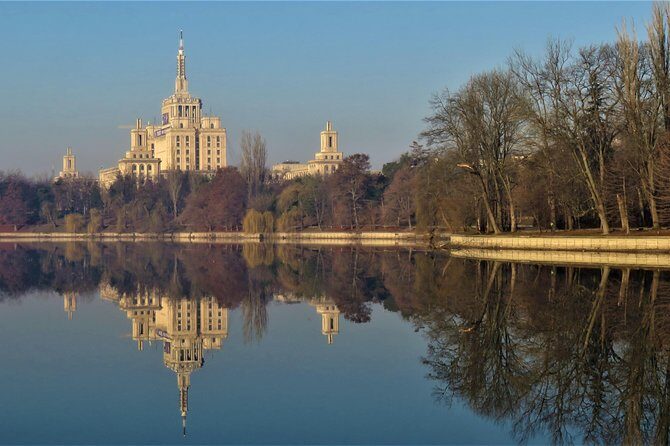
After Herăstrău, the tour shifts tone. The House of the Free Press is described as a communist-era architecture building, and this kind of stop is where a bike tour beats a “do-your-own-research” day. You see the structure, then you get the meaning tied to Romania’s political reality.
The stop is listed as free and brief, but the value is in how it’s explained. Communism-era architecture can look like plain concrete if you don’t know what to notice. With guiding, you learn how the design reflects power, messaging, and control—and you connect that to what comes next.
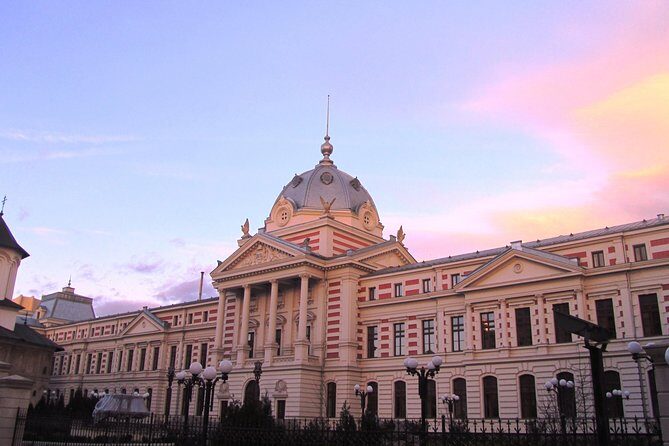
Then you roll to Piaţa Revoluţiei, with about 10 minutes. This is framed as the end of the communism regime in Romania, plus a memorial. In other words, this isn’t just an old building. It’s a public space built around a turning point.
A bike tour is useful here because you’re not just standing in one spot. The route keeps moving, so the history doesn’t feel like trapped “before and after.” You can sense the shift from the older symbols into the places that mark the break.
One consideration: since these stops are short, you’ll get the main points and the big takeaways. If you’re the kind of person who wants to study every detail on your own, treat this as your orientation layer, then plan a deeper visit later.
Ateneul Român: Why This Icon Still Matters
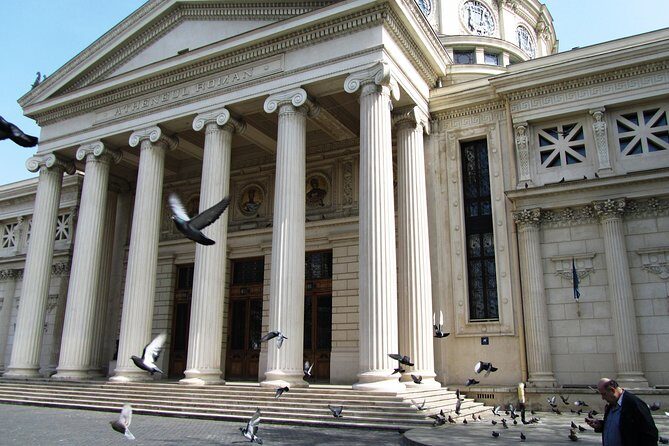
The tour includes Ateneul Român as an architectural symbol and a living story of Bucharest. The stop is about 5 minutes, listed as free for the general visit, with an optional visit to the site for 10 Lei.
This is a nice structure for real travelers: you get the exterior and the context quickly, then you decide if you want to spend extra time and money to go further. If you’re short on time, you can skip the ticket and still walk away with why the building is important.
If you do choose the optional site visit, the tour becomes a blend of “see it now” and “learn it deeper,” without forcing the whole group to pay extra. And since the tour already keeps most stops free, that optional fee doesn’t feel like a constant drip-feed.
From a practical standpoint, this is also where you might slow down mentally. Early stops hit big themes quickly (monarchy, war, political buildings). Ateneul Român is more about the way Bucharest tells cultural identity through architecture, and that’s a different kind of story than a memorial square.
Even if you only do the short stop, you’ll likely remember the building as a recognizable Bucharest marker—the kind of sight you can later point out when you see it again from another angle.

Palace of Parliament: The Biggest Stop, the Biggest Questions
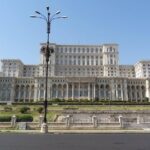
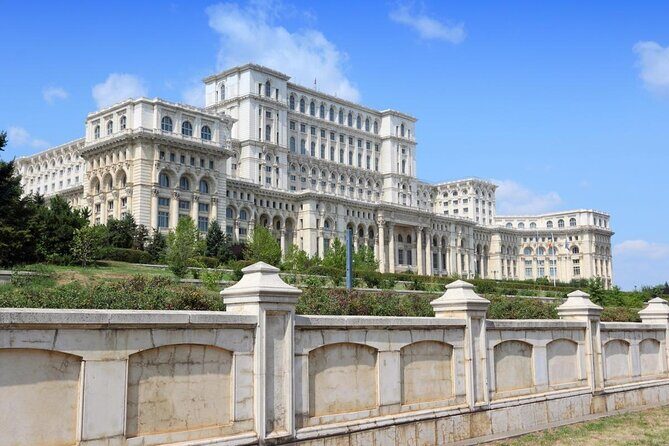
The final major stop is the Palace of Parliament, listed as about 5 minutes. It’s described as the heaviest building in the world and the second largest (after the Pentagon), built by communist dictator Ceausescu. Even without going inside, that scale is something your eyes need to process in person.
On a bike tour, this stop works best as a “size check.” You’re not trying to tour the whole palace in five minutes. You’re getting the visual shock and the political context: why a regime would build something this massive, and what it says about power.
Because the stop is listed as free admission, you can think of it as an external look plus guided framing. That makes it easier to fit into a half-day schedule. It also means you can decide later if you want a full interior visit on another day.
This is also where pacing matters. If you’ve been cycling and stopping since the morning/afternoon start, the final stop should feel like a conclusion, not a sprint. A well-run bike tour keeps you moving but doesn’t yank you along so fast that you can’t absorb anything.
If you’re sensitive to crowds or large-scale political sites, keep expectations realistic: you’ll see a lot, but you’ll also be outside and exposed to weather. That’s why the tour’s “requires good weather” note matters.
What You Get for $35.50: Value That’s Not Just Marketing
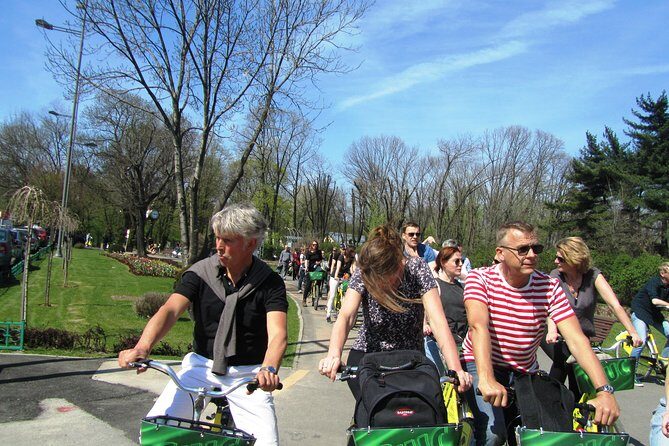
At $35.50 per person, the best part isn’t just the price tag. It’s what’s bundled together for that time window.
Included:
- Bicycle use
- Coffee and/or tea
- Photos along the route
- Professional guiding with 10+ years experience
Not included:
- Lunch and dinner
- Any additional fees besides the listed optional paid item (like the Ateneul Român site option)
That bundle matters. Bike tours can be cheap and still cost you time and money separately (renting equipment, paying for a guide, buying drinks, paying for photo services). Here, the tour takes care of the practical stuff so you can focus on the experience.
Group discounts exist too, and the tour is private for your group, which can raise value if you’re traveling with friends or family. Even solo, a private setup can mean a better ride rhythm and fewer delays.
Another value factor is the stop mix. The itinerary jumps between monarchy/war symbolism, large public space, communist-era architecture, a key memorial square, a cultural icon, and a monumental political building. That’s a lot of themes without turning your day into a patchwork of separate attractions.
The only cost surprise you might run into is if you choose to pay the optional site fee at Ateneul Român. It’s clearly stated (10 Lei), so you can decide calmly instead of at the last second.
Who This Bike Tour Suits Best (and Who Should Think Twice)
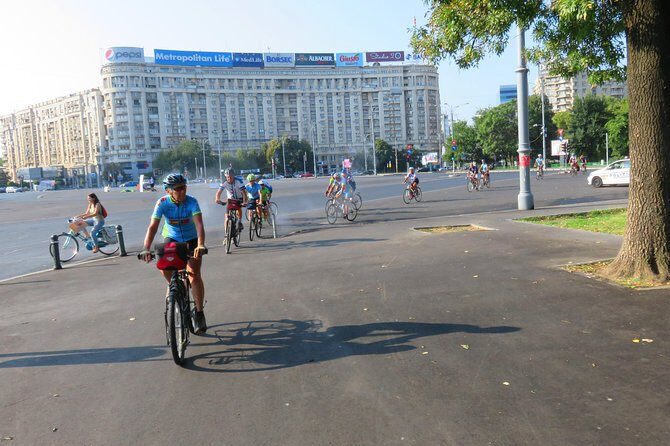
This tour fits best if you want:
- A first-timer-friendly orientation to Bucharest’s major symbols
- A way to see political and cultural landmarks without being stuck on foot for hours
- A guided route with short, digestible stops
- A bike that feels easy to handle (new, light, comfortable, and mechanically sound, based on how one group described the equipment)
It’s also a good match for groups with teens, since the tour is movement-based and keeps stopping at interesting points rather than sitting through long museum interiors.
Who might think twice: if you want deep time inside multiple buildings, this won’t replace a full museum day. The stops are designed for exposure and context, not for hours-long exploration.
Also, it’s weather-dependent. The tour requires good weather, which means if Bucharest is rainy or unpleasant, you’ll want a plan B day or flexibility.
Should You Book Bucarest à vélo?
If you’re trying to make the most of a half-day and you like your Bucharest with clear story threads, I’d say yes. This is one of those tours that helps you build a mental map quickly: Triumph Arch for monarchy and WWI, Herăstrău for breathing space, House of the Free Press and Piaţa Revoluţiei for the communism story, Ateneul Român for cultural identity, then the Palace of Parliament for sheer scale and political weight.
Book it if you want value that’s bundled (bike, drink, photos, guiding) and a route that keeps you moving without turning history into a blur. Skip it or add a separate plan if your priority is long interior time in major sites.
One last practical tip: if you care about details, bring a couple of questions before the ride starts. The stops are short, so good questions help you squeeze more meaning out of each one.
FAQ
How long is Bucarest à vélo?
The tour lasts about 3 to 4 hours.
How much does it cost?
It costs $35.50 per person.
Where do we meet, and where does the tour end?
You start at Piaţa Presei Libere, Sector 1, Bucharest, Romania, and the tour ends back at the same meeting point.
Is the tour in English?
Yes, it’s offered in English.
Are the bikes included?
Yes. Bicycle use is included.
What’s included besides the bike?
You get coffee and/or tea along the route, photos taken during the tour, and professional guiding with 10+ years experience.
Are there any entrance fees during the tour?
Most stops are listed as free admission. The Ateneul Român has an optional site visit with a 10 Lei fee.
Is this a group tour or private?
It’s a private tour/activity, so only your group participates.
What weather does the tour need?
The experience requires good weather. If it’s canceled due to poor weather, you’ll be offered a different date or a full refund.
What if I need to cancel?
You can cancel up to 24 hours before the experience for a full refund.