REVIEW · BUCHAREST
9 days Balkans Tour from Bucharest to Sofia and Budapest
Book on Viator →Operated by Guided Europe Tours · Bookable on Viator
Road trips, but with history on repeat. This 9-day Balkans route strings together UNESCO sights and real city walks, from Bucharest to Sofia, then south and west to Budapest. I especially like the one-way flow—no backtracking that wastes your time—and the steady rhythm of guided stops where you actually get context, not just photos.
The tradeoff: you spend real hours on the road. One past traveler also flagged ride comfort issues in a small vehicle and felt the tour started late on some days, so if you’re picky about seats and timing, keep that in mind.
In This Review
- Key highlights you’ll feel fast
- Price and logistics: what your $1,191.42 is really buying
- The driving pace: comfort, timing, and how to survive long days
- Day 1: Bucharest pickup to Lovech via Devetashka Cave and Krushunskiye Waterfalls
- Day 2: Lovech’s Covered Bridge and Sofia’s domes, mosques, and shopping street
- Day 3: Rila Monastery’s UNESCO church art, then Skopje at night
- Day 4: Skopje’s Old Bazaar and Kale Fortress, then the jump to Ohrid
- Day 5: Tirana’s Skanderbeg Square and the Albanian border crossing mood shift
- Day 6: Kotor’s Stari Grad UNESCO old town at night
- Day 7: Mostar’s Old Bridge history, then Sarajevo’s Latin Bridge and WWI story
- Day 8: Belgrade Republic Square to Kalemegdan and the Danube-Sava meeting point
- Day 9: Novi Sad’s Danube promenades, then Budapest arrival near Kerepesi station
- Hotels, walking level, and what to pack for daily city strolls
- Who should book this Balkans tour (and who should skip it)
- Should you book this tour?
- FAQ
- Where does the tour start and end?
- How long is the tour?
- What’s included in the price?
- What is not included?
- Are there walking requirements?
- What languages is the tour offered in?
- How large is the group?
- What do I need to travel?
- What is the cancellation window?
Key highlights you’ll feel fast
- One-way routing keeps momentum and avoids the constant zigzag that drains vacation days
- 4 hotels with breakfast (8 breakfasts) means you start each morning ready to walk
- Professional tour leader + local guides in key cities helps you understand what you’re seeing
- UNESCO-heavy itinerary with Rila Monastery, Ohrid, and Kotor’s Old Town
- Moderate walking pace with distances like 4 km in Sofia and up to 7 km on some days
Price and logistics: what your $1,191.42 is really buying
At $1,191.42 per person for roughly 9 days, you’re not paying just for sightseeing tickets. You’re paying for the practical stuff that’s hard to DIY smoothly in the Balkans: cross-border travel, a dedicated air-conditioned vehicle, and a professional tour leader running the day-to-day plan.
Here’s what’s included: 8 nights in hotels, transport by air-conditioned vehicle for the entire tour, a professional tour leader, and breakfast each morning (8). You also get a mobile ticket, and the tour operates in English with group discounts. The group size has a max of 46, so it’s not a huge crowd, but you’re still moving as a group.
What’s not included is also important for budgeting: tips for the driver/tour guide are 5 euro/day/person, meals and drinks are on you unless specifically stated, and entrance fees at museums are not included. Also, the itinerary lists a couple of nature stops where admission tickets are not included, like Devetashka Cave and the Krushunskiye Waterfalls.
My advice: plan your food budget like you’d travel independently. For the “you can’t miss it” sites, bring some cash/card for entrance fees even if many walking stops are marked as free. That keeps you from doing that annoying mid-day scramble.
You can also read our reviews of more tours and experiences in Bucharest.
The driving pace: comfort, timing, and how to survive long days
This is a road tour. Expect chunks of time in the vehicle between major cities, even though the stops are frequent and curated. The vehicle is air-conditioned, which helps in warm months and keeps you from arriving drenched and grumpy.
Still, road tours have tradeoffs. One past traveler complained about a small van setup, uncomfortable seating, and a damaged windshield, plus late starts that cut into destination time. I can’t predict what you’ll get for every departure, but I’d treat comfort as a variable here.
What you can do to make it better:
- Bring a small layer for vehicle temperature swings.
- Pack light enough that you’re comfortable carrying your own bag over a few hotel steps.
- Plan your expectations: you’re signing up for motion, not a stay-put city vacation.
Day 1: Bucharest pickup to Lovech via Devetashka Cave and Krushunskiye Waterfalls
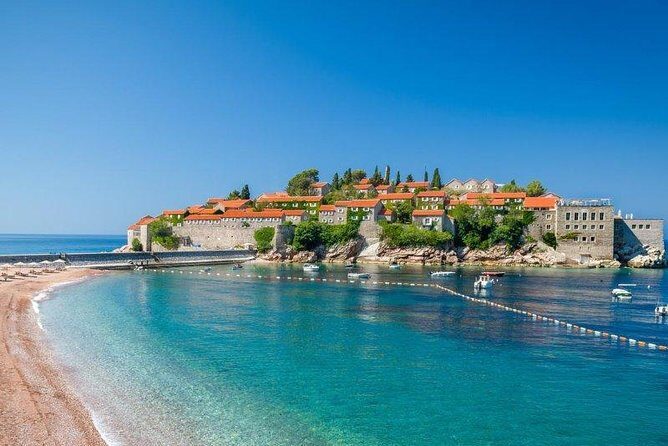
You meet near central Bucharest (start point is Bulevardul Regina Elisabeta 7, București) with an early departure around the 8:00–8:30 window depending on how they stage the group. Then day one is all about natural wow-factor.
First stop: Devetashka Cave. What makes this cave different is how it’s lit and how the interior feels alive. The floor is covered with greenery, especially in spring and summer, which can be a mind-bender the first time you see plant growth in a cave environment. The admission ticket is not included, so budget a bit for this one.
Next: Krushunskiye Waterfalls. This is a travertine cascade with lush vegetation, round-shaped terraces, and small natural pools fed by mineral water. The main fall is around 20 meters, splitting into smaller sections as it goes down softer limestone. Admission is not included again, so you’ll pay there too.
Then you overnight in Lovech at a 4 hotel (the trip description also mentions 3-star comfort in general, so treat expectations as midrange rather than luxury). Day one ends with real decompression time. You’ll want that after cave-walk + waterfall-walk legs.
Day 2: Lovech’s Covered Bridge and Sofia’s domes, mosques, and shopping street
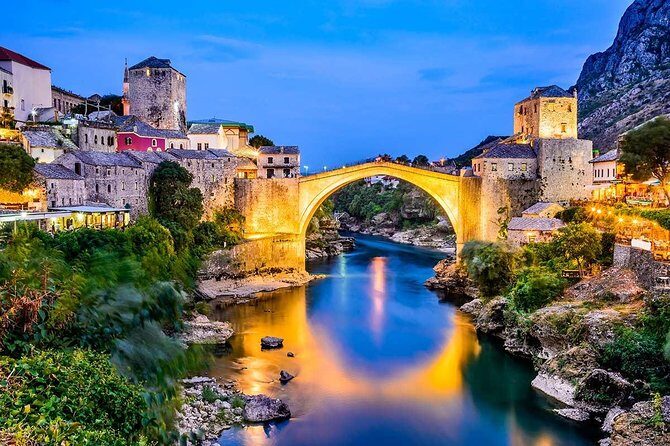
Lovech on day two is short and sweet, and it’s the kind of stop that makes the route feel more personal than just “big-city hopping.”
You’ll visit the Covered Bridge over the Osam River. It connects two halves of the town and is a distinctive construction. It’s not just a photo stop. It also gives you a quick sense of how these towns were built to function day-to-day, long before modern roads took over.
Then you roll onward to Sofia, arriving in the evening. The walk tour focuses on the old and iconic:
- Alexander Nevsky Cathedral (gold-domed)
- Saint (Sveta) Sofia Church
- Banya Bashi Mosque
- Sofia Synagogue
- Vitosha shopping street
The mix is the point. You see how layered Sofia is—Orthodox Christianity, Ottoman-era Islamic presence, and Jewish history all in the same stroll. Even if you don’t go inside every building, the street-level connections help you understand the city’s character fast.
Day 3: Rila Monastery’s UNESCO church art, then Skopje at night
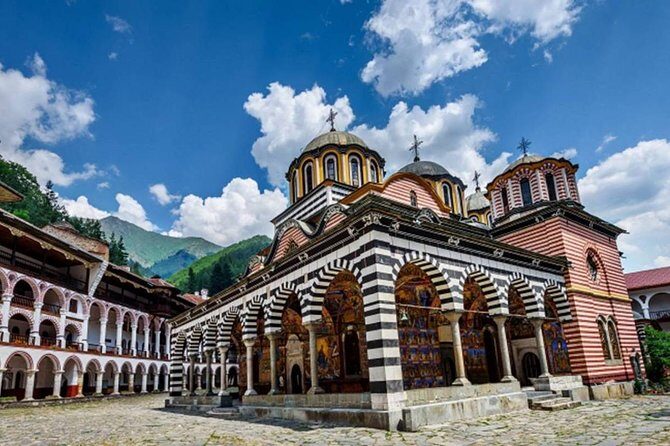
Day three starts with one of Bulgaria’s big-name sites: Rila Monastery, a UNESCO World Heritage Site. It traces back to the 10th century and is tied to Saint Ivan Rilsky (St John of Rila). You’re visiting the church, and it’s described as being adorned by top 19th-century masters from different schools of painting and woodcarving.
The practical angle: monastery visits can be tiring if you rush. Give yourself time to look slowly at details inside the church, because that’s where the value is—religious art and woodwork that you won’t fully appreciate through quick glance photography.
After breakfast, you travel to Skopje, arriving in the early evening. You get an orientation tour before heading to your centrally located hotel. It helps because Skopje’s layout can be confusing at first, and a quick orientation saves you time on day four’s longer walking tour.

Day 4: Skopje’s Old Bazaar and Kale Fortress, then the jump to Ohrid
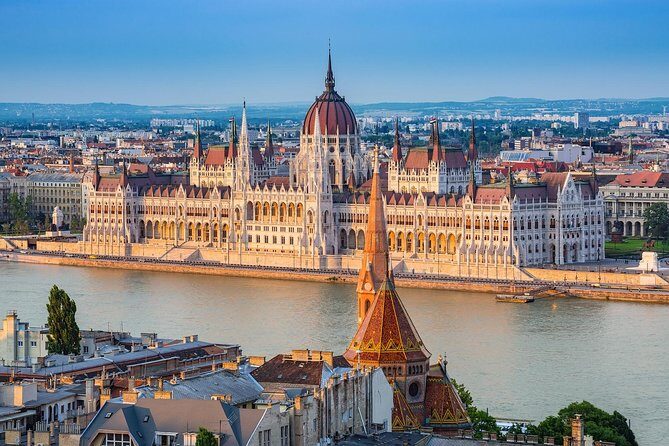
The walking tour in Skopje pulls together religious landmarks, market streets, and big historic markers.
You’ll see:
- the quay of the Vardar River
- the Old Bazaar, described as the biggest bazaar preserved in the Balkans today
- the Memorial House of Mother Teresa
- Kale Fortress, with a history noted as 1500 years old
- Macedonia Square, including the statue of Alexander the Great
What I like about this style of tour is it pairs the famous names with the street geometry. You’re not just ticking boxes. You walk the narrow bazaar lanes, then tie that experience to the memorial and fortress views, which makes the city feel coherent.
Then you move on to Ohrid. Ohrid sits on the lake of the same name and is also UNESCO-listed. You’ll walk the old city center: narrow streets and squares, an ancient theater area, older churches and monasteries, plus Sveti Sofia Church and Tsar Samuil’s Fortress. You also get a pedestrian shopping street. If you like cities that feel human-scale rather than “museum-only,” this one delivers.
Day 5: Tirana’s Skanderbeg Square and the Albanian border crossing mood shift
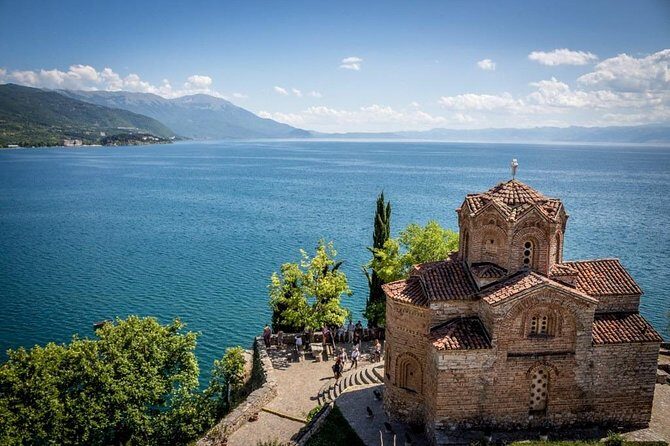
On day five, you continue the route, crossing the Macedonian–Albanian border, then arriving in Tirana.
The city walk is built around major landmarks:
- Skanderbeg Square
- National History Museum
- Et’hem Bey Mosque
- Skanderbeg’s statue
Tirana’s energy can feel different after a string of monasteries and lake towns. That’s not a bad thing. It keeps the trip from feeling like only old stones. If you enjoy urban sightseeing—squares, monuments, and religious architecture near each other—this day works well.
Day 6: Kotor’s Stari Grad UNESCO old town at night
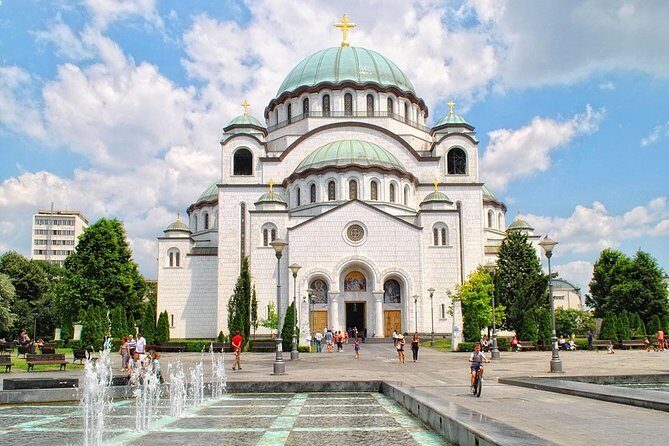
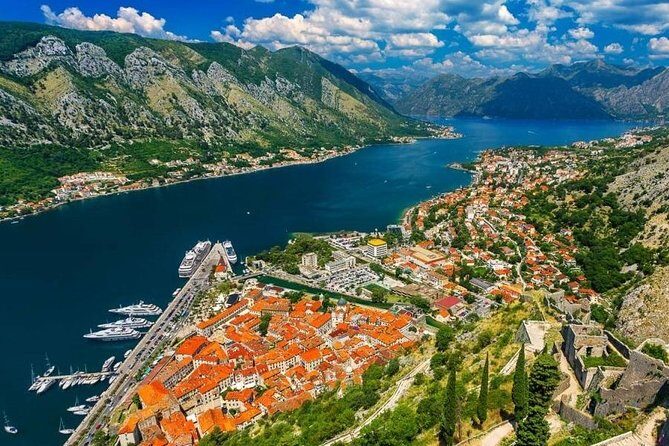
Day six is about arrival and atmosphere. You get into Kotor in the evening and then discover the fortified old town, Stari Grad, which is UNESCO World Heritage.
This is one of those places where the timing matters. Evening light and slower foot traffic tend to make the walls feel more imposing and the streets more atmospheric. Since the focus here is “discover,” you’re not forced into a long, nonstop checklist. You can just walk and take it in.
If you’re the type who likes viewpoint breaks, Kotor usually rewards pacing. Keep some energy for wandering after the tour wraps, if your hotel is close enough.
Day 7: Mostar’s Old Bridge history, then Sarajevo’s Latin Bridge and WWI story
Day seven is where the itinerary turns emotional in a good way—history you can feel under your feet.
In Mostar, you focus on the old town and the Old Bridge of Mostar. The bridge was built in 1566, and it became a reason the city developed around that crossing. It was destroyed in November 1993 during the Siege of Mostar. The walking tour explains the story and the reasons behind the destruction.
There’s also a living tradition tied to the bridge: a bridge-jumping tradition where young locals compete to jump off in front of visitors. It’s not just spectacle; it’s a sign of how communities rebuild rituals after damage.
After Mostar, you travel on a scenic road passing the Jablanica lake and through the Neretva River canyon, arriving in Sarajevo.
Sarajevo’s walk covers:
- Ottoman and Austria-Hungarian parts of the city
- markets and bazaars
- mosques, churches, and synagogues
- Latin Bridge, with the WWI story tied to this location
- 1984 Winter Olympics and what life was like during the Siege of Sarajevo
This day’s value is how the guide connects architecture to events. You don’t just see styles. You understand why they coexist in one city.
Day 8: Belgrade Republic Square to Kalemegdan and the Danube-Sava meeting point
Belgrade arrives after breakfast. In the afternoon you hit key landmarks with the kind of mix that makes the city feel both historic and modern.
Stops include:
- Republic Square
- the National Theater and National Museum
- Skadarlija (Bohemian Quarter)
- Kalemegdan Park and Belgrade Fortress
- Victor, Belgrade’s famous symbol
- the confluence of the Sava and Danube rivers
You also visit older sections with Ottoman heritage, plus the fact that the city’s only mosque is included in the tour overview. That “one mosque” detail makes you pay attention to how the city’s religious geography changed over time.
This is a good day for food timing. Belgrade’s streets tend to reward an appetite, so if your schedule allows, plan a meal when the tour ends rather than searching in the dark.
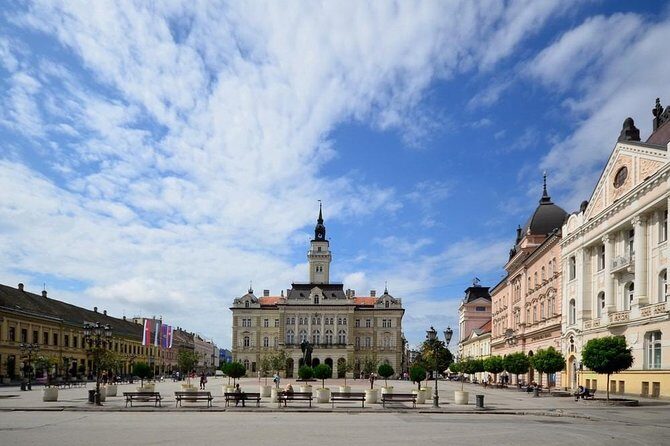
Day 9: Novi Sad’s Danube promenades, then Budapest arrival near Kerepesi station
You leave early for Novi Sad, with a stop that’s built around walking and river views.
You’ll see:
- Zmaj Jovina Street and the promenade
- the ornamental Palace of the Orthodox Bishop
- Dunavska Street with its long line of 19th-century houses
- the Danube embankment and the outside of Petrovaradin Fortress
Then you head onward to Budapest, arriving in the evening. You’ll get a taste of the city’s nickname and setting, but the itinerary doesn’t promise a full late-day walk here. Plan to use the evening for settling in and getting your bearings, especially since your end point is listed near Kerepesi út 2.
Hotels, walking level, and what to pack for daily city strolls
This tour keeps things moving, so your feet will do some work. The activity is described as an easy walk with a moderate pace, but don’t confuse that with “no effort.” You’ll do walking tours from about 2 hours up to 4–5 hours, typically 1 km to 7 km depending on the day.
They also note small practical burdens:
- you might carry your own bag up a few steps when entering some hotels
- most hotels have elevators, so it’s not a disaster
- you should have a moderate fitness level and come with comfortable shoes
Packing basics:
- comfortable walking shoes you already trust
- a light layer for church interiors and air-conditioned vehicles
- a day bag for water/snacks during long gaps between meals
One other practical note: hotel quality can vary. The general promise is 4 hotels, and breakfast is included. But since at least one traveler expressed disappointment about hotels, I’d keep your expectations grounded and treat this as a value-focused route, not a luxury comfort cruise.
Who should book this Balkans tour (and who should skip it)
You’ll likely love this tour if:
- you want a one-way circuit with minimal wasted days
- you like guided walking tours where the guide explains what you’re seeing
- UNESCO stops matter to you, especially monasteries and historic old towns
- you’re comfortable with moderate walking and long travel days
You might want to look elsewhere if:
- you hate road time and want mostly single-city exploring
- you’re very sensitive to vehicle comfort and timing
- you expect hotel quality to feel consistently upscale
The biggest decision factor is how you feel about motion. If you enjoy seeing a lot without planning every transfer, this works. If you want long lazy mornings and short commutes only, the pace may wear you down.
Should you book this tour?
I’d book it if your goal is to cover the Balkans in a structured, guided way—Bucharest to Sofia to the Adriatic, then up through Sarajevo, Belgrade, and into Budapest—without doing the logistics yourself. The included transport, breakfasts, and guided context make it a solid value for the amount of ground you cover.
I’d hesitate if you’re highly picky about vehicle comfort or you need perfectly timed departures every day. Consider this a practical road-and-walk tour. Bring steady expectations, comfortable shoes, and a flexible mindset—and you’ll get a rewarding mix of nature stops and layered city history.
FAQ
Where does the tour start and end?
It starts in Bucharest at Bulevardul Regina Elisabeta 7, and it ends in Budapest near Kerepesi út 2, listed as close to a train station.
How long is the tour?
The itinerary runs for about 9 days, with 8 nights of accommodation.
What’s included in the price?
The package includes 8 nights in 4 hotels, air-conditioned transport for the entire tour, a professional tour leader, and breakfast on 8 days.
What is not included?
Tips for the driver/tour guide (5 euro/day/person) are not included. Food and drinks are not included unless specified, and entrance fees at museums are not included.
Are there walking requirements?
Yes. It’s described as an easy walking tour with a moderate pace, but you should be prepared for walking tours from about 2 hours up to 4–5 hours and roughly 1 km to 7 km depending on the day.
What languages is the tour offered in?
The tour is offered in English.
How large is the group?
The tour has a maximum of 46 travelers.
What do I need to travel?
A current valid passport is required on the day of travel.
What is the cancellation window?
You can cancel up to 6 days in advance for a full refund, or 2–6 days in advance for a 50% refund. Less than 2 days before the start time is not refundable.