REVIEW · BUCHAREST
8h Bucharest Communism Tour – Best of Bucharest with Dracula’s Tomb
Book on Viator →Operated by Nicolas Experience Tours · Bookable on Viator
That second-person bus-window view of power feels unreal.
This 8-hour Bucharest communism tour strings together the big symbols of the Ceaușescu era and the places where people tried to resist it, then adds a very different twist at Snagov Monastery. I love how the day gives you context without making it heavy every minute, and I also like that you get both the official monuments and the human stories behind them. One caution: some of the major sights have entrance fees not included, so the final cost depends on what you choose to pay for.
In This Review
- What I’d expect from the day
- Key Highlights to Know Before You Go
- People’s House: seeing how totalitarian power gets built
- National Village Museum: traditional Romanian life in one place
- Calea Victoriei: royal elegance meets party power
- Revolution Square: where the 1989 story becomes physical
- Snagov Monastery: Dracula’s tomb on an island ride
- Ceaușescu Mansion: Spring Palace details that sharpen the story
- Price and logistics: what you’re paying for, and what to plan
- Who should book this communism + Dracula combo
- Should you book the 8h Bucharest Communism Tour?
- FAQ
- How long is the Bucharest communism tour?
- What’s the price per person?
- Does the tour include pickup and drop-off?
- Is this tour private?
- Are entrance tickets included?
- Is food included?
- Which stops have free admission?
- How far is Snagov Monastery from Bucharest?
- Do I get a mobile ticket?
- Is free cancellation available?
What I’d expect from the day
You’ll start with the mind-bending scale of the Palace of Parliament, then shift to everyday Romanian life at the National Village Museum. After that, you’ll move along Calea Victoriei and hit Revolution Square, where the 1989 story becomes visible in the very buildings people fought over. You’ll spend time outside the city at Snagov, then end with the Ceaușescu family residence, known as the Spring Palace.
The best part is the way the tour connects political power to architecture and space. I also appreciate the human touch in the guides: in recent comments, guides named Nicolas and Răzvan came through as flexible and sharp on details, with a friendly sense of humor that keeps the mood from turning into a lecture.
Key Highlights to Know Before You Go
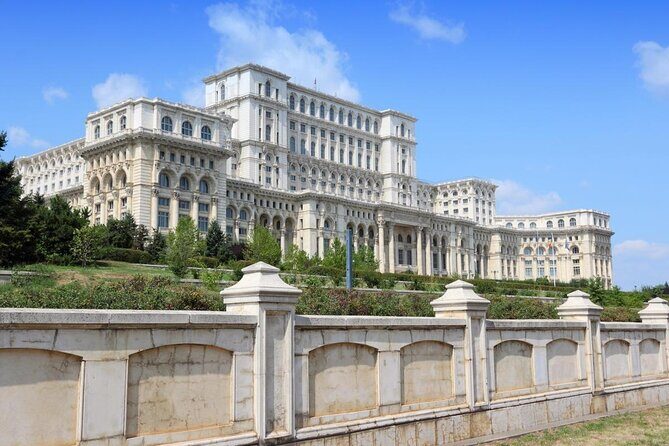
- People’s House scale: see the massive administrative machine of the regime in person.
- Village Museum contrast: switch from state power to traditional Romanian homes and village life.
- Calea Victoriei contradictions: royal-era landmarks sit next to communist-era authority buildings.
- Revolution Square timing: a focused stop on where the 1989 revolution turned the page.
- Snagov Monastery and Dracula’s tomb: a 40-minute outside-city island visit tied to popular legend.
- Ceaușescu Mansion interior-era design facts: you learn who shaped the palace and its grounds.
You can also read our reviews of more tours and experiences in Bucharest.
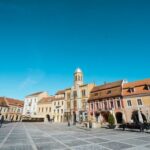
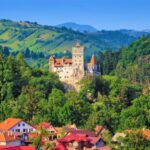
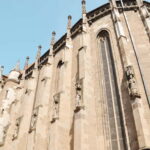
People’s House: seeing how totalitarian power gets built
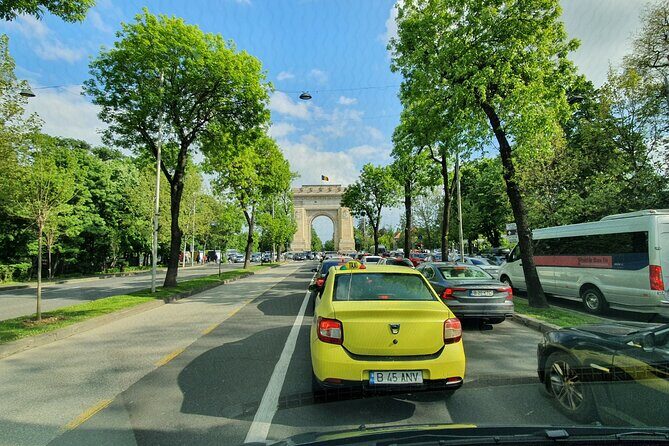
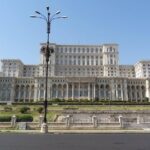
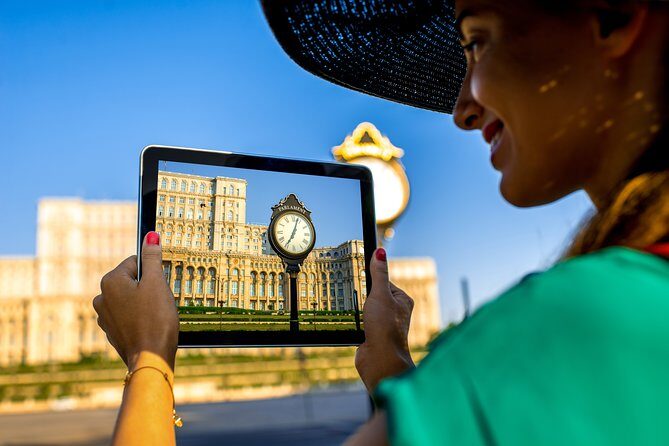
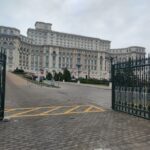
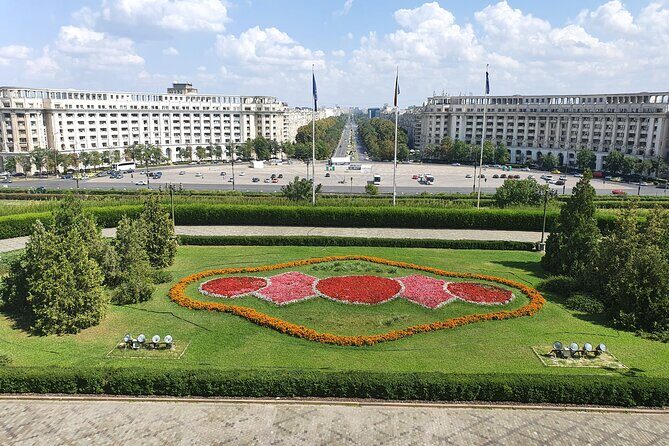
If you like your history visual, this is your first big hit. The Palace of Parliament, also called People’s House, is where the communist story turns from slogans into something physical: you get to stand in a building tied to megalomania and domination, and you really feel the absurdity of it. The tour frames it as a lesson in how totalitarian systems can damage a country, and the building does not make that easy to ignore.
The scale matters here. The tour points out that it’s the second largest administrative building on the planet after the Pentagon. That kind of comparison isn’t just trivia. It tells your brain to recalibrate: you’re not looking at a landmark you stroll through; you’re looking at a statement meant to dwarf people.
How to enjoy it: go in ready to look up and out. Let your guide point out the obvious size first, then listen for the quieter meaning: how this kind of opulence crushes individual scale.
Possible drawback: admission isn’t included for this stop. So if you’re budgeting tight, check what you’ll pay on-site before you get your heart set on seeing everything.
National Village Museum: traditional Romanian life in one place
After the political monument, the day takes a welcome turn to everyday life. At the National Village Museum, you see traditional Romanian houses from across the country. The tour emphasizes how these homes were built with local materials and how the village setting reflects a simpler rhythm of life tied to the land.
What I like about this stop is the emotional reset. You move from state-imposed grandeur to a picture of ordinary people building homes they could actually sustain. The tour highlights Romanian traditions and the idea of ecological and sustainable living in a backyard sense, not in a modern museum-display way.
You’ll also get the “how it’s made” vibe: wood and adobe houses, and also stone structures depending on the region. The tour specifically mentions national symbols you might recognize, like a mill and a wooden church. That helps you connect with the place beyond just walking through rooms.
Pro tip: this is a good moment to ask your guide for context about why certain houses or symbols were chosen for preservation. Even if you’re not a museum person, this stop helps you understand what the communists were trying to reshape versus what local culture kept intact.
Note on tickets: the tour data you provided indicates this museum stop is part of your experience, but entrance fees are not listed for this specific stop in the same way as other locations. Since tickets can vary by site, I’d plan to pay only if you’re asked on arrival.
Calea Victoriei: royal elegance meets party power
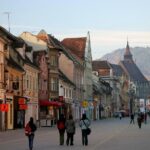
Next comes Calea Victoriei, a stretch of Bucharest that’s perfect for spotting contradictions in one glance. This is where the day becomes cinematic: on one side you have the Royal Palace, and on the other you run into the Central Committee of the Romanian Communist Party and the city spaces linked to the fall of Nicolae Ceaușescu.
The tour frames this corridor as a history collision. You’re shown the older Orthodox churches, the cultural businesses, and the “everyday Bucharest” layer that sits right beside the political story. That’s not just sightseeing. It’s how you learn a city has layers, and the communism chapter isn’t sealed behind a fence—it’s written into streets you can still walk.
Even the details are useful. The tour mentions Revolution Square as a place where Ceaușescu fled by helicopter. Whether you find that dramatic or grim, it gives you a mental map for why this part of Bucharest mattered so much in December 1989.
Time feel: this is a shorter stop, about 45 minutes, so don’t try to absorb every building. Instead, pick the few your guide points out and let those anchors do the work.
Revolution Square: where the 1989 story becomes physical

Then you land at Revolution Square, and the tour slows slightly in meaning even if the clock keeps moving. This stop is about the ousting of Ceaușescu and what’s left behind: the mysteries people associate with state security, plus the controversies around fortunes and offshore accounts.
The key practical value here is orientation. The tour explains that when you reach nearby buildings like the Senate Palace, you’ll see the structure that used to house the Central Committee of the Romanian Communist Party. It also ties this area to the moment the Revolution of December 1989 started.
That’s how the story sticks. You’re not just hearing about events. You’re placing them inside real geography—what faced what, what people could reach, and which buildings became symbols fast.
Time feel: roughly 30 minutes here. It’s short enough to stay sharp, long enough to matter if you pay attention to the names your guide points out.
What to watch for: ask your guide how the day’s other sites connect back to this square. When the guide builds those links, the whole story stops feeling like separate stops and starts feeling like one city-wide narrative.
Snagov Monastery: Dracula’s tomb on an island ride
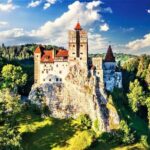
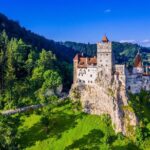
Now for the twist. Snagov Monastery is about 40 minutes outside Bucharest, on an island, and the tour calls out that it’s the place associated with Dracula’s tomb. Even if you treat the Dracula connection as legend, the atmosphere of a monastery on an island tends to make everyone’s imagination do a little extra work.
This is listed as a 1-hour stop, and since it’s outside the city, it’s a nice change of pace. You’re getting a break from urban monuments and a chance to see the Romanian landscape feel a bit closer, even if only for a day.
Important note: entrance tickets aren’t included for this stop. If you’re trying to control costs, budget a little extra here because this is one of the main “special” sights.
How to enjoy it: don’t rush to tick the Dracula box. Let the setting set the mood. Listen for how your guide explains why this specific story stuck to this place, and you’ll get more out of the visit than just the name.
Ceaușescu Mansion: Spring Palace details that sharpen the story
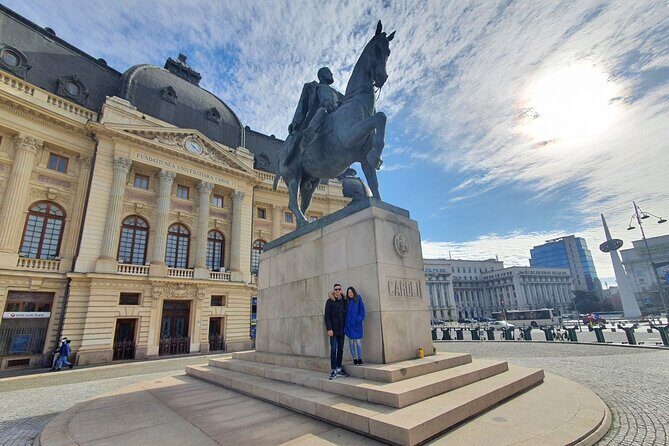
The final major stop is the Ceaușescu Mansion, also known historically as the Spring Palace. The tour lays out a clear timeline: for about a quarter of a century (1965–1989), it was the private residence of Nicolae and Elena Ceaușescu and their children: Nicu, Zoia, and Valentin.
What makes this stop so effective is that it’s not only about politics. It’s also about design and human comfort—how someone built a personal world inside a harsh era. The tour explains that the mansion was built in the mid-1960s, then enlarged between 1970 and 1972. That helps you see it as a long-term project, not a one-off fancy house.
The design credits are the kind of details I love because they give you a handle on form and craft. The tour names Aron Grimberg-Solari as the architect behind the palace design, and it credits Robert Woll for landscaping and as the main furniture designer for the house. It also mentions Teodosiu as the landscape engineer.
You might not memorize those names, but the bigger point lands: when you study how power wanted to look and feel, you understand the personality of the regime. It’s easier to judge the system after you can point to the choices it made.
Time feel: about 1 hour 20 minutes. That’s enough time to actually look, not just stand for photos.
Ticket reminder: admission isn’t included here either, so factor that into your budget.
Price and logistics: what you’re paying for, and what to plan

The price for this 8-hour private tour is listed as $297.38 per person. On paper, that can feel steep until you look at what’s included and what’s optional.
Included items that matter:
- Hotel pickup and drop-off (so you’re not coordinating transit across town)
- Private vehicle with a driver/guide
- A local guide
- Fuel surcharge and facility/landing fees
- Mobile ticket and confirmation at booking
- Group discounts (if you’re traveling with friends)
Not included:
- Entrance tickets and food and drinks
So where’s the value? You’re paying for time saved and for someone to connect the dots between buildings. The Palace of Parliament, Revolution Square, Snagov, and the Ceaușescu residence are all distinct. Without a guide, you’d likely get the facts but miss the meaning. With a good guide, you get a story that makes the city feel coherent.
Transportation comfort: from recent comments, the van was described as clean, air-conditioned, and with comfortable seating. Even if you’re not a “comfort person,” in August heat that can be the difference between enjoying the day and wanting to rush it.
Ticket math you can estimate:
- Expect to pay for the Palace of Parliament, Snagov Monastery, and the Ceaușescu Mansion (not included).
- Calea Victoriei and Revolution Square are marked as free in the info you provided.
- For the National Village Museum, the provided data is less explicit about ticket inclusion, so plan with a little flexibility.
Bring basics: comfortable shoes matter. You’ll spend time walking and standing for viewpoints. Also bring a light layer—indoor sections can feel cooler than the street.
Who should book this communism + Dracula combo
This is a strong fit if you:
- Want a one-day orientation to Bucharest beyond Old Town postcards
- Like history tied to real spaces—streets, squares, and specific buildings
- Prefer a guided pace where someone explains what you’re looking at
- Don’t mind a day that mixes heavy themes with a more pop-culture stop at Snagov
It may be less ideal if you:
- Want zero extra spending after booking. With multiple sites having tickets not included, your total can climb.
- Hate tight schedules. The day is well-paced, but it’s still a full program.
Since it’s private for your group, it suits couples, friend groups, and families who want fewer compromises than a large bus tour.
Should you book the 8h Bucharest Communism Tour?
I’d book it if you want Bucharest to make sense fast. The strongest reason is the pairing: you get the political architecture of the regime (Palace of Parliament, Revolution Square, Ceaușescu Mansion) and then you add cultural contrast (National Village Museum), plus a mood shift outside the city at Snagov Monastery with the Dracula tomb connection.
Before you decide, do two quick checks:
- Budget for entrance tickets at the major sites that aren’t included.
- If you care about language support, confirm the guide setup when you book, since the tour includes both a driver/guide and a local guide.
If you like history with a guide who can keep it moving and still make it personal, this is one of the better ways to spend a single day in Bucharest.
FAQ
How long is the Bucharest communism tour?
It runs about 8 hours.
What’s the price per person?
The tour is listed at $297.38 per person.
Does the tour include pickup and drop-off?
Yes. Hotel pickup and drop-off are included.
Is this tour private?
Yes. It’s described as a private tour/activity, meaning only your group participates.
Are entrance tickets included?
No. Entrance tickets are not included, and that applies to stops like the Palace of Parliament, Snagov Monastery, and the Ceaușescu Mansion based on the tour info you provided.
Is food included?
No. Food and drinks are not included.
Which stops have free admission?
Calea Victoriei and Revolution Square are listed with admission free.
How far is Snagov Monastery from Bucharest?
Snagov Monastery is about 40 minutes outside Bucharest.
Do I get a mobile ticket?
Yes. The tour includes a mobile ticket.
Is free cancellation available?
Yes. You can cancel up to 24 hours in advance for a full refund.