REVIEW · BUCHAREST
4h Jewish Legacy in Bucharest – Private Tour by Car and Walking
Book on Viator →Operated by Supplier · Bookable on Viator
Bucharest’s Jewish past feels close-up. In about 4 hours, this private tour strings together Bucharest’s most important Jewish landmarks with a climate-controlled car and guided walking, so you get the stories without baking in the summer heat. I especially love meeting local Jewish guides at places that are still part of daily life, like the Choral Temple, and I like how the Holocaust stop is handled with care and specific context. The main thing to keep in mind: some synagogues or the Jewish theater can be closed or unavailable depending on holidays or rehearsals, so your route may adjust.
You’ll ride with an English-speaking professional guide, and in the best cases you’ll get someone with real personal ties to the city—people like Radu (a retired chemical engineer) or Sebastian (welcoming, fluent, and proud of Bucharest). Expect a tour that’s both informative and practical: you’ll see the sites, learn what matters, and still have enough time to walk around without feeling rushed.
In This Review
- Key things to notice before you go
- The “4-hour circuit” that makes Bucharest Jewish history make sense
- Riding in comfort: hotel pickup, English guide, and a smooth schedule
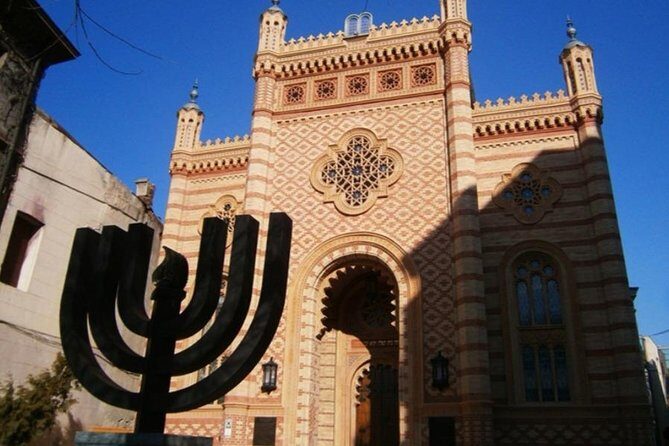
- Stop 1: Choral Temple, an active synagogue rebuilt after WWII
- Stop 2: The Holy Union Temple Museum—Jewish life told through rooms and objects
- Stop 3: Romania’s Holocaust Memorial and the word zachor
- Stop 4: Teatrul Evreiesc de Stat—when the theater is accessible
- When synagogues are closed: how the tour stays useful
- Price and value: what $130.97 buys you in real terms
- Who this tour suits best
- Should you book this Jewish Legacy in Bucharest tour?
- FAQ
- What’s the duration of the tour?
- What does the tour price include, and what’s extra?
- Is the Holocaust Memorial admission included?
- Can I visit the Jewish State Theatre during the tour?
- Is this tour private?
- Can I get a full refund if I change my mind?
Key things to notice before you go
- A private format means only your group, with pickup and drop-off at your hotel
- Stops include active Jewish sites, not just photo backdrops
- Holocaust Memorial is free and designed around the single word zachor (remember)
- Entrance fees are extra, so budget for a few small ticket costs
- The Jewish theater depends on rehearsals, so it might not be open when you visit
- Route flexibility can happen if a synagogue is closed
The “4-hour circuit” that makes Bucharest Jewish history make sense
This tour works because it’s built like a focused walking-and-driving circuit. You’re not wandering randomly through the city trying to match guidebook captions to real buildings. Instead, you get a guided sequence that helps you understand how Jewish life in Bucharest evolved, where it gathered, and what was lost.
The private vehicle is a big deal in Bucharest. Distances are manageable, but neighborhoods and streets change character fast. Having a car keeps the day comfortable, especially if the weather turns or if you’re walking more than you expected.
I also like the pacing: four hours is long enough to hit meaningful places—temple, museum, remembrance—without turning into a history lecture marathon.
You can also read our reviews of more private tours in Bucharest

Riding in comfort: hotel pickup, English guide, and a smooth schedule
The logistics are simple and worth it. You start around 10:00 am, and the plan includes hotel pickup and drop-off, so you don’t waste time negotiating transport before you even start learning.
Your guide is English-speaking and professional, and the experience is designed for a group that moves together. In practice, that means you’ll get the “why” behind what you see, not just dates and names. In good tours, that storytelling is helped by real depth: guides with lifelong ties to Bucharest have a way of explaining the city that feels lived-in, not memorized.
One practical note: the tour uses a mobile ticket, and locations are near public transportation. So even if you’re independently exploring before or after, the stops are logically placed.
Stop 1: Choral Temple, an active synagogue rebuilt after WWII
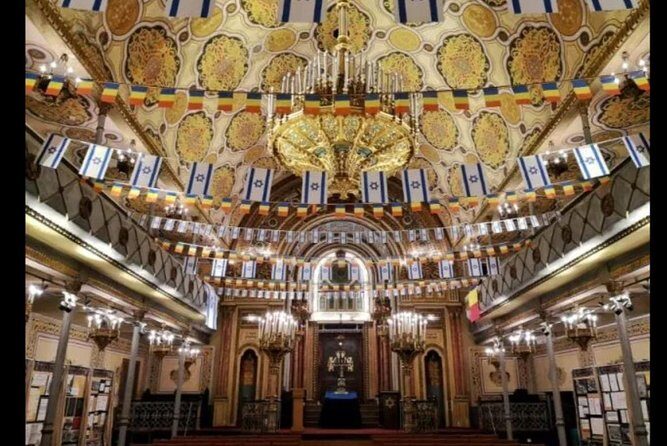
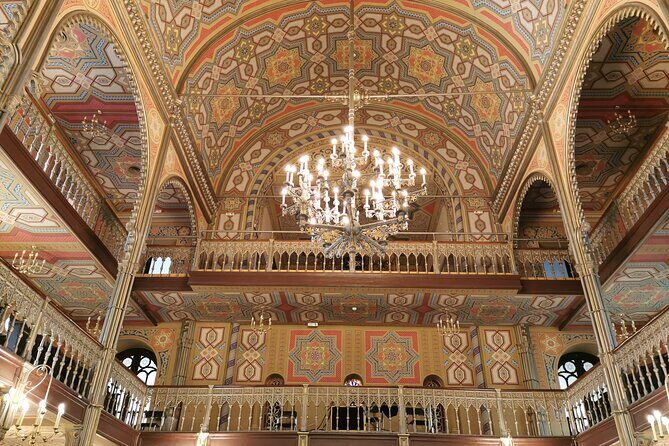
The Choral Temple is the kind of site that changes your sense of time. It’s not only a monument; it still hosts daily religious services in a smaller hall, making it one of the few active synagogues in Bucharest and in Romania.
The building is also historically connected to another synagogue tradition. It’s a copy of Vienna’s Leopoldstadt-Tempelgasse Great Synagogue, which matters because it shows how communities shared models, not just prayers. Then came the rupture: the temple was devastated by the far-right Legionaries and Nazis. After World War II, it was restored in 1945, and it continues serving worshippers today.
What you should expect on-site: you’ll get oriented first—what you’re seeing, how it fits into Bucharest’s Jewish history, and how the building survived when so much else was destroyed. If you’re there during service hours, the atmosphere is especially powerful.
Drawback to plan for: admission here is an extra ticket (around 30 RON / €6 per person), and if the timing doesn’t line up perfectly for a visit window, you might spend more time outside or in less extensive areas than you hoped.
Stop 2: The Holy Union Temple Museum—Jewish life told through rooms and objects
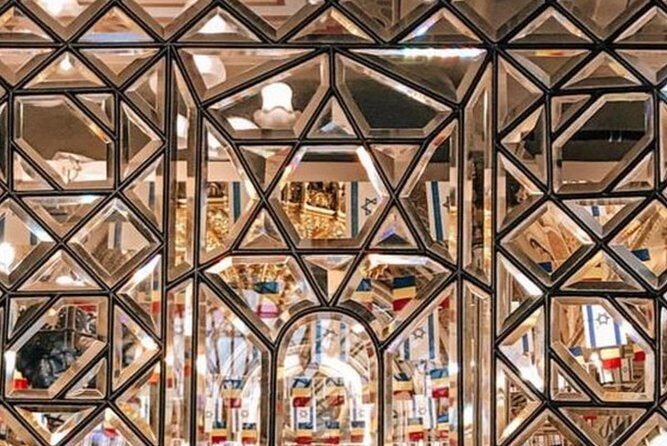
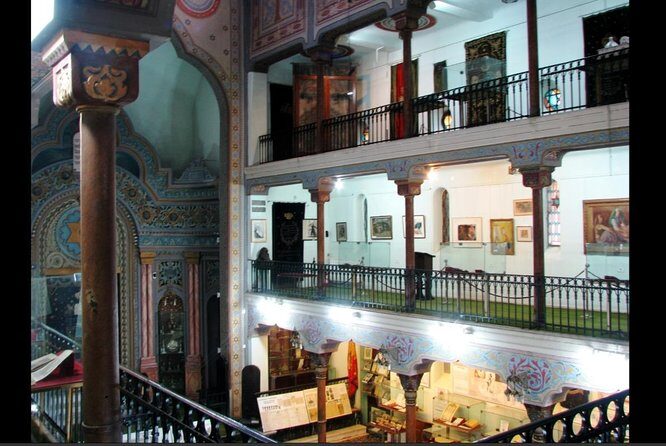
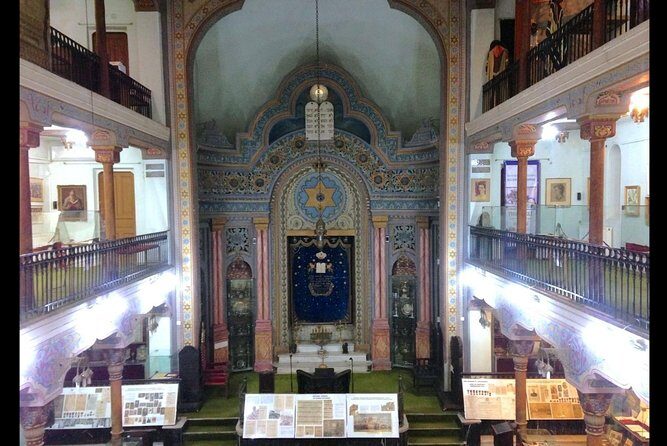
Next is the Museum of History of the Jewish Community, housed in the Holy Union Temple synagogue. The architecture dates to 1836, and it has functioned as a museum since 1978. That already tells you the museum’s mission: preserving memory through both the building and the collection inside.
This stop is valuable because it doesn’t treat Jewish history as only tragedy or only religion. Instead, you’re shown how the community of Bucharest once lived—through separate exhibitions that focus on everyday culture, communal structure, and the artifacts that carried meaning.
One of the strongest details tied to the museum is the liturgical collection assembled by Moses Rosen, Romania’s chief rabbi from 1964 to 1994. Rosen founded the museum, and that adds an interesting layer: the collection wasn’t assembled as an afterthought. It was intentionally gathered to keep community identity visible.
On a guided visit, you’ll usually get help moving through the exhibitions without getting lost in the “museum maze.” The guide’s job here is key. You’ll leave with a clearer picture of what kind of Jewish community Bucharest had—before the Holocaust tore it apart.
Practical detail: admission is extra (around 30 RON / €6 per person).
Stop 3: Romania’s Holocaust Memorial and the word zachor
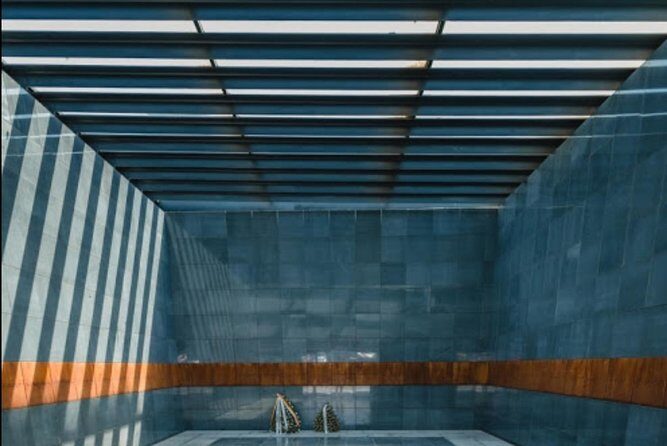
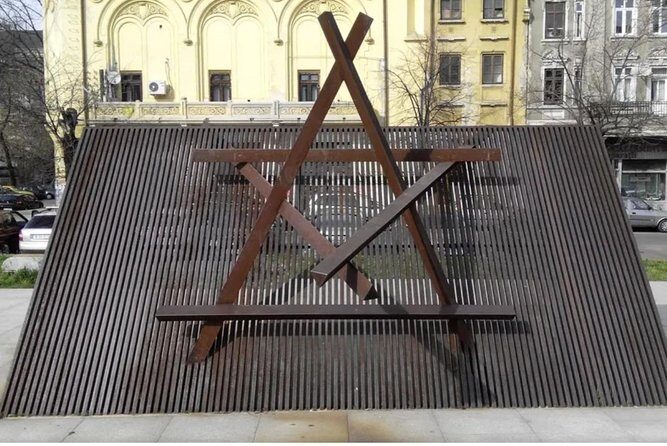
The Holocaust Memorial is the emotional anchor of the route. It was unveiled in October 2009, and it explicitly recognizes Romania’s role in the genocide of Europe’s Jews. The memorial’s framing references findings from the Wiesel Report, which concluded that no country outside Germany was responsible for deaths of more Jews than Romania.
The design is simple and unforgettable. The memorial includes a column where each side is written a single Hebrew letter. Together, the letters read zachor, meaning remember. There’s also a hall of remembrance and plaques containing the names of many Romanian Holocaust victims.
This is one of those stops where the guide’s tone matters. A good guide won’t rush. You’ll likely get a guided explanation of how the memorial’s symbolism works and why the emphasis on Romania’s responsibility is significant.
The best part for your day-planning: admission is free. So even if you need a small reset before the next stop, you’re not adding another ticket line item.

Stop 4: Teatrul Evreiesc de Stat—when the theater is accessible
The Teatrul Evreiesc de Stat is an edifice of Hebrew culture and often associated with Bucharest’s Yiddish-language arts tradition. The key detail for planning is that the theater can be visited only if there are no rehearsals.
That matters because it sets expectations. You may step inside for a guided look, or you may have to do more of the explanation outside, depending on how the schedule lands that day.
In my view, this is still worth including because it broadens the idea of Jewish legacy beyond synagogues and museums. Jewish cultural life also means performance, language, and community art—even when those traditions have been interrupted and reshaped over time.
Entrance fees for the theater are extra (around 25 RON / €5 per person). If the theater isn’t accessible during your time window, the guide may shift the day to keep it meaningful.
When synagogues are closed: how the tour stays useful
One of the honest realities of a historical city tour is that not every religious site is available on demand. This can happen for holiday reasons, and it can also affect whether additional synagogues you’re hoping to see are open.
The tour is designed to handle this. If a stop isn’t accessible, you may drive around or adjust so you still understand the neighborhood layout and historical connections. That’s not a guarantee you’ll see every possible doorway inside, but it’s a better approach than pretending everything will always be open.
The tour also notes that the Mamular Synagogue is not open every day. So if you’re the type who builds a day around a specific location, keep flexibility in your plans. A tour like this is most rewarding when you treat it as a guided narrative of the area, not a checklist of perfect interior access.
Price and value: what $130.97 buys you in real terms
The price is $130.97 per person for about four hours, in a private format with hotel pickup and a professional English guide plus private transportation. That’s not “budget tour” pricing, but for Bucharest, private history tours can be worth it when you want depth and comfort instead of a crowded bus ride.
Here’s where the value really shows up:
- You’re not managing transport between far-flung stops.
- You get a guide who explains why each place exists, not just what it looks like.
- You can keep a steady pace without rushing for tickets and directions.
What’s extra: admissions. Based on the listed ticket costs, you may pay roughly €17 total for the Choral Temple (about €6), the Jewish community museum (about €6), and the Jewish theater (about €5). The Holocaust Memorial is free.
So if you budget for a handful of tickets, the overall cost starts to feel like a reasonable trade for a guided, private day with comfort. If entrances are important to you, it’s smart to check your timing and remember that opening hours and rehearsals can affect what you can enter.
Who this tour suits best
This is ideal if you want Jewish Bucharest history with structure and context. You’ll get the most out of it if you care about:
- how Jewish community life was organized in the city
- the survival and restoration of major places of worship
- how Romania’s Holocaust history is remembered and framed
- how cultural life extended into theater and language
It’s also a good choice for people who don’t want to piece together transportation between sites. The private car is a practical advantage, especially if you’re short on time or you’re traveling in warmer months.
If you need a perfectly predictable schedule where every interior stop is guaranteed, you should temper expectations. Access can vary. But the tour’s flexibility is part of why it stays worthwhile.
Should you book this Jewish Legacy in Bucharest tour?
If your goal is meaningful Jewish history in Bucharest with a guide who can connect the dots, I think this is a strong booking. The combination of an active synagogue experience, a museum shaped by Moses Rosen’s legacy, and the zachor memorial makes the day feel coherent. Add hotel pickup and climate-controlled comfort, and it becomes one of the less stressful ways to cover this theme.
I would only hesitate if you’re traveling during a period when you strongly suspect multiple closures (religious holidays, rehearsal conflicts) and you can’t be flexible. In that case, you might still book—but go in knowing the route may shift, and your guide will work to keep the story intact.
FAQ
What’s the duration of the tour?
It runs about 4 hours.
What does the tour price include, and what’s extra?
The tour includes a professional English guide and private transportation. Entrance fees are not included for the Choral Temple, the Museum of History of the Jewish Community, and the Jewish State Theatre.
Is the Holocaust Memorial admission included?
Yes. The Holocaust Memorial has free admission.
Can I visit the Jewish State Theatre during the tour?
You can visit it only if there are no rehearsals.
Is this tour private?
Yes. It’s a private tour/activity, and only your group participates.
Can I get a full refund if I change my mind?
Yes. You can cancel up to 24 hours in advance for a full refund.
If you tell me your travel month and whether you care more about interiors versus street-level context, I can suggest how to plan around the most common closure timing.