REVIEW · BUCHAREST
4 Days Private Tour in Transylvania Brasov Sighisoara Sibiu
Book on Viator →Operated by Supplier · Bookable on Viator
Transylvania reads like a storybook, but you stay in motion. This private 4-day route is built for your group only, with time at big sights like Peleș and Bran, plus the slower payoff of Brasov, Sighișoara, and Sibiu. The main catch is that accommodation, meals, and most entrance tickets aren’t included, so you’ll want to budget extra for evenings and admissions.
What I like most is the customizable feel: the program is flexible, and the flow can be adjusted to your pace (and your photo stops). You’re not stuck waiting on other groups, which matters when you’re hopping between medieval towns and long mountain drives.
Also, this is a “see a lot” itinerary. The driving is part of the experience, but if you hate being in a car, plan for tiring days—especially on Day 4 when the scenery gets serious.
In This Review
- Key things to know before you go
- The Transylvania route that balances legends and real places
- Price and logistics: what $872.67 covers (and what you should plan for)
- Day 1: Peleș’s royal spectacle, Bran’s Dracula myth, and Brasov’s cobblestones
- Peleș Royal Castle near Sinaia (about 2 hours)
- Bran Castle (about 2 hours)
- Brasov Historical Center (about 2 hours)
- Day 2: Rupea’s stone fortress, Viscri’s Lutheran strong church, and Sighișoara’s UNESCO walls
- Rupea Fortress (about 1 hour)
- Viscri Fortified Church (about 1 hour)
- Sighișoara Historic Center (about 3 hours)
- Day 3: Biertan’s triple-wall defense and Sibiu’s Saxon streetscape
- Biertan Fortified Church (about 1 hour)
- Sibiu (about 2 hours)
- Day 4: Transfăgărășan road drama, Bâlea Lake season choices, and Curtea de Argeș legends
- Transfăgărășan Highway (about 1 hour)
- Bâlea Lake at altitude (about 1 hour)
- Vidraru Dam (about 15 minutes)
- Curtea de Argeș Monastery and cathedral (about 1 hour)
- How a private driver and guide changes the day-to-day experience
- Practical tips so you get more out of each stop
- Who this private Transylvania tour is best for
- Should you book this 4-day Transylvania private tour?
Key things to know before you go
- Private-group pacing: only your group participates, so stops feel less rushed.
- Comfort on the road: you’re in an air-conditioned vehicle with pickup from Bucharest.
- Castles plus UNESCO churches: you get legends (Bran) and defensive architecture (Biertan/Viscri).
- Mountain-day expectations: Day 4 mixes Transfăgărășan road, Bâlea Lake, and Curtea de Argeș.
- Budget for extras: plan for meals, lodging, and about $35–$40 in cumulative entrance costs per person.
- A flexible program: the itinerary can be tailored for your group.
The Transylvania route that balances legends and real places
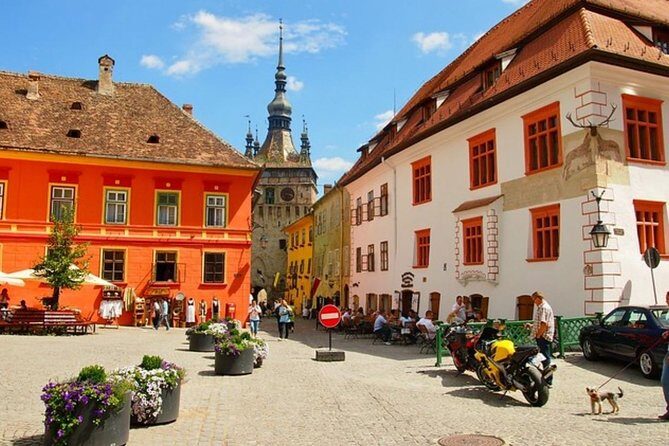
This tour hits the Transylvania “greatest hits,” but it’s not just postcard stops. You’ll move through three distinct styles of Transylvania life: royal-era showpieces (Peleș), Saxon fortified towns and churches (Viscri, Sighișoara, Biertan), and the Romanian mountain power scenes (Transfăgărășan, Vidraru Dam, and Bâlea Lake).
The value here is the mix. Many trips over-focus on Dracula vibes. This one does that too—Bran is included—but it also spends time where you can actually see how communities survived medieval conflicts: thick walls, steep positions, and planned entrances.
And because it’s private, the timing feels more human. You’re not negotiating your way through crowds during your only viewing window. You’re deciding what you want to linger on, from cobblestone squares to fortress viewpoints.
You can also read our reviews of more private tours in Bucharest
Price and logistics: what $872.67 covers (and what you should plan for)
The listed price is $872.67 per person for a private 4-day experience starting around 9:00 am, with pickup offered from Bucharest and a mobile ticket included.
Included basics:
- Private transportation and an air-conditioned vehicle
- Your group travels together without mixing with other people
- The itinerary covers multiple towns with overnight stays in Brașov, Sighișoara, and Sibiu
Not included (and this matters for your budget):
- Accommodation: listed as an average of about $70 per night with breakfast
- Meals: expect about $15–$20 per person per meal at restaurants
- Entrance tickets: listed as cumulative $35–$40 per person
So is it good value? Yes—if you’re the kind of traveler who wants the route to run cleanly without coordinating buses or hiring separate local drivers. You’re paying to remove friction. When the itinerary spans castles, three UNESCO stops, and long mountain roads, that convenience becomes the main win.
If you’re traveling on a shoestring and you’re happy to take public transport between towns, you could do it cheaper. But that’s not the point of this tour. The point is a private, guided, door-to-door style route where you can spend your energy on photos, questions, and looking closely.
Day 1: Peleș’s royal spectacle, Bran’s Dracula myth, and Brasov’s cobblestones
Day 1 sets the tone: palace beauty first, then the castle legend, then a medieval city walk.
Peleș Royal Castle near Sinaia (about 2 hours)
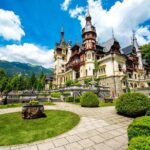
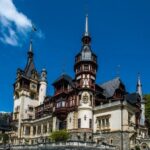
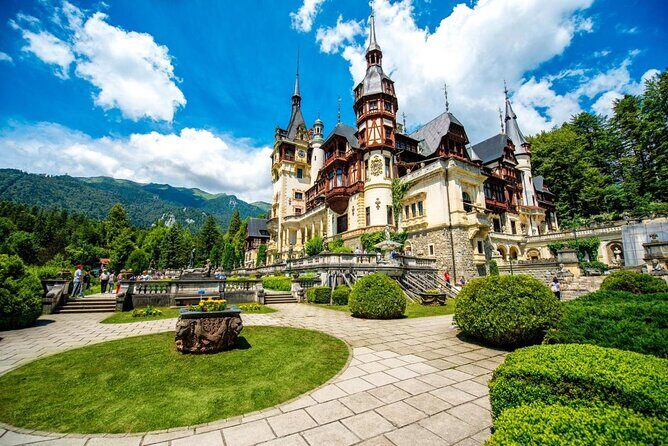
Peleș is a Neo-Renaissance castle in the Carpathian foothills near Sinaia, built between 1873 and 1914 and inaugurated in 1883 for King Carol I. The idea of a royal summer escape in the mountains is part of the charm, but what makes it worth time is the setting and the style. You get the sense of a place made to impress—then you watch the landscape frame it.
The listing notes the admission ticket is free for this stop, which is great. Still, give yourself real time here. The castle is easiest when you slow down and look at details rather than rushing through rooms.
Bran Castle (about 2 hours)
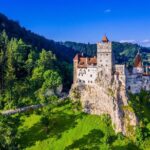
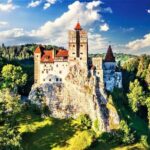
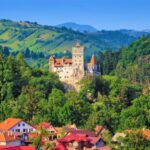
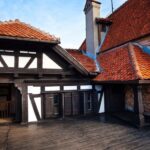
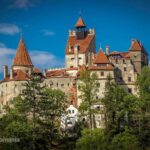
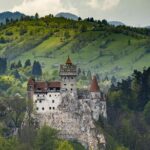
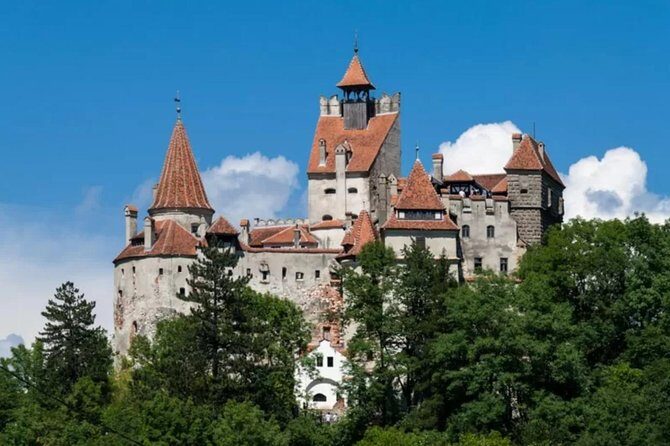
Bran sits high on a rock—about 200 feet—and it’s famous thanks to the Bram Stoker Dracula story. The castle’s roots are older than the myth: it was on the site of a Teutonic Knights stronghold from 1212, and it’s first documented in 1377 with rights for the Saxons of Kronstadt (Brasov) to build the citadel.
Here’s how I’d treat Bran: go for the atmosphere, then let your guide connect the dots between legend and the medieval fortress reality. Even if Dracula isn’t your main priority, you’ll still enjoy the castle’s location and the sense of height and defense.
You can also read our reviews of more tours and experiences in Bucharest
Brasov Historical Center (about 2 hours)
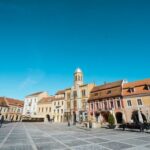
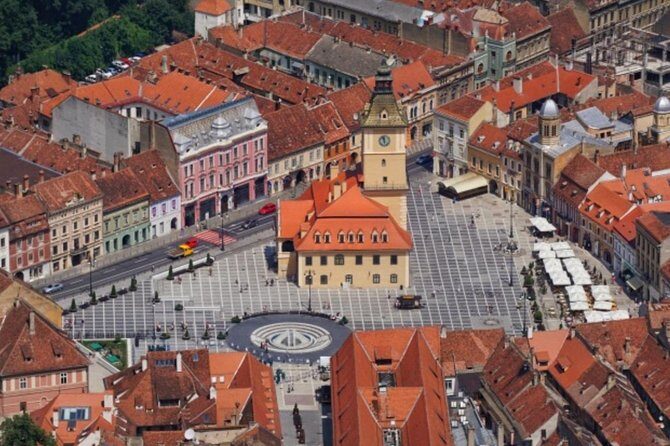
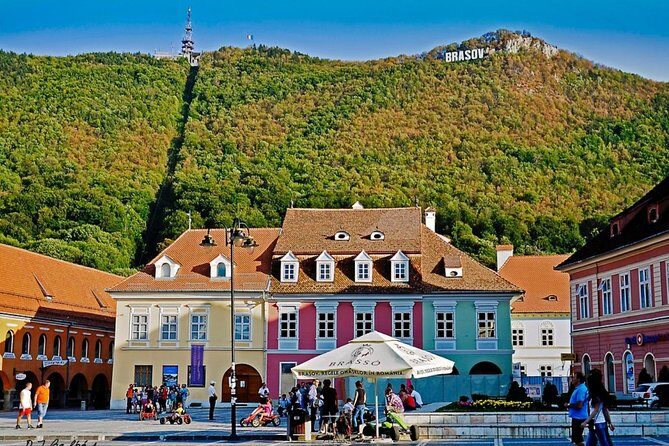
Brasov’s old town is the perfect landing after castle time. You’ll walk cobblestone streets with medieval and Baroque architecture, and you’ll see the landmark Black Church in the broader town feel. Council Square is the easy orientation point, with cafés and colorful buildings backed by Carpathian scenery.
This stop is light on “technical facts” and heavy on mood. You’ll leave with your bearings for the days ahead, especially if your evenings are spent strolling around the historic core.
Day 2: Rupea’s stone fortress, Viscri’s Lutheran strong church, and Sighișoara’s UNESCO walls
Day 2 moves from fortress and village defenses to one of Transylvania’s most atmospheric towns.
Rupea Fortress (about 1 hour)
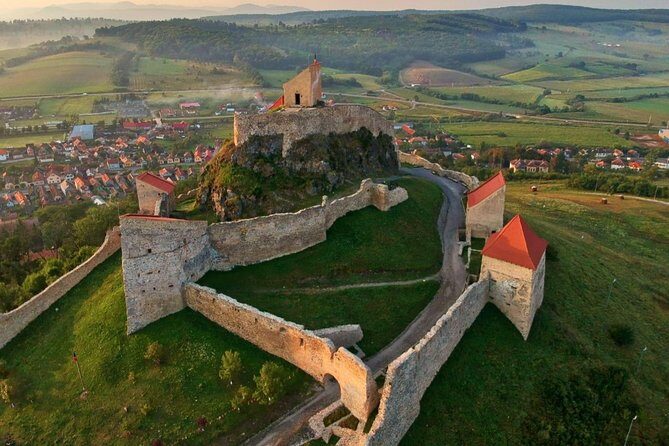
Rupea Citadel is among Romania’s oldest archaeological areas. It has signs of human settlement from the Paleolithic and early Neolithic, then later becomes a strategic stronghold. The first documentary attestation is 1324, when the Saxons revolted against King Charles I of Hungary and took refuge inside the citadel.
The current citadel rests on older layers, including a Dacian defense fort that the Romans conquered. The name comes from Latin rupes, meaning stone. From the 10th century, you get expansions, and by the 14th century Rupea is a key link between Transylvania, Moldavia, and Wallachia.
This is the kind of stop that rewards good footwear and patience. You’re not just walking a viewpoint; you’re looking at a place that shaped regional movement.
Viscri Fortified Church (about 1 hour)
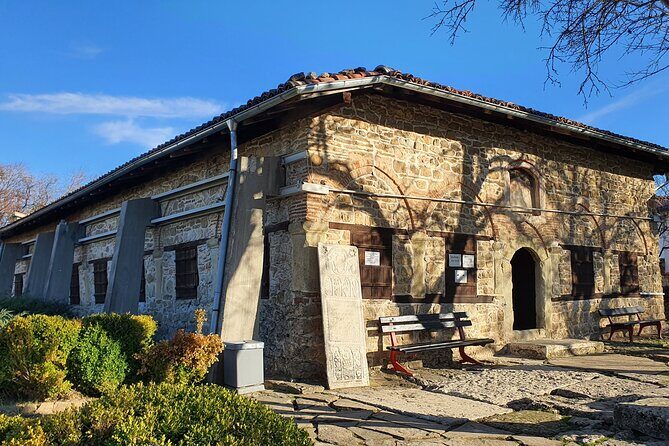
Viscri is small, but the fortified church here is a standout. The church is Lutheran now, built by the Transylvanian Saxon community when the area belonged to the Kingdom of Hungary. It began as Roman Catholic and later became Lutheran during the Reformation.
The key idea is protection. The church and village form part of the UNESCO World Heritage Site for fortified churches in Transylvania. Even without going “deep” into theology, you can see how communities mixed daily life with defense.
Sighișoara Historic Center (about 3 hours)
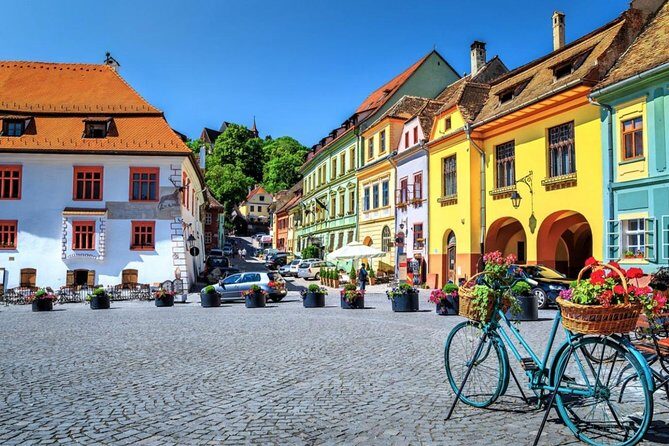
Sighișoara is UNESCO, and it feels like a medieval town that kept its shape. You’ll walk within preserved fortified walls, through cobbled streets lined with colorful buildings. The Clock Tower dominates the square area, and the town is also tied to Vlad Dracula’s birthplace, which adds a layer of mystery without taking over the whole experience.
This is one of your longer stops of the tour. Plan to spend time just walking, not only photographing. The town layout makes it easy to get “lost” in a good way.
If you get a guide like Mircea—mentioned in one of the tour notes with a humor twist (he also answers to Frank for easier pronunciation)—you’ll likely get better context as you move from street to street.
Day 3: Biertan’s triple-wall defense and Sibiu’s Saxon streetscape
Day 3 is where fortified church architecture meets a major Transylvanian city.
Biertan Fortified Church (about 1 hour)
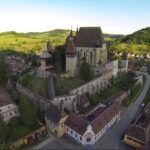
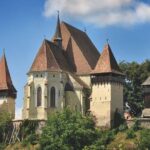
Biertan is a 15th-century fortified church sitting on a hill inside the village. What makes it powerful is the defense design: three tiers of defensive walls, each reaching about 35 feet, plus towers and gates surrounding the entire complex. The structure was essentially designed to resist medieval conquest.
Architecturally, you’ll see late-gothic features, heavy doors, and double exterior walls. The tour notes the church has the largest Transylvanian multi-paneled wooden altar and a notable wooden door that once protected treasures in the sacristy. The altar work is credited to artisans from Vienna and Nuremberg, which gives you a sense that this was not a remote backwater.
Admission is listed as free for this stop. If you only do one fortified church day out of all your time, this is a strong candidate.
Sibiu (about 2 hours)
Sibiu is a cultural center and a former hub for the Transylvanian Saxons. It was named European Capital of Culture for 2007 alongside Luxembourg. There’s also a modern quality-of-life angle: Forbes ranked it as the 8th-most idyllic place to live in 2008.
Sibiu isn’t only historic buildings. The city also administers Păltiniș, a ski resort about 35 km south. Even if you’re not thinking about skiing, it’s helpful context: Sibiu sits at a crossroads between culture and mountain life.
This stop gives your trip balance. After fortress walls, you get streets where life continued to develop—square to square, church to promenade.
Day 4: Transfăgărășan road drama, Bâlea Lake season choices, and Curtea de Argeș legends
Day 4 is the “wow factor” day, and it’s packed—castle legend doesn’t drive the whole story here. Mountain engineering and dramatic scenery do.
Transfăgărășan Highway (about 1 hour)
The Transfăgărășan (DN7C) is a paved mountain road crossing the southern Carpathians. It’s listed as the second-highest paved road in Romania after Transalpina. The road begins near Bascov close to Pitești and stretches about 90 km to the junction with DN1 and Sibiu, between peaks Moldoveanu and Negoiu.
This road was built in the early 1970s as a strategic military route, linking Transylvania and Wallachia. So yes, the views matter, but there’s also a “why it exists” story that makes the drive feel purposeful.
Bâlea Lake at altitude (about 1 hour)
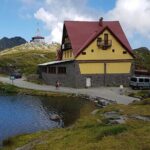
Bâlea Lake is a glacier lake at 2,034 m in the Făgăraș Mountains. The day’s timing can affect how the lake area feels, because access depends on season.
- In summer, you can reach it by car along the Transfăgărășan road.
- In the rest of the year, access is by cable car from the Bâlea Cascadă chalet.
The listing also mentions the first ice hotel in Eastern Europe was built near the lake (in 2006). Even if you’re not planning an overnight in ice, the fact that it’s built and rebuilt says something about the place: people come here to experience winter scale and mountain remoteness.
Vidraru Dam (about 15 minutes)
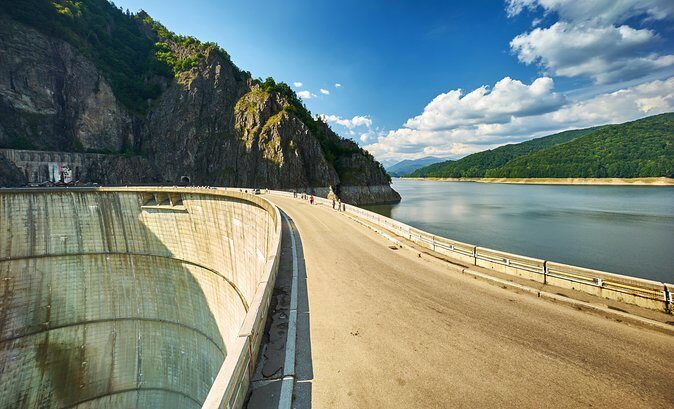
Vidraru Dam is quick but memorable if you like big infrastructure. It was completed in 1966 on the Argeș River and creates Lake Vidraru. It’s an arch dam, built primarily for hydroelectricity.
The numbers give it weight: the dam is 166 m high, with an arch length of 305 m, and it stores around 465 million cubic meters of water. The reservoir shoreline perimeter is listed as 28 km.
If you’re hoping for a long stop here, you won’t get it. But as a “breather plus viewpoint” stop, it fits the day’s pace.
Curtea de Argeș Monastery and cathedral (about 1 hour)
The day ends at Curtea de Argeș, where Romanian Orthodox architecture and local legend combine. The cathedral is part of the monastery complex, dedicated to the Dormition of the Mother of God, dating to the early 16th century. The building’s facing is pale grey limestone, and the interior is described as brick and plastered with frescoes.
There’s also a nearby Moorish-style royal palace on the monastery grounds. For story lovers, the tour notes a legend involving Radu Negru and the architect Meșterul Manole / Manoli, tied to the idea of building walls that can’t be finished.
This stop is more atmospheric than “technical.” It’s a good final chapter because it shifts you from roads and engineering to faith, symbolism, and local myths.
How a private driver and guide changes the day-to-day experience
A big part of the enjoyment here is how the trip is paced. When you have a private group, the day isn’t just a list of locations. It becomes a set of decisions.
With a capable guide like Mircea (the one described as adapting his name to make pronunciation easier), you’ll likely get answers that make the stops feel connected. That matters at places like Rupea or Biertan, where the walls and layout are doing the real storytelling.
A private car also helps you move between towns with less hassle. You’re dealing with fewer handoffs, fewer timetable headaches, and less time “figuring out where to go next.” That’s practical value, not a luxury detail.
Practical tips so you get more out of each stop
This itinerary is active and scenic. A few small choices make a big difference.
- Plan for long drive days with snacks and water, since meals aren’t included.
- Wear shoes you can walk in for cobblestones and fortress areas.
- Bring layers for altitude spots like Bâlea Lake—it’s listed at 2,034 m, and mountain weather can shift fast.
- If you care about photos, talk to your guide about timing at Sighișoara’s clock tower area and Brasov’s Council Square; those are natural magnet spots.
- If you want to keep the Dracula angle light, focus on the medieval function behind the buildings—how they were built, where they sit, and why they mattered.
This is the kind of trip where you’ll appreciate asking questions, especially when a fortification’s purpose becomes clear.
Who this private Transylvania tour is best for
I’d point this tour at you if:
- You want a structured route without the stress of planning every connection.
- You prefer private pacing over joining a big group.
- You enjoy a mix of castle legends and real-world medieval design.
- You’re okay paying extra for comfort and convenience, then using that time to look closely.
If you’re traveling with kids, this can still work, especially for the castle day and the medieval towns. Just expect that the “engineer’s day” (Transfăgărășan + dam) may be more interesting with good narration.
Should you book this 4-day Transylvania private tour?
If you want a clean, private, road-driven route that connects Peleș, Bran, UNESCO fortified churches, and mountain scenery, this is a strong choice. The biggest reason to book is the practicality: your group gets transportation, a flexible schedule, and a logical order that minimizes backtracking.
Before you book, do one quick reality check:
- You’re responsible for lodging, meals, and entrance fees (so the final cost will be higher than the headline price).
- Day 4 is a full mountain push, so you should be comfortable with lots of driving and altitude.
If those points sound like your style, book it. If you’d rather spend days slowly in one or two places, consider a shorter route instead.