REVIEW · BUCHAREST
2 Days – Private Tour to Transylvania – Brașov, Sighișoara, Sibiu
Book on Viator →Operated by Supplier · Bookable on Viator
Two days in Transylvania is a time-saver. This private route from Bucharest strings together Peleș Castle, Bran Castle, and the medieval gems of Brașov, Sighișoara, and Sibiu with an air-conditioned car and guided time you can actually use.
I like two things a lot: the door-to-door pickup and drop-off, and the way the guide helps you manage the day so you’re not stuck watching the clock. The quality of English-speaking guides (names like George, Laura, Sebastian, Catalin, Mircea, and Alin come up) seems to be a real theme.
One possible drawback: you’ll need to plan extra money for castle entrances and meals, and Peleș can be limited on Monday and Tuesday to the outer courtyard.
In This Review
- Quick hits
- Why This 2-Day Transylvania Route Works So Well from Bucharest
- Peleș Castle in Sinaia: The Fairy-Tale Castle That Actually Has Receipts
- A key planning note for Monday and Tuesday
- Bran Castle: Dracula Marketing vs the Real Story of the Fortress
- Brașov Historical Center: Medieval Streets and the Communist-Era Name Change
- Sighișoara Citadel: UNESCO Streets That Are Still Lived In
- Sibiu: Fortified Old Town Squares and the Saxon Wealth Story
- Cozia Monastery: A Short Stop with Real Religious Weight
- Transport, Pacing, and What a Private Guide Changes for You
- Price and Value: What $431.35 Per Person Really Covers
- Should You Book This Private 2-Day Transylvania Tour?
- FAQ
- Where does this tour start?
- Is transportation included?
- Is the guide available in English?
- Which major sights are included?
- Are entrance fees included for the castles?
- What is included in the price?
- What about meals?
- Is accommodation included?
- If I go on Monday or Tuesday, can I still visit Peleș Castle?
- Is this tour private and how do tickets work?
Quick hits
- Private transport saves hours: you cover more in two days without hopping between buses
- Peleș Castle details are next-level: electricity, heating, and water systems were built in early
- Bran Castle is best with context: Dracula marketing is loud, but the real castle is what you’re seeing
- Sighișoara and Sibiu feel truly medieval: UNESCO citadel streets and fortified Old Town squares
- Short Cozia Monastery stop: a meaningful Eastern Orthodox site that still runs as a place of worship
Why This 2-Day Transylvania Route Works So Well from Bucharest
This tour is built for people with limited time who still want the classic Transylvania hit: castles plus Saxon-style towns. Instead of dragging yourself across Romania on public schedules, you get a private, air-conditioned vehicle and a professional driver, which makes the whole plan feel smoother.
The other smart piece is the guide-led pacing. You’re not just dropped at a gate and told good luck; you get English guidance and a structure that keeps each day from feeling like a blur. For a two-day format, that matters a lot.
The route also makes a practical promise: you’ll see both the “Dracula” landmarks and the medieval cities that give Transylvania its texture. If you care about architecture, old-world squares, and how communities like the Transylvanian Saxons shaped these towns, this is a strong use of time.
You can also read our reviews of more private tours in Bucharest

Peleș Castle in Sinaia: The Fairy-Tale Castle That Actually Has Receipts
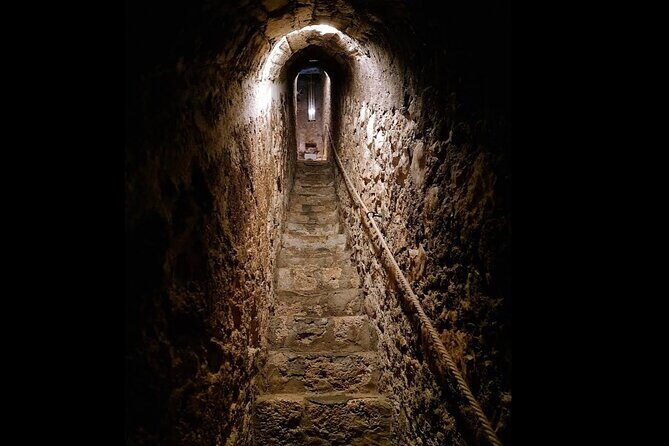
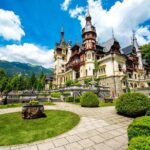
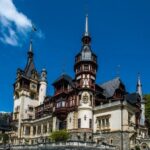
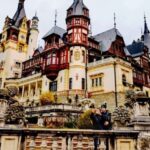
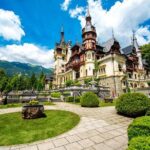
Peleș Castle is in Sinaia at the foot of the Bucegi Mountains, and it’s one of those places where the outside and inside both earn their hype. Commissioned by King Carol I in 1873 and finished in 1883, it became the royal family’s summer residence until 1947.
What I love about Peleș is how much of it is about craft and comfort. The castle has 160 rooms, Murano crystal chandeliers, German stained-glass windows, and even Cordoba leather-covered walls. And this isn’t just decorative show-off: Peleș is known as the first European castle with electricity and its own power plant, plus hot and cold running water, central heat, and a central vacuum system.
Time-wise, you’re set for about 4 hours here. That’s enough to slow down, not just snap photos at the main highlight. If you’re a museum-and-details person, this stop is likely the payoff of the day.
A key planning note for Monday and Tuesday
Peleș Castle is closed on Monday and Tuesday, so the plan switches to the outer courtyard on those days. That can still be beautiful for quick views, but it’s not the same as touring the interior. If castle interiors are your top priority, aim for a schedule outside Mon–Tue.
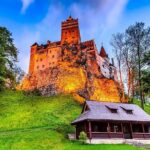
Bran Castle: Dracula Marketing vs the Real Story of the Fortress
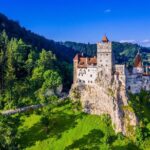
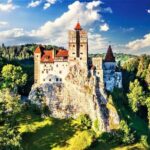
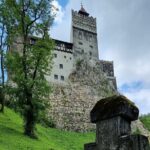
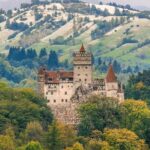
Bran Castle is the one people link to Dracula, and you’ll see that theme everywhere. But the interesting part is separating the pop-culture framing from the actual place.
Bran is often called Dracula’s Castle in international storytelling, yet the information given with this tour notes there’s no evidence Bram Stoker knew the castle. It also highlights that Stoker’s description of the fictional crumbling castle doesn’t match Bran’s look.
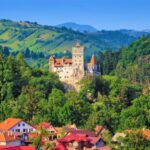
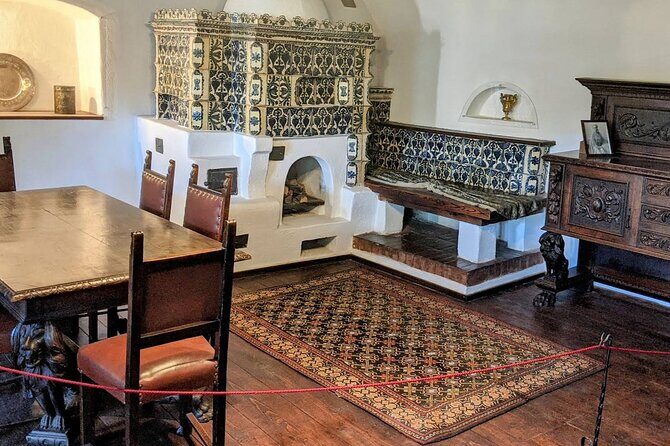
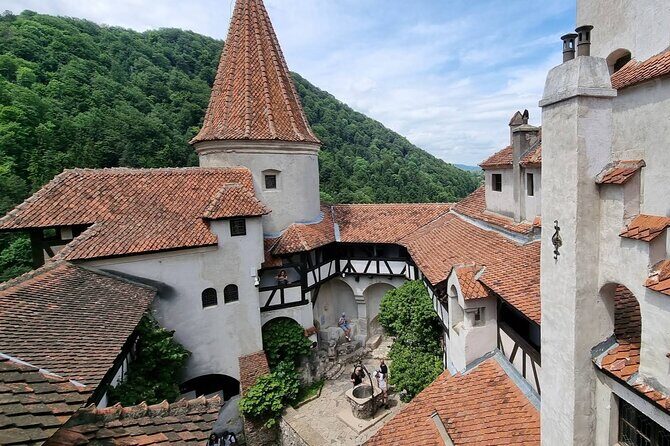
Still, Bran Castle works as an experience because it’s a fortress with real atmosphere. You spend about 4 hours here, which gives you time to explore beyond the first “Dracula photo” moment. I suggest treating Bran as a dramatic hilltop castle stop—less like a movie set, more like a layered medieval structure.
Also, entrance is not included. Your planning should assume tickets are on your side of the budget, not handled inside the tour price.
Brașov Historical Center: Medieval Streets and the Communist-Era Name Change
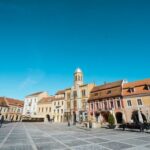
Brașov’s historical center is a big part of why this tour feels more than just castles. You’ll get roughly 4 hours to explore the city, and the time matters because Brașov has a lot going on at walking speed.
This city has been a major commercial center for centuries and later became an important industrial hub during communism. There’s even a specific footnote here: Brașov was renamed for 10 years as Stalin City, then reverted.
Architecturally, Brașov blends history, culture, and city life with mountain views nearby. It’s also one of the most visited stops in Romania, so you won’t feel like you’re “missing” something by not booking extra tours. The stop is listed as free admission, which makes it a great place to spend extra time if the day’s schedule allows.
One practical tip: after two big castle stops, Brașov is the reset. Plan to walk, snack, and slow down. If you try to rush it like it’s another castle, you’ll miss the point.
You can also read our reviews of more tours and experiences in Bucharest
Sighișoara Citadel: UNESCO Streets That Are Still Lived In
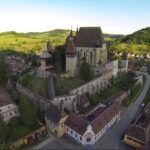
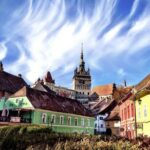
Sighișoara is where the tour shifts from major landmarks to a town you can actually feel in your legs. The Sighișoara citadel is an inhabited medieval area built in the 12th century by Saxon settlers, and it became a UNESCO World Heritage Site in 1999.
The UNESCO angle isn’t abstract here. It’s about an 850-year living record of Transylvanian Saxon history and culture. And yes, there’s a Dracula thread: Sighișoara is described as the birthplace of Vlad III the Impaler, which helps explain the attention it receives.
What makes Sighișoara more than a themed stop is that it still holds everyday life and special events. The tour info also notes a medieval festival where arts and crafts blend with rock music and stage plays, plus the town’s role on the upper boundary of the Land of Sachsen.
You get about 3 hours and free admission, which is a good length for a walkabout. If you like stepping into places that haven’t been rebuilt into theme-park uniformity, Sighișoara is a highlight.
Sibiu: Fortified Old Town Squares and the Saxon Wealth Story
Sibiu is the other UNESCO-adjacent anchor in this route, and it has a different flavor than Sighișoara. It was the largest and wealthiest of the seven walled citadels (Siebenburgen), starting from the 12th century with German settlers called the Transylvanian Saxons.
The reason this town looks the way it does is tied to guild wealth. The riches amassed by guilds helped fund impressive buildings and the fortifications meant to protect them. That’s why the Old Town still feels structured and intentional, not random.
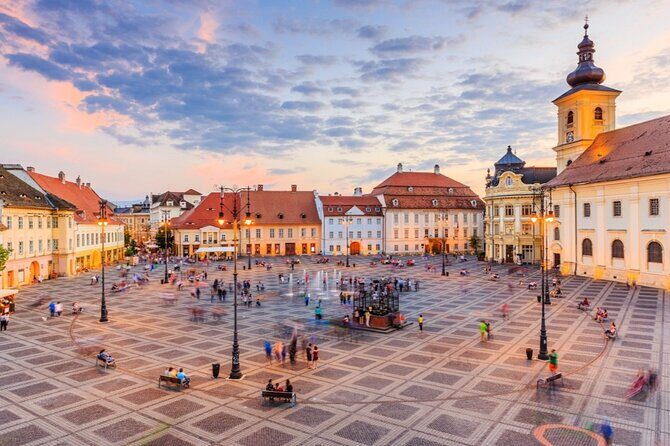
Expect a distinctly Germanic feeling: narrow streets, steep-roofed 17th-century buildings with gable overhangs, and medieval walls that still guard parts of the historic area. The walk opens into big, church-dominated squares—especially Great Square and Little Square.
You’ll have about 4 hours here with free admission, which is exactly the right amount of time to enjoy squares, side streets, and the rhythm of a real city core.
If you’re the type who loves “look up and notice details” travel, Sibiu is a win. It also works well after Sighișoara because both towns deliver medieval atmosphere, but with different architectural emphasis.
Cozia Monastery: A Short Stop with Real Religious Weight
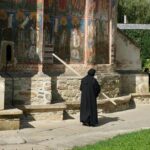
The final stop is Cozia Monastery near the Olt River, and it’s much more than a quick roadside checkbox. It’s an Eastern Orthodox monastery described as one of Romania’s most important and well-preserved medieval religious sites.
Here’s why it matters historically: it was founded in 1388 by Mircea the Elder (Mircea cel Bătrân), a ruler of Wallachia. The church is Byzantine in style with Romanian influences, and it features stone carvings and frescoes, with works dating to the 14th and 18th centuries.
The tour info adds a family link to Dracula lore in a grounded way: Mircea the Elder is buried here, and he’s described as the grandfather of Vlad the Impaler. That connection can be an emotional moment if you’ve been following the regional story threads.
You’re only scheduled for about 30 minutes, and it’s free admission, but active monasteries tend to feel different than museum stops. If you want one last authentic Romania stop before heading back, Cozia gives you that shift—from Saxon medieval towns to Orthodox spiritual history.
Transport, Pacing, and What a Private Guide Changes for You
This is private, meaning only your group rides together and only your group gets the guide time. That’s not a small upgrade. It changes how you experience the day.
In practice, a private format helps you handle the two big travel realities in Romania: sites can have closing quirks, and you may want more time in one place than another. The guides named with these experiences (like George and Laura, plus Sebastian and Catalin) are repeatedly described as punctual, professional, and flexible. That kind of flexibility can be a lifesaver when something shifts.
The vehicle is modern and air-conditioned, which is a practical win in summer or shoulder season. You also get professional driver service, which means you don’t have to worry about navigation or parking stress while you’re trying to enjoy castles and citadels.
The only pacing caution: two full castle days plus two UNESCO towns plus a monastery is busy. It’s a “see a lot” itinerary, not a slow vacation. If you want long lunches and zero schedule pressure, you might feel it.
Price and Value: What $431.35 Per Person Really Covers
At $431.35 per person for about two days, you’re paying for more than a checklist. You’re covering private pickup and drop-off, English-speaking guidance, and the private AC transport between stops. For many people, that’s the biggest value because it removes the friction of planning and timing.
But you should budget for the add-ons. Entrance fees are not included:
- Peleș Castle: 100 RON (about €20)
- Bran Castle: 150 RON (about €30)
You’ll also need accommodation for the night; it’s listed as about €50 per person, plus meals are not included. The tour info recommends staying in Sighișoara and specifically names Central Park Hotel as a recommendation. If you’re not sure where to sleep, that’s helpful.
There’s also a small planning detail worth noting: the tour is typically booked about 73 days in advance on average, so if your dates are fixed, don’t wait too long.
Overall, I see this as good value if you want a tight, structured Transylvania experience with private transport. If you’re already comfortable building your own route and buying tickets on your own, you may find cheaper options. But if you want less hassle and better timing, this one earns its fee.
Should You Book This Private 2-Day Transylvania Tour?
Book it if you want castles plus medieval towns in only two days, and you’d rather pay for smooth logistics than spend your time figuring out routes. It’s also a great fit for couples and small groups who like the feel of a guide steering the story while you choose how fast to walk.
Skip or reconsider if you’re traveling Monday or Tuesday and Peleș interiors are a must. Also reconsider if you hate “scheduled sightseeing days” and would rather linger slowly without a packed plan.
If you’re aiming for a first-time Transylvania hit—Peleș’s engineering wonder, Bran’s Dracula-shaped drama, Brașov’s city vibe, Sighișoara’s lived-in UNESCO citadel, and Sibiu’s square-and-wall medieval layout—this is a strong, efficient way to do it.
FAQ
Where does this tour start?
The tour is based in Bucharest, Romania, and it includes hotel pickup and drop-off on both days.
Is transportation included?
Yes. You get private transport in a modern air-conditioned vehicle with a professional driver.
Is the guide available in English?
Yes. The tour includes a professional guide (English speaker).
Which major sights are included?
You’ll visit Peleș Castle, Bran Castle, Brașov historical center, Sighișoara citadel, and Sibiu. You also stop at Cozia Monastery.
Are entrance fees included for the castles?
No. Entrance fees are not included for Peleș Castle (100 RON / about €20) and Bran Dracula’s Castle (150 RON / about €30).
What is included in the price?
Included items are hotel pick-up and drop-off, private air-conditioned transport, and an English-speaking professional tour guide.
What about meals?
Meals are not included.
Is accommodation included?
No. Accommodation is not included, and the information lists about €50 per person. It also recommends staying in Sighișoara, naming Central Park Hotel, and asks if you want help booking.
If I go on Monday or Tuesday, can I still visit Peleș Castle?
Peleș Castle is closed on Monday and Tuesday, so the tour visits the outer courtyard those days.
Is this tour private and how do tickets work?
It’s a private tour/activity with only your group. The tour also includes a mobile ticket.