REVIEW · BUCHAREST
Bucharest Private City Tour 4h with Hotel Pickup & Drop-Off
Book on GetYourGuide →Operated by Day Trip Romania · Bookable on GetYourGuide
Four hours, and Bucharest makes sense. In this private city tour, you ride to the Palace of the Parliament and the Revolution of 1989 sites with a licensed English guide, all in an air-conditioned car with Wi-Fi. Because the schedule is tight, you get plenty of photo stops and guided overviews, not long interior time at every building.
What I love is the mix of monumental power and everyday Romanian tradition. At the Dimitrie Gusti National Village Museum, you see Romanian homes and symbols of village life, with wooden, adobe, and stone buildings brought together so you can understand the country beyond politics.
In This Review
- Key highlights at a glance
- Getting set up fast: hotel pickup, private car, and a tight 4-hour plan
- Palace of the Parliament: why this building feels so unsettling
- Piața Unirii and the route between eras
- Dimitrie Gusti National Village Museum: Romanian life in wood, adobe, and stone
- Revolution Square: the December 1989 story you’ll actually remember
- Calea Victoriei (Victory Avenue): royal glamour meets communist symbolism
- National History Museum area, the Romanian Athenaeum, and CEC Palace: landmarks with big-picture meaning
- Senate Palace and the communist Central Committee: where history shifted
- Bucharest Old Town: a guided stroll to bring it together
- What the guides do right: time management and adapting to your pace
- Price and value: is $131 per person worth it?
- Who should book this tour (and who might want something else)
- Should you book this Bucharest private city tour?
- FAQ
- How long is the Bucharest Private City Tour?
- Do I get hotel pickup and drop-off?
- Is the tour private or shared?
- What language is the guide?
- What transport is included?
- Are entrance fees included?
- Is Wi-Fi available during the tour?
- What’s the cancellation policy?
Key highlights at a glance
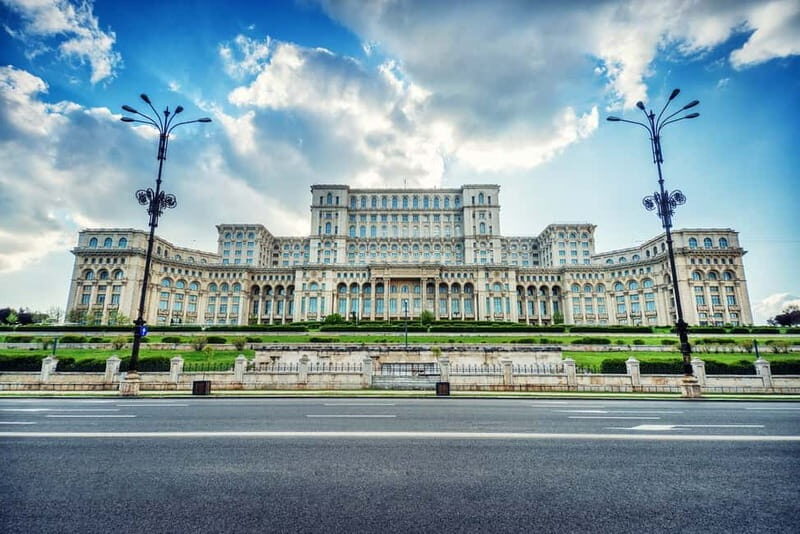
- Hotel pickup plus Wi-Fi car ride: start and end at your address without the hassle of finding transport.
- Palace of Parliament photo stop: see the scale of the world’s second-largest administrative building from the outside and get the story behind it.
- Revolution Square guided focus: learn what happened there during the December 1989 revolution.
- Dimitrie Gusti National Village Museum: traditional houses, a wooden church, and a mill that explain village life in real terms.
- Calea Victoriei Victory Avenue: a guided walk through royal-era glamour vs communist-era symbolism.
- Old Town time for context: a guided stroll that helps you connect the dots across Bucharest’s different identities.
Getting set up fast: hotel pickup, private car, and a tight 4-hour plan
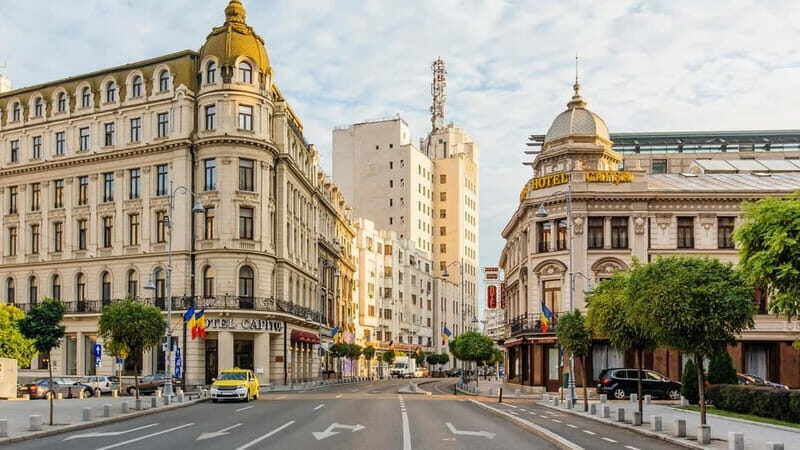
This tour works well if you’re short on time or want your first day in Bucharest to feel organized right from the start. You’re picked up from your hotel and dropped back at the end, which means you spend your energy on sights, not on navigating.
You’ll travel in a private, air-conditioned vehicle, and there’s Wi-Fi onboard. That sounds like a small perk, but it helps on a half-day trip—especially if you want to quickly message someone, pull up directions for later, or just stay comfortable while you’re moving between neighborhoods.
One more practical point: entrances aren’t included. That’s not a deal-breaker, but it does mean your guide’s plan may include stops where you can go inside if you’re ready to pay the site fee. The good news is that the tour includes skip-the-ticket-line support where ticketing is involved, so you’re not stuck standing around.
The private-group format also matters. On a condensed itinerary, having a guide who can pace you makes the difference between feeling rushed and actually understanding what you’re looking at.
You can also read our reviews of more city tours in Bucharest


Palace of the Parliament: why this building feels so unsettling
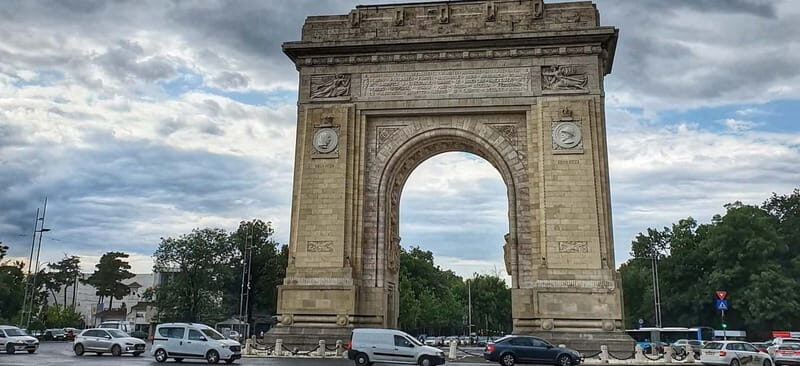
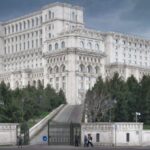
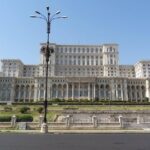
The day’s big visual magnet is the Palace of the Parliament, often called People’s House. Your stop here is built for photos and orientation, with about 30 minutes set aside for sightseeing and pictures.
Even if you’ve seen photos online, seeing it in person hits different. It’s described as the world’s second-largest administrative building, and your guide explains why that scale is more than a bragging right. The core idea is brutal: totalitarian regimes can do lasting damage to a nation, and the Palace is presented as a monument to that type of thinking. When you stand near a structure like this, you really do feel small next to a country’s attempt to project power through size.
If you’re the type of traveler who likes architecture but also wants meaning, this stop is a win. You’ll get context for the opulence and megalomania—there’s a strong emphasis on how art and power can become warped under dictatorship.
A consideration: since the itinerary is short, this is not a slow deep study of every room. You get the emotional and historical framing, plus time to take photos. If you want hours inside, plan for a separate visit later when you can linger.
Piața Unirii and the route between eras
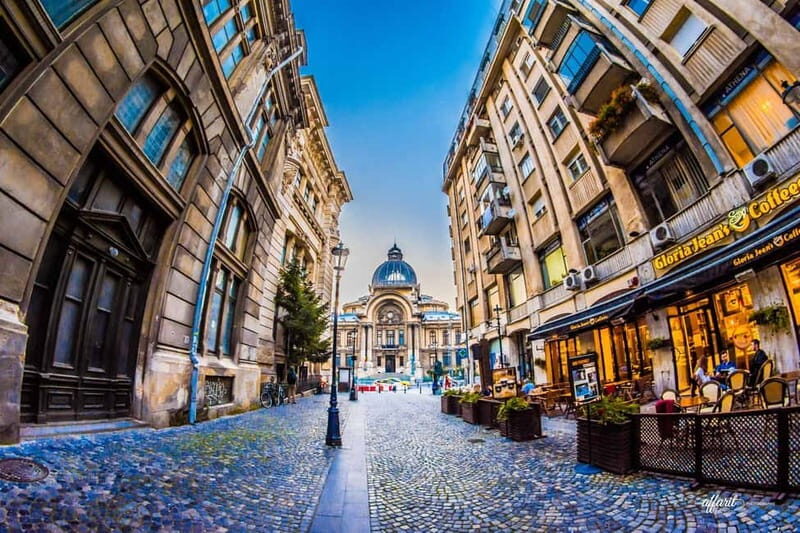
Between major stops, the tour threads through central Bucharest. You’ll pass Piața Unirii (about 10 minutes), which is a classic reminder that Bucharest’s big stories play out on large, open city squares and wide avenues.
This brief transit time is intentional. It keeps you moving while your guide sets up what you’ll see next—so you’re not just traveling between dots, you’re connecting themes.
Think of these quick passes like punctuation marks: short, useful, and often more meaningful than you expect.
Dimitrie Gusti National Village Museum: Romanian life in wood, adobe, and stone
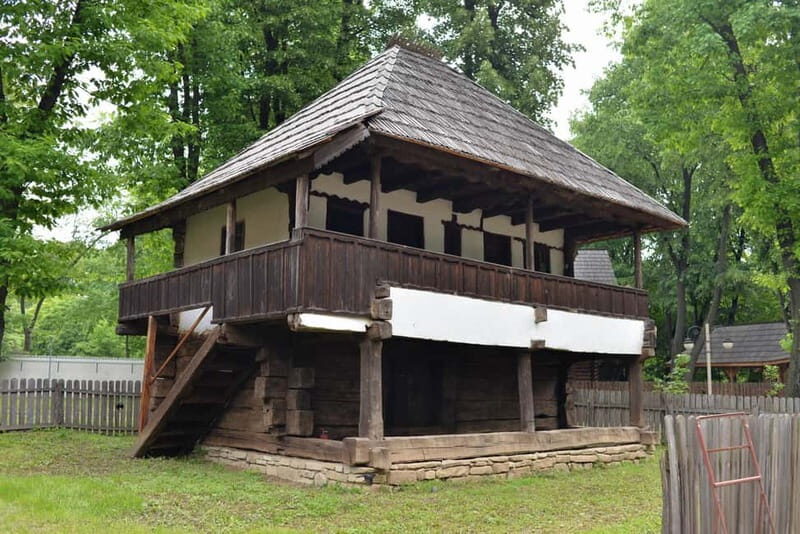
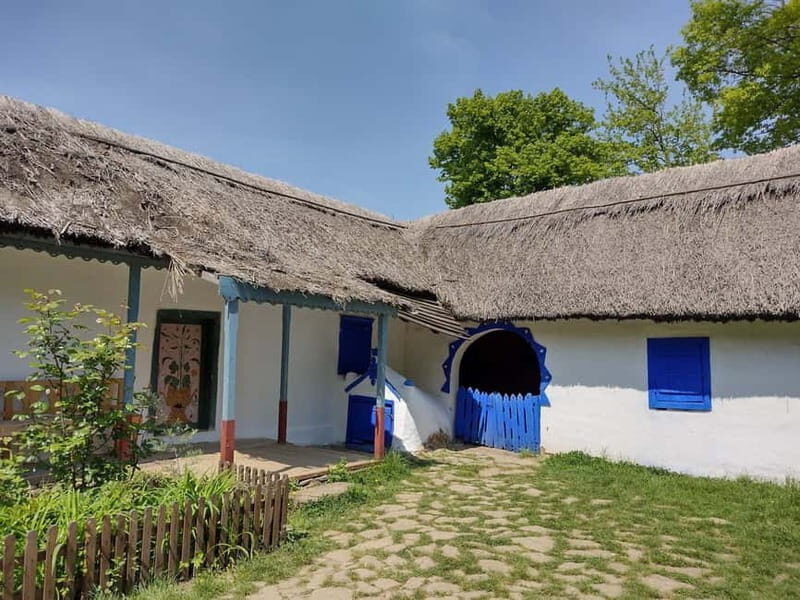
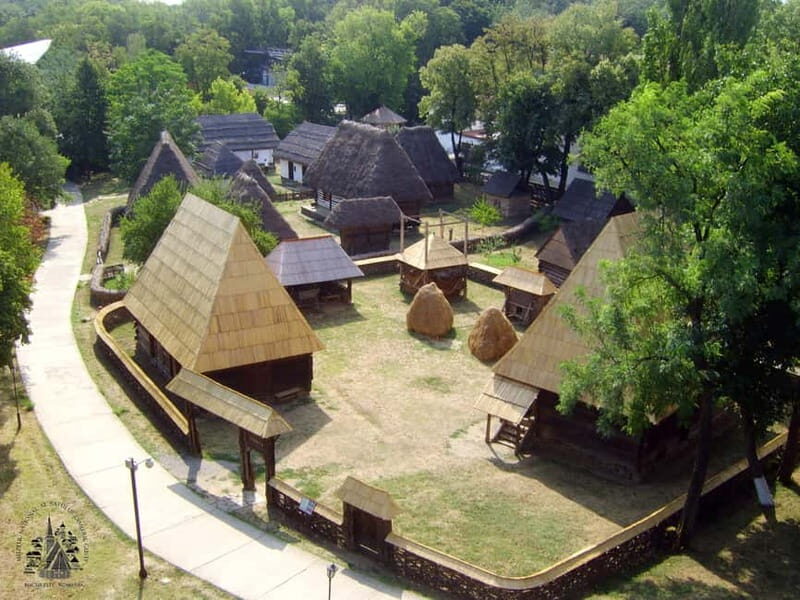
One of the tour’s strongest moments is the time at the Dimitrie Gusti National Village Museum, with about one hour dedicated to sightseeing and photos.
This isn’t about communist monuments or government buildings. It’s about how Romanian village communities lived—using materials like wood, adobe, and stone, and building homes shaped by local traditions rather than political slogans. The museum is presented as an embodiment of Romanian traditions, including the idea of building an environment that supported sustainability and everyday life.
A guide-led stop here is more valuable than a quick self-guided walk because you’re not just looking at structures. You’re learning what they meant: how villagers built “in their backyard,” how they lived with a mix of practicality and spirituality, and how those traditions helped keep people united over long periods.
You also get recognizable symbols: for example, the museum includes elements like a mill and a wooden church. Those details help the whole place feel grounded. You’re not imagining rural life—you’re seeing physical forms tied to real rhythms.
If you care about understanding a country beyond its headlines, this stop is the balance you needed. Bucharest can feel like politics in concrete; the Village Museum brings you back to people.
Revolution Square: the December 1989 story you’ll actually remember
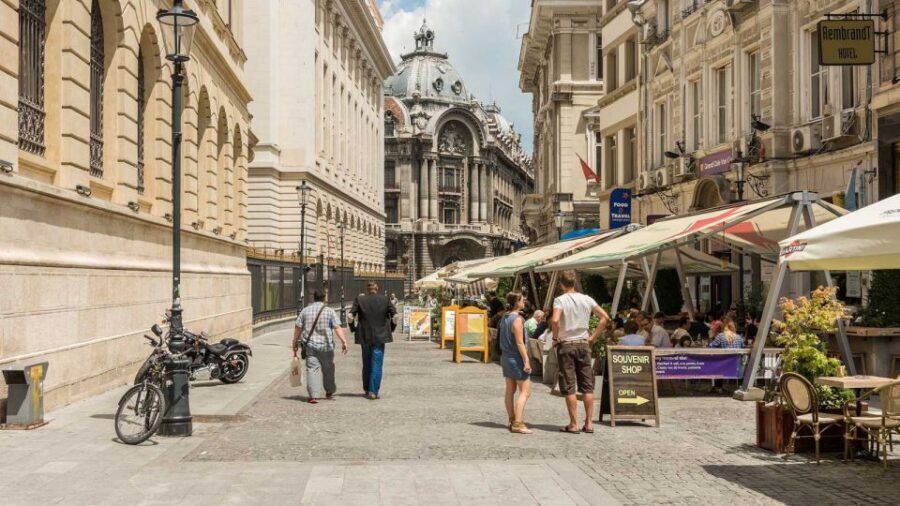
Then you head to Revolution Square (about 30 minutes), with a guided segment built around what happened there during the December 1989 revolution.
Your guide sets up the square’s role as a turning point and connects it to the fall of Nicolae Ceaușescu. One detail stands out in the narration: Ceaușescu fled the country by helicopter. It’s the kind of image that stays with you because it contrasts the vast machinery of power with a very sudden exit.
This is also where the tour gives you a more emotional takeaway. The Palace of the Parliament can feel like an abstract lesson in political control; Revolution Square makes it personal and immediate.
As a result, you don’t just see a famous place—you understand why it became famous in the first place.
You can also read our reviews of more private tours in Bucharest



Calea Victoriei (Victory Avenue): royal glamour meets communist symbolism
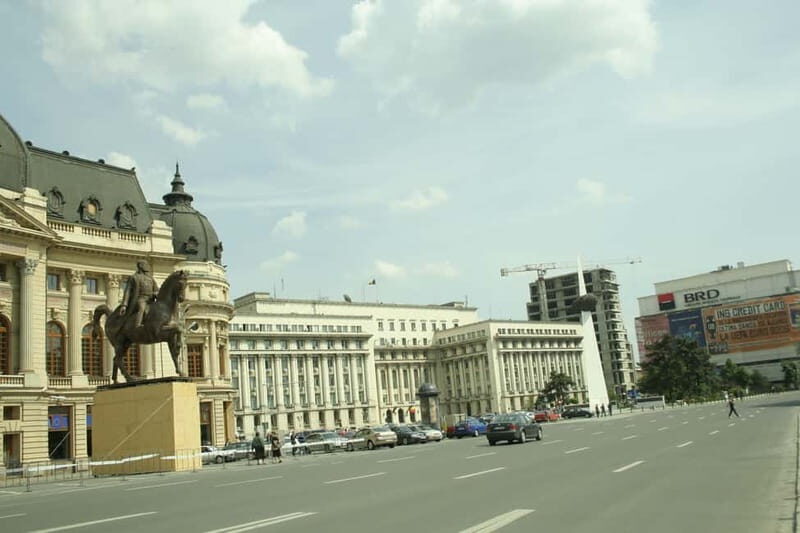
The guided walk along Calea Victoriei, or Victory Avenue, is one of the most enjoyable parts of the half-day tour, with about 45 minutes for photo stops and sightseeing.
This avenue is about contradictions, and your guide leans into that theme. On one side you have the pull of royal-era grandeur (you’ll hear about places tied to the Royal Palace). On the other side, you’ll connect that glamour to the communist presence—specifically the Central Committee of the Romanian Communist Party, which is part of what your route and commentary are designed to frame.
The walk also gives you the “Bucharest vibe” texture. As you move along the street, you’ll pass:
- old Orthodox churches with an aura of mystery
- a music store with a large selection of music
- casinos and bohemian restaurants
- museums, theatres, tea shops
- retail stores and souvenir gift shops
You’re not promised a long shopping spree here. The point is atmosphere: this avenue shows you how a city can carry layers at the same time—sacred and commercial, historical and everyday, beautiful and complicated.
If you love walking with context, this segment is the sweet spot of the whole itinerary.
National History Museum area, the Romanian Athenaeum, and CEC Palace: landmarks with big-picture meaning
Your route also includes a cluster of famous Bucharest landmarks, connected through commentary. You’ll come past or near the National History Museum, the Romanian Athenaeum, and the CEC Palace.
This portion works best if you’re willing to treat landmarks as clues. A building like the Romanian Athenaeum isn’t just pretty; it signals cultural ambition and identity. The National History Museum area gives you the story framework. CEC Palace, meanwhile, points to how financial institutions and national symbolism often share the same architectural stage.
Your guide’s job here is to keep it from becoming a checklist. In a four-hour tour, you need short, accurate explanations that help you remember what you saw and why it mattered.
Senate Palace and the communist Central Committee: where history shifted
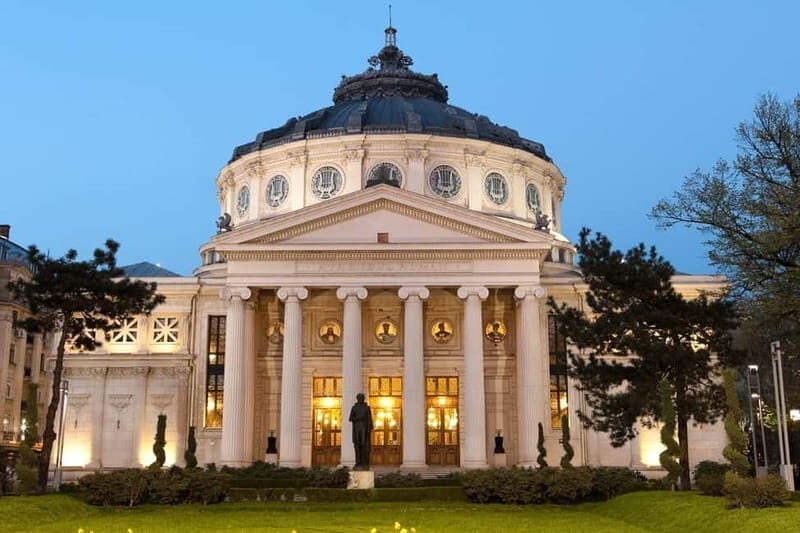
Another key stop is the Senate Palace area. Standing near it, you’ll hear what used to be there: housing for the Central Committee of the Romanian Communist Party.
This matters because the tour ties the building to the start of the Revolution of December 1989. You’re not just looking at stone; you’re looking at one of the nodes where power decisions were made—and then overtaken.
This is also where the tour’s tone lands. Instead of romanticizing dictatorship or treating it as distant history, the guide frames it as damaging on multiple levels. It’s a heavy lesson, but it’s presented in a way that feels understandable rather than preachy.
Bucharest Old Town: a guided stroll to bring it together
The last major part of your sightseeing time goes toward Bucharest Old Town, with about one hour of photo stops and guided touring.
Old Town time is what makes the half-day loop feel complete. You’ll get a guided stroll that helps you connect:
- the monumental political sites
- the cultural landmarks
- the everyday rhythm of streets and churches
- the turning points of 1989
You may not see every alley and courtyard in this window, but you’ll leave with better bearings. And those bearings matter, because Bucharest is a city you explore with your eyes and your feet. This tour gives you enough foundation to roam on your own afterward without feeling lost.
What the guides do right: time management and adapting to your pace
A private tour rises or falls on the guide. In real life, I’ve noticed the best guides do two things at once: they keep the story clear, and they manage time so you don’t feel like you’re being rushed through stops.
This experience has a strong reputation for that kind of delivery. Guides like Vlad and Alex are highlighted for being friendly, professional, and good at adjusting to what the group wants. Alex is specifically praised for efficient time management, covering a lot of ground without turning it into a blur.
You’ll feel that balance in how the itinerary flows—photo opportunities stay meaningful, and guided parts have enough time to teach you something instead of just pointing.
If you’re the type who asks questions, you’ll also appreciate that a live guide can steer the explanations to what you care about: architecture, politics, daily life, or that specific “why does this city feel like two cities stacked together” feeling.
Price and value: is $131 per person worth it?
At $131 per person for a 4-hour private experience, the value depends on what you’d otherwise do.
Here’s what you’re paying for:
- hotel pickup and drop-off
- a private, air-conditioned vehicle
- Wi-Fi onboard
- a live licensed English guide
- the opportunity for skip-the-ticket-line support where ticketing applies
- a route that blends major landmarks and neighborhood streets
If you’re traveling in a small group or you want a first-day orientation without hunting for taxis and backup plans, the private format makes sense. You’re not paying for “just a driver.” You’re paying for an organized, guided route that covers the Palace of the Parliament area, Revolution Square, Victory Avenue, Old Town, and the Village Museum.
Two small value notes:
- Entrance fees are not included, so you should budget extra if you want to go inside specific sites.
- The format is half-day, so don’t expect a slow, museum-style marathon. This tour is about meaning and direction more than spending hours deep in one building.
Who should book this tour (and who might want something else)
You’ll probably love this if:
- it’s your first time in Bucharest and you want context fast
- you care about the link between architecture and politics
- you want both big landmarks and Romanian village tradition in one outing
- you prefer a private format where you can ask questions
You might choose a different option if:
- you’re hoping for long interior time at major sites (this is photo-and-overview friendly)
- you already plan to spend separate full days at museums and you only want a light orientation
Should you book this Bucharest private city tour?
I’d book it if your goal is to understand Bucharest quickly and feel confident walking the city afterward. The mix is smart: the Palace of the Parliament and Revolution Square give you the political backbone, while the Dimitrie Gusti National Village Museum pulls you into Romanian daily life. Add the guided stretch along Calea Victoriei and the Old Town wrap-up, and you get a tour that teaches you how the city’s layers fit together.
If you do book, come ready for a guided story pace. Bring comfortable shoes for walking parts, and plan to pay any entrance fees separately if you want to go inside buildings. Do that, and you’ll get a half-day that doesn’t feel like sightseeing for its own sake.
FAQ
How long is the Bucharest Private City Tour?
The tour duration is 4 hours.
Do I get hotel pickup and drop-off?
Yes. Pickup and drop-off from your address are included.
Is the tour private or shared?
It is a private group.
What language is the guide?
The live tour guide is available in English.
What transport is included?
You travel in a private, air-conditioned vehicle with Wi-Fi onboard.
Are entrance fees included?
No. Entrance fees are not included and depend on the stops in the itinerary.
Is Wi-Fi available during the tour?
Yes, Wi-Fi is provided on board the vehicle.
What’s the cancellation policy?
Free cancellation is available up to 24 hours in advance for a full refund.