REVIEW · BUCHAREST
Bucharest Discovery morning tour
Book on Viator →Operated by Interesting Times Bureau · Bookable on Viator
Bucharest makes sense fast on foot. This 2.5-hour highlights walk stitches together Ottoman echoes, Transylvanian legends, and the city’s Communist scars, all while you’re moving through the center. I love that it gives you an easy, street-level orientation, and I also like how the route mixes grand squares with smaller details you’d otherwise miss.
My other favorite part is the storytelling focus: you’re not just seeing buildings, you’re learning why they matter. You’ll connect the look of the streets—Soviet-era apartment blocks beside Old World churches and theaters—to the larger chapters of Romanian history that shaped them.
One thing to consider: it’s still a walking tour, and the whole arc adds up to a solid chunk of time (about 2 hours 30 minutes). If your legs are sensitive, plan for a slow pace and wear comfortable shoes from the start.
In This Review
- Key things I’d watch for on this Bucharest morning walk
- Entering the city: why this 2.5-hour format works
- Price and what you really get for $46.86
- Meet-up at Carol I and how to plan your morning
- Stop 1: Piaka Revolukiei and the moment Bucharest changed
- Stop 2: Palace of Telephones—why a single building became famous
- Stop 3: Calea Victoriei and the Kretulescu church on Victory Street
- Stop 4: Old Town streets and the Ottoman-to-French storyline
- Stop 5: Piaka Constitukiei and the Communist-era monument effect
- The real value: reading Bucharest’s changing architectural styles
- Street snack and walking pace: a practical break without derailing the tour
- Who this tour is for (and who might want a different option)
- Should you book the Bucharest Discovery morning tour?
- FAQ
- How long is the Bucharest Discovery morning tour?
- What’s the meeting point and where does the tour end?
- Is the tour offered in English?
- How much does it cost?
- What’s included in the tour price?
- Do I need admission tickets for the stops?
- Can I cancel for a full refund?
Key things I’d watch for on this Bucharest morning walk
- A compact route with city-wide orientation: you leave knowing where the main districts sit in relation to each other
- Small group size (max 12): better chances for questions and a guide who keeps the pace human
- English guidance: you’ll follow the “who, why, and what happened” stories without getting lost
- Piaka Revolukiei to Piaka Constitukiei: you’ll see two major turning points in Bucharest’s modern story
- Victory Street flavor (Calea Victoriei area): Belle Époque-era vibes mixed with church and landmark stops
- A street snack included: it helps break up the walk without needing a full sit-down meal
Entering the city: why this 2.5-hour format works
This tour is built for people who want the essentials without turning the day into a long slog. At around 2 hours 30 minutes, you get enough ground covered to feel like Bucharest has a logic to it, but not so much that you burn your whole morning.
The pacing is also a good match for first-timers. You start at a major landmark and then move through a series of “stop-and-explain” moments, so you’re constantly building a mental map. By the time you reach the Old Town area, you’ll know what to circle again later.
You can also read our reviews of more tours and experiences in Bucharest
Price and what you really get for $46.86
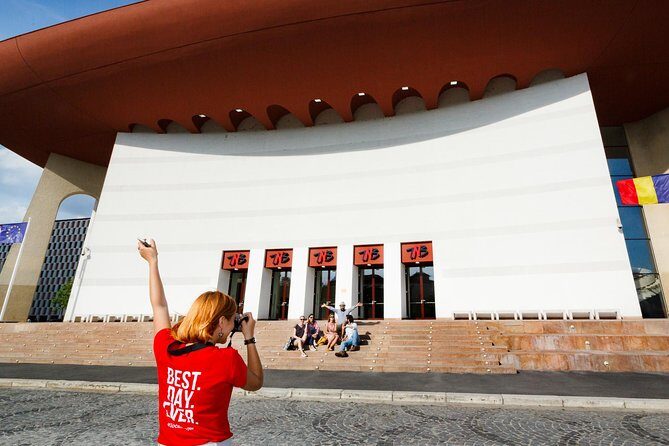
At $46.86 per person, this is priced like a solid walking tour, not a full-day activity. The value comes from what’s bundled in: you get a local guide plus a street snack, and you’re not paying for admissions at the listed stops because each one is marked as free.
You also get a clean practical bonus: a mobile ticket and a guided route that takes you between big sights. That matters in Bucharest, where neighborhoods can feel visually different block to block. Paying for a guide here is less about “comfort” and more about saving time and making sense of what you’re seeing.
Meet-up at Carol I and how to plan your morning
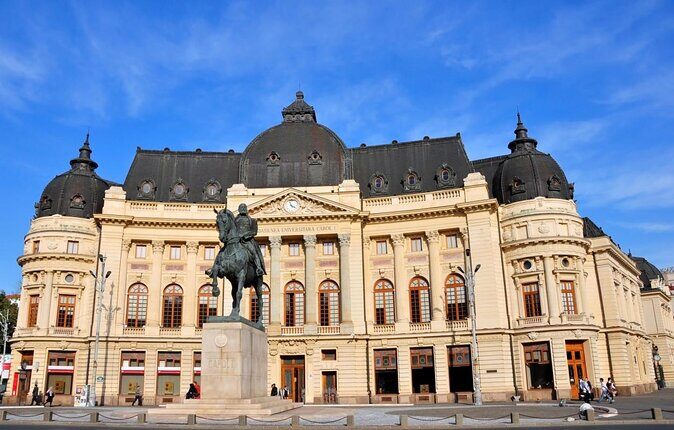
The tour starts at 11:00 am at the Equestrian Statue of Carol I in Sector 1. From there, you’ll walk through central Bucharest and finish in the Old Town area.
That finish location is convenient. After the tour, you’re already in the part of town where you can keep exploring on your own, grab lunch, or wander into side streets without feeling like you’re starting from zero. If you’re trying to fit a lot into one day, this timing makes it easier to do a second activity later.
A quick tip: because the whole experience depends on walking, set yourself up with comfortable shoes and a bottle of water. The route is approachable for most travelers, and service animals are allowed, but your comfort will come down to footwear and pace.
Stop 1: Piaka Revolukiei and the moment Bucharest changed

Your first big stop is Piaka Revolukiei (Revolution Square). This is one of those places where the stories feel etched into the ground. You stand on the key spaces tied to major power shifts in Romania—from the era of kings to the era of dictators—so the square isn’t just a landmark, it’s a timeline.
What I like about starting here is that it sets the emotional tone for the rest of the walk. Bucharest isn’t only architecture; it’s also political memory. Once you grasp that, later stops hit harder, especially the Communist-era contrasts.
The stop is scheduled for about 20 minutes, and that’s enough time to orient yourself before you move on. You’re not stuck waiting around, which helps keep the morning from feeling slow.
Stop 2: Palace of Telephones—why a single building became famous

Next comes the Palace of Telephones, a building that attracts attention for more than its facade. The guide explains what makes it so recognizable and covers the story behind it—who built it and why.
This stop is short, around 15 minutes, so it works best as a focused “story beat.” You’ll likely leave remembering a couple of key facts about the building rather than trying to memorize every detail. That’s perfect for a highlights tour, where the goal is understanding the city’s layers.
I also like that this kind of stop breaks up the bigger-sense history. A square gives you context; then a specific building gives you a hook you can later point to when you’re walking around on your own.

Stop 3: Calea Victoriei and the Kretulescu church on Victory Street
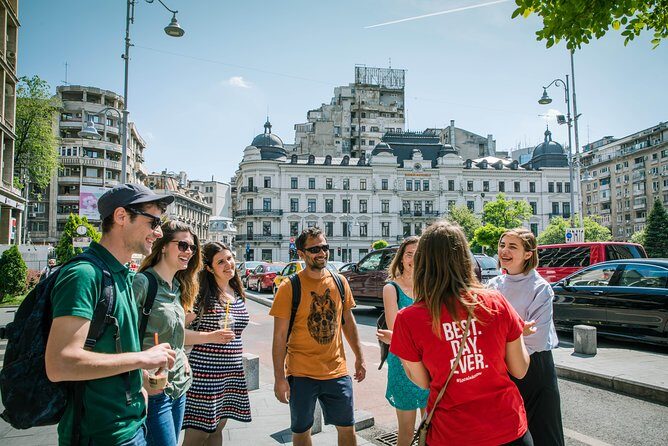
Then you shift into Calea Victoriei, often tied to the spirit of La Belle Époque—this is where Bucharest starts to feel like Little Paris in style and rhythm. The walk along this stretch is where you get a clearer sense of how the city presents itself.
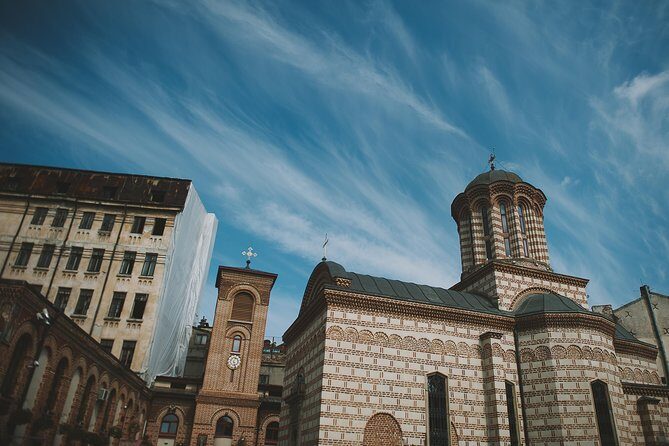
One of the highlights here is the church of Kretulescu, plus other landmarks along what’s described as Victory Street. This is a strong contrast to the political weight of Revolution Square. Instead of power struggles, you get to watch for details: the mix of religious architecture and elegant street energy.
You’ll spend about 30 minutes at this stage. That’s enough time to look up, notice different styles, and understand why the streetscape is such a big part of Bucharest’s identity. If you’re the kind of traveler who likes photos, this is where you’ll find plenty—just remember to slow down long enough to actually read what the guide is pointing out.
Stop 4: Old Town streets and the Ottoman-to-French storyline
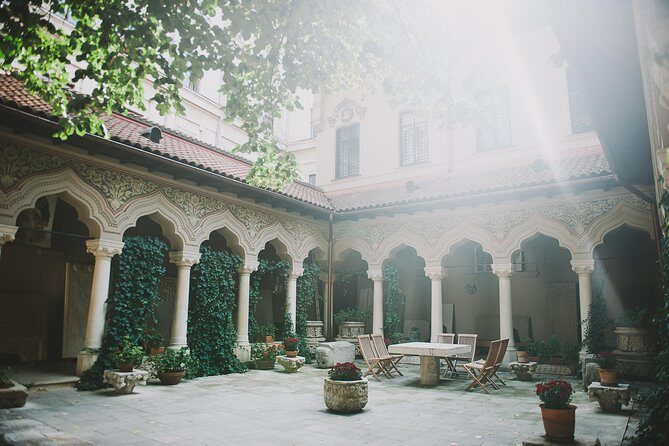
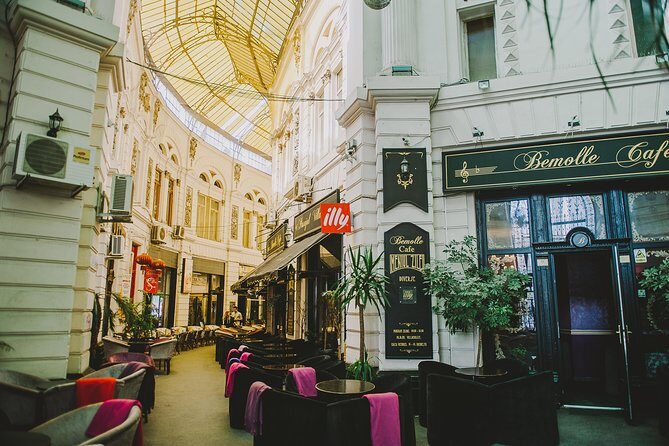
The tour then moves into the Old Town, about 45 minutes for roaming the heart of central Bucharest. This is the part where the city starts to feel like a maze in a good way—meandering streets, historic pockets, and layers of influence.
The story you’re given here spans Ottoman invasions and then into the architectural presence associated with French style. That mix makes sense when you’re walking, because the city doesn’t present history in one neat timeline. It presents it as overlap.
You’ll also hear tales connected to Ottoman pashas and Transylvanian princes while you move through these streets. Even if you don’t catch every name, the bigger takeaway is how Bucharest absorbed outside forces and turned them into local character.
Practical note: with a stop this long, it pays to keep your energy. If you need a bathroom break, this is the moment to handle it while you’re still near central areas.
Stop 5: Piaka Constitukiei and the Communist-era monument effect
The final major stop is Piaka Constitukiei (Constitution Square), where you face the impact of the communist dictatorship’s grand building plans. The tour frames this as the largest building in Europe, and the largest and most ambitious project of the dictator—leaving a permanent mark on both Bucharest and Romania.
Even without going into technical detail, the experience lands because scale does the talking. When you see a massive structure tied to that era, you instantly understand why Communist architecture is still a live subject here. It isn’t “old”; it’s part of the city’s present day silhouette.
You’ll spend about 30 minutes at this stop. That’s a smart amount of time: long enough to grasp why the building is controversial and memorable, but short enough that you’re not ending the tour in fatigue.
The real value: reading Bucharest’s changing architectural styles
If there’s one theme running through the whole walk, it’s contrast. You’ll see Soviet-style apartments, then ornate church architecture, then performance-style spaces like theaters, all in the same general city center.
This matters because architecture can teach you history without a lecture. Soviet-era blocks can signal a different era of priorities—speed, standardization, ideology—while older churches signal different values and different time periods of power and devotion. When you understand that, Bucharest stops being a pile of sights and starts behaving like a story you can read.
This tour is particularly good at giving you a framework for that. You don’t need to know every term. You just need the “why,” and the guide’s job is to connect the look of the city to the forces that shaped it.
Street snack and walking pace: a practical break without derailing the tour
A street snack is included, which is a small line item that makes a big difference. It helps keep the morning comfortable, especially if you’re not planning to eat a full meal until after you finish.
The tour duration suggests a steady rhythm: short stops for explanation, then a longer walk for atmosphere. The highlight moments don’t stretch so long that you lose attention, but they’re still detailed enough to give you something to remember.
For me, the sweet spot is that it feels like an introduction, not a full relocation of your day. You’re left with energy to keep going, not the heavy tiredness that can come from longer, nonstop walking itineraries.
Who this tour is for (and who might want a different option)
I think this tour fits best if you want an efficient way to get your bearings. If it’s your first visit to Bucharest and you’re trying to understand how the city’s history shows up in real streets and buildings, you’ll get a lot from the guided walk.
It’s also a good choice if you like stories, not just sightseeing. The tour leans into the “tales” side—Ottoman pashas, Transylvanian princes, and the Communist legacy—so you’ll have narrative anchors to hold onto.
If you’re traveling with someone who hates slow museums or prefers outdoor learning, this is a nice middle ground. You get context, and you still move. The main drawback is purely physical: you’ll be walking, so don’t book it if you’re dealing with mobility limits without planning for a slower pace.
Should you book the Bucharest Discovery morning tour?
Book it if you want a fast, guided orientation that connects major squares, iconic buildings, and Old Town streets into one clear storyline. The value is strong because the guide and street snack are included, the major stops are free of admission charges, and the group stays small enough to feel personal.
Skip or consider another option if you only want one neighborhood and dislike moving between multiple areas. This is a “highlights and orientation” tour, not a deep dive into one district.
If you’re on a tight schedule, starting at 11:00 am gives you a morning reset and a natural finish in the Old Town—so you can keep exploring with a better sense of where everything sits.
FAQ
How long is the Bucharest Discovery morning tour?
It lasts about 2 hours 30 minutes.
What’s the meeting point and where does the tour end?
The tour starts at the Equestrian Statue of Carol I in Sector 1 and ends in the Old Town.
Is the tour offered in English?
Yes, it’s offered in English.
How much does it cost?
The price is $46.86 per person.
What’s included in the tour price?
Included are a street snack and a local guide.
Do I need admission tickets for the stops?
The listed stops are marked as admission ticket free.
Can I cancel for a full refund?
Yes. Free cancellation is available up to 24 hours in advance for a full refund.