REVIEW · BUCHAREST
5 Days Private Tour in Romania from Bucharest to Transylvania
Book on Viator →Operated by Nicolas Experience Tours · Bookable on Viator
Romania hits differently in private.
I like how this trip mixes big-city history with real Transylvanian medieval towns, and I especially like having a licensed English-speaking guide with you the whole way. I also like the comfort of a private car built for flexibility, so you are not stuck in a rigid group schedule. The main drawback to plan for is that some major stops have separate admission fees, plus there are serious climbs like the 1,480 steps at Poienari Castle.
This is a true door-to-door style tour: pickup is offered, and you travel as just your group with a driver who handles gas, parking, and tolls. The result is a smoother experience when the driving days are long and when you want to ask questions without shouting over a bus.
And yes, Transylvania is the star, but the first day in Bucharest does real work too. You go from the Palace of Parliament and Revolution Square into culture stops like the Romanian Athenaeum and then out along Calea Victoriei, so the whole story of modern Romania lands faster.
In This Review
- Key highlights you’ll feel fast
- Why this Bucharest-to-Transylvania route feels worth the cost
- Day 1 in Bucharest: Parliament, Old Town, and Revolution Square contrasts
- Palace of Parliament: totalitarian scale, up close
- Old Town and Hanul Lui Manuc: where merchants once gathered
- Revolution Square (Piaka Revolukiei): December 1989 turning point
- Romanian Athenaeum and Calea Victoriei: culture after politics
- Centrul Shakti and Arcul de Triumf: a break and a view
- Day 2: Curtea de Arges, Poienari’s 1,480 steps, and Transfagarasan
- Curtea de Arges Monastery: royal tombs and sacrifice
- Poienari Castle: Dracula territory with real effort
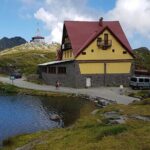
- Transfagarasan Highway: the road that earns its reputation
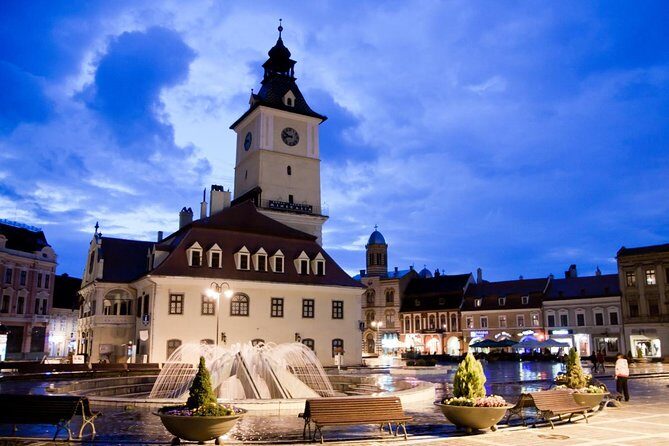
- Sibiu time around Piata Mare (Big Square)
- Day 3: UNESCO Biertan Fortified Church and medieval Sighisoara
- Biertan Fortified Church: UNESCO details you’ll notice
- Sighisoara citadel: inhabited medieval town life
- Day 4: Brasov walking tour, Black Church area, and Bran Castle foods
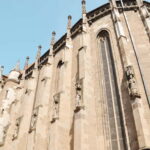
- Brasov historical center: Black Church and old walls
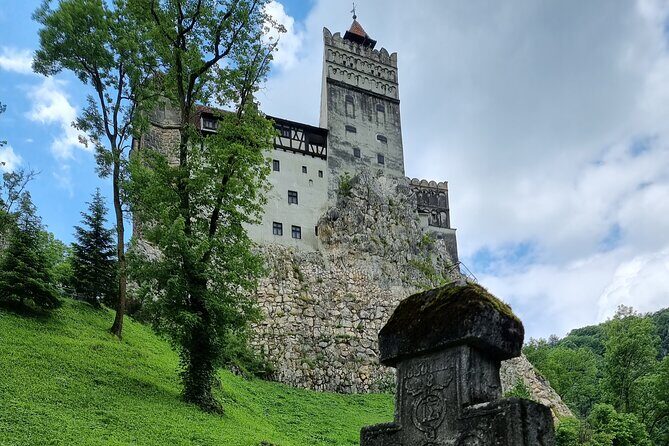
- Bran Castle: the famous silhouette, with local bites nearby
- Day 5: Peles Castle, Sinaia Monastery, and Snagov Monastery calm
- Peles Castle: the Carpathian crown jewel
- Sinaia Monastery: fortified, spiritual, and reflective
- Snagov Monastery: a controversial Vlad Tepes story on an island
- Price and logistics: what’s included, what’s on you
- Who this private tour is best for
- Should you book this Bucharest to Transylvania private tour?
- FAQ
- FAQ
- Is this a private tour?
- Do you get pickup?
- What’s included in the price?
- What is not included?
- Do I need separate tickets for attractions?
- Can I cancel for a full refund?
- Are service animals allowed?
Key highlights you’ll feel fast
- Private car, just your group for a calmer pace and easier photos on the move
- A licensed English guide/driver throughout so history makes sense, not just facts on a sign
- UNESCO Fortified Churches and medieval citadels like Biertan and Sighisoara
- Iconic Transfagarasan Highway views between stops, not as a random detour
- Dracula-flavored stops with real craft food around Bran Castle
- Royal and spiritual quiet at the end with Peles, Sinaia Monastery, and Snagov Monastery
Why this Bucharest-to-Transylvania route feels worth the cost
For $1,488.35 per person, you are not paying just for tickets and a list of sights. You are paying for time: a private vehicle, a driver/guide who stays with you, and all the car expenses that normally add stress. That matters in Romania, where distances between the big medieval towns are real and the best spots are rarely right next to each other.
This tour also leans into one of the smartest ways to experience Romania: you keep the same guide through the whole arc, from the political weight of Bucharest to the fortress towns of Transylvania. Instead of bouncing between random guidebooks, you get one guiding thread. The Palace of Parliament and Revolution Square make later medieval power struggles easier to understand. Then the fortified churches and citadels do the rest.
I also like that flexibility is built into the deal. The tour mentions flexibility regarding changes to the daily itinerary even after the start. That is useful when you want a slower stop for photos, or when you need to adjust pace for kids, older family members, or just jet lag.
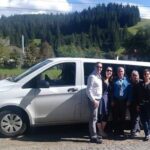
One more practical point: this is a private setup, and that means the pace and comfort can actually match your group, including if you are traveling with a child seat need. In at least one past trip with Nicolas Experience Tours, a family mentioned a comfortable minivan with a child seat provided. If you need anything like that, ask ahead and confirm details during booking.
You can also read our reviews of more private tours in Bucharest
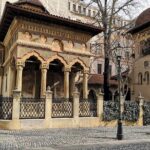
Day 1 in Bucharest: Parliament, Old Town, and Revolution Square contrasts
Bucharest can feel like two cities at once. You start with the political heavyweight, then shift quickly into the older street-level soul.
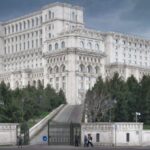
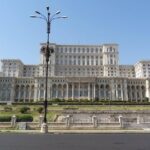
Palace of Parliament: totalitarian scale, up close
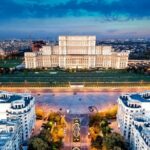
The Palace of Parliament (People’s House) is the type of stop that changes how you see a whole era. You will learn how damaging a totalitarian regime can be for a nation, and you will feel small looking at the megalomania of the building. It is described as the second largest administrative building on the planet after the Pentagon, which gives you scale fast.
Plan for a separate admission ticket here. That is fine, but it means you should budget time and money so you are not scrambling at the last minute.
Old Town and Hanul Lui Manuc: where merchants once gathered
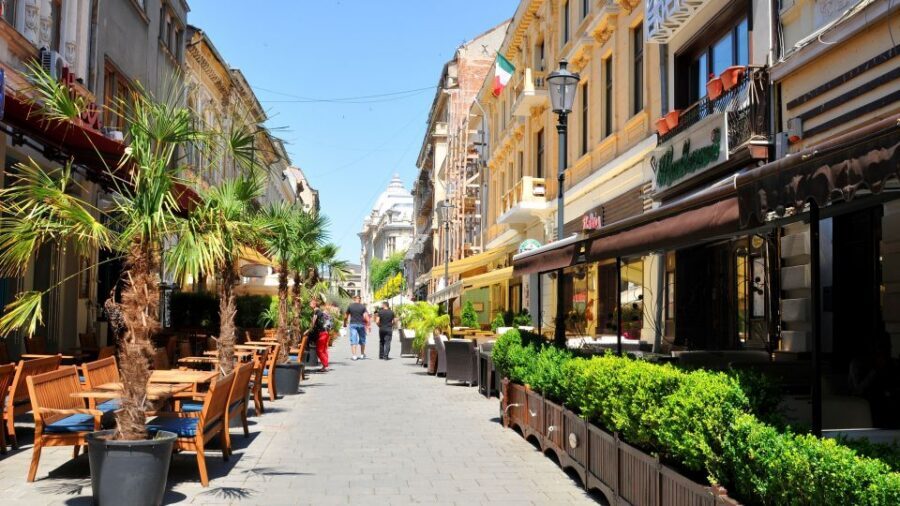
Next you move into Old Town, starting around Hanul Lui Manuc, a fortified inn built around 1806 by Manuc Bei. It is not just a pretty courtyard stop. It is a reminder that trade and culture were once the engine of the city, bringing merchants and different communities together.
This stop is listed as admission free, which is a nice bonus after a ticketed monument.
Revolution Square (Piaka Revolukiei): December 1989 turning point
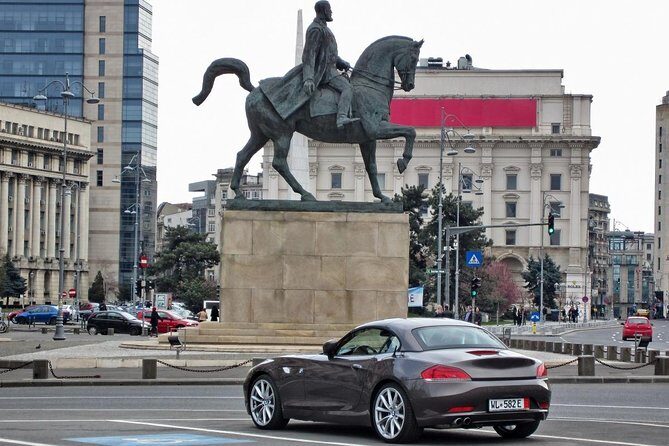
At Revolution Square, the story sharpens. You connect the fall of Nicolae Ceausescu to the Revolution of December 1989, and you also connect the building near the Senate Palace area to the Central Committee of the Romanian Communist Party. The tour frames the revolution with human force and sacrifice, and it helps you understand why this place matters beyond a postcard.
The stops around here are listed as admission free, so you can spend more time taking it in rather than managing ticket lines.
You can also read our reviews of more tours and experiences in Bucharest
Romanian Athenaeum and Calea Victoriei: culture after politics
The Romanian Athenaeum is next, a representative symbol of Romanian culture often seen as a Bucharest landmark. The stop notes that it is part of the European Heritage list, and it is one of the most visited attractions on Calea Victoriei.
You then walk or view Calea Victoriei, where monarchy-era references and communist-era symbols sit on the same avenue. The tour mentions old Orthodox churches, museums, theatres, tea shops, and gift shops. It also points to major anchors like the Royal Palace on one side and Revolution Square politics on the other.
Admission is listed as free for the Calea Victoriei segment, but you may still want spending money for snacks or shopping if that is your thing.
Centrul Shakti and Arcul de Triumf: a break and a view
You also stop at Centrul Shakti, in the Historical City Centre area. Even with limited detail in the itinerary description, this is a good example of how the day stays varied: monuments, then streets, then a different kind of cultural stop.
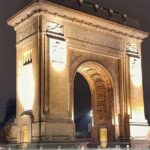
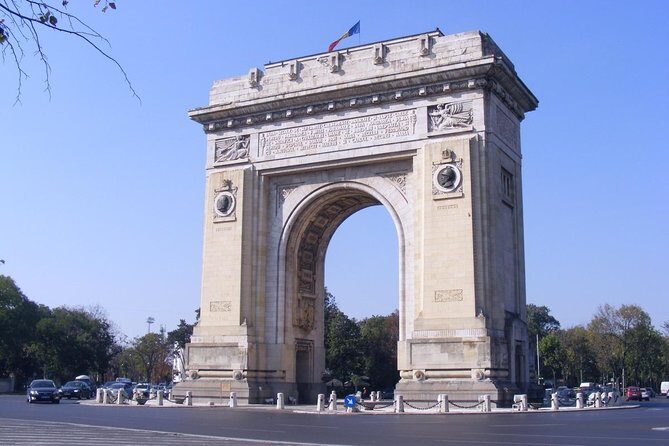
Then you end with the Triumph Arch (Arcul de Triumf). At 27 meters tall, it is built like a statement. The tour notes that it has changed designs over time, and that it can include exhibitions like the Great War for the Unification of Romania, heraldry of Great Boyar families, and photos about the arch.
This is listed as admission free in the itinerary, with a short time window. If you care about photos and close details, you might want to keep your camera ready for quick shots.
Day 2: Curtea de Arges, Poienari’s 1,480 steps, and Transfagarasan
Day 2 shifts from city storytelling into mountain drama. You will spend time on both historic sites and one of Romania’s most famous scenic drives.
Curtea de Arges Monastery: royal tombs and sacrifice
Curtea de Arges Monastery is tied to royal tombs and a major royal church story tied to the old Wallachian court ruins. The stop highlights the 13th-century Royal Church and the ruins of the Wallachian princely court.
Admission is not included here, so budget for separate entry.
Poienari Castle: Dracula territory with real effort
Poenari Castle is the classic Dracula fan stop, linked to Vlad the Impaler. The important detail is the physical reality: you climb 1,480 steps up to the ruined fortress at about 860 meters.
Admission is not included, and this is also where your fitness planning matters. If you have knee issues or anyone in your group struggles with steep climbs, tell the guide early and talk through options. Even if you push through, bring water and expect it to take more out of you than flat sightseeing.
Transfagarasan Highway: the road that earns its reputation
Then comes Transfagarasan Highway, framed as one of the most spectacular roads in the world. The tour notes a Top Gear mention calling it the most beautiful road in the world, and the pitch is simple: the views are the point.
This segment is listed with admission free. Practically, though, you will want good weather for the best views. If conditions are foggy or rainy, the drive can still be impressive, but expect the experience to be more about the drive and less about long-distance panoramas.
Sibiu time around Piata Mare (Big Square)
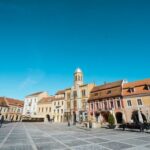
By the end of the day you are back in a town setting around Piata Mare, and the itinerary description emphasizes Sibiu as a must-visit with a history around 900 years. It also mentions a city tour that includes the Evangelical Cathedral and Sibiu Old City Center.
Admission for this segment is listed as free, so you are paying mostly for guided time and orientation. This is a good evening stop if you like atmosphere and want to wander without turning every hour into a ticket problem.
Day 3: UNESCO Biertan Fortified Church and medieval Sighisoara
This day is about walls—literal defensive walls and the kind that protect a way of life.
Biertan Fortified Church: UNESCO details you’ll notice
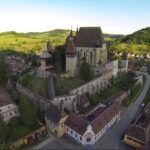
Biertan Fortified Church is recognized by the UNESCO World Heritage Centre. It is set in a town dating back to 1224 and is built on a hillock in the center of town.
The itinerary description adds details that make it fun to look at, like three defensive walls and seven bastions. It also includes a story that in three hundred years there was only one divorce. Even if you treat that as a local claim rather than a spreadsheet, it gives the site character.
Admission is not included for this stop, so plan your budget and time.
Sighisoara citadel: inhabited medieval town life
After Biertan, you head to Sighisoara’s historic center and citadel. The tour frames it as a living medieval fortress built from the 12th century, and it stresses that it has remained inhabited for over 700 years, which is rare.
The itinerary notes cobblestone streets, gates, and massive stone walls up to 14 meters. It also ties the town to Vlad the Impaler’s birthplace, though the tour keeps the point grounded in place rather than pure myth.
Admission is not included here, and you should expect walking on uneven surfaces. If you know your group tolerates it well, you will enjoy the citadel more rather than treating it like a race to the next stop.
Day 4: Brasov walking tour, Black Church area, and Bran Castle foods
Day 4 is where the medieval vibe becomes very personal. You get a guided old-town walk, then you pivot to Dracula-style legend territory with real culinary distractions.
Brasov historical center: Black Church and old walls
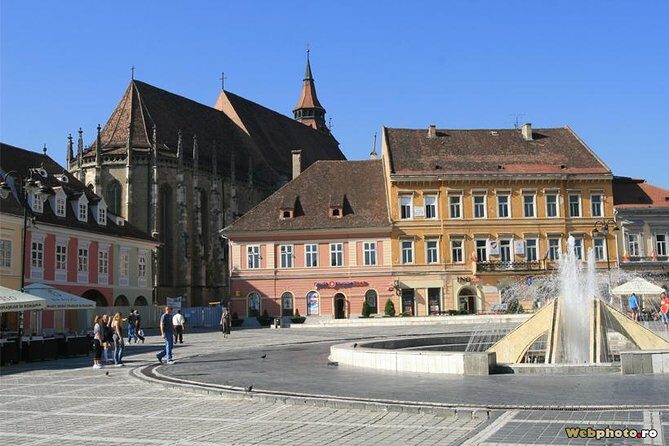
In Brasov, your guide leads a walking tour covering the Old Town square, the Black Church, and city walls built in the Middle Ages. There is also free time to absorb the atmosphere, plus a chance to sit in a café without feeling like you are skipping your guide.
This stop is listed with admission free. That does not mean there are no ticket issues later. It just means your money is going into guided orientation and time on foot.
Bran Castle: the famous silhouette, with local bites nearby
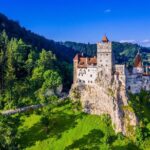
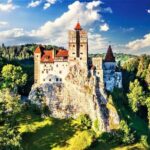
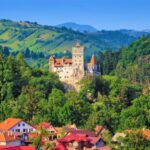
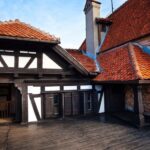
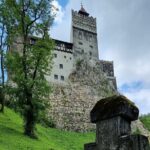
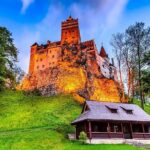
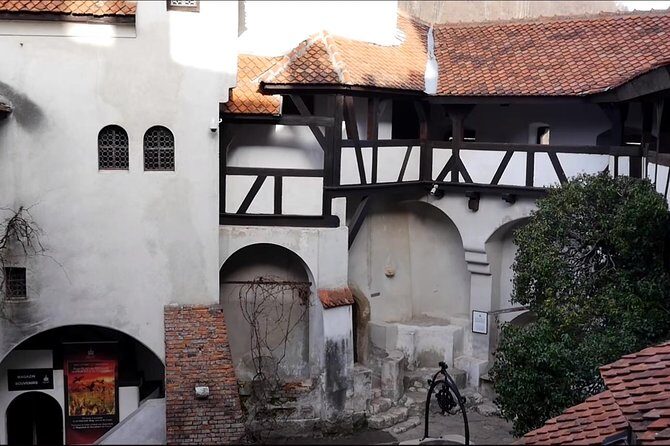
Bran Castle is described as between myth and history. It is widely believed that Bram Stoker’s Dracula descriptions helped shape how people imagine Bran. You will also get context on the bridge between fiction and the real building.
Admission is not included here, so again: budget and plan.
The itinerary also mentions tasting traditional foods outside the castle area: handmade cheeses, pálinka (plum and pear brandy), and traditionally-produced ham and sausages. Even if you skip alcohol, those cheese and sausage stops are a practical way to make the Dracula day taste like Romania.
Day 5: Peles Castle, Sinaia Monastery, and Snagov Monastery calm
The final day shifts mood again. After castles and cliffs, you end with royal elegance and then quiet spiritual stops.
Peles Castle: the Carpathian crown jewel
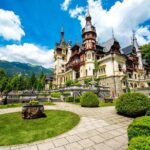
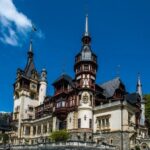
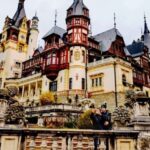
Peles Castle is framed as the Romanian royal family’s summer residence and a top castle in Europe. The itinerary calls it the crown jewel of the Carpathians, built over 41 years from 1873 to 1914.
Admission is not included. The good news is that this is a “slow down and look” type of place, so even if it is ticketed, it is usually time well spent.
Sinaia Monastery: fortified, spiritual, and reflective
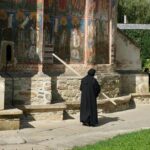
Next is Manastirea Sinaia, described as a mountain resort place visited by kings and important figures to unwind and reflect. You visit the monastery, including time for the fortified door entry experience and a focus on Orthodox spirituality and artistic representations.
Admission is not included here. The value is the contrast: after Romanian legends and stone walls, you get a place where the pace naturally slows.
Snagov Monastery: a controversial Vlad Tepes story on an island
Finally, Snagov Monastery. The itinerary focuses on a controversial story about Vlad Tepes’ death: the idea that monks secretly moved his earthly remains to be buried in front of the altar for sanctification, tied to the monastery on an island.
Admission is not included. If your group likes history that has both legend and debate, this is a satisfying closing note.
Price and logistics: what’s included, what’s on you

This is a private tour, and the included elements are practical, not just marketing.
Included
- Private car for your group (Tourism or Minibus), with pickup offered
- Private licensed English-speaking guide/driver available throughout
- All car expenses like gasoline, parking, and road tolls
- Complimentary wireless internet in the comfortable car
- Flexibility to adjust the itinerary even after the tour starts
- Accommodation, meals, and entrance fees for the guide
- Mobile ticket
- Group discounts (if you book with more people, ask what applies)
Not included
- Photo fees (some sights charge for photography)
- Accommodation, meals, and beverages for you (the tour recommends and books these for you)
- Entrance fees as per the itinerary
So is the price a deal? For me, it depends on your travel style. If you want a bus-group version, you can likely spend less. But if you want someone to manage the driving, choose the best sequence, and explain why each location matters, this price becomes easier to swallow. You are paying for time and problem-solving.
One more practical consideration: ticketing. Several stops are explicitly listed as admission not included (Palace of Parliament, Curtea de Arges Monastery, Poienari Castle, Biertan Fortified Church, Sighisoara, Bran Castle, Peles Castle, and the monasteries at Sinaia and Snagov). Some stops are listed as admission free (Old Town segment, Revolution Square segment, Calea Victoriei segment, Triumph Arch segment, Transfagarasan Highway segment, Piata Mare segment). That mix is normal for Romania, but you should set aside money for entrances.
Who this private tour is best for
I’d put this tour in the sweet spot for people who want structure without feeling trapped. It works especially well if you:
- Want a first-time Romania trip with clear story flow from Bucharest into Transylvania
- Prefer a private car and a guide who can answer questions in real time
- Enjoy medieval towns, fortified churches, and castle legends but still want context
- Have a small group or family and want a pace that suits you
It also fits solo travelers who want extra confidence. One past guest described the guide as professional and the experience as a safe choice for a first trip abroad. You still need to use common sense anywhere, but a private arrangement can feel calmer than navigating alone.
The main mismatch is physical. If your group does not handle steep stairs well, Poienari’s 1,480 steps may be too much. You can still enjoy the rest of the day, but you will want to plan for alternatives with the guide.
Should you book this Bucharest to Transylvania private tour?
I’d book it if you want a guided, story-driven route with UNESCO and medieval power plus classic Romania scenery like Transfagarasan. The private car and full-day guide time are the biggest value drivers, especially if you hate wasting half your trip figuring out logistics.
Skip it or rethink it if you:
- Want to control every ticket yourself with zero add-ons
- Have someone in your group who cannot do steep climbs
- Are traveling on a strict budget that cannot absorb multiple separate admission fees
If you do book, do one thing that makes the trip smoother: ask the guide ahead how you want to handle the stair-heavy portions, and confirm what the group needs for comfort. With that done, this route has a strong rhythm, from political Bucharest to fortress churches, to castles, and then back to quiet monastery stops.
FAQ
FAQ
Is this a private tour?
Yes. It is described as a private tour/activity where only your group participates.
Do you get pickup?
Pickup is offered.
What’s included in the price?
The tour includes a private car (tourism or minibus) for your group, a private licensed English-speaking guide/driver throughout, complimentary wireless internet in the car, and all car expenses like gasoline, parking, and road tolls. Accommodation, meals, and entrance fees for the guide are also included.
What is not included?
The tour does not include photo fees, your accommodation, meals, and beverages, and entrance fees as per the itinerary.
Do I need separate tickets for attractions?
Some stops are listed as admission ticket not included, while others are listed as free. Entrance fees are generally not included as a blanket item, so you should expect to pay for ticketed sights.
Can I cancel for a full refund?
Yes. You can cancel up to 24 hours in advance of the experience for a full refund.
Are service animals allowed?
Yes, service animals are allowed.