REVIEW · BUCHAREST
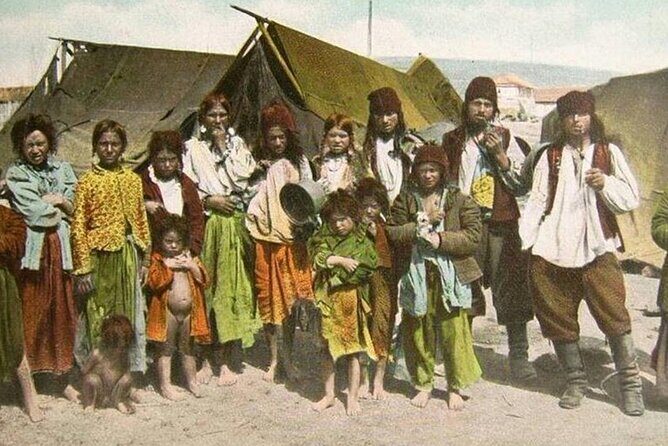
Slavery in Romania Myths and Truths About Gypsies
Book on Viator →Operated by BucharestGuide · Bookable on Viator
Slavery myths and Roma truths have a way of sticking to you. This 3-hour Bucharest walk is built around real places and a story thread that links public life, education, and painful history.
I especially like the professional English guide lead (Mihai, in at least some departures, brings the details into focus) and the way the tour ends with handcrafted Roma-made pieces at Mesteshukar ButiQ [MBQ]. One thing to plan for: it’s a walking route with several stops, so you’ll want to be comfortable on your feet for most of the 3 hours.
In This Review
- Key Highlights You’ll Notice Fast
- What This Bucharest Tour Actually Does With the Topic
- Start at Teatrul „Ion Creangă”: A Clean Beginning at 10:00 AM
- The Romanian Athenaeum: Where Art and Public Life Collide
- Iuliu Maniu Statue: Politics That Touches Roma History
- Palatul Stirbei: A 19th-Century Room to Think In
- Cismigiu Parc: The Best Part for Walking Lovers
- Gheorghe Lazăr National College: Education as a Story Lens
- Holocaust Memorial: The Forgotten Holocaust Part of the Route
- Piața Mihail Kogălniceanu: A Politician-Writer’s Link to Roma
- Mesteshukar ButiQ [MBQ]: Shopping That Feels Like Part of the Story
- Timing, Walking, and Group Size: The Practical Side
- Price and Value: What $127.37 Buys You
- Who This Tour Is Best For
- Should You Book This One
- FAQ
- How long is the tour?
- Where does the tour start and end?
- What time does it start?
- Is the tour offered in English?
- What’s included in the price?
- Do I need to buy admission tickets at the stops?
- Is coffee or tea included?
- How big is the group?
- Is it walking-heavy?
Key Highlights You’ll Notice Fast
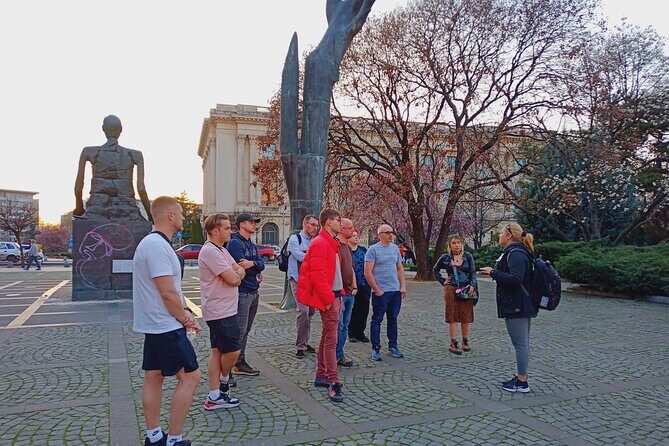
- An English-speaking guide who keeps the story clear and grounded in the city
- Eight structured stops with short on-site time and plenty of walking between
- Holocaust Memorial, including the Forgotten Holocaust theme in Romania
- Cismigiu Park with a school stop, park ruins mentioned on the route, and viewpoints
- Mesteshukar ButiQ [MBQ] crafts shop for authentic handmade items made by Roma artisans
- Small group size (max 15), which helps questions and pacing
What This Bucharest Tour Actually Does With the Topic
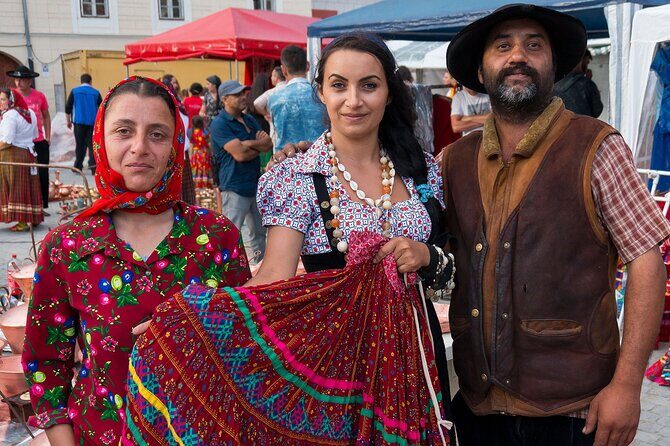
The title is big and heavy: slavery myths and truths about Gypsies. What I like about this tour is that it doesn’t stay abstract. It anchors the conversation in Bucharest landmarks, so you’re not just hearing opinions or dates in a vacuum. You see how ideas about Roma show up in politics, education, and public memory around the city.
You also get a mix that works well for most travelers: part are “look and learn” stops, part are short reflections tied to what you’re seeing. And at the end, you shift gears from memorials and statues to living culture at a craft shop.
If you’re hoping to leave with a neat checklist of facts about every myth, this might feel more like a guided route through key memory points than a full textbook. But as a first, city-based introduction, it’s strong.
You can also read our reviews of more tours and experiences in Bucharest.
Start at Teatrul „Ion Creangă”: A Clean Beginning at 10:00 AM
The tour kicks off at Teatrul „Ion Creangă” – Sala Mare, Strada Piața Amzei 13, București 030167. Meeting here is practical because it’s in central Bucharest and easy to plug into public transportation.
The time matters: the start time is 10:00 am, and the tour runs about 3 hours. That means you’re not stuck doing one more late afternoon wander. You get your story walk done, then you can keep exploring the city afterward with your bearings better than before.
Your ticket format is also easy: you get a mobile ticket, which is perfect when your phone is already doing the map work.
The Romanian Athenaeum: Where Art and Public Life Collide
The first stop is The Romanian Athenaeum, Romania’s House of Art. The building also houses the National Romanian Philarmonic, so it’s not just a pretty facade stop. It’s a place where culture is literally part of the city’s identity.
This is one of those early stops that helps you settle into the tour pace. About 20 minutes here gives you time to absorb the setting and hear how the artistic side connects to the larger story being told. If you like learning in context, this kind of start helps your brain file everything in the right place.
Admission is listed as free, so you can focus on the explanation instead of juggling ticket hassles.
Potential drawback: if you’re the type who likes longer museum-style time, this is a shorter orientation stop. It’s meant to move you along a route, not replace a full heritage visit.
Iuliu Maniu Statue: Politics That Touches Roma History
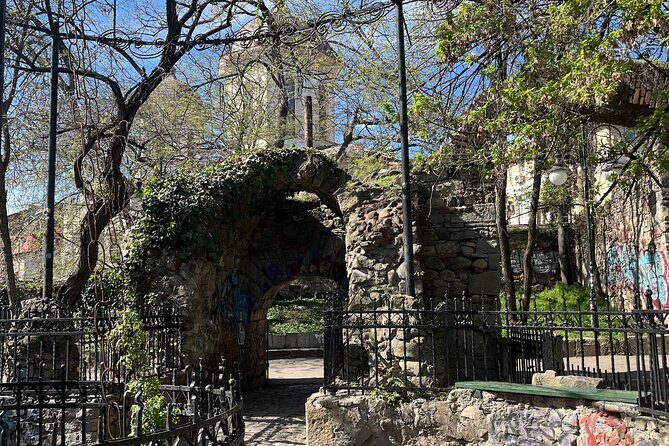
Next you meet Iuliu Maniu via the statue stop. This part is about recognizing that Roma history in Romania didn’t exist only on the margins. It’s connected to political life and the development of modern Romania, and the guide ties Maniu into that thread.
You get about 20 minutes, which is enough time for a focused narrative, not a sprawling lecture. I like this approach because it shows you how a single person’s role in a country’s politics can overlap with the story of Roma.
Admission here is also free, so you’re paying for the guide and the route, not entry fees.
Consideration: because it’s statue + street context, you’re relying on the guide’s storytelling to make the connections land. If you tune in, it works great. If your mind wanders during the explanation, you’ll miss the point of this stop.
Palatul Stirbei: A 19th-Century Room to Think In
The next jump is to Palatul Stirbei, described as a quick look into the 19th century. You’re looking at the house of Barbu Stirbey, an important figure in the tour’s story.
This stop gives you variety in setting. You’re not just dealing with formal memorial spaces and statues. You’re looking at a home built for power and status, and the guide uses that to keep the story grounded in how society looked at different times.
It’s another around 20 minutes stop and also free for admission. That makes it easy to fit into the schedule without losing momentum.
If you’re the kind of traveler who likes architecture, this stop helps. If you’re mostly after museums, you may wish for more time inside. Based on the format, though, the tour is designed to stay on the move.

Cismigiu Parc: The Best Part for Walking Lovers
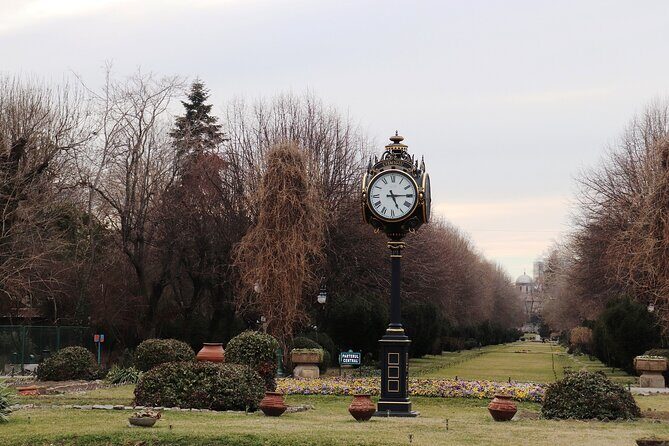
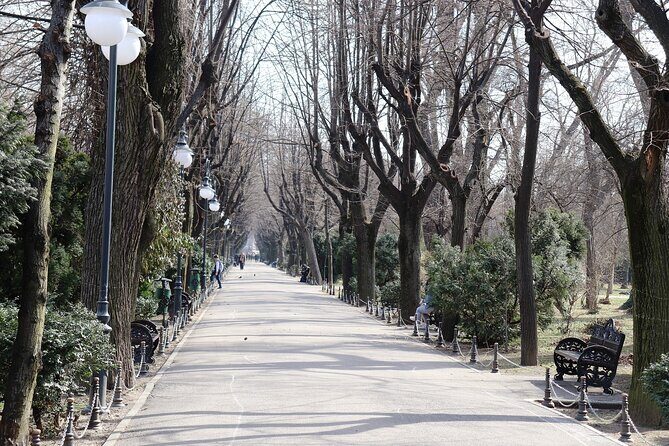
Now you get the relaxed hour-style pacing of Cismigiu Parc. This is described as the largest and most beautiful garden in the city, and the route uses it in a clever way. You don’t just stroll randomly. You make several story-linked stops inside the park with about 30 minutes assigned.
Along the way, you’ll hear about things like:
- a very famous high school (and then you’ll return to that theme at the official college stop)
- the ruins of an old monastery
- a great viewpoint over the park
- other surprises on the way
That list matters because it explains why Cismigiu Park is more than scenery. It’s a living classroom. You’re getting a walk with short narrative beats, plus a place to decompress for a moment before the heavier stops later.
Admission is free here too, which is nice. Parks are already the best value kind of sight: you’re paying mostly for context and guidance.
What to consider: park routes can mean uneven paths. The tour doesn’t specify surfaces, but it does say you should have moderate physical fitness. So treat comfortable shoes as part of your plan, not an optional extra.
Gheorghe Lazăr National College: Education as a Story Lens
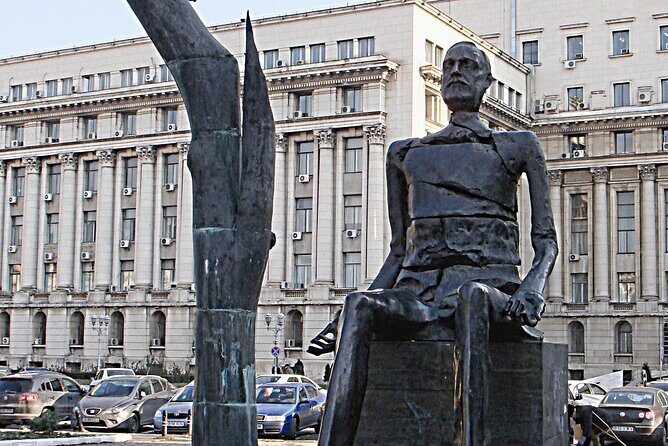
Right at the entrance to Cismigiu Park you’ll stop at Gheorghe Lazăr National College. The tour frames it with a single takeaway: education is the key to everything.
This is about 15 minutes, so it’s short, but the point seems designed to stick. The stop ties education into the broader narrative about Roma myths and truths by showing how institutions shape who gets seen, discussed, and recorded.
This is also free for admission, and it keeps the tour’s structure feeling tight: you don’t lose time wandering. The guide uses each stop to layer meaning onto what you’ve already learned.
If you prefer very long site visits, this might feel like a quick photo-and-notes moment. But within a story walk, that’s often exactly right.
Holocaust Memorial: The Forgotten Holocaust Part of the Route
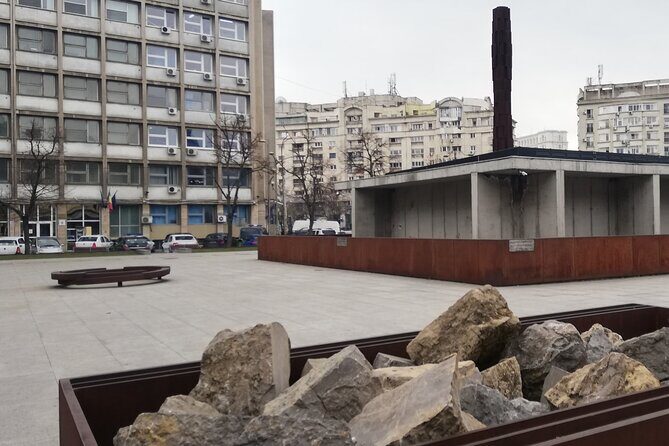
Then comes the emotional center: the Holocaust Memorial. This stop is explicitly about the rough story of Roma during WW2, including what is known as the Forgotten Holocaust.
It’s about 15 minutes, and it’s described as one of the most impressive monuments built in Romania in memory of Holocaust victims. Even without adding your own context, the guide is supposed to frame why this memorial matters and how it fits the tour’s theme.
This is the stop where you should plan to slow down mentally. If you rush, you’ll just see stone and text. If you stay present, it becomes a real historical anchor for everything else on the walk.
Practical note: because it’s only 15 minutes, you’re not expected to read everything in full depth. You’re meant to leave understanding the importance of the topic and knowing where to look further if you want.
Piața Mihail Kogălniceanu: A Politician-Writer’s Link to Roma
Next you reach Piața Mihail Kogălniceanu. Here you meet Kogălniceanu, described as one of the most famous Romanian politicians and writers. The key detail for this tour: he was the first one to write about Romanian Gypsies.
This stop is about 10 minutes, which tells you how the tour uses it. It’s meant as a quick but pointed connection between writing, public perception, and how narratives get formed.
If you like the idea of seeing how words and policies travel through history, you’ll get a lot out of this short stop. The guide turns a city square into a story about authorship and cultural labeling.
Admission is also free, so you’re paying for the explanation here, not for an entry.
Mesteshukar ButiQ [MBQ]: Shopping That Feels Like Part of the Story
The tour ends at Mesteshukar ButiQ [MBQ], at Bulevardul Mihail Kogălniceanu 12. This is a small shop that focuses on authentic pieces hand-crafted by Roma artisans.
This stop is about 20 minutes, and it works as a smart contrast. After memorials, statues, and park ruins, you get something tangible: craftsmanship, daily culture, and the chance to see creativity as lived reality, not only historical topic.
The tour’s format makes it easy: you’re already in the same area, and the guide can explain what you’re seeing so it’s more than browsing souvenirs.
From my perspective, this is one of the most satisfying parts of the whole trip. You leave with a story that includes living people, not only monuments. And if you shop, you’re more likely to buy something that feels connected to the local makers.
If you don’t want to shop at all, you can still enjoy the cultural side of the stop. The risk is simply time: if you’re a fast shopper, you might want to plan extra time afterward, since the tour gives only around 20 minutes here.
Timing, Walking, and Group Size: The Practical Side
This is a guided group tour with a maximum of 15 travelers. That small size helps a lot. You’re more likely to get answers if you ask questions, and the pacing feels human.
Total duration is about 3 hours, and the itinerary notes that the remaining time is used for walking between stops. So while each site is a short visit, you should expect the walking to be a real part of the experience.
Also note the weather factor. The route includes Cismigiu Parc, so you’ll feel the day’s conditions. Romania can vary quickly by season, so dress in layers and bring a light rain option if your dates look uncertain.
Included snacks are a cake snack, and coffee or tea is not included. The tour mentions a short stop on the way where those are an extra cost, so keep a little cash or card flexibility.
For footwear: given the park and walking time, I’d treat comfortable shoes as non-negotiable. The tour says you should have moderate physical fitness, not that it’s a strenuous hike, but it’s still a walking day.
Price and Value: What $127.37 Buys You
At $127.37 per person (approx.), this tour is priced like a focused guided experience rather than a low-cost add-on.
Here’s what makes it feel like value:
- A professional English-speaking guide for the full ~3 hours
- Short, meaningful stops across central Bucharest, not long commutes
- All listed admissions are free at the stops where entry is required
- A guided ending at Mesteshukar ButiQ [MBQ] where you’re seeing craftsmanship up close
- A cake snack included, plus a built-in rhythm so you’re not hunting for food
Is it a deal if you only want one museum? Maybe not. But if you want context and you like history told through places you can actually stand in, the structure justifies the price.
Who This Tour Is Best For
You’ll likely love this tour if:
- you want a short, story-driven walk rather than a full-day museum marathon
- you prefer your history connected to politics, education, and public memory
- you want a Roma-focused route in Bucharest that includes WWII remembrance
- you enjoy finishing with a place where you can see craftsmanship and culture in action
You might want to choose a different format if you strongly prefer deep museum time, because this experience is designed around short stops and walking.
Should You Book This One
Yes, you should consider booking if you want a clear, guided route that uses Bucharest itself as the classroom. The best reasons are the combination of Holocaust Memorial context, the city-square links to authorship and politics, and the end stop at Mesteshukar ButiQ [MBQ] where Roma culture is presented through real handmade work.
Book it especially if you’re the type who likes learning fast but grounded in real places. For the money, you’re buying time with an English guide plus a route that keeps the story moving instead of piling on single-location facts.
If you’re expecting a strict, comprehensive lecture on every myth and every detail, you may feel you want more sources afterward. But as an introduction that stays human and place-based, it’s a smart use of half a day.
FAQ
How long is the tour?
It runs for about 3 hours.
Where does the tour start and end?
It starts at Teatrul „Ion Creangă” – Sala Mare, Strada Piața Amzei 13, București, and ends at Mesteshukar ButiQ [MBQ], Bulevardul Mihail Kogălniceanu 12, București.
What time does it start?
The start time is 10:00 am.
Is the tour offered in English?
Yes, it’s offered in English.
What’s included in the price?
A professional English-speaking guide and a cake snack are included.
Do I need to buy admission tickets at the stops?
Admission tickets are listed as free at the stops described.
Is coffee or tea included?
No. There may be a short stop on the way, but coffee and/or tea would be an extra expense.
How big is the group?
The tour has a maximum of 15 travelers.
Is it walking-heavy?
Yes. The tour uses walking time between stops and you should have moderate physical fitness.