REVIEW · BUCHAREST
Eastern Orthodox Church Art in Bucharest
Book on GetYourGuide →Operated by Bucharest Break · Bookable on GetYourGuide
Church art in Bucharest speaks in color. This tour strings together Eastern Orthodox churches you can actually step into, so the art feels less like a display and more like a living language from the Wallachian Middle Ages onward. I especially like how it focuses on icons and frescoes, not vague church history.
What you’ll enjoy most is the way the route is built like a visual lesson: icons, wall paintings, and church interiors change as you move from stop to stop. You also get to see major names of Romanian church painting style up close, including the fresco work admired along Lipscani Street, and you’ll learn how Orthodox art is meant to teach and guide attention.
One possible drawback: these are active worship spaces. That means modest dress and respectful behavior are required, and the mood is more devotional than museum-quiet. If you’re sensitive to religious talk, know the guide will frame what you see through an Orthodox lens.
In This Review
- Key things to know before you go
- Walking Bucharest Through Eastern Orthodox Church Art
- Starting at the Anton Icon Shop: Set the Tone Fast
- Saint Anton Church: Wallachian Roots in Paint
- Saint George Km0 and Lipscani Street’s Fresco Power
- Saint Elijah and Lady’s Church: Two Stops Locals Don’t Rush
- Saint Elijah: An Orthodox Basilica with a Citywide role
- Lady’s Church: Old preserved frescoes in Bucharest
- Stavropoleos Monastery and the Neo-Baroque Finale Nearby
- Price and Group Size: Is $57 Worth It?
- What to Bring, What You Can Wear, and Church Etiquette
- Who This Tour Suits Best
- Should You Book Eastern Orthodox Church Art in Bucharest?
- FAQ
- How long is the tour?
- Where is the meeting point?
- What languages is the live guide available in?
- Are the churches museums?
- What should I wear or bring?
- Is food or drinks included?
- How big is the group?
Key things to know before you go
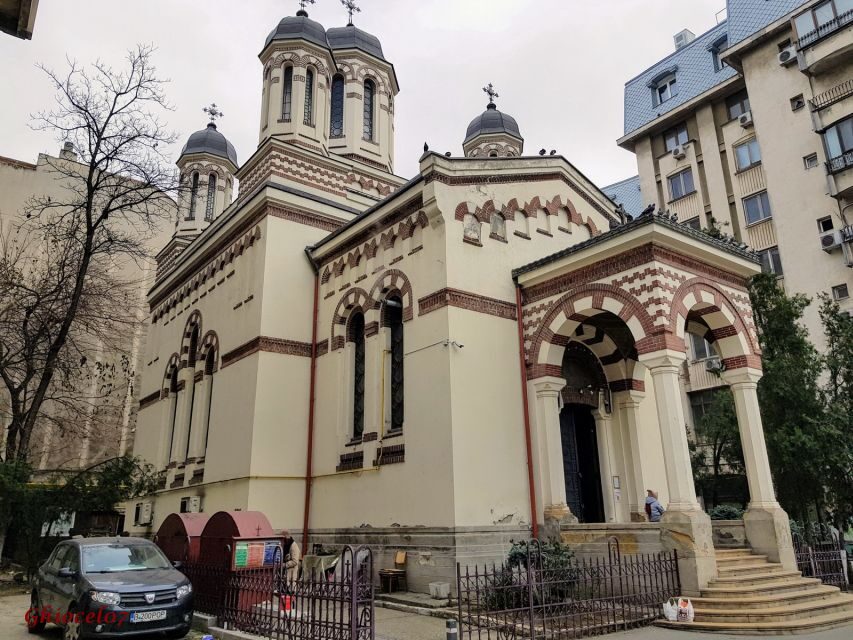
- Small group (10 max) means you get time for questions, not just a headcount.
- Meet in front of the Anton icon shop, with icons in your first minutes.
- A focused route connects multiple Orthodox churches through their painting styles and styles of devotion.
- You’ll visit hard-to-find-feeling churches, not just the most obvious postcard stops.
- Stavropoleos Monastery plus a neo-baroque finale gives you contrast at the end.
- No food included, so plan for a cafe stop if you want a break.
Walking Bucharest Through Eastern Orthodox Church Art
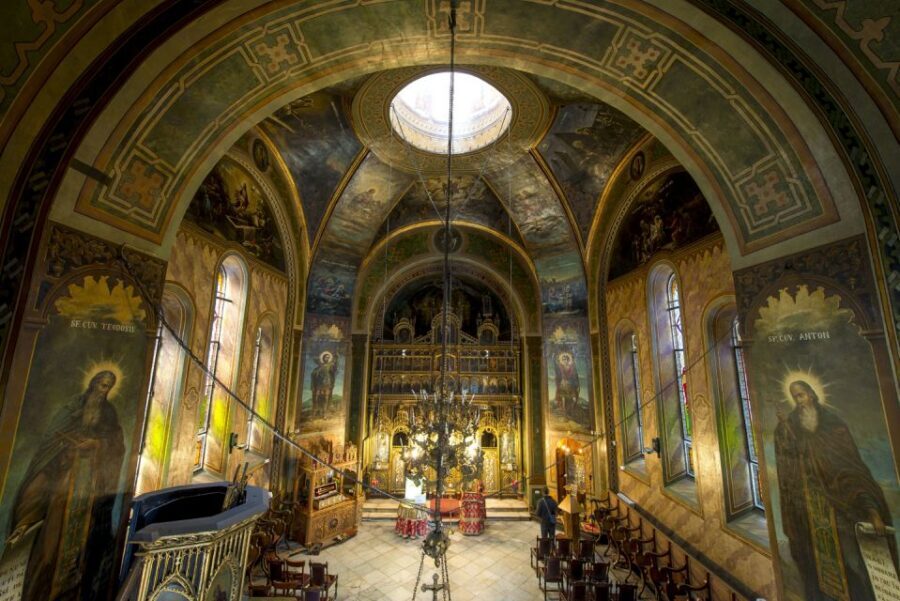
Bucharest can feel like a city of layers—medieval beginnings, Ottoman-era influences, modern blocks, and church domes all side by side. This experience turns those layers into a clear art route. In just 2.5 hours, you move from one painted interior to the next, and you start noticing how Orthodox art works: it guides your gaze, signals theology through symbols, and gives worshippers a visual focus.
I like that the tour stays practical. You’re not stuck listening from the sidewalk while art stays behind locked glass. Most of what you see is inside churches where people still worship, so there’s an extra layer of context. It’s not just about what the paintings look like—it’s about why they are there.
And because it’s a small group, you’re less likely to feel like you’re being rushed through sacred space. One-person tours happen, and that alone can make the explanations feel personal.
You can also read our reviews of more tours and experiences in Bucharest.
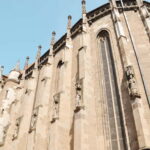
Starting at the Anton Icon Shop: Set the Tone Fast
Your tour begins in front of the Anton icon shop. That’s a smart way to start because it gives you a reference point right away: icons are not souvenirs here. They’re part of a tradition of prayer and visual teaching.
From this starting point, the route leads you to Saint Anton Church near the Old Princely Court area. That “near the old center” idea matters. It helps you understand that you’re not only looking at art—you’re tracing how religious communities and patrons shaped the city’s identity over time.
Also, pay attention to your own pace and expectations at the beginning. With churches involved, you’ll want to slow down. The best parts of Orthodox art often live in small details: facial expressions, posture, gestures, and the way figures are arranged.
If you’re planning to shop, keep in mind the tour starts at an icon-focused place. Even if shopping isn’t the mission, you may get time to browse.
Saint Anton Church: Wallachian Roots in Paint
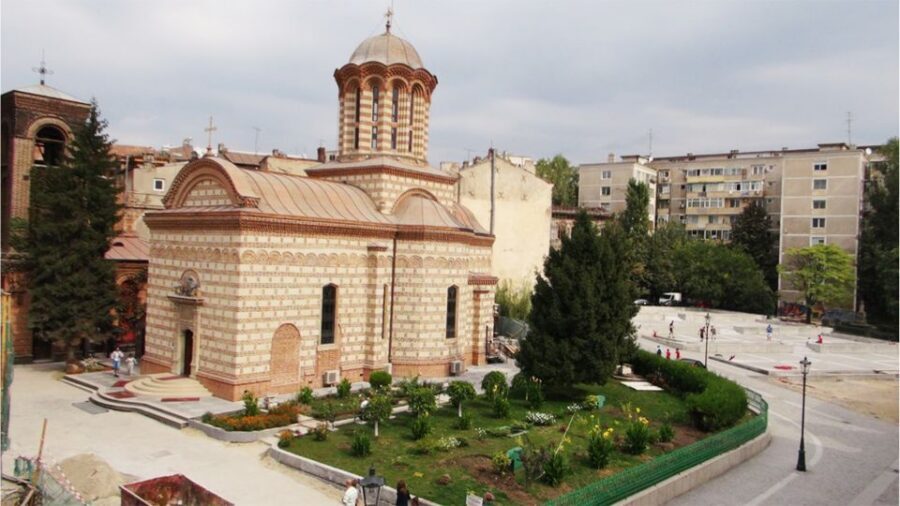
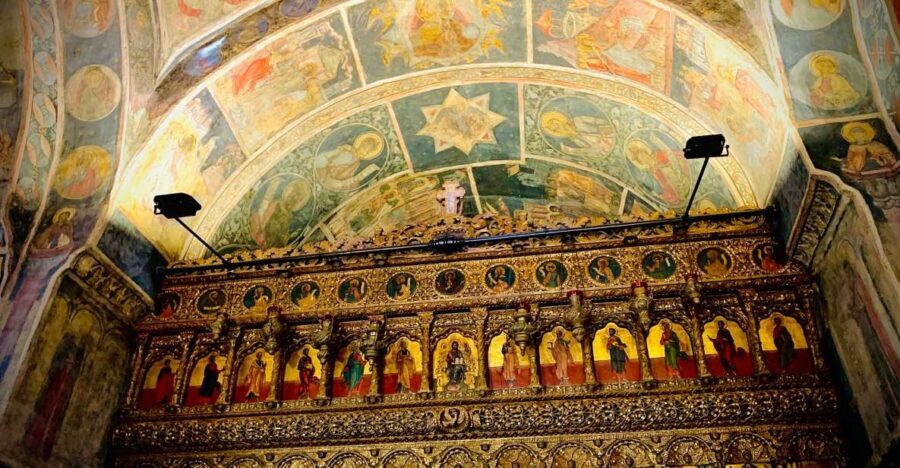
Saint Anton Church is your first church stop, and it’s a strong opener. The tour frames it as a step back toward the Wallachian Middle Ages, which is a helpful lens. Wallachia is tied to long traditions of Orthodox patronage and church art, and you can feel that continuity in how the spaces are decorated and used.
What you’ll look for here is the “language” of iconography: how figures are presented and how the paintings handle meaning through symbols and arrangement. Orthodox art isn’t random decoration. Even when the details are intricate, the overall purpose is clear—help worshippers understand sacred stories and ideals without needing a text in front of them.
Practical note: because it’s an active church, the experience will likely involve quieter moments and a more respectful pace than a typical sightseeing stop. Wear comfortable shoes, and plan to move carefully inside.
Saint George Km0 and Lipscani Street’s Fresco Power
After Saint Anton, the tour heads along Lipscani Street to Saint George (listed as Km0). This stop is especially attractive if you like church painting with a specific “Romanian” signature.
The big focus here is a fresco made by one of Romania’s greatest church painters. The tour doesn’t treat this as a generic mural. Instead, it positions the fresco as a kind of landmark—one that helps you understand how Romanian Orthodox church art developed stylistically and artistically.
When you’re standing in front of frescoes like this, I suggest you look at three things, in order:
- Faces and expressions: Orthodox painting often aims for spiritual presence, not realism-for-its-own-sake.
- Composition and hierarchy: who is centered, who is framed, and how attention is directed.
- Color and line: even if you’re not an art expert, your eyes can still feel the rhythm.
The best part is how the fresco connects to what you’ve just seen at Saint Anton. You start to realize this tour is really about patterns—how Orthodox spaces communicate across time.
Saint Elijah and Lady’s Church: Two Stops Locals Don’t Rush
Next come two churches described as difficult even for locals to locate. That alone can make your experience feel more like finding corners of Bucharest rather than doing a checklist.

Saint Elijah: An Orthodox Basilica with a Citywide role
Saint Elijah is described as an Orthodox Basilica and noted as one of two in the city. That tells you this isn’t a small chapel hidden away; it plays a larger role in the religious map of Bucharest.
When you’re inside, look for how basilica-scale spaces affect what you see. Larger interiors tend to emphasize the vertical lines and the way icons or painted sections relate to architecture. You might notice how the space shapes the way worship happens and how viewers are guided to specific parts of the interior.
Lady’s Church: Old preserved frescoes in Bucharest
Then there’s the Lady’s Church, highlighted for having some of the oldest preserved original frescoes in Bucharest. This is the kind of stop that turns your “photos later” instinct into a more careful moment.
If you’re trying to understand what makes an older fresco different, you’ll likely feel it in the preservation quality and in how the painting has survived changing surroundings. The tour’s emphasis here is clear: you’re not only looking at art—you’re seeing a surviving piece of early Orthodox visual tradition in the city.
For your visit, keep your expectations modest. You won’t have control over lighting, angles, or how people are standing for prayer. But that’s part of the value: the art is still used.
Stavropoleos Monastery and the Neo-Baroque Finale Nearby
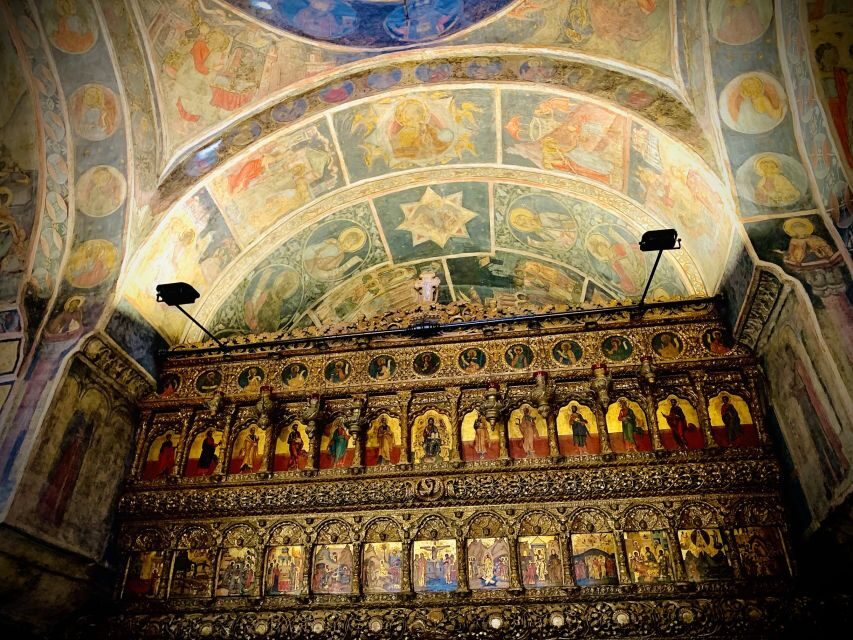
Stavropoleos Monastery is next, and the tour positions it as a point where you can broaden your understanding. A monastery site adds another layer: not only art, but a place shaped by religious community life.
From there, your last church stop is right next to Stavropoleos: a 19th-century neo-baroque church described as Saint Demetrios in the tour narrative. At the same time, the included list names Saint Cyprian Church. Either way, it’s the final church right by Stavropoleos in the tour route.
That contrast is one reason this ending works. Orthodox art is the through-line, but seeing a neo-baroque element nearby helps you notice how Bucharest’s religious architecture and artistic tastes have never existed in a single bubble. Cities like this layer styles, and art reflects that reality.
If you want a practical takeaway from the finale, use it like this: after you’ve spent time on Orthodox iconography and frescoes, your eye starts to compare. You’ll likely notice differences in visual emphasis, ornament, and how architecture and painting cooperate.
Price and Group Size: Is $57 Worth It?
At $57 per person for 2.5 hours, you’re paying for guided interpretation plus entry into multiple active churches. That makes the price easier to justify than a self-guided walk where you’d have to figure out context on your own.
The tour’s small group limit (10 participants) is key here. Art interpretation improves when you can ask questions and when you’re not trying to listen over a crowd. One standout detail from customer experiences: guides like Helen (and also Elena is listed for Spanish reviews) are described as flexible and personable, and that kind of energy tends to make a short tour feel longer and more satisfying.
One negative note you should consider before booking: there’s a mention of the guide becoming condescending when a Catholic traveler was involved. I can’t predict how your guide will behave, but it does point to the fact that this is an Orthodox-framed experience. If you care a lot about respectful, cross-denominational tone, I’d choose your questions carefully and set your goal as learning about art and church life through Orthodox eyes.
What to Bring, What You Can Wear, and Church Etiquette
Because every church on the route is active, you’ll need to follow modesty expectations and behave respectfully. The tour’s rules are straightforward, and they’re worth taking seriously so you don’t get stopped or feel uncomfortable.
Bring:
- Comfortable shoes (you’ll walk between sites)
Not allowed:
- Pets
- Short skirts
- Sleeveless shirts
- Tight clothing
- Ripped clothing
- Strong fragrances
That dress list isn’t just for show. Active worship spaces can get sensitive about strong scents and overly casual attire. I recommend planning your outfit like you’d plan for a church service, not like you’re just popping in for photos.
Also, give your guide the benefit of the doubt about timing. If a service or quiet moment happens, the tour pace can adjust. Churches aren’t museums, so part of the experience is respecting the rhythm of prayer.
Who This Tour Suits Best
This is a great fit if you want:
- Eastern Orthodox and Byzantine-style art explained in plain language
- a walkable route through multiple Bucharest churches in a short window
- a guide who can connect frescoes and icons to what they’re meant to do spiritually and visually
It’s also a good option if you like small groups. With a max of 10, your questions won’t get swallowed.
If you’re less interested in religious art or you prefer purely secular sightseeing, this might feel heavier than you want. The focus is Orthodox church art, and the churches are active.
One more practical point: a guide experience noted that they tailored the pacing for someone using crutches and another using a walking stick. That suggests the guide can be thoughtful about group needs, but I can’t treat that as a promise for every situation. If mobility is a concern, ask ahead and plan for slow, respectful movement inside churches.
Should You Book Eastern Orthodox Church Art in Bucharest?
If your goal is to see Bucharest’s Orthodox art up close with context, I’d say yes—this is the kind of tour that turns churches into lessons without making it feel like homework. The small group format, the icon-and-fresco focus, and the route that connects multiple distinctive church interiors make the $57 price feel fair for what you get in 2.5 hours.
Book it if you:
- enjoy art that’s meant for worship, not just viewing
- want an easy walking plan with a guide handling the explanations
- appreciate visiting places that are still active
Skip it (or consider something else) if:
- you want only secular history
- you’re uncomfortable with dress/etiquette rules in active churches
- you’re very sensitive to how religious topics are discussed
If you do book, come with comfortable shoes, dress modestly, and keep your mindset open. You’ll leave with a clearer sense of how Orthodox visual culture works—one fresco and icon at a time.
FAQ
How long is the tour?
The tour lasts 2.5 hours.
Where is the meeting point?
You meet in front of the Anton icon shop.
What languages is the live guide available in?
The guide offers English, Spanish, and Romanian.
Are the churches museums?
No. All the churches are active, so they are not museum-style stops.
What should I wear or bring?
Wear comfortable shoes. Dress modestly and avoid short skirts, sleeveless shirts, tight or ripped clothing. Don’t wear strong fragrances.
Is food or drinks included?
No food or drinks are served on the tour. You can stop in cafes, bars, or restaurants nearby if you want.
How big is the group?
The group is limited to 10 participants.