REVIEW · BUCHAREST
Bulgaria -Private Tour- Basarbovo, Arbanasi, Veliko Tarnovo
Book on Viator →Operated by Supplier · Bookable on Viator
Cross the border for medieval Bulgaria in one day. This private tour connects you to Basarbovo’s rock monastery, Arbanasi’s National Revival architecture, and Veliko Tarnovo’s Second Bulgarian Empire stronghold, all with an English guide and round-trip transport from your Bucharest hotel.
I like how the day removes the stress of navigating on your own: your guide handles the timing and the story behind each stop. I also like the mix of walking and looking—Tsarevets Fortress gets real time on foot, then you can slow down at Samovodska Charshiya to browse crafts and take photos.
One consideration: it’s a long ride and a long day (about 11 hours). On top of the tour price, you’ll also want to budget for entrance fees and lunch, plus any border delays.
In This Review
- Key highlights worth getting excited about
- Bucharest to Bulgaria in One Day: the driving, border, and comfort realities
- Basarbovo Rock Monastery: St. Dimitrii and the cave-church vibe
- Arbanasi and Konstantsalieva House: the National Revival you can see in person
- Tsarevets Fortress: 3-meter-thick walls and the Church of the Blessed Saviour
- Veliko Tarnovo: the city of the Tsars and why it stays memorable
- Samovodska Charshiya: ending with crafts instead of another fortress wall
- Price and value: what you’re really paying for
- Should you book this Basarbovo, Arbanasi, and Veliko Tarnovo private tour?
- FAQ
- How long does the tour last?
- Is this a private tour?
- Do I get pickup and drop-off in Bucharest?
- What are the main stops on the day?
- Are entrance tickets included?
- How much are the entrance fees?
- Is lunch included?
- What language is the guide?
- Can I cancel and get a full refund?
Key highlights worth getting excited about
- Hotel pickup and drop-off from Bucharest means you start and end without transportation headaches
- Basarbovo’s active rock monastery gives you a rare mix of caves, icons, and legend
- Arbanasi + Konstantsalieva House lets you see how National Revival life looked in stone and wood
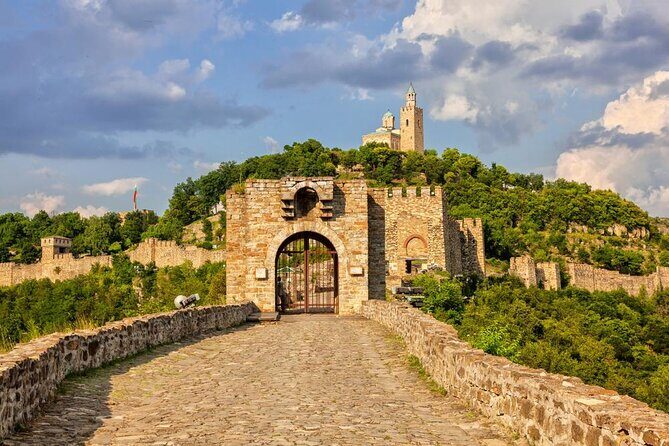
- Tsarevets Fortress views from the hills pair big medieval walls with standout church interiors
- Samovodska Charshiya artisan street is a calm, walkable finish with workshops and handmade goods
Bucharest to Bulgaria in One Day: the driving, border, and comfort realities
This is the kind of trip that works because you leave Bucharest early and stop only where it counts. You’ll get picked up from your hotel in Bucharest and transfer by car into Bulgaria, with the drive taking about 3 hours to reach Veliko Tarnovo.
The upside of a private vehicle is simple: you’re not bouncing around with strangers, and you can ask quick questions as you go. In the real-world comments I’ve seen, guides like Sebastian, Bogdan, Radu, and Alin are often praised not just for explanations, but for making the day feel easy—even things like arriving on time, having water ready, and keeping the car comfortable show up a lot.
The one thing to plan for is time on the border. Some schedules can run into delays when infrastructure is under construction, and you might wait longer than you’d expect (one report notes around 20–25 minutes). It’s not usually a disaster, but it’s smart to keep a flexible mindset so you don’t feel tense if the clock shifts.
You can also read our reviews of more private tours in Bucharest

Basarbovo Rock Monastery: St. Dimitrii and the cave-church vibe
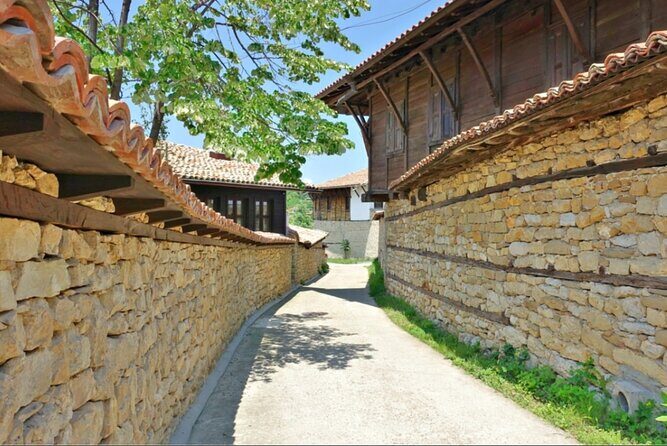
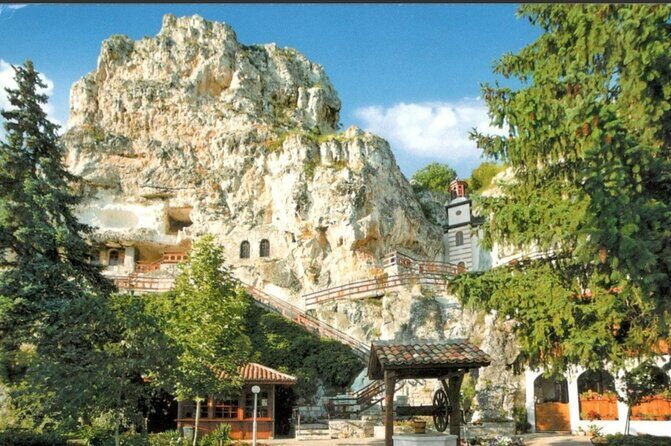
Basarbovo Monastery is the first stop, and it’s the reason many people book this route. It’s a Bulgarian Orthodox rock-hewn monastery near the village of Basarbovo, about 10 km south of Ruse, along the Rusenski Lom River. The big hook here is that it’s Bulgaria’s only active rock monastery—meaning this is not a museum-only stop.
You’ll spend about 1 hour here. The setting is built for quiet attention: carved caves, spiritual atmosphere, and a legend that connects faith across borders. The story centers on St. Dimitrii Basarbovski, a hermit born in 1685 in the nearby village. He lived an ascetic life in the monastery caves and died in 1685. Later, his relics were moved to Bucharest during the Russo-Turkish War (1768–1774) and are currently enshrined in the Church of Sts. Constantine and Helena, where he’s venerated as the patron saint of Romania’s capital.
That connection is why the monastery lands differently for people who start in Bucharest. You’re not just seeing an old site in another country—you’re seeing a spiritual thread that loops back home.
Cost note: admission for St. Dimitrii of Basarbovo Monastery is not included, so you’ll pay about €2 per person on-site.
Arbanasi and Konstantsalieva House: the National Revival you can see in person
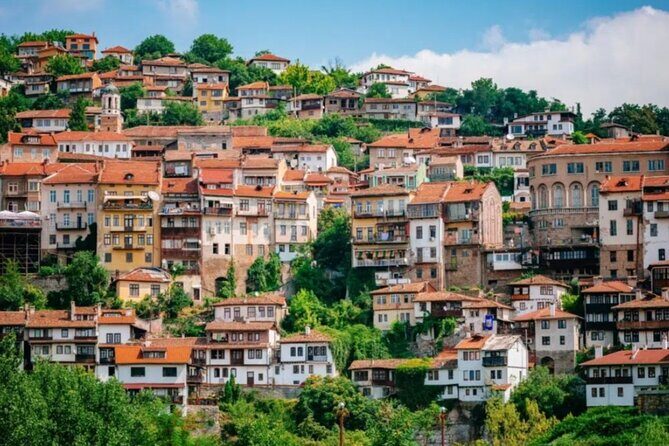
After Basarbovo, you head to Arbanasi, a village about 4 km from Veliko Tarnovo. Arbanasi sits on a high plateau between the Tsarevets and Trapezitsa hills, and it feels like a place built to slow you down—stone walls, old homes, and streets where architecture tells the story.
You’ll have about 1 hour in Arbanasi, and the key thing to notice is the village’s purpose back in the 16th and 17th centuries. During that period, Arbanasi flourished as a trading center, and wealthy merchants built two-story houses with defensive features: high stone walls, narrow windows, and heavy wooden gates. It’s a style that mixes protection with status.
One of the best parts of this stop is Konstantsalieva House, a well-preserved example of Bulgarian National Revival architecture from the 17th–18th centuries. It’s stone and wood, with fortified walls and small windows for safety, while inside you’ll see the more luxurious side—carved wooden ceilings, furniture, and textiles that reflect day-to-day life for a wealthy merchant family.
Admission here is not included, and Konstantsalieva House costs about €5 per person.
If you like architecture, this is the pause in the itinerary where you can actually look at details instead of racing to the next big view. It’s also a nice contrast after the monastery’s cave feel.
Tsarevets Fortress: 3-meter-thick walls and the Church of the Blessed Saviour
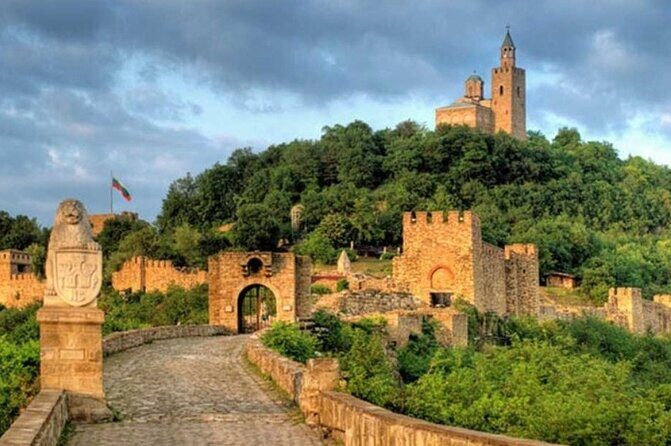
Tsarevets is where Veliko Tarnovo’s medieval power becomes visible. The fortress sits on Tsarevets Hill, surrounded on three sides by the Yantra River, which explains why this location was so defensible from the start.
You’ll spend about 2 hours here, and the time is well used because Tsarevets isn’t just one photo spot—it’s a full circuit of walls, ruins, towers, and church areas. The outer fortification walls are about 3 meters thick, and the site encloses a large space with over 400 residential and administrative buildings, plus churches and towers. Even if you only walk part of the area, the scale hits you fast.
Three features are especially worth keeping an eye out for:
- Baldwin’s Tower, a reconstructed watchtower named after Baldwin I of Constantinople
- The Royal Palace ruins, where the throne hall and royal church areas are associated with the Bulgarian Tsars
- Church areas inside the fortress, including the Church of the Blessed Saviour, where murals and lighting can be striking in the interior
I like Tsarevets because your brain gets to connect the dots: you can see why leaders wanted control here, and you can also appreciate the artistry of religious spaces within the same walls.
Cost note: Tsarevets Fortress entrance is not included and is about €5 per person.
Veliko Tarnovo: the city of the Tsars and why it stays memorable
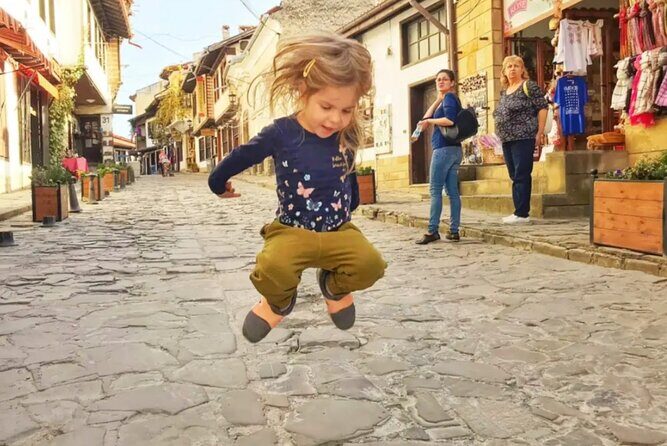
Veliko Tarnovo is the medieval capital of the Second Bulgarian Empire (1185–1396), and the layout of the city explains why it looks dramatic. It sits on three hills—Tsarevets, Trapezitsa, and Sveta Gora—overlooking the winding Yantra River.
This stop is shorter, about 1 hour, but it’s still valuable because it frames everything else. You’re not only visiting monuments in isolation; you’re getting the sense of how the city functioned as a political and spiritual center.
The city’s story also goes older than the empire period. Archaeological evidence points to habitation since the Neolithic, then later importance under Thracian and Roman periods. After the uprising of the Asen and Peter brothers in 1185, Veliko Tarnovo became the capital and a hub for Orthodox Christianity, literature, and architecture. You’ll also hear the nickname Third Rome in some historical interpretations, and standing in the city’s viewpoints makes that idea easier to grasp.
Practical tip: wear shoes you trust. You’ll be walking on uneven ground and along old paths where the terrain can feel steep in spots. Taking it slow pays off, especially with photo stops across the river and hills.
Samovodska Charshiya: ending with crafts instead of another fortress wall
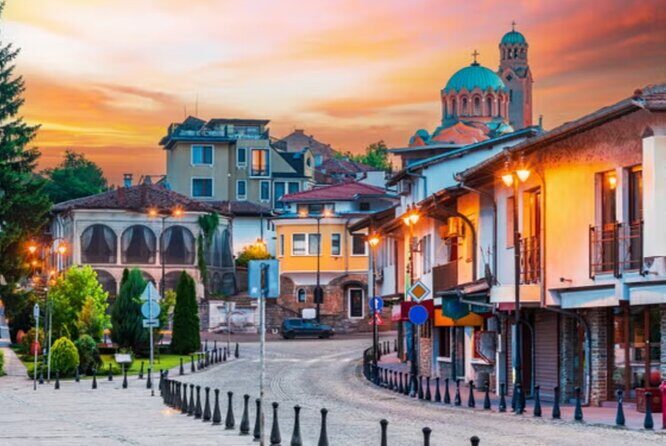
You finish at Samovodska Charshiya Complex, an artisan district in central Veliko Tarnovo. This is an excellent way to close the day because it shifts from big historic power to human-scale craft and everyday life.
You’ll spend about 1 hour here, and it’s free to enter. The district is made up of two narrow cobblestone streets lined with Revival-style houses, workshops, and inns. Samovodska Charshiya developed in the 1860s and 1870s and functioned as a market and craft center during the National Revival period.
The name comes from Samovodene, a nearby village where women would lay out produce on colorful rugs in the market—a tradition that continues in spirit today. That detail matters because it explains why you’ll often see color and textile themes connected to souvenirs here.
What I like about this stop is you don’t have to buy anything to enjoy it. It’s a walkable finale where you can browse handcrafts, pause for photos, and pick up small souvenirs that feel connected to local life rather than generic souvenir stalls.
Price and value: what you’re really paying for
At $170.16 per person for a private, full-day tour, you’re paying mainly for three things:
1) round-trip transport from your Bucharest hotel
2) a professional English-speaking guide to explain the sites
3) the scheduling and pace that lets you hit multiple major stops without losing time
Entrance fees and lunch are not included. Based on what’s listed for the paid sites, your extra costs are likely:
- Tsarevets Fortress: €5 per person
- St. Dimitrii of Basarbovo Monastery: €2 per person
- Konstantsalieva House: €5 per person
That’s about €12 total in entry fees, plus lunch, which you’ll need to arrange yourself. Some guides may recommend or take you to a local restaurant, and in real-world comments this can be a highlight—people often point to good Bulgarian dishes as part of the day’s payoff. Still, don’t count on lunch being included in the price.
The value part depends on your group size and your travel style. If you want a structured, guided day and you don’t want to manage border timing and languages on your own, this is a straightforward way to do it. If you already love self-guided road trips and you’re fine with figuring things out, you might find cheaper options—but you’d trade away the smooth flow and the story behind each site.
Also: expect an 11-hour day. This isn’t a short hop. The “value” really shows if you want to maximize limited time in Romania and you care about history and faith-related sites.
Should you book this Basarbovo, Arbanasi, and Veliko Tarnovo private tour?
I’d book it if you have a limited window in Romania and you want to add another Eastern European country without turning your vacation into a DIY logistics project. The combination of Basarbovo’s rock monastery, Arbanasi’s merchant-era houses, and Tsarevets’ medieval fortress is a strong mix for people who like seeing how power, religion, and daily life shaped the same region.
I’d hesitate if you dislike long driving days or if you want lots of free time in one place. This itinerary is packed by design, and the “trade” is time in transit for coverage across northern Bulgaria. Also, if you’re extremely sensitive to guide style, do pay attention to guide communication ahead of time—there have been occasional complaints in the broader booking world about guide professionalism and attention, so clear expectations matter.
If you go in knowing it’s a long day built around major sites, you’ll likely feel you got a full, satisfying taste of Bulgaria in one go—plus that neat extra connection between St. Dimitrii’s relics in Bulgaria and his veneration in Bucharest.
FAQ
How long does the tour last?
The tour runs about 11 hours.
Is this a private tour?
Yes. It’s a private tour/activity, meaning only your group participates.
Do I get pickup and drop-off in Bucharest?
Yes. Hotel pick-up and drop-off in Bucharest are included.
What are the main stops on the day?
You’ll visit St. Dimitrii of Basarbovo Monastery, Arbanasi, Konstantsalieva House, Tsarevets Fortress, Veliko Tarnovo, and Samovodska Charshiya Complex.
Are entrance tickets included?
No. Entrance fees are not included for Tsarevets Fortress, St. Dimitrii of Basarbovo Monastery, and Konstantsalieva House.
How much are the entrance fees?
Tsarevets Fortress is €5 per person, St. Dimitrii of Basarbovo Monastery is €2 per person, and Konstantsalieva House is €5 per person.
Is lunch included?
No. Lunch is not included.
What language is the guide?
The tour includes a professional tour guide in English.
Can I cancel and get a full refund?
Yes. You can cancel up to 24 hours in advance for a full refund.