REVIEW · BUCHAREST
Bucharest Unveiled: A Private Walking Journey
Book on Viator →Operated by Crafted Tours Romania · Bookable on Viator
Bucharest clicks into place fast on foot. This private walking journey gives you a guided orientation through landmarks like the Ateneul Român and the Palace of the Parliament, with clear narration that ties architecture to real moments in Romanian history. I especially like the way the route balances grand city sights with calmer stops like Stavropoleos Monastery, and I like that you’re not stuck with a one-size-fits-all group pace. One thing to plan for: it’s still a walk, so if your feet aren’t happy, you’ll want good shoes and you may miss some slower photo time.
The tour works because it’s private—you get flexibility and personal attention from a certified guide—and it runs in English with options for day or evening timing. You’ll start at Strada Benjamin Franklin 4 and end somewhere else in the center area (so it’s convenient for continuing your own plans). At around $57.67 per person for 2 to 3 hours, it’s a solid value if you want an organized overview without paying extra for entrances on most stops.
In This Review
- Key highlights you’ll feel right away
- Why this 2-3 hour Bucharest walk is such a smart start
- Starting at Strada Benjamin Franklin: easy to reach, easy to begin
- Ateneul Român: a Greek-temple look that teaches you how Bucharest styled itself
- Piața Revoluției: the Romanian Revolution story, shown not just told
- Calea Victoriei: Bucharest’s elegant avenue, and how to read a boulevard
- Biblioteca Centrală Universitară and the royal equestrian statue in front
- Palatul Regal: the winter royal residence dated 1937
- Old Town rhythm: cafes, 19th-century streets, and easy wandering time
- Stavropoleos Monastery: a quieter corner that rewards slow attention
- Palace of the Parliament exterior: why the numbers make sense
- A major city square and the National Theatre: wrapping the walk with atmosphere
- What the guides do well: clear explanations and real tips
- Price and value for about $57.67 per person
- When to go and what to bring so you’re comfortable
- Who should book Bucharest Unveiled?
- Should you book this private walking tour?
- FAQ
- How long is the Bucharest Unveiled private walking journey?
- Is the tour offered in English?
- Is pickup included?
- Is this tour private or shared with other people?
- Where does the tour start?
- Does the tour include entrance fees?
- Are food or drinks included?
- What stops are included on the route?
- What is the cancellation policy?
- What happens if the weather is poor?
Key highlights you’ll feel right away
- Private guide, private pacing so you can ask questions and spend extra time where you care most
- Revolution storytelling at Piața Revoluției with photos and video support from the 1989 days
- A grand-then-classic route from Calea Victoriei’s elegance to Old Town streets and courtyards
- Parliament exterior at scale with the big-number context that makes it make sense
- Free-ticket stops built into the flow so you can focus on seeing instead of budgeting for entries
Why this 2-3 hour Bucharest walk is such a smart start
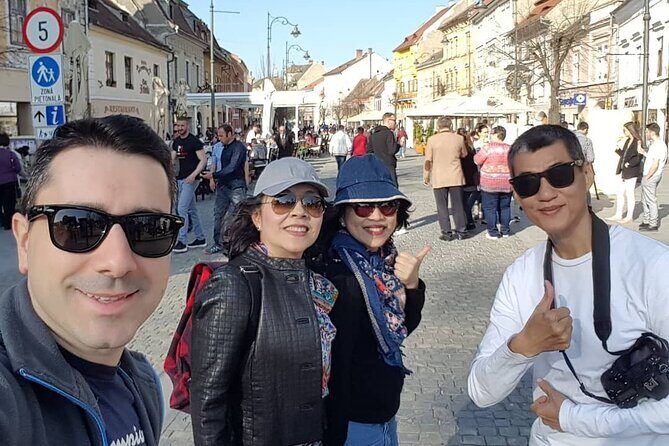
If Bucharest feels a bit confusing at first, this tour is designed to fix that. You get your bearings quickly because the route strings together the city’s most recognizable visual “anchors.” After you’ve walked these blocks, the map stops being abstract.
What I like most is that you’re not only looking at pretty buildings. The guide connects what you see—columns, boulevards, palaces, churches—with why Bucharest became the way it is. That matters, because architecture here is a kind of language. If you can read it even a little, you’ll enjoy the rest of your time in the city more.
The other strength is balance. Some stops are big and dramatic (the Parliament exterior), while others are smaller and more atmospheric (Stavropoleos). That contrast keeps the tour from turning into a checklist.
You can also read our reviews of more private tours in Bucharest

Starting at Strada Benjamin Franklin: easy to reach, easy to begin
The meeting point is Strada Benjamin Franklin 4, București 030167, Romania. Since the tour is near public transportation, it’s easier to sync up with whatever you’re doing before the walk—coffee, a museum stop, or just a quick reset from travel.
I also like that the tour offers pickup. Even if you plan to walk everywhere in Bucharest, pickup can be a lifesaver for the first day. You avoid the early-stress problem: finding a meeting point while you’re still adjusting to the city.
Ateneul Român: a Greek-temple look that teaches you how Bucharest styled itself
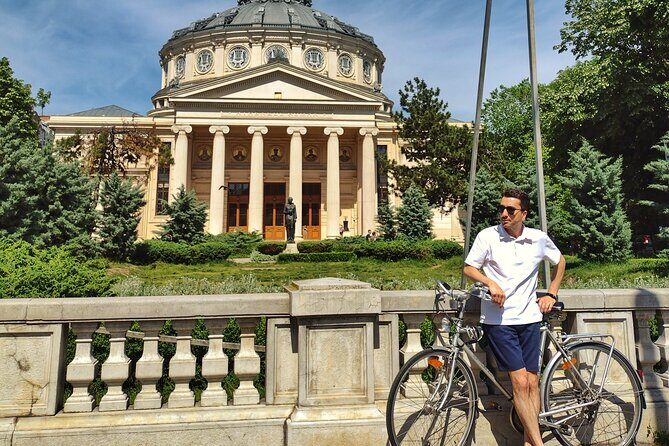
The tour begins with a stop at Ateneul Roman (the Romanian Atheneum). This building is one of the most emblematic landmarks in Bucharest, and the “ancient Greek temple” vibe is exactly the point. The guide’s narration helps you see it as more than a photo spot—this is Bucharest signaling cultural ambition through classical form.
Why it’s worth your time: you’re not just seeing a facade. You’re learning how the city used architecture to project identity. That theme comes back later in the walk, especially when you compare grand boulevards and royal-era buildings with older religious spaces.
A quick practical note: the stop is short (around 15 minutes), and admission is listed as free for this point. Treat it as a “get the big picture” moment. If you want longer time inside, you’d need separate plans.
Piața Revoluției: the Romanian Revolution story, shown not just told
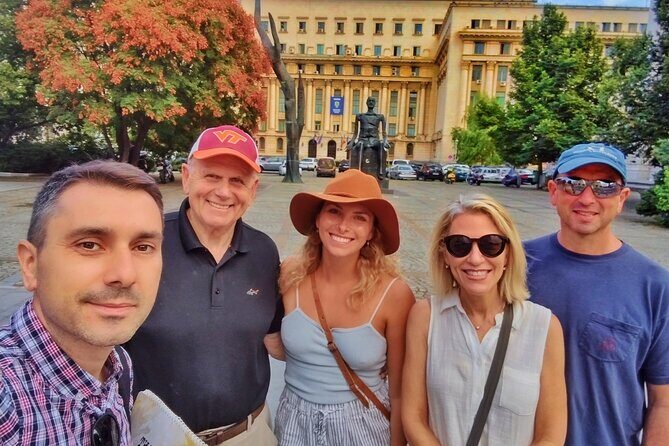
Next is Piața Revoluției, the square where former communist leader Nicolae Ceaușescu gave his last speech in 1989. This is where the tour shifts gears from architecture vibes to human history.
The guide uses pictures and video presentations from the revolution days. That support matters because you’re dealing with a complex, emotionally heavy topic, and visual context helps your brain place the events in time and space.
What you’ll take away: you’ll understand why this square is more than a wide open space. It’s a memory stage for the 1989 turning point, and it helps explain how Bucharest changed after communism.
Time check: this stop runs about 45 minutes, with ticket entry listed as free. Plan for a more focused segment here, because the narration is likely to be denser than at the earlier stops.
Calea Victoriei: Bucharest’s elegant avenue, and how to read a boulevard
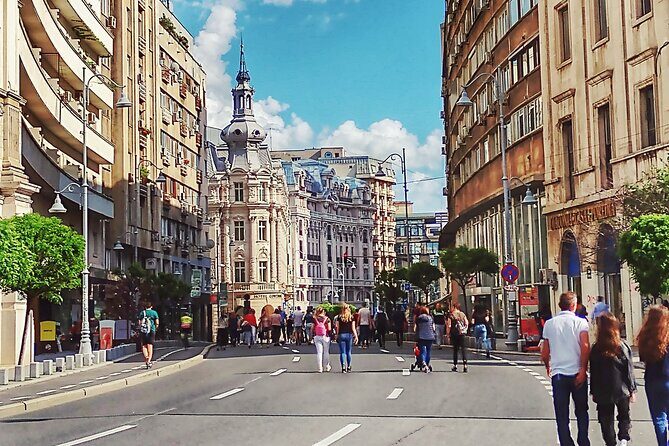
Then you move to Calea Victoriei, described as Bucharest’s most elegant avenue. This part of the walk is your “street-level grand tour.” You’ll see major buildings and monuments along the boulevard, and the guide’s commentary helps you connect the architecture to the city’s changing eras.
What I like: boulevards can feel like just scenery if you’re not given a lens. With a guide, you notice details faster—how the avenue is laid out, how buildings announce status, and how the city’s style changes as you go.
Time check: around 30 minutes, again with admission listed as free. Expect this to be a good stretch for photos and people-watching, but keep your phone ready—guides often point out specific visual cues worth capturing.
Biblioteca Centrală Universitară and the royal equestrian statue in front
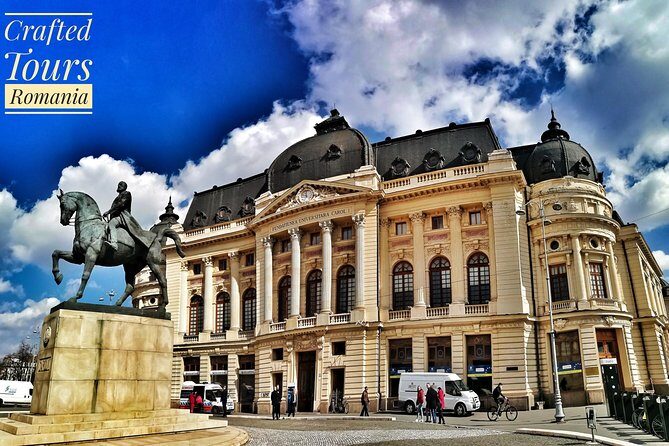
At the Biblioteca Centrala Universitara (Central University Library), you get a stop that’s all about design and patronage. The building is in an eclectic style built by French architect Paul Gottereau, backed by sponsorship from King Carol I.
What makes this stop more than a name-drop is the royal equestrian statue you can see in front of the library. It’s the kind of urban detail that you’d probably walk past on your own, and the guide helps you register why it’s there.
Why this matters for your visit: if you’re the kind of traveler who enjoys how empires and money shape cities, this is a satisfying pause. You’ll come away understanding that Bucharest’s “look” wasn’t accidental—it was funded, designed, and curated for the image leaders wanted.
Time check: about 10 minutes, ticket listed as free.
Palatul Regal: the winter royal residence dated 1937
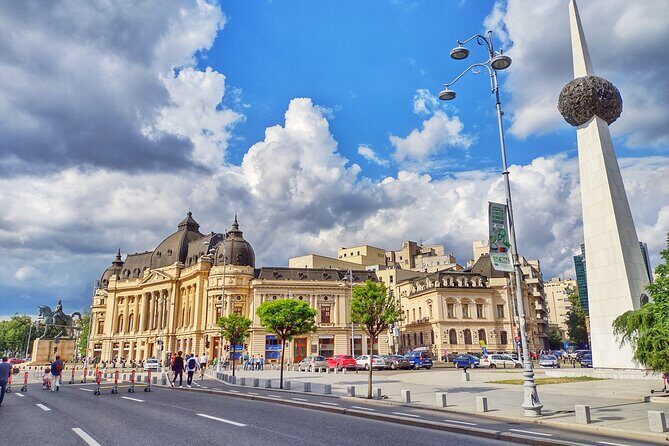
Next is Palatul Regal / Royal Palace, specifically noted as the winter royal residence of Romanian kings, dated 1937. The tour frames it under the direct supervision of Queen Maria and her son, King Carol II.
What you’ll enjoy: even if you don’t go inside, a palace exterior gives you clues. You can start noticing how royal spaces express authority—shape, symmetry, placement, and how the building relates to the streets around it.
Time check: around 10 minutes and ticket listed as free for this stop. This is a “see it, understand it” segment, not a deep palace experience. If you want interiors, you’ll likely plan those separately.
Old Town rhythm: cafes, 19th-century streets, and easy wandering time
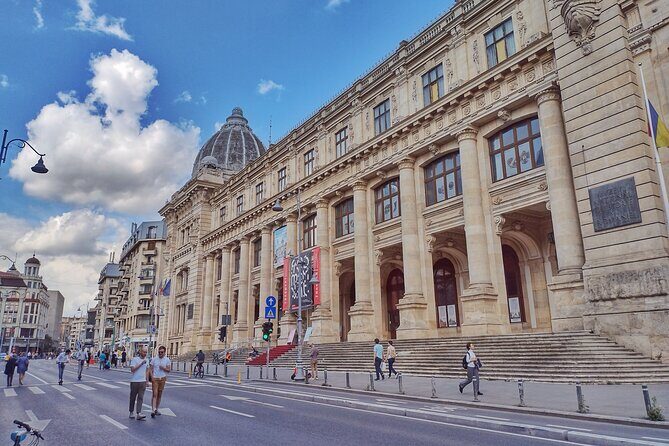
After the more official buildings, the tour shifts into the Old Town area for about 30 minutes. This is where the city feels more lived-in. You’ll pass cafes, pubs, and restaurants, along with 19th-century architecture buildings that help you picture how Bucharest looked as the city grew.
Why it’s a great reset: the walk gives you history and monuments, and then the Old Town gives you texture—sounds, streetscapes, and places that feel ready for a casual evening.
Practical takeaway: if you’re planning dinner on your own later, this is your chance to notice what feels convenient and what matches your vibe.
Stavropoleos Monastery: a quieter corner that rewards slow attention
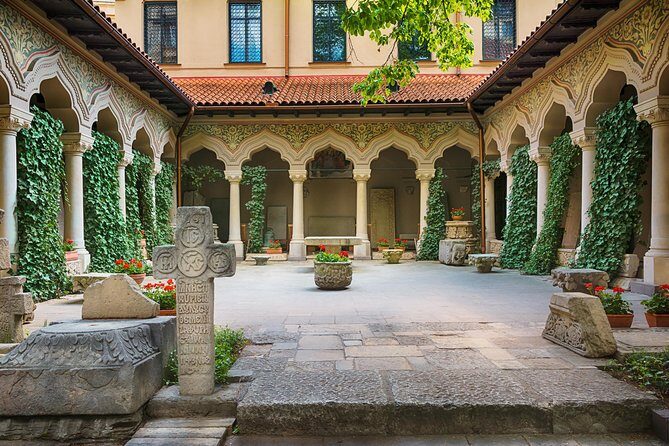
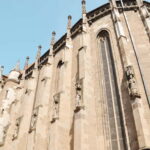
Stavropoleos Monastery is one of the older church sites in Bucharest, dating to 1724. The tour describes it as a hidden gem in the Old Town, and that word is appropriate—not because it’s secret, but because it’s easy to miss unless you’re guided to it.
This stop is about 15 minutes with ticket listed as free. Monasteries and churches often work best in small doses like this, because you can focus on the atmosphere and key visual features without rushing.
What you’ll like if you enjoy details: the guide’s narration tends to slow your attention down here. It’s the kind of stop that helps you understand that Bucharest isn’t only grand boulevards and political monuments. There’s also faith, continuity, and craft in these older spaces.
Palace of the Parliament exterior: why the numbers make sense
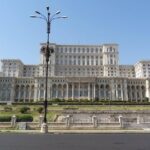
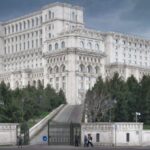
One of the most dramatic stops is the exterior of the Palace of the Parliament. The tour notes that construction began in 1984. It’s described as the heaviest building in the world and the third-largest administrative building. For scale, the tour also compares its volume to the Great Pyramid of Giza, saying the Palace exceeds the Pyramid’s volume by 2%, which is why it’s described as pharaonic construction.
Those numbers could sound like random trivia—until you see the building. Walking up to it (even from the exterior) gives the context that makes the scale feel real in your body, not just in your brain.
Why this stop is worth it: you’re not just “seeing a huge building.” You’re learning how to interpret it as a product of a specific time, ideology, and ambition. That helps you connect the political story you heard earlier at Piața Revoluției to the built environment around you now.
Time check: it’s one of the later major stops, and you’ll hear the story while admiring the exterior.
A major city square and the National Theatre: wrapping the walk with atmosphere
The route continues with a stop at one of the main squares in the city, described as surrounded by imposing statues and buildings. Because the name isn’t provided here, I’d treat it as a “big-picture” stop where you see how monuments and civic space work together.
The tour ends with a stop for the National Theatre in Bucharest. This is a fitting finale: a cultural institution that rounds out the “architecture and power” theme with something more creative. Even if you don’t attend a show, seeing the theatre gives you a final mental image of Bucharest as a city that produces art and public life, not just monuments.
What the guides do well: clear explanations and real tips
This is a private tour, and the guide style matters. The experience leans on professional narration, with guides clearly comfortable answering questions.
From one guide example, Manuela stood out for having comprehensive knowledge of Romanian history and architecture, plus useful information on restaurants, sights, and activities to enjoy in Bucharest. That last part is practical: it turns your tour into a planning shortcut for the rest of your trip.
Another guide example, Toni, delivered an enjoyable experience with strong information, especially around the Romanian Atheneum and palace-related context. That consistency tells me the operator invests in guides who can explain what you’re seeing without turning it into a lecture.
Price and value for about $57.67 per person
At $57.67 per person, you’re paying for a short, focused private guided walk with an English-speaking certified guide. For Bucharest, where you can easily spend a day “just wandering,” this price makes sense if you value direction.
Here’s the value equation I’d use:
- You get organized time (about 2 to 3 hours) instead of aimless wandering.
- You get context at several major landmarks, including the Revolution square and the Palace of the Parliament exterior.
- Many stops are listed as ticket-free, so you’re less likely to lose momentum to buying entries you didn’t plan for.
One caveat: it’s not an all-day ticketed tour of interiors. If your dream is mostly inside museums and palaces, you’ll need to pair this with additional activities after.
When to go and what to bring so you’re comfortable
This experience is weather dependent, which is exactly what you’d expect for a walking route through city landmarks. If conditions are unpleasant, the tour may be canceled and rescheduled, so build a little flexibility into your plans.
For your comfort:
- wear comfortable walking shoes
- bring water (even though food/drinks aren’t included)
- have a phone camera ready for quick exterior photo moments
- consider a light layer if you’re doing an evening timing
Because some segments are short, you don’t want to spend that time fumbling with clothing. Set yourself up to simply walk and listen.
Who should book Bucharest Unveiled?
Book it if:
- you’re arriving in Bucharest for the first time and want a guided orientation
- you care about how architecture connects to history, including the 1989 revolution era
- you want a private pace so you can stop for questions or photos without feeling rushed
- you’re trying to make limited time count and still see the big names plus some quieter corners
You might skip or supplement this tour if:
- you dislike walking
- you only want inside visits and ticketed attractions (this route leans heavily on exterior viewing and narrated stops)
- you want an in-depth museum day rather than a city overview
Should you book this private walking tour?
Yes, if you want a practical first pass through Bucharest that doesn’t bury you in details but still gives meaning to what you see. The route hits the main story beats: classical Bucharest style, the Revolution moment at Piața Revoluției, grand avenues like Calea Victoriei, royal-era references, then the scale shock of the Palace of the Parliament exterior, capped with Old Town atmosphere and the National Theatre.
My biggest reason to recommend it: it’s built to help you understand Bucharest fast, not just look at it. For a first visit—or for a trip where you want one guided foundation—this is an efficient, enjoyable way to start.
FAQ
How long is the Bucharest Unveiled private walking journey?
It lasts about 2 to 3 hours.
Is the tour offered in English?
Yes, the tour is offered in English.
Is pickup included?
Pickup is offered.
Is this tour private or shared with other people?
It’s private. Only your group will participate.
Where does the tour start?
The meeting point is Strada Benjamin Franklin 4, București 030167, Romania.
Does the tour include entrance fees?
No. Entrance fees are not included, though the plan lists ticket-free admission for multiple stops.
Are food or drinks included?
No, food or drinks are not included.
What stops are included on the route?
The tour includes stops such as Ateneul Roman, Piața Revoluției, Calea Victoriei, Biblioteca Centrala Universitara, Palatul Regal/Royal Palace, Old Town, Stavropoleos Monastery, the exterior of the Palace of the Parliament, a main city square, and the National Theatre.
What is the cancellation policy?
You can cancel for a full refund up to 24 hours in advance of the experience’s start time.
What happens if the weather is poor?
If it’s canceled due to poor weather, you’ll be offered a different date or a full refund.