REVIEW · BUCHAREST
Bucharest: The “Last Days of Communism” Tour
Book on GetYourGuide →Operated by TravelMaker · Bookable on GetYourGuide
Communism in Bucharest feels oddly personal. This Bucharest tour focuses on the “last days” of the regime, using the city’s big, symbolic blocks to explain how power looked on the street—especially at Revolution Square and inside the Palace of Parliament. I love how the route links key moments to real places, including the balcony from which the dictator gave his last speech. I also like that you get an English guide with real drive for the story, and the experience is more than photos and dates.
One thing to plan for: the ticketed visits to the Parliament Palace and Primaverii Palace are not included, and visits are sometimes not guaranteed when buildings are closed for meetings or conferences.
In This Review
- Key points to know before you go
- What This Bucharest Communism Tour Really Shows
- Hotel Pickup and the Downtown Route That Keeps You Oriented
- Revolution Square: Where the Story Turns Into a Scene
- Parliament Palace (People’s House): The Building You Can’t Ignore
- Free Press Square and the Communist City’s Messaging System
- Primaverii Palace: A Former Presidential Home
- Price and Logistics: Why $69 Can Make Sense
- What I’d Pack and How to Plan Your Day
- Who This Tour Is Best For (and who might skip it)
- Should You Book This Bucharest Communism Tour?
- FAQ
- How long is the tour?
- How much does it cost?
- What’s included in the price?
- Are entrance fees included for the Parliament Palace and Primaverii Palace?
- Where does the tour start?
- What language is the tour in?
- Do I need to bring anything?
- Are visits guaranteed?
- What happens if I want to visit the Parliament Palace on a weekend with a smaller group?
Key points to know before you go
- Revolution Square and the balcony moment: the stop that makes the 1989 revolution feel immediate.
- Palace of Parliament as a political monument: the sheer scale and purpose behind the People’s House.
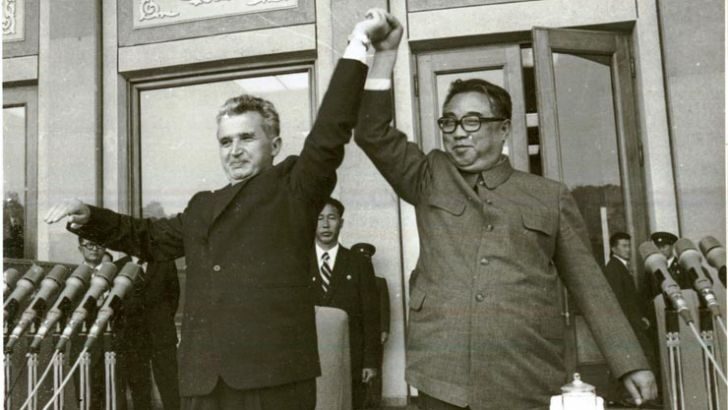
- Free Press Square context: you’ll connect media, propaganda, and the regime’s image-making.
- Downtown “communist compass” route: Arch of Triumph, Victoriei, University, Romana, and Charles de Gaulle Square keep the story moving.
- Primaverii Palace stop: a former presidential residence that helps you see how elite life was staged.
- Hotel pickup with a short, focused schedule: enough time to cover a lot without burning the whole day.
What This Bucharest Communism Tour Really Shows
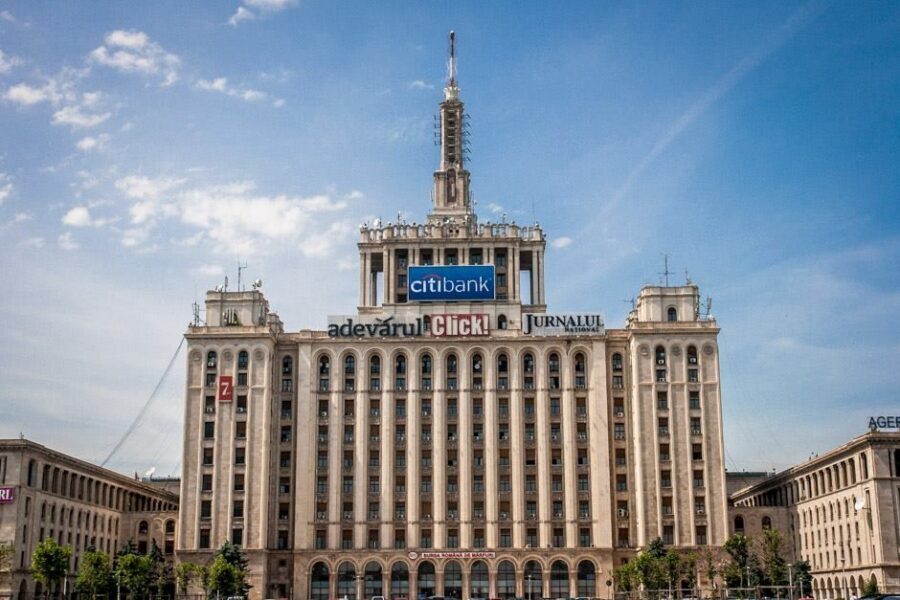
This tour is built around a specific idea: don’t just learn about Romania’s communist period from a screen. Use the city itself as your textbook. Romania was a communist country for more than 40 years (1948 to December 1989), and the guide’s job is to show how power shaped architecture, public squares, and everyday perception.
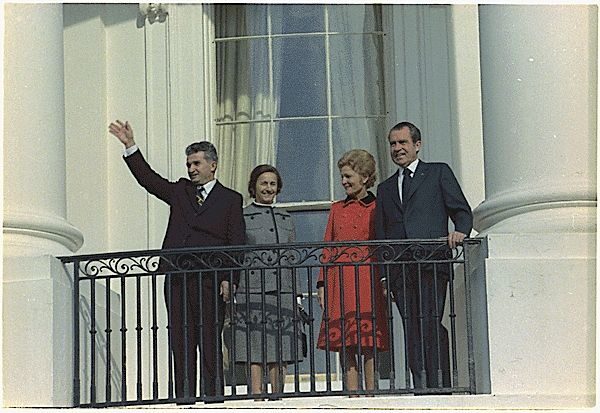
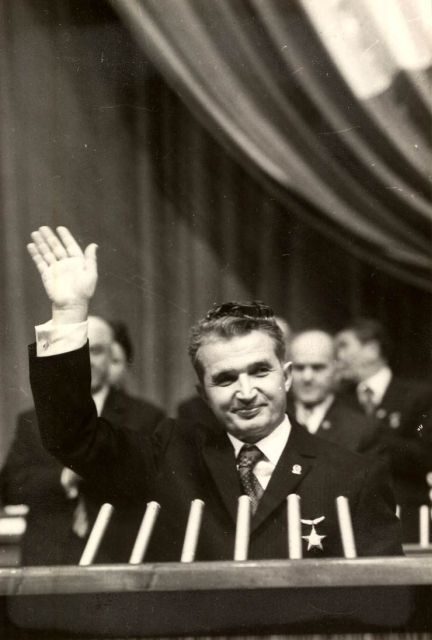
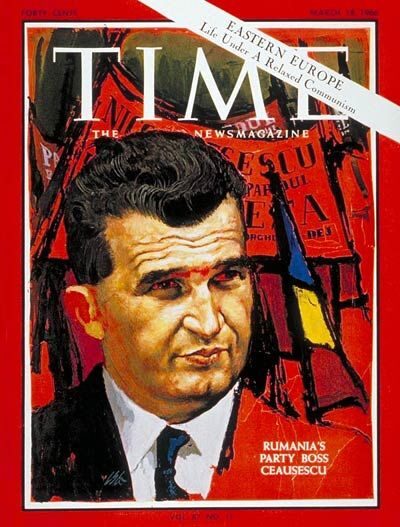
You start with the ending—Nicolae Ceausescu’s rise and collapse set the tone. He became General Secretary in 1965, then president of the Socialist Republic of Romania in 1974, and was removed from power and executed after a violent revolution in the winter of 1989. Even if you’re coming for history, you’ll quickly see why these places still matter: they’re where the regime tried to look unstoppable, and where the story turned.
What I appreciate is the balance of “glory” and controversy. The tour frames the regime’s claimed accomplishments, but it also gives you the context to understand why people still argue about that era. You don’t leave with one neat moral. You leave with places, dates, and symbolism you can connect yourself.
You can also read our reviews of more tours and experiences in Bucharest.
Hotel Pickup and the Downtown Route That Keeps You Oriented
The tour starts in the morning with pickup from your Bucharest hotel. Transport is by car or minibus, which matters because the sights are spread out across central areas. It’s a real time-saver, and you spend less energy figuring out buses and more energy watching the city as you move.
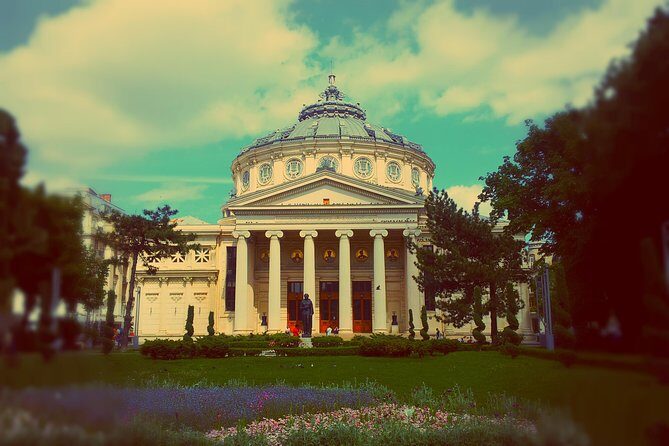
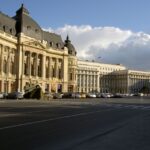
The itinerary is adjusted based on your hotel location, but you can expect a classic central-Bucharest sweep that includes both grand squares and major landmarks. Along the way, you’ll see or pass by Free Press Square (Piata Presei Libere), the Arch of Triumph (Arcul de Triumf), Victoriei Square (Piata Victoriei), and the area around the Romanian Atheneum and Revolution’s Memorial near Revolution Square.
A nice practical detail: the tour is designed as a 5-hour outing, but the main sightseeing block is about 4 hours. That makes it a good fit for a first visit when you want structure, or for a later visit when you want to connect the dots across neighborhoods.
Revolution Square: Where the Story Turns Into a Scene
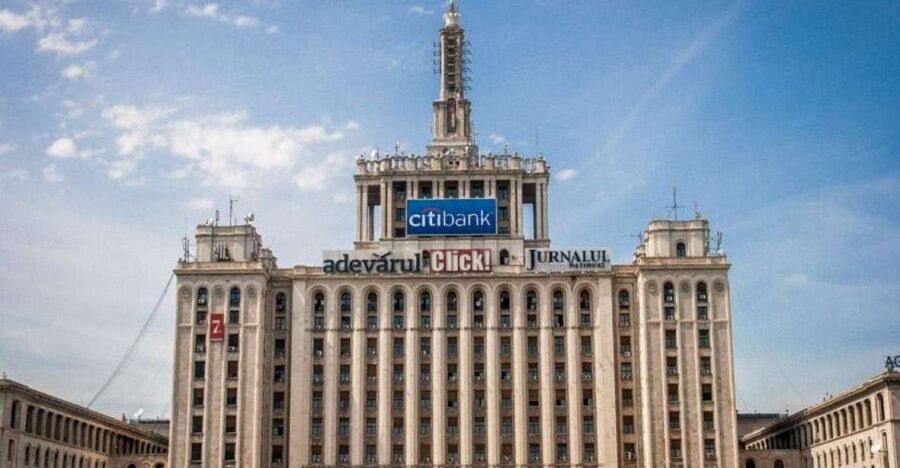
If you want one stop that changes how you read the entire 1989 revolution, it’s Revolution Square. This is where you’ll stand in the setting tied to Ceausescu’s final speech, given from the balcony mentioned as part of the experience.
Revolution Square isn’t just a landmark. It’s a reminder that political events were public theater. The scale of the space, the way major buildings and axes line up, and the location’s symbolism all help you understand how the regime staged power—and how it eventually unraveled in the same public view.
From here, the tour flows through the energy of downtown Bucharest. You’ll pass along key central streets tied to the revolution’s public memory, including stops connected to the Romanian Atheneum area and Revolution’s Memorial. Even if you’re not the type who reads plaques, these are the kinds of points where a guide’s explanations help you “see” what you’re looking at.
One consideration: if you’re expecting a long, in-depth walking tour around the square, the time is still limited. This is a guided drive-and-sightseeing format. You’ll get the key story moments, but it’s not built to be a slow, lingering day.
Parliament Palace (People’s House): The Building You Can’t Ignore
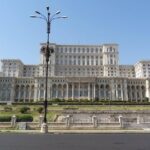
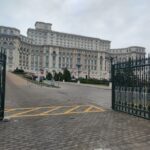
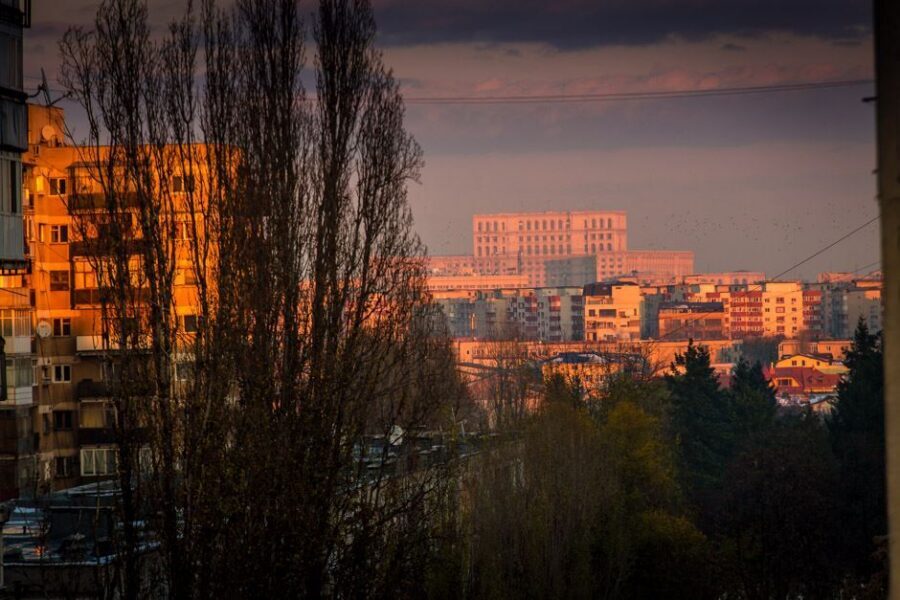
Next up: the Parliament Palace, also known as the House of People. This is the headline site, and for good reason. It’s the kind of structure that dominates your sense of the city before your brain even finishes processing it.
Here’s what makes this stop valuable: it turns an abstract political era into physical presence. When you look at a building like this, you understand that architecture wasn’t neutral. It was part of the messaging—about strength, permanence, and control.
Important practical note: entrance fees to the Parliament Palace are not included in the tour price. Also, visits aren’t guaranteed because the institution can close for meetings and conferences. On weekends, there’s another rule to know: weekend visits to the Palace of Parliament are available only for groups of 10 or more. If your group is smaller, the Palace visit can be replaced with an alternative attraction or a guided walking tour of the Old Town.
So go in with the right mindset: even if you can’t enter the Palace on your date, the exterior and the guide’s explanation still do a lot of work. But if you’re specifically after the interior, keep those timing and group-size conditions in mind when you choose your day.
Free Press Square and the Communist City’s Messaging System
A big part of why this tour feels different is that it doesn’t only focus on one dictator or one building. It also takes you to sites connected to communication and public persuasion.
You’ll learn more about Free Press Square (Piata Presei Libere) and its House of the Free Press theme. In a communist context, that matters because media and messaging were central tools. Even without going deep into technical details, standing in the place where state narratives were promoted helps you see the regime as an information system—not just a government.
The tour also keeps the visuals moving through other central points tied to the era’s street-level organization. You’ll pass Victoriei Square and go by areas such as Union Square (Piata Unirii) and University Square (Piata Universitatii), plus Romana Square (Piata Romana) and Charles de Gaulle Square (Piata Charles de Gaulle).
Each of these is a “chapter heading” for the city layout. The squares and major routes create the sense of a plan. Whether you view that plan with nostalgia or criticism, you can’t deny that the city shows the imprint of power.
Primaverii Palace: A Former Presidential Home
The tour ends with a stop at Primaverii Palace, the former residence of the presidential couple. This is a different angle than Revolution Square or the Palace of Parliament. Instead of public confrontation or monumental governance, you get a view of how the elite lifestyle was connected to state authority.
Even though your time here depends on whether the visit is available, the stop has a strong interpretive value. It helps you connect the political story to the human scale of comfort and status—how leadership was protected, displayed, and separated from the wider public.
Entrance fees to Primaverii Palace are also not included. And as with the Parliament Palace, visits are not guaranteed if the property is closed for meetings and conferences. If you’re traveling with a tight schedule and want maximum certainty, it’s worth keeping expectations flexible.
Price and Logistics: Why $69 Can Make Sense
At $69 per person for about 5 hours with hotel pickup and an English-speaking guide/driver, this is one of the more practical ways to get the story without spending hours coordinating transportation. You’re paying for three things: local transit, guided interpretation, and access to multiple sites in one outing.
The key caveat is straightforward: the tour price does not include entrance fees to the Parliament Palace or Primaverii Palace. So your real total cost depends on whether you enter both buildings on your date.
Time-wise, it’s also good value if you don’t want a full day dedicated to one theme. You get enough stops to build a coherent narrative: Revolution Square, Parliament Palace, the Free Press Square area, central squares, and then Primaverii Palace. That’s a lot of “set pieces” for a half-day tour.
Group size rules can also influence scheduling, especially in winter and shoulder seasons. From March to October (and December 16 to January 6), tours run with a minimum of 4 people. From January 7 to February 29 and November 1 to December 15, the minimum is 2 people. If minimum numbers aren’t met, you’ll be offered an alternative date or a full refund.
This isn’t complicated, but it does mean booking earlier gives you more date options.
What I’d Pack and How to Plan Your Day
Bring your original passport or ID card. The tour specifically calls for the original document, not a copy.
Wear comfortable shoes for central Bucharest walking time. The itinerary includes passing by multiple squares and making at least a couple of site stops. Even if you’re mostly on the route by car/minibus, you’ll likely spend short stretches on foot.
Also note what’s not allowed: no pets. If you’re traveling with an animal, you’ll need alternate arrangements.
For the best experience, treat this tour as an education in symbolism. Look at the buildings, then listen to how the guide connects them to the political timeline from Ceausescu’s rise in 1965 and presidency from 1974 to the revolution and execution in 1989.
Who This Tour Is Best For (and who might skip it)
This is a great fit if you like political history you can see. If your idea of a good city tour includes understanding what power looked like in stone, streets, and public squares, you’ll get a lot out of it.
It’s also a strong choice for your first or second day in Bucharest. The route covers major landmarks and gives you a framework you can use to explore on your own afterward.
You might skip it if you’re mainly after scenic views or a light, casual walk. This tour has a serious theme, and even though it’s engaging, it’s focused on political context and the last phase of communist Romania.
Finally, if you strongly care about entering both the Parliament Palace and Primaverii Palace, check your travel dates with the weekend and closure considerations in mind so you don’t feel blindsided.
Should You Book This Bucharest Communism Tour?
I’d book it if you want a structured, guide-led way to understand Romania’s communist era using Bucharest’s most important “story locations.” The value is strong for the price: hotel pickup, transport, and an English-speaking guide for a half-day plan that hits Revolution Square, the Parliament Palace, Free Press Square context, and Primaverii Palace.
The main reason not to book is also the clearest: entrances are not included, and visits are sometimes replaced or adjusted due to closures and weekend group rules. If you’re flexible, that’s not a deal-breaker—it just means the experience may lean a bit more on what you see from the outside and the guide’s explanations rather than inside access.
If your dates are flexible and you’re curious how a political system becomes visible in a city, this is a smart way to spend your time.
FAQ
How long is the tour?
The tour duration is 5 hours.
How much does it cost?
The price is $69 per person.
What’s included in the price?
Included are the communism tour, hotel pick-up, transport by car/minibus, and an English speaking guide/driver.
Are entrance fees included for the Parliament Palace and Primaverii Palace?
No. Entrance fees to the Parliament Palace and Primaverii Palace are not included.
Where does the tour start?
The tour starts in the morning at your hotel in Bucharest. Pickup is included.
What language is the tour in?
The tour is guided in English.
Do I need to bring anything?
Bring your original passport or ID card.
Are visits guaranteed?
Visits are not guaranteed because these institutions are sometimes closed for meetings and conferences.
What happens if I want to visit the Parliament Palace on a weekend with a smaller group?
Weekend visits to the Palace of Parliament are available only for groups of 10 or more. For smaller groups, the Palace of Parliament may be replaced with an alternative attraction or a guided walking tour of the Old Town.